
Prioritizing Care for High-Risk COVID-19 Patients in the EU: 10 Civic Recommendations to the Institutions
Thanks to the initiative organized on 14th November 2023 in the European Parliament by Active Citizenship Network, 26 patient advocacy groups (PAGs) from 13 countries sent a clear message to the EU institutions: even if COVID-19 moves from pandemic to endemic, we must ensure that we remain vigilant and prioritize efforts to minimize its impact. In particular, as the winter season approaches, it is imperative to guarantee high attention to COVID-19. In fact, experts remind us that COVID-19 remains a threat to national health systems as a whole; it is particularly dangerous for patients who are at higher risk, as they may suffer from serious conditions such as chronic, respiratory, cardiovascular, oncological or any other form of disease; respiratory diseases contribute to serious illness and high levels of hospitalization in vulnerable populations each year, particularly in the elderly and people with pre-existing conditions. To date, there are several preventive measures (such as vaccines produced with different technologies) and therapeutic strategies (such as monoclonal antibodies and antivirals) available to reduce the impact of COVID-19, which need to be adequately communicated to the public by defining the precise indications for use, particularly for vulnerable patients and their family members/caregivers. With the Recommendations presented at the EU level, civic & patient organizations concretely encourage policymakers and healthcare institutions to increase public awareness and communication about the symptoms and risks of COVID-19 and to strengthen the synergy between General Practitioners, patients and other specialists who treat them. With the European elections only a few months away, we expect that the health of European citizens will remain a top priority on the agenda of European institutions.
Abbreviations
HERA: Health Emergency Preparedness and Response; JICF: Joint Industrial Cooperation Forum; NRRPs: National Recovery and Resilience Plans; HCPs: Healthcare Professionals PAGs: Patient Advocacy Groups.
Introduction
From Pandemic to Endemic
5 May 2023 [1] will remain a historic day for the COVID-19 pandemic. On that date, the World Health Organization
officially declared the end of the health emergency that broke out just over three and a half years earlier, on 11 March 2020, with the declaration of the beginning of the pandemic. This, of course, does not mean that COVID-19 has disappeared, nor that its effects should not be managed as carefully as in recent years. COVID-19 remains a global threat and its variants are still active on a global scale: millions of people every week continue to be notified as infected or re-infected, hundreds of thousands of people are hospitalised with COVID-19, and thousands of people still die every week worldwide [2, 3].
In addition to bringing catastrophic numbers of cases and deaths, the pandemic has highlighted the fragility of European healthcare systems and highlighted the lack of adequate investment in public health and pandemic preparedness in general. To support Member States in responding to the pandemic, European policymakers implemented special measures, including the vaccine strategy and a common EU pandemic response mechanism for the entire European population.
At the EU level, we have embraced the sense of the WHO Resolution adopted by the General Assembly on 29 March 2022 “Elevating pandemic prevention, preparedness and response to the highest level of political leadership” [4], and we have high expectations of the activities of the Health Emergency Preparedness and Response (HERA) [5], also because of the constant dialogue it has initiated with all stakeholders, from the civil society world as well as from the private sector, who are members of its “Civil Society Forum” and the “Joint Industrial Cooperation Forum (JICF) [6].
HERA will work closely with EU countries to analyse, identify, and prioritise possible health threats. This will aim to provide the basis for the strategic coordination of the development of medical countermeasures and industrial capacity to address these needs. But in a concrete way, are the institutions still committed to successfully supporting the transition from a pandemic approach to COVID-19 to a routine approach? Since the official end of the pandemic, a clear deprioritisation of the undertaken actions to fight COVID-19 has been driven at national and European levels as vaccination strategies; free screenings, updated and accessible COVID-19 data and public awareness of the accessible and existent treatments for COVID-19 have been left aside. Health, once a priority has fallen down the list. Yet, it is worth noticing that the pandemic still exists, and remains deadly, especially for patients who are at a higher risk as they can suffer from severe conditions such as chronic, respiratory, cardiovascular, and oncological or any other form of the disease.
Methodology
The Process leading to Stakeholder Recommendations
In the initial phase of our project, a detailed survey was disseminated to gather insights from European and national organisations. This questionnaire aimed to understand the current COVID-19 disease pathway and the challenges faced by high-risk patients. More than 20 organisations, operating at both EU and national levels, actively participated, laying the groundwork for subsequent expert discussions. Survey findings showed limited collaboration between organisations and national authorities at the local level in the area of patient pathway improvement, while a more collaborative approach was observed at the EU level. The patient community demonstrated awareness of available treatments, but there was a recognised lack of knowledge about the criteria for applying them.
Organisations reported various barriers when it comes
to timely diagnosis and treatment, including a lack of healthcare knowledge about treatment options, varying criteria by population or region, restricted testing and resource access. These challenges led to extended recovery periods, potential hospitalisation, or physical deterioration.
In response to these insights, we formed an advisory board representing diverse perspectives from various European countries. Through extensive discussions, a clear consensus emerged on the critical importance of fostering closer collaboration with policymakers, national governments, and civil society organizations. The outcomes of the advisory board played a pivotal role in shaping our policy recommendations.
Results
The Purpose, Pillars, and target of the Recommendations Covid-19 Patient Pathways
Through the following 10 recommendations [7] divided into 3 pillars, we aim to expose the current challenges and barriers related to COVID-19 for high-risk groups and pave the way to improve patient care pathways. The goal of the Recommendations is to support policymakers in working towards ensuring that patients have their medical needs met - while promoting better education among healthcare professionals and reinforcing the need for further building national healthcare systems preparedness.
Pillar A) Public Awareness and Communication on Covid-19 Symptoms and Risks
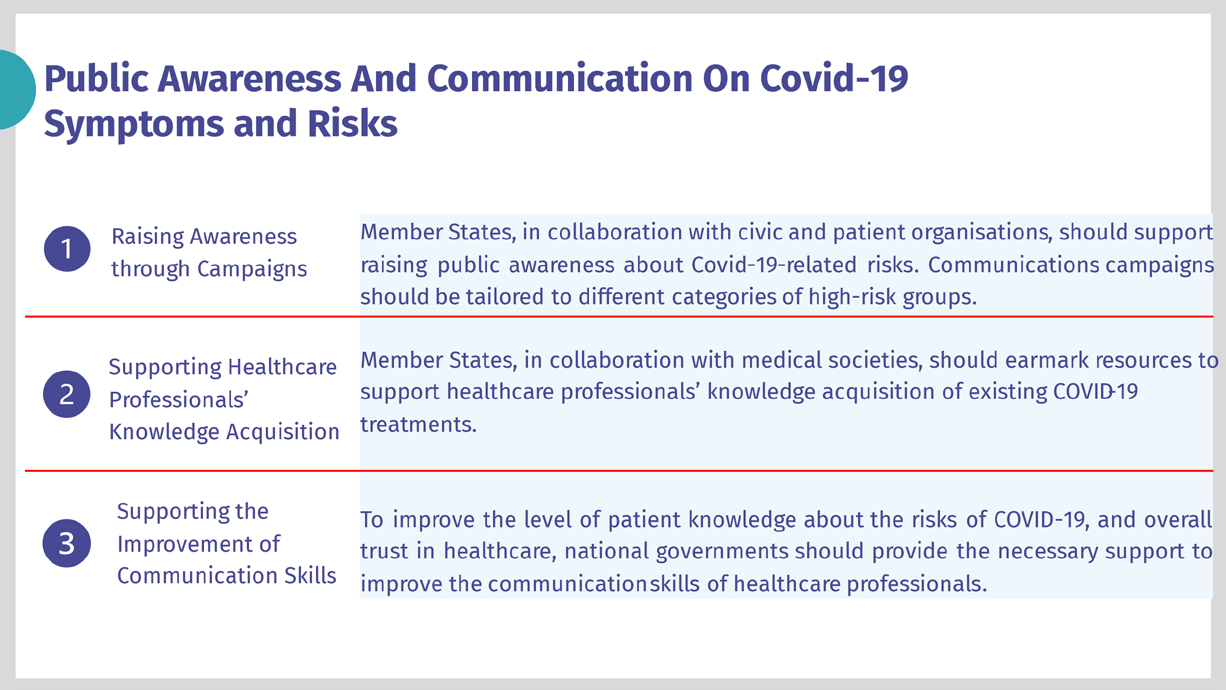
• Recommendation No.1 = Member States, in collaboration with civic and patient organisations, should support raising public awareness about Covid-19-related risks. Communications campaigns should be tailored to different categories of high- risk groups.
As Covid-19 has lost prominence on the political agenda, many high-risk patients have a high degree of misinformation about the current COVID-19 measures put in place, leaving patients insufficiently informed on how to minimise their exposure and risks of COVID-19. As such, a joint collaboration between civic and patient organisations and national governments may support patient communities in increasing public awareness about continuous risks related to COVID-19. It is key to ensure that accurate and up- to-date information related to symptoms, early testing, and treatment, is disseminated to those who are at a higher risk, as a prompt diagnosis is crucial for a better clinical course.
• Recommendation No.2 = Member States, in collaboration with medical scientific societies, should earmark resources to support healthcare professionals’ knowledge acquisition of existing COVID-19 treatments.
Knowledge of existing COVID-19 treatments is critical for healthcare professionals (HCPs) to provide effective care to patients. By providing resources to support their education and continuous training, Member States can help ensure that patients receive the best possible care and treatment options Pillar B) Transformation of Health Services to reduce the possible severe Covid-19 symptomatology.
By equipping HCPs with the necessary information, expertise, and resources they need to provide optimal diagnostic and treatment, lives can be saved, patient management optimised, and financial costs reduced, diminishing the burden that COVID patients may produce on healthcare systems.
• Recommendation No.3 = To improve the level of patient knowledge about the risks of COVID-19, and overall trust in healthcare, national governments should provide the necessary support to improve communication skills of healthcare professionals.
Identifying COVID-19 symptoms early is critical to prevent the spread of the virus and limit its impact on public health. The lack of citizen and patient trust in healthcare represents, however, one of the main barriers towards timely testing and diagnosis of COVID-19. As such, at the national level, governments and healthcare organisations should invest in up skilling the communication skills of HCPs regarding the importance of identifying early COVID-19 symptoms, as well as in circulating appropriate relevant information and promoting trusted sources and channels of communication. This can be done through training programs, continuing education, and other initiatives aimed at improving communication skills.
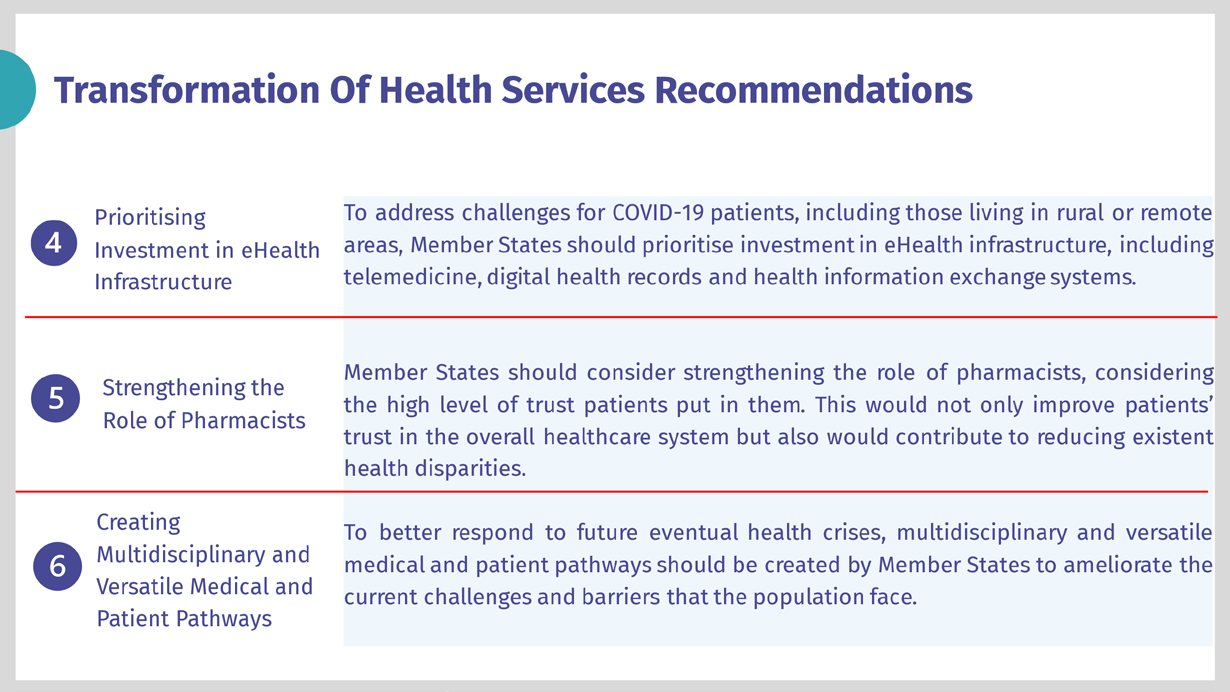
• Recommendation No.4 = To address challenges for COVID-19 patients, including those living in rural or remote areas, Member States should prioritise investment in eHealth infrastructure, including telemedicine, digital health records and health information exchange systems.
The aftermath of the pandemic showcased that telemedicine is an effective option to fight public health emergencies, by complementing traditional healthcare services. There are many advantages when it comes to deploying telemedicine as the use of such tools: not only reduces the number of face-to-face visits but improves and shortens patients’ pathways to receiving medical prescriptions. When it comes to high-risk patients, telemedicine allows them to receive medical care without leaving their homes, reducing the risk of exposure to COVID-19 in healthcare facilities. Policymakers should address disparities in access to eHealth services among different patient populations, including those living in rural or remote areas, and those from disadvantaged or marginalized communities. This should be done in parallel with the development of clear guidelines on the services that can be provided, the professionals that will provide them and the patients that receive them. To this end, the decision- makers should be in constant communication with patient representatives to ensure the proper use of telemedicine.
• Recommendation No.5 = Member States should consider strengthening the role of pharmacists, considering the high level of trust patients put in them. This would not only improve patients’ trust in the overall healthcare system but also would contribute to reducing existent health disparities.
Pharmacists can help in COVID-19 testing and vaccination efforts in underserved areas, making it easier for individuals in those areas to access testing and vaccination Pillar C) Setting Up a Comprehensive Policy Framework services. They can further contribute to managing the medications of COVID-19 patients and support their adherence to treatments, ensuring they receive the proper medication regimen prescribed by their healthcare provider and providing reliable information on the disease. As such, pharmacists can work collaboratively with other healthcare providers to manage COVID-19 patients, providing valuable support to healthcare teams.
• Recommendation No.6 = To better respond to future eventual health crises, multidisciplinary and versatile medical and patient pathways should be created by Member States to ameliorate the current challenges and barriers that the population face.
The current pathways have been shown to lack effectiveness, innovation, and functionality. Overall efficient response of national healthcare systems must include an upgrading of the existent patient and medical pathways with the aim of addressing eventual health crises. The lessons learned from the Covid-19 pandemic along with the latest developments in telemedicine and e-health shall be integrated by Member States as an essential basis to set up these avant-garde pathways to diminishing challenges and barriers experienced by patients.
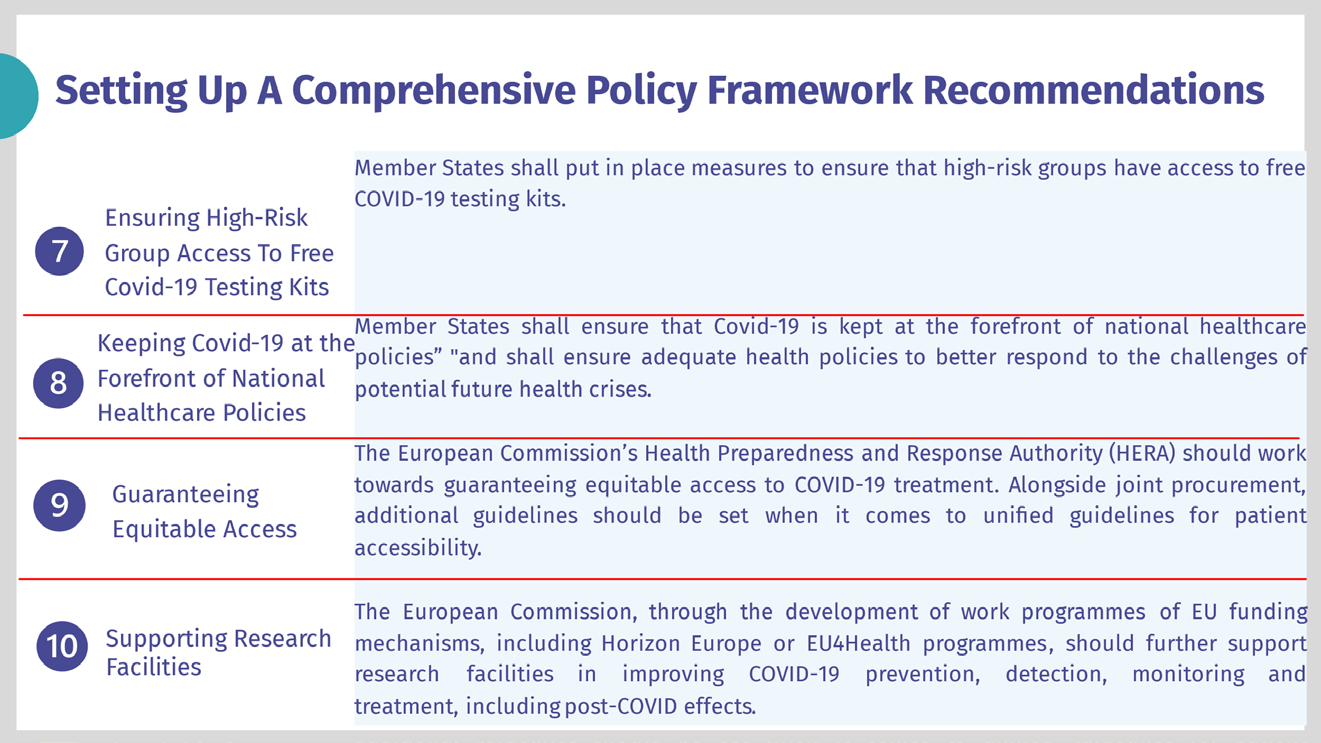
• Recommendation No.7 = Member States shall put in place measures to ensure that high-risk groups have access to free COVID-19 testing kits.
At-risk groups, such as older adults, and individuals with underlying health conditions, are more vulnerable to severe illness and death from COVID-19. Free testing can help identify cases early, allowing for timely medical intervention and reducing the risk of complications. The cost of COVID-19 testing can be a financial burden for many individuals and families, especially those who are at increased risk of infection. Providing fully reimbursed testing can reduce the financial burden of COVID-19 from the patients’ perspective and ensure that at-risk groups have access to essential healthcare services, and finally, it can also contribute to reducing the economic impact of the pandemic.
• Recommendation No.8 = Member States shall ensure that Covid-19 is kept at the forefront of national healthcare policies.
The advent of new vaccines and antiviral treatments against COVID-19 has led to a decrease in the number of cases and deaths from COVID-19. As such, national governments have ceased to continue addressing the risks related to the Covid-19 pandemic, contributing to a low perception of Covid-19 real risks, especially, for high-risk populations, which lack access to COVID-19 data. To ensure a sufficient overall response of national healthcare systems to an eventual outbreak of future pandemics, it is necessary to create adequate and flexible health policies to better respond to the challenges of addressing future health crises.
• Recommendation No.9 = The European Commission’s Health Preparedness and Response Authority (HERA) should work towards guaranteeing equitable access to COVID-19 treatment. Alongside joint procurement, additional guidelines should be set when it comes to unified guidelines for patient accessibility.
Joint procurement and unified guidelines can help to streamline the response to COVID-19, reducing the administrative burden on healthcare providers and enabling them to focus on providing high-quality care to patients. Moreover, harmonised guidelines, including when it comes to a common definition of high-risk patients, can facilitate national and cross-border care coordination by providing clear instructions for patient referrals and transfer of care, as well as enabling healthcare providers to communicate effectively and share patient data securely.
• Recommendation No.10=The European Commission, through the development of work programmes of EU funding mechanisms, including Horizon Europe or EU4Health programmes, should further support research facilities in improving COVID-19 prevention, detection, monitoring and treatment.
The havoc that the national healthcare system endured during the Covid-19 pandemic is the outcome of a lack of prioritisation of healthcare policies and investments at national, regional, and European levels. As such, it is crucial to increase investment in the national/regional primary healthcare system and to support further European development and innovation to ameliorate healthcare providers resources, patients’ quality of healthcare attention and life and to further develop innovative diagnostic tools and treatments which can optimise patients and medical care pathways. In addition, to ensure a holistic approach it is also of paramount importance to support research in understanding and treating post-infection complications, such as long COVID, that represent an important healthcare and social burden.
Discussion
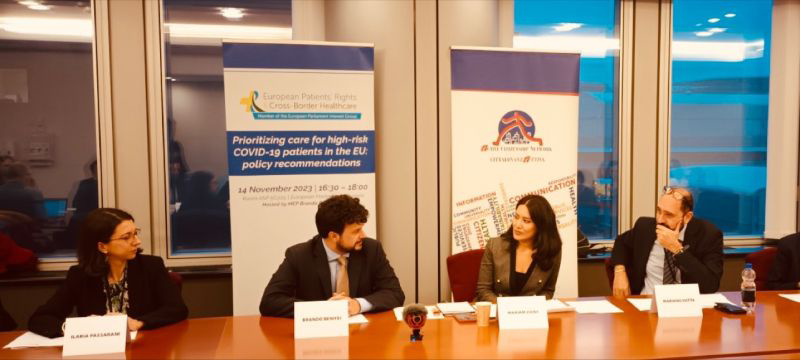
The initiative organized on 14th November 2023 in the European Parliament [8] by Active Citizenship Network [9], the EU branch of the Italian NGO Cittadinanzattiva [10] kindly hosted by MEP Brando Benifei (S&D) [11] with the support of the MEPs Interest Group “European Patients’ Rights & Cross-Border Healthcare” [12] allowed to 26 patient advocacy groups (PAGs) from 13 countries to reinforce a clear message to the EU institutions, very well highlighted in the pillar of the Policy Recommendations titled “Setting Up a Comprehensive Policy Framework”: even if COVID-19 moves from pandemic to endemic, we must ensure that we remain vigilant and prioritize efforts to minimize its impact.
The Covid-19 pandemic remember us how much damage even an uninformed citizen and patient - who perpetrates unhealthy behaviour - can cause and how much, instead, an informed citizen and patient can make a difference not only to their own individual health but to public health in general. The understanding of what the risks are, especially for some patients with comorbidities, and the awareness of what the benefits of Covid vaccination & therapies are, on the other hand, can help mitigate the Covid-19 pandemic and other similar events, which cannot be ruled out for the future: hence the need for us to be more prepared and prepared.
To date, several preventives (such as vaccines produced with different technologies) and therapeutic strategies (such as monoclonal antibodies and antivirals) are now available to counter the COVID-19 pandemic, which need to be adequately communicated to the public, defining the precise indications for use, particularly for vulnerable patients and their families/caregivers. And this is the second message of the EU public initiative promoted by Active Citizenship Network, summarized in the pillar of the Policy Recommendations titled “Public Awareness and Communication on Covid-19 Symptoms and Risks”.
Data from several studies confirm that heart disease, diabetes and chronic renal failure are significantly more frequent and numerically more numerous among COVID-19 patients who died, compared to the general population [13]. Vulnerable individuals have a higher rate of adverse disease outcomes: ascertaining frailty at an early stage is important to identify the most vulnerable patients. In other words, some people have a greater risk than others of becoming severely ill with COVID-19, which means they are more likely to going to hospital; being admitted to intensive care; needing the ventilator to breathe die.
The administration of current antiviral drugs is strictly indicated for frail/vulnerable patients at high risk of contracting serious forms of the disease (having neoplastic, renal insufficiency, immunodeficiency, obesity or cardiovascular disease, etc.). Such individuals must be expressly indicated by the doctor, who, having been alerted in good time to the onset of symptoms attributable to COVID-19, will manage the patient appropriately.
To date, even we have vaccines and specific treatments, it is also essential to reinforce a synergy between the general practitioner, the patient and the other specialists treating them. With the Recommendations PAGs wanted to also emphasize this aspect, included in the pillar titled “Transformation of Health Services”.
To amplified the value of the recommendations, Active Citizenship Network launched on November 2023 a social media communication campaign #Care For All which has been endorsed by 17 Patients Advocacy Groups from 9 countries.
Conclusions
Civic & patients’ organizations across Europe, committed to reduce inequalities, protect patients’ rights and promote civic participation in decision-making processes at all levels, underline three priorities and preconditions necessary to strengthen the implementation of these Recommendations:
- a long-term strategy instead of a single spot initiative;
- the need for an approach of “General Interest”, because it is only by protecting the general interest that the particular interests are also supported; and, last but not least,
- The need to guarantee the empowerment of people, communities, intermediate bodies such as Patients’
Advocacy groups, citizens’ organizations involved in health issues and, more in general, all actors promoting health as a common good. Right now, it is crucial to properly address the consequences of the Covid-19 infection.
The Policy Recommendations want to be a contribute to the EU Institutions, taking into account that we all have responsibilities:
• To Avoid the Paradox effect for COVID-19 / LONG COVID-19 patients they risk experiencing the same situation as cancer and chronic patients, who were almost left alone during the first wave of the pandemic, with the risk to jeopardize 20 years of advancement in prevention and care. This risk, since the World Health Organisation officially declared the end of the health emergency, may increase.
• To Support the HCPs Categories, living the so-called “medical deserts” phenomenon with related risks and paradox: on the one hand, we owe eternal gratitude to health workers for the sacrifice they have made, also in terms of human lives, in tackling the pandemic; and on the other, their legitimate demands have been almost ignored (or at least not considered a priority) in the countries of the European Union when allocating the National Recovery and Resilience Plans (NRRPs) funds for “public health”. This is a discrepancy that citizens and patients are paying dearly for, seeing their right to access care restricted, whether it is highly specialised or routine, since the shortage of health professionals affects not only specialists but also GPs and paediatricians. Not to mention nurses and other socio-health workers. The fact that sufficient and adequate measures were not taken in the elaboration of the National Recovery and Resilience Plans is a paradox that can hardly be justified. This aspect is strictly link with the following one:
• To reduce health inequalities, a crucial factor especially to build trust among Eu citizen and EU Institution in front of the next European election in 2024.
• To recognize the key role of the civil Society and Patients Advocacy Ԍroսps for More Resilient Health Care Systems. All the key and open-minded actors active at global level agree about the need to strengthen the relationship between the public and private sector, to increase dialogue with the Institutions, and to involve academia, professionals, scientific societies, researchers, media in the dialogue.
• To prioritize in public policy the value of the Health Literacy, a very powerful individual and public health assurance tool that enables us to understand that health is a public good to be preserved through individual preventive actions that become more effective the more we follow them. As declared by experts [14], the COVID-19 infodemic (an excessive amount of information about a problem that is typically unreliable, spreads rapidly, and makes a solution more difficult to achieve) showed that low health literacy of a population is a globally underestimated public health problem. For example, in Europe [15], nearly half of the adults reported having problems with health literacy and lacked relevant skills to take care of their health and the health of others.
As we approach the European elections, we are fully aware that from the importance that will be given to health issues in this European political framework, European citizens will understand whether “the need to create a stronger European Health Union (EHU), based on the European Commission’s recent efforts to act on cross-border health threats” [16] - as emphasised by European Commission President Ursula von der Leyen in her ‘State of the Union’ address [17] - is just a statement or the actual direction taken by the European institutions for the coming years. A key element by which European citizens will assess the work of the European institutions.
Declarations
Each of the authors confirms that this manuscript has not been previously published by another international peer-review journal and is not under consideration by any other journal. Additionally, all the authors have approved the contents of this paper and have agreed to the submission policies of the journal.
Acknowledgements
The event at the EU Parliament was carried out by Cittadinanzattiva/Active Citizenship Network in the framework of the EU project titled “Protecting the value of access to care during - and after - the COVID-19 pandemic across Europe: focus on antivirals” [18], realized with the unconditional support of Pfizer. For all phases of the project, a project team was set up by Cittadinanzattiva/Active Citizenship Network (coordinated by Mariano Votta and composed of Daniela Quaggia and Bianca Ferraiolo). RPP Group coordinated the development of the recommendations. For all phases of the initiative, a project team was set up by RPP Group (coordinated by Kinga Wójtowicz and composed of Georgios Mavrodimitrakis and Luca Mario Comincioli).
RPP Group thanks all the organisations that were involved in the “Advisory Board” for the development of the recommendations, as well as Pfizer for the unconditional support received. In particular, special thanks to:
- Ms. Otilia Stanga - International Patient Organisation for Primary immunodeficiency (IPOPI).
- Mr. Fabio Candotti - European Society for Immunodeficiency (ESID).
- Mr. Ivica Belina - Coalition of Healthcare Associations from Croatia (Koalicija udruga u zdravstvu-KUZ).
- Mr. Robert Hejzák - National Association of Patient Organizations from Czech Republic (Národní asociace pacientských organizací-NAPO).
- Ms. Vida Augustinienė - Council of Representatives of Lithuanian Patient Organizations from Lithuania (Lietuvos pacientų organizacijų atstovų taryb-LPOAT).
- Mr. Igor Grzesiak - Institute of Patient Rights and Health Education from Poland (Instytut Praw Pacjenta i Edukacji Zdrowotnej-IPPEZ).
- Mr. Juan Carlos Julian Mauro - Federación Nacional de Asociaciones (ALCER) from Spain.
- Ms. Paula Echevarria - Plataforma de Organización de Pacientes (POP) from Spain.
- Mr. Mariano Votta – Cittadinanzattiva/Active Citizenship Network from Italy.
For Cittadinanzattiva/Active Citizenship Network the involvement in the “Advisory Board” was in coherence with its engagement in the fight against the Covid-19 pandemic [19].
Cittadinanzattiva/Active Citizenship Network also thanks the EU umbrella organization European Liver Patients’ Association (ELPA) and all the 16 national PAGs - Active Citizenship Network historical partners that endorsed the Recommendations, as follows:
- AUSTRIA: Lower Austrian Patient and Nursing Advocacy (NÖ Patienten- und Pflegeanwaltschaft)
- Cyprus: Cyprus Federation of Patients’ Associations – CyFPA, Universal Patients’ Rights Association (Evrensel Hasta Haklari Dernegi)
- Bulgaria: Together with you, Child and Maternal Healthcare “Smile”, Cardiovascular Patient Association, Alliance of transplanted and operated ATO “Future for all”, The Innovations Institute
- Croatia: Croatian Ass. for Patients’ rights (CAPR) - “Hrvatska udruga za promicanje prava pacijenata”, International Council of The Patient Ombudsman
- Greece: Greek Patients’ Association
- The Netherlands: Epecs Foundation, euPrevent
- Ireland: Irish Patients Association
- Spain: Universidad del Paciente y la Familia
- Extra EU:
- Kosovo: Patients’ Rights Association in Kosova For the development of the social media communication campaign #Care for All, Cittadinanzattiva/Active Citizenship Network thanks Stripe Communications with the team coordinated by Jake Harrison, Senior Account Manager.
Authors’ contribution
Each named author has substantially contributed to conducting the underlying research and drafting this manuscript. Additionally, to the best of our knowledge, the named authors have no conflict of interest, financial or otherwise.
Conflict of interest
The authors listed on the first page declare that they do not have any conflict of interest.
References
-
World Health Organisation Europe (2023) Coronavirus disease (COVID-19) pandemic.
-
World Health Organization (2023) WHO COVID-19 Dashboard.
-
World Health Organization (2023) From Emergency Response to Long-Term COVID-19 Disease Management: Sustaining Gains Made During the COVID-19 Pandemic.
-
Elevating Pandemic Prevention, Preparedness and Response to the Highest Level of Political Leadership: Resolution / Adopted by the General Assembly (2022) United Nations Digital Library.
-
Health Emergency Preparedness and Response 2023 European Commission.
-
International Cooperation (2023) European Commission.
-
Addressing high-risk patients‘unmet needs and challenges (2023) Recommendations Covid-19 Patient Pathways.
-
Prioritizing care for high-risk COVID-19 patients in the EU: policy recommendations (2023) Active Citizenship Network.
-
The engagement of Cittadinanzattiva in the fight against the Covid-19 pandemic (2022) Active Citizenship Network.
-
(2023) Cittadinanzattiva.
-
Brando Benifei, Italian Member of the European Parliament, Group of the Progressive Alliance of Socialists and Democrats in the European Parliament, MEPs European Parliament.
-
Strengthening Vaccination Policies towards the European Elections: From Recommendations to Concrete Experiences (2024) European Patients’ Rights and Cross-border Healthcare.
-
Pranata R, Henrina J, Anthonius LM, Lawrensia S, Yonas E, et al. (2021) Clinical Frailty Scale and Mortality in COVID-19: A Systematic Review and Dose-Response Meta-Analysis. Arch Gerontol Geriatr 93: 104324.
-
Leena P, Orkan O (2020) COVID-19: Health Literacy is an Underestimated Problem. Lancet Public Health 5(5): e249-e250.
-
Kristine S, Jurgen MP, Rothlin F, Kristin G, Zofia S, et al. (2015) Health literacy in Europe: comparative results of the European health literacy survey (HLS-EU). Eur J Public Health 25(6): 1053-1058.
-
European Health Union Initiative and Manifesto (2023) European Health Forum Gastein.
-
State of the Union (2020) European Commission.
-
Protecting the Value of Access to Care During - and After - The COVID-19 Pandemic Across Europe: Focus on Antivirals (2023) Active Citizenship Network.
-
The Engagement of Cittadinanzattiva in the Fight against the Covid-19 Pandemic (2020) Active Citizenship Network.
- Are the Vaccines the Only Solution to Prevent the COVID-19 Pandemic? Part Two
- Clinical Characteristics of Women in this New Global Immunodeficiency
- Cell Dynamics in HIV Pathogenesis: Insights and Implications
- Determination of the CDR (CDR1, CDR2) « Complementary- Determining Region Invertebrate Primitive Antibody from Sea Star »
- Comprehensive Insights into ModRNA Vaccines: Persistent PP-Spike Recombinant Protein, Hyperimmune/Inflammatory Reactions, Thrombotic Vasculopathy, Chronic Organ Complications and Excess Deaths
- Impact of Dietary Choices on Immune System Functionality