
Possible Pathogenesis and Treatment of Human Immunodeficiency Virus Infection
Human Immunodeficiency Virus (HIV) is most dangerous life threatening infection in this World. More than 10 thousand of dead detect in every year with 10 lack affected people in 2016. HIV infection can be transmitted through sexual, parenterals by infected syringe or by prenatal birth. It can be detected by various laboratory tests and managed by antiretroviral therapy.
Introduction
HIV
HIV is also known as Human immunodeficiency virus. HIV is a member of slow lentivirinae, subfamily of retroviruses. There are two related but distinct types of HIV, HIV-1 and HIV-2 can be detected in humans. When HIV-1 infection is suspected, whether owing to symptoms or high-risk behaviour, it should be confirmed by laboratory. In HIV patients, the immune-defensive system can be weaker day by day with cluster of body syndromes which does not heal the patient to basic injury. HIV can be caused Acquired immunodeficiency syndrome (AIDS) [1].
Methods
The most common method is an enzyme-linked immunosorbent assay (ELISA), which detects antibodies against HIV-1. The ELISA test is both highly sensitive (>99%) and highly specific (>99%) [2].
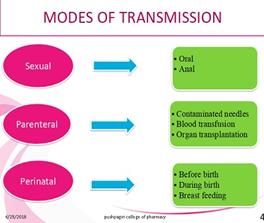
Epidemiology
- Globally in 2016, 1.8 million of newly diagnosed people were suffering from HIV.
- 1.8 million People become newly infected with HIV in
2016 globally. • The most effected region of HIV is Africa and Sub-
Saharan region of Africa with 25.6 million were affected. • More than 19.5 million people in 2017 with HIV were receiving antiretroviral therapy (ART) globally [3].
Clinical Presentation of Primary HIV Infection in Adults
Symptoms Include
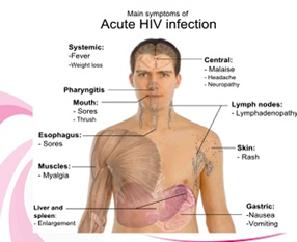
- Fever but not all times, sore throat, restlessness, reduce weight, diarrhoea, nausea, and may be vomiting.
- Myalgia (suffers 40% to 80% of patients).
- Morbilliform or a kind of Maculopapular rash on trunk.
- Lymphadenopathy, sweats in night with usually aseptic meningitis (fever, head pain, photophobia, and sometimes stiff neck).
- Reduction in CD4 lymphocytes [4].
Pathogenesis
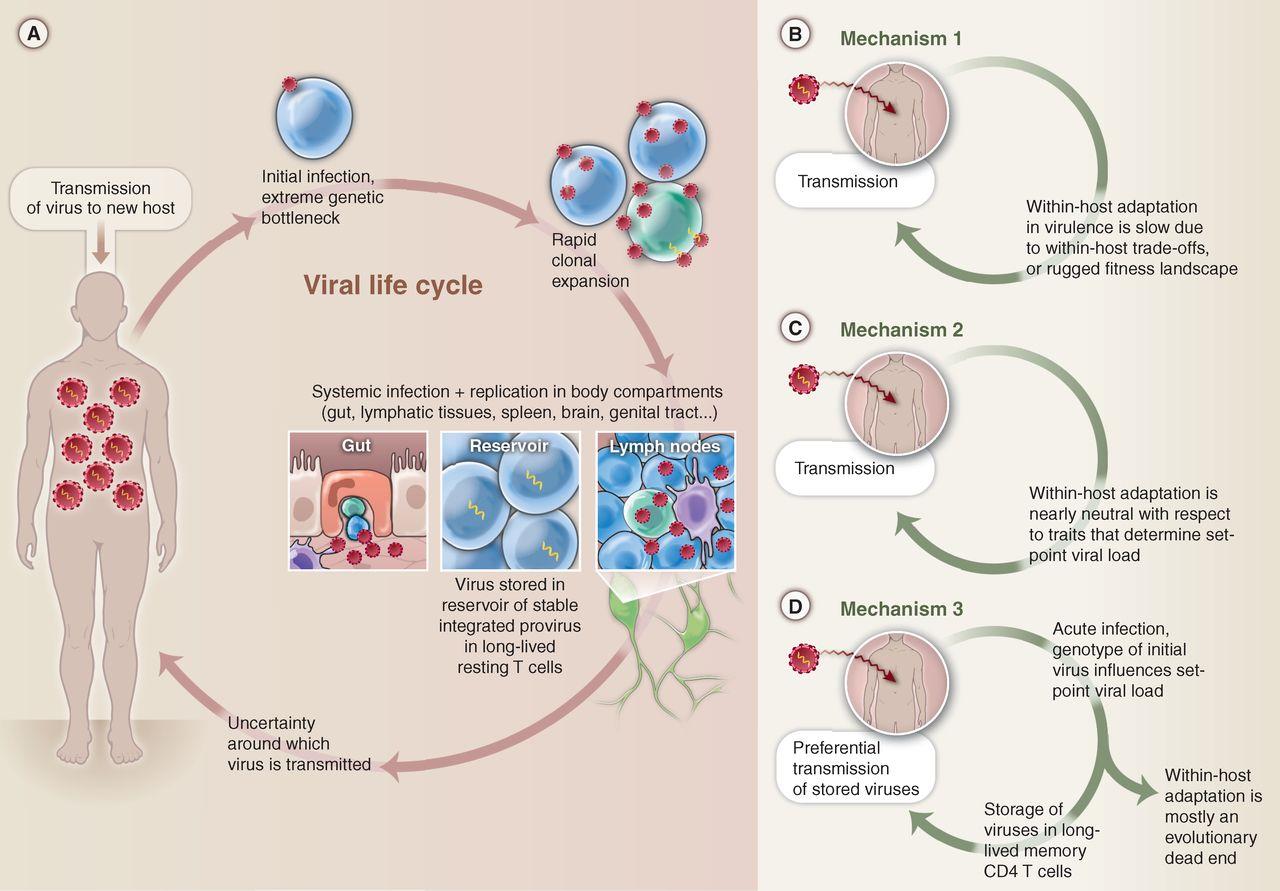
Diagnosis
HIV test can be diagnosed by following lab procedures:
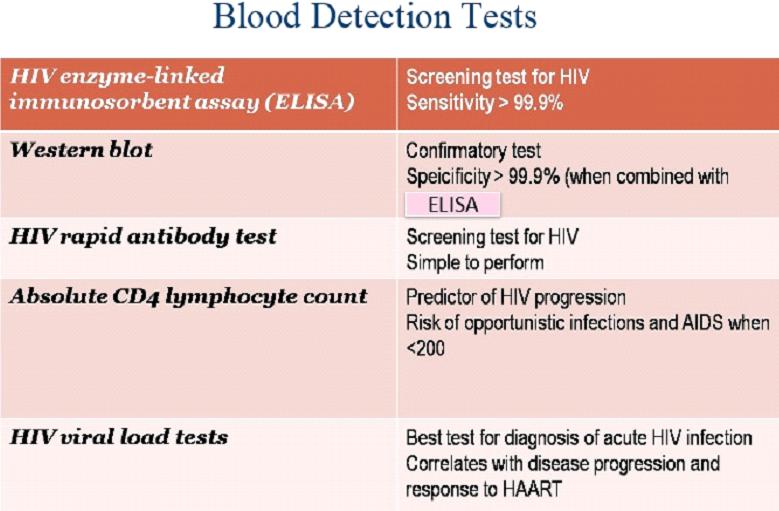
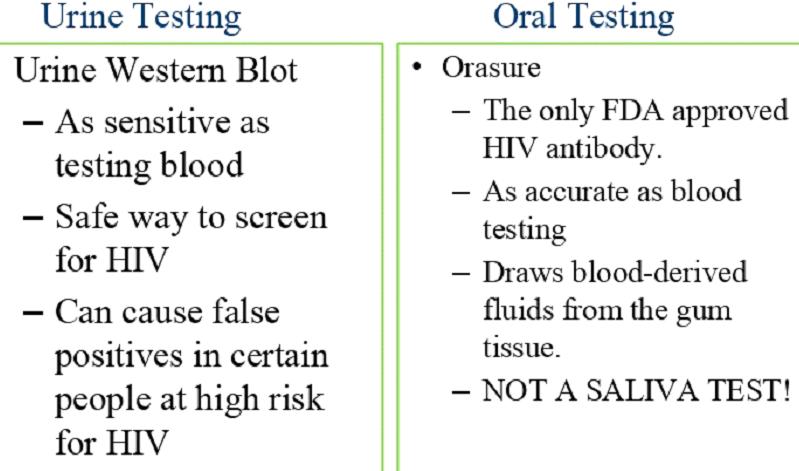
The most common method for detection of HIV is ELISA it detects antibodies against HIV-1 – with a strong range of highly sensitive and specific results. Minimum time to develop antibodies is 3 to 4 weeks from initial exposure. Positive ELISAs - repeated in duplicate and if one or both tests are reactive, a confirmatory test is performed for final diagnosis. Western blot assay-most commonly used confirmatory test [5].
Viral load can be used as a prognostic factor to monitor disease progression and the effects of treatment. The number of CD4 lymphocytes in the blood is a surrogate marker of disease progression. The normal adult CD4 lymphocyte count ranges between 500 and 1600 cells/mL, or 40% to 70% too all of the total lymphocytes [6].
Management of HIV Infection
Anti Retroviral Therapy
There have been three primary groups of drugs used:
- Nucleoside reverse transcriptase inhibitors (NRTI).
- Non-nucleoside reverse transcriptase inhibitors (NNRTI).
- Protease inhibitors (PI).
| NRTI | NNRTI | PI | ||||||
|---|---|---|---|---|---|---|---|---|
| Abacavir (ABC) | Delavirdine (DLV) | Amprenavir (APV) | ||||||
| Zidovudine (AZT or ADV) | Efavirenz (EFV) | Atazanavir (ATV) | ||||||
| Lamivudine (3TC) | Nevirapine (NVP) | Indinavir (IDV) | ||||||
| Stavudine (d4T) | Lopinavir (LPV) | |||||||
| Didasonine (ddi) | Nelfinavir (NFV) | |||||||
| Emtricitabine(FTC) | Ritonavir (TRV) | |||||||
| Tenofovir (TDF) | Saquinavir (SQV) | |||||||
| Zalcitabine |
Table 1: List of antiretroviral drugs.
Antiretroviral Regimens Recommended in Antiretroviral-Naive Persons
NNRTI–Based Regimens Preferred: Efavirenz +lamivudine+ zidovudine (or tenofovir DF or stavudine) except for pregnant women or women with pregnancy potential. Alternatives: Efavirenz+ emtricitabine+ zidovudine (or tenofovir DF or stavudine) except or pregnant women or women with pregnancy potential- Efavirenz + (lamivudine or emtricitabine) + didanosine except for pregnant women or women with pregnancy potential- Nevirapine + (lamivudine or emtricitabine) + zidovudine (or stavudine or didanosine) [7].
PI Based Regimens
Preferred
Lopinavir/ritonavir+ lamivudine+ zidovudine (or stavudine)
Alternatives
Amprenavir/ritonavir + lamivudine (or emtricitabine) + zidovudine (or tavudine) Atazanavir + lamivudine (or emtricitabine) + zidovudine (or stavudine) Indinavir- ritonavir + lamivudine (or emtricitabine) + zidovudine (or stavudine) Lopinavir-ritonavir + emtricitabine + zidovudine (or stavudine) Nelfinavir + lamivudine (or emtricitabine) + zidovudine (or stavudine) Saquinavir- ritonavir + lamivudine (or emtricitabine) + zidovudine (or stavudine) [8].
Triple Nucleoside Reverse Transcriptase Inhibitor
Based Regimen (Only as an alternative to NNRTI- or PI-based regimens when these cannot be used as preferred therapy) Abacavir + lamivudine + zidovudine + Abacavir + lamivudine + stavudine.
Treatment of HIV in Pregnancy
Zidovudine Monotherapy
Those with viral loads < 10000 copies/mL and wild- type virus who are willing to have Caesarean section. ZDV i.v. infusion at onset of labour: those on ZDV alone or those on HAART but with detectable virus, undergoing normal vaginal delivery [10].
Discussion
HIV infection is the most dangerous infections in this World. Most of the infections just treat with antiretroviral therapy but after HIV stage 2 it is not curable. HIV patient leads to suffer from various systemic infections and syndromes which also reduced the level of immune system. In early stages of HIV can be diagnosed by laboratory test and procedures and managed by antiretroviral therapy including the preferred dose of NNRTI, NRI and protease inhibitors. In some patients a therapy of HAART can be preferred to treat HIV.
Conclusion
HIV is non curable disease; patients can be treated by antiretroviral therapy depend upon the condition. HIV infection can be easily detected by a way of ELISA test.
References
-
Panichsillapakit T, Smith DM, Wertheim JO, Richman DD, Little SJ, et al. (2016) Prevalence of transmitted HIV drug resistance among recently infected persons in San Diego, CA 1996-2013. J Acquir Immune Defic Syndr 71(2): 228-236.
-
Yang WL, Kouyos R, Scherrer AU, Böni J, Shah C, et al. (2015) Swiss HIV Cohort Study. Assessing the paradox between transmitted and acquired HIV type 1 drug resistance mutations in the Swiss HIV Cohort Study from 1998 to 2012. J Infect Dis 212(1): 28-38.
-
Hofstra LM, Sauvageot N, Albert J, Alexiev I, Garcia F, et al. (2016) SPREAD Program. Transmission of HIV drug resistance and the predicted effect on current first-line regimens in Europe. Clin Infect Dis 62(5): 655-663.
-
Buzon MJ, Martin GE, Pereyra F, Ouyang Z, Sun H, et al. (2014) Long-term antiretroviral treatment initiated at primary HIV-1 infection affects the size, composition, and decay kinetics of the reservoir of HIV-1-infected CD4 T cells. J Virol 88(17): 10056- 10065.
-
Ananworanich J, Schuetz A, Vandergeeten C, Sereti I, de Souza M, et al. (2102) RV254/SEARCH 010 Study Group. Impact of multi-targeted antiretroviral treatment on gut T cell depletion and HIV reservoir seeding during acute HIV infection. PLoS One 7(3): 339-348.
-
Schuetz A, Deleage C, Sereti I, Rungsun R, Nittaya P, et al. (2104) RV254/SEARCH 010 and RV304/SEARCH 013 Study Groups. Initiation of ART during early acute HIV infection preserves mucosal Th17 function and reverses HIV-related immune activation. PLoS Pathog 10(12): e1004543.
-
Laanani M, Ghosn J, Essat A, Melard A, Seng R, et al. (2015) Agence Nationale de Recherche sur le Sida PRIMO Cohort Study Group. Impact of the timing of initiation of antiretroviral therapy during primary HIV-1 infection on the decay of cell-associated HIV- DNA. Clin Infect Dis 60(11): 1715-1721.
-
Cheret A, Bacchus-Souffan C, Avettand-Fenoel V, Mélard A, Nembot G, et al. (2105) OPTIPRIM ANRS- 147 Study Group. Combined ART started during acute HIV infection protects central memory CD4 T cells and can induce remission. J Antimicrob Chemother 70(7): 2108-2120.
-
El-Sadr WM, Lundgren J, Neaton JD, Gordin F, Abrams D, et al. (2006) Strategies for Management of Antiretroviral Therapy Study Group. CD4 count- guided interruption of antiretroviral treatment. N Engl J Med 355(22): 2283-2296.
-
Marzel A, Shilaih M, Yang WL, Böni J, Yerly S, et al. (2106) Swiss HIV Cohort Study. HIV-1 transmission during recent infection and during treatment interruptions as major drivers of new infections in the Swiss HIV Cohort Study. Clin Infect Dis 62(1): 115-122.
- Gallic and Citric Acid Present in the Peels of Tropical Fruits as an Alternative in the Fight against Cancer
- Treating the Forehead Lines with Combination of Forehead and Glabellar Botulinum Toxin Among Japanese Patients
- Clinical Evaluation of Patients Suffering from Breast Cancer & Determination of Treatment Therapies and Better Strategies Related to Breast Cancer
- Medieval Recipes by Al-Zahrāwī for Heart Palpitations Treatment
- Etiology and Prescription Errors of Myocardial Infarction in Different Health Care Systems of Azad Kashmir
- Early Diagnosis and Multidisciplinary Management of Turner Syndrome: A Paediatric Case Study