
To Study the Effect of Sprouted Fenugreek Seeds Along with Yoga and Diet Modification on Obese Patients
Background: Obesity is one of the major complications for both morbidity and mortality in the entire world. It can be develop due to change in the lifestyle, reduced social and physical activity, lack of exercise and inactivity to do hard work. However, there are few drugs in the market for the management of obesity but they are costly, less effective and produce side effects as well. So, we need some herbal medicine which has low side effects as well as low coast. Fenugreek is one of the most useful plant which has responsible in the management of obesity and related diseases. Not only whole plant but its seeds are used in the reduction of weight. Methods: The study was conducted at Maharishi Aurobindo Subharti College & Hospital of Naturopathy & Yogic Sciences, Swami Vivekan and Subharti University, Meerut. A total number of 100 patients with obesity were selected. They were grouped into two, group one treatment group (50) consumed 25 gm sprouted fenugreek seeds orally once daily for 45 days and the second group was control (50) not received any dose. In the study from the total 100 individuals, n= 89 were involved, 39 in treatment group and 50 in the control group. Weight and BMI was measured from each participant before and after the study. Data entry and analysis was performed using SPSS version 20 statistical software. Data were presented as mean ± SD. A level of p<0.05 was considered statistically significant. Results: Treatment group had significantly reduced weight and BMI (P<0.05) compared with baseline weight and BMI of control group. Conclusions: The present study shows that administration of sprouted fenugreek seeds had pronounced effects on reducing weight and BMI of obese patient with negligible side effects.
Firoz Khan* and Prem Parkash Khosala
India
its seeds are used in the reduction of weight.
presented as mean ± SD. A level of p<0.05 was considered statistically significant.
control group.
reducing weight and BMI of obese patient with negligible side effects.
Keywords: Sprouted fenugreek seeds; Obesity; Body mass index
Introduction
The image of the human being has changed significantly in the last fifty years due to changing in lifestyle which involve tendency to increase body weight. Obesity and metabolic disorder characterized by accumulation of excessive fat in the body imbalance between energy intake and expenditure [1].
Overweight and obesity are defined as abnormal or excessive fat accumulation in the body that responsible for development of some metabolic disorders including diabetes, cardiovascular disease, arthritis and many more endocrine diseases [2]. For measurement of obesity and adiposity in the body government proposed a parameter for calculation of obesity or fat in the body which is known as “Body Mass Index”. Body mass index (BMI), defined as the weight in kilograms divided by the height in meters squared (kg/m2) [3]. This index commonly used to classify overweight and obesity in adults due to its low cost and simplicity. According to the World Health Organization (WHO); BMI can be calculated on the basis of its BMI range on the table
| Weight status | BMI (kg/m2) | ||||
|---|---|---|---|---|---|
| Underweight | ≤18.5 | ||||
| Normal | 18.5-24.9 | ||||
| Overweight or pre- obese | 25-29.5 | ||||
| Obese (Class I) | 30-34.9 | ||||
| Obese (Class II) | 35-39.9 | ||||
| Obese (Class III) | >40 |
Table 1: World Health Organization BMI guidelines.
The worldwide prevalence of obesity more than doubled between 1980 and 2017 and for today [4]. WHO has declared obesity as global epidemic and took it under control. In 2014, more than 1.9 billion adults older than 18 years (39%) are overweight. Overall, about 13% or 600 million of these adult populations (11% of men and 15% of women) were obese [5]. The highest prevalence of obesity is observed in the Pacific Islands and reach up to 80% in some regions. The obesity rate less than 1% has been reported in India [6]. In Europe, as for 2014, in general the incidence of obesity is high but geographically wide variations have been reported. The lowest rate observed in Tajikistan (13.5%) and highest in Andorra and Turkey (29.4%) [7]. More than 80% of countries reported nationally gender-specific data related to prevalence of obesity or over weight in population. In majority of countries located in Africa, Latin America, Asia and Oceania the higher levels of overweight amongst women has been reported. In contrast to these regions in Europe and North America male’s overweight prevalence rates were more pronounced [8].
(I) Stress-related components
- Excessive eating, especially overeating intake of simple sugars
- Consumption of cigarettes and tobacco related products
- Increase in alcohol and beverages intake
- Nervous and endocrine system related disorders: increase in the formation of cortisol level, deficiency in sex hormone secretion (II) Low energy utilization because of an absence of physical activity/exercise (III) Genetic factors (IV) Developing age [9]
Fenugreek (Trigonella Foenum-Graecum)
Fenugreek (Trigonella foenum graecum), native to southern Europe and Asia, is an annual herb with white flowers and hard, yellowish brown and angular seeds, known from ancient times, for nutritional value beside of it medicinal effects. Fenugreek seeds are rich source of gum, fiber, alkaloid, flavonoids, saponin and volatile content [10].
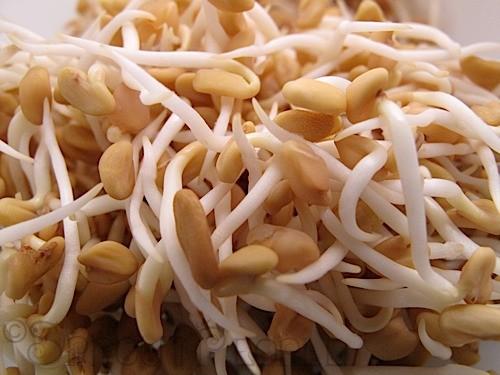
Due to its high content of fiber, fenugreek could be used as food stabilizer, adhesive and emulsifying agent to change food texture for some special purposes. Some evidences suggest that fenugreek may also be regarded as antidiabetic, anticarcinogenic, remedy for hypocholesterolemia and hypoglycemia, antioxidant, antibacterial agent, gastric stimulant, and anti-anorexia agent. The present article is aimed to review the potential applications of fenugreek as a functional food and nutraceutical [11].
Nutritional Content of Sprouted Fenugreek Seeds
Sprouts of Trigonella foenum-graecum contains amazing nutritional component for human health by improving the quality standard of food. The sprouts now, used to reduce obesity and metabolic complications because it contains some of the major active ingredients such as- alkaloids, amino acids, flavonoids and large amount of fibre to decrease the absorption of sugar and carbohydrates from the intestine. Here, the list of nutritional component are listed below.
| Alkaloides | Trigonelline, Trimethylamine, Neurin, Choline, Gentianine and Carpaine |
| Amino acids | Leucine, Isoleucine, 4-Hydroxyisoleucine, Histidine, lysine, L-tryptophan, and Argenine. |
| Fibers | Soluble and insoluble fibers, Gum and neutral detergent |
| Flavonoids | Quercetin, isovetixin, rutin, and vetixin |
| Saponins | Trigofoenosides A-G, graecunins, fenugreekine and fenugrin B. |
| Steroidal sapinogens | Saponaretin, neogitogenin and yuccagenin |
| Other | Mucilage, lipids, vitamins, proteins, coumarin and bitter fixed oil [12]. |
Table 3: List of active components in the sprouted fenugreek seeds.
Whereas sprouted fenugreek seeds contains mostly proteins and fibers to facilitate its action by improving the regulation of glucose in the liver or muscular tissue. The content of fenugreek in percentage is listed below [13].
| Component | Percentage (%) | ||||
|---|---|---|---|---|---|
| Protein | 32 | ||||
| Crude Fibers | 10.6 | ||||
| Soluble fibers | 20 | ||||
| Insoluble fibers | 28 | ||||
| Fat | 6.24 | ||||
| Ash | 3.14 | ||||
| Water | 7.6 | ||||
| Carbohydrate | 38.7 | ||||
| Moisture content | 13.5 |
Table 5: Chemical composition of sprouted fenugreek seed (On dry weight basis mg/100 g).
Taxonomic Classification of Fenugreek
| Kingdom | Plantae | ||||
|---|---|---|---|---|---|
| Subkingdom | Tracheobionta | ||||
| Superdivision | Spermatophyta | ||||
| Division | Magnoliophyta | ||||
| Class | Magnoliopsida | ||||
| Subclass | Rosidae | ||||
| Order | Fabales | ||||
| Family | Fabaceae | ||||
| Genus | Trigonella | ||||
| Species | T. Foenum-graecum |
Table 2: Taxonomic classification of fenugreek plant [14].
Common Names of Fenugreek in India
| Botanical Name | Trigonella Foenum-graecum | ||||
|---|---|---|---|---|---|
| English | Fenugreek, Sickle Fruit fenugreek, Greek hay | ||||
| Hindi | Methi | ||||
| Sanskrit | Methika | ||||
| Tamil | Vendhayam | ||||
| Telugu | Menthulu |
Table 4: Different names of fenugreek in India.
Morphology
- Appearance: Seeds are solid- rhomboidal, 3 to 5 mm long to 2 mm thick, soft, pebble-like.
- Colour: Yellowish brown or light brown
- Odour: Characteristic spicy
- Taste: Slightly bitter and mucilaginous [15].
Materials and Methods
Study Area
Design of the study was open labelled and carried out on 100 already diagnosed patients; were suffering from obesity and metabolic syndrome (increased BMI). Patients met with the inclusion criteria enrolled for the study. The study was carried out under the supervision of Maharishi Aurobindo Subharti College & Hospital of Naturopathy & Yogic Sciences, Swami Vivekan and Subharti University, Meerut (U.P). All the patients were duly informed about the research work, possible effects and known side effects of sprouted fenugreek seeds. The patient was enrolled in the study with their own interest, and a written informed consent was taken from everyone. The duration of this study was 45 days. An approval of Institutional ethics committee was obtained before the start of the study.
Experimental Design
Design: Open labelled study. Patients were divided into two groups: Group 1 (Treatment group): Patients were given the standard treatment protocol that was Yoga, diet advice and 25gm sprouted fenugreek seeds for 45 days. Group 2 (Control Group): Patients were on normal routine; except Yoga, diet and sprouted fenugreek seeds. Parts of plant used: Sprouted fenugreek (Trigonella foenum-graecum) seeds. Dose used: 25gm of sprouted fenugreek seeds once daily.
Eligibility Criteria
Inclusion Criteria
• Subject diagnosed with obesity (BMI >25).
• Age 18–50 years
- Patients were not taking any Ayurvedic or allopathic medicine for obesity
- Presence of dyslipidemia or non dyslipidemia.
• Presence of increased cholesterol levels.
Exclusion Criteria
- Patients who are not willing to participate in the study and unable to give informed Consent.
- Patient having liver diseases.
• Patients with ischemic heart disease.
- Patient with any diabetic complications such as neuropathy, nephropathy, or retinopathy.
- Pregnant women.
Sampling Technique
Patients satisfied for the eligibility criteria were randomized to treatment and control groups. The treatment group received 25gm of sprouted fenugreek seeds once daily along with Yoga and diet modification for 45 days, while controls group did not received any dose of fenugreek sprouts.
Response Rate
A total of 100 patients were enrolled for the study, 89 completed the study, 39 in treatment group and 50 in the control group, but some dropped out of the study: 6 patients in first two weeks, 5 patients in second two
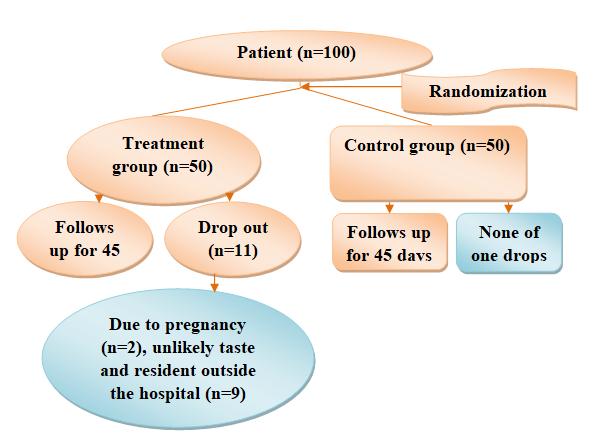
- weeks for reasons unrelated to the use of sprouted fenugreek seeds and for its taste.
- Prepared Yoga (Asana) Chart
- Patients were advised to follow the given Asana (Yoga) chart as exercise for 45 days for reduces the weight.
- Sr. No.
- Asana Name
- Number of Sets
- 1
- Surya Namaskar
- 3-5
- 2
- Tadasana (Mountain Pose)
- 2
- 3
- Vrikshasana (Tree Pose)
- 2
- 4
- Adho Mukho Svanasana (Downward Facing Dog Pose)
- 3-4
- 5
- Trikonasana (Triangle Pose)
- 8-10
- 6
- Kursiasana (Chair Pose)
- 5-6
- 7
- Naukasana (Boat Pose)
- 5-6
- 8
- Bhujangasana (Cobra Pose)
- 10-11
- 9
- Paschimottanasana
- 6-7
- 10
- Sukhasna
- 8-9
Table 6: Yoga chart for obese subjects.
Diet Chart for Obese Subjects
Along with Yoga, patient were on diet control and was followed the diet as directed in the informed consent for 45 days.
| Food Item | Amount | ||||
|---|---|---|---|---|---|
| Early Morning | Yoga (30-50 mins) | ||||
| Tepid Water | 2-3 glass | ||||
| S | prouted Fenugreek Seed | s | 3 | table spoon (aprox. 25 mg | ) |
| Lemon Tea | 1 cup | ||||
| Fiber Biscuits OR | 2 | ||||
| Cucumber Shake Or | |||||
| 1 medium bowl | |||||
| Vegetable Shake | |||||
| Breakfast | |||||
| M | Stuffed Green | a | |||
| ethi/Palak/Lauki Parath | 2 small | ||||
| Or Roti | |||||
| Curd | 1 cup (50 gm) | ||||
| Or | |||||
| Vegetable | |||||
| 1 soup bowl | |||||
| Poha/Upama/Oats/Daliya | |||||
| Mid Morning | |||||
| Orange/Apple/Guava | 1 | ||||
| Blackberry (Jamun) | 1 bowl | ||||
| Lunch | |||||
| Salad (10 Mins Before | |||||
| 1 medium bowl | |||||
| Lunch) | |||||
| Capsicum + Gobhi Veg | 1 medium bowl | ||||
| Or | |||||
| Bitter- Gourd With Onion | |||||
| 1 medium bowl | |||||
| Veg | |||||
| Dal | 1 soup bowl | ||||
| Phulka (No Ghee) | 2 | ||||
| Evening | |||||
| S | Green Tea/Milk (Without | n | |||
| ugar)/Herbal Tea/Lemo | 1 cup | ||||
| Tea | |||||
| Roasted Chana + Puffed | |||||
| 1 cup | |||||
| Rice OR Corn | |||||
| Dinner | |||||
| Salad 10 Mins Before | |||||
| 1 medium bowl | |||||
| Dinner) | |||||
| Phulka ( No Ghee) | 2 | ||||
| Lauki Veg | 1 cup | ||||
| Curd | 1 cup | ||||
| Late Night | |||||
| S | kim Milk (Without Sugar | ) | 1 glass |
Table 7: Follow up diet chart for obese patients.
Data Collection Procedure
Preliminary data was collected at the baseline (Day1) in a standardized format which included the information about daily routine of subjects, weight, height and Body Mass Index.
Clinical measurements
The measured value of weight and BMI range were compared with baseline and control group on day 1, day 15, day 30 and for day 45.
Measurement of Weight and Body Mass Index (BMI)
Weight was measured by using electric weight balance by standing posture of the subject. Body mass index was measured as weight in kilograms divided by the square of their height in meter. Weight was measured while patients were wearing light clothing without shoes by using the weighing scale. Height measurement was taken using portable tape meter without shoes and recorded to the nearest 0.5 cm.
Ethical Consideration
It was only an observational study. The diagnostic and treatment modalities given to patients was be recorded. Privacy of identity was maintained. The thesis proposal was reviewed and approved by the Institutional Ethical Committee (IEC) (Ref No: SMC/IEC/2017/194) of the Department of Pharmacology, Subhash Chandra Boss Subharti Medical College, Swami Vivekanand Subharti University, Meerut. The research started after ethical clearance was obtained.
Results
Baseline (Day 1) Measurements of Weight and BMI of Subjects
As can be seen in Table 9 at the beginning of the study both the Treatment and Control group had increased weight and BMI.
| Parameters | ||||||||
|---|---|---|---|---|---|---|---|---|
| Baseline value | Treatment group | Control group | ||||||
| Weight (kg) | 69.5 ± 12.3 | 68.5 ± 5.9 | ||||||
| BMI (kg/m2) | 33 ± 3.5 | 32.2 ± 3.3 |
Table 8: Weight and BMI of patients measured on day 1. Data are expressed as mean ±SD
The Effect of Sprouted Fenugreek Seeds on Weight of Obese Patients
Table 10,11,12 shows the weight of the treatment group on day 1, day 15, day 30 and day 45 following administration of 25 gm of sprouted fenugreek seeds in once a day. The data shows that weight of obese patients of the treatment group had significantly reduced weight as compared with baseline weight and with control group throughout the study period.
The treatment group was received sprouted fenugreek seeds for 45 consecutive days had decreased weight compared with baseline weight 1.4% (81.7±13.3 vs. 80.5±13.1), 4% (81.7±13.3 vs. 78.4±12.9) and 8.5% (81.7±13.3 vs. 74.7±12.4 (P < 0.05)) on day 15, 30 and day 45 respectively.
| Groups | Day 1 | Day 15 | Mean Difference | T-value | P-value | |||||||||||
|---|---|---|---|---|---|---|---|---|---|---|---|---|---|---|---|---|
| Treatment Group | 81.7±13.3 | 80.5±13.1 | 1.2±0.2 | 0.34 | 0.72 | |||||||||||
| Control Group | 75.5±6.1 | 74.1±6.1 | 1.4±0 | 0.34 | 0.34 |
Table 9: Weight (kg) of obese patient of treatment and control group on day 1 and day 15.
| Groups | Day 1 | Day 30 | Mean Difference | T-value | P-value | |||||||||||
|---|---|---|---|---|---|---|---|---|---|---|---|---|---|---|---|---|
| Treatment Group | 81.7±13.3 | 78.4±12.9 | 3.3±0.4 | 0.94 | 0.34 | |||||||||||
| Control Group | 75.5±6.1 | 74.3±6.6 | 1.2±-0.5 | 0.81 | 0.41 |
Table 10: Weight (kg) of obese patient of treatment and control group on day 1 and day 30.
| Groups | Day 1 | Day 45 | Mean Difference | T-value | P-value | |||||||||||
|---|---|---|---|---|---|---|---|---|---|---|---|---|---|---|---|---|
| Treatment Group | 81.7±13.3 | 74.7±12.4 | 7±0.9 | 2.06 | 0.04 | |||||||||||
| Control Group | 75.5±6.1 | 73.8±6.2 | 1.7±-0.1 | 1.15 | 0.25 |
Table 11: Weight (kg) of obese patient of treatment and control group on day 1 and day 45.
The treatment group shows statistically significant reduced weight when compared with the baseline weight
Weight of Obese patients
Treatment Group
$$ \square $$
Day 1 Day 15 Day 30 Day 45
Time in Days
Figure 3 demonstrated the treatment group was taken 25 gm of sprouted fenugreek seeds once daily for (15) consecutive days, shows reduced weight when compared with the control group 81.7±13.3 vs. 80.5±13.1 (P= 0.72) on day 15. On day 30, the treatment group received sprouted fenugreek seeds for 30 consecutive days had decreased weight compared with control group 81.7±13.3 vs. 78.4±12.9 (P= 0.34). Similarly, on day 45, the treatment group received sprouted fenugreek seeds for 45 consecutive days had statistically significant decreased weight compared with control group 81.7±13.3 vs. 74.7±12.4 (P < 0.05). However, the control group shows no significant change of weight measurement 75.5±6.1 vs. 74.1±6.1 (P= 0.34), 75.5±6.1 vs. 74.3±6.6 (0.41) and 75.5±6.1 vs. 73.8±6.2 (P= 0.25) compared with their baseline weight on day 15, 30 and day 45 respectively.
The Effect of Sprouted Fenugreek Seeds on BMI
Table 13,14,15 demonstrated the BMI of the treatment group on day 1, day 15, day 30 and day 45 following administration of 25 gm of sprouted fenugreek seeds in once a day. The data shows that BMI of the treatment group had significantly lowered as compared with baseline BMI and with control group throughout the study period.
| Groups | Day 1 | Day 15 | Mean Difference | T-Value | P-Value | ||||||||||||
|---|---|---|---|---|---|---|---|---|---|---|---|---|---|---|---|---|---|
| Treatment Group | 33±3.5 | 31.9±3.5 | 1.1±0 | 1.3 | 0.4 | ||||||||||||
| Control Group | 32.2±3.3 | 32.1±3.2 | 0.1±0.1 | 0.23 | 0.93 |
Table 12: BMI (kg/m2) of diabetic patient of treatment and control group on day 1 and day 15.
| Groups | Day 1 | Day 30 | Mean Difference | T-Value | P-Value | |||||||||||
|---|---|---|---|---|---|---|---|---|---|---|---|---|---|---|---|---|
| Treatment Group | 33±3.5 | 30.7±3.4 | 2.3±0.1 | 2.75 | 0.09 | |||||||||||
| Control Group | 32.2±3.3 | 31.7±3.9 | 0.5±-0.6 | 0.7 | 0.68 |
Table 13: BMI (kg/m2) of diabetic patient of treatment and control group on day 1 and day 30.
| Groups | Day 1 | Day 45 | Mean Difference | T-Value | P-Value | |||||||||||
|---|---|---|---|---|---|---|---|---|---|---|---|---|---|---|---|---|
| Treatment Group | 33±3.5 | 30.1±3.3 | 2.9±0.2 | 3.58 | 0.03 | |||||||||||
| Control Group | 32.2±3.3 | 31.8±3.1 | 0.4±0.2 | 0.59 | 0.74 |
Table 14: BMI (kg/m2) of diabetic patient of treatment and control group on day 1 and day 45.
The treatment group was received sprouted fenugreek seeds for 45 consecutive days had reduced BMI compared with baseline BMI 3.3% (33±3.5 vs. 31.9±3.5), 6.9% (33±3.5 vs. 30.7±3.4) and 8.7% (33±3.5 vs. 30.1±3.3 (P ≤ 0.05)) on day 15, 30 and day 45 respectively. The
BMI of Obese patients
Treatment Group Control Group
Mean of BMI (kg/m2)
Day 1 Day 15 Day 30 Day 45
Time in days
treatment group shows statistically significant reduction in BMI range when compared with the baseline BMI range of diabetic patients. Day 1 was the baseline of the treatment and control group.
As demonstrated in figure 4, the treatment group was taken 25 gm of sprouted fenugreek seeds once a day for (15) consecutive days, shows reduced BMI when compared with the control group; 33±3.5 vs. 31.9±3.5 (P= 0.4) on day 15. On day 30, the treatment group received sprouted fenugreek seeds for 30 consecutive days had reduced BMI compared with control group 33±3.5 vs. 30.7±3.4 (P= 0.09). Similarly, on day 45, the treatment group received sprouted fenugreek seeds for 45 consecutive days had statistically significant BMI compared with control group; 33±3.5 vs. 30.1±3.3 (P < 0.03). However, the control group which had not received sprouted fenugreek seeds shows no significant change in BMI 32.2±3.3 vs. 32.1±3.2 (P= 0.93), 32.2±3.3 vs. 31.7±3.9 (P= 0.68) and 32.2±3.3 vs. 31.8±3.1 (P= 0.74) compared with their baseline BMI on day 15, 30 and day 45 respectively.
Discussion
Obesity is one of the major problem for future prevalence. Millions of people are dying due to obesity and obesity related risk factors. These factors include development of cardiovascular, endocrine disorders and neuropathic complications. These complication are come due to change in lifestyles, reduce physical work, not get time to walk and excessive eating (fast foods). To overcome this problem and to cure of this morbidity complication; sprouted fenugreek seeds is the best example for reducing excessive weight and body mass index of the patients.
Sprouted fenugreek seeds have desired active ingredients for reduce extra weight and improved the glucose tolerance in the body. There are three main active constituents that are responsible for its action i.e. galactomannans (fibers), 4-hydroxyisoleucine acid and trigonelline. These components slower down the absorption of sugar and fat in stomach and intestine and to lower the entry of these molecules in to blood stream. Besides that galactomannan act on extra-pancreatic route inhibits the production of glycogenolysis in liver and ameliorates histological damage in the β cells of Langerhans. As a result the new sugar molecule is not generated and nor to stored in the muscles. Fenugreek sprouts increase the amount of HDL-C in the blood and lowers triglycerides, LDL-C and VLDL due to its availability of high amount of protein called 4- hydroxyisoleucine acid and also fibers in it.
In addition to its anti-hyperglycemic effect, sprouted fenugreek seeds reduced the excessive weight of obese patients. In this study weight was significantly reduced in treatment group by administration of 25 gm sprouted fenugreek seeds once daily for 45 consecutive days. It significantly reduced body weight (p<0.05) compared with control groups (figure 3).
The current study demonstrated the reduction of both men and women body mass index after taken the sprouted seeds of fenugreek for 45 days. The reduction of BMI was statistically significant P= <0.05 had shown in figure 4. The study demonstrated the reduction in BMI due to its proteins and fibers and also enhanced the gastric empting time.
Conclusion
Trigonelline, 4-Hydroxyisoleucine and fibers are thee of the main constituent that are responsible for reduction of excessive body weight and BMI of the subjects. In this article it was proved that modification in the diet and applying Yoga in the daily routine reduced the risk of obesity and related metabolic disease that helps to human live longer.
References
-
Francisco Paula JA, Clifford JR (2010) Obesity, diabetes mellitus and last but not least, osteoporosis. Arq Bras Endocrinol Metab 54(2): 149-157.
-
Cutrim DM, Pereira FA, Paula FJ, Foss MC (2007) Lack of relationship between glycemic control and bone mineral density in type 2 diabetes mellitus. Braz J Med Biol Res 40(2): 221-227.
-
Reis JP, Hankinson AL, Loria CM, Lewis CE, Powell Wiley T, et al. (2013) Duration of abdominal obesity beginning in young adulthood and incident diabetes through middle age: the cardia study_._ Diabetes Care 36(5): 1241-1247.
-
Yaturu S (2011) Obesity and type 2 diabetes. Journal of Diabetes Mellitus 1(4): 79-95.
-
Garrow JS (1988) Obesity and Related Diseases. London, Churchill Livingstone 1-16.
-
Aftab SA, Reddy N, Smith E, Barber TM (2012) Obesity and Type 2 Diabetes Mellitus. Internal Medicine: Open Access 2(6): 1-6.
-
Van IT (1998) Health implications of over-weight and obesity in the United States. Annals of Internal Medicine 103: 983-988.
-
Schwartz AV, Sellmeyer DE, Ensrud KE, Cauley JA, Tabor HK, et al. (2001) Older women with diabetes have an increased risk of fracture: a prospective study. J Clin Endocrinol Metabol 86(1): 32-38.
-
Thorpe SR, Baynes JW (2003) Maillard reaction products in tissue proteins: new products and new perspectives. Amino Acid 25(3-4): 275-281.
-
Thornalley PJ, Langborg A, Minhas HS (1999) Formation of glyoxal, methylglyoxal and 3- deoxyglucosone in the glycation of proteins by glucose. Biochem J 344: 109-116.
-
Yao D, Taguchi T, Matsumura T, Pestell R, Edelstein D, et al. (2007) High glucose increases angiopoietin-2 transcription in microvascular endothelial cells through methylglyoxal modification of mSin3A. J Biol Chem 282(42): 31038-31045.
-
Saito M, Fujii K, Soshi S, Tanaka T (2006) Reductions in degree of mineralization and enzymatic collagen cross-links and increases in glycation-induced pentosidine in the femoral neck cortex in cases of femoral neck fracture. Osteoporos Int 17(7): 986-995.
-
Saito M, Fujii K, Marumo K (2006) Degree of mineralization-related collagen crosslinking in the femoral neck cancellous bone in cases of hip fracture and controls. Calcif Tissue Int 79(3): 160-168.
-
Sadeghzadeh Ahari D, Kashi AK, Hassandokht MR, Amri A, Alizadeh Kh (2009) Assessment of drought tolerance in Iranian fenugreek landraces. Journal of Food, Agriculture & Environment 7(3,4): 414-419.
-
Sauvaire Y, Petit P, Broca C (1998) 4- Hydroxyisoleucine: a novel amino acid potentiator of insulin secretion. Diabetes mag 47(2): 206-210.
- Gallic and Citric Acid Present in the Peels of Tropical Fruits as an Alternative in the Fight against Cancer
- Treating the Forehead Lines with Combination of Forehead and Glabellar Botulinum Toxin Among Japanese Patients
- Clinical Evaluation of Patients Suffering from Breast Cancer & Determination of Treatment Therapies and Better Strategies Related to Breast Cancer
- Medieval Recipes by Al-Zahrāwī for Heart Palpitations Treatment
- Etiology and Prescription Errors of Myocardial Infarction in Different Health Care Systems of Azad Kashmir
- Early Diagnosis and Multidisciplinary Management of Turner Syndrome: A Paediatric Case Study