
Improving Parent Competence with a Community-Based Group Parent Training Program
This pilot study investigated the impact of a parent training program that focused on helping parents use child development information to identify care giving issues and set goals to improve their parent-child interactions. The community-based program provided group education on parenting topics, a structured goal setting process, and individual coaching. After six weeks, the participants recorded more competence with parenting, improved goal performance, and more satisfaction with their parent-child interactions. A follow-up with the parents one year later revealed that they were continuing to benefit from the education and coaching program. These findings support the use of parent training programs to improve parents’ ability to monitor and adapt their parent-child interactions to meet their children’s changing needs.
Introduction
Parents are faced with many challenges during daily interactions with their children. Part of the parenting role is addressing these challenges in a way that meets the needs of the child and the parent. Parents must have an understanding of child development, the ability to apply that knowledge to their own context, and problem solving skills to meet the demand. Caring for children requires the parent and child to perform interactive tasks that need continuous matching and shaping to occur between the parent and child [1]. Occupational scientists use the term co-occupation to describe this unique interaction. When there is difficulty in caring for a child, parents need to create complex care giving routines that both meet the needs of the family and accommodate the child [2]. These excess parenting demands contribute to fatigue and stress, decrease parents’ ability to manage the co- occupational needs of their child, and result in parents having less confidence and satisfaction in their role as a parent [3, 4]. However, when parents have adequate resources to provide care, foster development, and manage their child’s behaviors [4], their high levels of competence and self-efficacy in their parent role support their flexibility to respond to new challenges [5].
Many parents equate success in their role as a parent with their ability to arrange their daily activities to maximize quality of life while being sensitive to the needs of their child and outside demands [2]. The arrangement process or orchestration of parenting involves “planning, organizing, balancing, anticipating, interpreting, forecasting, perspective shifting, and meaning making” [2]. Many of the steps in the process require parents to have adequate information and a full understanding of their child’s behavior in order to make appropriate decisions about co-occupations. Without the information and understanding, there can be a disparity in the co- occupational interaction that negatively impacts the child’s developmental process and formation of independent occupations [6, 7]. If parents do not understand their child’s behavior, they are lacking information that they need to support the child’s development.
When parenting challenges persist, parents seek additional support from a variety of sources to competently perform their parenting role. Parents sometimes turn to group parenting classes as a reliable source of in depth information on a specific topic. Often these classes are run by other professionals in the community, but occupational therapists are well qualified to address co-occupational challenges. Occupational performance coaching has been used by occupational therapists to give parents emotional support, developmental information, and a structured process to help them identify and implement co-occupational interventions [8, 9]. In addition to improved co- occupational performance, parents’ sense of efficacy and resilience also improved with these interventions [6, 8, 9]. This pilot study used group education and individual coaching in a community setting in order to improve the co-occupational functioning of families and increase parents’ sense of competence.
Connection between Co-occupations and Competence
There is a bi-directional relationship between co- occupations and parenting competence. In Larson’s (2000) study of the mothering role [2], co-occupations were both impacted by the child’s needs and impactful to the mother’s competence. Other studies show that changing parent behaviors through coaching interventions not only changes the parent’s performance but also the co-occupational performance and behaviors of the child [9, 10]. When the child’s behaviors and performance are altered, the impact on the parent’s competence is also altered. Price and Stephenson’s (2009) examination of co-occupations of a mother and child identified that successful co-occupations increased the occupational, social, and emotional development of the mother and the child and increased the parent’s sense of competence. With greater competence and performance satisfaction, parents increase their engagement in co- occupations [4]. In this way, co-occupational interactions impact parent’s sense of competence and parenting competence impacts co-occupational performance.
Impact of Goal Setting and Individual Coaching
Studies show that the general developmental information that parents receive from health and social service agencies does not have as great of an impact on many child and parent outcomes as information with the addition of individualized coaching [11, 12]. Parents’ awareness of needs and ability to identify concerns is enhanced with individual developmental questionaires and reflective interventions [13]. Generalization of interventions to other co-occupational areas and contexts is enhanced by parents setting their own goals and receiving coaching to develop their own intervention strategies [9, 14]. Although short term gains have been evident with instructional parenting programs [15], long term improvments have been found with programs that included individual feedback or coaching [3, 9, 16, 17]. Brief programs, with four to ten sessions, were also found to be effective when they included coaching strategies for parents to become independent problem solvers [8, 9, 10, 17]. Programs that educate and provide individual coaching empower parents to use the new information beyond the scope of the program for maximum potential benefits across all areas of life.
Perception of Child Behavior and Competence
Studies have also shown that a parent’s sense of competence is more closely correlated with a parent’s perception of their child’s behavior than with a clinical evaluation of the child’s behavior [18]. This phenomenon can be explained in several ways. Children may not behave the same way with a clinician present as they do in their typical co-occupations with their parents. Also, the brief evaluation may not capture the range of behaviors that the parent experiences. The parent’s perception is a more accurate interpretation of the daily co-occupational interactions that are taking place. In order to have the greatest influence on a parent’s sense of competence, their perception of co-occupational performance must be used to set goals and develop interventions. This connection lends more support to the need for parents to be active participants in parenting programs.
Information Needs of Parents
Parent training programs that focus on a specific skill or parenting need have been shown to impact psychosocial well-being, competence, and stress [3, 6, 10, 11, 13]. Studies have shown that the majority of parents want support and guidance with co-occupations that occur in the home such as bathing, dressing, grooming, and feeding. Parents feel a higher level of competence when they are able to apply strategies to challenging co-occupations to achieve their goal of improved performance. Sleep and relaxation strategies that decrease fatigue and increase a parent’s ability to cope with challenges have also been shown to be valuable to parents and correlate with an increase in competence [3, 9, 16]. By focusing on the topics that parents want and need, group parent training programs can be appropriate for a wide range of parents in the commuity.
Successful Parent Training Programs
Parent training has been used to support the parenting role and has been shown to be an effective intervention for increasing parents’ sense of competence [8, 9, 16]. A systematic review of 48 randomized controlled trials demonstrated that the intervention is effective in multiple settings and cultures [15]. When parents set goals and implement strategies, the intervention is family-centered and supports the individual ways that families function [8, 9]. Individual feedback within a group training experience helps parents connect the information to their co-occupational routines and contexts [16]. Parents’ successful attempts to modify co-occupations with their children result in more satisfaction with their parenting role and an increase in parenting competence.
A systems approach that addresses the transaction of the parent, child, and the context is used as a foundation to influence the parent-child co-occupations. The key features of the intervention are emotional support for the parent, an exchange of information, and a structured problem solving process [8, 9, 16]. Emotional support for the parent often comes from the practitioner, but group parent trainings can offer additional support from other parents that may be experiencing similar challenges with their children [16]. Educating parents about child development addresses any knowledge gaps the parents may have and has the ability to change the parents’ perspective about their perceived co-occupational challenges. Practitioners must then help parents identify the desired outcomes of challenging co-occupations and explore ways to achieve the desired performance. Following up with parents after their independent attempts at making co-occupational changes is beneficial to provide feedback and support any further problem solving that may be needed. This process empowers parents and creates the potential for parents to generalize their problem solving skills to other co-occupations and contexts with their children, thus impacting the well- being of the family [9].
Theoretical Framework
Lifestyle Redesign is an occupational therapy model that focuses on preventative health care. Participants adapt to daily challenges by setting health and quality of life goals that impact physical and psychosocial well-being [19, 20]. The Lifestyle Redesign model has two key assumptions. The first assumption is that occupations are transformative [20]. Transformations occur when occupational participation changes the individual, the environment, or the sociocultural context [19, 21]. Small occupational changes have the ability to make larger long- term transformations. The second assumption is that meaningful occupations are essential for health [20]. When occupations are meaningful to the individual, the transformative effect is increased [19]. Using these assumptions, the Lifestyle Redesign model guides the development and implementation of customized plans for health related activities.
Lifestyle Redesign was used to guide the development of this parent training program. The model’s combination of group educational presentations, peer exchange, individual reflection, and facilitated goal setting were used to transform the meaningful co-occupations of parents and children. Educational components of the project focused on the health related development of co- occupations. Parents then recognized patterns in their own co-occupations that were impacting the health and well-being of their family. Through the Lifestyle Redesign model, participants changed co-occupational patterns in order to incorporate meaningful and healthy routines for their current and future well-being.
Rationale for the Current Study
When parents have adequate resources to provide care, foster development, and manage their child’s behaviors, they have high levels of competence and self- efficacy in their parent role [4]. Under best practice, pediatricians should be addressing age appropriate topics at well-child visits that include “feeding and nutrition, sleeping, nurturing, injury prevention, growth, learning, behavior, discipline, communication, language development, and toileting” [22]. However, there are disparities between the recommendations of the American Academy of Pediatrics and what information parents actually receive [23]. A national survey in the United States showed that only 10.8% of parents received information in all of the recommended age appropriate topics [23]. It appears that relying on anticipatory guidance from pediatricians does not provide parents with the variety and depth of knowledge required to understand and support their child’s developmental needs, especially when co-occupations are challenging.
Parents would benefit from a trusted source of professional information related to their child’s development and coaching to identify a co-occupational dysfunction. Parents of children with a variety of diagnoses and parents of children without any diagnoses have all demonstrated improvements with co- occupational interventions. Receiving information and identifying a goal has even been shown to increase parent satisfaction before any intervention has taken place [9]. The importance of understanding their child’s behavior and having new strategies to support co-occupational change have a greater impact on parents’ sense of efficacy than the outcome of the strategies. This pilot study addressed the gap in preventative community services by providing access to developmental information and individual coaching by an occupational therapist for any parent regardless of concerns.
Setting and Participants
The pilot study took place in a suburban housing community in a small Virginia town. The group educational components were scheduled to take place in the community building, and participants were recruited through weekly community emails. Eight parents attended the first educational session, but only five of the original participants completed the entire study. Scheduling conflicts and weather related interruptions were given as reasons for withdrawal from the study. An additional parent that was unable to attend the first session was added in the second week of the study. She received the information from the first session online.
All of the participants were mothers who lived in the housing community. To be considered for the pilot study, participants needed to be a parent or primary caregiver of a child between the ages of 0-18 years. Four of the mothers had two children each, one mother had one child, and one mother had three children under the age of 18. The children ranged in age from 2 to 14 years old. Participants were asked to attend all three of the educational sessions, participate in follow-up coaching between sessions, and complete the outcome measures pre- and post-implementation.
Outcome Measures
The Parenting Sense of Competence scale is a 16 item Likert scale questionnaire that is commonly used to measure competence in the parental role [18]. It has been proven a reliable and valid measure with subfactors of satisfaction and efficacy [18]. The Parenting Sense of Competence scale was used in this pilot study as a pre- and post-test to determine the effect of the co- occupational intervention on parents’ sense of competence.
Parent coaching programs conducted by occupational therapists have also used the Canadian Occupational Performance Measure to assist parents in identifying co- occupational needs, setting individual goals, and monitoring performance progress and satisfaction [8, 9]. The Canadian Occupational Performance Measure was modified for this pilot study to include categories for the three educational topic areas of behavior, feeding, and sleep in order to focus participants’ attention to those areas. Participants were asked to reflect on the information from the educational presentations, identify areas of concern, and create goals that they would like to work towards with their child. They then rated their satisfaction and perceived level of performance for each goal on a Likert scale. After rating these areas again at the end of the study, the Canadian Occupational Performance Measure was used to determine the effectiveness of the intervention on the co-occupations of parents and children.
Procedures
The 6-week pilot study, developed and conducted by an occupational therapist, consisted of three educational presentations on parenting topics, goal setting, and individual coaching. The educational topics of social emotional behavior, feeding and nutrition, and sleep were chosen on the basis of the evidence of previous studies that parents wanted more information on daily activities that happen in the home [3, 8, 9, 16]. Approval for the study was granted from the Institution Review Board at Chatham University.
One hour group educational sessions were scheduled to take place at the community building on the first, third, and fifth week of the study. Because of a snow storm during the third week of the study, the group session had to be canceled. However, a narrated PowerPoint of the presentation was provided to participants to view from their home computers. A recorded presentation was also provided to two of the participants that were not able to attend the final group education session because of scheduling issues.
Participants completed the Parenting Sense of Competence scale at the beginning of the first educational session. After each of the educational sessions, participants used the Canadian Occupational Performance Measure to set goals for co-occupations they wanted to address at home. Participants were invited to share their goals and collaborate with the occupational therapist and other participants to develop intervention strategies, but individual coaching was also offered for those that did not want to share with the group. Participants were able to choose their preferred method of contact for follow-up coaching – email, telephone, or home visit. Individual follow-up coaching sessions took place during the second, fourth, and sixth week of the study to review progress towards the goals written in the previous weeks. Coaching included actively listening, asking guiding questions, problem solving, and providing additional strategies. Participants modified the focus, strategies, or intensity of their goals as a result of the coaching. The modifications created a better co-occupational fit between the caregiver and the child. During the final follow-up session, the participants completed the Canadian Occupational Performance Measure with final ratings on all of their goals, and the Parenting Sense of Competence scale was administered as a post- intervention measure.
One year following the educational sessions, a follow- up study was conducted to examine the long-term impact of the program. The participants were asked to complete the Parenting Sense of Competence scale and rate their original goals with the Canadian Occupational Performance Measure. Approval for the follow-up study was granted from the Institution Review Board at Shenandoah University.
Results
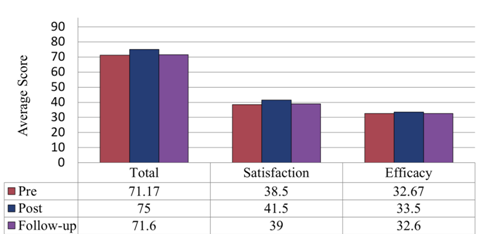
The Parenting Sense of Competence scores of the six participants were averaged in order to measure the overall impact of the intervention. Higher scores on the scale indicate an increase in competence. The average total score increased 3.83 points after the 6-week educational session, indicating a small positive change. The subcategories of the Parenting Sense of Competence scale also showed small positive changes after the sessions with an average increase of 3 points on the satisfaction scale and 0.83 points on the efficacy scale. After 1 year, the parents’ sense of competence returned to base line levels. See Figure 1 for a display of the results.
Using the Canadian Occupational Performance Measure, a total of 19 individualized goals were created by the group of participants during the study. Each participant created between one and five goals depending on their needs, with three goals per participant occurring most often. In total, participants created six social emotional goals, nine feeding and nutrition goals, and four sleep goals. Participants received coaching on using the goals to improve co-occupations with their children.
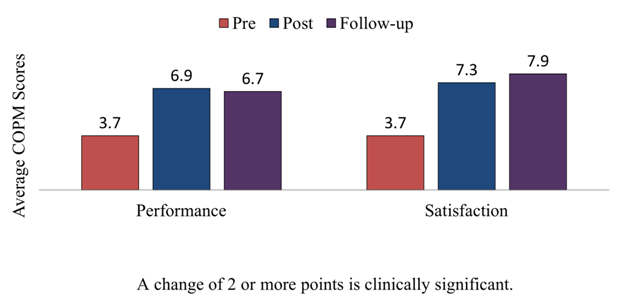
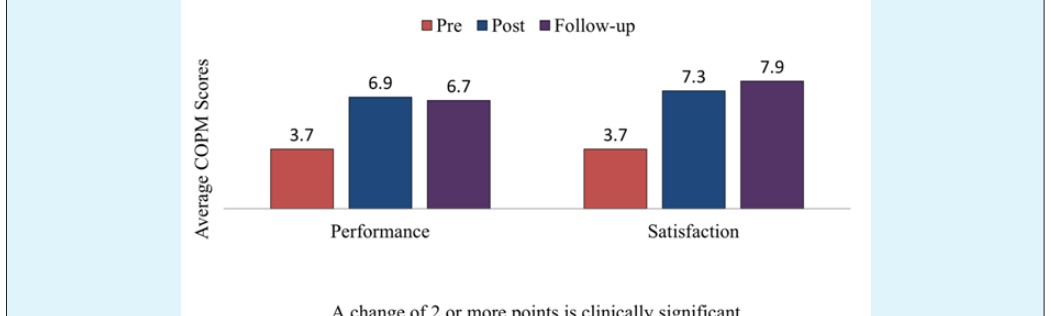
Performance and satisfaction ratings were gathered during the goal setting process and at the end of the project in order to measure the impact of the intervention on the participant’s co-occupational areas of concern. Participants rated the performance quality and their satisfaction of that performance for each co-occupational area of concern, with higher ratings indicating more quality or satisfaction. Positive changes were observed in performance and satisfaction across all goal areas. Figure 2 shows the average change in performance and satisfaction for the social emotional, feeding and nutrition, and sleep goals during the 6-week sessions. At the 1-year follow-up, the level of performance and satisfaction on the goals remained high. Figure 3 shows the average performance and satisfaction scores pre, post, and 1-year following the education and coaching sessions.
This pilot study was designed to investigate the impact of education and coaching on co-occupations and parents’ sense of competence. The findings suggest that parents in the community had an increase in their sense of competence with parenting after receiving community- based group parent training on co-occupations. Prior research studies of parent training programs have generated greater increases in parent’s sense of competence. Compared to the average increase of 3.83 points on the Parenting Sense of Competence scale in this study, other studies have shown average increases over 10 points [9, 16]. However, unlike previous studies, the average pre-intervention score of the participants in this study was 8 points above the Parenting Sense of Competence scale norms, leaving less room for improvement in this area [18]. Previous research also investigated changes in parents of children with diagnoses such as Autism and Attention Deficit Hyperactivity Disorder [8, 16], whereas this study recruited parents from the general community with no required partental concerns. Although the difference in participants may have impacted the amount of improvement, this study demonstrated that a parent training program is effective for parents with higher than average pre-intervention levels of parenting competence.
The participants in this study showed a greater change in the satisfaction subcategory of the Parenting Sense of Competence scale than the efficacy subcategory. Previous research has shown that the goal setting process helps to increase integration and generalization of new concepts even before any intervention has taken place. The learning that takes place during the goal setting process may lead to a greater sense of satisfaction, whereas the implementation and success of strategies may lead to changes in the efficacy subcategory of the Parenting Sense of Competence scale [8, 9]. Because of the short length of this pilot study, participants may have had less opportunities for successful use of strategies to impact their sense of efficacy in parenting. Satisfaction increased with meaningful education and goal setting, but efficacy may build more gradually and could have continued to increase if the intervention period was longer.
The Canadian Occupational Performance Measure proved to be a valuable tool to assess changes in the participants’ perceptions of co-occupational performance and their satisfaction with that performance. The improvement in performance and satisfaction that the participants of this study experienced matched the gains documented in similar studies [8, 9]. An increase of two points on the Canadian Occupational Performance Measure is considered clinically important, and all areas measured in this study showed improvement above this level. The results demonstrate that this pilot study had a positive impact on the co-occupational areas that were addressed by the participants.
Overall parenting competence returned to base-line measurements after one year without continued intervention, however parents continued to rate performance and satisfaction on their individual goals at a high level. This indicates that the goal setting, education, and coaching were effective in long-term improvement of co-occupations in the specific areas of need, but that parenting competence is impacted by other variables. Parents’ needs continue to change over a year’s time as children are constantly developing new skills and challenges. The barriers to a parent’s sense of competence also need to be addressed with continued support in new co-occupational areas over time. By continuing the goal setting, education, and coaching program to address new areas of parent concern as children develop, long-term changes in many co-occupational areas may help to maintain the improvements in parent sense of competence.
Co-occupational Goals
In this study, participants were able to create individual goals related to the three topic areas addressed in the education portion – social emotional behavior, feeding and nutrition, and sleep. The intervention differed from previous studies in that topic areas were chosen on the basis of parent needs and included co-occupations that span all age ranges of children. The six participants had more concerns about feeding and nutrition as evidenced by their creation of nine feeding and nutrition goals – almost half of the 19 total goals for the project. Although the majority of parenting programs outside of occupational therapy target behaviors related to social emotional development and management [15], there exists a need for education and coaching on other co- occupational parenting activities such as feeding. Occupational therapists are well qualified to address this need and can provide a new co-occupational perspective to traditional parenting program structures.
The intervention in this study focused on the match between the parent’s expectations and behavior and the child’s developmental abilities. Parents often view their child’s behavior as the source of the problem and miss the impact of the parent-child interaction. Instead of attempting to fix the child when parents have little control over making changes, the intervention in this study encouraged parents to make changes in their own behavior which they do control. By matching their expectations and beahvior to their child’s abilities, parents are able to shape co-occupations and promote child development. Through the structured goal setting process, participants also learned how to identify co- occupational concerns by reflecting on the developmental information presented. Because recruitment of participants in this study was not based on existing concerns or daignoses, participants created goals to address concerns that were unique and meaningful to them. In many cases, this allowed participants to create goals that addressed a small manageable concern before any health related consequences had occurred. Repeating the structured goal setting process throughout the study with each topic also increased the opportunity for participants to generalize the concept to other parenting areas. Participants can then use the structured process with other sources of information to set future goals for co-occupational change as their children grow. As in this study, client-centered programs with broad access have the potential to be an effective means of family health prevention.
Program Length
The length of the intervention also differed from previous research studies. Similar parent training programs had 12 weeks of group education [16], or offered 8-10 coaching sessions [8, 9]. This 6-week pilot study included three educational sessions and three opportunities for individual coaching. Through the process of increasing parent’s awareness of typical development and providing a structure to identify concerns and set goals, parents were able to become more competent in making co-occupational changes on their own. The results of the project contribute to the evidence that short-term interventions that empower parents can make a significant impact on parents’ health and well- being [10, 11, 17].
Limitations and Suggestions
A community setting, independent of any health or social service organization, was chosen so that a variety of parents would have access to the study, but access difficulties remained an issue. Attempting to have a group education format was difficult with parents’ scheduling conflicts and weather interruptions. Modifications were made to include online viewing of the educational sessions, and no significant differences in outcomes were observed. In this study, the benefits of a group format were outweighed by the convenience of online options.
The community setting and broad inclusion criteria may have further limited group interaction. Participants had a variety of concerns and children in many different age categories. Participants may have shared more ideas and strategies if the group had similar concerns or children of similar ages. Individual coaching was a valuable aspect of the study. Several of the participants had difficulty integrating the educational material because their child did not match the typical development presented or there was interference from other contextual factors. These participants would have benefited from a longer study to work through further issues, but other participants were able to generalize the information and developed more independence in making co-occupational changes. Individualization in program length could lead to the best outcomes for all participants.
Recommendations for Practice
This project adds to the evidence that there is a need for parent training in the community. A program that incorporates education and coaching is effective, and the role of occupational therapy in this practice area is enhanced by the need for programs to address co- occupations. Practitioners should look into collaborating with other community organizations to increase awareness of parenting programs and tailor the programs to unique populations. Group formats are an efficient way of educating parents and may be enhanced with groups of similar parents. Variable program lengths should be used to maximize the benefits for all participants. Continued use of multiple methods of contact and online materials are also needed for the comfort and convenience of busy parents. With parent training programs focusing on co- occupations, parents will experience improved interactions with their children that impact their sense of competence with parenting. Community practitioners must advocate for these programs and look for ways to be supported by organizations to improve the health and well-being of the communities they serve.
Acknowledgements
The author would like to acknowledge the contributions of the following occupational therapy students who participated in the 1-year follow-up data collection: Franklyn Abedi, Mary Clarke, Laura Graham, Kelsey Hunt, Amber Kelly, So Lee, and Chelsie Miller.
References
-
Pierce D (2014) Occupational science for occupational therapy. 1st(Edn.), Slack Incorporated, Thorofare, NJ: Slack, pp: 384.
-
Larson EA (2000) The orchestration of occupation: The dance of mothers. American Journal of Occupational Therapy 54: 269-280.
-
Dunning MJ, Giallo R (2012) Fatigue, parenting stress, self-efficacy and satisfaction in mothers of infants and young children. Journal of Reproductive and Infant Psychology 30(2): 145-159.
-
Foran AC, Cermak S (2011) Occupational patterns of parents of children with autism spectrum disorder: Revisiting Matuska and Christiansen's model of lifestyle balance. Journal of Occupational Science 18(2): 115-130.
-
Matuska KM, Christiansen CH (2008) A proposed model of lifestyle balance. Journal of Occupational Science 15(1): 9-19.
-
Farber ML (2009) Parent mentoring and child anticipatory guidance with Latino and African American families. Health and Social Work 34(3): 179-189.
-
Price P, Stephenson SM (2009) Learning to promote occupational development through co-occupation. Journal of Occupational Science 16(3): 180-186.
-
Dunn W, Cox J, Foster L, Mische-Lawson L, Tanquary J (2012) Impact of a contextual intervention on child participation and parent competence among children with autism spectrum disorders: A pretest-posttest repeated-measure design. American Journal of Occupational Therapy 66: 520-528.
-
Graham F, Rodger S, Ziviani J (2013) Effectiveness of occupational performance coaching in improving children's and mothers' performance and mothers' self-competence. Am J Occup Ther 67: 10-18.
-
Wolfson A, Lacks P, Futterman A (1992) Effects of parent training on infant sleeping patterns, parents' stress, and perceived parental competence. Journal of Consulting and Clinical Psychology 60(1): 41-48.
-
Berkule SB, Cates CB, Dreyer BP, Huberman HS, Arevalo J, et al. (2014) Reducing maternal depressive symptoms through promotion of parenting in pediatric primary care. Clinical Pediatrics 53(5): 460- 469.
-
Leung C, Tsang S, Dean S (2011) Outcome evaluation of the Hands-On Parent Empowerment (HOPE) program. Research on Social Work Practice 21(5): 549-561.
-
Stewart-Brown S, Patterson J, Mockford C, Barlow J, Klimes I, et al. (2004) Impact of a general practice based group parenting programme: Quantitative and qualitative results from a controlled trial at 12 months 89(6): 519-525.
-
Patterson J, Barlow J, Mockford C, Klimes I, Pyper C, et al. (2002) Improving mental health through parenting programmes: Block randomised controlled trial. Arch Dis Child 87(6): 472-477.
-
Barlow J, Smailagic N, Huband N, Roloff V, Bennett C (2014) Group-based parent training programmes for improving parental psychosocial health. Cochrane Database of Systematic Reviews (6): CD002020.
-
Pisterman S, Firestone P, McGrath P, Goodman JT, Webster I, et al. (1992) The effects of parent training on parenting stress and sense of competence. Canadian Journal of Behavioural Science 24(1): 41- 58.
-
Wolfe RB, Hirsch BJ (2003) Outcomes of parent education programs based on reevaluation counseling. Journal of Child and Family Studies 12(1): 61-76.
-
Johnston C, Mash EJ (1989) A measure of parenting satisfaction and efficacy. Journal of Clinical Child Psychology 18(2): 167-175.
-
Jackson J, Carlson M, Mandel D, Zemke R, Clark F (1998) Occupation in Lifestyle Redesign: The well elderly study occupational therapy program. American Journal of Occupational Therapy 52(5): 326-336.
-
Salles-Jordan K (2007) Community health promotion programs using USC Lifestyle Redesign. Home & Community Health Special Interest Section Quarterly 14(2): 1-4.
-
Mandel DR (1999) Lifestyle Redesign: Implementing the well elderly program. Bethesda, MD: American Occupational Therapy Association.
-
Combs-Orme T, Nixon BH, Herrod HG (2011) Anticipatory guidance and early child development: Pediatrician advice, parent behaviors, and unmet needs as reported by parents from different backgrounds. Clinical Pediatrics 50(8): 729-737.
-
Bethell C, Peck Reuland CH, Halfon N, Schor EL (2004) Measuring the quality of preventative and developmental services for young children: National estimates and patterns of clinicians' performance. Pediatrics 113: 1973-1983.
- Electrolyte Considerations for Athletes
- Comprehensive Rehabilitation in Adults with Diabetic Peripheral Neuropathy: A Literature Review on Frequency, Intensity, and Duration Parameters
- Exercise Duration and Its Association with ADHD Symptom Severity in Children and Adolescents: A Parent-Reported Survey Study
- Adaptation of the Adult Neurophysiology of Pain Questionnaire for Use in Pediatrics
- A Non-Pharmacological Multidisciplinary Pain Program within a Hospital Wellness Program: A Mixed Methods Study
- The Effect of Frenkel's Exercise with PNF on Functional Reach in Stroke Survivors: A Randomized Control Trial