
Bioinformatics: The Fate Swap of Biological Sciences in Pakistan
<p>Bioinformatics has now become a global trend, is equipped with all the tools crucial for high through put analysis of biological data. But it is not overlooked in a country like Pakistan in which it has routes in genetics, pharmaceutical industry, environmental and health sectors. The need of hour is to cover up the gap of Bioinformaticians to establish more tools to integrate and analyse the diverse biological data.</p>
Introduction
Bioinformatics implements the algorithm, statistics and computer science to figure out the biological problems. It owns a huge information regarding the structural and functional characteristics of not only the genes but also of their products; the proteins, in the form of databases [1, 2]. In Pakistan bioinformatics is under progress as Pakistan itself. The impact of bioinformatics tools is very crucial in disease diagnosis and determining tribal affinities among different ethnic groups in Pakistan [3, 4]. Bioinformatics databases even deal with the allergens to combat the health issues [5]. It has strong impact on drug discovery and trial phase whether it is preclinical or clinical. However, pharmaceutical companies face difficulties during drug manufacturing which could be resolved with the aid of bioinformatics. This would eventually help us to deal with genomics, diagnosis and disease treatment in a precise way [6]. Bioinformatics tools need to be executed within Pakistan as the country is producer of varied crops, vegetables and fruits render the large genetic diversity which will be valuable in the high throughput research of biological data [7]. Bioinformatics tools applied to environmental sector is helpful in study of bioremediation. Also, EGTDC (Environmental Genomics Thematic Programme Data Centre) is working to provide easy access to researchers to interpret genomic data results throughout the world [8]. This article has intended to see everyone’s sights on bioinformatics work in Pakistan especially in KPK. The bioinformatics tools are being in practice in KPK, Punjab and other provinces of Pakistan for the analysis and diagnosis of several diseases like albinism and glaucoma, for the implementation of best treatment approaches.
Mystery of Bioinformatics
Bioinformatics is a cocktail of computer, mathematic algorithm and statistics with roots in biological sciences Bioinformatics & Proteomics Open Access Journal
for solving the biological problems. High-throughput bioinformatics analysis employs through pipeline framework and efficiently carried out by means of different tools on command. The bioinformatics is teemed with its advantages over the conventional techniques. It is time efficient, less laborious and huge amount of data can be stored in a website that constitute a database and specific regional databases, There are variety of bioinformatics tools that employs web services also comprises rapid and authentic identification [1, 2].
Attributes of Bioinformatics in Pakistan
Pakistan is a country that is at forefront of utilizing the latest tools of bioinformatics but still there are hasty advancements made, within last few years (Figure 1). Bioinformatics tools are employed in determining paternal lineage and personal identification of population of KPK. This is very influential in finding out the affinities within tribes residing in Pakistan.
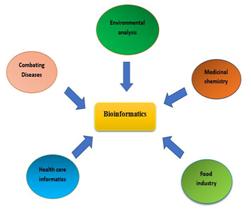
Bioinformatics play vital role to determine the frequencies and clinical consequences of different diseases that ultimately results in earlier and faster diagnosis with better treatment strategies. The diseases that have undergone research in Pakistan include OCA Disease Province Research Bioinformatics tools Reference OCA (oculocutaneous Punjab Identification and determination of OCA (OculoCutaneous Albinism) predominantly in Punjab province, in silico analysis reveals the missense mutations in CYP1B1 gene causing primary congenital glaucoma [3, 4]. Bioinformatics is very efficient in developing hierarchical strategies for rapid, feasible, and cost efficient genetic diagnostic assays for improved carrier detection and genetic counselling (Table 1).
alleles in families XHMM, CoNIFER [3]
Tuberculosis KPK Mutational analysis of RRS gene in Phyre2 server (Protein
Homology/AnalogY Recognition Engine), CPHmodel,Qmean server, PROCHECK,PrsA-web server glaucoma. Punjab Characterization of the five missense Mental retardation N/A Identification of TUSC3 involved in mental Bioinformatics & Proteomics Open Access Journal
| Hepatitis C | N/A | Testing the diagnostic and therapeutic capabilityofmi-RNAisdisease propagation | SPSS software version 16.0,Prism 6 software version 6.07 | [9] |
|---|---|---|---|---|
| Solid tumors | N/A | Inhibition of Serine /threonine kinases involved in cell growth and proliferation by mTOR inhibitors | Auto Dock vina Discovery studio visualization | [12] |
| Prostate cancer | N/A | Sorting out SNPs involved in onset of cancer due to presence in coding region of STEAP2 gene | PolyPhen 2, SIFT, PHDSNP,PROVEAN, MutPred, MuPro,I-mutant, I-TASSER, ERRAT,Galaxy refine | [13] |
| Scarlet fever | N/A | Structural and functional characterization Domain involved in drug transportation | BLAST, ProtParam, I-TASSER, TMHMM v2.0 | [14] |
Table 1: Research work conducting in Pakistan to combat diseases.
Bioinformatics: A New Window to Health Care Informatics
Pakistan has its distinctive resources in field of genetics, pharmaceutical industry, and environmental protection and in improving human health [10]. A wide range of health issues have been encountered due to the allergens. It demands the complete information which is owed to the Bioinformatic databases. These databases have compiled the data regarding the structure of allergens especially their epitopes to analyse the cross reactivity of these allergens with the CDRs (Figure 2). The most striking feature of bioinformatics is that it is independent of wet lab techniques. One can overcome all health issues by using web services [5]. In Lahore, a city of Pakistan, allergic responses in asthma patients are analysed at genetic level by the HaploReg bioinformatic tool [9].
Bioinformatics: A new Approach for Food
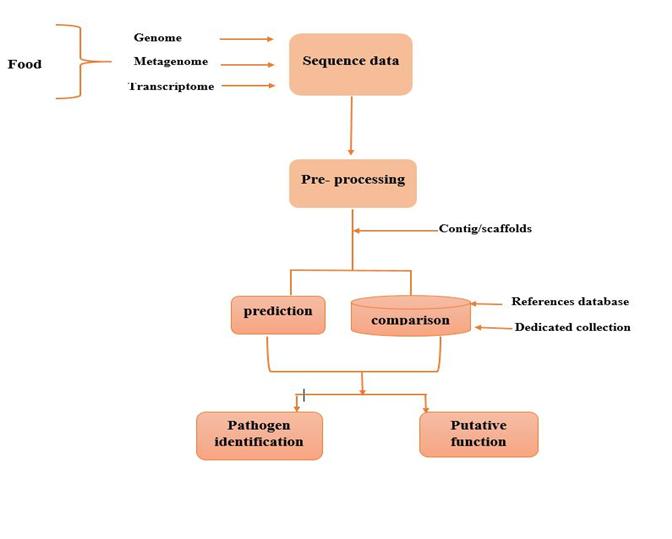
In Pakistan, about 21% of total GDP is based on agriculture but food inflation is a major problem that poses serious problems on its economy. Food stuff acquired by agriculture is largely equipped with mycotoxins. Therefore demand of time is to control mycotoxins and prevent food from spoilage [15]. Next generation sequencing is pace to develop new data streams to trace and identify pathogens, establish processes that reduce health risks associated with food and ensure authentic, manifest and auditable practices concealed with foodstuff associated risks [16].
Bioinformatics & Proteomics Open Access Journal
Bioinformatics: In medicinal chemistry
Drug repositioning and target identification are major challenges to bioinformatics. Drug repositioning is required to avoid any risk associated with use of previously approved drug for some other medical conditions i.e. increased sensitivity and resistance as in the case of human cancer cell lines. It is most important to estimate whatever a target is able to survive with a particular drug dosage or not [6]. Identification of target candidates performed with the aid of different tools such as CADD (Computer Aided Drug Designing), ROCS (Rapid Overly of Chemical Structure) and QSAR (Quantitative Structure Activity Relationship) that predicts 3D structure of targets to assess binding, pharmacophore (ligand) based binding of drug candidates and screening of drugs to get best therapeutic effects respectively [17]. The drugs as Dorzolamide, Capoten, Aluviran and Imatinib have been designed using the bioinformatics tools in these cases by use of SGDD technique [16, 17, 18].
Bioinformatics: A toolkit for environmental analysis
Regarding environmental role, bioinformatics presents many gripping possibilities for the process of bioremediation which can be studied by associating biodegradation related information with relevant proteomics and genomic data [18]. EGTDC (Environmental Genomics Thematic Programme Data Centre) works with an aim to expand and implement bioinformatics tools. It works for combined furnishing of computers, software, bioinformatics advisor and appropriate data standards with a goal to assist researchers an easy access, store and make effective interpretation of their genomic data. ETDGC also has devised a public catalogue that stores information for about 28 environmental genomic grants and a sum of 314 data holdings of varied types which include SNPs, Microsatellites, gene library, genetic maps, publications etc. [8].
Intense need of Computational Biology in Pakistan
Although, Bioinformatics is a rapidly growing field however, in Pakistan, there is dearth of Bioinformaticians to face the challenges to have deep insight towards the development of new tools for effective analysis of biological data [7]. Bioinformatics need to scrutinize in Pakistan as the country is blessed with exotic genetic resources. Because of its geographical location, climate changes and residence of different ethnic groups within a population of about 200 million, Pakistan offers a large genetic diversity to study genetic abnormalities The current goal is to highlight the role and importance of various bioinformatic approaches in different life sectors of Pakistan and to produce trained Bioinformaticians to fill the academic gap to meet worldwide challenges in this sector [10].
Conclusion
Bioinformatics assist the scientists to handle large no. of genomics and proteomics data by providing the basic knowledge of connection between genotype and phenotype of a particular disease.In future, bioinformatics relies on “integration” such as to predict genetic mutation becoming the cause of disease and large-scale comparative genomics. Hurdles in the way of bioinformatics so far include limited storage space of disks and expanded bands. Bioinformatics mimics biological observation into language that computer can understand. All these hurdles offer scientists with an opportunity to make amendments in the field of bioinformatics.
References
-
Ferraro PU, Roscigno G, Cattaneo G, Giancarlo R (2017) FASTdoop: a versatile and efficient library for the input of FASTA and FASTQ files for MapReduce Hadoop bioinformatics applications. Bioinformatics 33(10): 1575-1577.
-
Leipzig J (2017) A review of bioinformatic pipeline frameworks. Brief Bioinform 18(3): 530-536.
-
Shahzad M, Yousaf S, Waryah YM, Gul H, Kausar T, et al. (2017) Molecular outcomes, clinical consequences, and genetic diagnosis of Oculocutaneous Albinism in Pakistani population. Sci Rep 7: 44185.
-
Firasat S, Kaul H, Ashfaq UA, Idrees S (2017) In silico analysis of five missense mutations in CYP1B1 gene in Pakistani families affected with primary congenital glaucoma. Int Ophthalmol 1-8.
-
Fu Z, Lin J (2017) An Overview of Bioinformatics Tools and Resources in Allergy. Methods Mol Biol 1592: 223-245. Bioinformatics & Proteomics Open Access Journal
-
Wooller SK, Benstead-Hume G, Chen X, Ali Y, Pearl FMG (2017) Bioinformatics in translational drug discovery. Biosc Rep 37(4): BSR20160180.
-
Rashid S (2006) Bioinformatics resource development in Pakistan: A review. Proceedings- Pakistan Academy of Sciences 43(4): 295.
-
Field D, Tiwari B, Snape J (2005) Bioinformatics and data management support for environmental genomics. PLoS biology 3(8): e297.
-
Sabar MF, Shahid M, Bano I, Ghani MU, Akram M, et al. (2017) rs12603332 is associated with male asthma patients specifically in urban areas of Lahore, Pakistan. J Asthma 5: 1-6.
-
Manzoor S, Niazi A, Bongcam-Rudloff E (2017) A stepping stone to develop bioinformatics in Pakistan. EMBnet. Journal 23: 0.e891.
-
Naveed M, Syeda Khushbakht Kazmi, Fiza Anwar, Fatima Arshad, Tehreem Zafar Daret, et al. (2016) Computational Analysis and Polymorphism study of Tumor Suppressor Candidate Gene-3 for Non Syndromic Autosomal Recessive Mental Retardation. Journal of Applied Bioinformatics & Computational Biology 5(2).
-
Naveed M, Safia Zia, Maryam Akthar, Fatima Ashraf, Amber Afroz (2017) Molecular Docking and Pharmacokinetic of Highly Specific Novel Pan-Mtor Inhibitors against Solid Tumors. MOJ Proteomics & Bioinformatics 5(6): 00177.
-
Naveed M, Sana Tehreem, Shamsa Mubeen, Fareeha Nadeem (2016) In-silico analysis of non- synonymous-SNPs of STEAP2: To provoke the progression of prostate cancer. Open Life Sciences 11(1).
-
Muhammad MM, Ubair Aziz, Muhammad Usman, Muhammad Zubair Mehboob, Zoma chaudhary, et al. (2017) Structural and Functional Characterization of a Hypothetical protein of Streptococcus Pyrogenes: An In Silico Approach. Journal of Biochemistry, Biotechnology and Biomaterials 1(2): 54-63.
-
Ianevski A, He L, Aittokallio T, Tang J (2017) SynergyFinder: a web application for analyzing drug combination dose–response matrix data. Bioinformatics 33(15): 2413-2415.
-
Lambert D, Pightling A, Griffiths E, Van Domselaar G, Evans P (2017) Baseline Practices for the Application of Genomic Data Supporting Regulatory Food Safety. Journal of AOAC International 100(3): 721-731.
-
Gupta S, Jhawat V (2017) Quality by design (QbD) approach of pharmacogenomics in drug designing and formulation development for optimization of drug delivery systems. J Control Release 245: 15-26.
-
Fulekar M (2009) Bioinformatics: applications in life and environmental sciences. Springer Science & Business Media.
- Carbon Code for Analysis of Protein Stability in Protein Mutation
- Number of Contiguous Amino Acids in Nanon of 16A Diameter
- Identification of Hub Genes and Pathways in Cervical Cancer by Statistical and Bioinformatics Analysis
- Effect of Dietary Inclusion Levels of Moringa Olerifera Oil on the Growth Performance and Nutrient Retention of Broiler Starter Chicks
- Proteomics Loans in Kinetoplastids during the Last Decade
- “Identification of SARS-CoV-2 in Human Genome based on Protein Dynamics Conversion and Target Genes Marking via Bioinformatics Approaches”