
A Novel 2019 Severe Acute Respiratory Syndrome Coronavirus 2 (COVID-19) as Global Pandemic
A novel coronavirus disease that emerged in the 2019 end has been declared as a global health emergency by the world health organization (WHO). COVID-19 is an infectious disease caused by the severe acute respiratory syndrome (SARS) that affects the lower respiratory tract and manifests as pneumonia in the host. In response to this unprecedented outbreak, we summarise the current knowledge about the COVID-19 to spread public awareness about the disease and provide a reference for further research.
Introduction
Coronaviruses (CoVs) belongs to the Coronaviridae family of enveloped positive-sense single-stranded RNA viruses with a diameter ranging from 60-120nm infecting humans and vertebrates [1, 2]. They are widely classified into α, β, γ, and δ-coronavirus [3, 4]. Human-susceptible virus among CoVs has been identified, namely 229E and NL63 which are α-CoVs, and HKU1 and OC43 which belong to β-CoVs which causes respiratory diseases similar to the common cold, thus having low pathogenicity. There are two other β-CoVs that lead to severe and potentially fatal respiratory tract infections namely SARS-CoV and MERS- CoV [5]. The novel 2019 coronavirus was officially named as “severe acute respiratory syndrome coronavirus 2” (SARS- CoV-2) by The International Committee on Taxonomy of Viruses [6] the World Health Organization (WHO) named the new virus ‘COVID-19’. The unknown viral pneumonia epidemic initially broke out in Wuhan, China in December 2019. SARS-CoV-2 belongs to the family of β-coronavirus as it shows approximately 79% genome sequence homology with SARS [7]. Some studies show that SARS-CoV-2 showed similarity with bat coronaviruses suggesting that maybe bat are their potential reservoir [7, 8]. Covid-19 possesses a single-stranded RNA genome and has spike‑like projections all over its surface, under the microscope. Many laboratories across the world have sequenced its genome which shows that it contains longs nucleotides around 29.811 bp [9]. Tang and his group have further classified the SARS-CoV-2 genome into two prevalent types, L type (~70%) and S type (~30%) after conducting 103 SARS-CoV-2 genomes population genetic study [10]. It is analysed that derivation of L type strain is from S type strain which is found more contagious and aggressive due to evolution. In January 2020, WHO declared COVID-19 as a global threat.
This article reviews available information regarding
pathogenesis, clinical characteristics, genetic structure, and route of transmission, prevention, and treatment of COVID-19. The knowledge about the SARS-CoV-2 virus is rapidly evolving, thus the latest information about the research, prevention, and treatment of this new disease is very important.
Pathomechanism
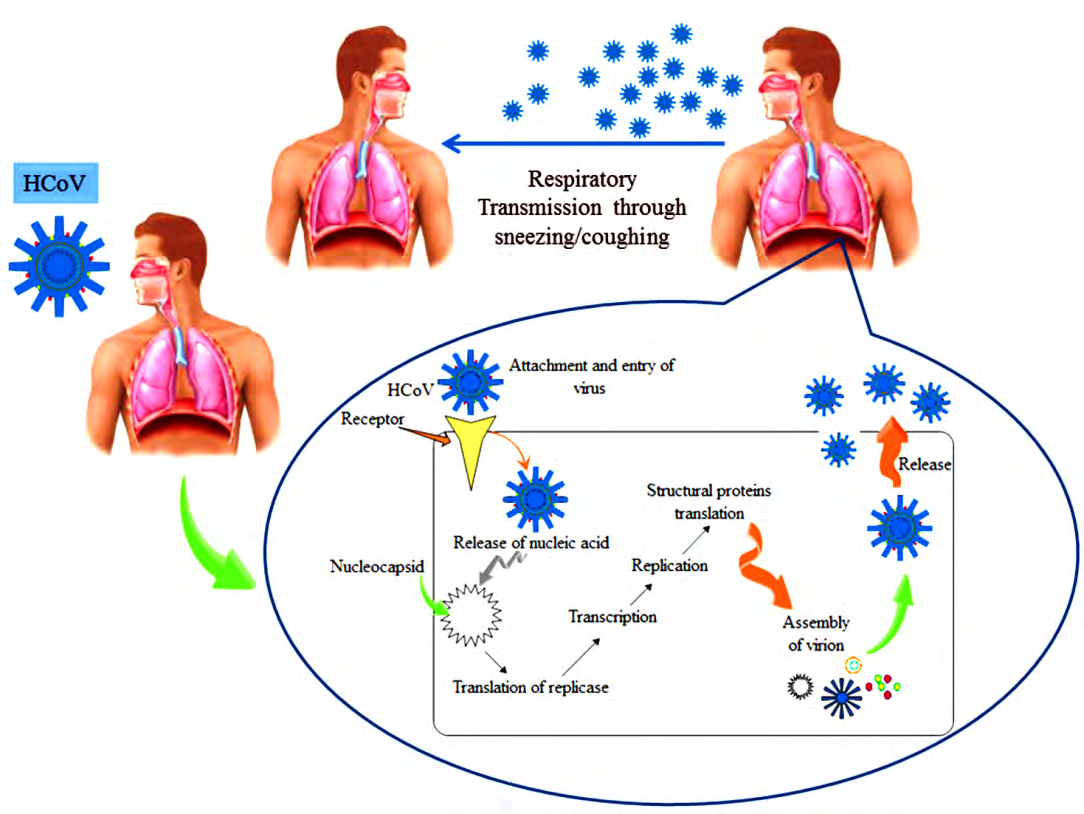
The recently discovered beta-coronavirus (2019) have the typical coronavirus structure with spike protein and possesses single-stranded, positive (+)-sense RNA as a genetic material [11]. The genomic study revealed that nucleic acid (RNA) encodes four vital structural proteins such as spike (S), glycoprotein, envelope (E), membrane (M), and nucleocapsid (N) with several accessory proteins [12]. SARS-CoV-2 genome encodes 16 non-structural proteins (NSP) and also contains the largest gene orf1ab which through translation gives two polyproteins (pp1a and pp1ab) [13, 14]. The CoV spike (S) is the dominant surface protein and plays an essential role in viral attachment, fusion, entry, and transmission. It is composed of receptor binding N-terminal S1 subunit and C-terminal S2 subunit responsible for the virus-cell membrane fusion [15, 16]. The S1 subunit contains a receptor-binding domain (RBD), which binds to the cell surface receptor angiotensin-converting enzyme 2 (ACE2) present at the surface of host epithelial cells [11]. Epithelial cells act as a primary barrier to any foreign entity entering their host via body cavities as it covers the inner and outer linings of body cavities, such as the respiratory or intestinal tract [17]. During infection, the virus attached to the host cell through S1- receptor binding domain and the ACE2 cell membrane receptor, leading to the entry inside the target cell [18, 19]. Viral genomic RNA is released into the cytoplasm of the host cell and translated into polymerase and replicas polyproteins, further cleaved into small products by viral proteinases [20]. Positive-sense RNA synthesized from negative-sense genomic RNA (as a template). Afterward, in the cytoplasm replication of viral RNA and nucleocapsid takes place followed by the transcription. A structural protein such as S, M, and E transported to the Golgi after translation in the endoplasmic reticulum (ER) and further undergoes assembly of virions and transported via vesicles [21] (Figure 1). Lastly, the virion-containing vesicles fuse with the plasma membrane and released out of the host cell. CoV uses various strategies to avoid immune responses for better survival into the host cell. There are pattern recognition receptors (PRRs) that recognize microbial evolutionarily conserved structures called pathogen-associated molecular patterns (PAMPs). However, these viruses produce double-membrane vesicles which lack PRRs and replicate in viral vesicles, hence avoiding detection by host cell [22].
Clinical Characteristics and Transmission
SARS-CoV-2 is the third zoonotic coronavirus which has created a frightening crisis around the world on human health [23, 24]. All ages are susceptible to the 2019 coronaviruses disease. The virus replicates in the ciliated epithelium that causes cellular damage and contamination at infection site. Typical symptoms of infected patients are dry cough, fever, shortness of breath, fatigue, headache, pneumonia, diarrhoea, and vomiting [25, 26]. COVID-19 ranges from an asymptomatic state to severe infection leading to acute respiratory distress syndrome (ARDS) to critical condition which may lead to multiorgan dysfunction and even death. COVID-19 primarily spreads through airborne zoonotic droplets through sneezing and coughing and from infected patients or direct contact with infected persons, surfaces, or objects [23, 24, 25, 26, 27] and promotes community transmission. There is evidence that shows this virus remains active in aerosol for 3 hours and on stainless steel, plastic, cardboard surfaces, and copper, it survives up to 72 hours [28]. Researchers have found the presence of the virus in faces and blood, indicating the probability of multiple routes transmission [29, 30, 31]. The current epidemiological investigation reflects that the incubation period of viral particles 1-14 days and most importantly 3-7 days [32]. Clinical investigations showed aged people suffering from severe diseases like chronic obstructive pulmonary disease, hypertension, cardiovascular disease, and diabetes is more affected than adults or children. In aged people coronavirus rapidly develop respiratory failure, acute respiratory distress syndrome, septic shock, multiple organ failure, even leading to death [33].
Prevalence Rate
The virulence of coronavirus diseases in humans is affected by both viral and host factors. A case of unidentified pneumonia was reported in late December 2019 in Wuhan, China which spread rapidly by human-to-human transmission and was virulent [34]. Soon, Chinese research authorities isolated a new virus from the seafood market in Wuhan city; known as 2019-nCoV [35]. Eventually, there was exponential growth in the number of COVID-19 positive patients and the virus rapidly spread to many countries. As of 5th July 2020, 11,465,712 cases of COVID-19 have been confirmed World- wide with 532,021 deaths. Among which 2,936,890 and 675,453 cases are confined to the USA and India respectively [36]. Wu and his group calculated the basic reproduction number (R0) of SARS-CoV-2 and found that the secondary infections may cause in a completely vulnerable population without interference. His group estimated R0 to be 2.47-2.86 using the SEIR model [37]. Which was higher than the R0 value of SARS-CoV which is 2.2-3.6 [38], and MERS-CoV is 2.0-6.7 [39], indicating relatively high transmissibility that of SARS-CoV-2. The main source(s) of this new novel virus remains elusive but direct contact with infected host animals or wild animal’s consumption is suspected to be the main route of SARS-CoV-2 transmission. COVID-19 positive cases are increasing continuously at an exponential rate and the doubling time of the pandemic is reported to be 1.8 days after conducting modelling studies [23]. The overall fatality rate is has been estimated 2 to 3% whereas this rate is higher ranging from 4 to 11% in hospitalized adult patients [36]. Special care is needed for neonates and the elderly since they have an immature or weak immune system.
Diagnosis, Treatment and Prevention
The emerging SARS-CoV-2 cause’s global health emergency is in urgent need of interventions. Diagnosis of COVID-19 requires non-invasive detection of viral nucleic acid in patients that has high specificity, high sensitivity, low cost, eases of use, easy accessibility, and fast screening. The important methods for diagnosis of this pneumonia are nucleic acid reverse transcription-polymerase chain reaction (RT-PCR) test from the throat and nasal swab samples, chest computed tomography (CT) scan [40, 41], next-generation sequencing. Serological tests such as ELISA tests, rapid chromatographic tests, and others are also used for the detection of immunoglobulin M (IgM) which rises after 1 week of initial infection and immunoglobulin G (IgG) appears about 14 days after infection [42]. Preliminary identification of the SARS-CoV-2 was conducted at the viral research institution, China through electron microscopy for observing its morphology and the classical Koch’s postulates [43]. The virus infected cases could be suspected with the appearance of any of the clinical characteristics such as fever, sore throat, cough, and difficulty in breathing or travel history [32]. However, asymptomatic cases and symptomatic cases both require confirmation with a positive molecular test. Elevated levels of C-reactive protein, lactate dehydrogenase, erythrocyte sedimentation rate, creatinine, low white blood cell count, and prolonged prothrombin time are usually associated with disease condition [26, 27, 28, 29, 30, 31, 32, 33, 34, 35, 36, 37, 38, 39, 40, 41, 42, 43, 44]. No confirmed treatment or effective antiviral therapy is approved until now against COVID-19. Available treatments are focused mainly on symptomatic and respiratory support. Therefore, community transmission should be prevented via adequate isolation from an infected person, maintaining nutrition, and managing mild illness at home. Drugs including Remdesivir, Chloroquine, Lopinavir, Ritonavir, Ribavirin, Oseltamivir, penciclovir, acyclovir, or their combination are investigated to use in clinical practice as a potential cure to COVID-19. Remdesivir shows broad-spectrum antiviral activity against several RNA viruses has been reported to treat the first US case of COVID-19 successfully [45, 46]. Another anti- malaria drug, chloroquine shows with great potential to treat COVID-19 infection [47], with the specific mechanism of action that is not well understood. In-vitro analysis of remdesivir and chloroquine combination has also proven to effectively inhibit the recently emerged CoV. Study of SARS and MERS-CoV antibodies might provide important guidelines for designing and development of SARS-CoV-2- specific antibody as this new virus is closely related to SARS- CoV and has a high sequence identity in their S proteins [34, 48]. Prevention is the best way because currently there is no approved treatment knows yet against this pandemic infection. The virus incubation period before the onset of symptoms and contact with asymptomatic positive patients are several factors leading to uncontrolled transmission of this new infection. Wearing masks, following proper cough hygiene, home isolation in case of mild illness, washing hands with soap, maintaining a healthy routine, and decontaminating the surroundings preferably with sodium hypochlorite are some of the infection control measures recommended. An adequate supply of medical essentials is very to protect healthcare workers who are taking care of patients and to prevent transmission of infection to other patients as well.
Conclusion and Future Prospective
SARS-CoV-2 continues to spread globally with an urgency to develop effective therapeutics. Further research to understand the novel coronavirus transmission and pathogenicity mechanism is required to facilitate the development of a virus-specific vaccine and drugs. More so, this new virus outbreak has challenged the medical, economic, and public health infrastructure across the world. Evidently, the pandemic potential of COVID-19 demands rigorous efforts to control this outbreak and efficient measures to monitor future outbreaks of zoonotic origin.
Acknowledgments
This work was supported by Startup Research Grant (UGC Faculty Research Promotion Scheme; FRPS) and sustained by Mohanlal Sukhadia University, Udaipur, and Rajasthan, India. Authors are highly grateful to the authorities of respective departments for support in doing this work.
References
-
Hui DS, Azhar EI, Madani TA, Ntoumi F, Kock R, et al. (2020) The continuing 2019-nCoV epidemic threat of novel coronaviruses to global health-The latest 2019 novel coronavirus outbreak in Wuhan, China. Int J Infect Dis 91: 264-266.
-
Enjuanes L, Gorbalenya AE, De Groot RJ, Cowley JA, Ziebuhr J, et al. (2008) Nidovirales. In: Mahy BWJ, Van Regenmortel MHV (Eds.), Encyclopedia of Virology. 3rd (Edn.), Elsevier: Oxford, pp: 419-430.
-
Zhu N, Zhang D, Wang W, Li X, Yang B, et al. (2020) A novel coronavirus from patients with pneumonia in China, 2019. N Engl J Med 382(8): 727-733.
-
Chan JF, To KK, Tse H, Jin DY, Yuen KY (2013) Interspecies transmission and emergence of novel viruses: lessons from bats and birds. Trends Microbiol 21(10): 544-555.
-
Yin Y, Wunderink RG (2018) MERS, SARS and other coronaviruses as causes of pneumonia. Respirology 23(2): 130-137.
-
Wang LS, Wang YR, Ye DW, Liu QQ (2020) A review of the 2019 novel coronavirus (COVID-19) based on current evidence. Int J Antimicrob Agents 55(6): 105948.
-
Wu A , Peng Y , Huang B , Ding X , Wang X , et al. (2020) Genome composition and divergence of the novel coronavirus (2019-nCoV) originating in China. Cell Host Microbe 27(3): 325-328.
-
Paraskevis D, Kostaki EG, Magiorkinis G, Panayiotakopoulos G, Sourvinos G, et al. (2020) Full- genome evolutionary analysis of the novel corona virus (2019-nCoV) rejects the hypothesis of emergence as a result of a recent recombination event. Infect Genet Evol 79: 104212.
-
Sah R, Rodriguez Morales AJ, Jha R, Chu DKW, Gu H, et al. (2020) Complete genome sequence of a 2019 novel coronavirus (SARS-COV-2) strain isolated in Nepal. Microbiol Resour Announc 9(11): e00169-e00120.
-
Tang X, Wu C, Li X, Song Y, Yao X, et al. (2020) On the origin and continuing evolution of SARS-CoV-2. Natl Sci Rev 7(6): 1012-1023.
-
Zhou P, Yang XL, Wang XG, Hu B, Zhang L (2020) A pneumonia outbreak associated with a new coronavirus of probable bat origin. Nature 579(7798): 270-273.
-
Cui J, Li F, Shi ZL (2019) Origin and evolution of pathogenic coronaviruses. Nat Rev Microbiol 17(3): 181-192.
-
Lu R, Zhao X, Li J, Niu P, Yang B, et al. (2020) Genomic characterisation and epidemiology of 2019 novel coronavirus: implications for virus origins and receptor binding. The Lancet 395(10224): 565-574.
-
Chen Y, Liu Q, Guo D (2020) Emerging coronaviruses: genome structure, replication, and pathogenesis. J Med Virol 92(4): 418-423.
-
Du L, He Y, Zhou Y, Liu S, Zheng BJ, et al. (2009) The spike protein of SARS-CoV-a target for vaccine and therapeutic development. Nat Rev Microbiol 7(3): 226-236.
-
Du L, Yang Y, Zhou Y, Lu L, Li F, et al. (2017) MERS-CoV spike protein: a key target for antivirals. Expert Opin Ther Targets 21(2): 131-143.
-
Ren X, Glende J, AlFalah M, De Vries V, Qu X, et al. (2006) Analysis of ACE2 in polarized epithelial cells: surface expression and function as receptor for severe acute respiratory syndrome associated coronavirus. J Gen Virol 87(Pt 6): 1691-1695.
-
Simmons G, Gosalia DN, Rennekamp AJ, Reeves JD, Diamond SL, et al. (2005) Inhibitors of cathepsin L prevents severe acute respiratory syndrome coronavirus entry. Proc Natl Acad Sci USA 102(33): 11876-11881.
-
Kuhn JH, Li W, Choe H, Farzan M (2004) Angiotensin- converting enzyme 2: A functional receptor for SARS coronavirus. Cell Mol Life Sci 61: 2738-2743.
-
De Wilde AH, Snijder EJ, Kikkert M, Van Hemert MJ (2018) Host factors in coronavirus replication. Curr Top Microbiol Immunol 419: 1-42.
-
Perrier A, Bonnin A, Desmarets L, Danneels A, Goffard A, et al. (2019) The C-terminal domain of the MERS coronavirus M protein contains a trans-Golgi network localization signal. J Biol Chem 294(39): 14406-14421.
-
Snijder EJ, Van Der Meer Y, Zevenhoven Dobbe J, Onderwater JJM, Van Der Meulen J, et al. (2006) Ultrastructure and origin of membrane vesicles associated with the severe acute respiratory syndrome coronavirus replication complex. J virol 80(12): 5927- 5940.
-
Li Q, Guan X, Wu P, Wang X, Zhou L, et al. (2020) Early transmission dynamics in Wuhan, China, of novel coronavirus-infected pneumonia. N Engl J Med 382: 1199-1207.
-
Munster VJ, Koopmans M, van Doremalen N, Van Riel D, De Wit E (2020) A novel coronavirus emerging in China - Key questions for impact assessment. N Engl J Med 382: 692-694.
-
Guan WJ, Ni ZY, Hu Y, Liang WH, Ou CQ, et al. (2020) Clinical characteristics of coronavirus disease 2019 in China. N Engl J Med 382: 1708-1720.
-
Wang D, Hu B, Hu C, Zhu F, Liu X, et al. (2020) Clinical characteristics of 138 hospitalized patients with 2019 novel coronavirus-infected pneumonia in Wuhan, China. JAMA 323(11): 1061-1069.
-
Lee PI, Hsueh PR (2020) Emerging threats from zoonotic coronaviruses-from SARS and MERS to 2019-nCoV. J Microbiol Immunol Infect 53(3): 365-367.
-
Patients L, Taylor D, Lindsay AC, Halcox JP (2010) Niacin Compared with Ezetimibe. N Engl J Med 362: 1046-1048.
-
Zhang W, Du RH, Li B, Zheng XS, Yang XL, et al. (2020) Molecular and serological investigation of 2019-nCoV infected patients: implication of multiple shedding routes. Emerg Microbes Infect 9(1): 386-389.
-
Drosten C, Gunther S, Preiser W, Van der Werf S, Brodt HR, et al. (2003) Identification of a novel coronavirus in patients with severe acute respiratory syndrome. N Engl J Med 348(20): 1967-1976.
-
Wu Y, Guo C, Tang L, Hong Z, Zhou J, et al. (2020) Prolonged presence of SARS-CoV-2 viral RNA in faecal samples. Lancet Gastroenterol Hepatol 5(5): 434-435.
-
Jin YH, Cai L, Cheng ZS, Cheng H, Deng T, et al. (2020) A rapid advice guideline for the diagnosis and treatment of 2019 novel coronavirus (2019-nCoV) infected pneumonia (standard version). Mil Med Res 7(1): 4.
-
Huang C, Wang Y, Li X, Ren L, Zhao J, et al. (2020) Clinical features of patients infected with 2019 novel coronavirus in Wuhan, China. The Lancet 395(10223): 497-506.
-
Zhou P, Yang XL, Wang XG, Hu B, Zhang L, et al. (2020) A pneumonia outbreak associated with a new coronavirus of probable bat origin. Nature 579(7798): 270-273.
-
Kumar D, Malviya R, Sharma PK (2020) Corona Virus: A Review of COVID-19. EJMO 4(1): 8-25.
-
(2020) Reported Cases and Deaths by Country, Territory, or Conveyance. World meter.
-
Wu JT, Leung K, Leung GM (2020) Now casting and forecasting the potential domes- tic and international spread of the 2019-nCoV outbreak originating in Wuhan, China: a modelling study. The Lancet 395(10225): 689- 697.
-
Lipsitch M, Cohen T, Cooper B, Robins JM, Ma S, et al. (2003) Transmission dynamics and control of severe acute respiratory syndrome. Science 300(5627): 1966- 1970.
-
Majumder MS, Rivers C, Lofgren E, Fisman D (2014) Estimation of MERS-coronavirus reproductive number and case fatality rate for the Spring 2014 Saudi Arabia outbreak: insights from publicly available data. PLoS Currents Outbreaks.
-
Chen N, Zhou M, Dong X, Qu J, Gong F, et al. (2020) Epidemiological and clinical characteristics of 99 cases of 2019 novel coronavirus pneumonia in Wuhan, China: A descriptive study. The Lancet 395(10223): 507-513.
-
Xu XW, Wu XX, Jiang XG, Xu KJ, Ying LJ, et al. (2020) Clinical findings in a group of patients infected with the 2019 novel coronavirus (SARS-Cov-2) outside of Wuhan, China: retrospective case series. BMJ 368: m606.
-
Huang P, Liu T, Huang L, Liu H, Lei M, et al. (2020) Use of chest CT in combination with negative RT-PCR assay for th 2019 novel coronavirus but high clinical suspicion. Radiology 295(1): 20.
-
Lu H, Stratton CW, Tang YW (2020) Outbreak of pneumonia of unknown etiology in Wuhan, China: the mystery and the miracle. J Med Virol 92(4): 401-402.
-
Jain N, Choudhury A, Sharma J, Kumar V, De D, et al. (2020) A review of novel coronavirus infection (Coronavirus Disease-19). Glob J Transfus Med 5(1): 22-26.
-
Agostini ML, Andres EL, Sims AC, Graham RL, Sheahan TP, et al. (2018) Coronavirus susceptibility to the antiviral remdesivir (GS-5734) is mediated by the viral polymerase and the proofreading Exoribonuclease. mBio 9(2): e00221.
-
Holshue ML, DeBolt C, Lindquist S, Lofy KH, Wiesman J, et al. (2020) First case of 2019 novel coronavirus in the United States. N Engl J Med 382(10): 929-936.
-
Vincent MJ, Bergeron E, Benjannet S, Erickson BR, Rollin PE, et al. (2005) Chloroquine is a potent inhibitor of SARS coronavirus infection and spread. Virol J 2: 69.
-
Barupal T, Tak PK, Meena M (2020) COVID-19: Morphology, characteristics, symptoms, prevention, clinical diagnosis and current scenario. Coronaviruses 1(1): 1-8.
- The Muculent Bleb-Mucinous Cystic Neoplasm-Hepatobiliary Region
- Insulin Sensitizers as Anti-Aging Agents: Unveiling Synergies with Albumin, GLP-1RA, Klotho Protein, and Metformin in the Quest to Combat Aging
- Reprogramming of GLP-1 Response at Prediabetes for the Prevention of Type 2 Diabetes: The Role of Albumin and GLP-1 Receptor Agonists
- The Mingled Allies-Combined Hepatocellular Carcinoma and Cholangiocarcinoma
- Compilation and Embodiment-Leydig Cell Tumour Testis
- Glucolipotoxicity: A Novel Different Perspective on the Causes of Cancer