
Genetic Factors of Diabetes Mellitus
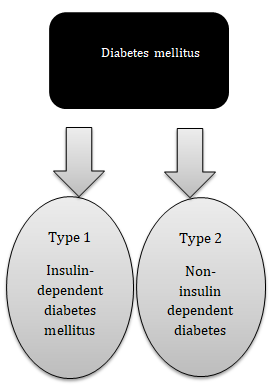
Diabetes mellitus is a disease in which pancreas fail to perform its work. In this condition, insulin is not produced in the amount as required for the normal function of the body. This led to different complication. And the results of many different diseases like kidney failure, high blood pressure, urination, blindness, stroke, heart attack, muscle dysfunction. Diabetes mellitus has two types: first is known as type 1 diabetes or Insulin-dependent diabetes. Second is known as type 2 diabetes or Non-insulin dependent diabetes mellitus. Most important is genetics which plays an important role in the development of diabetes. Other is environmental factors which are responsible for causing of disease by changing the gene patterns. In genetics, different genes are responsible for the causing of diabetes and these genes are present at a different position on a chromosome. In type 1 diabetes chromosome 6 and HLA complex, viral infection, physiological factors, environmental factors, and 60 genes are identified for causing of this disease. In type 2 diabetes environmental factor, 120 genetic loci, E23K polymorphism in the KCNG11 gene, Glucokinase gene mutation, epigenetics, TCF722, ABCC8, CAPN10, GIUT2, genes are responsible for the causing of disease of type 2 diabetes.
Rana Khalid Iqbal1*, Tehseen Zahra1 and Rabia Afzal1
Multan-Pakistan
Biotechnology, Bahauddin Zakariya University, Pakistan, Email:
Khalid.iqbal@bzu.edu.pk
ABCC8, CAPN10, GIUT2, genes are responsible for the causing of disease of type 2 diabetes.
Keywords: CAPN10 gene; Gestational Diabetes Mellitus; HLA Complex; KCNJ11 GENE
Introduction
Diabetes Mellitus is a disease in which pancreas will be unable to produce insulin in the required amount. After heart disease and cancer we come to know that Diabetes is on 3rd number in the fatal disease. 6-8% population is affected by diabetes. So it will affect the different body parts and cause of blindness, renal failure stroke, and heart attack. Diabetic patients have higher urine excretion because normal insulin concentration in plasma is 20-30 µu/ml which is not produced. According to the International Diabetes Federation (IDF) 2015, Atlas has estimated 415 million people worldwide who are affected by diabetes. But this may increase to 642 million by 2040. Diagnostic criteria of diabetes are weight loss, thirst, polyuria, blurred vision, and perianal infection. The types of Diabetes mellitus are as follow. 1st is known as Insulin-dependent diabetes mellitus (IDDM) and 2nd is known as Non-Insulin dependent diabetes (NIDDM). In diabetes, the person feels fatigue, pain in the body and sometimes due to high blood pressure headache. Type 1 Diabetes which is known as IDDM usually occurs in childhood at 20 years -25 and 10-20% population is affected by it. In this case, the pancreas fails to produce insulin so patient depends upon insulin injection [1]. If you have a marker of diabetes which is located on chromosome 6 and an HLA (human leukocyte antigen) complex. These complexes are responsible for type 1 diabetes. Other factors are a viral infection in which different viruses attack body and cause of disease. In family history, if both parents have diabetes than there are higher chances of diabetes in their children. In the second condition if the father has diabetes with type 1 then their child develop diabetes is slightly higher than the mother other is autoimmune conditions. In which some HLA complex produced Type 1 diabetes and its symptom of diabetes appear when 80-90% β-cell destroyed [2]. Duration of symptoms are in a weeks. Type 2 Diabetes or NIDDM usually occurs in adults at the age of 40 or above and it is found 80-90% diabetes population. It commonly occurs in obese people. In this case, insulin production is high. Factors which are responsible for type2 are genetic and environment [3]. Duration of symptoms is months to years. It is hereditary because genetics play an important role in Type 2 Diabetes. If father and mother have diabetes then it does not guarantee to develop it, instead, it means they have a greater chance of developing type 2 in their children. In type 2 if the mother has diabetes then in children it is a greater chance to develop as compared to father. Today more than 120 genetic loci are associated with type 2 diabetes. Normal blood glucose level is 70-120 mg/dl in a normal person but in a diabetic patient it will exceed 120 mg/dl then we need to diagnose it and we diagnose it by doing a test which is known as oral glucose tolerance test (OGTT). One other form of diabetes is maturity-onset diabetes of young (MODY). At different chromosome three abnormalities on genetic loci are found. First one is mutation on chromosome 12 in hepatic nuclear transcription factor which is also known as HNF1 (54). Second one is mutation on chromosome 7Pof glucokinase gene. Third form is linked with abnormality in HNF4 gene on chromosome 2q. The recently fourth variant has recently described a mutation in another transcription factor gene IPF-1 which in its homozygous form leads to total production agenesis Geneva, (1980).
Rana Khalid Iqbal, et al. Genetic Factors of Diabetes Mellitus. Obes Int J 2019, 4(4): 000213.
Literature
Association of the E23K Polymorphism in the KCNJ11 Gene with Gestational Diabetes Mellitus
Gestational diabetes mellitus shows the same physiological history as type 2 Diabetes. The women who have GDM at high risk of type 2 Diabetes. It was first reported during pregnancy. GDM result when a beta cell of pancreas fails to control the insulin resistance during pregnancy. So, GDM and type 2 Diabetes have the same genetic susceptibility [4]. Women with type 2 Diabetes have high chances to develop GDM [5]. There are different genes which are responsible for type 2 Diabetes. E23K polymorphism of the potassium inwardly-rectifying channel subfamily J, member 11 (KCNJ11) genes and increased for type 2 Diabetes [6]. Variations in the calpain 10 (CAPN10) genes have also been associated with type 2 Diabetes. These have high chances of GDM. By genotyping, we can give its proof that GDM and type 2 Diabetes have a similar genetic predisposition. [7].
Type 1 Diabetes Mellitus: Cellular and Molecular Pathophysiology at a Glance.
In type1 Diabetes, there is high production of blood sugar level. Different environmental and genetic factors are playing an important role in the causes of type 1Diabetes. In present, different loci are specified which are responsible for genetic factors of Diabetes1 type [8].
Copyright© Rana Khalid Iqbal, et al.
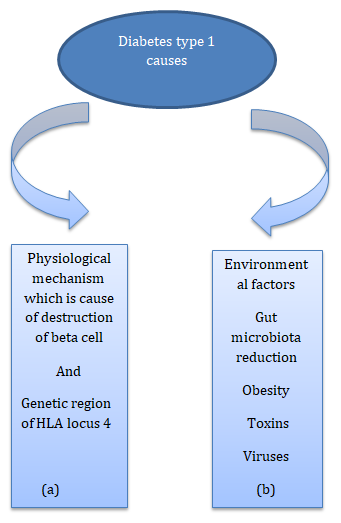
But only a few genes are described by the mechanism. Type 1 Diabetes occurs in young age. Type 1Diabetes is an autoimmune disease and more common in males. [9]. In Europe, many people are affected by type 1 Diabetes. It’s causing factors are genetic and environment. The genetic region which is linked to type 1Diabetes is human leukocyte antigen (HLA) locus 4 and like this gene which associated with insulin production is also identified. a) Physiological mechanism of type 1Diabetes is through activation of the immune system against Beta cell antigen and initiation of demagogic responses. So due to inefficient regulation of Beta-cells chronic immunologic responses will occur which leads to the destruction of beta-cells and cause of death of Beta-cell is due to the physiological mechanism which antigens and initiation of the immune response against other beta-cells [10]. b) Environmental factors which play an important role in type 1Diabetes Mellitus are as follow; Gut microbiota reduction, obesity, Gluten, Toxins, Lack of Vitamin D, Viruses. Gut Micro Biota Reduction: Gut micro biota is playing an important role in the health of human. A fight between immune cells and gut micro biota during early stages of life activate the immune-regulatory mechanism, which has the ability to control autoimmune reactions and the phenomena known as “hygienic hypothesis”. A receptor (TLR) 4 which stimulate lipopolysaccharide and bacterial products which are connected with the immune system and which are receptor as suppressors of autoimmunity. So, the reaction in gut micro biota results in loss of control of the immune system. When the immune system is not proper working than it will work against cells of the self and leads to the disease diabetes. Obesity: Weight gain is another issue which leads to diabetes, in which high beta-cell load and insulin resistance. So weight gain in childhood will be a risk sign of diabetes in later life [11]. Gluten: When we start to give a diet which is the risk of gluten in children which are more than 3 months old then there are high chances of increase of islet autoantibody production. When gluten contents are increased then diabetic patients with human leukocyte antigen D related (HLA-DR) allele have high T-cell reactivity. So it will result in the development of beta-cell autoimmunity. Toxins: When in early age our body exposure to toxin then it will cause abnormal processing of pro insulin and also endoplasmic reticulum stress in beta cell of the pancreas. So in result, it will activate the autoimmunity mechanism during early life.
Rana Khalid Iqbal, et al. Genetic Factors of Diabetes Mellitus. Obes Int J 2019, 4(4): 000213.
Lack of vitamin D: According to epidemiological analysis when vitamin D is in deficient form then we have high chances of diabetes. It directly affects T and B cell functions. Viruses: In environmental factors viruses are responsible for a different type of disease especially if we talk about diabetes then it is causing agent of type 1Diabetes. It directly cytolytic effect on beta-cells, indirectly way it destroys beta-cells. The main organ which takes part in pathophysiology is pancreas, genome-wide association studies and their meta-analysis identified almost 60 genes which cause genetic susceptibility to type 1Diabetes. These genes are present in pancreatic beta cells which reflect the autoimmune nature of the disease. These genes are also highlighted in the molecular mechanism of type 1 Diabetes Mellitus and by this, we can identify the complications which occur in type 1Diabetes Mellitus. There are two major classes of complication. Micro- vascular & Macro-vascular which affect the heart, limbs, nervous system, eyes, and kidney. To Right side of the body shows macro-vascular complication. The left side of the body shows micro-vascular complication. [12]. Macro-vascular complications of type 1 Diabetes Mellitus: A group of blood vessel disease occurs in patients and cardiovascular disease in diabetic patients occurs four times higher as compared to non-diabetic patients. The risk of hypertension in TIDM patients is 30% higher as compared to non-diabetic patients and other diseases such as coronary artery, cerebrovascular and peripheral vascular disease are also due to macro- vascular complications [13]. Micro-vascular complication of type 1 Diabetes Mellitus: In this small vessel damage and cause neuropathy, nephropathy, and retinopathy by a different mechanism. The diabetic vascular complication is an excellent example that clarifies the role of genetic factors, environmental factors [14].
Familial Aggregation and Heritability of Type 1 Diabetes Mellitus and Coagulation of Chronic Diseases in Affected Families
In worldwide type 1Diabetes is increasing by 3% per year. It occurs in early age and rate of 6.4/100,000 for 0- 9-year-old Asian and Pacific Islands. Bu in Taiwan was 5.6/1,000,000 from 0-14 years old. Human leukocyte antigen (HLA) has found as major genetic determinants for type 1Diabetes. Strongly found in Europe and East Asian populations [15]. The families which have diabetes type 1 are at greater risk for chronic diseases. In familial resemblance and heritability of type 1Diabetes, the phenotypic variance was 66.50% for genetic factors Copyright© Rana Khalid Iqbal, et al.
(heritability) and environmental factors were 10.86% and the non-environmental factors were 22.64%. The autoimmune disease which shows significant familial co- aggregation linked with type 1Diabetes are rheumatoid arthritis and systematic lupus erthematosus. Other diseases are thyroid simple goiter, for non-toxic nodular goiter. So genetic factors are very strong which contribute to type 1Diabetes with a heritability of 66.5% [16].
Complications of Diabetes: An Insight into Genetic Polymorphism and the Role of Insulin
Diabetes mellitus is a chronic endocrine disorder which is characterized by an insufficiency of insulin production by pancreas we can explain here different genetic factors which are responsible for Diabetes. Glycolysis initiate by glucokinase which serves as glucose sensor and metabolic signal producer in liver and pancreas. An important component which detects glucose of pancreas beta cells is glucokinase and genetic variations in human glucokinase gene even a point mutation cause of MODY in which blood glucose level will high and cause of diabetes and 70% of the patient shows GCK genes mutation [17]. Glucokinase is mostly found in type 2 diabetes mellitus affect the liver which enlarged in this chronic endocrine disorder and insulin production will be lowered or insulin resistance in peripheral tissue soft tissue and selection muscle result in a hyper chronic condition. The genes which are responsible for type 1 diabetes are human leukocyte antigen HLA which are present on the short arm of human chromosome6.HLA show linkage to the DQA and DQB genes. But type 2 diabetes mellitus is prominent worldwide in this case insulin production is very low in amount. Here we also discuss Maturity- oneself diabetes of young MODY. It results from loss of function mutation a single of 6-8 genes that are in defined and located on different chromosomes it is linked to chromosome 12 in a hepatic transcribed factor which is also known as hepatocyte nuclear factor HNF-1 alpha its transcriptional factor of MODY. Complications of diabetes retinopathy (DR) are a condition which disrupted blood vessel of the retina [18]. Diabetic Neuropathy (DN) which affect the nervous system in which symptoms show confusion, discomfort in feet and skin damage.in this condition, kidneys destroy sand renal tissues and plasma protein appeared in urine which known as proteinuria [19]. Here we also discuss insulin role and its action. Insulin is a peptide hormone which is produced by beta cells of the pancreas. It’s synthesized as preproinsuline, on 11.5KDa peptide and once manufactured, preproinsuline is rapid>1min discharged into cisternal space of RER where proteolytic Rana Khalid Iqbal, et al. Genetic Factors of Diabetes Mellitus. Obes Int J 2019, 4(4): 000213.
enzyme cleaves the signal peptide, generally proinsulin. Proinsulin is 9KDa peptide containing two chains (A&B) of insulin (20-30 amino acids) joined by C peptide (30-35 amino acids). C peptide is aligned by disulfide bridges that link A and B chains. So molecule correctly folded for cleavage [20]. Proinsulin first transported in microvesicles to Golgi apparatus where it will bound by a membrane known as secretory granules. Insulin is initiated in Golgi complex and continuous within maturing secretory granule through the sequential action two endopeptidases prohormone converses 2and 3 and carboxypeptidase H70 which removal the C peptide chain liberating two cleavage dipeptides and finally yielding insulin [2]. If we talk about genomic regions which are linked to diabetes mellitus then DM1 has been localized to HLA for IDDM susceptibility genes and for IDDM2 was mapped to a variable number of tandem repeats locus at 5 prime of the insulin gene. But by using random markers throughout human genome11 additional regions are found that are IDDM susceptibility gene and mutation in case hyperglycemia and insulin release with zero defects throughout insulin activity.it occurs in MODY at age of 25 [2].
The Epidemiology of Diabetes Mellitus in Asia Specific Regions
Asia is the 2nd largest country in the world. It has prime importance of epidemiology of diabetes and population is affecting by diabetes here. the western Pacific region along India sub-continent it is forefront epidemic diabetes of type 2.Globelly in 1998 it was estimated that 140million people are affected by diabetes mellitus but it will increase to 300 million by year of 2025.according to DR Hilary prediction 150 million will be in Asia India was 15million in 1995 to 57 million in 2025. According to Dr. Hilary prediction, 150 million people in Asia and 15 million people developed diabetes in 1995 but it will increase to 57 million in 2025. In China 15-20 million people, which will increase to 50 million by 2050. But more than 30% of people with diabetes in 2025 will be in two countries (India & Asia) [21]. The prevalence rate will be high in the industrialization of individual countries. In spite of diversity in a region, common themes are found with respect to diabetes and prevalence rates. And the rate of type 1 diabetes is lower as compared to type 2 diabetes. The concept of epidemiology transition can also be applied to diabetes. The countries which have no concept of epidemiology transition their diabetes prevalence rates remain low, but problem considerable and they face a problem with the Copyright© Rana Khalid Iqbal, et al.
infectious complication of diabetes, sever foot sepsis and tuberculosis (Cockram, 2000).
Epigenetics: A Molecular Link between Environmental Factors and Type 2 Diabetes
Obesity and aging are increased susceptibility to Type 2 Diabetes. Many people who exposed to risk factors but do not develop the disease. Epigenetics plays an important role in gene and environment. But our knowledge about the molecular mechanism which links environmental factors and type 2 Diabetes still remain limited [22]. An overview of epigenetic regulation is as follow. There is no unique definition of epigenetics, but we can define it as follow, heritable change in gene function without a change in the nucleotide sequence. Epigenetics modification can be passed from one generation to the next. But there is limited information about the inheritance of epigenetic between generations in animals. Epigenetics also affected by environment and caused by diabetes. The different epigenetic factors which are the cause of type 2Diabetes are included DNA methylations and also explain how cells with identical DNA can differentiate into different cell types and different phenotypes and it will focus on the role of DNA methylation and histone modification in the pathogenesis of type 2Diabetes Mellitus [23]. Invertebrate, cytosine residues occurring in GC dinucleotide are targets for DNA methylation. It is associated with transcriptional silencing. Epigenetics is also included by aging and increase the risk of type 2 Diabetes, and mechanism behind is both genetic and environmental factors. DNA methylation and transient neonatal diabetes (TND) which rare form of diabetes and start within the first 6 weeks of life, Insulin therapy is not required at 3 months and later these patients develop type 2Diabetes. Three chromosomes of 6 anomalies have described in TND which are as follow: Hypo-methylation at chromosome 6924, parentally inherited duplication of 6924, Parental uni-parental isodisomy of chromosome 6. Recently shown mutations in zinc-finger transcriptional factor, zfp57, which is associated with TND and hypo-methylation of regions on 6924, which include gene PLAGL1 and HYMA1 (Charlotte Ling, 2009). Diabetic complications are vascular inflammation which will increase with increased expression of inflammatory genes [24].
Role of Genetics in Type 2 Diabetes
Different factors are responsible for the development of type 2Diabetes. Obesity and our lifestyle environmental factors are responsible for this disease, genetic influence Rana Khalid Iqbal, et al. Genetic Factors of Diabetes Mellitus. Obes Int J 2019, 4(4): 000213.
from where we get this disease [25]. If we talk about family history of diabetes then you have been diagnosed by type 2Diabetes then you are not only the first person with this disease. You develop this disease if your parents or sibling are also affected by this disease [26].
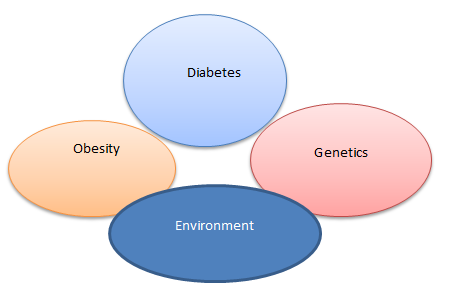
Many gene mutations are linked for development of type 2Diabetes. It may also be linked with the environmental factor. Then if we talk about the role of genetics in type 2Diabetes then the factors which are responsible for diabetes are genetic and environment. Different gene mutations are causing diabetes. But we don’t say that every people who have mutation will get diabetes. But we can say that the people who are affected by diabetes have one or many these kinds of mutation. So genetic and environmental factors are linked to each other and factors are responsible for transmitting the disease to the next generation. Genetics is also playing an important role in determining the weight. The people who are obese are at higher risk for development of diabetes. Now we can identify the different genes which are responsible for type 2Diabetes [27]. Study of twins shows that type 2Diabetes is linked with genetics. Many mutations have shown the effect of type 2Diabetes. And each gene is responsible for the contribution of mutation. Mutation normally occurs in the genes which are controlling glucose levels, production of glucose and regulation of insulin. Genes associated with type 2 diabetes risk are as follow. TCF722: which affect insulin secretion and glucose production, ABCC8 which helps to regulate insulin, CAPN10: which associate to diabetes risk in Mexican American, GIUT2: a glucagon hormone involved in glucose regulation [28].
Copyright© Rana Khalid Iqbal, et al.
Conclusion
In diabetes, Mellitus pancreas didn’t work properly. Which lead to different issues of health? Different factors are responsible for the causes of diabetes. Genetic and environmental are the main factors which are responsible for this disease. In genetic different genes which are present at a different position on the chromosome are responsible. Environmental also influence on genetic factors.
References
-
Alberti KG, Zimmet PZ (1998) Definition, diagnosis and classification of diabetes mellitus and its complications. Part 1: diagnosis and classification of diabetes mellitus provisional report of a WHO consultation. Diabet Med 15(7): 539-553.
-
Aleem S, Iqbal R, Shar T, Noreen S, Rafiq N, et al. (2018) Complications of Diabetes: An Insight into Genetic Polymorphism and Role of Insulin. Recent Pat Inflamm Allergy Drug Discov 12(1): 78-86.
-
Poulsen P, Kyvik KO, Vaag A, Beck-Nielsen H (1999) Heritability of type II (non-insulin-dependent) diabetes mellitus and abnormal glucose tolerance-a population-based twin study. Diabetologia 42(2): 139-145.
-
Rich SS, Norris JM, Rotter JI (2008) Genes associated with risk of type 2 diabetes identified by a candidate- wide association scan: as a trickle becomes a flood. Diabetes 57(11): 2915-2917.
-
Kim C, Newton KM, Knopp RH (2002) Gestational diabetes and the incidence of type 2 diabetes: a systematic review. Diabetes Care 25(10): 1862-1868.
-
Lu J, Luo Y, Wang J, Hu C, Zhang R (2017) Association of type 2 diabetes susceptibility loci with peripheral nerve function in a Chinese population with diabetes. J Diabetes Investig 8(1): 115-120.
-
Abdelhamid I, Lasram K, Meiloud G, Ben Halim N, Kefi R, et al. (2014) E23K variant in KCNJ11 gene is associated with susceptibility to type 2 diabetes in the Mauritanian population. Prim Care Diabetes 8(2): 171-175.
-
Fabbri M, Frixou M, Degano M, Fousteri G (2019) Type 1 Diabetes in STAT Protein Family Mutations: Rana Khalid Iqbal, et al. Genetic Factors of Diabetes Mellitus. Obes Int J 2019, 4(4): 000213. Regulating the Th17/Treg Equilibrium and Beyond. Diabetes 68(2): 258-265.
-
Atkinson MA, Eisenbarth GS, Michels AW (2014) Type 1 diabetes. Lancet 383(9911): 69-82.
-
Altobelli E, Petrocelli R, Verrotti A, Chiarelli F, Marziliano C (2016) Genetic and environmental factors affect the onset of type 1 diabetes mellitus. Pediatr Diabetes 17(8): 559-566.
-
Leete P, Mallone R, Richardson SJ, Sosenko JM, Redondo MJ, et al. (2018) The Effect of Age on the Progression and Severity of Type 1 Diabetes: Potential Effects on Disease Mechanisms. Curr Diab Rep 18(11): 115.
-
Kondrashova A, Hyöty H (2014) Role of viruses and other microbes in the pathogenesis of type 1 diabetes. Int Rev Immunol 33(4): 284-295.
-
Gerstein HC, Bosch J, Dagenais GR, Díaz R, Jung H, et al. (2012) Basal insulin and cardiovascular and other outcomes in dysglycemia. N Engl J Med 367(4): 319- 328.
-
Saberzadeh-Ardestani B, Karamzadeh R, Basiri M, Hajizadeh-Saffar E, Farhadi A, et al. (2018) Type 1 Diabetes Mellitus: Cellular and Molecular Pathophysiology at A Glance. Cell J 20(3): 294-301.
-
Schleger F, Linder K, Walter L, Heni M, Brändle J, et al. (2018) Family History of Diabetes Is Associated With Delayed Fetal Postprandial Brain Activity. Front Endocrinol (Lausanne) 9: 673.
-
Kuo CF, Chou IJ, Grainge MJ, Luo SF, See LC, et al. (2018) Familial aggregation and heritability of type 1 diabetes mellitus and coaggregation of chronic diseases in affected families. Clin Epidemiol 10: 1447- 1455.
-
Heuvel-Borsboom H, de Valk HW, Losekoot M, Westerink J (2016) Maturity onset diabetes of the young: Seek and you will find. Neth J Med 74(5): 193- 200.
-
Mishra B, Swaroop A, Kandpal RP (2016) Genetic components in diabetic retinopathy. Indian J Ophthalmol 64(1): 55-61. Copyright© Rana Khalid Iqbal, et al.
-
Chua J, Lim CXY, Wong TY, Sabanayagam C (2018) Diabetic Retinopathy in the Asia-Pacific. Asia Pac J Ophthalmol (Phila) 7(1): 3-16.
-
Apperley LJ, Ng SM (2019) Increased insulin requirement may contribute to risk of obesity in children and young people with Type 1 Diabetes Mellitus. Diabetes Metab Syndr 13(1): 492-495.
-
Kaveeshwar SA, Cornwall J (2014) The current state of diabetes mellitus in India. Australas Med J 7(1): 45- 48.
-
Gilbert ER, Liu D (2012) Epigenetics: the missing link to understanding beta-cell dysfunction in the pathogenesis of type 2 diabetes. Epigenetics 7(8): 841-852.
-
Agardh E, Lundstig A, Perfilyev A, Volkov P, Freiburghaus T, et al. (2015) Genome-wide analysis of DNA methylation in subjects with type 1 diabetes identifies epigenetic modifications associated with proliferative diabetic retinopathy. BMC Med 13: 182. Rana Khalid Iqbal, et al. Genetic Factors of Diabetes Mellitus. Obes Int J 2019, 4(4): 000213.
-
Ling C, Groop L (2009) Epigenetics: a molecular link between environmental factors and type 2 diabetes. Diabetes 58(12): 2718-2725.
-
Hu FB (2011) Globalization of diabetes: the role of diet, lifestyle, and genes. Diabetes Care 34(6): 1249- 1257.
-
Antosik K, Borowiec M (2016) Genetic Factors of Diabetes. Arch Immunol Ther Exp (Warsz) 64(S1): 157-160.
-
Dajani R, Li J, Wei Z, March ME, Xia Q, et al. (2017) Genome-wide association study identifies novel type II diabetes risk loci in Jordan subpopulations. Peer J 5: e3618.
-
Papandreou D, Hamid ZT (2015) The Role of Vitamin D in Diabetes and Cardiovascular Disease: An Updated Review of the Literature. Dis Markers 2015: 580474. Copyright© Rana Khalid Iqbal, et al.
- Investigation of Polymorphisms in PPAR-Ɣ and TRHR Genes and their Impact on Turkish Diabetic and Obese Individuals
- The Impact of Aircraft Noise Exposure on the Efficacy of Empagliflozin Therapy in an Animal Model of Obesity
- Rooibos Mitigates Metabolic and Inflammatory Dysfunctions in Mice Fed a High-Carbohydrate Diet
- Synergistic Effect of Combined Leaf Extract of Vernonia amygdalina, Ocimum gratissimum, and Zingiber officinale Tuber on Phytochemical Profile, Antioxidant Activity, Serum Insulin, and Biochemical Parameters in Streptozotocin-Induced Diabetic Rats
- Investigation of Cardiovascular Responses to Aerobic Exercise in Obese University Students
- A Look at the Phase Angle Obtained by Electrical Bioimpedance