
Stress Affected Date Palm and Modified Treatments: A Review
Salt stress soil or water come to be the most problem and deficiency the crop yields, in spite of the fact that date palm (Phoenix dactylifera L.) can be tolerate high levels of salts, the acclimatized plantlets in the early stage facing stress just planted in the open field, however in the pre-acclimatization stage in vitro , also after acclimatization stage in the greenhouse these plantlets were adapted with different concentrations of salts NaCl, CaCl2 for helping them facing bad effects of salts in the fields, as well as many treatments can be done to ameliorate the bad effects of salts on the plantlets as hormons (IAA, GA3, cytokinins), yeast, amino acids, potassium K+ or Ca2+ and some of growth retardants, all of these treatments have important role to adverse bad effects of salts, enhancing growth as well as improving productivity of plants under salts stress.
Introduction
Date palm (Phoenix dactylifera L.) which produced via tissue culture technique after acclimatization in the green house may be unable to confrontation the abiotic stress conditions when its cultured in the sustainable land i.e. salt stress, drought stress which caused bad effects on the plant growth characteristics as decreasing heights and length, leaves numbers, fresh and dry weights of aerial parts and roots. Na+- specific damage is associated with the accumulation of Na+ in leaf tissues and results in necrosis of older leaves. the date palm showed true halophytic adaptations to salt stress more than many other fruit trees [1], Soils classified to saline which saturated paste electrical conductivity (ECe) of 4 dS m-1, PH is less than 8.5, sodic soils defined that ECe of less than 4 dS m-1, and pH exceeds 8.5 15% and saline-sodic soils have ECe ≥ 4 dS m-1, and their pH is less than 8.5 by their chemistry, morphology, and pH (2) [2, 3], Date palms are tolerated salinity stress than other cultivated trees to 4dSm-1 (EC (dSm-1) and a yield reduction per unit 3.6% [4], date palm is an important horticultural fruits in the arid and semi-arid regions and tolerant to salinity, which caused several types of damage such as growth inhibition and yield quality Del [5], date palms mostly found as trees growth in hot weather and salinity affected plants and some varieties of date palm can tolerate salinity levels up to 22000 ppm (EC 34 dS m-1) meanwhile their growth and yield productivity are affected, however, date palm cv [6]. Ruzaiz in vitro culture and offshoots tolerated salinity NaCl 1% , CaCl2, KCl at 0.2 M Al, date palm can tolerate abiotic stresses as drought, heat and soil salinity that markedly reduced fruits yields as well as the viable numbers of the date palm trees, 125 mM NaCl and higher, callus of date palm Phoenix dactylifera L [7]. cv [8, 9]. Barhee, growth was inhibited; an increase in proline accumulation in response to increased salinity, proline accumulation was correlated to callus growth inhibition [10], NaCl salt gave many bad effects etc., stunted growth, chlorosis of green parts, dry mass reduction and elongation as well as expansion growth of leaves [11], the weak plantlets of two other treatments (1.5 and 2.0%) NaCl were failed in growth and acclimatization of pineapple plantlets Hamed & Ali [12], Ibrahim [13], Abdallah, et al. [14] found that, 6000, 10000 and 14000 ppm NaCl + CaCl2 2:1 by weight which added to MS medium in vitro of date palm cv. Sakuti and cv. Zaghloul derived by tissue culture after two years from acclimatization stage, decreased all vegetative growth of the plantlets linearly with increasing salts levels as shootlet length, number of leaves, survival percentage of rooting stage, also decreasing vegetative characters in the rooting stage, moreover these plantlets were transferred into greenhouse after pre-acclimatized and all vegetative characters and acclimatization survival percent were significantly decreased with increasing salts, anions and cations reduced plant growth root and shoot development and yield morphological parameters like plant height, leaf production, root length and collar girth of different varieties which subjected to high salinity irrigation showed differential responses (56) long term irrigation with very high EC of irrigation water (8 and 12dSm−1) severely reduced growth and yield of date palm cv [15, 16, 17, 18, 19]. Medjool NaCl from 50-250 mM supplemented in MS media of date palm cvs Barhi’, ‘Zaghlool’ and ‘Barban which were affected by salt stress as decreasing of root growth particularly with high level, while Zahdi’ and ‘Majhool’ exhibited higher tolerance [20, 21, 22, 23].
Effects of Salts Stress on the Chemical Contents
Ions
reduction in K + concentration in plant tissue due to the antagonism of Na + and K + at uptake sites in the roots, the influence of Na + on the K + transport into xylem or the inhibition of uptake processes, NaCl in the soil solution , the levels of K in plant were reduced related to the antagonism between Na and K after evaporation of salty water (Ca2+, Mg2+ and Na+) Ca2+ and Mg 2+ were precipitate to carbonate remain Na+ in the soil increased availability of Na and Cl, under salt stress contribute to reduced uptake of N, P, and K salinity stress by increasing concentration of Na+ in the soil, Na+ ion competes with K+ for the transporter as they both share the same transport mechanism, thereby decreasing the uptake of K+, Sodium, K+ and Cl- were the main inorganic solutes that contributed to osmotic adjustment, Na+ replaced K+ as the main cation, particularly in the proximal region of the growth zone, K+, Ca2+ and K+/Na+ ratio in canola decreased by salt stress, but significantly increased of Na+ and Cl- content in the roots, shoots and leaves, N/K+, K+/Na+ ratio, Ca2+ and Mg2+ content of date palm cvs , Khalas, Madjol and Barhy young leaves, stem and roots were decreased with increasing levels of salinity (200 and 400mM) , while increasing of Na+ and Cl- content [1, 2, 4 and 6 dsm-1 (ds/m) on dwarf apple rootstocks (M.pomila) led to increased Na and Cl in leaves while decline in the K, N and Cu concentration in leaves of plants also reduction of P, Fe, B, Zn and Mn [24, 25, 26, 27, 28, 29, 30, 31].
Affecting photosynthesis process and products as amino acids, enzymes: factors reduced photosynthetic rates i.e. enhanced senescence, changes in enzyme activity, induced by alterations in cytoplasmic structure and negative feedback by reduced sink activity more than alteration of photosynthetic pigment biosynthesis, (94), (95) [33], salinity associated with a marked inhibition of photosynthesis, reduction in water potential and accumulated Na+ and Cl- in the chloroplast which affects photosynthetic components such as enzymes, chlorophylls, and carotenoids and membranes which the primary sites of injury under stress, photosynthesis was the primary affected by salts and drought stress, Water stress induced stomatal closure, reduced net CO₂ assimilation rate and the intercellular CO₂ availability in mesophyll, also reduced the photosynthetic efficiency, on the other hand antioxidant enzymes and stimulated the production of antioxidant metabolites and preventing lipid peroxidation [32, 33, 34, 35, 36, 37, 38, 39]. It was found that stress can be strongly affected enzymes in this respect many scientists showed that enzymes antioxidant activity proved to the mechanism tolerant salts as SOD and CAT which they found in cell compartments in stressed plants and ascorbate peroxidase (APX) have important function against oxidative stress [40], CAT activity in suaeda salsa increased under 200 mM NaCl [41] and peroxidase (POX) in rice [42], the increasing activity related to lowered H2O2 level and POX activity appears to be caused either by activation of existing enzymes isoforms, antioxidant enzymes catalase (CAT) and peroxidase (POD), , POX, APX were significantly higher under severe salt stress in Pancratium maritimum plants, protect plants against damage oxidative of NaCl (Sanaerirad [43] on Salsolacrassa) [44], In the date palm induction of enzymes as PdCAT, PdGR and PdMDAR were observed at NaCl (100mM, 200mM, 300mM and 400 mM 100 mM NaCl these observation suggest that antioxidative enzymes involved in either ROS detoxification or antioxidation, and have important role the tolerance of date palm to salt stress [45, 46, 47]. Protein synthesis and lipid metabolism are affected under stress, positive antioxidant response might be responsible for a higher tolerance to flooding stress in Carrizo citrange Poncirus trifoliata L. Raf. x Citrus sinensis L. Osb. and Citrumelo CPB 4475 Poncirus trifoliata L. Raf. x Citrus paradisi L. Macf the photosynthesis and respiration rate of plants decreased under salt stress also total carbohydrate, fatty acid and protein content, moreover increasing levels proline was found, meanwhile Proline accumulation which is a known measure adopted for alleviation of salinity stress [48, 49, 50, 51, 52].
Stress Affecting Stomata and Pigments
Under salt stress plants has to close their stomata due to water loss [53], stomatal closure induced by synthesis of ABA which act as ameliorative responses include maintenance of root water uptake, the synthesis of osmoprotective proteins Cl - -induces chlorotic toxicity due to impaired production of chlorophyll (Chl) [54], critical levels for toxicity to be 4-7 mg g −1 for Cl - - sensitive species and 15-50 mg g −1 for Cl - -tolerant species [55], decreasing rate of photosynthesis occurred at high salinity, also inhibited cell expansion and cell division stomatal conductance and closure in Bruguiera parviflora, decreases in contents of chlorophyll (a), (b) & (a + b) carbohydrates, soluble proteins and Sofy & Fouda [56] on Helianthus tuberosus L.), these severe effect of stress on pigments according to the time of stress exposure [57], moreover demonstrated that the reduction in chlorophyll contents under salt stress caused by inhibitory effects of the accumulation ions Na+ and Cl- on the biosynthesis of the different chlorophyll fractions, Chlorophyll responsible for photosynthesis moreover under adverse conditions, chlorophyll contents is a good indicator of photosynthetic activity [58, 59], assimilation of CO2 decreased also stomatal conductance and plant transpiration were reduced similarly in all three Lemon (Fino 49) salt treatments50 mM NaCl [60], under salt stress less chlorophyll contents and highly of accumulation of Na and Ca under salt stress 100-200 mM El- Bagoury, et al. [61] on Casuarina equisetifolia L.), total chlorophyll decreased with exposure to NaCl (20, 40, 60, 80, and 160 mM) in WPM culture medium at 15 and 30 days in Paulownia imperialis (Siebold & Zuccarini) and Paulownia fortunei (Seemann & Hemsley), proline content in P. imperialis significantly increased under 20 and 40 mM NaCl The decrease in Chl content under salt stress is a commonly reported phenomenon were used as a sensitive indicator of the cellular metabolic state [62, 63], salt soil resulted in 41% reduction in ch b compared with 75 and 33% reduction of ch a under NaCl from 100 to 200 mM for 14 days of Oryza sativa [64], salt stress the reduction in photosynthesis pigments related to increasing destructive enzymes as chorophyllase activity or by weakening of protein-pigment-lipid complex in addition stress can reduce cell division [64, 65, 66], furthermore depressing of the rate of photosynthesis and related enzymes activity, suppresses chlorophyll synthesis [67].
Reactive Oxygen Species (ROS)
Salinity stress have severe injury caused by ROS is known as oxidative stress, which is one of the major damaging factors to plants, ROS cause peroxidation of polyunsaturated fatty acids in the membranes [68], which include the superoxide anion radical O2¯, hydroxyl radical OH¯ and (H2O2) hydrogen peroxide [69], antioxidant and enzymes as carotenoids, ascorbate, glutathione and tocopherols, superoxide dismutase (SOD), catalase (CAT), glutathione peroxidase (GPX), peroxidases, ascorbate peroxidase can inhibited damage were found by ROS under salts stress scavenging enzymes SOD, APX and POX improved tolerance to abiotic stresses as salinity which produced high levels of ROS [70, 71], reactive oxygen species (ROS) responsible for cellular oxidative caused damage in cell machinery and chloroplast ROS which produced normally from cell metabolism however, these products under stress defected biomolecules and cell metabolism and led to cell death [72, 73, 74, 75], ROS have important role in the plant cell to reduce forms of atmospheric oxygen, four electrons are required to oxygen reduction ROS results from the transference of one, two and three electrons, respectively, to O2 to form superoxide (O2·-), peroxide hydrogen (H2O2) and (HO·) hydroxyl radical [76], in addition, increasing ROS production result from stomatal closure, causing a decrease in CO2 concentration inside the chloroplasts, on the other hand ROS increase in the salt sensitive plants were removed by antioxidative mechanisms in the normal condition, but this removal can be impaired under salt stress [77, 78]), excess amounts of ROS caused and cellular toxicity in citrus (168) [79], ROS, such as (singlet oxygen 1O2), hydrogen peroxide H2O2, superoxide O2·- and hydroxyl radical HO·, are toxic molecules capable of causing oxidative damage to proteins, ROS detoxification are antioxidants as ascorbic acid (AsA) and glutathione (GSH), and ROS-scavenging enzymes as superoxide dismutase (SOD), ascorbate peroxidase (APX), catalase (CAT), glutathione peroxidase [80], ROS generated during metabolic processes damage cellular functions lead to, senescence and cell death, these bad effect of ROS can be scavenged by antioxidant enzymes such as superoxide dismutase, calatase, peroxidase, Polyphenoloxidase and Glutathione Reductase, under salt stress excessive ROS caused adverse effects that exhibited from interaction with macromolecules, Arabidopsis thaliana treated with 300 mM NaCl for 72 h exhibited that plasma membrane oxidation in the cellular injury by production of ROS which may be cause cell death [81, 82, 83, 84, 85, 86, 87].
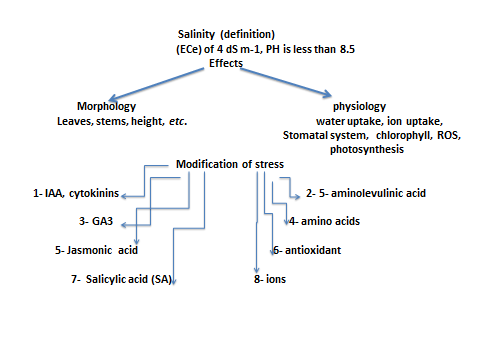
Modified Stress by Different Treatments
IAA, cytokinins tolerance plant to salinity by different mechanism i.e. osmotic stress tolerance, Na+ or Cl− exclusion, and the tolerance of tissue to accumulated Na+ or Cl− (16) [88], many attempts and modification treatments were done to decreasing these bad effects and trying to increasing yields under stress, osmoprotectants (proline, glycinebetaine, trehalose, etc.), plant hormone (gibberellic acids, jasmonic acids, brassinosterioids, salicylic acid, etc.), antioxidants (ascorbic acid ABA, glutathione, tocopherol, etc.), signaling molecules (nitric oxide, hydrogen peroxide, etc.), polyamines (spermidine, spermine, putrescine), trace elements (selenium, silicon, etc.) effective to mitigating the salt induced damage in plant [89, 90, 91, 92], Phytohormones play important roles in regulating plant responses to stress which increased ABA and JA [93], numerous plant hormones as salicylic acid, abscisic acid, jasmonic acid and ethylene play a significant role in altering plant growth morphology in response to stress [94, 95], wheat seedlings were more sensitive to water stress, meanwhile cytokinin activity (6- benzylaminopurine, thidiazuron, cartolin 2, and cartolin 4) played a protective role as increasing the stability of the photosynthetic machinery under conditions of water deficiency, enhancing cytokinin levels could plants reduced growth rates maintained by abscisic acid accumulation in stressed tissues [96, 97].
5-aminolevulinic acid (ALA) have PGR properties which promoting plant growth under normal environments and stressful conditions and enhance plant tolerance to drought when applied at low concentrations, ALA showed to be essential biosynthetic precursor of tetrapyrrole compounds such as heme, cytochromes and chlorophyll, ALA as foliar spray 0.18-0.6 mM increased photosynthetic carbon fixation and reduced dark respiration [98, 99, 100]. ALA-based fertilizer Pentakeep-v improves salt tolerance in date palm seedlings by increasing photosynthetic assimilation, IAA from 54 to 97% significantly increased Wheat root growth under 100 mM NaCl , ALA at low concentrations can promote plant growth as exogenous application on spinach (Spinacia oleracea), Brassica napus and cucumber seedlings (201) [101, 102, 103, 104, 105, 106, 107], pretreatments of ALA at 2.11 μM or 2.57 μM The ALA under 50 mM NaCl increases of total chlorophyll and antioxidative activities of (CAT) catalase, (APx) ascorbate peroxide, (GR) glutathione reductase and (SOD) superoxide dismutase [108].
IAA, application of auxin IAA increased hypocotyls length, seedling fresh and dry weight and hypocotyls dry weight of wheat plants under salinity, in Z. mays plants, foliar application of IAA, especially at 2 mM, counteracted some of the salt induced adverse effects by enhancing essential inorganic nutrients as well as by maintaining membrane permeability, growth promotion in maize plants was associated with increased photosynthetic pigment and leaf Na+/K+ ratio to increased salt tolerance of plants which come out as growth and development can be regulate by cytokinins (CKs), auxins (AUXs), gibberellins (GAs), JA, brassinosteroids (BRs), ABA and SA [109, 110, 111]. Exogenous application of tryptophan and nicotinic acid at 200 ppm under 3000 and 6000 ppm salts can be enhancing growth parameters as height and fresh weight of Allium cepa L. [112, 113].
GA3
Plant growth regulators as GA3, Zeatin and ethephon can alleviate bad effect os salts on germination and growth parameters of Ceratoides lanata, Salicarnia pacifica, Allenrolfea accidentalis [114], pre-treatment seeds with GA3, IAA, Zeatin and Cytokinins increased and development of plant growth under salt stress [115], seed treatment of Trichocereus terscheckii (Cactaceae) with gibberellic acid improved germination percentage under saline conditions [116], Gibberellic acids (also called Gibberellin A 3 , GA, and GA 3 ) are generally involved in growth and development; they control seed germination, leaf expansion, stem elongation and flowering (Magome et al. 2004, Kim and Park 2008), GA3 at 20,25 and 30 mg/l ameliorated bad effect of salinity stress at 10000, 14000 and 16000 ppm under GA3 at 20 and 25 mg/l the shoot and root length, number of leaves and roots were increased under levels of salinity Table 1 and 2, salt stress increased Na, Ca and Cl Table 3, salts decreased survival acclimatized while GA3 increased this percent [117], GA3 treatment in L. esculentum reduced stomatal resistance and enhanced plant water use at low salinity [118]. GA 3 - priming-induced increase in T. aestivum grain yield was attributed to the GA 3 -priming-induced modulation of ions uptake and partitioning (within shoots and roots) and hormones homeostasis under saline conditions [119] [119, 120], GA3 at 100 μM. Enhancing growth parameters of Barley and Wheat cvs under NaCl at 100 and 300 mM [121].
ABA (Abscissic acid) Osmotic stress induces and enhanced ABA biosynthesis as well as increased accumulation of the key ABA biosynthesis enzyme (NCED) 9-cis-epoxy-carotenoid dioxygenase [122], ABA have important role in plant osmotic stress response by a decreased pH led to induction of turgor loss in stomatal guard cells leading to stomatal closure [123], High K+/Na+ ratio was observed due to abscissic acid (ABA) treatment given to common bean plant that seems to limit sodium translocation to shoot [124].
Amino Acids
Protects the higher plants against osmotic stresses not only by adjusting osmotic pressure by many compatible solutes which are small molecules, water soluble and uniformly neutral with respect to the disturbance of cellular functions, even when present at high concentrations as well as [125], carbohydrates in stress mitigation involves osmoprotection, carbon storage also increases the level of reducing sugars as sucrose and fructans [126], Compatible osmolytes and proteins used as potential biochemical which were useful in the salt- resistant of plant cells [127], photosynthetic apparatus protection [128], and reduction of ROS [129], Proline accumulation rises in response to salinity stress also involved in cellular structures Solomon, et al. [130] on Tamarix jordanis), induced significant increase in chlorophyll and total soluble sugars contents , proline protect plants under stress by stabilizing many functional metabolism as complex II electron transport, membranes, proteins and enzymes such as RuBisCo [131], Proline improves salt tolerance in Nicotiana tabacum plants by increasing the activity of enzymes involved in the antioxidant defense system [132], by protecting the photosynthetic apparatus [133, 134], exogenous Pro 5 mM and 100 mM NaCl in Citrus sinensis ‘Valencia late’, increased growth of this salt sensitive citrus cell line stated that, the applications of proline 30 and 50 ppm were diminished the harmful effects of salt stress 16000 [135, 136, 137], 18000 and 20000 ppm NaCl + CaCl2 as plant height (cm), number of leaves/seedling, root length (cm), roots number/seedlings and fresh and dry weights of Phoenix canariensis , significant increase in total amino acids Na, Ca and total amino acids obtained by the treatment 20000 ppm, In addition yeast have important components that have increasing growth which can ameliorated bad effects of salts as application of yeast and amino acids had significantly ameliorated the harmful effects of salinity which accompanied by markedly increase in all studied growth parameters plant height, leaves numbers, fresh and dry weights of leaves particularly at 50 cm/l yeast and 6 cm/l amino acids compared to control treatment (salts only) [138]. Na, Ca and Cl were increased, while under salts chlorophyll a and b decreased under salt stress while increased with yeast and amino acids, closely positively relation between salt stress and the anti - oxidative enzymes catalase (CAT) and peroxidase (POD) which was significantly enhanced in the presence of salinity levels, antioxidant enzymes were had the defense system for salt tolerance in a lot of plants.
Glycinebetaine (GB) and putrescine, glycine betaine protects the cell by osmotic adjustment [139], one of compatible solutes that has an osmoprotective function and improve salt stress tolerance in most crop plants [140] GB may have a positive impact on both absorption and translocation of monovalent cations in salt-stressed, the positive effect of exogenous GB was associated with reduced Na + accumulation and with the maintenance of K + concentration, triggering the antioxidant defense and also glyoxalase System [141, 142] , polyamines a foliar spray minimize the adverse effect of salinity [143], furthermore, foliar application of putrescine (1.25 mM) accumulation of putrescine under salt stress, the possible physiological role of putrescine in alleviating stress damage [144], organic metabolite soluble in water and non-toxic at high concentrations which can potentially play a protective role against salt stress [145], it has found that arginine and GB can adverse bad effect of salts 4500, 15000, 3000, 4500 and 6000 ppm by stabilized proteins also the main function that protects the photosynthesis system from damage [146] on Mung bean (Vigna radiate L and Cha-Um & Kirdmanee [147], growth and nutrients of citrus rootstock Karna khatta ( Citrus karna Raf.) were enhancing with putrescine and paclobutrazol application under salt stress [148, 149]. Jasmonic acid (JA) and its methyl esters are ubiquitous in plants and have hormone properties. Jasmonates found as important roles in salt tolerance, SA and JA are synthesized in the osmotically stressed mesophyll cells of leaves under regulation of ABA [150], jasmonic acid at 30 μM enhancing tolerance of rice under 40 mM of NaCl [151, 152], these are important cellular regulators involved in diverse developmental processes, such as seed germination, root growth, fertility, fruit ripening, senescence and stomatal closure induced of JA in roots of citrus under drought stress conditions lead to progressive ABA accumulation in the plants which will induce later plant responses [153, 154, 155, 156, 157], Antioxidant (Ascorbic acid or Ascorbate (AsA), Citric acid or Vitamin C) and Glutathione (GIT): is an important antioxidant in plant tissue which is synthesized in cytosol of higher plants primarily from conversion of d -glucose to AsA. AsA has been shown to have an essential role in several physiological processes in plants, including growth, differentiation, and metabolism. It functions as a reductant for many free radicals, thereby minimizing the damage caused by oxidative stress. Plant with higher amount of AsA content showed better protection against oxidative stress. Ascorbate influences many enzyme activities, Citric acid consider as one of non -enzymatic antioxidants which act to eliminate free radicals produced in plants under stress [158, 159], AsA (Ascorbic acid) plays an important role in plant stress tolerance. Under stressed condition plants showed different capacity of AsA metabolism which is due to the variation of AsA synthesis and regeneration. Different studies showed that AsA content in leaves of stressed plants tends to increase with increasing levels of salt stress reported that AsA concentration in leaves of Momordica charantia increased under NaCl stress as compared to control. Increase in AsA concentration due to salinity was reported by other researchers [160, 161, 162], it has been observed, tocopherols and ascorbic acid application provided enhanced tolerance to salt stress 15 ds/m also decreased the leaf senescence [163, 164], exogenous application of AsA influences many enzyme activities and minimizes the damage caused by oxidative processes through a synergic function with other antioxidants [165, 166, 167], Glutathione (GIT) is a tripeptide (α-glutamylecysteinyl glycine), non-protein present as well as non-enzymatic antioxidants exhibited to improve seed germination and seedling growth under salt stress scavenge oxygen species reported that the application of vitamin C was effective to mitigate the adverse effect of salt stress on plant growth due to increased leaf area, improved Chl and Car contents [168, 169], enhanced Pro accumulation and decreased H 2 O 2 content. In addition, application of ascobin with different concentrations not only mitigated the inhibitory effect of salt stress in both wheat cultivars, and increases in IAA, GA3, cytokinins, photosynthetic pigments, total carbohydrates and polysaccharides contents Mervat, et al. [169] recently, exogenous 1mM of ascorbic acid with 3 mM NaCl on tomato improved and ameliorated bad effects of salts stress as chlorophyll a and b, shoot and root length and fresh and dry weights of shoots [170, 171].
Salicylic acid (SA) is a common plant-produced phenolic compound and a potential endogenous plant hormone that plays an important role in plant growth and development. The role of SA is intensively studied in plant responses to biotic stress. SA application under salt stress enhancing synthesis of chl a, b and carotenoids, maintained membrane integrity also led to less contents of Ca2+ and act to accumulate K+ and soluble sugars which caused increasing of photosynthesis process [172, 173], Arabidopsis tolerance salinity with SA by restoring membrane potential and preventing salt- induced K+ loss from guard cell outward rectifying K(+) (GORK) also SA can upregulation of H+-ATPase activity, which improving K+ retention during salt stress moreover pretreatment of SA can reduce the concentration of accumulated Na+ in the shoot [174], also SA caused accumulation of ABA and IAA [175], another methods as (soaking the seeds prior to sowing, adding to the hydroponic solution, irrigating, or spraying with SA solution) have been shown to protect various plant species against abiotic stress by inducing a wide range of processes involved in stress tolerance mechanisms via enhancing activity of antioxidant enzymes Salicylic acid can enhancing antioxidant enzymes activity i.e. POD, DOD and SOD in tomato as spraying under drought and salinity stress A foliar spray of SA at 1.00 mM promoted the plant growth under 50, 100, or 200 mM NaCl , activity of antioxidant enzymes, as catalase [176, 177, 178, 179, 180, 181], peroxidase, and superoxide dismutase, were enhanced by SA treatment Aftab, et al. [182], Habibi [183], Misra & Misra [184]on Rauwolfia serpentina ), [185, 186], salicylic acid application 0.75, 2.5 and 5.0 mM improved tolerance of Eucalyptus globulus by improving water potential with increasing photosynthetic rate, soluble sugars under water deficit 5% and chlorophyll a Jesusa, et al. [187], Nimir, et al. [188] on Sorghum bicolor), in this respect proved that, salicylic acid at 400 ppm and IAA at 30 ppm were enhanced growth estimations i.e. plant height, leaves numbers, fresh and dry weights of leaves. Whereas these parameters were significant reduced under salts 14000 ppm NaCl, chlorophyll a and b was decreased, At saline conditions, increasing of, proteins, catalase activities (CAT) and peroxidase activities (POD) which act as defense effects in the plants exposed to salinity stress, Na+, Ca2+, Cl- and K+ leaf concentrations were rising under 14000 ppm NaCl [189].
different ions can ameliorated bad effect of salt stress: supplemental Ca alleviates the inhibitory effect of salt on cotton root growth by maintaining plasma membrane selectivity of K over Na [190], adding at least 5-10 mM Ca to the medium for salinities of 100-150 mM NaCl, to counteract the inhibitory effect of high Na concentrations on growth [191, 192], Supplementing the Ca2+ can alleviates growth inhibition by salt in glycophyte plants. Ca2+ sustains K+ transport and K+/Na+ selectivity in Na+-challenged plants Sohan, et al. [193] Ca2+ can be ameliorated bad effect of stress as rising shoot growth and root elongation, as well as reduced Na+ accumulation and increasing uptake of K+, however this effect related to its function of membrane and cell elongation and division [194, 195].
(S)sulphur date palm cvs Sewy, Zaghloul and Hayany treated with 1088 ppm soil salinity with soil addition of sulphur 100 mg/l, spraying of citric acid 500 ppm and salicylic acid 100 ppm, effective microorganisms (EM) 50 ml/tree/year, humic acid 50ml/tree/year, compost enriched with actinomyces 5 kg/tree/year and filter mud
5 kg/tree/year all of these anti salinity can be ameliorated the adverse effect of salinity on bunch numbers and weight , TSS and sugars [196], sulphur at level of 200g caused a significant increase height, leaf area, number of leaves and girth of date palm cv. Berhi under saline treatment EC soil (15.93 dS m-1) and to EC water (4.55 dS m-1) Also, sulphur increasing total Chlorophyll, Dry weight, Carbohydrates, proline and soluble protein, peroxidase enzyme activities and (IAA) content [197, 198].
Selenium (Se) which stimulate the growth, the activities of SOD and POD, as well as the accumulation of water soluble sugar [206], however, Se at 5 and 10 m M significantly improved growth rate protecting the cell membrane against lipid peroxidation and increased the photosynthetic pigments and Protein contents, in addition Se proved as stimulate enzymatic and non-enzymatic antioxidant, reduce Na + uptake and enhanced K + uptake, K + : Na + selectivity under stressful condition, [207, 208], Si was mitigate salinity stress by enhancing Na + exclusion and decreasing lipid membrane peroxidation through stimulation of enzymatic and non-enzymatic antioxidants Silicon, the silver bullet for mitigating biotic and abiotic stress [209, 210], and improving grain quality, in rice? Environmental and Experimental Botany 120:8- 17), addition of Si to salt stressed plants alleviated the adverse effects of NaCl on growth Glycine max, as it enhanced endogenous GA3, while reducing the levels of ABA and Pro found that Si supplementation at 0.5, 1, 1.5, 2, 2.5 mM into salts at 120 mM significantly improved fresh and dry weight [211, 212], protein contents and catalase activity and numbers of trichome and stomata. of Borago officinalis L, exogenous of selenium at 0, 2, 4, 8, 16 μM enhancing growth and performed as antioxidant by inhibiting lipid peroxidation and increasing in SOD and POD enzymes activity with 100 mM NaCl Keling, et al. [213] on Cucumis melo L. and Hasanuzzaman, et al. [214], Nawaz, et al. [215], [216, 217, 218, 219, 220, 221, 222, 223, 224, 225, 226, 227, 228, 229, 230].
N,K and P KH2PO4 can ameliorated effects of salts by improved ratio of Na/K in spinach, as well as KH2PO4 can correction the deficiencies of P and K that mostly found under salts stress, KNO3 at 250 mg/l increased weights of Lagentaria siceraria [199, 200], different levels of KNO3 from 0.5 to 3.2 % improved growth of Sunflower under 150 mM NaCl also increased photosynthesis rate [201], existence of 50 mM NaCl potted plants Supplemented with nitrate KNO3 at 10 mM that increased leaf number and area Citrus reticulate × Citrus limetta] (Valencia/Bakraii) and Carrizo citrange [C. sinensis × Poncirus trifoliata] (Valencia/Carrizo), stem elongation, Chl contents and stimulated photosynthetic activity, from this nitrate ameliorated the deleterious effects of NaCl stress Phosphorus fertilization reduces of Na+ in shoots and increased growth and yield in rice and sunflower [202, 203], shoot and root fresh and dry weights, chlorophyll contents, different ion accumulation and yield components of wheat were increased when treated with spraying phosphorus at , 400, 800 mg/L or potassium in the presence of 150 mmol NaCl Khan, et al. [204], Rasmia & El Banna [205] on date palm.
Conclusion
In general salts (soil or water) ranked as the most stress affected growth and productivity of many crops in all culture area of the world, this stress can modified by different treatments as IAA, GA3, yeast, amino acids, minerals as potassium, calcium in addition some of growth retardants, all of these treatments can be enhancing growth and developments of crops under stress.
References
-
FAO (2005) Global network on integrated soil management for sustainable use of salt affected soils.
-
Mohamed S, Alhammadi, Shyam S, Kurup SS (2012) Impact of Salinity Stress on Date Palm (Phoenix dactylifera L) - A Review. Crop Production Technologies.
-
Radwan O (2015) Genomics Improvement of Agronomic Crops to Abiotic Stress. Journal of Investigative Genomics 2(3): 1-7.
-
Mass EV, Hoffiman GJ (1990) Crop salt tolerance- current assessment. In: Tanijii KK, (Ed.), Agricultural Salinity Assessment and Management, ASCE, New York, pp: 262-304.
-
Del Amor FM, Martinez V, Cerda A (1999) Salinity duration and concentration affect fruit yield and quality, and growth and mineral composition of melon plants grown in perlite. Hort Sci 34: 1234- 1237.
-
Erskine W, Moustafa AT, Osman AE, Lashine Z, Nejatian A, et al. (2004) Date Palm in the GCC countries of the Arabian Peninsula. Regional Workshop on Date Palm Development in the Arabian Peninsula, Abu Dhabi, UAE.
-
Al-Busaidi KT , Farag KM (2015) The use of electrolyte leakage procedure in assessing heat and salt tolerance of Ruzaiz date palm (_Phoenix dactylifera_ L.) cultivar regenerated by tissue culture and offshoot and treatments to alleviate the stressful injury. Journal of Horticulture and Forestory 7(4): 104-111.
-
Yaish MW, Kumar PP (2015) Salt tolerance research in date palm tree (Phoenix dactylifera L.), past, present, and future perspectives. Front Plant Sci 6: 348.
-
Majid Alikhani-K, RezaF, Zabihollah Z, Saeedeh S (2018) Effects of deficit irrigation on some physiological traits, production and fruit quality of ‘Mazafati’ date palm and the fruit wilting and dropping disorder. Agricultural Water Management, Elsevier 29(30): 219-227.
-
Al-Khayri JM (2002) Growth, proline accumulation and ion content in sodium chloride-stressed callus of date palm. In Vitro Cellular & Developmental Biology- Plant 38(1): 79-82.
-
Toosi F, Baki BB (2013) Effects of NaCl on Germination and Early Seedling growth of Brassica juncea var. Ensabi. International Journal of Agronomy and Plant Production 4(11): 3004-3011.
-
Hamed AM, Ali EAM (2007) Effect of different sea water concentrations on growth parameters of pineapple (_Ananas comosus_) _in vitro_ and _in vivo_. J Appl Sci Res 3(8): 713-722.
-
Ibrahim MA (2013) Effect of NaCl Stress on Pineapple Plant (_Ananas comosus_ Merr. (L.) cv. Del Monte) _In_ _Vitro_. International Journal of Farming and Allied Sciences 2(9): 206-210.
-
Abdallah EA, Azza MS, El-Banna A, Rasmia Darwesh SS (2007) Effect of Salts Stress on Growth and Development in Vitro culture, Acclimatization Stage on _Phoenix dactylifera_ L. cv. Sakuti in Greenhouse. Egypt J Agric Res 85(1B): 529-547.
-
Eman E, Al-Amier H, Craker LE (2008) Influence of Salt Stress on Growth and Essential Oil Production in Peppermint, Pennyroyal, and Apple Mint. Journal of Herbs Spices & Medicinal Plants 14(1-2): 77-87.
-
Kurup SS, Hedar YS, Ai Dhaheri MA, El Hewiety AY, Aly MM, et al. (2009) Morpho-Physiological Evaluation and RAPD Markers - Assisted Characterization of Date Palm (Phoenix dactylifera L) Varieties for Salinity Tolerance. Journal of Food, Agriculture & Environment 7(3-4): 503-507.
-
Nawaz K, Ashraf M (2010) Exogenous application of glycinebetaine modulates activities of antioxidants in maize plants subjected to salt stress. Journal of Agronomy and Crop Science 196(1): 28-37.
-
Heidar A, Toorchi M, Bandehagh A, Reza Shakiba M (2011) Effect of NaCl Stress on Growth, Water Relations, Organic and Inorganic Osmolytes Accumulation in Sunflower (_Helianthus annuus_ L.) Lines. Universal Journal of Environmental Research and Technology 1(3): 351-362.
-
Bijeh keshavarzi MH, Rafsanjani MSO, Moussavinik SM, Abdin MZ (2011) Effect of salt (NaCl) stress on germination and early seedling growth of Spinach (_Spinacia oleracea_ L.). Annals of Biological Research 2(4): 490-497.
-
Tripler E, Shani U, Mualem Y, Ben-Gal A (2011) Long- term growth, water consumption and yield of date palm as a function of salinity. Agricultural Water Management 99(1): 128-134.
-
Queiroz HM, SodekII L, Haddad CRB (2012) Effect of salt on the growth and metabolism of Glycine max. Brazilian Archives of Biology and Technology 55(6).
-
Ibraheem YM, Pinker I, Böhme M, Al-Hussin Z (2012) Screening of some date palm cultivars to salt stress in vitro. Acta Horticulturae, pp: 359-365.
-
Al-Mulla N, Bhat R, Khalil M (2013) Salt-Tolerance of Tissue-Cultured Date Palm Cultivars under Controlled Environment. International Journal of Animal and Veterinary Sciences 7(8): 468-471.
-
Azevedo NAD, Tabosa JN (2000) Salt stress in maize seedlings: II. Distribution of cationic macronutrients and it’s relation with sodium. Rev Bras Eng Agric Amb 4: 165-171.
-
Ahmad P, Prasad MNV (2012b) Environmental adaptations and stress tolerance in plants in the era of climate change. Springer Science + Business Media, New York.
-
Kaya C, Kirnax H, Higgs D (2001 a) The effect of supplementary potassium and phosphorus on physiological development and mineral nutrition of cucumber and pepper cultivars grown at high salinity (NaCl), Journal Pl Nutr 24(9): 285-294.
-
Mansour MM, Salama FZ, Ali M, Abou Hadid AF (2005) Cell and plant responses to NaCl in Zea Mays L. cultivars differing in salt tolerance. Gen Appl Plant Physiol 31(1-2): 29-41.
-
Fricke W, Akhiyarova G, Wei W, Alexandersson E, A Miller PO, et al. (2006) The short-term growth response to salt of the developing barley leaf. J Exp Bot 57(5): 1079-1095.
-
Tunçtürk M, Tunçtürk R, Yildirim B, Çiftçi V (2011) Effect of salinity stress on plant fresh weight andnutrient composition of some Canola (Brassica napusL.) cultivars. Afr J Biotechnol 10(10): 1827- 1832.
-
Al-Abdoulhadi A, Dinar HA, Ebert G, Buttner C (2012) Influence of salinity levels on nutrient content in leaf, stem and root of major date palm (_Phoenix Dactylifera_ L) cultivars. International Research Journal of Agricultural Science and Soil Science 2(8): 341-346.
-
Alaei S, Darabi Y, Razmjoo E (2015) Vegetative Growth and Ions Accumulation of Olive (_Olea_ _europaea_ cv. Dezfol) Under Salinity Stress. Biological Forum-An International Journal 7(1): 1739-1741.
-
Flexas J, Diaz-Espejo A, Galme´s J, Kaldenhoff R, Medrano H, et al. (2007) Rapid variations of mesophyll conductance in response to changes in CO2 concentration around leaves. Plant Cell & Environment 30: 1284-1298.
-
Anjum MA (2008) Effect of NaCl concentrations in irrigation water on growth and polyamine metabolism in two citrus rootstocks with different levels of salinity tolerance. Acta Physiologiae Plantarum 30: 43.
-
Fisarakis I, Chartzoulakis, K, Stavrakas D (2001) Response of Sultana vines ( _V. vinifera_ L.) on six rootstocks to NaCl salinity exposure and recovery. Agric Water Manage 51(1): 13-27.
-
Sudhir P, Murthy SDS (2004) Effects of salt stress on basic processes of photosynthesis. Photosynthetica 42(4): 481-486.
-
Davenport R, James R, Zakrisson-Plogander A, Tester M, Munns R (2005) Control of Sodium Transport in Durum Wheat. Plant Physiology 137: 807-818.
-
Chaves MM, Flexas J, Pinheiro C (2009) Photosynthesis under drought and salt stress: regulation mechanisms from whole plant to cell. Ann Bot 103(4): 551-560.
-
Rahdari P, Tavakoli S, Hosseini SM (2012) Studying of salinity stress effect on germination, proline, sugar, protein, lipid and chlorophyll content in Purslane (_Portulaca oleraceae_ L.) leaves. Stress Physio and Bio J 8(1): 182-193.
-
Dias MC, Azevedo C, Costa M, Pinto G, Santos C (2014) Melia azedarach plants show tolerance properties to water shortage treatment: an ecophysiological study. Plant Physiol Biochem 75: 123-127.
-
Ahmad P, Jeleel CA, Azooz MM, Nabi G (2009) Generation of ROS and non-enzymatic antioxidants during abiotic stress in Plants. Bot Res Intern 2: 11- 20.
-
Cai-Hong P, Su-Jun Z, Zhi-Zhong G, Bao-Shan W (2005) NaCl treatment markedly enhances H2O2- Scavening system in leaves of halophyte _Suaeda salsa_. Physiol Plantarum 125(4): 490-499.
-
Sharma DK, Dubey AK, Srivastav M, Singh AK, Sairam RK, et al. (2011) Effect of putrescine and paclobutrazol on growth, physiochemical parameters, and nutrient acquisition of salt-sensitive citrus rootstock Karna khatta ( Citrus karna Raf.) under NaCl Stress. J Plant Growth Regul 30: 301-311.
-
Sanaeirad H (2015) Effect of Soil Salinity on Antioxidant Enzymes of the Salsolacrassa Plant in the Natural Growth Environment of Sultan Pond. GMP Review 16(3): 50-58.
-
Wang X, Wei Z, Liu D, Zhao G (2011b) Effects of NaCl and silicon on activities of antioxidative enzymes in roots, shoots and leaves of alfalfa. Afr J Biotechnol 10(4): 545-549.
-
Eltayeb Habora M, El- Eltayeb A, Tsujimoto H, Tanaka K, Ahmed T (2014) Expression Patterns Of Genes Encoding Antioxidative Enzymes In Date Palm(phoenix Dactylifera) In Response To Salinity Stress. Qatar Foundation Annual Research Conference Proceedings, pp: EEPP1072.
-
Ebrahimian E, Bybordi A (2012) Effect of salinity, salicylic acid, silicium and ascorbic acid on lipid peroxidation, antioxidant enzyme activity and fatty acid content of sunflower. African Journal of Agricultural Research 7(25): 3685-3694.
-
Abdelilah M, Fatima J, Widad B, Abdelghani E, Mohamed H (2015) Use of mycorrhizal fungi as a strategy for improving the drought tolerance in date palm (Phoenix dactylifera). Scientia Horticulturae 192 (31): 468-474.
-
Parida AK, Das AB (2005) Salt tolerance and salinity effects on plants: A review. Ecotoxicology and Environmental Safety 60(3): 324-349.
-
Arbona V, Hossain Z, López-Climent MF, Pérez- Clemente RM, Gómez-Cadenas A (2008) Antioxidant enzymatic activity is linked to waterlogging stress tolerance in citrus. Physiol Plant 132(4): 452-66.
-
Zeinolabedin J (2012) The Effects of Salt stress on plant growth. Technical Journal of Engineering and Applied Sciences 2(1): 7-10.
-
Saxena SC, Kaur H, Verma P (2013) “Osmoprotectants: potential for crop improvement under adverse conditions,” in Plant Acclimation to Environmental Stress, Springer, New York, NY, USA, Science 15(2): 89-97.
-
Yaish MM (2015) Proline accumulation is a general response to abiotic stress in the date palm tree (Phoenix dactylifera L.). Genetics and Molecular Research 14(3): 9943-9950.
-
Chatrath A, Mandal PK, Anuradha M (2000) Effect of secondary salinization on photosynthesis in fodder oat (_Avena sativa_ L.) genotypes. J Agronomy Crop Sci 184(1): 13-16.
-
Seki M, Umezawa T, Urano K, Shinozaki K (2007) Regulatory metabolic networks in drought stress responses. Current Opinion in Plant Biology 10(3): 296-302.
-
White PJ, Broadley MR (2001) Chloride in soils and its uptake and movement within the plant: a review. Ann Bot 88(6): 967-988.
-
Sofy MR, Fouda HM (2013) Spermidine as modulator of growth, some metabolic activities and reproductive development of Helianthus tuberosus plants grown in two types of soil. Nature and Science 11(12): 161- 171.
-
Doganlar ZB, Demir K, Basak H, Gul I (2010) Effects of salt stress on pigment and total soluble protein contents of the three different Tomato cultivars. Afr J Agri 5(15): 2056-2065.
-
Mohamed MA, Matter MA, Saker MM (2010) Effect of salt stress on some defense mechanisms of transgenic and wild potato clones ( _Solanum tuberosum_ L.) grown in vitro. Nat Sci 12: 181-193.
-
Xin wen X, Hailiang X, Yangling W, Xiaojing W, Yongzhi Q, et al. (2008) The effect of salt stress on the chlorophyll level of the main sand - binding plants in the shelterbelt along the Tarim Desert Highway. Chinese Science Bulletin 53(S11):109-111.
-
Ahmad P, Hakeem KR, Kumar A, Ashraf M, Akram NA (2012a) Salt-induced changes in photosynthetic activity and oxidative defense system of three cultivars of mustard ( _Brassica juncea_ L.). Afr J Biotechnol 11: 2694-2703.
-
El-Bassiouny HMS, Mostafa HA, El-Khawas SA, Hassanein RA, Khalil SI, et al. (2008) Physiological responses of wheat plant to foliar treatments with arginine or putrescine. Austr J of Basic and Applied Sci 2(4): 1390-1403.
-
Ayala-Astorga GI Azevedo NAD, Alcaraz-Meléndez L (2010) Salinity effects on protein content, lipid peroxidation, pigments, and proline in _Paulownia_ _imperialis_ (Siebold & Zuccarini) and Paulownia fortunei (Seemann & Hemsley) grown _in vitro_. Plant Biotechnology 13(5): 1-15.
-
Chutipaijit S, Cha-um S, Sompornpailin K (2011) High contents of proline and anthocyanin content and increase protective response to salinity in Oryza sativa L. spp. Indica. Aust J Crop Sci 5(10): 1191-1198.
-
Amirjani MR (2011) Effect of salinity stress on growth, sugar content, pigments and enzyme activity of rice. Int J Bot 7: 73-81.
-
Marshall A, Aalen RB, Audenaert D, Beeckman T, Broadley MR (2012) Tackling drought stress: receptor-like kinases present new approaches. The Plant Cell 24(6): 2262-2278.
-
Hasanuzzaman M, Nahar K, Fujita M (2013) Plant Response to Salt Stress and Role of Exogenous Protectants to Mitigate Salt-Induced Damages. Ecophysiology and Responses of Plants under Salt Stress, pp: 25-87.
-
Correia B, Pintó-Marijuan M, Castro BB, Brossa R, López-Carbonell M, et al. (2014a) Hormonal dynamics during recovery from drought in two Eucalyptus globulus genotypes: from root to leaf. Plant Physiology Biochem 82: 151-160.
-
Smirnoff N (2005) Antioxidants and Reactive Oxygen Species in Plants. Blackwell Publishing, New York, USA, pp: 320.
-
Benavides MP, Marconey PL, Gallego SM, Comba ME, Tamaro MI (2000) Relationship between antioxidant defence systems and salt tolerance in Solano tobarasum. Aust J Plant Physiol 27: 273-278.
-
Hernandez JA, Jimenez A, Mullineaux P, Sevilia F (2000) Tolerance of pea (Pisum sativum L.) to long- term salt stress is associated with induction of antioxidant defences. Plant Cell Environ 23(8): 853- 862.
-
Roxas VP, Lodhi SA, Garret DK, Mahan JR, Allen RD (2000) Stress tolerance in transgenic tobacco seedlings that overexpress glutathione s-transferase/ glutathione peroxidase. Plant Cell Physiol 41(11): 1229-1234.
-
Asada K (2006) Production and scavenging of reactive oxygen species in chloroplasts and their functions. Plant Physiol 141: 391-396.
-
Mano J (2012) Reactive carbonyl species: their production from lipid peroxides, action in environmental stress, and the detoxification mechanism. Plant Physiol Biochem 59: 90-97.
-
Martinez CA, Loureiro ME, Oliva MA, Maestri M (2001) Differential responses of superoxide dismutase in freezing resistant Solanum tuberosum subjected to oxidative and water stress. Plant Sci 160: 505-515.
-
Sakihama Y, Cohen MF, Grace SC, Yamasaki H (2002) Plant phenolic antioxidant and prooxidant activities: phenolics-induced oxidative damage mediated by metals in plants. Toxicology 177(1): 67-80.
-
Mittler R, Blumwald E (2010) Genetic engineering for modern agriculture: challenges and perspectives. Annu Rev Plant Biol 61: 443-462.
-
Foyer CH, Noctor G (2003) Redox sensing and signalling associated with reactive oxygen in chloroplasts, peroxisomes and mitochondria. Physiol Plant 119: 355‑364.
-
Vaidyanathan H, Sivakumar P, Chakrabarsty R, Thomas G (2003) scavenging of reactive oxygen species in NaCl- stressed rice (Oryza sativa L.) differential response in salt -tolerant and sensitive varieties. Plant science 165:1411-1418.
-
Mittova V, Guy M, Tal M, Volokita M (2004) Salinity upregulates the antioxidative system in root mitochondria and peroxisomes of the wild salt- tolerant tomato species Lycopersicon pennellii. J Exp Bot 55: 1105-1113.
-
Dietz KJ (2008) Redox signal integration: from stimulus to networks and genes. Physiol Plant 133 459-468.
-
Joseph B, Jini D (2010) Insight into the Role of Antioxidant Enzymes for Salt Tolerance in Plants. International Journal of Botany 6: 456-464.
-
Gapinska M, Sklodowska M, Gabara B (2008) Effect of short- and long-term salinity on the activities of antioxidative enzymes and lipid proxidation in tomato root. Acta Physiol Plant 30: 11-18.
-
Frary A, Göl D, Keleş D, Okmen B, Pinar H (2010) Salt tolerance in Solanum pennellii: antioxidant response and relate QTL. BMC Plant Biol 10: 58-74.
-
Miller GAD, Suzuki N Ciftci-Yilmaz S and Mittler RON (2010) Reactive oxygen species homeostasis and signalling during drought and salinity stresses. Plant Cell & Environment 33(4): 453-467.
-
Rodríguez AA, Taleisnik EL (2012) Determination of reactive oxygen species in salt-stressed plant tissues. Methods Mol Biol 913: 225-236.
-
Mano J, Nagata M, Okamura S, Shiraya T, Mitsui T (2014) Identification of oxidatively modified proteins in salt-stressed Arabidopsis: a carbonyl-targeted proteomics approach. Plant Cell Physiol 55(7): 1233- 1244.
-
Sabbagh E, Lakzayi M, Keshtehgar A, Rigi K (2014) The effect of salt stress on respiration, PSII function, chlorophyll, carbohydrate and nitrogen content in crop plants. International Journal of Farming and Allied Sciences 3 (9): 988-993.
-
Munns R, Tester M (2008) Mechanisms of salinity tolerance. Annu Rev Plant Biol 59: 651-681.
-
Azzedine F, Gherroucha H, Baka M (2011) Improvement of salt tolerance in durum wheat by ascorbic acid application. J Stress Physiol Biochem 7: 27-37.
-
Rawia Eid A, Taha LS, Ibrahiem SMM (2011) Alleviation of adverse effects of salinity on growth, and chemical constituents of marigold plants by using glutathione and ascorbate. J Appl Sci Res 7: 714-721.
-
Tahir MA, Aziz T, Farooq M, Sarwar G (2012) Silicon- induced changes in growth, ionic composition,water relations, chlorophyll contents and membrane permeability in two salt-stressed wheat genotypes. Arch Agron Soil Sci 58(3): 247-256.
-
Kumar K, Kumar M, Kim SR, Ryu H, Cho YG (2013) Insights into genomics of salt stress response in rice. Springerm Therice Journal 6(27): 1-15.
-
Wang Y, Mopper S, Hasenstein KH (2001) Effects of salinity on endogenous ABA, IAA, JA, and SA in Iris hexagona. J Chem Ecol 27(2): 327-342.
-
Swiatek AA, Witters E, Van Onckelen H (2003) Stress messengers Jasmonic acid and Abscisic acid negatively regulate plant cell. BulgUlg J Plant Phsiology, pp: 172-178.
-
Bari R, Jones JD (2009) Role of plant hormones in plant defense responses. Plant Mol Biol 69(4): 473- 488.
-
Monakhova OF, Cherniad'ev II (2004) Effects of cytokinin preparations on the stability of the photosynthetic apparatus of two wheat cultivars under water deficiency. Prikl Biokhim Mikrobiol 40(6): 659-667.
-
Vyroubalová S, Václavíková K, Turecková V, Novák O, Smehilová M, et al. (2009) Characterization of new maize genes putatively involved in cytokinin metabolism and their expression during osmotic stress in relation to cytokinin levels. Plant Physiol 151(1): 433-447.
-
Korkmaz A (2012) Effects of exogenous application of 5-aminolevulinic acid in crop plants. In: Abiotic Stress Responses in Plants, pp: 215-234.
-
Liu D, Wu L, Naeem MS, Liu H, Deng X (2013) 5- Aminolevulinic acid enhances photosynthetic gas exchange, chlorophyll fluorescence and antioxidant system in oilseed rape under drought stress. Acta Physiol Plant 35: 2747-2759.
-
Watanabe K, Ryoji O, Rasid MM, Suliman A, Tohru T, et al. (2004) Effects of 5-aminolevulinic acid to recover salt damage on cotton, tomato, and wheat seedlings in Saudi Arabia. J Arid Land Studies 14: 105- 113.
-
Dilfuza Egamberdieva (2009) Alleviation of salt stress by plant growth regulators and IAA producing bacteria in wheat. Acta Physiol Plant 31(4): 861-864.
-
Youssef T and Awad MA (2008) Mechanisms of Enhancing Photosynthetic Gas Exchange in Date Palm Seedlings (Phoenix dactylifera L.) under Salinity Stress by a 5-Aminolevulinic Acid-based Fertilizer. J Plant Growth Regul 27: 1-9.
-
Wongkanthakorn N, Sunohara Y , Mutsumoto H (2009) Mechanism of growth amelioration of NaCl- stressed rice (Oryza sativa L.) by δ-aminolevulinic acid. J Pestic Sci 34(2): 89-95.
-
Nishihara E, Kondo K, Parvez MM, Takahashi K, Watanabe K, et al. (2003) Role of 5-aminolevulinic acid (ALA) on active oxygen-scavenging system in NaCl-treated spinach (Spinacia oleracea). J Plant Physiol 160(9): 1085-1091.
-
Naeem MS, Rasheed M, Liu D, Jin ZL, Ming DF, et al. (2011) 5-Aminolevulinic acid ameliorates salinity- induced metabolic, water-related and biochemical changes in _Brassica napus_ L. Acta Physiol Plant 33: 517-528.
-
Ali B Tao, Q, Zhou Y, Gill RA, Ali S, Rafiq MT (2013) 5- Aminolevolinic acid mitigate the cadmium-induced changes in Brassica napus as revealed by the biochemical and ultra-structural evaluation of roots. Ecotoxicol Environ Saf 92: 271-280.
-
Zhen A, Bie ZL, Huang Y, Liu ZX, Fan ML (2012) Effects of 5-aminolevulinic acid on theH2O2- content and antioxidative enzyme gene expression in NaCl- treated cucumber seedlings. Biol Plant 56(3): 566- 570.
-
Nunkaew T, Kantachote D, Kanzaki H, Nitoda T, Raymond JR (2014) Effects of 5-aminolevulinic acid (ALA)-containing supernatants from selected _Rhodopseudomonas palustris_ strains on rice growth under NaCl stress, with mediating effects on chlorophyll, photosynthetic electron transport and antioxidative enzymestchie. Electronic Journal of Biotechnology 17: 19-26.
-
Kaya C, Tuna AL, Okant AM (2010) Effect of foliar applied kinetin and indole acetic acid on maize plants grown under saline conditions. Turk J Agric For 34: 529-538.
-
Kaya C, Ashraf M, Dikilitas, Tuna AL (2013) Alleviation of salt stress-induced adverse effects on maize plants by exogenous application of indoleacetic acid (IAA) and inorganic nutrients - A field trial. Australian Journal of Crop Science 7(2): 249-254.
-
Rivas-San VM, Plasencia J (2011) Salicylic acid beyond defence, its role in plant growth and development. J Exp Bot 62(10): 3321-3338.
-
Hussein MM, Faham SY, Alva AK (2014) Role of Foliar Application of Nicotinic Acid and Tryptophan on Onion Plants Response to Salinity Stress. Journal of Agricultural Science 6(8): 41-51.
-
Parvaiz M (2014) Response of Maize to salt stress a critical review. International Journal of Healthcare Sciences 1(1): 13-25.
-
Gul B, Khan MA, Weber DJ (2000) Alleviation salinity and dark enforced dormancy in _Allenrolfea_ _occidentalis seeds_ under various thermoperiods. Aust J Bot 48: 745-752.
-
Afzal I, Basra S, and Iqbal A (2005) The effect of seed soaking with plant growth regulators on seedling vigor of wheat under salinity stress. J Stress Physiol Biochem 1(1): 6-14.
-
Baes PO, Arechiga MR (2007) Seed germination of _Trichocereusterschecki_i (Cactaceae): Light, temperature and gibberellic acid effects. J Arid Environ 69: 169-176.
-
Darwesh RSS, Mohamed HF (2009) The adverse effect of GA3 (Gibberllic acid) on salinity of _Phoenix_ _dactylifera_ L. plantlets in vitro rooting stage. 4th Conference on Recent Technology in Agriculture.
-
Maggio A, Barbieri G, Raimondi G, De Pascale S (2010) Contrasting effects of GA 3 treatments on tomato plants exposed to increasing salinity. J Plant Growth Regul 29(1): 63-72.
-
Iqbal M, Ashraf M (2010) Gibberellic acid mediated induction of salt tolerance in wheat plants: growth, ionic partitioning, photosynthesis, yield and hormonal homeostasis. Environ Exp Bot 86: 76-85.
-
Iqbal N, Masood A, Khan NA (2012) Phytohormones in salinity tolerance: ethylene and gibberellins cross talk. In: Khan NA, Nazar R, Iqbal N, Anjum NA (Eds.), Phytohormones and abiotic stress tolerance in plants. Springer, Berlin, pp: 77-98.
-
Shaddad MAK, Abd El- Samad HM, Mostafa D (2013) Role of gibberellic acid (GA3) in improved salt stress tolerance of two wheat cultivars. Global Journal of Biology and Biomedical Research 1(1): 1-8.
-
Taji T, Seki M, Satou M, Sakurai T, Kobayashi M, et al. (2004) Comparative genomics in salt tolerance between Arabidopsis and Arabidopsis-related halophyte salt cress using Arabidopsis microarray. Plant Physiology 135(3): 1697-1709.
-
Yamaguchi K, Takahashi Y, Berberich T, Imai A, Miyazaki A, et al. (2006) The polyamine spermine protects against high salt stress in Arabidopsis thaliana. FEBS, Lett 580(30): 6783-6788.
-
Khadri M, Tejera NA, Liuch C (2007) sodium chloride-ABA interaction in two common bean (_Phaseolus vulgaris_) cultivars differing in salinity tolerance. Environ Exp Bot 60(2): 211-218.
-
Sakamoto A, Murata N (2002) The role of glycine betaine in the protection of plants from stress: clues from transgenic plants. Plant Cell and Environment 25(2): 163-171.
-
Kerepesi I, Galiba G (2000) Osmotic and salt stress- induced alteration in soluble carbohydrate content in wheat seedlings. Crop Science 40(2): 482-487.
-
Shonjani S (2002) Salt sensitivity of rice, maize, sugar beet and cotton during germination and early vegetative growth. Ph.D thesis. Institute of Plant Nutrition, Justus Liebig University, Giessen.
-
Allakhverdiev SI, Hayashi H, Nishiyama Y, Ivanov AG, Aliev JA, et al. (2003) Glycinebetaine protects the D1/D2/ _Cyt b 559_ complex of photosystem II against photo-induced and heat-induced inactivation. J Plant Physiol 160(1): 41-49.
-
Ashraf M, Foolad MR (2007) Roles of glycinebetaine and proline in improving plant abiotic stress resistance. Environ. Exp Bot 59: 206-216.
-
Solomon A. Beer S, Waisel Y, Jones GP, Paleg LG (1994) Effect of NaCl on the carboxylating activity of Rubisco from Tamarix jordanis in the presence and absence of proline related compatible solutes. Physiol. Plant. 90(1): 198-204.
-
Hamilton EW, Heckathorn SA (2001) Mitochondrial adaptation to NaCl. Complex I is protected by antioxidants and small heat shock proteins, whereas complex II is protected by proline and betaine. Plant Physiol 126(3): 1266-1274.
-
Hoque MA, Banu MNA, Nakamura Y, Shimoishi Y, Murata Y (2008) “Proline and glycinebetaine enhance antioxidant defense and methylglyoxal detoxification systems and reduce NaCl-induced damage in cultured tobacco cells. Journal of Plant Physiology 165(8): 813- 824.
-
Ashraf M, Athar HR, Harris PJC, Kwon TR (2008) Some prospective strategies for improving crop salt tolerance. Adv Agron 97: 45-110.
-
Szabados L, Savouré A (2010) Proline: a multifunctional amino acid. Trends in Plant Science, 15(2): 89-97.
-
Lima-Costa ME, Ferreira S, Duarte A, Ferreira AL (2008) Alleviation of salt stress using exogenous proline on a citrus cell line. Acta Hort 868: 109-112.
-
Yan Z, Guo S, Shu S, Sun J, Tezuka T (2011) Effects of proline on photosynthesis, root reactive oxygen species (ROS) metabolism in two melon cultivars ( Cucumis melo L.) under NaCl stress. Afr J Biotechnol 10(80): 18381-18390.
-
Rasmia Darwesh SS, Sawsan Sayed S, El Shamy MA (2011) The efficiency of proline on the hatmful effects of salinity on seedlings growth of _Phoenix canariensis_ L. Egypt J Hort 38 (2): 145-154.
-
Rasmia Darwesh SS (2013) Improving growth of date palm plantlets grown under salt stress with yeast and amino acids applications. Annals of Agricultural Sciences 58(2):247-256.
-
Gadallah MAA (1999) Effects of proline and glycinebetaine on Vicia faba responses to salt stress. Biologia Plantarum 42(2): 249-257.
-
Demiral T, Türkan I (2006) Exogenous glycinebetaine affects growth and proline accumulation and retards senescence in two rice cultivars under NaCl stress. Environ Exp Bot 56: 72- 79.
-
Lutts S (2000) Exogenous glycinebetaine reduces sodium accumulation in salt-stressed rice plants. IRRN 25: 39-40.
-
Banu MNA, Hoque MA, Watanabe Sugimoto M (2010) Proline and glycinebetaine ameliorated NaCl stress via scavenging of hydrogen peroxide and methylglyoxal but not superoxide or nitric oxide in tobacco cultured cells. Biosci Biotechnol Biochem 74 (10): 2043-2049.
-
Amri E, Shahsavar A (2010) Response of lime seedlings (_Citrus aurantifolia_ L.) to exogenous spermidine treatments under drought stress. AJBAS 4(9): 4483-4489.
-
Liu J, Zhou YF, Zhang WH, Liu YL (2006) Effects of exogenous polyamines on chloroplast- bound polymine content and photosynthesis of corn suffering salt stress. Acta Bot Boreal-Occident Sin 26: 254-258.
-
Chen THH, Murata N (2008) Glycinebetaine: an effective protectant against abiotic stress in plants. Trend Plant Sci 13: 499-505.
-
Abdul Qados AMS (2010) Effect of arginine on growth, nutrient composition, yield and nutritional value of mung bean plants grown under salinity stress. Nature and Science 8(7): 30-42.
-
Cha-Um S, Kirdmanee C (2010) Effect of glycinebetaine on proline, water use, and photosynthetic efficiencies, and growth of rice seedlings under salt stress. Turkish Journal of Agriculture and Forestry 34(6): 517-527.
-
Sharma DK, Dubey AK, Srivastav M, Singh AK, Sairam RK, et al. (2011) Effect of putrescine and paclobutrazol on growth, physiochemical parameters, and nutrient acquisition of salt-sensitive citrus rootstock Karna khatta ( Citrus karna Raf.) under NaCl Stress. J Plant Growth Regul 30: 301-311.
-
Hasanuzzaman M, Alam M, Rahman A, Hasanuzzaman MD, Nahar K, et al. (2014) Exogenous Proline and Glycine Betaine Mediated Upregulation of Antioxidant Defense and Glyoxalase Systems Provides Better Protection against Salt-Induced Oxidative Stress in Two Rice (_Oryza sativa_ L.) Varieties. BioMed Research International 9(3): 1-17.
-
Hilda P, Racagni G, Alemano S, Miersch O, Ramírez I, et al. (2003) Salt tolerant tomato plants show increased levels of jasmonic acid. Plant Growth Regulation 41(2): 149-158.
-
Kim SK, Sohn EY, Joo G J, Lee IJ (2009) Influence of jasmonic acid on endogenous gibberellin and abscisic acid in salt-stressed chard plant. Journal of Environmental Biology 30(3): 333-338.
-
Seo HS, Kim SK, Jang SW, Choo YS, Sohn EY, et al. (2005) Effect of jasmonic acid on endogenous gibberellins and abscisic acid in rice under NaCl stress. Biol Plant 49(3): 447-450.
-
Rohwer CL, Erwin JE (2008) Horticultural applications of jasmonates: a review. J Hortic Sci Biotechnol 83: 283-304.
-
Wasternack C, Hause B (2002) Jasmonates and octadecanoids - signals in plant stress response and development. In: Moldav K (Ed.), Progress in nucleic acid research and molecular biology. 72nd (Vol). Academic, New York, pp: 165-221.
-
Cheong JJ, Choi YD (2003) Methyl jasmonate as a vital substance in plants. Trends Genet 19: 409-413.
-
Poonam S, Kaur H, Geetika S (2013) Effect of Jasmonic Acid on Photosynthetic Pigments and Stress Markers in _Cajanus cajan_ (L.) Millsp. Seedlings under Copper Stress. AJPS 4(4): 817-823.
-
Ollas C de, Hernando B, Arbona V, Gómez-Cadenas A (2013) Jasmonic acid transient accumulation is needed for abscisic acid increase in citrus roots under drought stress conditions. Physiol Plant 147(3): 296- 306.
-
Alhasnawi AN, Kadhimi AA, Isahak, Mohamad A, Mohtar A, et al. (2015) Exogenous Application of Ascorbic Acid Ameliorates Detrimental Effects of Salt Stress in Rice (MRQ74 and MR269) Seedlings. Asian Journal of Crop Science 7(3): 186-196.
-
Ozge C, Atak A (2012) The effect of salt stress on antioxidative enzymes and proline content of two Turkish tobacco varieties. Turk Journal of Biol 36: 339-356.
-
Sakr MT and El-Metwally MA (2009) Alleviation of the harmful effects of soil salt stress on growth, yield and endogenous antioxidant content of wheat plant by application of antioxidants. Pak J Biol Sci 12(8): 624-630.
-
Agarwal S, Shaheen R (2007) Stimulation of antioxidant system and lipid peroxidation by abiotic stresses in leaves of _Momordica charantia_ . Braz J Plant Physiol 19(2): 149-161.
-
Panda SK, Upadhyay RK (2004) Salt stress injury induces oxidative alterations and antioxidative defense in the roots of _Lemna minor_. Biol Plant 48: 249-253.
-
Gadalla SF (2009) The roles of ascorbic acid α- tocopherol in minimize of salt-induced wheat leaf senescence. J Agric Sci Mans Univ 34(11): 10645- 10661.
-
Fayed TA (2010) Effect of some antioxidants on growth, yield and bunch characteristics of Thempson seedless grapevine. American Eurasian J Agric And Environmental Sci 8(3): 322-328.
-
Shalata A, Neumann PM (2001) Exogenous ascorbic acid (Vitamin C) increases resistance to salt stress and reduces lipid peroxidation. J Exp Bot 52(364): 2207-2211.
-
Athar HR, Khan A, Ashraf M (2008) Exogenously applied ascorbic acid alleviates salt-induced oxidative stress in wheat. Environ Exp Bot 63: 224-231.
-
Beltagi MS (2008) Exogenous ascorbic acid (vitamin C) induced anabolic changes for salt tolerance in chick pea ( Cicer arietinum L.) plants Afr J Plant Sci 2: 118- 123.
-
Aly-Salama KH, Al-Mutawa M M (2009) Glutathione- triggered mitigation in salt-induced alterations in plasmalemma of onion epidermal cells. International Journal of Agriculture and Biology 11(5): 639-642.
-
Ahmad I, Basra MAS, Afzal I, Farooq M, Wahid A (2013) Growth Improvement in Spring Maize through Exogenous Application of Ascorbic Acid, Salicylic Acid and Hydrogen Peroxide. Int J Agric Biol 15: 95-100.
-
Mervat SH Sadak, Abd Elhamid EM, Mostafa HM (2013) Alleviation of Adverse Effects of Salt Stress in Wheat Cultivars by Foliar Treatment with Antioxidants, I. Changes in Growth, Some Biochemical Aspects and Yield Quantity and Quality. American- Eurasian J Agric And Environ Sci 13(11): 1476-1487.
-
Krupa-Małkiewicz M, Smolik B, Ostojski D, Sędzik M and Pelc J (2015) Effect of ascorbic acid on morphological and biochemical parameters in tomato seedling exposure to salt stress. Environmental Protection and Natural Resources 2(64): 21-25.
-
El Tayeb MA (2005) Response of barley grains to the interactive effect of salinity and salicylic acid. Plant Growth Regul 45: 215-224.
-
Ahmad P, Nabi G, Ashraf M (2011) Cadmium- induced oxidative damage in mustard [Brassica junce (L.) Czern. & Coss.] Plants can be alleviated by salicylic acid. South Afr J Bot 77(1): 36-44.
-
Jayakannan M, Bose J, Babourina O (2013) Salicylic acid improves salinity tolerance in Arabidopsis by restoring membrane potential and preventing salt- induced K+ loss via a GORK channel. Journal of Experimental Botany 64 (8): 2255-2268.
-
Sakhabutdinova AR, Fatkhutdinova DR, Bezrukova MV, Shakirova FM (2003) Salicylic acid prevents the damaging action of stress factors on wheat plants. Bulg J Plant Physiol 314-319.
-
Horvath E, Szalai G, Janda T (2007) Induction of abiotic stress tolerance by salicylic acid signaling. J Plant Growth Regul 26: 290-300.
-
Gunes A, Inal A, Alpaslan M, Eraslan F, Bagci EG, et al. (2007) Salicylic acid induce changes on some physiological parameters symptomatic for oxidative stress and mineral nutrition in maize ( _Zea mays_ L.) grown under salinity. J Plant Physiol 164: 728-736.
-
Talaat IM (2005) Physiological effect of salicylic acid and tryptophan on Pelargonium graveolens. Egypt Journal AppI Sci 20: 751-760.
-
Hussein MM, Balbaa K, Gaballah MS (2007) Salicylic acid and Salinity effects on growth of maize plants. Research Journal of Agriculture and Biological Sciences 3(4): 321-328.
-
Hayat S, Hassan SA, Fariduddin Q, Ahmad A (2008) Growth of tomato (_Lycopersicon esculentum_) in response to salicylic acid under water stress. Journal Plant Interact 3(4): 297-304.
-
Yusuf M, Hassan SA, Ali B, Hayat S, Fariduddin Q, et al. (2008) effect of salicylic acid on salinity induced changes in Brassica junicea. Journal Integative Plant Biol 50(9): 1096-1102.
-
Aftab T, Khan M, Jaime S, Mohd, Naeem I, Moinuddin M (2011) Role of Salicylic Acid in Promoting Salt Stress Tolerance and Enhanced Artemisinin Production in _Artemisia annua_ L. Journal of Plant Growth Regulation Dec 30 (4): 425-435.
-
Habibi G (2012) Exogenous salicylic acid alleviates oxidative damage of barley plants under drought stress. Acta Biologica Szegediensis 56(1): 57-63.
-
Misra N, Misra R (2012) Salicylic acid changes plant growth parameters and proline metabolism in _Rauwolfia serpentine_ leaves grown under salinity stress. American-Eurasian J Agric Environ Sci 12(12): 601-1609.
-
Jasim AH, Wessan BAM (2012) Effect of salt stress, application of salicylic acid and proline on seedlings growth of sweet pepper (_Capsicum annum L._). Euphrates Journal of Agriculture Science 4(3): 1-14.
-
Nasiri Y, Feyzi P, Javanmard A (2014) Effects of Hydro and Hormonal Seed Priming on Seed Germination of Milk Thistle under Saline Stress Condition. Notulae scientia Biologicae 6(3): 374-380.
-
Jesusa C, Meijónb M, Monteiroa P, Correiaa B, Amarala J, et al. (2015) Salicylic acid application modulates physiological and hormonal changes in _Eucalyptus_ _globulus_ under water deficit. Environmental and Experimental Botany 118: 56-66.
-
Nimir EAN, Lu S, Zhou G, Guo W, Ma B, Wang Y (2015) Comparative effects of gibberellic acid, kinetin and salicylic acid on emergence, seedling growth and the antioxidant defense system of sweet sorghum (_Sorghum bicolor_) under salinity and temperature stresses. Crop and Pasture Science 66(2): 145.
-
Rasmia Darwesh SS (2014) Exogenous supply of salicylic acid and IAA on morphology and biochemical characteristics of date palm plantlets exposed to salt stress. Middle East Journal of Agriculture Research 3(3): 549-559.
-
Jaleel CA, Gopi R, Gomathinayagam M, Panneerselvam R (2008) Effect of calcium chloride on metabolism of salt-stressed Dioscrea potundata. Acta Biologica Cracoviensia Series Botanica 50(1): 63-67.
-
Cramer GR, Quarrie SA (2002) Abscisic acid is correlated with the leaf growth inhibition of four cultivars to boron toxicity. Plant Science 164: 925- 933.
-
Munns R (2002b) Salinity, growth and phytohormones. Salinity: environment - plants – molecules. Springer, pp: 271-290.
-
Sohan D, Jason R, Zajcek J (1999) Plant-water relations of NaCl and calcium-treated sunflower plants. Environmental and Experimental Botany 42(2): 105-111.
-
Shabala S, Demidchik V, Shabala L, Cuin TA, Smith SJ, et al. (2006) Extracellular Ca2+ ameliorates NaCl- induced K+ loss from Arabidopsis root and leaf cells by controlling plasma membrane K+ -permeable channels. Plant Physiol 141(4): 1653-1665.
-
An P, Li X, Zheng Y, Eneji AE, Inanaga S (2014) Calcium effects on root cell wall composition and ion contents in two soybean cultivars under salinity stress. Canadian Journal of Plant science 94 (4): 733- 740.
-
El-Khawaga AS (2013) Effect of Anti-salinity Agents on growth and fruiting of Different Date Palm Cultivars. Asian J of Crop science 5(1): 65-80.
-
Shah F, Hussain S, Bano A, Saud S, Hassan S, et al. (2014) Potential role of phytohormones and plant growth-promoting rhizobacteria in abiotic stresses: consequences for changing environment, Environ Sci Pollut Res 22(7): 4907-4921.
-
Abbas MF, Jasim AM, Shareef HJ (2015) Role of Sulphur in salinity tolerance of Date Palm (_Phoenix_ _dactylifera_ L.) offshoots cvs. Berhi and Sayer. International Journal of Agricultural and Food Science 5(3): 92-97.
-
Ahmad R, Jabeen R (2005) Foliar spray of mineral elements antagonistic to solution a technique to induce in salt tolerance in plants grown under saline condition. Pak Journal of Bot 37: 913-920.
-
Delgado IC, RAJ Sanchez (2007) Effect of sodium chloride and mineral nutrients and initial stages of development on sunflower life. Communications in Soil Sciences and Plant Analysis 38 (15-16): 2013- 2027.
-
Akram MS, Ashraf M (2009) alleviation of adverse effect of salt stress on sunflower (Helianthus annuus L.) by exogenous application of potassium nitrate. Journal of Applied Botany and Food Quality 83: 19-27.
-
Khoshbakht D, Ghorbani A, Baninasab B, Naseri LA, et al. (2014) Effects of supplementary potassium nitrate on growth and gas-exchange characteristics of salt-stressed citrus seedlings. Photosynthetica 52 (4): 589-596.
-
Qadar A (1998) Alleviation of sodicity stressed rice genotypes by phosphorus fertilization. Plant Soil 203: 269-277.
-
Khan A, Ahmad I, Shah A, Ahmad F, Ghani A, et al. (2013) Amelioration of salinity stress in wheat (_Triticum aestivum_ L) by foliar application of phosphorus. Revista International De Botanica Experimental International Journal of Experimental Botany 82: 281-287.
-
Rasmia SSD, El-Banna AA (2011) Role of potassium and salinity effects on growth and chemical compositions of date palm plantlets. Arab Universities Journal of Agricultural Sciences 19(1): 233-244.
-
Kong L, Wang M, Bi D (2005) Selenium modulates the activities of antioxidant enzymes, osmotic homeostasis and promotes the growth of sorrel seedlings under salt stress. Plant Growth Regul 45:155-163.
-
Hawrylak-Nowak B (2009) Beneficial effects of exogenous selenium in cucumber seedlings subjected to salt stress. Biol Trace Elem Res 132(1-3): 259-269.
-
Hayat S, Ahmad A (2011) Brassinosteroids: a class of plant hormone. Springer, Dordrecht.
-
Liang Y, Sun W, Zhu YG (2007) Christie P: mechanisms of silicon mediated alleviation of abiotic stresses in higher plants: a review. Environ Poll 147(2): 422-428.
-
Meharg C, Meharg AA (2015) Silicon, the silver bullet for mitigating biotic and abiotic stress, and improving grain quality, in rice? Environmental and Experimental Botany 120: 8-17.
-
Lee SK, Sohn EY, Hamayun M, Yoon JY, Lee IJ (2010) Effect of silicon on growth and salinity stress of soybean plant grown under hydroponic system. 80(3): 333-340.
-
Torabia F, Majdb A, Entesharic S (2015) The effect of silicon on alleviation of salt stress in borage (Borago officinalis L.). Soil Science and Plant Nutrition 61(5): 788-798.
-
KeLing H, Ling Z, JiTao W, Yang Y (2013) Influence of selenium on growth, lipid peroxidation and antioxidative enzyme activity in melon (_Cucumis melo_ L.) seedlings under salt stress. Acta Societatis Botanicorum Poloniae 82(3): 193-197.
-
Hasanuzzaman M, Hossain MA, Fujita M (2011b) Selenium-induced up-regulation of the antioxidant defense and methylglyoxal detoxi fi cation system reduces salinity-induced damage in rapeseed seedlings. Biol Trace Elem Res 143(3): 1704-1721.
-
Nawaz F, Ashraf MY, Ahmad R, Waraich EA, Shabbir RN (2014) Selenium (Se) Regulates Seedling Growth in Wheat under Drought Stress. Advances in Chemistry 2014: 1- 7.
-
Abdallah EA, Azza MS, El-Banna A, Rasmia DarweshSS (2007) Effect of Salts Stress on Growth and Development of _Phoenix dactylifera_ L. plantlets in Greenhouse. Egypt J Agric Res 85(1B): 515- 527.
-
Carter CT, Grieve CM, Poss JP (2005) Salinity effects on emergence, survival, and ion accumulation of _Limonium perezii_. J Plant Nutr 28:1243-1257.
-
Foyer CH, Noctor G (2003) Redox sensing and signalling associated with reactive oxygen in Chloroplasts, peroxisomes and mitochondria. Physiol Plant 119: 355‑364.
-
El Bagoury H, Hossni YA, El Tantawy A, Shehata M, Asmaael R (1999) Effect of saline water irrigation on growth and chemical composition of (_Casuarina_ _equisetifolia_ L.) Seedlings. Egyptian Journal of Horticulture 26(1): 47-57.
-
Hussain KH, Majeed A, Nisar MF, Nawaz K, Bhatti KH, et al. (2009) Growth and ionic adjustments of chaksu (_Cassia absus_ L.) under NaCl stress. American- Eurasian Jourbal Agric & Environ Sci 6(5): 557-560.
-
Jeschke WD (1984) K+-Na+ exchange at cellular membranes, intracellular compartmentation of cations and salt tolerance. In: Salinity tolerance in plants: Strategies for crop improvement. In: Staples RC and Toenniesen GH (Eds.), John Wiley and Sons, New York, pp: 37-66.
-
Kim SG, Park CM (2008) Gibberellic acid-mediated salt signaling in seed germination. Plant Signal Behav 3: 877-879.
-
Kosová K, Vítámvás P, Prášil IT, Renaut J (2011) Plant proteome changes under abiotic stress- contribution of proteomics studies to understanding plant stress response. J Proteomics 74(8): 1301-1322.
-
Maggio A, Barbieri G, Raimondi G, De Pascale S (2010) Contrasting effects of GA 3 treatments on tomato plants exposed to increasing salinity. J Plant Growth Regul 29(1): 63-72.
-
Magome H, Yamaguchi S, Hanada A, Kamiya Y, Odadoi (2004) Dwarf and delayed- fl owering 1, a novel Arabidopsis mutant de fi cient in gibberellins biosynthesis because of overexpression of a putative AP2 transcription factor. Plant J 37(5): 720-729.
-
Marcelis LFM, Hooijdonk J (1999) Effect of salinity on growth, water use and nutrient use in radish (Raphanus sativus L.). Plant Soil 215: 57-64.
-
Mohammed AMA (2007) Physiological aspects of mingbean plant (_Vigna radiate_ L.) in response to salt stress and gibberellic acid treatment. Res J Agric & Biol Sci 3(4): 200-213.
-
Patade VY, Suprasanna P, Bapat VA, Kulkarni UG (2006) Selection for abiotic (salinity and drought) stress tolerance and molecular characteristics of tolerant lines in sugarcane. Barc Newsletter 273: 244- 256.
-
Tanou G, Molassiotis A and Diamantidis G (2009) Induction of reactive oxygen species and necrotic death-like destruction in strawberry leaves by salinity. Environ Exp Bot 65(2-3): 270-281.
-
Wilson JR (1985) Comparative response to salinity of the growth and nodulation of Macroptilium atropurpureum cv. siratro and Neonotonia wightii cv. Cooper seedlings. Aust J Agric Res 36(4): 589- 599.
- The Role of Podocyte Apoptosis and the Involvement of SIRT1 in Diabetic Nephropathy
- Dealcoholization of Beer by Osmotic Distillation for the Beverage Industry
- Biopolymer-Based Edible Packaging- Biomaterials, Methods, and Applications in Food Industry: An Updated Review
- Influence of Bioprocessing Methods on 'China Rice' (Gawal R1), and Soyabean Supplementation on the Quality of Complementary Food
- Cassava (Manihot esculenta) Varietal Growth, Yield and Cyanide Content Performance in Three Sites in the South- Eastern Semi Arid Regions of Kenya
- Food Waste Treatment, Recycling, Management and Production of Value-Products-An Update on Methodologies and Current Trends