
Scientific Findings: The Amazing use of Essential Oils and their Related Terpenes as Natural Preservatives to Improve the ShelfLife of Food
There is growing legislation against the use of synthetic and chemical food preservatives as antimicrobials. Therefore, it is essential to discover and develop alternative safe and natural techniques for controlling food-borne and spoilage bacteria, fungi and yeast in and through food. Worldwide studies carried out on essential oils (EOs) have motivated scientists to focus their interest toward the research of botanical antimicrobials. It is obvious that the application of EOs and their derivatives has been widely described and used against a wide range of food-borne and food spoilage microorganisms. Research on the use of EOs as natural preservatives in the food industry is still in the “childhood” step with more exciting and promising discoveries to come. Still, the findings are extremely encouraging and suggest that EOs or their characteristic chemical compounds (thymol, carvacrol, linalool, citral, citronellol, geraniol, eucalyptol, geranyl acetate and limonene) can replace chemical food preservatives and create all-natural, safe, and tasty food products with a long shelf-life.
Introduction
The modern food industry has progressed into a complicated organization. Raw materials of food are cultivated in one part of the globe, transported into another area to be prepared as fruit juices, and are sold into yet another completely different region. This extended chain that links producers to customers will not be able to function if we can’t discover and develop a method to provide our food crops longer shelf-lives [1].
Food safety scientists, regulatory agencies and food processors have been progressively worried with the rising cases of food-borne disease and infection outbreaks linked to microorganisms and pathogens such as Salmonella sp., Campylobacter, Staphylococcus aureus, Vibrio parahaemolyticus, entero-pathogenic Escherichia coli, Clostridium perfringens, Candida albicans, Aspergillus niger, Bacillus cereus and Listeria monocytogenes [2, 3]. These bacteria and fungi cause over 90% of all cases of food infections. Poisoning due to bacterial, yeast and fungal strains also remain a considerate clinical problem. In addition, emerging resistance of microorganisms (multi- drug resistant bacteria) is extremely reducing the number of active antibiotics and antimicrobials [3, 4, 5].
Food preservatives have been used for thousands of years. According to historical annals, human beings have been looking for sure, nontoxic and long-term conservation of food. Food preservatives used in human history are spices, aromatic herbs, sugar, salt and vinegar, while new food preservatives are chemical molecules such as nitrates, benzoates, sorbic acids and sulfites. However, safety of most of these chemical additives is reasonably questionable. There is increasing public anxiety among consumers concerning the adding of food chemical additives to foods [6].
Particular examples comprise the application of synthetic preservatives (antioxidant and antibacterial) that have been regularly used to improve shelf-life of several foods. For example, in the USA and most of the European countries, the poultry and meat industry have relied heavily on synthetic antioxidants, including TBHQ (tert- butylhydroquinone), BHT (butylated hydroxytoluene), BHA (butylated hydroxyanisole) and PG (propyl gallate), as well as vitamin E (tocopherols) and vitamin C (ascorbic acid) to prevent protein and lipid oxidation [7, 8, 9].
Nevertheless, BHA is designated as a carcinogen. Also, the addition of BHT into the diet considerably augmented the frequency of liver cancers in animals [10]. Other investigations have also revealed that BHT can cause lung (pulmonary) irritation and inflammation [11]. There is continuing studies funded by the National Institute of Environmental Health Sciences on the potential relationship between the synthetic additives and food allergies [12].
A remarkable British study, in The Lancet, establishes that sodium benzoate used as a food preservative posed too much of a danger for hyperactivity in children to go ignored. Until now, the U.S. Food and Drug Administration (FDA) still consider this molecule harmless when “correctly” used [13]. The same goes for about more than 45 other synthetic food preservatives and additives comprising monosodium glutamate (MSG), potassium nitrate and sodium nitrate, aspartame, sodium benzoate and citric acid (E300). Common food additives have been associated to human health problems and are no longer trusted by consumers [14].
Despite growing, placebo-controlled, double-blinded
evidence demonstrating the side effects and negative physiological influences of most synthetic food additive ingredients, the FDA continues to ignore the injurious effects of numerous, conventionally-produced food preservatives.
Consequently and because of growing pressure of legal authorities and customers, the food industry has a tendency to diminish the application of chemical food additives or to search for more safe and natural substitutes for the extension or maintenance of food shelf-life [15, 16, 17, 18, 19, 20]. Food companies are also actively looking for additives from natural sources which have safe and effective molecules with improved food shelf-life and delayed food deterioration [21, 22, 23].
Therefore, one of the major emerging technologies is the application of essential oils (EOs) to foods [21, 23, 24, 25, 26]. For example, EOs have received growing consideration as natural food preservatives for the shelf-life improvement. The chemical composition of EOs revealed the presence of several bioactive molecules, which have antibacterial, antifungal and antioxidant activities in vitro, so their use can be very beneficial to improve food shelf-life [27, 28]. Gratefully, there are researchers and scientists that say ‘move over synthetics’ because they’ve discovered how to harness EOs as a healthy and safe food preservative [29, 30, 31].
All you Need to Know about Essential Oils
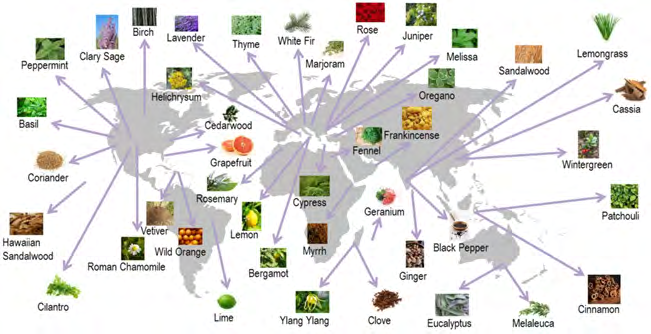
EOs, also named volatile odoriferous oil, are scented oily liquids obtained from different parts of aromatic herbs and medicinal plants (flowers, peels, stems, leaves, buds, barks and seeds) (Figure 1). They can be distillated from botanical materials by different techniques such as hydro- or steam distillations, cold expression method, solvent-free microwave extraction assay, supercritical fluid extraction technique, and so on. Among all these methods, steam distillation has been extensively used, particularly for commercial scale production [32, 33].
Steam distillation is a technique used for the recovery of volatile or aromatic chemical constituents with high boiling point, from inert and complex matrices, liquid or solid, using saturated or superheated steam as separation and energy agent. This method is used for the extraction of EOs from aromatic herbs, spices and medicinal plants. Steam distillation (Figure 2) is done by passing dry steam through the aromatic herbs and plant material whereby the steam volatile molecules are volatilized, condensed and obtained in receivers. Steam distillation has been in use for EO extraction for many decades. Hydrosteam distillation is done when the aromatic herbs and the perfumery plant material is susceptible to direct steam. In this method the plant material is supported on a screen or a perforated grid placed at some distance above the bottom of the still. Distillation is realized with low pressure steam which replaces the volatile compounds from the intact aromatic plants. In this method, two different products are obtained: EO and hydrosol (aromatic water). The EO is in the upper phase and the aromatic water (water and some hydrolyzed molecules) is in the bottom phase of the decanter. Steam-distillation has been used for a many years to extract dairy aromas from dairy products. Nevertheless, great temperatures may affect the composition and the quality of the aroma obtained, because of degradation of heat-sensitive flavor molecules. Another main disadvantage is that hydrophobic flavor components may be retained by the matrix of the original plant, leading to a changed composition of the aroma. As steam distillates contain a significant quantity of water (up to 90%), a weak aroma is obtained [32, 33, 34, 35].
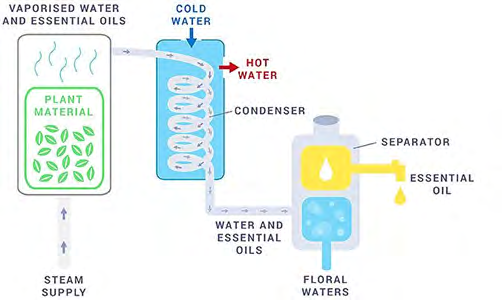
Figure 2: Extraction of essential oils from perfumery plant material using the steam distillation technique. (Source: www.essentialoilmach.com/news ; updated: 17 March 2020, 10:00 GMT) Cold pressing (Figure 3) is a mechanical extraction process of EOs, also known as expression or mechanical separations. Cold-pressed EOs from the peel are the first by-products to be recovered during the processing of Citrus fruits and any improvement in their recovery is of great interest for the Citrus processing industry. It is typically used to extract Citrus EOs. In this technique, the oil is forced from the material under high mechanical pressure. Many base oils are obtained in the same way.
![Figure 3: Cold-Press extraction used for citrus peels. (Source: www.essentialoilmach.com/news ; updated: 17 March 2020, 10:00 GMT) Novel equipment’s have been constantly established to overcome the limitation and inadequacy of traditional techniques, and to improve the distillation effectiveness [34,35].](/fulltextimages/5157/fig_3.png)
EOs found in several aromatic herbs differ in flavor and odor, which are influenced by the quantity and types of chemical compounds present in EOs. EOs are unique because they offer such an extensive spectrum of uses. Actually, as many as 3,000 EOs are of commercial significance in current industries ranging from beverages and food to pharmaceuticals and cosmetics [35]. The food manufacturing has become particularly involved in approving EOs to satisfy consumer demands [17, 23, 34].
EOs have been recognized to have antimicrobial and antioxidant properties, thereby serving as natural food preservatives. Further, EOs may be able to be used as food additives in packaging to improve the food shelf-life, in which the characteristics of those materials, mainly water vapor barrier property linked with hydrophobicity in nature of EOs, can be enhanced [36, 37, 38].
In Vitro Antimicrobial Activity of EOs against Food Spoilage Microorganisms
Aromatic herbs and their EOs are possibly valuable sources of antibacterial and antifungal chemical molecules. Several reports and investigations have been done and published on the inhibitory effects of EOs and their characteristic compounds against different types of microorganisms, including food-borne and spoilage pathogens [39, 40, 41]. Due to these properties, aromatic herbs and spices have been added to food since antique time, not only as condiments or flavoring agents but also as preservatives [23, 26, 29, 42]. Furthermore, essential oil- rich aromatic plants and spices have usually been used in Chinese, Indian, Middle Eastern, Indian, and African cuisines to stimulate digestion and enhance food taste [15, 21, 23].
The principal chemical constituents of EOs - mono- and sesquiterpenes including phenols (thymol, carvacrol and eugenol), ethers (eucalyptol), esters (geranyl acetate and citronellyl formate), aldehydes (cinnamaldehyde, citral, geranial and neral), ketones (carvone and menthone), alcohols (citronellol, geraniol, linalool and menthol) and carbohydrates (limonene and pinene) (Figure 4) are responsible for the in vitro antimicrobial and antioxidant activities of medicinal plants and aromatic herbs as well as for their EOs [16, 34, 35, 37, 43]. Also, the minor compounds of EOs have revealed that they play a significant role against fungal and bacterial species. It can be probably due to the synergy effect when combined with major chemical compounds as it occurs in rose-scented geranium, lemongrass, thyme, sage, lavender, oregano and eucalyptus [23, 34, 35, 38, 44]. Moreover, numerous EOs and their constituents are stated by the U.S. FDA to have a GRAS (Generally Recognized As Safe) status and are approved as aroma or food additives [21, 23].
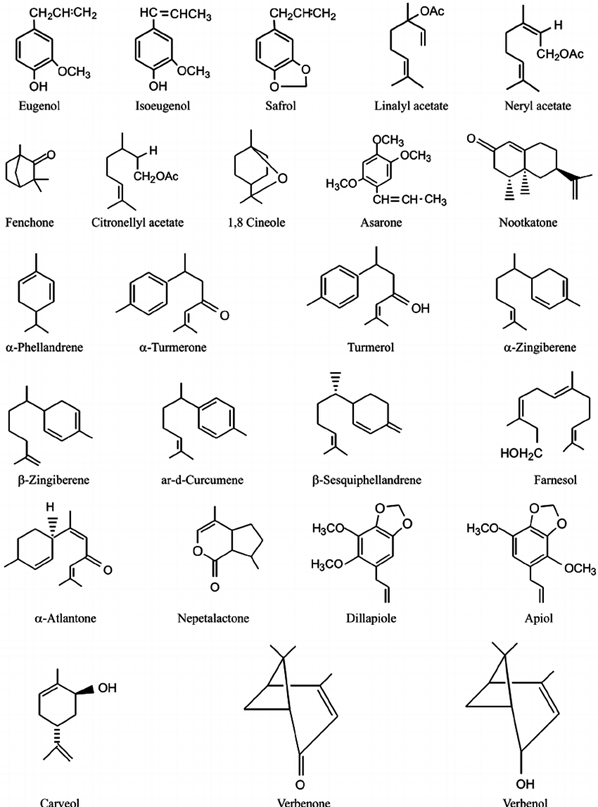
Currently, scientists are studying EOs as many of them have antimicrobial activities and are powerful antifungal and antibacterial agents. Several EOs proved powerful and potent in vitro antibacterial and antifungal effects that have the ability to serve as natural additives against food-borne and spoilage species [18, 45, 46, 47].
The antibacterial activities of botanical EOs have been known for a long time and a number of researches on the antibacterial effect of plant essential oils and their derivatives have been reported by different investigations [44, 46]. For example, the microbial inhibitory effect of EOs and major compounds has been reported on Escherichia coli and Escherichia coli O157:H7 [47, 48, 49].
When comparing results obtained in different publications, most authors give an overview about whether or not plant EOs or major compounds have antibacterial and antifungal effects against Gram-negative or Gram-positive bacteria, yeast and fungi. However, not all studies describe detail about the extent or spectrum of this inhibitory effect. Primarily, the difference in the microbial inhibitory effect of EOs or chemical compounds between different publications may be linked to the diverse environmental growth condition and growth stage of aromatic herbs and medicinal plants, extraction techniques, chemical composition of EOs, microbial strains and species used and storage temperature [19, 27, 50, 51, 52]. Additionally, some EOs with the same common name may be derived from diverse botanical species. Moreover, the technique used to assess in vitro antibacterial and antifungal activities and the choice of test microorganism (s) varies between research articles [20, 53, 54, 55, 56, 57, 58, 59, 60].
How Efficient are Essential Oils as Preservatives in Foods?
Research into the efficacy of EOs or their major compounds in the preservation of food commodities in order to increase shelf-life has been efficaciously carried out. Several articles on the antioxidant and antimicrobial properties of EOs in food recommend their use to improve food safety [26, 27, 29, 39, 61].
The use of EOs for shelf-life improvement in foods is mostly due to their antibacterial, antifungal and antioxidant effects which also is mirrored in the number of research articles published when the words “antimicrobial” (344,000 papers), “antibacterial” (244,000 Papers), “antifungal” (144,000 papers), “antioxidant” (418,000 papers), or both (162,000 papers) were used as searching criterion in google scholar website. Regarding the type of food systems generally used in these investigations, it can be concluded that EOs or chemical compounds have been applied as natural preservatives in all kinds of foods: fish products (70,500 papers), meat products (61,300 papers), milk and dairy products (40,100 papers), fruits (63,000 papers), vegetables (56,100 papers), fruit juices (33,700 papers) and bread and baked foods (27,500 papers).
Furthermore, scientists have used EOs, either in pure or formulation forms, to improve food shelf-life in several storage containers such as those made of cardboard, tin, glass, polyethylene, or natural fabrics and have observed important extension of food shelf-life [62, 63].
Kim & Fung [64] reported inhibitory effects of Puerariae radix in ground beef and especially liquid foods like mushroom soup on Escherichia coli O157:H7. An earlier study demonstrated that some EO chemical compounds such as citronellal, citral, farnesol, citronellol, geraniol, eucalyptol, nerol, thymol and eugenol, and could protect chili seeds and fruits from fungal infection for up to 6 months [62]. Another study revealed that EO from Ageratum conyzoides effectively controlled rotting of mandarins by blue mold and increased mandarin shelf-life by up to 30 days [65]. It has been reported also that EO from Ocimum basilicum, Cymbopogon nardus and C. flexuosus could significantly control anthracnose in banana and increased banana shelf-life by up to 21 days [66]. Also, Cymbopogon flexuosus EO (20 μL/mL) is capable of protecting against rotting of Malus pumilo fruits for up to 3 weeks [67].
A fumigant application of EOs from Putranjiva roxburghii was effective against Aspergillus flavus and A. niger infecting groundnuts during storage and improved the shelf-life of groundnut from fungal contamination for up to 6 months [68]. The use of Cymbopogon pendulous EO as a fumigant increased groundnut shelf-life by 6-12 months [69], thus proving to be more effective than Puerariae roxburghii EO.
A small incorporation of oregano EO (up to 1% v/w) to ground meat was revealed to delay bacterial growth [29], while its addition to beef meat fillets contaminated with Listeria monocytogenes eliminated these harmful bacteria [70]. Further, several investigations have demonstrated that an addition of oregano EO to apple juice and eggplant salad [71] contaminated with Escherichia coli suppressed growth of these microorganisms [30].
Citrus EOs, such as lemon (Citrus limon), sweet orange (Citrus sinensis), and bergamot (Citrus aurantium var. bergamia) are cold-pressed from the citrus fruit peels. These EOs are rich with limonene, a hydrocarbon monoterpene that is a strong antimicrobial agent. Citrus EOs suppress growth of many bacteria that can cause food poisoning [72]. They are very active antimicrobial agents when added to bread and mozzarella cheese [73].
In some cases, the natural EO compounds performed even better than the synthetic food preservatives [57, 58, 59, 74]. These differences in efficacy of EOs may be related to the use of oils from different plant species, as well as to their chemical composition, dose level, and storage container type [20, 25, 34, 54].
Active Packaging Containing Essential Oils and Applications
Nowadays, smart packaging has gained increasing attention, for example, antimicrobial packaging, which can be applied to extend the shelf-life of food and products [75, 76]. To enhance the property of those packaging, antimicrobial compounds or phytochemical extracts with the selected bioactivity are incorporated. Thus, several approaches have been introduced, not only for increasing bioactivity but also modifying the property of biomaterials used for packaging [77, 78, 79].
EO integration into food packaging may increase water vapor barrier properties of protein-based films, improve the strength of the film and resistance to stretching, decrease transparency, and help prevent food contamination by interacting with the films [80, 81].
A new research in the Journal of Food Science, published by the Institute of Food Technologists (IFT), revealed that EOs may be able to be used as natural food preservatives in packaging to help improve the shelf-life of food products [82].
The films that were used in a recent 2014 research published in the Journal of Agricultural and Food Chemistry containing oregano and clove oil were able to preserve bread longer than common commercial additives. Bread was chosen given its global popularity as a food-stuffs mainstay. The films were tested after 10 days and the EO used, as a food preservative, were shown to slow mold growth [83, 84, 85, 86, 87, 88, 89, 90, 91, 92, 93, 94]. EO films could offer widespread application, reducing food waste while slowing the production of synthetic additives. Reducing chemical food additive and preservative production offers a positive environmental impact by decreasing pollution that results from the manufacturing process as well [95, 96, 97]. One possible method to achieve this is to add EO combinations to edible fibers and to coat the surface of food products - such as cheese, bread, and fruits - creating edible films. These films protect freshness and prevent growth of pathogenic bacteria. Edible films containing a combination of clove Syzygium aromaticum and oregano Origanum vulgare [83] and a combination of rosemary (Rosmarinus officinalis), oregano (Origanum vulgare) and garlic (Allium sativum) [85] EOs were found to be particularly effective.
Limitations
Although EOs have been demonstrated to be favorable substitutes to synthetic food additives, they have several restrictions and limitations that must be resolved before their use in a real food matrice. High volatility and instability, low water solubility, and strong scent are the principal properties that make it problematic for food uses [20, 24, 25, 54]. Modern progresses that refer to novel and promising forms of addition to decrease these difficulties are presently under investigation. Their potential use into coated films and packaging materials, but also directly into the food systems as nano-encapsulation (Figure 5) and coating are some of their different uses among others [55].
![Figure 5: Schematic representation of possible mechanism of actions nano-encapsulated Eos [93].](/fulltextimages/5157/fig_5.png)
Although the majority of the botanical EOs are recognized as GRAS [26, 34], their application as food preservatives is limited, and possible reasons for this limitation may be the strong flavor and scent of these natural molecules when used at active concentrations and the reduction in their efficiency when they are incorporated to complicated food systems [29] in comparison with microbiological media [56, 57, 58]. For this reason, there is a growing request for exact data of the minimum inhibitory concentrations (MIC) and minimum bactericidal or fungicidal concentrations (MBC, MFC) of EOs to allow equilibrium between the antimicrobial efficiency and sensorial or organoleptic acceptability [59] in different systems. For example, doses of Oregano EO as low as 0.7% seemed to be microbiologically effective and organoleptically acceptable as well. The Addition of EOs is therefore not problematic, especially not when used in such a small amount as we define according to the MIC and MBC values [60]. Furthermore, a recent investigation reported that EO extracted from oregano can maintain the physico-chemical, sensory acceptance, decrease protein and lipid oxidation of lamb meat after freezing storage after 120 days [60]. These data suggest that that oregano EO may be a potent alternative to the chemical food preservatives.
Synergistic Preservative Effects
The antimicrobial effect of EOs in model food matrices or in real food is well documented in the literature [30, 70, 85]. Several reports are focused on the synergistic action of EOs. Scientists are working for the combinations of EOs that will make them active against a wide spectrum of bacteria, yeast and fungi; combine both antioxidant and antimicrobial effects; and allow the EOs to accomplish the desired effects with the minimal concentration [20, 34, 86].
Application of EOs is mainly advisable because spices and aromatic herbs are usually added in food to obtain a specific flavor and taste. Adding different plant derived antimicrobials or EOs in combination should increase both the antimicrobial spectrum of activity and the level of inhibition due to synergistic effects. Thus, the combination of EOs and their chemical compounds might have even greater potential [87, 88]. Due to the growing consideration in natural food additives, EOs have been used more extensively, particularly in combination with other preservations under the concept of “hurdle technology.” Oregano EO was studied as an alternative natural additive and found to contribute to the intrinsic safety of eggplant salad, acting synergistically with low pHs and storage temperatures [30]. When associated with balanced portions of safe chemical preservatives, the synergistic effect between EOs and synthetic preservatives is even more powerful. This gives food manufacturers a promising way to compromise between the undeniable necessity to maintain food safety and the desire for natural ingredients [89, 90].
Further, it has been revealed that the use of thermal processing affects the aromatic compounds such as EOs by increasing their vapour pressure, which in turn increases the probability to solubilize the bacterial and yeast cell membrane (Figure 6). Though, the application of only one preservation treatment cannot guarantee the microbial stability of foods and beverages without disturbing the final sensorial and organoleptic properties. The association of moderate heat treatment with EOs (Mentha, Lemongrass (Cymbopogan citratus) and Eucalyptus) gives a very valuable and suitable synergy whereby increase in temperatures during storage could improve the vapour phase concentration of EOs, thereby enhancing the antifungal and antibacterial properties for better food or beverage preservation [56, 57, 58, 91]. This synergistic association can be used as a superior preservative with minimal impact on the sensory properties of the food and beverage.
![Figure 6: Antimicrobial action mechanism of EOs[91].](/fulltextimages/5157/fig_6.png)
Conclusion
The interest in EOs and their related terpenes for potential application in food preservation has been augmented in a last decade by an increasingly negative consumer perception of chemical and synthetic food additives. The use of chemical additives and synthetic preservatives and is leading to cancer, inflammation, intoxication and other degenerative diseases. Additionally, food-borne and food spoilage microorganisms are a growing human health concern worldwide, calling for more potent preservation approaches. One of the major emerging technologies for food preservation is the application of EOs and their characteristic purified molecules. EOs and related terpenes have received growing consideration as natural food preservatives for the shelf-life improvement. They have in vitro antimicrobial activity against a wide range of bacteria, fungi and yeast as well as antioxidant property, which is generally attributed to phenolic compounds and oxygenated monoterpenes owned by EOs. Mediterranean dietary food products are greatly appreciated by consumers; their natural preservation with EOs would represent an added value. As EOs contain a large number of molecules, it is expected that their mechanism of action includes numerous targets in the microorganism’s cell. However, the main obstacle for using EO constituents as food preservatives is that they are most often not active enough as single molecules, and they cause negative sensorial and organoleptic effects when used and added in sufficient quantities to provide an antibacterial and antifungal activities. Further, it must be taken into account that EOs have a strong flavor and odor, which can change the flavor and scent of food products. Consequently, investigations should focus on the minimum necessary EO concentration, which still maintains microbial inhibitory effect without altering the organoleptic properties of food products. In addition, the combined use of different EOs or related terpenes, in lower doses, may satisfy the quality and safety of food products not depreciating their sensory characteristics.
Conflicts of Interest
The author declares no conflict of interest.
References
-
Van Ruth SM, de Pagter-de Witte L (2020) Integrity of organic foods and their suppliers: fraud vulnerability across chains. Foods 9(2):188.
-
Kaszoni-Rückerl I, Mustedanagic A, Muri-Klinger S, Brugger K, Wagner KH, et al. (2020) Predominance of distinct Listeria Innocua and Listeria Monocytogenes in recurrent contamination events at dairy processing facilities. Microorganisms 8(2): 234.
-
Ripolles-Avila C, García-Hernández N, Cervantes- Huamán BH, Mazaheri T, Rodríguez-Jerez JJ (2019) Quantitative and compositional study of monospecies biofilms of spoilage microorganisms in the meat industry and their interaction in the development of multispecies biofilms. Microorganisms 7(12): 655.
-
Pobiega K, Kraśniewska K, Przybył JL, Bączek K, Żubernik J, et al. (2019) Growth biocontrol of foodborne pathogens and spoilage microorganisms of food by polish propolis extracts. Molecules 24(16): 2965.
-
Basavegowda N, Patra JK, Baek KH (2020) Essential oils and mono/bi/tri-metallic nanocomposites as alternative sources of antimicrobial agents to combat multidrug- resistant pathogenic microorganisms: An overview. Molecules 25(5): 1058.
-
Oswell NJ, Thippareddi H, Pegg RB (2018) Practical use of natural antioxidants in meat products in the US: A review. Meat science 145: 469-479.
-
Parke DV, Lewis DFV (1992) Safety aspects of food preservatives. Food Addit Contamin 9(5): 561-577.
-
Brul S, Coote P (1999) Preservative agents in foods: mode of action and microbial resistance mechanisms. Int J Food Microbiol 50(1-2): 1-17.
-
Pandey H, Kumar V, Roy BK (2014) Assessment of genotoxicity of some common food preservatives using Allium cepa L. as a test plant. Toxicol Reports 1: 300-308.
-
Lindenschmidt RC, Tryka AF, Goad ME, Witschi HP (1986) The effects of dietary butylated hydroxytoluene on liver and colon tumor development in mice. Toxicology 38(2): 151-160.
-
Bauer AK, Dwyer-Nield LD, Hankin JA, Murphy RC, Malkinson AM (2001) The lung tumor promoter, butylated hydroxytoluene (BHT), causes chronic inflammation in promotion-sensitive BALB/cByJ mice but not in promotion-resistant CXB4 mice. Toxicology 169(1): 1-15.
-
Randhawa S, Bahna SL (2009) Hypersensitivity reactions to food additives. Curr Opin Aller clin Immunol 9(3): 278-283.
-
Beezhold BL, Johnston CS, Nochta KA (2014) Sodium benzoate-rich beverage consumption is associated with increased reporting of ADHD symptoms in college students: A pilot investigation. J Attent Dis 18(3): 236- 241.
-
McCann D, Barrett A, Cooper A, Crumpler D, Dalen L, et al. (2007) Food additives and hyperactive behaviour in 3-year-old and 8/9-year-old children in the community: a randomised, double-blinded, placebo-controlled trial. The Lancet 370(9598):1560-1567.
-
Nychas GJE (1995) Natural antimicrobials from plants. in new methods of food preservation; Gould GW (Edn.), Blackie Academic Professional, London, UK, pp: 58-89.
-
Tongnuanchan P, Benjakul S (2014) Essential oils: extraction, bioactivities, and their uses for food preservation. J Food Sci 79(7): R1231-R1249.
-
Calo JR, Crandall PG, OBryan CA, Ricke SC (2015) Essential oils as antimicrobials in food systems-A review. Food Contr 54: 111-119.
-
Chouhan S, Sharma K, Guleria S (2017) Antimicrobial activity of some essential oils-present status and future perspectives. Medicines 4(3): 58.
-
Pandey AK, Kumar P, Singh P, Tripathi NN, Bajpai VK (2017) Essential oils: Sources of antimicrobials and food preservatives. Front Microbiol 7: 2161.
-
Hyldgaard M, Mygind T, Meyer RL (2012) Essential oils in food preservation: mode of action, synergies, and interactions with food matrix components. Front Microbiology 3:12.
-
Soković M, Glamočlija J, Marin PD, Brkić D, Van Griensven LJ (2010) Antibacterial effects of the essential oils of commonly consumed medicinal herbs using an in vitro model. Molecules 15(11): 7532-7546.
-
Fernández-López J, Viuda-Martos M (2018) Introduction to the Special Issue: Application of essential oils in food systems. Foods 7: 56.
-
Preedy VR (2015) Essential Oils in food preservation, flavor and safety. Academic Press, London, UK.
-
Perricone M, Arace E, Corbo MR, Sinigaglia M, Bevilacqua A (2015) Bioactivity of essential oils: a review on their interaction with food components. Front Microbiol 6: 76.
-
Speranza B, Corbo MR (2010) Essential oils for preserving perishable foods: possibilities and limitations. application of alternative food-preservation technologies to enhance food safety and stability. Bentham Science Publishers, Sharjah, UAE, pp: 35-37.
-
Gottardi D, Bukvicki D, Prasad S, Tyagi AK (2016) Beneficial effects of spices in food preservation and safety. Front Microbiol 7: 1394.
-
Tassou CC, Drosinos EH, Nychas GJE (1995) Effects of essential oil from mint (Mentha piperita) on Salmonella enteritidis and Listeria monocytogenes in model food systems at 4 and 10 C. J Appl Bacteriol 78(6): 593-600.
-
Soković M, Tzakou O, Pitarokili D, Couladis M (2002) Antifungal activities of selected aromatic plants growing wild in Greece. Food/Nahrung 46(5): 317-320.
-
Skandamis PN, Nychas GJ (2001) Effect of oregano essential oil on microbiological and physico‐chemical attributes of minced meat stored in air and modified atmospheres. J Appl Microbiol 91(6): 1011-1022.
-
Skandamis PN, Nychas GJE (2000) Development and evaluation of a model predicting the survival of Escherichia coli O157: H7 NCTC 12900 in homemade eggplant salad at various temperatures, pHs, and oregano essential oil concentrations. Appl Environ Microbiol 66(4): 1646-1653.
-
Chen GW, Lin YH, Lin CH, Jen HC (2018) Antibacterial activity of emulsified pomelo (Citrus grandis Osbeck) peel oil and water-soluble chitosan on Staphylococcus aureus and Escherichia coli. Molecules 23(4): 840.
-
Cassel E, Vargas RM (2006) Experiments and modeling of the Cymbopogon winterianus essential oil extraction by steam distillation. J Mexic Chem Soc 50(3): 126-129.
-
Lira PDL, Retta D, Tkacik E, Ringuelet J, Coussio JD, et al. (2009) Essential oil and by-products of distillation of bay leaves (Laurus nobilis L.) from Argentina. Ind Crops Prod 30(2): 259-264.
-
Burt S (2004) Essential oils: their antibacterial properties and potential applications in foods-a review. Int J Food Microbiol 94(3): 223-253.
-
Bakkali F, Averbeck S, Averbeck D, Idaomar M (2008) Biological effects of essential oils-a review. Food Chem Toxicol 46(2): 446-475.
-
Koyama S, Heinbockel T (2020) The Effects of Essential Oils and Terpenes in Relation to Their Routes of Intake and Application. Int J Mol Sciences 21(5):1558.
-
Klimek-Szczykutowicz M, Szopa A, Ekiert H (2020) Citrus limon (Lemon) phenomenon-a review of the chemistry, pharmacological properties, applications in the modern pharmaceutical, food, and cosmetics industries, and biotechnological studies. Plants 9(1): 119.
-
Sadgrove N, Jones G (2015) A contemporary introduction to essential oils: chemistry, bioactivity and prospects for Australian agriculture. Agriculture 5(1): 48-102.
-
Friedman M, Henika PR, Mandrell RE (2002) Bactericidal activities of plant essential oils and some of their isolated constituents against Campylobacter jejuni, Escherichia coli, Listeria monocytogenes, and Salmonella enterica. J Food Prot 65(10):1545-1560.
-
Grujic‐Jovanovic S, Skaltsa HD, Marin P, Sokovic M (2004) Composition and antibacterial activity of the essential oil of six Stachys species from Serbia. Flav Fragr J 19(2): 139-144.
-
Mimica-Dukic N, Bozin B, Sokovic M, Simin N (2004) Antimicrobial and antioxidant activities of Melissa officinalis L.(Lamiaceae) essential oil. J Agr Food Chem 52(9): 2485-2489.
-
Dosoky NS, Setzer WN (2018) Chemical composition and biological activities of essential oils of Curcuma species. Nutrients 10(9): 1196.
-
Avoseh O, Oyedeji O, Rungqu P, Nkeh-Chungag B, Oyedeji A (2015) Cymbopogon species; ethnopharmacology, phytochemistry and the pharmacological importance. Molecules 20(5): 7438-7453.
-
Di Pasqua R, Betts G, Hoskins N, Edwards M, Ercolini D, et al. (2007) Membrane toxicity of antimicrobial compounds from essential oils. J Agr Food Chem 55(12): 4863-4870.
-
Nieto G (2017) Biological activities of three essential oils of the Lamiaceae family. Medicines 4(3): 63.
-
D’agostino M, Tesse N, Frippiat JP, Machouart M, Debourgogne A (2019) Essential oils and their natural active compounds presenting antifungal properties. Molecules 24(20): 3713.
-
Dorman HJD, Deans SG (2000) Antimicrobial agents from plants: antibacterial activity of plant volatile oils. J Appl Microbiol 88(2): 308-316.
-
Dadalioǧlu I, Evrendilek GA (2004) Chemical compositions and antibacterial effects of essential oils of Turkish oregano (Origanum minutiflorum), bay laurel (Laurus nobilis), Spanish lavender (Lavandula stoechas L.), and fennel (Foeniculum vulgare) on common foodborne pathogens. J Agr Food Chem 52(26): 8255- 8260.
-
Özcan M, Erkmen O (2001) Antimicrobial activity of the essential oils of Turkish plant spices. Eur Food Res Technol 212(6): 658-660.
-
Liu Q, Meng X, Li Y, Zhao CN, Tang GY, et al. (2017) Antibacterial and antifungal activities of spices. Int J Mol Sci 18(6): 1283.
-
Moreira MR, Ponce AG, Del Valle CE, Roura SI (2005) Inhibitory parameters of essential oils to reduce a foodborne pathogen. LWT-Food Sci Technol 38(5): 565- 570.
-
Prakash B, Singh P, Kedia A, Dubey NK (2012) Assessment of some essential oils as food preservatives based on antifungal, antiaflatoxin, antioxidant activities and in vivo efficacy in food system. Food Res Int 49(1): 201- 208.
-
Hammer KA, Carson CF, Riley TV (1999) Antimicrobial activity of essential oils and other plant extracts. J Appl Microbiol 86(6): 985-990.
-
Seow YX, Yeo CR, Chung HL, Yuk HG (2014) Plant essential oils as active antimicrobial agents. Critical Rev Food Sci Nutr 54(5): 625-644.
-
Prakash B, Kujur A, Yadav A, Kumar A, Singh PP, et al. (2018) Nanoencapsulation: An efficient technology to boost the antimicrobial potential of plant essential oils in food system. Food Contr 89: 1-11.
-
Tyagi AK, Gottardi D, Malik A, Guerzoni ME (2013) Anti-yeast activity of mentha oil and vapours through in vitro and in vivo (real fruit juices) assays. Food Chem 137(1-4): 108-114.
-
Tyagi AK, Gottardi D, Malik A, Guerzoni ME (2014) Chemical composition, in vitro anti-yeast activity and fruit juice preservation potential of lemon grass oil. LWT-Food Sci Technol 57(2): 731-737.
-
Tyagi AK, Prasad S (2015) Volatile phytochemicals: potential role in food safety and preservation. Air Water Borne Dis 10(4172): 2167-7719.
-
Lambert RJW, Skandamis PN, Coote PJ, Nychas GJ (2001) A study of the minimum inhibitory concentration and mode of action of oregano essential oil, thymol and carvacrol. J Appl Microbiol 91(3): 453-462.
-
Fernandes RDPP, Trindade MA, Tonin FG, Pugine SMP, Lima CGD, et al. (2017) Evaluation of oxidative stability of lamb burger with Origanum vulgare extract. Food Chem 233: 101-109.
-
Koutsoumanis K, Lambropoulou K, Nychas GE (1999) A predictive model for the non-thermal inactivation of Salmonella enteritidis in a food model system supplemented with a natural antimicrobial. Int J Food Microbiol 49(1-2): 63-74.
-
Tripathi NN, Asthana A, Dixit SN (1984) Toxicity of some terpenoids against fungi infesting fruits and seeds of Capsicum annuum L. during storage. J Phytopathol 110(4): 328-335.
-
Pandey AK, Palni UT, Tripathi NN (2014) Repellent activity of some essential oils against two stored product beetles Callosobruchus chinensis L. and C. maculatus F.(Coleoptera: Bruchidae) with reference to Chenopodium ambrosioides L. oil for the safety of pigeon pea seeds. J Food Sci Technol 51(12): 4066-4071.
-
Kim S, Fung DYC (2004) Antibacterial effect of water- soluble arrowroot (Puerariae radix) tea extracts on foodborne pathogens in ground beef and mushroom soup. J Food Protect 67(9): 1953-1956.
-
Dixit SN, Chandra H, Tiwari R, Dixit V (1995) Development of a botanical fungicide against blue mould of mandarins. J Stored Prod Res 31(2): 165-172.
-
Anthony S, Abeywickrama K, Wijeratnam SW (2003) The effect of spraying essential oils of Cymbopogon nardus, Cymbopogon flexuosus and Ocimum basilicum on postharvest diseases and storage life of Embul banana. J Hort Sci Biotechnol 78(6): 780-785.
-
Shahi SK, Patra M, Shukla AC, Dikshit A (2003) Use of essential oil as botanical-pesticide against post harvest spoilage in Malus pumilo fruit. BioContr 48(2): 223-232.
-
Tripathi NN, Kumar N (2007) Putranjiva roxburghii oil-A potential herbal preservative for peanuts during storage. J Stored Prod Res 43(4): 435-442.
-
Shukla AC (2009) Volatile oil of Cymbopogon pendulus as an effective fumigant pesticide for the management of storage-pests of food commodities. Nat Acad Sci Lett 32(1-2): 51-59.
-
Tsigarida E, Skandamis P, Nychas GJ (2000) Behaviour of Listeria monocytogenes and autochthonous flora on meat stored under aerobic, vacuum and modified atmosphere packaging conditions with or without the presence of oregano essential oil at 5 C. J Appl Microbiol 89(6): 901-909.
-
Friedman M, Henika PR, Levin CE, Mandrell RE (2004) Antibacterial activities of plant essential oils and their components against Escherichia coli O157: H7 and Salmonella enterica in apple juice. J Agr Food Chem 52(19): 6042-6048.
-
Fisher K, Phillips CA (2006) The effect of lemon, orange and bergamot essential oils and their components on the survival of Campylobacter jejuni, Escherichia coli O157, Listeria monocytogenes, Bacillus cereus and Staphylococcus aureus in vitro and in food systems. J Appl Microbiol 101(6): 1232-1240.
-
Gammariello D, Di Giulio S, Conte A, Del Nobile MA (2008) Effects of natural compounds on microbial safety and sensory quality of Fior di Latte cheese, a typical Italian cheese. J Dairy Sci 91(11): 4138-4146.
-
Amara N, Boukhatem MN, Ferhat MA, Kaibouche N, Laissaoui O, Boufridi A (2017) Applications potentielles de l’huile essentielle de lavande papillon (Lavandula stoechas L.) comme conservateur alimentaire naturel. Phytothérapie, pp : 1-9.
-
Appendini P, Hotchkiss JH (2002) Review of antimicrobial food packaging. Innov Food Sci Emerg Technol 3(2): 113-126.
-
Quintavalla S, Vicini L (2002) Antimicrobial food packaging in meat industry. Meat Sci 62(3): 373-380.
-
Chouliara E, Karatapanis A, Savvaidis IN, Kontominas MG (2007) Combined effect of oregano essential oil and modified atmosphere packaging on shelf-life extension of fresh chicken breast meat, stored at 4 C. Food Microbiol 24(6): 607-617.
-
Nielsen PV, Rios R (2000) Inhibition of fungal growth on bread by volatile components from spices and herbs, and the possible application in active packaging, with special emphasis on mustard essential oil. Int J Food Microbiol 60(2-3):219-229.
-
Hyun JE, Bae YM, Yoon JH, Lee SY (2015) Preservative effectiveness of essential oils in vapor phase combined with modified atmosphere packaging against spoilage bacteria on fresh cabbage. Food Contr 51: 307-313.
-
Zanetti M, Carniel TK, Dalcanton F, dos Anjos RS, Riella HG, de Araujo PH, Fiori MA (2018) Use of encapsulated natural compounds as antimicrobial additives in food packaging: A brief review. Trends Food Sci Technol 81: 51-60.
-
Goulas AE, Kontominas MG (2007) Combined effect of light salting, modified atmosphere packaging and oregano essential oil on the shelf-life of sea bream (Sparus aurata): Biochemical and sensory attributes. Food Chem 100(1): 287-296.
-
Suhr KI, Nielsen PV (2005) Inhibition of fungal growth on wheat and rye bread by modified atmosphere packaging and active packaging using volatile mustard essential oil. J Food Sci 70(1): M37-M44.
-
Otoni CG, Pontes SF, Medeiros EA, Soares NDF (2014) Edible films from methylcellulose and nanoemulsions of clove bud (Syzygium aromaticum) and oregano (Origanum vulgare) essential oils as shelf life extenders for sliced bread. J Agr Food Chem 62(22): 5214-5219.
-
Seydim AC, Sarikus G (2006) Antimicrobial activity of whey protein based edible films incorporated with oregano, rosemary and garlic essential oils. Food Res Int 39(5): 639-644.
-
Koutsoumanis K, Tassou CC, Taoukis PS, Nychas GJ (1998) Modelling the effectiveness of a natural antimicrobial on Salmonella enteritidis as a function of concentration, temperature and pH, using conductance measurements. J Appl Microbiol 84(6): 981-987.
-
Lachowicz KJ, Jones GP, Briggs DR, Bienvenu FE, Wan J, Wilcock A, Coventry MJ (1998) The synergistic preservative effects of the essential oils of sweet basil (Ocimum basilicum L.) against acid-tolerant food microflora. Lett Appl Microbiol 26(3): 209-214.
-
Stanojevic D, Comic LJ, Stefanovic O, Sukdolak SS (2010) In vitro synergistic antibacterial activity of Melissa officinalis L. and some preservatives. Spanish J Agri Res 8(1): 109-115.
-
Mishra VK, Gupta S, Pundir RK (2014) Synergistic antimicrobial activity of essential oil and chemical food preservatives against bakery spoilage fungi. CIBTech J Microbiol 4(1): 6-12.
-
Kurita N, Koike S (1982) Synergistic antimicrobial effect of acetic acid, sodium chloride and essential oil components. Agr Biol Chem 46(6):1655-1660.
-
Stanojević D, Čomić L, Stefanović O, Solujić-Sukdolak S (2010) In vitro synergistic antibacterial activity of Salvia officinalis L. and some preservatives. Arch Biol Sci 62(1): 167-174.
-
Tyagi KA, Bukvicki D, Gottardi D, Tabanelli G, Montanari C, Malik A, Guerzoni ME (2014) Eucalyptus essential oil as a natural food preservative: in vivo and in vitro antiyeast potential. BioMed Res Int 2014: 9.
-
Li Y, Fabiano-Tixier AS, Chemat F (2014) Essential oils as reagents in green chemistry. Springer International Publishing, Cham, Switzerland, pp: 71-78.
-
Rai M, Paralikar P, Jogee P, Agarkar G, Ingle AP, et al. (2017) Synergistic antimicrobial potential of essential oils in combination with nanoparticles: emerging trends and future perspectives. Int J Pharm 519(1-2): 67-78.
-
Koul O, Walia S, Dhaliwal GS (2008) Essential oils as green pesticides: potential and constraints. Biopest Int 4(1): 63-84.
-
Ballester-Costa C, Sendra E, Fernández-López J, Viuda- Martos M (2016) Evaluation of the antibacterial and antioxidant activities of chitosan edible films incorporated with organic essential oils obtained from four Thymus species. J Food Sci Technol 53(8): 374- 3379.
-
Moghimi R, Aliahmadi A, Rafati H (2017) Antibacterial hydroxypropyl methyl cellulose edible films containing nanoemulsions of Thymus daenensis essential oil for food packaging. Carbohyd Polymers 175: 241-248.
-
Xue F, Gu Y, Wang Y, Li C, Adhikari B (2019) Encapsulation of essential oil in emulsion based edible films prepared by soy protein isolate-gum acacia conjugates. Food Hydrocoll 96:178-189.
- The Role of Podocyte Apoptosis and the Involvement of SIRT1 in Diabetic Nephropathy
- Dealcoholization of Beer by Osmotic Distillation for the Beverage Industry
- Biopolymer-Based Edible Packaging- Biomaterials, Methods, and Applications in Food Industry: An Updated Review
- Influence of Bioprocessing Methods on 'China Rice' (Gawal R1), and Soyabean Supplementation on the Quality of Complementary Food
- Cassava (Manihot esculenta) Varietal Growth, Yield and Cyanide Content Performance in Three Sites in the South- Eastern Semi Arid Regions of Kenya
- Food Waste Treatment, Recycling, Management and Production of Value-Products-An Update on Methodologies and Current Trends