
Consumers’ Perceptions of Bivalve Shellfish Quality and Safety among Niger Delta Population
Bivalve shellfish is a delicious and healthy diet in coastal cities around the world. They are important food items in several dietary regimes in the Niger delta. This study investigated consumers’ perceptions of quality and safety of bivalve shellfish among populations along Niger delta coastline. A clustered based sampling procedure was applied to carry out consumer survey on bivalve shellfish perceptions of quality and safety at four locations along the Atlantic coastline of Niger delta. This was carried out through the use open questionnaire administered through direct interview. Results showed a significant relationship (p
Introduction
Bivalve shellfish is an important and nutritive food item to populations residing at river banks, coastal and inland water areas of the world. According to World Bank reports, bivalve shellfish plays a significant function of meeting protein and nutrient needs of the low income class [1]. Currently, seafood including bivalve shellfish accounted for over 20% of protein need that are obtained from animal sources. The proportion of bivalve consumption is liable to improve due to the prevailing world economy and higher demand by middle income earners who seek higher-value seafood [2]. Bivalve shellfish are soft-bodied invertebrate which are enclosed in two hard shells. They inhabit fresh and marine waters from the abyssal depths of high intertidal areas in tropical to warm temperate waters. They are regarded as delicious and nutritive food substance in some diet in several places. The commonest types include different species of the clams, oysters scallops and mussels [3, 4].
Globally, bivalve production have continued to increase in the past sixty-six years moving from nearly a million tonne in 1950 to over 17.1million tonnes in 2016, which provided over 5% of the total amount of income in 2016 [5]. Bivalve shellfish presently have become a well-established food commodity in global market. Demand for the products has continued to increase annually with supply unable to match the growing interest. Bivalve shellfish constitute a significant component of native diet of an average Niger delta family in Nigeria. It has also been reported that fishery resources constitute a greater part of primary and traditional source of income and livelihood to some coastal population in this part of the country [6]. Bivalve shellfish and other fishery resources are exploited at subsistence level by fishermen, youth and adult women residing at the coastal communities of the Niger Delta [7]. At that level of production, bivalve shellfish are eventually vended either fresh or dried in local and wet markets for home consumption, restaurant operators and other food vendors. It has been noted that data obtained from relevant studies obtained during value chain assessment indicated a relatively higher value and profitability of bivalve shellfish and their products [8].
From consumer’s stand point, food quality is what the consumer expects from the product and the expected quality, when it is compare with price and other costs, will satisfy food choice. Therefore consumer perceptions to food quality can be seen as a significant reason for choosing a food product [9]. Food safety has become a significant part of human life, particularly as consumers become more interested in nutrient needs. Also food safety and environmental issues play significant roles in determining the acceptability of food products [10]. Consumer surveys have been used to determine and predict consumer behaviour as well as provide the foundation for understanding appropriate concerns and barriers in increasing the consumption of seafood and further utilization [11]. Studies on the consumer behavior on bivalve shellfish in the Niger delta and similar studies at other part of the world have indicated that consumer’s choice and preference is a function of several factors such as purchasing price and availability, nutritional value, flavour, freshness, variety, convenience, home preparation, taste (sensory) among others [10].
Bivalves shellfish such as mangrove oyster, clams are preferably consumed fresh or slightly cooked. The traditional processing and cooking tradition raises researcher’s interest about bivalve quality and safety as well as their tendency to expose consumer to health risk. This is consequent to their filter-feeding pattern where they accumulate various forms of contaminants and hazards from the polluted water column [12, 13]. Also, harvesting of bivalve shellfish usually takes place in on shore estuaries of the Niger delta which is consistently subjected to strong environmental pressures. These changes mostly result in environmental changes and the resultant negative impact to aquatic flora. Harvesting and fishing for bivalve shellfish in Niger delta is devoid of regulatory or established procedures these is further worsen by high level of environmental deterioration and aquatic disturbance resulting from explorative activities of oil companies in this region [14, 15]. These have inevitably affected the quality and safety of bivalve shellfish harvested from this coastal water. For the purpose of public health protection and to provision of safe products to consumers, several regulations have been enacted to stipulate regulated limits for indicator micro-organisms (coliform counts) and pathogens (Salmonella counts) for a any shellfish production area that are suitable for direct human consumption (EC Regulations 854/2004, EC, 2004; 1441/2007, EC, 2007).
Consumer surveys remain an excellent tool for investigating the important safety concerns that have been highlighted by consumer groups and regulatory agencies as they are vital in forming a significant component of the much needed information to bivalve shellfish consumers and the general public [16]. The quality and safety of bivalve shellfish harvested from Niger delta, other issues such as sustainability and impact of oil pollution have continued to attract researcher’s interest. These are with the view of improving quality, fostering consumer satisfaction and achieve the much needed goal of biodiversity conservation [13, 17]. However, several studies on bivalve shellfish in the Niger delta have focused on the perceived impacts of oil and gas exploration in seafood production and management as well as analysis of accumulated contaminants in seafood and their risks to human health [7, 6, 13]. A joint initiated collaborative and participatory research involving bivalve shellfish dealers, consumers and other stakeholders in bivalve shellfish supply chain is insufficient or completely absence hence technological and optimum marketing strategies to improve existing marketing opportunities and enhance more value for bivalve shellfish is urgently needed. Therefore, understanding the rationale behind consumer choice for seafood particularly bivalve shellfish perceptions is quite significant in developing the most suitable consumer educational messages regarding the balance of nutritional needs and possibility of adverse health consequences relating with bivalve shellfish consumption [18]. The objective of the present study is to investigate consumers’ perception of quality and safety among population residing along the coastal and inland water areas of the Niger delta. Ultimately, the information obtained from this study would assist the consumers, academia and the health care professionals to develop appropriate information that will address the present concerns about shellfish safety. It is hoped that the outcome of this consumer survey will help stakeholders in the needed policy formulation relating to production, product diversity, and sustainability of bivalve shellfish as well as other shellfish value chain protocols.
Material and Methods
Consumer Survey
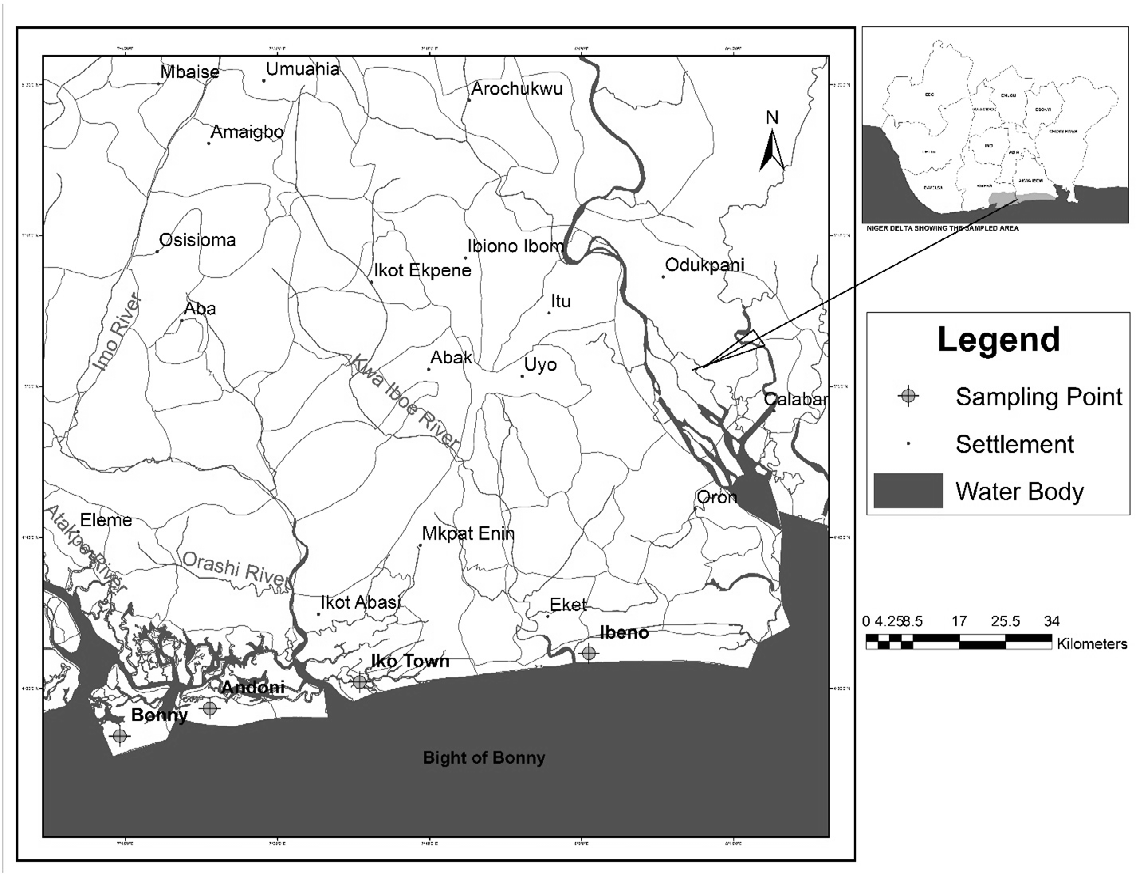
The survey data were collected at four locations along the Atlantic coastline in the Niger Delta The locations were: Andoni (4028’ - 4045’ and 7022’-7023), Bonny (4o23`- 4o25` and 7005’-7015’), Ibeno (4o56’ -4o57` and 8o 07’ - 8o15’) and Iko Town (4o20’-4o35’ and 7o40’- 7o50’). The first two locations are in Rivers State while the last two are in Akwa Ibom State respectively. Data collection started early February 2019 and continued toward the end of June 2019. The choice of the survey location was due to the present of several species of bivalve shellfish which serves as an important food item to the native population of these coastal communities. Also, fisheries activities including bivalve shellfish farming serves as a major source of revenue to local authorities and employment to youth and women (Figure 1).
Questionnaire
The questionnaire for this survey was divided into three (3) part. The first part focused on socio-demographic and economic characteristics of respondents which included the socio-demographic (gender, age, education attainment, employment status) and socio-economic (average household income) variables. The second section assessed consumer perceptions towards bivalve shellfish through the following indicators: availability, low price, pleasant flavour, no allergies, free of food poisoning, and absence of previous food poisoning experience. The third part of questionnaire focused on food safety and environmental concerns arising from bivalve consumption. The last section dealt with related health challenges encountered by the respondents while consuming different bivalve species as well as knowledge of possible sources of risk factors in the bivalve shellfish. Before the beginning of the survey, a pre-test questionnaire was ministered on the consumers for appropriate modification [19]. The actual questionnaires were ministered to respondents through face-to-face interview. Interviewers were familiar with the tradition of these coastal communities and could communicate through the indigenous languages. They were properly educated on the aims of the survey, how to conduct interviews and questionnaires sections and content. The size of respondents to be interviewed at a particular study location was determined according to equation below:
$$ n = \frac {4 p (1 - p)}{d ^ {2}} $$
Where n equals the total population size of respondent; d
is the error margin (0.05), while p is the size of population
of interest [20]. The number of interview performed was
approximately Two hundred and fifty (250).
Data Analysis
A clustered based sampling procedure was used to carry out consumer survey on bivalve shellfish perceptions of quality and safety at four locations through the use open questionnaire administered by direct interview. Survey
data collected from questionnaires at each category were calculated and presented in percentages and frequencies of responses. Chi-square tests were conducted to investigate relationships between socio-demographic and socio-economic variables of respondents with bivalve shellfish perceptions. The significant differences were set at P<0.05.
Results and Discussion
Socio-Demographic and Socio-Economic Characteristics of Bivalve Shellfish Consumers
Results obtained from analysis of socio-demographic and socio-economic characteristics of consumers in the Niger delta are shown in Table 1. Bivalve shellfish consumers were placed on three age categories of 20-37, 38-55 and 56-71. The consumer group with most respondents (46.0%) came from 56-71 closely followed by respondents (39.2%) 38-55 age group while the least respondents (14.8%) were from group 20-37. The respondents’ gender distribution showed 64.8% of consumers were female while 35.2% were male. Data that were obtained from the survey on marital status showed 53.2% of respondents were married, 24.0% single, 13.2% were widows while 9.6% of the respondents were separated. Respondents’ educational achievement indicated that 18.8% had university education 32.8% attended polytechnic and colleges; 19.2% had secondary education or high school, while 21.6% had different forms of vocational education. Results of chi-square tests on respondents socio- demographic and socio-economic variables and perceptions of bivalve species revealed a significant relationship (p<0.05) between some demographic variables and the levels of perception while there was no significant relationship (p>0.05) existing between place of residence, and monthly household income on the level of perception toward some species (Tables 2 & 3). Results of socio-economic indicators such as employment status and average monthly income indicated that 70.4% of the respondents were employed of which 7.2% who were self-employed involving in farming and fishing related activities. The available household income showed the highest (35.6%) of the respondents fell into income category of N41, 000-50,000. This was closely followed (20.4%) by those of income group above N51, 000 while about 8.4% of the respondents live at monthly income level below N10,000. Demographic variables of respondents are important factors when investigating consumers’ choice and perception. Also, differences in gender and cultural values are quite relevant factors in consumer food choices. Fisheries and other aquatic resources have remained the major source of livelihood to populations around coastal and inland water areas of Nigeria [21] and as according to the United Nation Development Programme reports on the Niger delta [22], the coastal and inland waters are very important to Niger delta population and 60% of them relay on this environment for their livelihoods. According to the findings of Udotong, et al. [7] shellfish especially bivalve molluscs are mostly exploited for food and livelihood by elderly women. The result as observed from this work is in agreement with other reports on effect of gender differences on the acceptability level of some native foods [23, 24].
| Labels | Frequency | % of respondents | |
|---|---|---|---|
| Gender | Male | 88 | 35.2 |
| Gender | Female | 162 | 64.8 |
| Marital status | Single | 60 | 24 |
| Marital status | Married | 133 | 53.2 |
| Marital status | Widow | 33 | 13.2 |
| Marital status | Separated | 24 | 9.6 |
| Age group | 20-37 | 37 | 14.8 |
| Age group | 38-55 | 98 | 39.2 |
| Age group | 56-71 | 115 | 46 |
| Educational attainment | No formal | 4 | 1.6 |
| Educational attainment | Primary/secondary | 52 | 20.8 |
| Educational attainment | College/Polytechnic | 82 | 32.8 |
| Educational attainment | University degrees | 58 | 23.2 |
| Educational attainment | Vocational education | 54 | 21.6 |
| Employment status | Employed (Public/private) | 176 | 70.4 |
| Employment status | Self employed | 52 | 20.8 |
| Employment status | Retired | 22 | 8.8 |
| Average monthly household income | ≤10,000 | 21 | 8.4 |
| Average monthly household income | 11,000-20,000 | 45 | 18 |
| Average monthly household income | 21,000-30,000 | 26 | 10.4 |
| Average monthly household income | 31,000-40,000 | 18 | 7.2 |
| Average monthly household income | 41,000-50,000 | 89 | 35.6 |
| Average monthly household income | ≥51,000 | 51 | 20.4 |
Table 1: Socio-demographic and economic characteristics of bivalve shellfish consumers.
| Chi square value | Df | Assumptive sig. (2 sided) | Remark | |
|---|---|---|---|---|
| $Gender | 4.226^{a}$ | $2 | 1.21 | Ho: accepted |
| Marital status | 11.193^{a}$ | $6 | 0.083. | Ho: accepted |
| Age group | 3.88^{a}$ | $4 | 0.422 | Ho: accepted |
| Residence | 15.925^{a}$ | $2 | 0 | Ho: rejected |
| Educational attainment | 12.411^{a}$ | $12 | 0.413 | Ho: accepted |
| Working condition | 8.775^{a}$ | $12 | 0.722 | Ho: accepted |
| Monthly income | 30.426^{a}$ | $10 | 0.01 | Ho: rejected |
Table 2: Level of perception toward bloody cockle consumption. Chi-square χ² p-Value (p<0.05).
| Chi square value | Df | Assumptive sig. (2 sided) | Remark | |
|---|---|---|---|---|
| $Gender | 0.984^{a}$ | $2 | 0.611 | Ho: accepted |
| Marital status | 10.658^{a}$ | $6 | 0.1 | Ho: accepted |
| Age group | 5.443^{a}$ | $4 | 0.245 | Ho: accepted |
| Residence | 4.486^{a}$ | $2 | 0.106 | Ho: accepted |
| Educational attainment | 9.541^{a}$ | $12 | 0.656 | Ho: accepted |
| Working condition | 21.473^{a}$ | $12 | 0.044 | Ho: accepted |
| Monthly income | 25.260^{a}$ | $10 | 0.05 | Ho: rejected |
Table 3: Level of perception toward knife clam consumption_._ _Chi-square χ² p-Value (p<0.05)._ Bivalve shellfish serves as tradi
Table 3: Level of perception toward knife clam consumption_. _Chi-square χ² p-Value (p<0.05). Bivalve shellfish serves as traditional food item to the coastal population around the globe. Also, the result could be partly be explained by taking into account that women in the Niger delta are naturally explorative and therefore they are more prone to engaging in this kind of ventures in order to contribute to the livelihood of their families [25, 10]. Similarly, the percentage of respondent increased as age increases. This result confirmed that older people tend to be more appreciative in responding to enquiry about native foods like bivalve shellfish as compared to the younger people, who appear to be so conservative to their traditional experiences about local foods [24, 26]. In the course of life, individual changes their choice and perception toward a particular food, which may result to changes in their food consumption habits. Therefore, age can be a major factor responsible for changes in consumption behaviour as well as perception. As obtained from this survey, respondents’ age was shifting toward the elderly population which suggests that higher demand for bivalve mollusc shellfish could still be expected. The survey also revealed that most respondents live within monthly income range of N41,000 and N50,000 while more than 8% of the respondents live with less than N10,000 for a month. In spite of lack of concrete data or information on the composition of an average household in Niger delta, the available household income of coastal population of the Niger delta according to UNDP [22] study, revealed the level of poverty in this area.
Perception Toward Quality and Safety of Bivalve Shellfish
The perceptions of respondents toward the quality and safety of bivalve shellfish species from the study locations are presented in Table 4. From the results obtained, it was obvious that respondents have different perceptions about bivalve shellfish quality and safety. Perceptions were considered under the following indicators: easy availability; low price, pleasant flavor, absence of allergies, free from food poisoning and lack of previous poisoning experience. All the bivalve samples were adjudged to be easily available by the respondents with clam being the most abundant (96%) followed by bloody cockle (83.6%) while knife clam with 75.6% was the least. Mangrove oyster with 94.8% had the cheapest price closely followed by clam with 94.4%. Generally respondents showed that all the bivalve shellfish species were cheap. Also mangrove oyster was adjudged by the respondents (89%) to be the best in terms of flavor, while bloody cockle (91.2%) had the highest score for its non- implication to any form of food allergies. However knife clam had the least score for its implication to food allergies (84.0%). Over 15%, 14%, and 8% of the respondent did not believe that bloody cockle, knife clam and mangrove oyster respectively were free from food poisoning. Similarly respondents rated clams as the best (95.2%) in terms lacking in previous poisoning experience while 6.8% and 6.4% for bloody cockle and knife clam respectively have experienced different forms of food poisoning while consuming these bivalve shellfish species.
| Species | Reason | Most True | TRUE | Less True | Not True |
|---|---|---|---|---|---|
| Cockle | Easily Available | 83.6 (209) | 0.4 (1) | 4.8 (12) | 11.2 (28) |
| Low Price | 91.2 (228) | 2.8 (7) | 2.8 (7) | 3.2 (8) | |
| Pleasant Flavors | 86.8 (217) | 2.0 (5) | 2.0 (9) | 7.6 (19) | |
| Do not cause Allergies | 91.2 (228) | 6.8 (17) | 6.8 (0) | 2.0 (5) | |
| free of Food Poisoning | 80.4 (201) | 2.4 (6) | 2.4 (5) | 15.2 (38) | |
| No previous poisoning experience | 92.4 (231) | 0.4 (1) | 0.4 (1) | 6.8 (17) | |
| Clam | Easily Available | 96.0 (240) | 0.8 (2) | 0.8 (2) | 2.4 (6) |
| Low Price | 94.4 (236) | 1.6 (4) | 2.0 (5) | 2.0 (5) | |
| Pleasant Flavors | 84.4 (211) | 2.0 (5) | 8.8 (22) | 4.8 (12) | |
| Do not cause Allergies | 90.4 (226) | 5.6 (14) | - | 4.0 (10) | |
| Free of Food Poisoning | 89.2 (223) | 1.6 (4) | 1.6 (4) | 7.6 (19) | |
| No previous poisoning experience | 95.2 (238) | 0.8 (2) | 0.8 (2) | 3.2 (8) | |
| knife clam | Easily Available | 75.6 (189) | 2.4 (6) | 9.2 (25) | 12.8 (32) |
| Low Price | 87.2 (218) | 2.4 (6) | 6.0 (15) | 4.4 (11) | |
| Pleasant Flavors | 82.0 (205) | 3.2 (8) | 5.6 (14) | 9.2 (23) | |
| Do not cause Allergies | 84.0 (210) | 6.0 (15) | 7.2 (18) | 2.8 (7) | |
| free of Food Poisoning | 80.4 (201) | 2.4 (6) | 2.8 (7) | 14.4 (36) | |
| No previous poisoning experience | 90.4 (226) | 2.0 (5) | 1.2 (3) | 6.4 (16) | |
| Oyster | Easily Available | 80.8 (202) | 3.2 (8) | 12.4 (31) | 0.4 (1) |
| Low Price | 94.8 (237) | 2.0 (5) | 2.8 (7) | 0.4 (1) | |
| Pleasant Flavors | 89.2 (223) | 3.6 (9) | 4.4 (11) | 2.8 (7) | |
| Do not cause Allergies | 90.0 (225) | 5.6 (14) | 2.8 (5) | 1.6 (4) | |
| free of Food Poisoning | 86.4 (216) | 2.0 (5) | 3.6 (9) | 8.0 (20) | |
| No previous poisoning experience | 94.8 (237) | 1.2 (3) | 0.8 (2) | 3.2 (8) |
Table 4: Reasons for consuming bivalve molluscs by respondents in Niger Delta % (no of respondents).
It is worthy to note that place of residence is a relevant factor in determining the level of perception of bivalve shellfish. With all respondents residing within the coastal and inland water areas within the Niger delta, there is a possibility that respondents have developed higher affinity for bivalve and other seafood. Inhabitants of these areas are acquainted with the aquatic ecosystem and seafood therefore, a more responsive perception toward bivalve shellfish as food was not quite surprising. All the bivalve samples were adjudged to be easily available by the respondents with clam being the most abundant (96%) followed by bloody cockle (83.6%) while knife clam with 75.6% was the least. The preference for bivalve shellfish as an important food item to people residing around the coastal and inland water areas could be attributed to the choice for native food item over nonnative food item. This as compared to red meat being more expensive with its attendant health implications to the elderly. This situation making shellfish and other seafood more desirable. According to Anacleto, et al. [12] seasonal differences have a significant role on the availability of bivalve shellfish in Portugal. This is not in agreement with the result from this study which indicated availability in the study locations in spite of seasonal differences. However Gabriel, et al. [27] noted that the distribution of bivalve in the Niger Delta appeared to be limited by certain factors such as salinity and sediment types. Mangrove oyster with 94.8% has the cheapest price closely followed by clam with 94.4%. Generally, respondents indicated that the entire bivalve species under investigation were cheap implying that bivalve is a low priced product. This is in agreement with what was reported by Batzios, et al. [28] who also opined that price is not regarded as a serious factor in Greece since shellfish including milluscs consumed in that country were not expensive but quite affordable in contrast to other protein sources. Consumers in Africa and some European countries such Greece and Portugal have reported bivalve shellfish as an easily available and a low priced product, however, consumers in United State reported that the decreasing bivalve consumption patterns were attributed to less affordability and less availability. Other factors they cited included variability in household taste and preferences [11]. It is believed that matters associated with bivalve quality, safety related issues are currently receiving more attention in the public and media space. The increase in media reportage about negative health challenges relating bivalve and other seafood may be responsible for a more unfavourable perception towards bivalve shellfish that is noticed in United State and some developed countries around the world. According to Andalecio, et al. [29] non-consumers have always reported various reasons such as health challenges such as allergies, stomach ache, diarrhea and undesirable flavour for not consuming bivalve molluscs. However reports suggested that it is the methods of processing have been linked to the flavour of bivalve products. Over 15%, 14%, and 8% of the respondent did not believe that bloody cockle, knife clam and mangrove oyster respectively were free from food poisoning. Similarly consumers rated clams as the best (95.2%) in terms lacking in previous poisoning experience while 6.8% and 6.4% of consumers of have experienced some forms of food poisoning while consuming bloody cockle and knife clam respectively. According to Wang, et al. [30] consumption of not properly processed bivalve shellfish can lead to several illnesses, especially gastroenteritis and other related food poisoning syndromes. Particularly, the culinary tradition of consuming bivalve shellfish fresh or slightly cooked raises serious concerned about their quality and safety, as well as the tendency to increase the risk to human health.
Food Safety and Environmental Concerns
The results of respondents consciousness for the safety of bivalve shellfish from the Niger delta environment is shown in Table 5 & Figure 2. Food safety and environmental concerns were examined through the following; awareness of place of harvest, demanding to know the place of harvest before buying the product, being conscious of effect of pollution on the quality and safety of bivalve shellfish as well as health related issues encountered while bivalve consumption. About 74% of the respondents are interested in the source of the product while about 72% believed that pollution of the coastal waters can affect the quality and safety bivalve harvested from this area. However, only 35.6% of the respondents usually inquire from the vendors the source of the products before buying them. On health related issues, majority of respondents did not encountered health related problems during bivalve consumption (Table 5). However, 22.8% of respondents who consumed bloody cockle have encountered various health related problems such as stomach ache (10.8%), diarrhea (6.8%) and vomiting (8.8%). According to Hu, et al. [31] issues of food safety have continued to receive greater interest in the media space all over the world. this is due to the increasing outbreaks of food- borne illnesses and the newly recognised food safety hazards that are associated with seafood. Food safety issues that are related with bivalve shellfish may arise from pollution of the coastal and inland water with biological, chemical and other environmental hazards.
| Species | No | Number of | Health challenges | ||
|---|---|---|---|---|---|
| Complaints | Complainants | Stomach ache | Diarrhea | Vomiting & Diarrhea | |
| Cockle | 77.2 (193) | 22.8 (57) | 10.8 (27) | 6.8 (17) | 8.8 (22) |
| Clam | 90.0 (225) | 10.0 (25) | 2.8 (7) | 3.2 (8) | 5.2 (13) |
| Knife clam | 89.6 (224) | 10.4 (26) | 5.6 (14) | 2.4 (6) | 6.0 (15) |
| Oyster | 86.0 (215) | 1.4 (35) | 6.0 (15) | 5.2 (13) | 8.0 (22) |
Table 5: Health challenges encountered by respondents while consuming bivalve in Niger Delta % (no of respondents).
![Figure 2: Food safety and environmental concerns were examined through the following; awareness of place of harvest, demanding to know the place of harvest before buying the product, being conscious of effect of pollution on the quality and safety of bivalve shellfish as well as health related issues encountered while bivalve consumption. About 74% of the respondents are interested in the source of the product while about 72% believed that pollution of the coastal waters can affect the quality and safety bivalve harvested from this area. However, only 35.6% of the respondents usually inquire from the vendors the source of the products before buying them. On health related issues, majority of respondents did not encountered health related problems during bivalve consumption (Table 5). However, 22.8% of respondents who consumed bloody cockle have encountered various health related problems such as stomach ache (10.8%), diarrhea (6.8%) and vomiting (8.8%). According to Hu, et al. [31] issues of food safety have continued to receive greater interest in the media space all over the world. this is due to the increasing outbreaks of food- borne illnesses and the newly recognised food safety hazards that are associated with seafood. Food safety issues that are related with bivalve shellfish may arise from pollution of the coastal and inland water with biological, chemical and other environmental hazards.](/fulltextimages/6772/fig_2.png)
Consumers’ knowledge of bivalve safety has a significant influence on consumer choices and decisions. Also factors that are associated with seafood quality such as, product handling, preparation and storage are serious issues that contributed to perception, while other interest such as place of harvest, environmental issues are also ranked serious in response rates [10]. In this study, respondents revealed possible source of risk factors in bivalve species as well as some related health challenges encountered by respondents while consuming bivalve. The consequence of filter-feeding pattern and the polluted estuarine and brackish water environment can give rise to accumulation of various hazards from polluted water column [12]. From the result as obtained in this study, about 74% of the respondents were interested in the source of the product while about 72% believed that pollution of the coastal waters can affect the quality and safety of bivalve harvested from this area. However, only 35.6% of the respondents usually asked the vendors, the source before buying the products. This may be attributed to the fact that no human death is directly linked to food poisoning resulting from consumption of bivalve shellfish or related seafood in this region. According to Sumner and Ross food safety hazards associated with shellfish especially bivalve mollusc result from the contamination from biological, chemicals and environmental hazards. On health related issues, majority of respondents did not encountered health related problems during bivalve consumption. However, 22.8% of respondents who consumed bloody cockle reported to have encountered various health related problems such as stomach ache (10.8%), diarrhea (6.8%) and vomiting (8.8%). According to a survey that was conducted in Portugal, several risky behaviours were deduced from the study. These included fishing of seafood from polluted waters and direct buying of shellfish with no idea of their safety. There are also, the issues of consumption of fresh or slightly cooked bivalve shellfish [11]. These culinary practices expose consumers to potential health risk. From the survey conducted by Wilcock, et al. [32], lack of coordinated survey on consumer attitude and perceptions toward food safety in developing economies have lead to poor consumer education and training as well as lower influence on food safety. This can be addressed through enlightening the public, demonstration and dissemination of information at fair in collaboration with stakeholders in shellfish value chain. This should be done in the Niger Delta [33, 34, 35, 36, 37, 38].
Conclusion
Consumer surveys have been used to determine and predict consumer behaviour as well as provide the foundation for understanding appropriate concerns and barriers in increasing bivalve consumption and utilization. Socio-demographic and economic variables were considered to influence consumers’ perception toward bivalve. The effect of these variables on perception of bivalve shellfish was seen in the consumers’ responses. An important factor responsible for the higher response towards bivalve mollusc shellfish perception place of resident. All respondents reside around coastal and inland water areas within the Niger Delta and have developed higher affinity for seafood. The respondents were also much acquainted with marine ecosystem particularly seafood and therefore, a more responsive perceptions toward bivalve as food was however expected. All bivalve samples were adjudged to be easily available and cheap implying that bivalve is a low price product. Bivalve consumers within the Niger delta were conscious of the effects of environmental pollution on the bivalve shellfish quality and safety but seem not to have a choice or make it as a pre-condition before purchasing the product from the fisherman or vendors over 22% of the consumers have experienced health related problems such as stomach ache, diarrhea and vomiting in the Niger delta which were attributable to bivalve consumption. The culinary tradition of consuming bivalve shellfish fresh or slightly cooked raises serious concerned about their quality and safety, as well as the tendency to increase the risk to human health. This study is meant to assist consumers and those that are involved in bivalve shellfish businesses to understand challenges that are capable of influencing consumer attitudes and choices well as indicators of consumer’s perceptions of quality and safety of bivalve shellfish. This survey will avail stakeholders in bivalve shellfish related businesses with adequate knowledge on the safety and possible source of risk to consumers
Declaration of Competing Interest
The authors declare no competing interest.
Acknowledgments
The first author acknowledged a PhD grant from the Nigerian Government through the University of Uyo. Uyo, Akwa Ibom State. The authors would also like to thank youth organisations of the coastal communities of Andoni, Bonny, Ibeno and Iko town for their supports and cooperation during the survey.
References
-
World Bank (2013) Fish to 2030: Prospects for Fisheries and Aquaculture. Agriculture and Environmental services discussion paper 03. World bank report number 83177-Glb. Washington DC. USA.
-
FAO (2016) Food and Agriculture Organization of the United Nations. The State of World Fisheries and Aquaculture. Contributing to food security and nutrition for all. Rome 200.
-
Gosling E (2003) Bivalve Molluscs; Biology, Ecology, and Culture. Black well publishing Ltd, Grasington Road, Oxford, UK, pp: 1-15.
-
Gopalsamy I, Arumagam M, Saravanan K, Thangavel B (2014) Nutritional value of Marine Bivalve, Donax cuneatus from cuddalore coastal waters, southeast coast of India. Inventi Impact 1: 15-19.
-
FAO (2018) Global aquaculture updates. In: FAO aquaculture Newsletter No 58. Fisheries and aquaculture Department. Rome, Italy.
-
Akankali JA, Nwafili SA (2017) An Assessment of the Socioeconomic Impact of Crude oil pollution an aquaculture in Gokana Local Government Area Rivers State, Nigeria. Nigerian Journal of Fisheries and Aquaculture 5(1): 87-94.
-
Udotong JIR, Udoudo UP, Udotong IR (2017) Effects of oil and gas exploration and production activities on production and management of seafood in Akwa Ibom State, Nigeria. J of Environmental Chemistry and Ecotoxicology 9: 20-42.
-
Njie M, Drammah O (2011) Value chain of the artisanal oyster harvesting fishery of the Gam Gia, Costal resource centre. University of Rhode Island, pp: 74.
-
Zeithaml VA (1988) Consumer perceptions of price, quality, and value: a means-end model and synthesis of evidence. Journal of marketing 52: 2-22.
-
Ukwo SP, Ezeama CF, Ntukidem VE (2020) Analysis of Consumption Patterns and Preferences toward Bivalve Mollusc Shellfish in the Population of Niger Delta, Nigeria. Trends Applied Sc Res 15(1): 24-35.
-
Hicks D, Pivarnik L, McDermott R (2008) Consumer perceptions about seafood-an internet survey. Journal of Food service 19: 213-226.
-
Anacleto P, Barrento S, Nunes ML, Rosa R, Marques A (2014) Portuguese consumers’ attitudes and perceptions of bivalve molluscs. Food Control 41: 168-177.
-
Ukwo SP, Ezeama CF, Obot OI (2019) Microbiological safety and toxic element contaminants in bivalve shellfish from intertidal mudflats of IKO estuary, Niger delta, Nigeria. South Asian Journal of Food Technology and Environment 5(2): 846-854.
-
Wala C, Hart AI, Babatunde BB, Zabbey N (2016) Assessment of Human Health Risk from heavy Metal Loads in fresh water clam, Ergeria radiata, from the Nun River, Nigeria Delta, Nigeria. J of Env and Earth Sc 6(9): 10-20.
-
Zabbey N, Babatunde BB (2015) Trace Metals in Intertidal sediment of mangrove sheltered creeks in Niger Delta. Nigeria. Variability before and after crude oil spillage. African Journal of Environmental Science and Technology 9(4): 371-378.
-
Groves RM, Floyd J, Fowler Jr, Couper MP, Lepkowski JM, et al. (2004) Survey methodolog. John Wiley & Sons, Inc, New York.
-
FAO (2008) Climate change and food security: a frame- work document.
-
Nesheim MC, Yaktine AL (2007) Seafood choices: balancing benefits and risks. Washington DC. National Academies Press.
-
Verbeke W, Vackier I (2005) Individual determinants of fish consumption: application of the theory of planned behaviour. Appetite 44(1): 67-82.
-
Dagnelie P (1998) Statistiques théoriques et appliquées. Inférence statistique à une et à deux dimensions Tome 2. De Boeck et Larcier, Bruxelles.
-
Baumüller H, Donnelly E, Vines A, Weimer M (2011) The effects of oil companies’ activities on the environment, health and development in Africa. Chatham House, United Kingdom, pp: 61.
-
UNDP (2006) United Nation Environmental Programme Report on Environmental Assessment of Ogoniland, pp: 94-200.
-
Megido RC, Gierts C, Blecker C, Brostaux Y, Haubruge E, et al. (2016) Consumer acceptance of insect-based alternative meat products in Western countries. Food Quality and Preference 52: 237-243.
-
Tan HSG, van den Berg E, Stieger M (2016) The influence of product preparation, familiarity and individual traits on the consumer acceptance of insects as food. Food Quality and Preference 52: 222-231.
-
De Boer J, Schosler H, Boersema JJ (2013) Moti- vational differences in food orientation and the choice of snacks made from lentils, locusts, sea- weed or “hybrid” meat. Food Quality and Preference, 28(1): 32-35.
-
Verbeke W, Viaene J (1999) Beliefs, attitude and behaviour towards fresh meat consumption in Belgium: empirical evidence from a consumer survey. Food Quality and Preference 10(6): 437-445.
-
Gabriel UU, Akinrotimi OA, Orlu EE (2011) Haematological characteristics of the Bloody cockle Anadara senilis from Andoni Flats, Niger Delta, Nigeria. Science World Journal 6(1): 1-4.
-
Batzios CH, Angelidis P, Papapanagiotou EP, Moutopoulos DK, Anastasiadou CH, et al. (2004) Greek consumer’s image of the cultured mussel market. Aquaculture International 12: 239-257.
-
Andalecio MN, Duncan PF, Peralta EM, Napata RP, Laureta LV (2014) Consumer behavior towards cultured oyster and mussel in Western Visayas, Philippines. AACL Bioflux 7: 116-136.
-
Wang D, Zhang D, Chen W, Yu S, Shi X (2010) Retention of Vibrio parahaemolyticus in oyster tissues after chlorine dioxide treatment. International Journal of Food Microbiology 137(1): 76-80.
-
Hu Y, Yuan C, Yu K, Qu Y, Chen S, et al. (2014) An Online Survey Study of Consumer Preferences on Aquatic Products in China: Current Seafood Consumption Patterns and Trends. Fish Aquac J 5: 1-6.
-
Wilcock A, Pun M, Khanonax J, Aung M (2004) Consumer attitudes, knowledge and behaviour: A review of food safety issues. Trends in Food Science and Technology 15: 56-66.
-
EC (2004) Regulation (EC) No 854/2004 of the European Parliament and of the Council of 29 April 2004 laying down specific rules for the organisation of official controls on products of animal origin intended for human consumption. Official Journal of the European Union L226: 83e127.
-
EC (2007) Commission regulation (EC) 1441/2007 of 5 December 2007 amending regulation (EC) No 2073/2005 on microbiological criteria for foodstuffs. Official Journal of the European Union L322: 1e18.
-
Jahns L, Raatz SK, Johnson LK, Kranz S, Silverstein JT, et al. (2014) Intake of seafood in the US varies by age, income, and education level but not by Race-Ethnicity. Nutrients 6(12): 6060-6075.
-
Manrique J, Jensen HH (2001) Spanish household demand for seafood. Journal of Agricultural Economics 52: 23-37.
-
Myrland O, Trondsen T, Johnston RS, Lund E (2000) Determinants of seafood consumption in Norway: lifestyle revealed preferences and barriers to consumption. Food Quality and Preference 11(3): 169- 188.
-
Olsen SO (2004) Antecedents of Seafood Consumption Behavior: An Overview. Journal of Aquatic Food Product Technology 13: 79-91.
- The Role of Podocyte Apoptosis and the Involvement of SIRT1 in Diabetic Nephropathy
- Dealcoholization of Beer by Osmotic Distillation for the Beverage Industry
- Biopolymer-Based Edible Packaging- Biomaterials, Methods, and Applications in Food Industry: An Updated Review
- Influence of Bioprocessing Methods on 'China Rice' (Gawal R1), and Soyabean Supplementation on the Quality of Complementary Food
- Cassava (Manihot esculenta) Varietal Growth, Yield and Cyanide Content Performance in Three Sites in the South- Eastern Semi Arid Regions of Kenya
- Food Waste Treatment, Recycling, Management and Production of Value-Products-An Update on Methodologies and Current Trends