
Development and Quality Evaluation of Garden Cress (Lepidium Sativum L.) Seeds Supplemented Panjiri for Lactating Mothers
Lepidium sativum also referred to as garden cress, is a fast-growing annual herb that originated in West Asia and Egypt but is now grown all over the world. Its seeds are a great source of iron, omega-3 fatty acids, dietary fibre, protein, and other vital nutrients and phytochemicals. Garden cress seed- an unexplored health grain, is a rich source of nutrients, nutraceuticals, and possess numerous health benefits including its galactagogue properties. Despite having significant medicinal potential, garden cress seeds has not received the attention it deserves and has often been underutilised. Galactagogue properties of garden cress seeds promote lactation and prevent postnatal complications. Considering this property nutritious, convenience ready‐to‐eat panjiri (sund) was prepared for the lactating mothers. Incorporation of garden cress powder significantly and proportionately affected the sensory attributes of panjiri formulations. There was significant and proportionate increase in macronutrients of panjiri with increase in levels of supplementation. 20 per cent incorporated recipe had higher amount of ash, crude fat, crude fibre and crude protein (2.89, 37.65, 3.34 and 9.44 % respectively) as compared to control and 5, 10, 15 per cent incorporated panjiri.
Introduction
Medicinal plants have been used from the Vedic era. For thousands of years, they have been used to treat and prevent many types of diseases along with epidemics. Almost every portion of the plant has own medicinal properties. A large number of the plants are also reported to possess many other activities like anti-oxidant, anti-inflammatory, anti-insecticidal, anti-parasitic, antibiotic, anti-hemolytic properties etc, also used widely by the tribal people all over the world [1].
The medicinal value of plants lies in some chemical active substances that produce define physiological action on the human body [2]. Plants with medicinal potential are widely used in India by all socioeconomic groups as both traditional medicines in various indigenous medical systems like Siddha, Ayurveda, and Unani, as well as processed goods in the pharmaceutical sector [3]. One such medicinal plant is of garden cress. Garden cress belongs to Family: Brassicaceae. Garden cress is commonly referred as common cress, garden pepper grass, pepper cress or pepperwort in English, chansur in Hindi and chandshura in Sanskrit [4]. In native languages, it is pronounced as haloyen (Pahari), holan (Punjabi), and haliv (Marathi) [5]. Garden cress can be grown at all elevations, throughout the year, but the best crop is obtained in the winter season [6]. Lepidium sativum is an easily grown crop with few requirements that is ready within a period of 90-120 days and cultivated in quantity of 14 to 16 quintal / hectare [7].
Garden cress is rich in many phytochemicals, which are responsible for its therapeutic nature and a wide range of positive physiological effects on human health. Garden cress seeds have been used in traditional foods and medicine supplements since ancient times in India (Mali et al., 2007). The seeds are considered beneficial as have medicinal values such as galactogogue, anticarcinogenic, antidiabetic, antiasthmatic and antidiarrheal. For galactogenic property these seeds are traditionally consumed as a complementary food given postpartum to lactating mothers to enhance milk production and to prevent postnatal complications [8].
Lactation is a highly demanding state for the mother with a nutritive burden considerably greater than that of pregnancy [9]. A mother’s nutritional status may be impacted by the intensity of lactation (whether the infant is nursed exclusively or merely partially). Various kind of health food, such as methidana, panjeeri, gond ke laddoo, ginger powder, and others, are traditionally prepared and consumed throughout pregnancy and the breastfeeding stage to carry a full-term viable infant with sufficient milk secretion to nourish the baby [10]. Breastfeeding is an important source of various nutrients, as well as an immunity enhancer for the baby [11]. The galactogogues property of garden cress seeds enhance the functioning of hormones that further stimulate and promote milk production in lactating women. It is the highest iron containing plant source ever known with better bioavailability [11]. About 100 mg/100 g of iron is present in garden cress seeds that makes it an excellent source of this important micro mineral and is therefore also known as raktabija in Sanskrit [12].
Its high nutritive value, therapeutic properties and low price makes it possible for people of all sections of the society to include them in their diets and enhance the nutritive quality of their meals.
Being a rich source of nutrients like protein, iron and folic acid, a wide range of phytochemicals and their therapeutic benefits, its lactogenic properties, an attempt was therefore made to utilize and explore the possibility of garden cress seeds as a functional food ingredient for development of convenience ready‐to‐eat, sweet product i.e. panjiri(sund) for lactating mothers. Panjiri(sund) is a tasty Indian postpartum healing and lactation food that is preferred for providing nourishment and energy to the mother. It is a cheap, convenient, nutritious food product formed from the locally available flours of cereal grains and legumes such as wheat flour, soya flour, chickpea flour using household technologies like blending and roasting, and also compliance with recommended daily allowance (RDA) requirements [13].
Material and Methods
Procurement of Garden Cress Seeds and Treatment
The garden cress seeds and all the other ingredients used in the preparation of garden cress supplemented panjiri were procured from the local market. Procured Garden cress seeds were cleaned manually for removing adhering dirt, dust and foreign particles. The treatment viz. germination as per method of Vaishnavi and Gupta [12] was given to selected samples as germination reduce the peppery and tangy taste of garden cress seeds, enhancing its palatability and acceptability attributes also make this crop an excellent source of important micro minerals. Garden cress seeds were spread on a damp muslin cloth and were kept at room temperature (32°- 35°C). Regular sprinkling of water was carried out to keep the seeds moist. Seeds took 48 hrs for germination (about 1–1.5 cm long). Germinated seeds were then dried in tray drier at 55°C for 12 hrs. After germination seeds were ground into a fine powder and then incorporated in panjiri formulations.
Selection, Standardization and Development of Panjiri
During the initial phase of the study, supplemented garden cress seeds product viz. panjiri (sund) was developed and standardized in the laboratory using modified methods of Rana and Kaur [14]. Germinated garden cress seed powder was incorporated in varying proportions of 5%, 10%, 15% and 20% to develop and assess the best acceptability level. In addition, one control recipe was also developed for comparison purpose i.e. garden cress was not incorporated in it as shown in Figure 1. The formulations of panjiri were coded as described below.
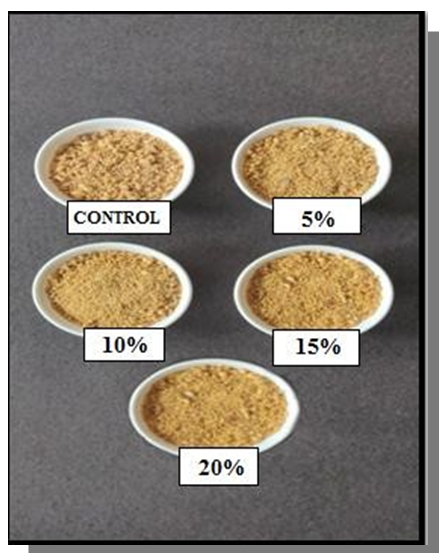
Levels of supplementation of germinated garden cress powder Products Control 5% 10% 15% 20% Panjiri P1 P2 P3 P4 P5 The basic recipe of panjiri is given in detail as below:
Ingredients:
| Ghee | 22 g | Powdered sugar | 18 g |
|---|---|---|---|
| Edible gum | 1 g | Wheat flour | 26 g |
| Flame of the forest (kamarkas) | 1 g | Grated coconut | 8 g |
| Lotus seeds | 8 g | Cardamom powder | 0.5 g |
| Almond | 5 g | Raisins | 5 g |
| Melon seeds | 5 g | Soanth | g |
Method
- A pan was taken and ghee was heated into it. Flame of the forest and edible gum were fried until puffed up properly in medium flame.
- More ghee was added into the pan and almonds, melon seeds, lotus seeds and grated coconut were shallow fried till their raw flavour was lost which was followed by a nice nutty aroma and a crisp texture.
- All the ingredients were taken in a plate and were cooled down.
- Roasted ingredients were grinded using a mixer grinder and a coarse powder was made.
- Left out ghee was heated in the pan and wheat flour and sonth powder were roasted to a pleasant aroma and a light brown colour. Flame was turned off.
- All the coarsely grounded ingredients, powdered sugar, chopped raisins and cardamom powder were added into wheat flour and mixed well. 7. Panjiri was cooled and sealed in aluminium foil-lined kraft paper bags.
Shelf-Life Studies of Developed Value-Added Products
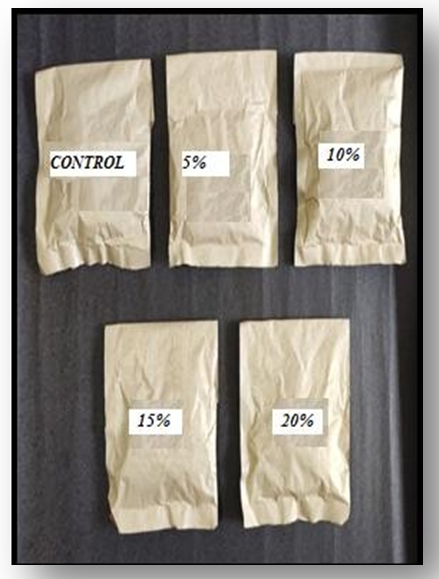
Different formulations of value-added product viz. panjiri were packed and sealed in aluminium foil-lined kraft paper bags and were stored for 30, 60 and 90 days at room temperature for shelf-storage studies as shown in Figure 2. To study the effect of storage period on quality of value added product, the nutritional analysis was done for proximate as well as for mineral composition. Influence of storage period on organoleptic or sensory quality for all the formulations was assessed by 10 semi-trained judges using hedonic rating scale. Each panellist was given a sensory evaluation sheet and the prepared products were evaluated for attributes of colour, texture, taste, flavour and overall acceptability.
Proximate Composition
The effect of adding germinated dried garden cress powder in panjiri was analysed for proximate composition. The proximate analysis of different formulation of panjiri for moisture, crude protein, crude fat, crude fibre and total ash was carried out in triplicate according to the standard methods of Association of Official Analytical Chemists [15]. Nitrogen was determined by the micro Kjeldahl method and was multiplied by the factor of 6.25 for converting it in to crude protein. Total carbohydrates content was determined by difference method.
Mineral Composition
The organic matter present in different formulation of panjiri was wet digested with diacid mixture. The digested samples for minerals were analysed for determination of calcium and iron using atomic absorption spectrophotometer (Model: Perkin–Elmer 3100) while phosphorous was measured spectrophotometrically [16]. All the analysis work was carried out in triplicate so as to reduce the experimental error and subjected to statistical analysis for one way analysis of variance (ANOVA) in a completely randomized design at 5 per cent level of probability using statistical software [17]. The values obtained have been reported as mean and standard deviation. Per cent deviation i.e. the effect of incorporation of varying proportion of germinated garden cress seed powder on the nutritional and mineral composition of panjiri was also assessed and reported in tables.
Result and Discussion
Shelf-Life Studies of Developed Value-Added Panjiri
The effect of addition of germinated garden cress seeds powder in varying proportions of 5%, 10%, 15% and 20% in panjiri was evaluated at the fresh stage by comparing with control panjiri on the basis of attributes of colour, texture, taste, flavour and overall acceptability on the evaluation sheet which were presented to each panellist. The rating so obtained was compiled, tabulated and the value in the form of mean ± SD is presented in Table 1.
| Storage period (days) | Sensory Attri butes | Level of incorporation | Mean | C.D (p≤0.05) | ||||
|---|---|---|---|---|---|---|---|---|
| P1 | P2 | P3 | P4 | P5 | ||||
| 0 (fresh) | Colour | 8.40±0.03 | 8.14±0.01 (-3.09) | 7.97±0.07 (-5.12) | 7.61±0.03 (-9.40) | 7.61±0.11 (-9.40) | 7.94±0.038 | 0.109 |
| Flavour | 8.04±0.01 | 7.65±0.03 (-4.85) | 7.20±0.02 (-10.44) | 7.03±0.02 (-12.56) | 6.63±0.04 (-17.53) | 7.31±0.032 | 0.091 | |
| Texture | 8.11±0.07 | 7.51±0.07 (-7.39) | 7.41±0.02 (-8.63) | 7.21±0.03 (-11.09) | 7.05±0.02 (-13.07) | 7.45±0.051 | 0.148 | |
| Taste | 8.04±0.02 | 7.74±0.03 (-3.73) | 7.43±0.01 (-7.58) | 7.23±0.04 (-10.07) | 6.99±0.02 (-13.05) | 7.45±0.031 | 0.088 | |
| Overall accepta bility | 8.14±0.07 | 7.76±0.02 (-4.66) | 7.50±0.01 (-7.86) | 7.27±0.01 (-10.68) | 7.07±0.03 (-13.14) | 7.54±0.038 | 0.109 | |
| 30 | Colour | 8.40±0.10 | 8.15±0.03(-2.97) | 7.90±0.06 (-5.95) | 7.60±0.03 (-9.52) | 7.63±0.10 (-9.16) | 7.91±0.029 | 0.11 |
| Flavour | 8.00±0.03 | 7.60±0.02 (-5.00) | 7.23±0.04 (-9.62) | 7.00±0.12 (-12.5) | 6.94±0.12 (-18.12) | 7.26±0.022 | 0.095 | |
| Texture | 8.09±0.04 | 7.49±0.07 (-7.41) | 7.40±0.16 (-8.52) | 7.10±0.07 (-12.23) | 7.00±0.10 (-13.47) | 7.39±0.065 | 0.15 | |
| Taste | 8.00±0.02 | 7.65±0.02 (-4.37) | 7.43±0.05 (-7.12) | 7.25±0.11 (-9.37) | 6.95±0.02 (-13.12) | 7.35±0.031 | 0.09 | |
| Overall accepta bility | 8.12±0.06 | 7.72±0.05 (-4.92) | 7.49±0.15 (-7.75) | 7.23±0.21 (-10.96) | 7.05±0.03 (-13.17) | 7.46±0.019 | 0.11 | |
| 60 | Colour | 8.11±0.32 | 8.03±0.127 (-0.98) | 7.67±0.10 (-5.42) | 7.72±0.02 (-4.80) | 7.48±0.04 (-7.76) | 7.80±0.079 | 0.227 |
| Flavour | 7.85±0.05 | 7.54±0.02 (-3.94) | 7.28±0.03 (-7.26) | 6.94±0.12 (-12.56) | 6.63±0.11 (-11.59) | 7.24±0.083 | 0.239 | |
| Texture | 7.92±0.03 | 7.48±0.01 (-5.55) | 7.27±0.02 (-8.20) | 7.12±0.01 (-10.10) | 6.88±0.05 (-10.48) | 7.33±0.033 | 0.095 | |
| Taste | 7.87 ±0.02 | 7.49±0.02 (-4.82) | 7.30±0.02 (-7.24) | 7.08±0.018 (-10.03) | 6.75±0.04 (-14.23) | 7.29±0.029 | 0.083 | |
| Overall accept ability | 7.93±0.07 | 7.63±0.02 (-3.78) | 7.38±0.01 (-6.93) | 7.21±0.01 (-9.07) | 6.93±0.03 (-12.61) | 7.41±0.038 | 0.181 | |
| 90 | Colour | 7.90±0.09 | 7.67±0.05 (-2.91) | 7.43±0.038 (-5.94) | 7.17±0.04 (-9.24) | 7.00±0.034 (-11.39) | 7.43±0.057 | 0.164 |
| Flavour | 7.72±0.047 | 7.43±0.040 (-3.75) | 7.18±0.04 (-9.99) | 6.75±0.130 (-12.56) | 6.47±0.11 (-16.19) | 7.11±0.084 | 0.24 | |
| Texture | 7.68±0.04 | 7.43±0.02 (-3.25) | 7.16±0.02 (-6.77) | 7.04±0.02 (-8.33) | 6.70±0.101 (-12.76) | 7.20±0.053 | 0.152 | |
| Taste | 7.68±0.04 | 7.29±0.03 (-5.07) | 7.07±0.03 (-7.94) | 6.89±0.04 (-10.28) | 6.49±0.03 (-15.49) | 7.07±0.038 | 0.11 | |
| Overall accept ability | 7.74±0.06 | 7.53±0.05 (-2.71) | 7.21±0.15 (-6.84) | 6.96±0.21 (-10.07) | 6.66±0.03 (-13.95) | 7.22±0.019 | 0.204 |
Table 2: Sensory acceptability of control and supplemented panjiri at different storage intervals.
As clear from the table, at the fresh stage, maximum sensory score was rated for control recipe and minimum for 20 per cent formulation. Control recipe scored 8.40 points for its colour acceptability followed by score of 8.14 when 5% germinated garden cress powder was added. Further incorporation of 5% level of powder proportionately and significantly brought down the scores to 7.97 and 7.61 in P3, P4 and P3 respectively. In descriptive terms, the colour of P1(control) and P2 was “liked very much” and P3, P4 and P5 p_anjiri_ was “liked moderately” by the panel of judges thereby influencing a significant per cent decrease of 5.12,9.40 and 9.40 respectively. Similar results were obtained by Deshmukh, et al. [18] as they found that the colour score of cookies prepared with use of garden cress seed bran was less acceptable as compared to control. Flavour is a sensory phenomenon used to denote the sensations of odour, taste and mouth feel. Flavouring substances are aromatic compounds which are conceived by the combination of taste and odour and perceived by the mouth and nose. Flavour of control panjiri (_P1) was graded as “liked very much”, of P2 and P3 was “liked moderately” whereas P5 _panjiri was “liked slightly” by the panel of the judges, so, the score of 8.04 attained by control recipe (P1) decreased down to 7.65, 7.20, 7.03 and 6.63 when 5,10,15 and 20 per cent cress powder was added to panjiri recipe. Incorporation of garden cress powder significantly affected the flavour of panjiri when analysed statistically at 5 per cent level of probability. However, none of the preparations scored below average, thus indicating that they were appealing to panellists. More or less, an equal effect as assessed for flavour was also observed for taste, as these two sensory attributes are closely related to each other. Taste helps in identification, acceptance and appreciation of food and is perceived by the taste buds on the tongue. Additional increment of 5 per cent cress powder brought down the score from 8.04 to 7.74, 7.43, 7.23 and 6.99 thereby giving per cent decrease of 3.73, 7.58,10.07 and 13.05 when 5, 10, 15 and 20 powder was added to panjiri to enhance its nutritional value and functional properties. As observed for the discussed attributes, the taste scores were also affected by the addition of germinated cress powder to different formulations when analysed on the basis of average ratings scored as well as on a statistical basis.
Texture is prerequisite in the acceptance of numerous foodstuffs and includes consistency, thickness, fragility, chewiness and the size and shape of particles in food. The score points for texture ranged from 8.11 to 7.05, maximum being for P1 and minimum rated for P5. The panellists also expressed that though different quantities of garden cress seeds were used in the preparations, none of the samples had a bitter after taste and their taste was as acceptable as the control panjiri. Overall acceptability when assessed descriptively revealed that all the prepared formulations of panjiri were acceptable to the panel of judges who liked the control recipe (P1) very much while rest of the prepared formulations were “liked moderately” by them. All garden cress formulations differed significantly with each other as well as with the control recipe when evaluated statistically.
After evaluating all panjiri formulations for sensory quality, they were packed and sealed in aluminium foil-lined Kraft paper bags and were taken out after the intervals of 30, 60 and 90 days of storage and were again evaluated organoleptically by the judges for its acceptability and sensory quality. As clear from the table, the storage period of 30 days did not affect the sensory acceptability of panjiri. The panel of judges rated almost the same scores for all the formulations as they rated at the fresh stage of evaluation. Almost the same trend of score rating was observed i.e maximum points being attained by P1 (control) followed by a gradual and proportionate decrease with increase in incorporated cress powder. If we compare the cress formulations, the highest rating was given to P2 (5%) and minimum to P5 (20%). Of all the assessed sensory aspects, flavour and taste of P5 were significantly affected however if assessed from the angle of overall acceptability all the prepared versions were in the range of “liked very much” to “liked moderately”. When analysed statistically, all the treatments differed significantly with each other for all the stated sensory attributes.
If the table is observed from mean sensory scores, the packed products stored for 60 days were still “liked moderately” and were at par with the sensory evaluation scores rated at fresh and at 30 days of shelf-life. However, if analysed individually, 20% formulations had the least scores for all the attributes and was rated as “liked slightly” for its texture, flavour and taste as well as overall acceptability. The overall acceptability and texture of garden cress seed panjiri was significantly affected by the increased level of garden cress seed powder. P1 formulation showed higher preference and attained an overall acceptability score of 7.93 that declined to values of 7.63, 7.38,7.21 and 6.93 when cress powder at levels of 5, 10, 15 and 20 per cent were incorporated resulting in per cent decrease of 3.78, 6.93, 9.07 and 12.61 respectively. One-way ANOVA analysis for the sensory characteristics of the garden cress panjiri prepared with germinated cress powder at variable incorporation levels revealed that there was a significant difference (p<0.05) among the experimental samples. Ninety days of storage period saw a further decline in sensory scores. Colour score of germinated garden cress supplemented panjiri fall from 8.40 (liked very much) to 7.90 (“liked moderately”) from fresh stage to 90 days of storage and likewise was also observed for other sensory characteristics; however, the panjiri formulations were still at their organoleptic acceptability mode of “liked moderately”. 20 % variant further lost its flavour, texture, taste as well as its overall acceptability, followed by 15% variant which were expressed as “liked slightly” by the judges. Amruta, et al. [19] developed four variants of value-added instant garden cress seed kheer mix which were organoleptically acceptable even after six months’ storage period.
Sensory evaluation of panjiri revealed that even after 90 days of storage of packaged treatments, all variants were palatable and acceptable to the panel of judges and were “liked moderately” when expressed on the hedonic rating scale. When mean sensory scores of 90 days of shelf-life were compared with fresh stage, there was only 6.42, 2.73, 3.35, 5.10 and 4.24 per cent reduction in the organoleptic scores of colour, flavour, texture, taste and overall acceptability respectively. At 90 days of storage, there was less than 10% reduction in organoleptic scores of 20 per cent formulation when it was compared with 5 per cent incorporated garden cress panjiri. Thus, it can be concluded that panjiri supplemented with 20 per cent level of garden cress seeds and packed in aluminium lined Kraft paper can be safely stored at room temperature for a period of three months (90 days).
Proximate Composition
Enhancing the nutritive value is one of the many ways of adding value to a food product. Sweet panjiri developed for lactating mothers had added value by supplementing with the protein, iron, fat and mineral-rich garden cress (Lepidium sativum) powder at variable levels of supplementation. The influence or effect of variable levels was assessed by proximate composition analysis of developed formulations. Proximate analysis is of key commercial concern as food- manufacturing industries require ensuring that their products meet the appropriate laws and legal declaration requirements as well as the safety aspects of the end products when released to the end consumer. All the parameters were analysed in triplicates and the results calculated have been compiled and reported on dry weight basis.
Values for moisture/water remain an essential constituent in food composition databases because the moisture content is one of the most variable components, especially in plant foods. This variability affects the composition of the food as a whole. It is clear from the (Table 2) that control panjiri had the lowest amount of moisture i.e. 5.23 per cent. With an increase in added germinated garden cress powder at levels of 5, 10, 15 and 20 per cent, moisture content of panjiri proportionately and slightly increased to 5.34, 5.44, 5.52 and 5.58 per cent. Significant difference (P≤0.05) was observed in the moisture content of P1 (control) panjiri when compared with supplemented formulations of panjiri contributing to per cent increment of 2.10, 4.01, 5.54 and 6.69 respectively. Cress seeds contain large amounts of mucilaginous constituents in its bran portion and thus have a high water holding capacity. When the seeds are soaked in water, they absorb the water rapidly; the mucilage on the seed coat swells and encloses the whole seed with a transparent, colourless covering that does not separate from the seeds. This mucilage might have added to the slight increase in moisture content.
The ash content is an indicator of product quality and the nutritional value of food product. Ash refers to the inorganic residue that remains after complete ignition of the sample. The residue left out is the total mineral content present in the food sample which is represented as ash. Results presented for ash shows that ash content of control panjiri (P1) was at the lowest level of 0.93 per cent. Likewise, moisture, the additional increment of 5 % garden cress powder in, P2, P2, P4 and P5 led to a rise of 1.18, 1.73, 2.23 and 2.89 per cent influencing per cent increment of 26.88, 86.02, 139.78 and 210.75 respectively. When compared statistically, non-significant difference (P≤0.05) was calculated when P1 (control) was compared with P2 and P3_, and the_ difference was significant when P1was statistically matched with P4 and P5 formulations. Germinated garden cress seeds are an excellent source of minerals particularly iron, calcium and phosphorus, so, the addition of cress powder in the panjiri significantly increased the total ash content of the panjiri formulations at higher levels.
| Proximate Parameters | Level of incorporation | Mean | C.D (p≤0.05) | ||||
|---|---|---|---|---|---|---|---|
| P1 | P2 | P3 | P4 | P5 | |||
| Moisture | 5.23±0.01 | 5.34±0.06 (+2.10) | 5.44±0.06 (+4.01) | 5.52±0.09 (+5.54) | 5.58±0.08 (+6.69) | 5.41±0.02 | 0.07 |
| Ash | 0.93±0.05 | 1.18±0.02 (+26.88) | 1.73±0.05 (+86.02) | 2.23±0.08 (+139.78) | 2.89±0.06 (+210.75) | 1.79±0.13 | 0.122 |
| Crude fat | 33.35±0.10 | 34.41±0.12 (+3.17) | 35.44±0.09 (+6.26) | 36.55±0.08 (+9.59) | 37.65±0.11 (+12.89) | 35.48±0.04 | 0.135 |
| Crude fibre | 1.50±0.09 | 1.93±0.15 (+28.66) | 2.34±0.12 (+56.00) | 2.82±0.10 (+88.00) | 3.34±0.05 (+122.66) | 2.386±0.09 | 0.221 |
| Crude protein | 8.61±0.20 | 8.79±0.17 (+2.09) | 8.95±0.26 (+3.94) | 9.24±0.48 (+7.31) | 9.44±0.48 (+9.63) | 8.91±0.03 | 0.129 |
| Total carbohydrates | 50.43±0.12 | 48.33±0.04 (-4.16) | 46.12±0.16 ( -8.56) | 43.40±0.18 (-13.95 ) | 41.39±0.34 (-17.92 ) | 45.93±0.09 | 0.308 |
Table 3: Proximate composition of panjiri formulations (% DW basis). Data are expressed as the mean ± standard deviation. Data in
Crude fat is the term used to refer to the crude mixture of fat-soluble material present in a sample that may include triglycerides, diglycerides, monoglycerides, phospholipids, steroids, free fatty acids, fat-soluble vitamins, carotene pigments, chlorophylls, etc. The common approach for total crude fat determination is based on the solubility of lipids in non-polar organic solvents such as hexanes, petroleum ether etc. It is clear from the table that control panjiri (_P1) contained minimum crude fat of 33.35 per cent as compared to all the formulations. When 5 % germinated garden cress powder was added (P2), it significantly increased to 34.41 per cent with per cent increment of 3.17 per cent. Further incorporation levels of 10 (P3), 15 (P4) and 20 (P5) per cent added 6.26, 9.59 and 12.89 percentage of fat with numerical values of 35.44, 36.55 and 37.65 respectively. Amount of _ghee used in all the formulations was same but the percentage of fat content was in ascending order because the cress seeds used contain around 25% fat which has good fatty acid profile. It has a remarkable amount of linolenic acid (26 - 34%). Linoleic acid (7 - 11%), arachidic acid (2 - 3.5%) and oleic acid (26 - 30%) are also found in a fair amount. When compared statistically, significant difference (P≤0.05) was observed in the crude fat content among the supplemented formulations as well as when they were compared with control formulation (P1).
Crude fibre is a measure of the quantity of indigestible cellulose, pentosans, lignin, and other components of this type present in foods. It is the residue of plant materials remaining after solvent extraction followed by digestion with dilute acid and alkali. These components have little food value but provide the bulk necessary for proper peristaltic action in the intestinal tract. The crude fibre content in panjiri increased with the addition of germinated garden cress seed powder concentration with a jump in value from 1.50 per cent (0 per cent supplementation-control) to 3.34 per cent (for 20 per cent supplementation) leading to per cent increment of 122.66. Incorporation of 5,10and 15 per cent germinated cress powder increased the fibre content in the recipe to 1.93, 2.34 and 2.82 per cent with contributing per cent increase of 28.66, 56 and 88 per cent respectively. Therefore, the addition of this germinated cress powder enhanced the levels of crude fibre content in panjiri. This is also beneficial for lactating mothers as they sometimes suffer from the problem of constipation during this physiological period. When compared statistically, non-significant difference was examined when P1 treatment (control) was matched with P2 and P3. On the contrary, difference was significantly high, when P4 and P5 panjiri were compared to control. A glance at Table 2 revealed maximum crude protein content in panjiri incorporated with 20 per cent germinated garden cress seeds powder (9.44 %) and minimum in control panjiri (8.61%). Garden cress seeds contain 25 per cent protein with an equal amount of fats. So, the additional increment of 5% powder in succession enhanced protein content to 8.79, 8.95 and 9.24 per cent leading to per cent increment of 2.09, 3.94 and 7.31 in P2, P3 and P4 respectively. The increase in protein content was not because of the quantity of nuts used in the recipe, as they were in equal amount in all the formulations, there was only the difference in the proportion of wheat and germinated garden cress seed powder used. Statistically, non-significant difference (P≤0.05) was observed when supplemented formulations were correlated with each other and with the control treatment. Carbohydrates are one of the most important components in many foods. In proximate analysis, total carbohydrate content of foods is calculated by difference. Under this approach, the other constituents in the food (protein, fat, water, fibre, ash) are determined individually, summed and subtracted from the total weight of the food. Total carbohydrate content decreased significantly with the increase in concentration of germinated garden cress seeds powder in the panjiri. As discussed above, there was an increase in all proximate parameters with increase in supplementation of cress powder so this affected the values of total carbohydrates in all the experimental formulations. Controlled panjiri had the highest percentage of total carbohydrates i.e. 50.43 per cent. When 5, 10, 15 and 20 per cent germinated garden cress powder was added in the recipe, total carbohydrates decreased to 48.33, 46.12, 43.40 and 41.39 per cent thereby influencing a significant per cent decrease of 4.16, 8.56, 13.95 and 17.92 respectively. Total carbohydrates content of all the supplemented formulations was non-significant with each other and with the control panjiri too. The iron profile of panjiri presented in the Table 3 reveals that the iron content had a surge of value from 2.90 mg in control i.e. 0 per cent supplementation to 8.68 mg in 20 percent supplementation having 199.31 per cent total rise from the base value. P2(5 per cent supplementation) had iron content of 4.81 mg influencing per cent increment of 65.86 per cent followed by P3 and P4 formulations having 6.12 and 7.27 mg iron with per cent rise of 111.03 and 150.68 respectively. So, with each addition of cress powder in the recipe, iron content increased proportionately in each treatment roughly to a value of 50%. Garden cress is the highest iron containing plant source ever known with better bioavailability. 100 mg/100g of iron is present in garden cress seeds that makes it an excellent source of this important micro mineral and is therefore also known as raktabija in Sanskrit. Iron content of supplemented formulations was significantly high as compared to controlled panjiri and all the supplemented formulations were also significant with each other_. The nutritional intake of lactating women is one of the most important determinants of women health, well- being and the ability for long term successful breastfeeding. The physiological stress of lactation in the body is greater than that of pregnancy. Therefore, during the stage of lactation, all nutrients are required at higher levels. _Panjiri formulation P5, having 20 per cent of germinated cress powder supplementation had the highest levels of almost all macronutrients. This formulation was rich in total ash (minerals), crude fat, crude fibre and crude protein. This formulation also had better sensory acceptability as compared to other treatments at all stages of storage intervals. So, germinated garden cress powder can be added at levels of 20 per cent to enhance the nutritive value of panjiri formulated for lactating mothers and when packed and sealed in aluminium foil-lined kraft paper bags, can safely be stored for 90 days at room temperature.
Mineral Composition
Adequate nutrition of the mother during lactation is of vital importance because, during the first few months of life, the infant derives all the nutrition from the mother’s milk. A breastfeeding mother needs to consume an adequate balanced diet having all the nutrients along with minerals. Adequate intake of iron is important for lactating mothers to minimise the harmful effect of iron-deficiency anaemia. The digested minerals samples of panjiri treatments were analysed for determination of calcium and iron using atomic absorption spectrophotometer (Model: Perkin–Elmer 3100) while phosphorous was measured spectrophotometrically.
| Parameters | Level of incorporation | Mean | CD (p≤0.05) | ||||
|---|---|---|---|---|---|---|---|
| P1 | P2 | P3 | P4 | P5 | |||
| Iron | 2.90±0.06 | 4.81±0.03 (+65.86) | 6.12±0.03 (+ 111.03) | 7.27±0.01 (+ 150.68) | 8.68±0.01 (+ 199.31) | 5.95±0.03 | 0.118 |
| Calcium | 69.27±0.35 | 74.26±0.22 (+7.20) | 78.28±0.33 (+13.00) | 82.85±0.31 (+ 19.60) | 86.94±0.30 (+ 25.50) | 78.32±0.31 | 0.989 |
| Phosphorous | 134.21±0.01 | 142.17±0.08 (+ 5.93) | 150.98±0.24 (+ 12.49) | 158.49±0.24 (+18.09) | 167.49±0.15 (+24.79) | 150.66±0.21 | 0.69 |
Table 4: Mineral profile of panjiri formulations (mg/100g on DW basis). Data are expressed as the mean ± standard deviation. Data
Table 3: Mineral profile of panjiri formulations (mg/100g on DW basis). Data are expressed as the mean ± standard deviation. Data in parenthesis shows per cent deviation Calcium is one of the important minerals required both during pregnancy and lactation. During pregnancy, it is required for the fetal skeletal development and during lactation, for milk production. According to NIN [20], the requirement of calcium doubles, 1000 mg of calcium per day is required during the lactation period. It is clear from the Table 3 that the supplemented formulations of panjiri had more calcium as compared to control panjiri. Calcium content revealed a direct relationship with the increase in garden cress seed incorporation i.e. it increased significantly with the increase in the level of incorporation in the value-added product. Control panjiri (_P1) contained minimum calcium content of 69.27 mg. When 5% germinated garden cress powder was added (P2), it significantly increased to 74.26 mg influencing per cent increment of 7 per cent. Further incorporation levels of 10 (P3), 15(P4) and 20 (P5) per cent increased calcium content to 78.28 and 82.85 and 86.94 mg leading to per cent increment of 13,19 and 25 per cent respectively. Overall mean of 78.32 mg/100g was calculated. Statistically, calcium content of all the experimental formulations was significantly high when compared with each other and with control _panjiri. Phosphorous content of panjiri was analysed in ascending order i.e. it increased significantly with the increase in the level of cress powder in the recipe. Control panjiri having no garden cress powder had phosphorus content of 134.21 g followed by 5 per cent incorporated recipe with 142.17 mg of phosphorus which was significantly high as compared to former_.10,15 per cent incorporated _panjiri had phosphorus content of 150.98 and 158.49 g influencing per cent increment of 12.49 and 18.09. Panjiri with 20 per cent cress powder had the highest amount of phosphorus content i.e. 167.49 mg with per cent increment of 24.79. Statistically calcium content of all the incorporated formulations was significantly high when compared with each other and with control panjiri. As garden cress seeds are a rich source of iron (100 mg/100g) along with calcium (377 mg/100g) and phosphorous (723 mg/100g) so, the addition of germinated garden cress seed powder led to increase in the mineral profile of panjiri [21, 22, 23, 24].
Conclusion
Germinated garden cress seed powder was incorporated in varying proportions of 5, 10, 15 and 20 per cent to develop and assess the best acceptability level of supplementation. In addition, one control recipe was also developed for comparison purpose. From the present study it can be concluded that there was significant and proportionate increase in macronutrients of panjiri with increase in levels of supplementation. So, 20 per cent incorporated recipe had higher amount of ash, crude fat, crude fibre and crude protein (2.89, 37.65, 3.34 and 9.44 % respectively) as compared to control and 5, 10, 15 per cent incorporated panjiri. Same effect was also calculated for mineral profile. 20 % formulation of panjiri had high amount of iron (8.68mg/100g), calcium (86.94 mg/100g) and phosphorus (167.49 mg/100g) while, control recipe had least amounts respectively (2.90, 69.27 and 134.21 mg/100g). Incorporation of garden cress powder significantly and proportionately affected the sensory attributes of panjiri formulations. The storage period of 30, 60 and 90 days did not affect the sensory acceptability of panjiri. Almost the same trend of score rating was observed i.e. maximum points being attained by P1 (control) followed by a gradual and proportionate decrease with increase in incorporated cress powder. At 90 days of storage of packaged treatments, all variants of panjiri were palatable and acceptable to the panel of judges thus 5, 10, 15 and 20 per cent germinated garden cress seeds incorporated formulations of panjiri can safely be stored for the period of 90 days if sealed in aluminum foil-lined kraft paper bags.
References
-
Bamola N, Verma P, Negi C (2018) A Review on Some Traditional Medicinal Plants. International Journal of Life Sciences Scientific Resource 4(1): 1550-1556.
-
Yadav R, Khare RK, Singhal A (2017) Qualitative Phytochemical Screening of Some Selected Medicinal Plants of Shivpuri District (MP). International Journal of Life Science Research 3(1): 844-847.
-
Srinivasan D, Nathan S, Suresh T, Perumalsamy PL (2007) Antimicrobial of certain Indian medicinal plants used in folkloric medicine. Journal of Ethnopharmacolog 74(3): 217-220.
-
Prajapati MR, Dave PH (2018) Therapeutic and nutritional importance of garden cress seed. Journal of Pharmacognosy and Phytochemistry 7(5): 140-143.
-
Vaishnavi, Gupta R (2021) Effect of Processing Treatments on Functional Properties of Garden Cress (_Lepidium sativum L_.) Seeds. International Journal of Current Microbiology and Applied Sciences 10(10): 429- 438.
-
Vaishnavi R, Gupta P, Choudhary (2020) Botanical description of garden cress (_Lepidium sativum L._) plant and physical characteristics of its seeds. Journal of Pharmacognosy and Phytochemistry 9(5): 2424-2428.
-
Wadhwa S, Panwar MS, Agrawal A, Saini N, Patidar LN (2012) A review on pharmacognostical study of _Lepidium sativum_. Advance Research in Pharmaceuticals and Biologicals 2: 316-323.
-
Al-Yawer MA, Al-Khateeb HM, Al-Khafaji FA (2006) Garden cress seed could be a factual galactagogue. The Iraqi Postgraduate Medical Journal 5(1): 62-67.
-
Haileslassie K, Mulugeta A, Girma M (2013) Feeding practices, nutritional status and associated factors of lactating women in Samre Woreda, South Eastern Zone of Tigray, Ethiopia. Nutrition Journal 12(28): 1-11.
-
Laroia N, Sharma D (2006) The Religious and Cultural Bases for Breastfeeding Practices among the Hindus. Breastfeeding Medicine 1(2): 94-98.
-
Kaur S, Kumar V, Kumar S, Suri S, Kaur J (2021) Considerations for development of low-cost supplementary foods for lactating women in India – a review. Nutrition & Food Science 51(3): 578-593.
-
Vaishnavi, Gupta R (2020) Effect of processing treatments on nutritional profile of garden cress (_Lepidium sativum_ _L_.) seeds. International Journal of Chemical Studies 8(4): 2831-2835.
-
Salve RV, Mulla MZ, Kadam ML, More SG (2011) Formulation, Nutritional Evaluation and Storage Study of Supplementary Food (_Panjiri_). Journal of Food Processing & Technology 2(6):131.
-
Rana R, Kaur P (2016) Sensory and nutritional evaluation of food products enriched with germinated garden cress seed flour. International Journal of food and nutritional sciences 5(4): 96-101.
-
AOAC (Association of Official Analytical Chemists) (2010) Official Methods of Analysis. 14th(Edn.), Washington, DC, USA Limited, pp: 190-191.
-
Singh D, Chhonkar PK, Dwivedi BS (2005) Manual on soil, Plant and Water Analysis. Westville Publishing House, New Delhi, pp: 86-100.
-
Sheoran OP, Tonk DS, Kaushik LS, Hasija RC, Pannu RS (1998) Statistical Software Package for Agricultural Research Workers. Department of Mathmetics Statistics, CCS HAU, Hisar, pp: 139-143.
-
Deshmukh YR, Thorat SS, Mhalaskar SR (2017) Influence of Garden Cress Seed (_Lepidium sativum_ L_._) Bran on Quality Characteristics of Cookies. International Journal of Current Microbiology and Applied Sciences 6(9): 586- 593.
-
Amruta S, Asha LB, Arya (2010) Development of Value added Instant Garden Cress Seed Kheer Mix: Department of Foods and Nutrition, College of Home Science, Vasantrao Naik Marathwada Krishi Vidyapeeth, Parbhani.
-
Balasubramanian (2011) Nutritive value of Indian food, National Institute of nutrition ICMR, Hyderabad Picciano 2003.
-
Cervera P, Ngo J (2001) Dietary guidelines for the breast- feeding woman. Public Health Nutrition 4(6A): 1357- 1362.
-
Yadav Y, Srivastav D, Seth A, Saini V, Balaraman R, et al. (2010) In vivo antioxidant potential of _Lepidium_ _sativum_ L_._ seeds in albino rats using cisplatin induced nephrotoxicity. International Journal of Phytomedicine 2: 292-298.
-
Mali R, Mahajan S, Mehta A (2007) _Lepidium sativum_ (Garden cress): A review of contemporary literature and medicinal properties. Oriental Pharmacy and Experimental Medicine 7: 331-335.
-
Wealth of India (1962) A Dictionary of Indian raw Materials and Industrial Products, Council of Scientific and Industrial Research, New Delhi 5: 70-73.
- The Role of Podocyte Apoptosis and the Involvement of SIRT1 in Diabetic Nephropathy
- Dealcoholization of Beer by Osmotic Distillation for the Beverage Industry
- Biopolymer-Based Edible Packaging- Biomaterials, Methods, and Applications in Food Industry: An Updated Review
- Influence of Bioprocessing Methods on 'China Rice' (Gawal R1), and Soyabean Supplementation on the Quality of Complementary Food
- Cassava (Manihot esculenta) Varietal Growth, Yield and Cyanide Content Performance in Three Sites in the South- Eastern Semi Arid Regions of Kenya
- Food Waste Treatment, Recycling, Management and Production of Value-Products-An Update on Methodologies and Current Trends