
Recent Progress of Metal-Organic Framework-Assisted Sensing System for Point-of-Care Antibiotics Detection in Food Industry; a Mini Review
Antibiotics (ANBs) are essential for animal health and are used for treatment, prevention, and growth promotion. However, ANB use in animals can lead to antibiotic residue in food products, which can cause various side effects. These include the transfer of ANB-resistant bacteria to humans, immunopathological effects, allergies, and even carcinogenicity. The most significant adverse effect is the transfer of ANB-resistant bacteria to humans due to the mobile properties of resistance. Therefore, timely detection is the best approach to prevent the spread of downsides of these compounds. Various methods exist for measuring ANB concentrations, such as LC-MS, high-performance liquid chromatography, capillary electrophoresis, thin-layer chromatography, and enzyme-linked immunoassay. However, complicated sample preparation processes and expensive equipment are often considered obstacles to their prevalent usage. Emerging technologies like Metal-Organic Frameworks (MOFs) offer a simpler, quicker, and more cost-effective solution for detecting veterinary drugs in animal-derived food samples. This investigation first reviews some conventional methods for ANB recognition, including microbiological, immunological, and laboratory-based procedures. Then, Sensor-based analytical methods and their advantages and disadvantages were discussed. Finally, the recent progress in ANB detection approaches using MOF-based sensors in food products was investigated. MOFs have become a topic of great interest due to their remarkable properties. These include high surface areas that can be easily modified, defined porosity, lightweight, adjustable pore sizes, ordered structures, and impressive mechanical strength. The performance of MOFs is superior to traditional chemosensory materials due to their ability to adjust properties. Various sensing systems based on MOFs have been reported, including photoelectrochemical, electrochemiluminescence, electrochemical, and quartz crystal microbalance. As discussed in this review, sensors based on MOFs have emerged as reliable alternatives for fast and routine detection in clinical and environmental analysis and food safety control. Various MOF-based materials have been used for detecting antibiotics, and their advantages and limitations have been critically evaluated for future applications in diagnosing antibiotics in food products.
Introduction
Antibiotics (ANBs), widely used to combat bacterial infections in humans and animals, have become a growing cause of concern as environmental pollutants. Given their remarkable persistence in the natural environment, they can adversely affect the health of various living organisms. Recent research has shown that ANBs can significantly change microbial communities and contribute to the emergence of ANB-resistant strains. These issues underscore the need for appropriate disposal and management of ANBs to minimize their environmental impact and protect public health [1].
Several analytical methods are available for quantifying ANB concentrations, including liquid chromatography- mass spectrometry (LC-MS), high-performance liquid chromatography (HPLC), capillary electrophoresis, thin- layer chromatography, and enzyme-linked immunoassay, all of which demonstrate high sensitivity and accuracy. However, their usage is impeded by complex and time-consuming sample preparation processes and the requirement for expensive equipment [2]. In contrast, emerging technologies like metal-organic frameworks (MOFs) show promise in chemical sensing, providing a simpler, rapid and more comprehensive solution for detecting veterinary drugs in animal-derived food samples. MOFs have several advantages over traditional methods, including low cost, ease of synthesis, and tunable porosity, making them an attractive alternative for veterinary drug detection. Consequently, MOFs have the potential to revolutionize the field of food safety and ensure that animal-derived products are free of harmful residues [3]. MOFs are crystalline porous materials with multifunctional properties. They are constructed by linking metals or metal clusters with organic linkers, primarily composed of carboxylic acid or nitrogen-containing ligands. MOFs have become a versatile platform for functional applications in various research fields [4].
In recent years, point-of-care detection (POCD) has advanced significantly, leading to the development of microfluidic chip-based devices such as poly(methyl methacrylate) (PMMA) and polydimethylsiloxane (PDMS)- based chips, as well as paper-based devices like lateral flow test strips and three-dimensional paper-based microfluidic devices [5]. The research and development of POC technologies for detecting ANBs in food has been ongoing. These technologies aim to quickly and accurately detect ANB residues in food products, which will contribute to food safety and public health. Using POC devices for evaluating antimicrobial resistance and detecting specific pathogens in food can help determine ANB therapy and reduce the overuse of ANBs. This can ultimately prevent antimicrobial resistance from developing. These novel technologies are reliable, portable, equipment-free, and user-friendly, making them an ideal alternative to traditional benchtop detection methods. They are also sensitive, specific, and can be quickly delivered to end-users with high accuracy and precision. The detection methods typically rely on colorimetric, fluorescent, or electrochemical signals, providing a rapid and simple platform for monitoring food safety [6]. However, there have been challenges with its multi-functionality, multiplexing, sensitivity, and quantification. Recent investigations have demonstrated promising improvements to minimize these challenges, e.g., using signal amplification techniques [7, 8].
The following article provides a brief overview of the latest advancements in metal-organic framework technology for creating highly sensitive ANB detection systems at point- of-care facilities. It offers valuable insights into the main accomplishments, obstacles, and potential applications of these innovative systems, making it an indispensable resource for professionals and researchers striving to develop cutting-edge ANB detection technologies.
Antibiotics Importance at a Glance
ANBs were a microbiological breakthrough in the early 1900s, providing effective treatments for infectious diseases. However, their widespread use in farming and healthcare has led to their accumulation in waterways and ecosystems, posing a threat to human health and the environment [1]. Antimicrobials are widely used in health, animal, and food industries for their effectiveness and low cost. ANBs are classified based on their composition and mechanism of action (Table 1). They can exhibit diverse functions within a molecule, making them sensitive to changes in pH levels [9]. Recent studies show that several kilograms of ANBs are produced daily, with tons of ANB residues being released into the environment annually [1].
| Antibiotic classes | Examples used in livestock |
|---|---|
| Aminoglycosides | Gentamicin, neomycin |
| Macrolides | Erythromycin, tilmicosin, lincomycin, tulathromycin, tylosin |
| β-lactams | Penicillin, ceftiofur, amoxicillin |
| Fluoroquinolones | Ciprofloxacin, danofloxacin, enrofloxacin |
| Tetracyclines | Chlortetracycline, oxytetracycline, tetracycline |
| Amphenicols | Chloramphenicol, florfenicol |
| Sulfonamides | Various sulfonamides |
| Nitrofurans | Nitrofurantoin |
Table 1: Provides useful information about various veterinary ANB classes with some examples.
Overuse and misuse of ANBs have resulted in increased per capita consumption, posing health risks to consumers. ANB residues are also found in farmland soil and wastewater, leading to soil pollution and contaminated vegetables [10]. As an illustrative instance, tetracycline (TC) is an affordable ANB for bacterial infections in humans and animals. However, most ingested TC is excreted and re-enters the environment, contaminating it. TC is difficult to degrade and even low doses have harmful effects. Residual TC contributes to ANB- resistant genes and the emergence of super bacteria [2].
Conventional Method for Antibiotics Detection
In the food industry, commercial microbial inhibition and antibody tests are frequently utilized to test milk at the beginning of the supply chain. Both of these tests have the drawback of being qualitative and depending on the user to interpret the test results, but they are helpful for on-site testing and reasonably priced when applied to bulk food [11, 12, 13]. This section reviews the traditional approaches to trace the residue of ANBs in food products (Table 2).
| Type | Principle | Advantages | Disadvantages | Example | Reference |
|---|---|---|---|---|---|
| Microbial- based methods | Based on the growth of incubated bacteria and pH changes (color shift) | Relatively broad spectrum of ANBs detection, and high efficiency | Long incubation periods, unsuitable for real-time analysis, and limited range of analytes | SNAP® tests, Delvotest®, Eco test® BT, LacTek® test and BetaStar® Plus cylinder- plate (or cup-plate), and tube assay | [12-14] |
| Immuno logical-based methods | Highly specific binding between an antigen and an Abd | Broad spectrum of ANBs detection, speed of analysis, high specificity and sensitivity, and high efficiency | Qualitative data, more expensive than microbial tests, need for lab equipment and conditions during the preparation of Abds, limited range of analytes (particularly β-lactams), and unsuitable for real-time analysis | Charm®, SNAP® tests, ELISA, CLIA, CGIA, RIA, and FIA | [12,15] |
| Laboratory- based methods | Partition chromatography or adsorption chromatography | Precise separation, analyses, and purification, very low sample volumes, broad spectrum of ANBs detection, and high efficiency | Time-consuming process, expensive as higher quantities of solvents, complicated and costly process, low separation power, and irreproducible results | HPLC, TLC, GC, and GPC | [12,16] |
ABDS: Antibodies; ANBS: Antibiotics; HPLC; high performance liquid chromatography, GC; gas chromatography, TLC; thin-layer chromatography, GPC; gel permeation chromatography, ELISA; enzyme-linked immunosorbent assay, CLIA; chemiluminescence immunoassay, RIA; radioimmunoassay, CGIA; colloidal gold immunoassay, FIA; fluorescence immunoassay.
Microbiological-Based Methods
The foundation of microbiological-based testing relies on using well-characterized indicator organisms with known ANB drug sensitivities [14]. Numerous tests with a variety of applications are available on the market, including the Delvotest® (Indiana, USA), the SNAP® tests (Maine, USA), the Eco test® BT (Cremona, Italy), the BetaStar® Plus (Kentucky, USA), and others. These commercial devices are easy to use, affordable, practical, and permitted by regulations [13, 14]. They are packaged in kits that are easy to assemble and include clear instructions. The most popular commercial microbial inhibition test among them is Delvotest®, which comes in various forms [12]. It is predicated on the growth of bacteria cultured in tubes or on a disk (in agar).ANB-free matrix will allow bacteria to proliferate when the sample is added to the tubes, lowering the pH. Next, an indicator dye included in the growth medium is used to quantify this pH shift. ANB-containing samples prevent the indicator organism from growing, thwarting the tube’s color from changing [12, 14].
Immunological-Based Methods
It entails the surface production of a free antibody and an antibody–ANB combination as a “control.” Upon introducing the sample, the target ANB selectively attaches itself to the free antibody, creating a “test” antibody–ANB combination. Subsequently, both test and control complexes vie for the immunological receptor or enzyme. The outcome is determined by the test’s intensity and the control group’s responses (positive or negative). Charm® is one notable commercial example of immunological receptor tests [12, 15]. The benefits and limitations of this test are illustrated in Table 2.
Laboratory-Based Methods
More specific, sensitive, and accurate laboratory-based methods, including desktop-based equipment like gas/liquid chromatography or spectrofluorometric, are also exploited for foodstuff analysis. These are sometimes conducted at the processing industrial, scientific, or regulatory units as a confirmation before processing raw foods or environmental samples [11, 12, 16]. The analysis is typically performed using HPLC or gas chromatography (GC), along with other techniques such as thin-layer chromatography (TLC) and gel permeation chromatography (GPC). Extraction of interference substances and sample clean-up are needed before analysis. As previously stated, several antimicrobial agents possess notable protein-binding capacities. Thus, eliminating proteins from the matrix can reduce the proportion of ANBs contained within the sample [12, 16, 17, 18].
Sensor-Based Analytical Methods
The detection of ANB residues at central laboratories and research centers typically involves several analytical procedures, such as immunological or microbiological tests, chromatography, and spectrophotometry. These approaches require expensive equipment, skilled personnel, and significant time [16, 17]. On the other hand, false-positive outcomes are prevalent due to the intricate nature of food samples. Several factors, such as heating, natural inhibitors, colony-formed units, and numerous natural interferences, can influence test results and compromise the reliability of the analysis [17]. Therefore, these tests may have limitations in accurately detecting analytes, affecting their sensitivity, specificity, and linear ranges. So, there exists a requirement for a point-of-care gadget that possesses reliability, rapidity, and user-friendliness to fulfil or enhance sensitivity benchmarks set by conventional methodologies. There has been notable advancement in using sensors to detect ANB residue. This progress can be attributed to the distinctive attributes possessed by these sensors, such as their user-friendly nature, exceptional accuracy, proper reproducibility, sensitivity, selectivity, and stability. Further, these sensors exhibit rapid and prompt response times, facilitate easy experimental operation, and offer a lower limit of detection (LOD) [12, 17, 19]. As discussed, several factors, like transforming recognition signals into comprehensible specific signals, reproducibility, stability, selectivity and sensitivity, lower LOD, and portability in the form of miniaturized sensing tools, can impact sensor practical application on large scales. Nanomaterials (NMs)-based sensors can effectively address the issues mentioned earlier. These sensors offer several advantageous characteristics, including color or structure tunability, high stability and surface area, shock resilience, and optimal conductivities [19, 20, 21]. NMs have been widely exploited as signal amplifiers in the development of sensing systems, including various nanoparticles (NPs), carbon-based NPs, metal-oxide NPs, noble metal NPs, magnetic NMs, metal-organic frameworks (MOFs), nano-rods (NRs), and quantum dots (QDs), etc. Among these, MOFs indicated promising potential uses in different fields such as gas adsorption, catalysis, separation or storage process, purification uses, drug delivery, and especially sensing systems, which are discussed in the next section [19, 22].
Metal Organic Frameworks
Over the last decade, there has been a growing interest in the field of NM research, leading to the exploration of novel NMs to develop sensors with enhanced sensing capabilities. Specifically, MOF has demonstrated considerable potential in the sensing sectors. Indeed, MOF is a novel type of porous crystalline NM created by self- assembly metallic centers as nodes and organic ligands as linkers through coordination bonds [22, 23]. MOFs have garnered significant attention due to their remarkable characteristics, including extensive accessible surface areas that may be easily modified, well-defined porosity, low density, adjustable pore sizes, and chemical composition, ordered crystalline structures, and impressive mechanical robustness (Figure 1). The exceptional adjustability of MOFs’ structural and chemical properties suggests that they are likely to surpass conventional chemosensory NMs in terms of performance. The generally employed method for synthesizing MOF structures is a bottom-up approach, wherein the metal and organic molecules must undergo direct reaction under specified synthesis circumstances, such as hydrothermal, sonochemical, mechanochemical, and electrochemical conditions.This approach facilitates the directed growth of MOF structures [22, 23]. Due to their distinctive physiochemical properties and inherent porosity, MOFs exhibit exceptional adsorption properties.Using in- situ or post-modification methods, they can be readily functionalized with different binding groups (e.g., NH2 and COOH). The inherent characteristics of MOFs render them very suitable for the co-immobilization of biological ligands through robust interactions, including hydrogen bonding, π–π stacking, and electrostatic forces between the functional groups of MOFs and biological ligands. These interactions are promising for advancing biosensor technology [22, 23, 24]. Up to now, different sensing systems based on MOFs, such as photoelectrochemical, electrochemiluminescence, electrochemical, and quartz crystal microbalance, have been reported (Table 3). The following discusses the state-of-the- art point-of-care sensing platform for ANBs detection in more detail.
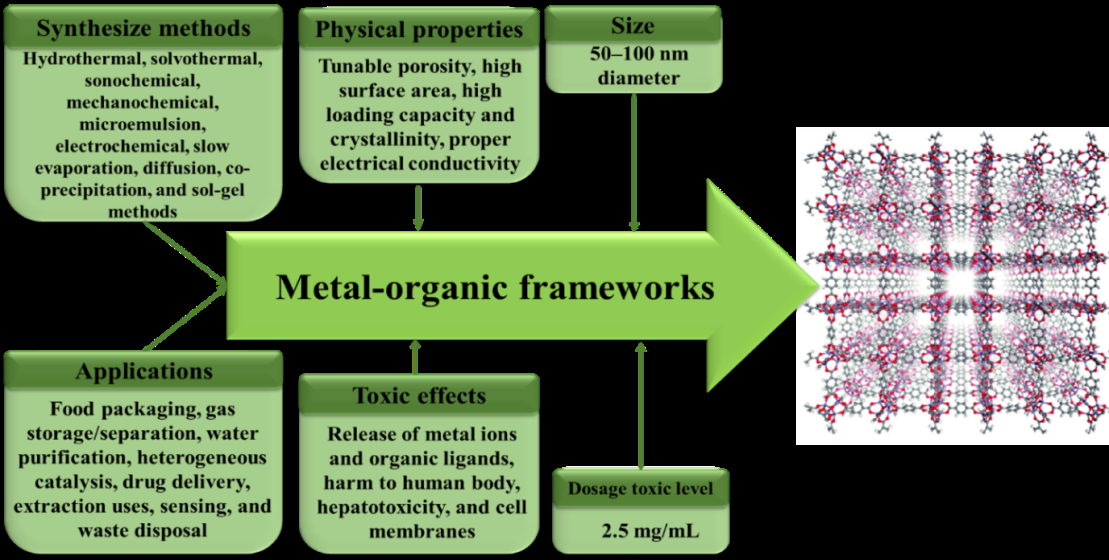
Figure1: Metal-Organic Framework-Based nanomaterials; Fundamentals, synthesize methods, toxic properties, physical attributes, and applications.
State-of-the-Art Point-of-Care Sensing Platform
Optical-Based Analysis
Fluorescent point-of-care (POC) sensors have shown excellent efficacy in various areas, including clinical diagnosis, food testing, and environmental monitoring. In this regard Zhu, et al. [25] created a distinct fluorescent- traffic-light POC sensor array based on MOFs to realize the detection and quantification of tetracycline (TTC) ANBs in milk samples [25]. The authors used a composite material of copper nanoclusters and MOF (CuNCs@MOF-5) as the central component for target identification and signal transduction. The CuNCs@MOF-5 composite was created using a straightforward one-pot synthetic approach (Figure 2). Experimental results demonstrate that the CuNCs@ MOF-5, in their original state, displayed notably enhanced fluorescence features, including a 28-fold increase in emission intensity and a stability improvement of over 110 days compared to CuNCs that were not confined and protected by MOF-5. Accordingly, the TTC has a distinctive interaction with Zn(II), leading to the disassembling of CuNCs@MOF-5. This process induces the emission of green fluorescence from the TTC−Zn(II) complex while diminishing the red fluorescence of CuNCs. Based on the findings, a low LOD of 0.027 μM was achieved in the milk sample in the linear range of 0.05 to 1000 μM. In a similar study Shi, et al. [26] designed an innovative fluorescent sensor based on Eu3+ (as sensing elements), Ag+ (as fluorescence intensifier), and lanthanide-MOFs (Ln-MOFs) for the detection of TTC from actual samples [26]. The suggested sensor has provided TTC recognition in a detection range from 0.1 to 100.0 nM with a low LOD of 12.8 nmol/L (Figure 2).
The simultaneous determination of contaminants is crucial in light of the potential synergistic or antagonistic toxicological characteristics among different ANBs. Therefore, it is imperative to establish techniques for simultaneously detecting these similar structural molecules. In contrast to traditional sensor arrays that require unwieldy signal reading instruments and intricate sensing units, an up- to-date platform facilitates the detection of several targets without additional devices, relying solely on a rudimentary substance. In one such study Liu, et al. [27] suggested a hand-held photoluminescent sensing system that relies on “turn-off” bimetallic lanthanide MOFs for quantitative point- of-care diagnosis of six common ANBs (Figure 2). Three Tb/ Eu-MOFs with different bimetallic proportions were first fabricated [27]. Then, this complex was utilized to generate signals indicating various ANBs by assessing their distinct impacts on the reduction of photoluminescence exhibited by these probes. Herein, the development of a signal- capturing platform equipped with a smartphone and created using 3D printing technology, which is used to record and analyze slight variations in luminescence caused by various ANBs. The collected data was then processed using pattern recognition analytic techniques to classify and identify these ANBs. The described sensing substrate can detect individual ANBs and combinations of several ANBs in river water, milk, and urine samples.
![Figure 2: Schematic illustration of TTC identification photoluminescent sensing system; (A) synthetic process of Tb/Eu-MOFs, (B) SEM images of Tb/Eu-MOF (1:1), Tb/Eu-MOF (3:1) and Tb/Eu-MOF (10:1), (C) sensor array platform, (D) data processing, (E) TTC identification, and (F) different probes sensing TTC. Reproduced with permission from Liu, et al. [27].](/fulltextimages/11488/fig_2.png)
Figure 2: Schematic illustration of TTC identification photoluminescent sensing system; (A) synthetic process of Tb/Eu-MOFs, (B) SEM images of Tb/Eu-MOF (1:1), Tb/Eu-MOF (3:1) and Tb/Eu-MOF (10:1), (C) sensor array platform, (D) data processing, (E) TTC identification, and (F) different probes sensing TTC. Reproduced with permission from Liu, et al. [27].
The occurrence of ANB residues in aquatic environments and wastewater has ignited unprecedented attention. Hence, given the ramifications on the ecosystem and human health, there is an imperative need to expedite the development of a swift technique for ANB detection in the environment. Luminescence-based sensing assays have drawn considerable attention because of their high sensitivity, short assay time, and stable emission. Lanthanide MOFs (Ln- MOFs) are inorganic-organic compounds with rare-earth ions as the central node to be coordination-type connective crystal structures that represent luminescent MOFs [28].
With this background Yan, et al. [28] developed an Ln-MOFs- based luminescence paper sensor for the sensitive detection of sulfamethazine (SMZ) in actual water samples [28]. The present study involved the synthesis of Ln-MOFs using the micro emulsion method, which resulted in the observation of a consistent red luminescence in aqueous solution. The human visual perception can detect that the red light emitted by the sensor diminishes progressively when exposed to SMZ. Under ideal conditions, a low LOD of 0.67 μM was obtained in water in the recoveries of 99.6%−109.8% (Figure 3).
![Figure 3: ANBs residue recognition based on the fluorescence-based sensing assays; (A) Eu-Ln-MOF complex for SMZ (16), (B) CuNCs@MOF-5 complex for TTC (13), and (C) Ag+/Eu3+@MOFs for TTC [26].](/fulltextimages/11488/fig_3.png)
Colorimetric analytical procedures provide significant potential in advancing on-site ANB detection methods, while recent research endeavours have encountered challenges related to inadequate sensitivity. Considering this, Wang and co-workers designed a colorimetric POC sensor for in-field streptomycin (STP) identification based on the immobilized anti-STP aptamer (as target recognition) on the surface of zeolitic metal azolate framework-7 (MAF-7) (Apt@MAF- 7) (signal transduction) [29]. Reportedly, a significant color response can be observed because of the oxidation of colorless 3,3′,5,5′-tetramethylbenzidine (TMB) to its blue- green oxidized form oxTMB. This visible color change can be utilized for rapid POC detection of SMZ with extremely low LOD (0.51 pg/mL), eminent linearity (0.005−6 ng/mL), and satisfactory recyclability (95–103%).
Electrochemical-Based Analysis
The quartz crystal microbalance (QCM) sensor is a piezoelectric device sensitive to pressure and any mass change on its surfaces. They can be used in microbalances for thin film technology and trace quantitative analysis. As a mass-sensitive sensor, the QCM-based sensor has been widely used to quantify chemicals and biomolecules and explore molecular interactions on interfaces [30]. In one study done by Yang and co-workers, a facile and stable QCM-based electrochemical aptasensor was designed for label-free POC recognition of TTC, which presented excellent sensitivity, specificity, and reproducibility [31]. Herein, the sensing performance of a QCM-based sensor was enhanced by modifying MOFs and gold nanoparticles (AuNPs) onto its sensing surface. Then, the anti-TTC aptamer containing a sulfhydryl group was immobilized via an Au-S link. Finally, the computer simulation was exploited to predict and verify the detection efficiency of the proposed platform (Figure 4).
![Figure 4: Schematic illustration of tetracyclines detection based on POC quartz crystal microbalance MOD-based aptasensor using differential pulse voltammetry (DPV) and cyclic voltammetry (CV) methods. Adopted from Yang, et al. [31] with permission. Under the optimized experimental conditions and adoption of frequency change, the quantitative determination of TTC was performed in the broad concentration linear range of 1.0 × 10⁻¹⁰ g/mL to 1.0 × 10⁻⁵ g/mL with satisfactory recovery rates between 87.6 and 91.4% (LOD; 0.80 × 10⁻¹¹ g/mL).](/fulltextimages/11488/fig_4.png)
Figure 4: Schematic illustration of tetracyclines detection based on POC quartz crystal microbalance MOD-based aptasensor using differential pulse voltammetry (DPV) and cyclic voltammetry (CV) methods. Adopted from Yang, et al. [31] with permission. Under the optimized experimental conditions and adoption of frequency change, the quantitative determination of TTC was performed in the broad concentration linear range of 1.0 × 10⁻¹⁰ g/mL to 1.0 × 10⁻⁵ g/mL with satisfactory recovery rates between 87.6 and 91.4% (LOD; 0.80 × 10⁻¹¹ g/mL).
Challenges and Future Needs
The potential for MOFs-based point-of-care sensors to recognize ANB residue with proper sensitivity/specificity has been indicated. However, there are some limitations, needs, and challenges to existing point-of-care sensing systems that should be a priority for future researchers for use in actual circumstances and address full-time manufacturing and large-scale uses [12, 32]. One significant need is to achieve proper efficacy in ANB residue detection to sense even very low traces of ANB molecules in intricate actual samples. On the one hand, the selectivity of the sensing system is necessary to avoid an unsatisfactory rate of false-positive results. In the current review, we evaluated some research that exploited several recognition elements that were immobilized on the surface MOFs-based sensing substrates to detect different ANB residues [11, 22]. The occurrence of false-positive outcomes might arise from a direct detection technique and due to the resemblance in chemical structures across several ANBs within a given class, such as tetracycline’s. Thus, it is imperative to thoroughly evaluate the selection of a highly specialized biological substance before proceeding with immobilization. Due to MOFs’ excellent adsorption ability, various receptors are immobilized on the MOF surface through various binding groups, e.g., NH2 and –COOH, by in-situ and post-modification. Thus, choosing metal ions, organic molecules, and synthesis methods is essential as effective parameters for MOF properties.
Another factor is the need for a prepared sensing system to have high sensitivity and accuracy, with valid results over various complex samples and environments. The prescribed maximum residue levels values for ANBs are a reference for determining the desired detection limits. Nevertheless, some biosensors discussed in this review must satisfy the existing threshold levels. In recent years, using NMs for receptor immobilization or electrode surface modification with these NMs has become a well-recognized technique for achieving reliable results. Generally, an attractive option is to use MOF materials to address these challenges [11, 33]. On the other hand, the cost of sensors is a significant consideration, encompassing both the expenses associated with design and development and the ongoing costs of consumables. Some electrochemical devices or optical approaches have inherent advantages due to their potential for low production costs. However, it is essential to note that the extent of these cost benefits is contingent upon factors such as economies of scale and market size [12, 32, 33]. The preservation of stability and functionality of bio sensing components, such as aptamers or antibodies, necessitates using surface engineering approaches. Actual samples have a complicated nature, characterized by a diverse range of solubility and acidity. Due to the elevated surface energy of MOFs, their aggregation is possible.As such, inappropriate immobilization techniques and interference from actual samples, particularly dairy products, may decrease target affinity, thereby restricting the binding capacity and shelf life under varying temperature conditions [12, 33, 34, 35, 36, 37, 38]. Hence, the implementation of unique recognition components is necessary for the effective utilization of MOF-based point- of-care sensors. This is particularly crucial due to the inherent difficulty in detecting analytes of interest, such as ANBs, when they are present at low concentrations [12, 34]. Other challenges of sensor applications are affordability and adaptability, consistency and reproducibility, user- friendliness and simple understanding, obtained data quality, and sample handling [11].
| Sensing strategy | Target | Real samples | Used nanomaterials | Sensing performance Assay time (min) | Linear range | Detection limit | Reco veries | Selectivity/ specificity | Refe rence |
|---|---|---|---|---|---|---|---|---|---|
| Photo luminescent | PEN-G, OTC, TTC, CTC, DOX, and SMZ | Water, milk, and urine | Tb/Eu-MOFs | 5 | NS | NS | NS | NS | [27] |
| Fluorescent | TTC | Milk | Zn(II)/CuNCs@ MOF-5 | 30 | 0.02 to 1000 μM | 0.012 μM | 99.4– 103.5 | OTC, CTC, MOC, NFZ, NFT, SMZ, AA, and Cys | [25] |
| Fluorescent | TTC | Milk and honey | Ag+/Tb3+@ UiO-66- (COOH)2, Ln- MOF | 6 | 0.1– 100.0 nM | 12.8 nM | 96.0– 102.0 | OTC, CTC, AMX, CAP, GEN, DOX, different metal ions and amino acids | [26] |
| Electro chemical | TTC | Milk | Apt/AuNPs@ MOF | 60 | 1×10⁻¹⁰ to 1×10⁻⁵ g/mL | 0.8×10⁻¹¹ g/ mL | 87.6– 91.4 | OTC, CTC, and DOX | [31] |
| Luminescent | SMZ | water | Eu-Ln-MOF | 30 | 0 to 50 μM | 0.67 μM | 99.6– 109.8 | NFZ, ROX, MDZ, TEC, PEN, VAN, and DTZ | [28] |
| Luminescent | OTC, TTC, CTC, and DOX | Milk, pork, honey, and honey | Ag+/Tb3+@ UiO-66- (COOH)2, Ln- MOF | NS | 0–100 μM | OTC (11.0 nM), TTC (20.1 nM), CTC (9.1 nM), and DOX (22.5 nM) | 98.34– 104.32 | OTC, CTC, ERY, CAP, AMX, KNM, FLO, different metal ions and amino acids | [32] |
| Colorimetric | STP | Water and milk | Apt/HRP@MOF | 20 | 0.005−6 ng/mL | 0.51 pg/mL | 95–103 | TOB, KNM, GEN, ERY, CAP, and other similar ANBs | [29] |
Table 3: Current application of MOF-based POC optical/electrochemical sensor for the detection of ANB residues in different fo
NM; not stated, MOFs; metal-organic frameworks, TTC; Tetracycline, CuNCs; copper nanocluster, SMZ; sulfamethazine, Ln; lanthanide, NFZ; nitrofurazone, MDZ; metronidazole, ROX; roxithromycin, TEC, teicoplanin, PEN-G; penicillin G, PEN; penicillin, VAN; vancomycin, DTZ; dimetridazole, OTC; oxytetracycline, CTC; chlortetracycline, MOC; minocycline, NFT; nitrofurantoin, Cys; cysteine, AA; ascorbic acid, Apt; aptamer, AuNPs; gold nanoparticles, DOX; doxycycline, STP; streptomycin, TOB; tobramycin, KNM; kanamycin, GEN; gentamycin, ANBs; antibiotics, ERY; erythromycin, CAP; chloramphenicol, AMX; amoxicillin, FLO; florfenicol, Eu; Europium, HRP; horseradish peroxidase. Table 3: Current application of MOF-based POC optical/electrochemical sensor for the detection of ANB residues in different food products.
Conclusion
Coordination polymers of MOF, formed through the interaction of unfilled/half-filled d-/f-block metal ions with a range of organic ligands, are widely used for detecting various antibody residues. Within these coordination polymers, the metal ion plays the role of the electron acceptor, while the ligand acts as the electron donor. The architecture and chemical properties of a MOF (metal-organic framework) are determined by the properties of the central metal ion and the chemical structure of the ligand. In order to synthesize MOFs with the desired properties, it is essential to consider the ligand’s length, flexibility, and number of binding sites. Additionally, intermetallic charge transfer between the metal ions and ligands enhances the sensing properties of MOFs.
Various procedures such as liquid chromatography- mass spectrometry (LC-MS), high-performance liquid chromatography, capillary electrophoresis, thin-layer chromatography, and enzyme-linked immunoassay are widely used to determine antibiotics in food and the environment. These methods are known for their high sensitivity and accuracy. However, they are expensive and require skilled personnel and regular maintenance. On the other hand, MOFs are a less expensive alternative to these methods. The interplay and interactions among the building components of MOFs can also tune the signals generated from metal and ligand units, making them a promising technology for detecting antibiotics. Furthermore, MOFs exhibit stability suitable physical, chemical, electronic, luminescent, and catalytic properties due to larger external surface areas, increased exposure to active sites, and faster energy, electron, and ion transfer. Different sensing systems based on MOFs, such as photo electrochemical, electro chemiluminescence, electrochemical, and quartz crystal microbalance, have demonstrated promising capabilities for selective and point-of-care detection of antibiotics in various food products.
References
-
Lakshmi PR, Nanjan P, Kannan S, Shanmugaraju S (2021) Recent advances in luminescent metal–organic frameworks (LMOFs) based fluorescent sensors for antibiotics. Coord Chem Rev 435: 213793.
-
Li Y, Wang J, Huang Z, Qian C, Tian Y, et al. (2021) An Eu- doped Zr-metal-organic framework for simultaneous detection and removal of antibiotic tetracycline. J Environ Chem Eng 9(5): 106012.
-
Wang B, Jing-Hao L, Yu J, Lv J, Dong C, et al. (2020) Broad spectrum detection of veterinary drugs with a highly stable metal-organic framework. J Hazard Mater 382: 121018.
-
Jiao L, Seow JYR, Skinner WS, Wang ZU, Jiang HL (2019) Metal–organic frameworks: Structures and functional applications. Mater Today 27: 43-68.
-
Gopal A, Yan L, Kashif S, Munshi T, Roy VAL, et al. (2022) Biosensors and Point‐of‐Care Devices for Bacterial Detection: Rapid Diagnostics Informing Antibiotic Therapy. Adv Healthc Mater 11(3): e2101546.
-
Choi JR, Yong KW, Choi JY, Cowie AC (2019) Emerging Point-of-care Technologies for Food Safety Analysis. Sensors 19(4): 817.
-
Li X, Yang F, Wong JXH, Yu HZ (2017) Integrated Smartphone-App-Chip System for On-Site Parts-Per- Billion-Level Colorimetric Quantitation of Aflatoxins. Anal Chem 89(17): 8908-8916.
-
Pang B, Fu K, Liu Y, Ding X, Hu J, et al. (2018) Development of a self-priming PDMS/paper hybrid microfluidic chip using mixed-dye-loaded loop-mediated isothermal amplification assay for multiplex foodborne pathogens detection. Anal Chim Acta 1040: 81-89.
-
Marimuthu M, Arumugam SS, Sabarinathan D, Li H, Chen Q (2021) Metal organic framework based fluorescence sensor for detection of antibiotics. Trends Food Sci Technol 116: 1002-1028.
-
Rayappa MK, Kavya KS, Rattu G, Krishna PM (2023) Advances and effectiveness of metal–organic framework based bio/chemical sensors for rapid and ultrasensitive probing of antibiotic residues in foods. Sustain Food Technol 1(2): 152-184.
-
Abedi-Firoozjah R, Ebdali H, Soltani M, Abdolahi-Fard P, Heydari M, et al. (2024) Nanomaterial-based sensors for the detection of pathogens and microbial toxins in the food industry; a review on recent progress. Coord Chem Rev 500: 215545.
-
Raykova MR, Corrigan DK, Holdsworth M, Henriquez FL, Ward AC (2021) Emerging Electrochemical Sensors for Real-Time Detection of Tetracyclines in Milk. Biosensors 11(7): 232.
-
Ribeiro BV, Ferreira LF, Franco DL (2022) Advances in biosensor development for the determination of antibiotics in cow’s milk - A review. Talanta Open 6: 100145.
-
Aktayeva S, Sarsen A, Mussakhmetov A, Kiribayeva A, Tursunbekova A, et al. (2023) Development of microbiological diffusion inhibition test for the determination of antibiotic residues in the milk. Eurasian J Appl Biotechnol 2: 44-51.
-
Ahmed S, Ning J, Peng D, Chen T, Ahmad I, et al. (2020) Current advances in immunoassays for the detection of antibiotics residues: a review. Food Agric Immunol 31(1): 268-290.
-
Siddiqui MR, Al-Othman ZA, Rahman N (2017) Analytical techniques in pharmaceutical analysis: A review. Arab J Chem 10(Supp 1): S1409-S1421.
-
Gaudin V (2017) Advances in biosensor development for the screening of antibiotic residues in food products of animal origin – A comprehensive review. Biosens Bioelectron 90: 363-377.
-
Yekta R, Assadpour E, Hosseini H, Jafari SM (2023) The influence of ionic polysaccharides on the physicochemical and techno-functional properties of soy proteins; a comprehensive review. Carbohydr Polym 319: 121191.
-
Gu Y, Li Y, Ren D, Sun L, Zhuang Y, et al. (2022) Recent advances in nanomaterial‐assisted electrochemical sensors for food safety analysis. Food Front 3: 453-479.
-
Yekta R, Abedi-Firoozjah R, Salim SA, Khezerlou A, Abdolmaleki K (2023) Application of cellulose and cellulose derivatives in smart/intelligent bio-based food packaging. Cellulose 30: 9925-9953.
-
Yekta R, Mirmoghtadaie L, Hosseini H, Norouzbeigi S, Hosseini SM, et al. (2020) Development and characterization of a novel edible film based on Althaea rosea flower gum: Investigating the reinforcing effects of bacterial nanocrystalline cellulose. Int J Biol Macromol 158: 327-337.
-
Kajal N, Singh V, Gupta R, Gautam S (2022) Metal organic frameworks for electrochemical sensor applications: A review. Environ Res 204: 112320.
-
Cheng W, Tang X, Zhang Y, Wu D, Yang W (2021) Applications of metal-organic framework (MOF)-based sensors for food safety: Enhancing mechanisms and recent advances. Trends Food Sci Technol 112: 268-282.
-
Sohrabi H, Ghasemzadeh S, Ghoreishi Z, Majidi MR, Yoon Y, et al. (2023) Metal-organic frameworks (MOF)-based sensors for detection of toxic gases: A review of current status and future prospects.Mater Chem Phys 299: 127512.
-
Zhu T, Chen J, Zeng S, Chen J, Qi C (2023) Highly Stable Fluorescent-Traffic-Light Sensor for Point-of-Care Detection of Tetracycline. ACS Sensors 8(11): 4272- 4280.
-
Shi B, Zhang X, Li W, Liang N, Hu X, et al. (2023) An intrinsic dual-emitting fluorescence sensing toward tetracycline with self-calibration model based on luminescent lanthanide-functionalized metal-organic frameworks. Food Chem 400: 133995.
-
Liu B, Liu J, Pan J, Hu P, Liang H, et al. (2023) An instrument- free photoluminescent sensor array based on “turn-off” bimetallic lanthanide metal–organic frameworks for antibiotic determination. Sensors Actuators B Chem 397: 134671.
-
Yan J, Zhang J, Zhang M, Shi G (2022) Lanthanide metal- organic framework as a paper strip sensor for visual detection of sulfonamide with smartphone-based point- of-care platform. Talanta 237: 122920.
-
Wang L, Liu G, Ren Y, Feng Y, Zhao X, et al. (2020) Integrating Target-Triggered Aptamer-Capped HRP@ Metal–Organic Frameworks with a Colorimeter Readout for On-Site Sensitive Detection of Antibiotics. Anal Chem 92: 14259-14266.
-
Torad NL, Zhang S, Amer WA, Ayad MM, Kim M, et al. (2019) Advanced Nanoporous Material–Based QCM Devices: A New Horizon of Interfacial Mass Sensing Technology. Adv Mater Interfaces 6(20): 1900849.
-
Yang Y, Yang L, Ma Y, Wang X, Zhang J, et al. (2022) A novel metal–organic frameworks composite-based label-free point-of-care quartz crystal microbalance aptasensing platform for tetracycline detection. Food Chem 392: 133302.
-
Yadav AK, Verma D, Sajwan RK, Poddar M, Yadav SK, et al. (2022) Nanomaterial-Based Electrochemical Nanodiagnostics for Human and Gut Metabolites Diagnostics: Recent Advances and Challenges. Biosensors 12(9): 733.
-
Bahavarnia F, Hasanzadeh M, Sadighbayan D, Seidi F (2022) Recent Progress and Challenges on the Microfluidic Assay of Pathogenic Bacteria Using Biosensor Technology. Biomimetics 7(4): 175.
-
Zhang R, Belwal T, Li L, Lin X, Xu Y, et al. (2020) Nanomaterial‐based biosensors for sensing key foodborne pathogens: Advances from recent decades. Compr Rev Food Sci Food Saf 19(4): 1465-1487.
-
Ahangari H, Yousefi M, Abedi R, Mirzanajafi‐Zanjani M, Mohammadi MA, et al. (2022) Probiotic Ayran development by incorporation of phytosterols and microencapsulated Lactobacillus casei L26 in sodium caseinate–gellan mixture. Int J Dairy Technol 75(1): 150- 158.
-
Norouzbeigi S, Yekta R, Vahid‐Dastjerdi L, Keyvani H, Ranjbar MM, et al. (2021) Stability of severe acute respiratory syndrome coronavirus 2 in dairy products. J Food Saf 41(5): e12917.
-
Norouzbeigi S, Vahid-Dastjerdi L, Yekta R, Farhoodi M, Mortazavian AM (2021) Effects of using different O2 scavengers on the qualitative attributes of bifidus yogurt during refrigerated storage. Food Res Int 140: 109953.
-
Yekta R, Vahid-Dastjerdi L, Norouzbeigi S, Mortazavian AM (2021) Food products as potential carriers of SARS- CoV-2. Food Control 123: 107754.
- The Role of Podocyte Apoptosis and the Involvement of SIRT1 in Diabetic Nephropathy
- Dealcoholization of Beer by Osmotic Distillation for the Beverage Industry
- Biopolymer-Based Edible Packaging- Biomaterials, Methods, and Applications in Food Industry: An Updated Review
- Influence of Bioprocessing Methods on 'China Rice' (Gawal R1), and Soyabean Supplementation on the Quality of Complementary Food
- Cassava (Manihot esculenta) Varietal Growth, Yield and Cyanide Content Performance in Three Sites in the South- Eastern Semi Arid Regions of Kenya
- Food Waste Treatment, Recycling, Management and Production of Value-Products-An Update on Methodologies and Current Trends