
Phytochemical and Chromatographic Studies in the Latex Milk Powder of P. Daemia. Linn
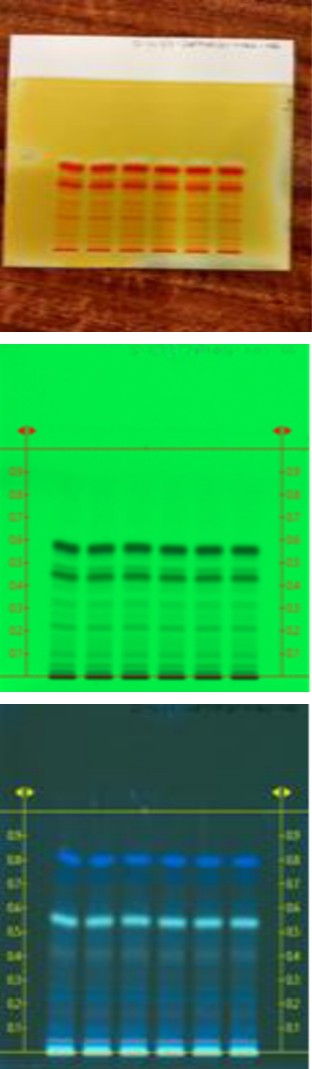
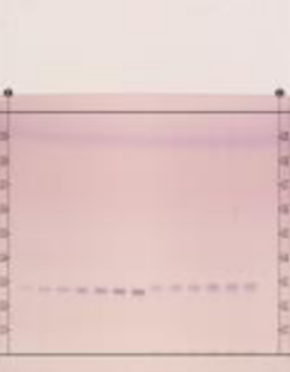
India being a rich and varied flora of medicinal plants since the Vedic period. The present study deals with the scientific validation of P. daemia.Linn with special reference to its pharmacognostical and phytochemical investigations. This is commonly known as P. daemia, figure and is known to have medicinal properties, also even used as home remedies in the rural and the remotest parts of the India Qualitative & Quantitative analysis for nutritional value and amino acid detection for both sample has been estimated & detected TLC finger prints of latex of at 366 nm (before derivatization) & Rf values in TLC finger prints of latex at 254 nm (after derivatization) has been studied for both Samples. Latex is applied externally on chronic infected wounds to alleviate edema, pain and to promote the healing; therefore an attempt has been made to carried out the detailed quality control and assurance of the drug followed by HPTLC profiles, HPTLC profile of P. Daemia latex milk powder observed under 366 nm & 254 nm shows the variety of results A – C (Gautala forest,) B - Aurangabad (M.S.) Sample A, B & C.
Introduction
Medicinal plants are important component of natural resources viz. food, gum, fiber, tannin, resin, herbal medicines. The importance of herbal medicine that about 80% of the developing world’s population depends on traditional medicine for their primary health care [1, 2, 3, 4]. One such plant is Pergularia daemia linn whole Plant. It is a hispid perennial herb which grows along the road sides of India and other tropical and sub- tropical regions. It is popularly known as Veliparuthi in Tamil. This plant has been used in the traditional medicine for a wide range of aliments. The entire plant is used as anti-helmenthic, anti- pyretic, laxative, expectorant and infantile diarrhea [2]. Each part of the plant has various therapeutic values. The root of the plant is effecting in treating the disorders like asthma, mental disorder, anemia, leprosy and piles. The dried leaves are used in treating bronchitis, asthma, rheumatic fever, amenorrhea and dysmenorrhea and wounds Roots and shoots are prescribed for Whooping cough. All these medicinal properties of Pergularia daemia is may be due to the presence of various phytochemicals [5, 6, 7]. Hence this study aims to determine the phytochemicals so that they can be used further for the designing of the drugs in future. All natural drugs are functioning properly and whose mind, body and spiritare cheerful. Pergularia daemia, the trellis-vine, is a hispid, perennial vine in the family Apocynaceae, with an extensive range in the Old World tropics and subtropics. It has been used traditionally to treat a number of ailments [6, 7, 8, 9].
Materials and Methods
Collection of the Plant
The plant materials for the proposed study were collected in the month of August & September 2019 from Paithan road, Aurangabad District, Maharashtra India. The plant material was taxonomically identified by Prof. Arvind Dhabe, Botany Department, Dr.BAMU, Aurangabad, Maharashtra, India. The voucher herbarium specimens (Accession No. 0715) have been preserved in our laboratory for further reference.
Physico-Chemical Analysis
Air dried plant material was used for the quantitative determination of ash and extractive values (nutritional values) according to standard procedure of Indian Pharmacopoeia [10, 11, 12, 13, 14] and WHO/QCMMPM [15]. Fluorescence analysis of the extract(s) was carried out according to standard procedure [16]. Powdered latex was subjected to analysis under ultraviolet light after treatment with various reagents and chemicals like sulphuric acid, nitric acid, dilute hydrochloric acid and sodium hydroxide.
Preliminary Phytochemical Screening
Preliminary phytochemical evaluation was carried out by using standard procedure [17].
Fluorescence Analysis
The latex powder was treated with different chemicals and seen under the normal light and UV radiations at 254 and366 nm wavelengths as per the standard procedure. The colour development under the day light was also observed for the presence of various phytochemical compounds.
High Performance Thin Layer Chromatography (HPTLC)
For HPTLC, 5 g of coarsely powdered drug in 250 ml stoppered conical flask & extracted with 100 ml ethanol for24 hours by maceration technique with occasional shaking. The extract was extracted and volume was raised up to100 ml in a volumetric flask. 25 ml of the extract was taken from the above stock solution and concentrated on water bath to similarly, ethanol extracts were prepared for two samples of P.daemia. Linn, as reference Kokate CK and Lohar DR [17, 18].
Results and Discussion
Physiochemical Analysis
Air dried material was used for quantitative determination of phytochemical values. Total ash, acid insoluble ash, water soluble and alcohol soluble extractive were determined for five times as per WHO recommendations. Alcohol soluble extractive value was found to be very high when compared to other extractable matter in the drug (Table 3) [18].
Preliminary Phytochemical Screening
The preliminary phytochemical test was performed on the extracts of plant of Linn. They show the presence of the alkaloids, carbohydrate, flavonoids, saponin, resin, protein and tannin (Table 1). The fluorescence analysis is a tool for the determination of constituents in the plant that gives a definite idea of the chemical nature. Thus the fluorescence analysis of the powder was carried out and data is presented in the Table 4.All amino acid test and nutritional value concentration has been determined in both samples Tables 2-8 [15, 18].
| S. No | Parameters | Samples A | Sample B |
|---|---|---|---|
| 1 | Carbohydrate | + | + |
| 2 | Alkaloid | + | + |
| 3 | Flavonoid | + | + |
| 4 | Tannin | + | + |
| 5 | Protein | + | + |
| 6 | Resin | + | + |
| 7 | Saponin | + | + |
| S. No | Amino acid test | P.Deamia Extract | |
| Sample A | Sample B | ||
| 1 | L-hydroxyproline | - | - |
| 2 | DL serine | + | + |
| 3 | DL- alanine | + | + |
| 4 | DL-tryptopham | - | + |
| 5 | DL Iso- leucine | + | + |
| 6 | DL valine | + | - |
| 7 | DL- nor- leucine | + | + |
| 8 | L- Cystein hydroxyl | + | + |
| 9 | L- ornithine | - | - |
| 10 | DL-2-aminobutyric acid | + | + |
| 11 | DL- aspartic acid | + | + |
| 12 | Glycine | - | + |
| 13 | 3-c-3-4dihydroxy phenyl | - | - |
| 14 | L-glutamic acid | + | + |
| 15 | L-tyrosine | + | + |
| 16 | DL- threonine | + | + |
| 17 | L- proline | - | + |
| 18 | L- arginine | + | + |
| 19 | L-leucine | + | + |
| 20 | L- lysine monochloride | + | + |
| 21 | DL- methionine | + | + |
| 22 | L- histidine | - | - |
Table 1: Preliminary phytochemical screening of extracts of latex milk powder of P.daemia: Linn.
Key: + present, -absent. Table 1: Preliminary phytochemical screening of extracts of latex milk powder of P.daemia: Linn.
| Nutrients | Value | ||
|---|---|---|---|
| Sample A | Sample B | ||
| 1 | Moisture (%) | 46.20 ± 0.14 | 48.20 ± 0.15 |
| 2 | Ash (%) | 3.96 ± 0.15 | 5.00 ± 0.14 |
| 3 | Insoluble ash (%) | 9.29 ± 0.10 | 7.11± 0.15 |
| 4 | Soluble ash (%) | 7.45 ± 0.10 | 8.36 ± 0.11 |
| 5 | Crude fibre (%) | 16.65 ± 0.10 | 15.38± 0.17 |
| 6 | Crude fat (%) | 4.39 ± 0.14 | 6.21± 0.18 |
| 7 | Total nitrogen (%) | 0.75 ± 0.08 | 1.25 ± 0.10 |
| 8 | Total protein (%) | 4.06 ± 0.06 | 3.55± 0.09 |
| 9 | Carbohydrate (%) | 19.78 ± 0.10 | 17.24± 0.11 |
| 10 | Organic matter (%) | 94.85 ± 0.15 | 90.77± 0.19 |
| 11 | Na (mg/100g) | 0.72 ± 0.12 | 0.88 ± 0.16 |
| 12 | Ca (mg/100g) | 1.45 ± 0.13 | 1.67 ± 0.15 |
| 13 | pH | 5.6 | 5.56 |
| 14 | Alcohol-soluble extractive | 63.45% | 63.65% |
| 15 | Water-soluble extractive | 22.33% | 22.45% |
| 16 | K (mg/100g) | 1.48 ± 0.10 | 2.11 ± 0.11 |
| 17 | Mg (mg/100g) | 0.90± 0.13 | 0.96± 0.14 |
| 18 | P (mg/100g) | 1.86 ± 0.02 | 1.99 ± 0.02 |
| 19 | Fe (mg/100g) | 0.02 ± 0.02 | 0.03 ± 0.04 |
Table 2: Nutritional value of latex powder of P.daemia: Linn for Both Sample.
| S. No | Treatment | Samples A | Samples B |
|---|---|---|---|
| Day light | UV light at 254 nm | UV light at 366nm | |
| 1 | Powder as such | Brown Brown | Brown |
| 2 | Powder + KOH | Dark Yellow | Blue Blue |
| 3 | Powder + HCl | Brown Blues | Brown Brown |
| 4 | Powder + H2SO4 | Dark Yellow | Brown Brown |
| 5 | Powder + NaOH | Dark Yellow | Brown Black |
| 6 | Powder + HNO3 | Brown | Blue Blue |
Table 3: Fluorescence Analysis of latex milk powder of P.Daemia Linn.
HPTLC fingerprint profile of alkaloid and phenolic compound fraction was developed in respective solvent system and identified in different visualizing agent as per Stahl, in both Samples [16, 19].
| S. No | Parameters | Samples A | Samples B |
|---|---|---|---|
| 1 | Rf 1 (sky blue) | 0.52 | 0.52 |
| 2 | Rf 2 (white) | 0.81 | 0.81 |
| 3 | Rf 3 (blue) | 0.95 | 0.95 |
Table 5: Rf values in TLC finger prints of latex of at3 66nm (before derivatization) Rf value.
A –Daultabad forest (Aurangabad, Maharashtra), B – Gautala forest (Aurangabad, Maharashtra)
| S. No | Parameters | Samples A | Samples B |
|---|---|---|---|
| 1 | Rf 1 (yellow) | 0.63 | 0.63 |
| 2 | Rf 2 (yellow) | 0.77 | 0.77 |
| 3 | Rf 3 (red) | 0.95 | 0.95 |
Table 7: Rf values in TLC finger prints of latex of at 254 nm (after derivatization) Rf value.
| S. No | Parameters | Samples A | Samples B |
|---|---|---|---|
| 1 | Rf 1(blue ) | 0.07 | 0.07 |
| 2 | Rf 2 (sky blue) | 0.38 | 0.38 |
| 3 | Rf 3 (brown) | 0.54 | 0.54 |
| 4 | Rf 4 (white) | 0.63 | 0.63 |
| 5 | Rf 5 (yellow) | 0.77 | 0.77 |
| 6 | Rf 6 (yellow) | 0.87 | 0.87 |
| 7 | Rf 6 (red) | 0.95 | 0.95 |
Table 4: Rf values in TLC finger prints of at 366nm (after derivatization) Rf value.
| for header rows | for data cells | for header rows | for data cells | |
|---|---|---|---|---|
| 1 | Rf 1 (yellow) | 0.63 | 0.63 | 0.63 |
| 2 | Rf 2 (yellow) | 0.77 | 0.77 | 0.77 |
| 3 | Rf 3 (red) | 0.95 | 0.95 | 0.95 |
Table 6: Rf values in TLC finger prints of at visible light (after derivatization) Rf value.
Conclusion
The study of Pharmacognostical-phytochemical features of P. Daemia latex milk powder Linn had shown the standards which will be useful the detection of its identity and authenticity. The other study viz. Sample A & Sample B Shows the variety of results under the physiochemical analysis, preliminary phytochemical test, nutritional value determination, amino acid detection fluorescence analysis and High Performance Thin Layer Chromatography (HPTLC) add to its quality control and quality assurance for proper identification. HPLC and TLC fingerprint would be useful for the quality assessment of raw material under different wavelength frequency of and also helpful in the identification and isolation of therapeutically important phytochemicals.
References
-
(1956) The Wealth of India – A Dictionary of Indian Raw Materials. Publication and Information Directorate 4: 35-36.
-
Atal CK, Kapur BM (1982) Cultivation and Utilization of Medicinal Plants. Regional Research Laboratory pp: 514- 519.
-
(2000) The Ayurvedic Pharmacopoeia of India, Ministry of Health & Family Welfare, Government of India, Department of ISM &H. The Controller of Publications 1(2): 217-218.
-
Mishra R, Tiwari AK, Singh S, Tripathi RC (2012) Life Science Bulletin. An International Biannual Journal of Life Sciences 9(1): 156-160.
-
Cooke T (1967) The Flora of Presidence of Bombay. Botanical Survey of India 2: 154.
-
Parikh PM (2009) Indian Journal of Natural Products and Resources. Nat Prod Radiance 8: 84-90.
-
Chopra RN, Chopra IC, Verma BS (1992) Supplement to Glossary of Indian. Medicinal Plants pp: 29.
-
Chopra RN, Chopra IC, Handa KL, Kapur LD (1958) Indigenous Drugs of India. UN Dhur and Sons pp: 415- 416.
-
Sharma PC, Yelne MB, Dennis TJ (2001) Database on Medicinal plant used in Ayurveda. Central Council for Research in Ayurveda and Siddha 3: 1-4.
-
Gupta DP (2008) The Herbs, Habitate, morphology and pharmcognosy of medicinal plants. pp: 217-218.
-
Shiksharthi AR, Mittal S (2011) International Journal of Recent Advances in Pharmaceutical Research. IJPSR 4: 6-15.
-
Mukherjee PK, Saha K, Murugesan T, Mandal SC, Pal M (1998) Screening of anti-diarrhoeal profile of some plant extracts of a specific region of West Bengal, India. J Ethnopharmacol 60(1): 85-89.
-
(1996) Indian Pharmacopoeia, Government of Indian, Ministry of health and human welfare. Controller of publications 2: A53.
-
(1998) Quality control methods for medicial plant materials. WHO, Switzerland.
-
(2008) Quality Control Manual for Ayurvedic, Siddha and Unani medicines. PLIM pp: 1-99.
-
Karthika K, Jamuna S, Paulsamy S (2014) TLC and HPTLC fingerprint profiles of different bioactive components from the tuber of Solena amplexicaulis. Journal of Pharmacognosy and Phytochemistry 3(1): 198-196.
-
Kokate CK (1994) Practical Pharmacognosy. Nature pp: 54.
-
Lohar DR (2007) Protocol for Testing Ayurvedic, Siddha and Unani medicines. PLIM, pp: 40-108.
-
Anjoo K, Ajay KS (2017) Development of validated HPTLC method for quantification of stigma sterol from leaf and stem of Bryophyllum pinnatum. Arabian Journal of Chemistry 10(2): 2644-2250.
- Superposition of Cryo-EM and AlphaFold Predictions of Dengue Antigen-Antibody Complexes
- Jugular-Applied Coherent Low-Level Laser Therapy Enhances Systemic Mitochondrial Metabolic Function and Antioxidant Response
- Role of OMC32 Polypeptide in Acrosin-Mediated Exocytosis during the Bovine Sperm Acrosome Reaction
- Association of Galectin-3 but not Laminin in Tamoxifen-Induced Growth Suppression in Breast Cancer MCF-7 Cells
- Effect of Different Wavelengths of Light on the Rate of Photosynthesis
- Nutritional, Therapeutic, and Environmental Effect of Oyster Mushrooms: An Editorial