
Contemporary Relationships: The Potential Risk of Affection and Suicidal Ideation
Introduction: Modern relationship dynamics, influenced by factors such as social media, changing gender roles, and societal expectations, have given rise to unique challenges in understanding the intersection of love addiction and suicide risk. This introduction sets the stage for thoroughly examining existing research, highlighting the need to address this pressing issue and its potential implications for mental health interventions. Aim: This article analyzes contemporary relationships, revealing their potential link to increased vulnerability to suicidal thoughts in modern romantic relationships, fostering a nuanced understanding. Methodology: This study explores the relationship between love, affection, and suicidal tendencies using NCRB data and relevant literature. Contemporary relationship dynamics were examined, with case studies included for support. Studies were critically appraised for quality, ensuring robust conclusions on how emotional factors influence suicidal behavior in modern relationships. Result: NCRB data from 2020-2022 reveals a 4.5% rise in suicides due to 'Love Affairs,' contributing to a total of 170,924 suicides in 2022. This highlights the increasing impact of romantic relationships on mental health, particularly among young adults and minors. Conclusion: Contemporary relationships have become increasingly complex, with affection as both a source of joy and a potential risk factor for emotional distress. While affection fosters emotional support and connection, it can also increase vulnerability to psychological pain due to unreciprocated love, conflicts, or neglect. This study highlights the link between love addiction and suicidal tendencies, emphasizing the influence of digital communication on unrealistic expectations. It calls for collaborative efforts among mental health professionals, educators, and policymakers to raise awareness and promote healthier relationship norms and coping mechanisms.
Abbreviations
BNS: Bharatiya Nyaya Sanhita; NCRB: National Crime Records Bureau; LU: Lucknow University; FIR: First Information Report; IPC: Indian Penal Code.
Introduction
The world of feelings and relationships among people has always been interesting. Love is a big part of this, and it can be powerful and sometimes chaotic [1]. The dynamics of relationships have significantly evolved in contemporary society, influenced by a range of socio-cultural, economic, and technological shifts [2]. In earlier times, relationships— whether romantic or otherwise—were primarily built around familial ties, local community structures, and religious institutions. However, today’s relationships are increasingly fluid, diverse, and complex [3]. This shift can largely be attributed to factors like globalization, the widespread use of social media, changing gender roles, and evolving norms regarding love and sexuality [4]. While these changes provide individuals with more freedom and opportunities for personal expression, they also introduce new challenges and risks [5]. One major concern is the potential for emotional distress, especially in its most intense or fractured forms, to contribute to suicidal ideation.
The Evolution of Relationships in Modern Society
Historically, social expectations and cultural norms largely dictated relationships. Marriage, for example, was seen more as an institution designed to cement alliances, ensure financial stability, or maintain social status rather than a partnership based on affection alone [6]. In recent decades, however, the rise of individualism has shifted this dynamic. Today, personal fulfillment, emotional compatibility, and mutual respect are at the forefront of what many people seek in relationships [7]. The concept of “true love” has become an aspirational ideal, emphasizing the importance of emotional connection and intimacy [8].
However, these changing expectations also bring with them new challenges. Modern relationships are less bound by traditional structures, but they are increasingly affected by the pressures of modern life [9].
Social media, for instance, blurs the boundaries between personal and public lives, often subjecting individuals to heightened emotional stakes, judgment, and scrutiny from a broader audience. This can amplify feelings of rejection, insecurity, or failure when relationships encounter difficulties [10].
Affection and Emotional Vulnerability
Affection plays a pivotal role in relationships, serving as an expression of love, care, and intimacy between individuals. Although generally seen as positive, affection also has a darker side, particularly in romantic relationships [11]. The deep emotional investment required in such relationships makes individuals more vulnerable to emotional pain [12]. When expectations are unmet or affection appears one-sided, feelings of inadequacy, loneliness, or betrayal can arise. These emotions, if left unchecked, can act as catalysts for mental health struggles [13]. In contemporary culture, affection, and love are often idealized, with media and popular culture portraying them as ultimate solutions to personal fulfillment. However, this idealization creates intense pressure. When individuals’ lived experiences do not align with these expectations, they may become emotionally drained, leading to crises where personal failures in relationships are internalized and seen as reflections of self- worth. In such cases, emotional despair can follow, fostering a sense of hopelessness [14].
Love Addiction and Love Affection
“Love addiction” is a psychiatric term referring to an obsessive, excessive desire to seek out love or romantic relationships to escape from life’s challenges [15]. Love, though traditionally seen as a positive force, can become addictive, causing negative effects when individuals seek out relationships driven by a strong fear of abandonment or a constant need for approval. This obsession can make maintaining healthy relationships difficult, as the individual is consumed by their desire for love, often placing unrealistic expectations on their partner [16].
“Love affection,” while not a formal psychiatric term, could be seen as a combination of “love” and “affection.” In relationships, it signifies the fondness, warmth, and tenderness one feels towards another. Manifesting through gestures, actions, and expressions of care, love affection is essential to creating emotional intimacy and connection. However, when distorted or imbalanced, even love and affection can turn into an emotional dependency that creates psychological distress [17].
The Shifting Landscape of Modern Relationships
The 21st century has seen a dramatic transformation in romantic relationships, largely influenced by social media, online dating platforms, and the globalization of cultures. These shifts have reshaped how relationships are initiated, sustained, and perceived [18]. Dating apps and social media have expanded access to potential partners, allowing people to navigate an increasingly intricate web of virtual and real- world connections. While these platforms have provided new opportunities for connection, they also pose challenges to traditional notions of love and commitment [19]. Moreover, modern relationships are characterized by their diversity. Long-distance, open, and non-monogamous relationships are becoming more common, reflecting a departure from traditional relationship structures [20]. The increased focus on emotional compatibility, mutual respect, and shared values aligns with society’s growing emphasis on gender equality and mental well-being. However, the complexities of navigating trust, commitment, and the balance between independence and connection continue to present challenges [20, 21].
The Link Between Relationship Distress and Suicidal Ideation
The connection between relationship distress and suicidal ideation has been extensively documented in psychological research. Romantic relationship problems are frequently cited as major sources of emotional turmoil that can lead to suicidal thoughts, particularly for individuals who exhibit intense emotional dependence on their partners [22]. When a relationship ends or undergoes significant strain, the profound sense of loss and disconnection can lead to feelings of despair, escalating to suicidal ideation.
Emotional intensity in romantic relationships often creates a fear of abandonment, rejection, or unreciprocated love [23]. In cases of emotional abuse, infidelity, or unmet expectations, individuals may experience extreme emotional responses such as depression or anxiety. For some, the emotional pain becomes unbearable, leading them to view suicide as an escape from overwhelming distress [24].
The Role of Social Media and Digital Communication
One of the most significant changes in contemporary relationships is the prevalence of digital communication. Platforms like Instagram, Facebook, and Twitter have allowed individuals to curate their romantic lives in public, often creating unrealistic portrayals of love and affection [25]. While these platforms facilitate connection, they can also exacerbate feelings of inadequacy when individuals compare their relationships to the seemingly idealized relationships of others [26]. Moreover, digital communication adds complexity to relationship dynamics. Misunderstandings, cyberbullying, and passive-aggressive behaviors in online interactions can contribute to emotional stress. The pressure to maintain a perfect online persona can create additional emotional turmoil, especially when insecurities arise in the context of digital relationships [27].
Gender, Affection, and Suicidal Ideation
Affection and its associated risks are experienced differently across gender lines. Research shows that men and women navigate emotional distress in relationships differently [28]. Men, for instance, are less likely to seek emotional support during times of relationship stress, often internalizing their emotions, which can increase their risk of suicidal ideation [29]. Women, while more open about their emotional needs, often face societal pressures surrounding romantic success, body image, and the idealization of affection, which can also contribute to psychological pain [30]. Gender-based expectations also influence how individuals perceive and react to relationship failures. Men may feel pressured to maintain emotional control and avoid vulnerability, which can lead to the suppression of emotions until they become overwhelming. Women, while more likely to express emotional pain, may still struggle with societal stigmas around emotional dependency, leading to internal conflicts about their feelings and self-worth [31].
Medicolegal Complexities in Proving Emotional Abuse and Suicidal Ideation
In medicolegal studies, the intersection of relationships and mental health is crucial, especially regarding suicidal ideation linked to emotional distress [32]. Investigating suicides due to relationship breakdowns raises complex legal questions about liability. Emotional abuse, which can lead to suicidal thoughts, may be considered abetment of suicide under certain laws, requiring forensic analysis of communications, including digital ones [33]. Proving emotional abuse is more difficult than physical abuse, posing challenges in legal proceedings. While laws like the Domestic Abuse Act 2021 recognize emotional and psychological harm, proving such cases often depends on psychiatric evaluations and testimonies [34].
Digital communication further complicates matters, as cyberbullying and online harassment can cause emotional trauma. Many countries have laws addressing cyberbullying, and forensic experts play a key role in gathering digital evidence. Healthcare providers have a legal duty to assess and manage suicidal ideation, including breaching confidentiality, if necessary, to safeguard vulnerable individuals in emotional distress [35].
In India, Section 309 of the Indian Penal Code (IPC) previously criminalized suicide, but the Mental Healthcare Act of 2017 decriminalized it, emphasizing mental health support over punishment [36, 37].
Sections 305 and 306 of the IPC address the abetment of suicide, with varying penalties. Section 305 applies to abetment involving minors, mentally ill individuals, or intoxicated persons, with penalties including death or life imprisonment [38, 39]. Section 306 deals with the general abetment of suicide, prescribing up to 10 years in prison [40].
India’s legal reforms, through the Bharatiya Nyaya Sanhita (BNS) 2023, introduced updates to laws related to suicide and abetment. BNS 105 imposes strict penalties for aiding suicides involving minors or mentally ill individuals, while BNS 106 addresses the abetment of suicide in general. Additionally, BNS 84 tackles cruelty towards women by husbands or relatives, prescribing imprisonment for actions likely to lead to suicide or grave injury. These amendments aim to strengthen protections against cruelty and abetment within the legal system [41, 42].
Reported Data
About 4,789 suicides were owing to family problems while illness was referred to as the reason for the act in 2,131 cases. Some of the reasons for the suicide and the number of deaths include drug abuse/alcohol addiction (1,047); love affairs (292) Bankruptcy (242); unemployment (117) marriage-related issues (116); professional/career problems (100). Of the total suicides in 2022, 8,031 were male while the corresponding number of females was 2,129. Among the females, 1,089 were housewives. The category-wise data self-employed (991); self-employed (business; 637); persons engaged in the farming sector (233). Among the total cases, 3, 617 were daily wage earners [43, 44]. The Accidental Deaths and Suicides in India (ADSI) report for 2021, published by the National Crime Records Bureau, revealed a concerning rise in suicides among minors attributed to “love affairs.” The data shows an 11.81 percent increase, with cases escalating from 1,337 in 2020 to 1,495 in 2021. Interestingly, this surge occurs amid an overall decrease in suicides among minors, dropping from 11,396 in 2020 to 10,732 in 2021, reflecting a decline of 5.82 percent [45, 46]. In 2008, a total of 3,774 individuals took their own lives due to romantic relationship failures. Notably, women outnumbered men in this tragic phenomenon, with 1,912 females and 1,862 males ending their lives, as reported in the ‘Accidental Deaths and Suicides in India 2008’ report [47, 48]. Table 1 presents data on global suicides from 2017 to 2021, covering total suicides, mid-year projected population (in lakhs), and suicide rates. Over these five years, the number of suicides increased consistently: 129,887 in 2017, 134,516 in 2018, 139,123 in 2019, 153,052 in 2020, and 164,033 in 2021, reflecting growing mental health challenges, relationship issues, and career pressures. The mid-year population also grew steadily, from 13,091.6 lakh in 2017 to 13,671.8 lakh in 2021. The suicide rate, calculated as suicides per lakh of the population, rose from 9.9 in 2017 to 12.0 in 2021, indicating an upward trend in suicide occurrences relative to population growth.
| SI. No. | Year | Total number of suicides | Mid-Year Projection (in lakh*) | Rate of suicide (col. 3/col. 4) |
|---|---|---|---|---|
| (1) | (2) | (3) | (4) | (5) |
| 1 | 2017 | 1,29,887 | 13091.6# | 9.9 |
| 2 | 2018 | 1,34,516 | 13233.8# | 10.2 |
| 3 | 2019 | 1,39,123 | 13376.1# | 10.4 |
| 4 | 2020 | 1,53,052 | 13533.9$ | 11.3 |
| 5 | 2021 | 1,64,033 | 3671.8$ | 12 |
Table 1: ** Number of Suicides, Growth of Population, and Rate of Suicides During 2017-2021(Source: NCRB-Suicides Report 2021 Ind
# Source: Report of the Technical Group on Population Projections (November 2019), National Commission on Population, Ministry of Health & Family Welfare. $ Source: Report of the Technical Group on Population Projections (July 2020), National Commission on Population, Ministry of Health & Family Welfare + One Lakh = 0.1 million * Rate of Suicides = Incidence of suicides per one lakh (1, 00,000) of population. Table 1:** Number of Suicides, Growth of Population, and Rate of Suicides During 2017-2021(Source: NCRB-Suicides Report 2021 India and as Per Data Provided by States/Uts).
Aim
This article analyzes contemporary relationships, revealing their potential link to increased vulnerability to suicidal thoughts in modern romantic relationships, fostering a nuanced understanding.
Objectives
- To examine the characteristics and challenges unique to modern romantic relationships.
- To explore the prevalence of suicidal thoughts within the context of contemporary relationships.
• To provide insights and recommendations for fostering healthier, more supportive romantic relationships.
Methodology
Study Design
This research adopts a mixed-methods approach, integrating quantitative data from official records with qualitative analysis derived from existing literature. The study aims to investigate the correlation between love, affection, and suicidal tendencies in modern relationship dynamics.
Data Sources
Data for the study was primarily obtained from the National Crime Records Bureau (NCRB), which provides comprehensive statistical information on suicides in India, including those linked to relationship issues. The NCRB’s records for the past five years were reviewed to identify trends and patterns in suicide cases where relationship problems, such as failed love affairs, emotional distress, and interpersonal conflicts, were implicated.
Literature Review
A systematic review of existing literature was conducted to analyze the impact of romantic relationships and emotional well-being on suicidal behavior. Studies were selected from peer-reviewed journals, books, and reports that specifically explored the psychological and emotional factors in romantic relationships that contribute to suicidal tendencies. The review emphasized studies published within the last decade to ensure relevance to contemporary relationship dynamics.
Inclusion criteria
- Focus on emotional and romantic relationships.
- Studies discussing the psychological impact of love, affection, and rejection.
- Research analyzing the link between relationship failure and suicidal behavior.
- Studies assessing contemporary issues such as social media influences, changing relationship norms, and their mental health impacts.
Case Study Analysis
Relevant case studies of individuals who had attempted or committed suicide due to relationship issues were included to provide deeper insight into the psychosocial factors contributing to suicidal tendencies. These cases were selected based on their documentation in psychological and forensic reports, news archives, and research publications.
Each case was examined for underlying relational and emotional factors, focusing on the role of love, affection, rejection, and emotional breakdowns in triggering suicidal behavior.
Data Analysis
The NCRB data was subjected to statistical analysis to identify patterns and trends in suicides attributed to relationship problems. Descriptive statistics such as frequencies and percentages were calculated to categorize the different types of relationship issues linked to suicide cases (e.g., failed love affairs, emotional breakdowns, domestic disputes). These findings were then compared with insights gained from the literature review and case study analyses. Qualitative data from literature and case studies were critically appraised using thematic analysis to identify recurring themes related to love, affection, and their influence on suicidal tendencies. Key themes included emotional dependency, rejection, the psychological effects of breakups, and the role of modern relational stressors such as social media.
Methodological Quality Assessment
Each study included in the literature review was assessed for methodological rigor using standard appraisal tools (e.g., CASP checklists). Only studies that demonstrated high methodological quality and relevant findings were included to ensure the robustness of the conclusions. The appraisal criteria included study design, sample size, data collection methods, and validity of the findings.
Supporting Case Study
Case 1: Female Student Ends Life in Hostel Room, Records Suicide on Camera in Lucknow
In a distressing incident at Tilak Hostel on the campus of Lucknow University (LU), a female student from the College of Arts and Crafts allegedly died by suicide on the evening of January 10. The victim, a fifth-semester student and a resident of Prayagraj took her own life by hanging herself from a ceiling fan in her shared room, capturing the entire sequence on her cell phone camera. Two of her roommates, returning from the market, discovered the room locked from the inside. Concerned, they sought help from hostel staff, who, with joint efforts, broke the windowpanes to access the room. Upon entering, they found a devastating scene and promptly alerted the authorities. Police officials revealed that the deceased had a dispute with an individual in Varanasi, potentially contributing to her decision. Led by Additional DCP (Central), the police arrived promptly, retrieving the victim’s body for a post-mortem examination, with the family and local guardians notified. LU Spokesperson Mr. Srivastava emphasized that the university is cooperating with the ongoing police investigation to understand the circumstances surrounding this tragic event, emphasizing the importance of addressing mental health concerns within educational institutions [49].
Case 2: Student Hangs to Death Due to Love Failure in Vij
In a tragic case report, A. Mr. N.K. 20-year-old pharmacy student from Anantapur district, visited Vijayawada on a Saturday and, unfortunately, ended his life in a lodge near the bus station. Mr. NK, a third-year student at a private college in Sattenapalli, arrived in Vijayawada in the morning and rented a room in a lodge opposite Pandit Jawaharlal Nehru bus station. Concerns arose when he did not emerge from his room after a day, prompting the lodge staff to break open the door and reveal. NK’s lifeless body.
The police, summoned to the scene, found no suicide note during their initial investigation. Preliminary findings suggest that Mr.’s suicide may be linked to a romantic rejection from a classmate, and he had a dispute with another male student from the same college who had feelings for the same girl. This emotional turmoil appears to have driven Mr. NK to take his own life. Responding to the incident, the police registered a case to delve deeper into the circumstances surrounding this tragic event. The case underscores the critical need to address mental health concerns and foster supportive environments within educational institutions to mitigate the emotional challenges students may face during their academic journeys [50].
Case 3: Mr. Kumar V. State Through its Inspector of Police and Another
A Criminal Original Petition under Section 482 of the Code of Criminal Procedure was filed to seek the quashing of the First Information Report (FIR) in Crime No. 45 of 2018 on the file of the first respondent police. The case revolved around the suicide of Miss R, the daughter of the complainant, on February 16, 2018. The FIR suggested that the petitioner, Mr. Kumar, and the deceased were in a romantic relationship, and Miss R took her own life after Mr. Kumar declined to marry her. The petitioner argued that there was no evidence to infer abetment of suicide on his part; it was primarily a case of love failure, and Rohini, unable to cope, resorted to suicide. The government advocate for the police countered, stating that the investigation was complete, and a charge sheet was pending. Upon reviewing the Case Diary and witness statements, the court found that the petitioner intended to delay marriage due to personal reasons, not intending harm. As the essential elements for the offense under Section 306 IPC were not established, the court quashed the FIR, allowing the Criminal Original Petition—consequently, Crl. M.P.(MD) No. 3611 of 2018 was closed [51].
Case 4: Engineering Student Commits Suicide Over Failed Love Affair
In a tragic incident reported from Bareilly, Uttar Pradesh, a third-year engineering student from Rohilkhand University named Mr.Kumar, aged 20 and hailing from Badhun, allegedly took his own life on Tuesday. The police disclosed that Mr. Kumar hung himself from the ceiling fan in his rented room at Bareilly’s Pashupati Vihar Colony. Preliminary findings suggest that the motive behind the suicide was a failed love affair, as Mr. Kumar was reportedly in a relationship with a girl who married someone else on the preceding Monday, according to statements from students residing in nearby rooms. The police official further mentioned that the body of the B. Tech student had been sent for a post-mortem examination, and Mr. Kumar’s family had been duly informed of the tragic incident. This case underscores the emotional toll that failed relationships can have on individuals, particularly students, and emphasizes the need for awareness and support mechanisms for mental health within educational institutions [52].
Case 5: Love Affair with her Neighbour
On December 10, the first reported case unfolded when a young girl took her own life following the rejection of her romantic involvement with a neighbour by her family. Subsequently, the neighbor was arrested on charges of abetment of suicide [53].
Case 6: Failure in Love Drives 17-Year-Old to Suicide
A tragic incident occurred under the jurisdiction of Janki Puram police station, Lucknow, as a 17-year-old girl named Miss Verma, a B. Com (I) student, committed suicide by hanging herself from the ceiling on Monday. Her father, Mr. Kumar, a private company employee, reported that the family discovered her absence around 3:10 am. A search revealed Miss Verma hanging in another room, using a scarf as a makeshift rope. According to SHO, there were no visible injury marks on the body, and a suicide note was recovered. The note expressed Anjali’s deep love for her family and addressed a failed love affair, indicating her decision to part ways permanently. While the family has filed no formal complaint, the police suspect the suicide is linked to a romantic relationship [54].
Result
According to data reported by the National Crime Records Bureau (NCRB) from 2020 to 2022, a total of 170,924 suicides were recorded in India during 2022. This marks a 4.2% increase compared to 2021, with the suicide rate rising by 3.3% over the previous year. Table 1 illustrates the incidence and rate of suicides from 2012 to 2022. In 2022, the major causes of suicides included ‘Family Problems’ (31.7%) and ‘Illness’ (18.4%). Other significant causes were ‘Drug Abuse/Alcohol Addiction’ (6.8%), ‘Marriage Issues’ (4.8%), ‘Love Affairs’ (4.5%), ‘Bankruptcy or Indebtedness’ (4.1%), ‘Unemployment’ (1.9%), ‘Failure in Examination’ (1.2%), ‘Professional/Career Problem’ (1.2%), ‘Death of Dear Person’ (1.2%), and ‘Property Dispute’ (1.1%), as depicted in Figure1.Notably, suicides attributed to ‘Love Affairs’ have shown a concerning increase. This trend suggests a potential link between romantic relationships and the rise in suicide rates, particularly among young adults and minors. Figure 2 highlights the significant growth in suicides related to ‘Love Affairs’ from 2021 to 2022, underscoring the emotional impact of contemporary relationships on mental health and suicidal risks.
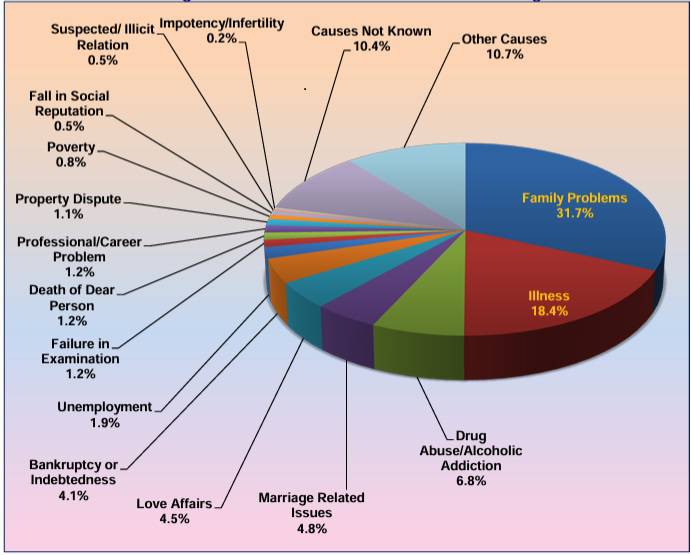
Source: As Per Data Provided by States/Uts. Figure 1: Percentage Share of Various Causes of Suicides During 2022
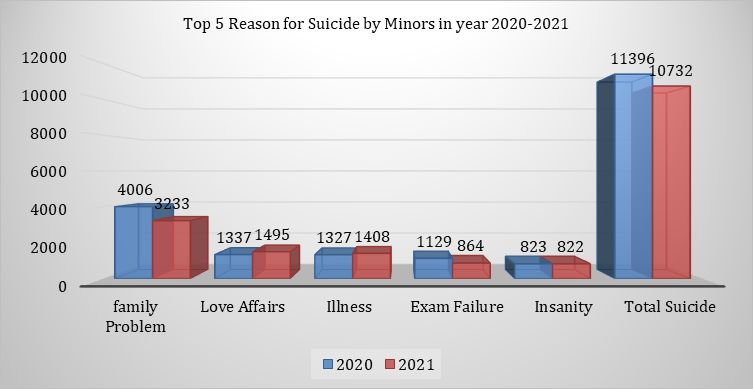
Source: NCRB Report 2020-2021. Figure 2: Reason for Suicide by Minors in the year 2020-2021
Discussion
A 2021 study by Still D [55] found that individuals reporting higher romantic relationship quality, regardless of the type of relationship, were less likely to experience suicidal ideation. This research expands previous findings in the sociology of mental health by highlighting the protective role of relationship quality [55]. A 2023 study by Khan AR, et al. [56] used qualitative semi-structured interviews with family, relatives, and friends of 37 men who died by or attempted suicide. The study identified five key risk factors: family provider pressures, second marriage issues, betrayal, non-marital relationship complications, and lack of control over their spouse. These men struggled to reconcile societal expectations of masculinity with their intimate relationships [56]. A 2014 study by Still DM [57] found that simply being in a romantic relationship, such as marriage or cohabitation, does not reduce the likelihood of suicidal thoughts compared to being single. However, individuals in high-quality relationships are less likely to experience suicidal ideation. Relationship dissatisfaction or low commitment increases the risk of suicidal thoughts, highlighting how relationship quality affects mental health [57]. A 2022 study by Tugnoli S, et al. [58] found that depression and suicidal ideation are more prevalent among undergraduate medical students (50.2% and 16.7%) compared to the general population (15–18% and 9.2%). Specific parenting styles, especially Affectionless Control and Neglectful Parenting, were linked to these issues, with a stronger impact on females. Father’s influence appeared less significant for males [58]. According to a 2019 study by the World Health Organization, India has some of the highest rates of youth suicide worldwide. Specifically, suicide rates among 15-29-year-old Indian men are approximately twice the global average (25.5 per 100,000 compared to 13.1), while rates among young Indian women are nearly six times higher (24.9 per 100,000 compared to 4.1) [59]. In a 2018 study conducted by Pompili M [59] and colleagues, the significance of early disrupted relationships with parental figures is introduced using theories and beliefs from other authors. Handling the specific subtype of suicidal patients discussed in this essay might pose a challenge for clinicians [60]. In a 2020 study by Hua P, et al. [61] and others, the findings revealed that emotional relationship instability was a key factor in self-poisoning suicides among young individuals. This concept emerged from the experiences and perceptions of the study participants. The central role of emotional relationship instability was linked to emotions such as humiliation, worthlessness, disgrace, and a sense of insignificance. Notably, changes in communication distance, indicating reduced closeness or intimacy, were identified as predictors for the nature and severity of suicide consequences [61]. In a 2019 study by May AM, et al. [62] and others, it was found that relationship problems constitute a significant factor in suicide. While previous research has primarily focused on the impact of infidelity and general relationship issues on suicide, this particular study highlights the crucial aspect of suicide stemming from feelings of disgrace and worthlessness [61, 62].
Conclusion
In conclusion, the study highlights the intricate connection between love addiction and heightened susceptibility to suicidal tendencies, particularly in the context of contemporary relationship dynamics. The research underscores the impact of digital communication and social media on shaping unrealistic expectations, contributing to emotional distress for those grappling with love addiction. The dependency and intense emotional fluctuations inherent in love addiction magnify this vulnerability. Recognizing love addiction as a societal concern, interventions must involve mental health professionals, educators, and policymakers. Initiatives should focus on awareness, education, and accessible mental health resources to address the interplay of psychological, social, and cultural factors. Tailored interventions, incorporating digital mindfulness and promoting self-esteem, are essential to mitigate the risk factors associated with love addiction. Open dialogue destigmatizing mental health is crucial for individuals to seek help. The study emphasizes the urgent need for a collaborative, comprehensive approach to foster healthier relationship norms and support systems in the modern era.
Recommendation
It is recommended to implement a comprehensive approach involving mental health professionals, educators, and policymakers to address the intricate relationship between love addiction and heightened vulnerability to suicidal tendencies. Initiatives should promote awareness, educate on healthy relationship dynamics, and offer accessible mental health resources. Tailored interventions, incorporating digital mindfulness, promoting self-esteem, and fostering healthy relationship skills, are essential components to mitigate the risks associated with love addiction. Additionally, creating a supportive environment through open dialogue and destigmatizing mental health discussions is crucial. These efforts can contribute to fostering healthier relationship norms and enhancing mental well-being in the context of modern relationships.
References
-
Illouz E (2012) Why love hurts: A sociological explanation. Polity, pp: 1-305.
-
Coccia M (2014) Socio-cultural origins of the patterns of technological innovation: What is the likely interaction among religious culture, religious plurality and innovation? Towards a theory of socio-cultural drivers of the patterns of technological innovation. Technology in Society 36: 13-25.
-
Moses J, Woesthoff J (2019) Romantic relationships across boundaries: global and comparative perspectives. The History of the Family 24(3): 439-465.
-
Balkin JM (2017) Digital speech and democratic culture: A theory of freedom of expression for the information society. InLaw and Society approach to cyberspace, pp: 325-382.
-
Dikey A (2016) Situating marriage in contemporary India: Expectations of young, urban, educated women and men from heterosexual marriage. Central European University, Vienna.
-
Regan MC (1999) Alone together: Law and the meanings of marriage. Oxford University Press.
-
Layder D (2015) Intimacy and power: The dynamics of personal relationships in modern society.
-
Protasi S True love: the normativity of a passion.
-
Hage J, Powers CH (1992) Post-industrial lives: Roles and relationships in the 21st century.
-
Finneman T, Thomas RJ, Jenkins J (2019) “I always watched Eyewitness News just to see your beautiful smile”: Ethical implications of US women TV anchors’ personal branding on social media. Journal of Media Ethics 34(3): 146-159.
-
Spitzberg BH, Cupach WR (2013) The dark side of close relationships, In: 1st (Edn.), Routledge.
-
Nesse R (1998) Emotional disorders in evolutionary perspective. British Journal of Medical Psychology 71(4): 397-415.
-
Gilbertson T (2020) Reconnecting with your estranged adult child: Practical tips and tools to heal your relationship. New World Library.
-
Metz JL (2007) And they lived happily ever after: the effects of cultural myths and romantic idealizations on committed relationships. Masters Thesis, Smith College, Northampton, UK, pp: 1-108.
-
Briggie A, Briggie C (2015) Love Addiction. The behavioral addictions 1: 153.
-
Johnson S (2014) The love secret: The revolutionary new science of romantic relationships. Hachette, UK.
-
Konstan D (2018) In the Orbit of Love: Affection in Ancient Greece and Rome. Oxford University Press, USA.
-
Sandel TL, Ju B (2019) Social media, culture, and communication. InOxford research encyclopedia of communication.
-
Hobbs M, Owen S, Gerber L (2017) Liquid love? Dating apps, sex, relationships and the digital transformation of intimacy. Journal of sociology 53(2): 271-284.
-
Braida N (2020) Challenging love. An exploration of theories and practices of Consensual Affective Non- monogamies in Italy. IRIS.
-
Tripathi SK, Choudhary R, Singh RR, Yadav PK (2023) Systemic Assessment of Fabricated Injury in Sexual Assault Cases: A Narrative Review. Journal of Clinical and Diagnostic Research 17(5): HE01-HE03.
-
Subotnik RB, Harris G (2005) Surviving infidelity: Making decisions, recovering from the pain. Simon and Schuster.
-
Gómez-López M, Viejo C, Ortega-Ruiz R (2019) Well- being and romantic relationships: A systematic review in adolescence and emerging adulthood. International journal of environmental research and public health 16(13): 2415.
-
Church MA, Brooks CI (2009) Subtle suicide: Our silent epidemic of ambivalence about living. Bloomsbury Publishing, USA.
-
Davenport G (2019) Love at First Like: How social media is changing contemporary romance and communication on college campuses.
-
Sheldon P, Rauschnabel P, Honeycutt JM (2019) The dark side of social media: psychological, managerial, and societal perspectives. Academic Press, UK.
-
Gianesini G, Brighi A (2015) Cyberbullying in the era of digital relationships: The unique role of resilience and emotion regulation on adolescents’ adjustment. Technology and youth: Growing up in a digital world 19: 1-46.
-
Nolen-Hoeksema S (2012) Emotion regulation and psychopathology: The role of gender. Annual review of clinical psychology 8(1): 161-87.
-
Baams L, Grossman AH, Russell ST (2015) Minority stress and mechanisms of risk for depression and suicidal ideation among lesbian, gay, and bisexual youth. Developmental psychology 51(5): 688-696.
-
Karandashev V (2016) Romantic love in cultural contexts. Springer, pp: 1-319.
-
Brody LR, Hall JA (2010) Gender, emotion, and socialization. In: Chrisler JC, McCreary DR (Eds.), Handbook of Gender Research in Psychology: Gender Research in General and Experimental Psychology 1: 429-454.
-
Sessa F, Polito R, Rosi GL, Salerno M, Esposito M, et al. (2024) Neurobiology and medico-legal aspects of suicides among older adults: a narrative review. Frontiers in Psychiatry 15: 1449526.
-
Moore S (2000) The decriminalisation of suicide. London School of Economics and Political Science, United Kingdom.
-
Goldenson J, Josefowitz N (2021) Remote forensic psychological assessment in civil cases: considerations for experts assessing harms from early life abuse. Psychological injury and law 14(2): 89-103.
-
Rao K, Singh RR, Yadav PK, Tripathi SK (2023) Role of scientific evidence in the judiciary system: A Systematic Review. Indian Journal of Forensic Medicine & Toxicology 17(4).
-
Anand S (2018) Suicide in India: A Socio-Legal Perspective. Gnlu Jl Dev & Pol 8: 96.
-
Sneha V, Madhusudhan S, Prashanth NR, Chandrashekar H (2018) Decriminalization of suicide as per section 115 of Mental Health Care Act 2017. Indian journal of psychiatry 60(1): 147-148.
-
Durrani F, Usamah AW, Thong Y, Ooi M (2020) Malaysia’s pathway to the decriminalisation of suicides: students’opinion and discussions.
-
Fay BP (1994) Individual versus Society: The Cultural Dynamics of Criminalizing Suicide. Hastings Int’l & Comp L Rev 18(3): 591-615.
-
Kumar S (2020) critical evaluation of section 498a of the Indian penal code in the light of recent guidelines given by the Supreme Court.
-
Nanda A, Gupta A (2023) Critical analysis of the bharatiya nyaya sanhita bill 2023 with special regard to laws concerning rape and unnatural offences. Panjab university law magazine-maglaw 2(1).
-
Khan K (2023) The new IPC removes the punishment for attempting suicide -or does it? Here’s what the proposed Nyaya Sanhita says. New Delhi: The Indian Express.
-
Shidhaye R (2023) Suicide in Indian women. The Lancet Public Health 8(5): e323-e324.
-
(2023) Rise in suicide rates in the state: NCRB report.
-
Yadav S, Aathavan KK, Cunningham SA, Bhandari P, Mishra US, et al. (2023) Changing pattern of suicide deaths in India. The Lancet Regional Health-Southeast Asia 16.
-
Naidu JS (2022) Over 11% rise in number of minors dying by suicide due to love affairs in 2021: NCRB report.
-
Pandey MK, Kaur C (2009) Investigating suicidal trend and its economic determinants: evidence from India, pp: 1-30.
-
(2010) Love affair triggers more suicides than poverty, unemployment.
-
India NP (2019) Uttar Pradesh Engineering Student Commits Suicide Over Failed Love Affair. Bareilly Up: NDTV Press Trust of India.
-
India TT (2023) Student hangs to death due to love failure in Vij. Vijayawada: The Times of India.
-
(2024) Lucknow student ends life in hostel, records suicide on camera. India.
-
Muthukumar MS (2019) V Ravikumar V. State through its Inspector of Police and Another. Casemine.
-
Roy S (2022) Triple suicide: Three UP girls die by suicide in separate incidents. New Delhi: Hindustan Times.
-
(2018) Failure in love drives a 17-year-old to suicide. Times of India.
-
Still D (2021) Romantic relationship quality and suicidal ideation in young adulthood. Society and Mental Health 11(2): 134-48.
-
Khan AR, Arendse N, Ratele K (2021) Intimate relationships and suicidal behaviour of men in Bangladesh. Mortality 28(1): 106-125.
-
Still DM (2021) Romantic Relationship Quality as a Protective Factor against Suicidal Ideation in Young Adulthood.
-
Tugnoli S, Casetta I, Caracciolo S, Salviato J (2022) Parental bonding, depression, and suicidal ideation in medical students. Frontiers in Psychology 13: 877306.
-
(2019) Suicide in the world: global health estimates. World Health Organization.
-
Pompili M (2018) Suicide risk in the detachment from reality: failures in the quest for love that saves. Psychoanalytic Psychotherapy 32(3): 301-314.
-
Hua P, Huang C, Bugeja L, Wayland S, Maple M (2020) A systematic review on the protective factors that reduce suicidality following childhood exposure to external cause parental death, including suicide. Journal of Affective Disorders reports 2: 100032.
-
May AM, Crenshaw AO, Leifker F, Bryan CJ, Baucom BRW (2019) Knowledge of suicide history, current depressive symptoms, and future suicide risk within couples. Behavior research and therapy 120: 103394.
- Narcotics and Digital Forensics: Bridging Crimes in the Digital Age
- Ethics in Forensic Psychiatry: Principles, Dilemmas, and Human Rights
- Impact of Acute Stress on Attentional Orienting to Social Cues
- Head Injury and Intracranial Hemorrhage in Western Region of Libya
- A Forensic Study on Handedness: Examination of Handwriting Features in Right and Left Handed Writers
- Techniques for Latent Fingerprint Development Using Natural and Synthetic Powders: A Review