
Matching of Partial Middle Phalangeal Prints of the Finger for Identification of an Offender: The Use of Automated Biometric Identification System (ABIS)
Friction ridge impression from the areas of the fingers or hands that are not from the fingertips are called non-distal prints, which include palm prints, middle and proximal phalangeal prints, and interphalangeal prints. The presence of these fingerprints is less compared to distal print however, once retrieved from the scene of crime allow the identification of the individual who committed the crime. Therefore, this case report presents a burglary case where phalangeal prints from the finger retrieved from the site of crime matched the prints collected from the suspect. This case report also goes through advancements brought by Automated Biometric Identification System (ABIS) such as enhancing low-quality latent fingerprint, real-time picture and matching, and integration of other biometric systems such as Iris scan, Facial recognition.
Abbreviations
ABIS: Automated Biometric Identification System; AFIS: Automated Fingerprint Identification System.
Introduction
Friction ridge impression from the areas of the fingers or hands that are not from the fingertips are called non-distal prints, which include palm prints, middle and proximal phalangeal prints, and interphalangeal prints. In terms of prevalence at the scene of crime, non-distal prints are less frequently found at the scene of crime and often less detailed compared to distal prints. However, advances in biometric technology have made it possible to study non-distal prints more effectively. Biometrics can enhance poor-quality fingerprints, adjusting contrast, detecting ridges, recognizing patterns, matching features, and more. The most well- known biometric systems for fingerprint analysis are called Automated Fingerprint Identification System (AFIS) [1] and the Automated Biometric Identification System (ABIS).
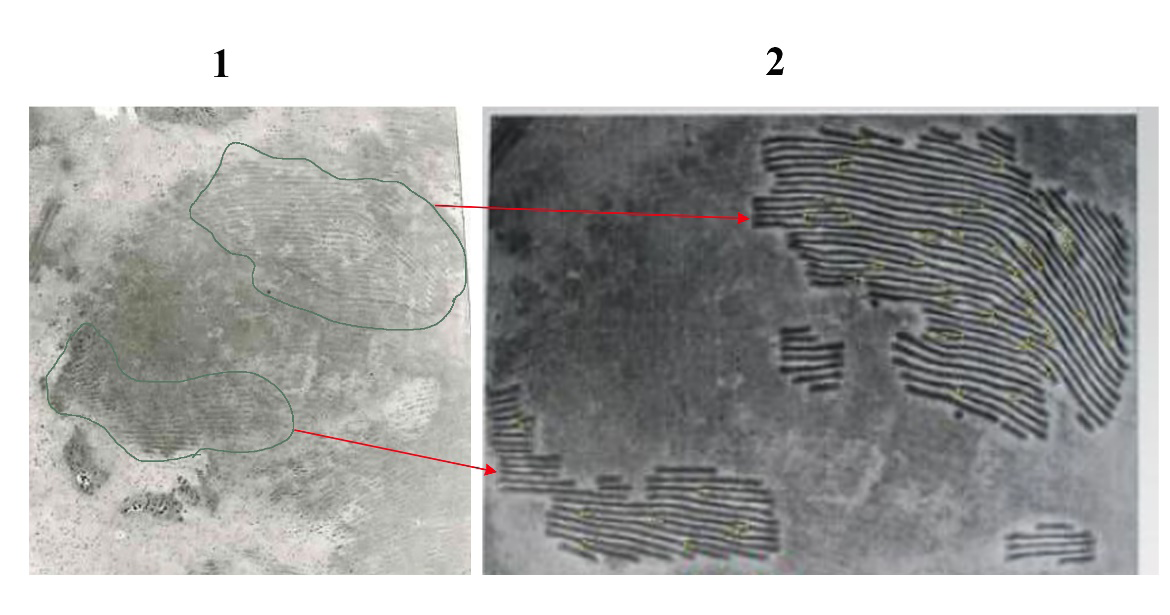
Currently, ABIS is used by the majority of forensic laboratories due to its enhancement capabilities. ABIS was invented by Joan L. Vitt and Derald E. Caudie, who received a patent of their invention in 2013 (https://patents.google. com/patent/US8571276B2/en). Their biometric improved upon AFIS, which is limited to fingerprint analysis and palm prints [2], by incorporating other biometric identifiers like iris scans, and facial recognition. It improves the partial latent print analysis whereby the prints are enhanced through its feature that shows “skeleton of the ridges,” improving ridge details and facilitate in matching and identification (Figure 1). ABIS also integrates with live scanning technology, enabling real-time capture and feature matching.
This case report highlights the use of ABIS in identification partial fingerprints that unlikely to be found at the scene of crime.
Brief Description on the Anatomy of the Finger and Corresponding Fingerprints
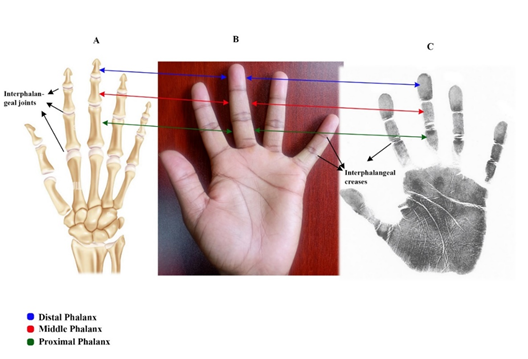
Distal and Proximal phalanx (Figure 2). The site where one phalanx meets another is called interphalangeal joints [3] and this feature is visible on the outer part of the skin as interphalangeal creases. The friction ridges of the skin left by individual’s fingers on the surface reflect such segmentation allowing the observation of the Distal, middle, and proximal phalangeal prints.
The human finger phalanges are the small bones from the finger and are divided into three sections or more on each finger: Distal phalanx, Middle phalanx, and proximal phalanx. Thumb is an exception having only two sections:
Case Description
In September 2024, the investigation Bureau received a complainant from a private company reporting the theft of more than three computers and other accessories. The complainant explained that the company’s property was under the protection of security guards, however, it was unclear how such a large number of items had been stolen. This raised suspicions that the guards might have been deliberately involved in the crime. Investigators visited the scene and upon the suspicion, they found that the intruder had entered through a window in the backyard of the company’s premises. The investigators focused on searching fingerprint around the broken window. Fortunately, they discovered the fingerprints on the interior region, inside the top of the window of washroom. Investigators used the black powder to develop the prints, which were then lifted by the tape-lifting method. The lifted prints were then handed over to a fingerprint analysis expert, along with rolled fingerprints collected from the security guard, the prime suspect.
Method and Materials
The initial procedure for analysing the submitted fingerprints involved visualization, photography and
enhancement using comprehensive imaging system called DCS®5 (Foster+Freeman) and after obtaining the desired details (observable fingerprint ridges), each fingerprint image were transferred to Automated Biometric Identification System (ABIS). This time the suspect’s fingerprints collected on the fingerprint card were scanned, adjusted and individually uploaded to the database. Next, the Image of latent fingerprint transferred from DCS®5 (Foster+Freeman) were added to the corresponding case/ suspect registered in the ABIS, then matched across the database.
Results
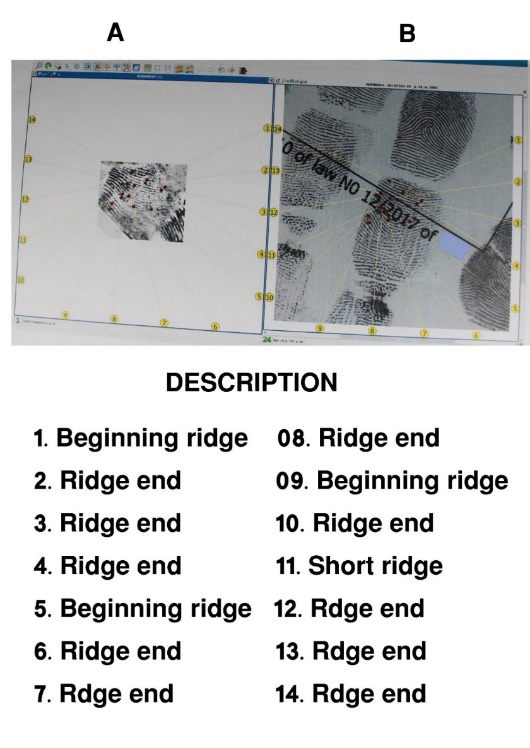
During the comparison of the latent fingerprint from the crime scene with those in the database, a complete fingerprint pattern could not be identified due to the partial nature of the prints. However, the extracted minutiae were sufficiently detailed for comparison. Fourteen minutiae points from the suspect’s right ring finger were identified as matching those from the crime scene, specifically from the middle phalanx of the finger (Figure 3). The results were then submitted to the investigators for further judicial proceedings.
Conclusion
This case report highlighted the use of non-distal print especially phalangeal prints to identify the culprit, and it also describe the advancements brought by Automated Biometric Identification System in fingerprint Analysis that overcame challenges the fingerprint examiners encounter when analysing fingerprint by AFIS [4] or manual fingerprint analysis such as low-quality fingerprint, Slow and less efficient matching, lack of real-time biometric capture and matching capabilities.
References
-
Hefetz I, Liptz Y, .Vaturi S, Attias D (2016) Use of AFIS for linking scenes of crime. Forensic Sci Int 262: e25-e27.
-
Hefetz I, Liptz Y, Oz K (2021) The benefit of AFIS searches of lateral palm and non-distal phalanges prints in criminal investigation. Forensic Science International 328: 111024.
-
Bayes MC (2021) “Hand and Fingers,” in Basics of Musculoskeletal Ultrasound. In: Daniels JM, Dexter WW, et al. (Eds.), Cham: Springer International Publishing, pp: 27-50.
-
Gibb C, Riemen J (2023) Toward better AFIS practice and process in the forensic fingerprint environment. Forensic Science International: Synergy 7: 100336.
- Narcotics and Digital Forensics: Bridging Crimes in the Digital Age
- Ethics in Forensic Psychiatry: Principles, Dilemmas, and Human Rights
- Impact of Acute Stress on Attentional Orienting to Social Cues
- Head Injury and Intracranial Hemorrhage in Western Region of Libya
- A Forensic Study on Handedness: Examination of Handwriting Features in Right and Left Handed Writers
- Techniques for Latent Fingerprint Development Using Natural and Synthetic Powders: A Review