
Internal Validation of the PowerPlex® Y23 PCR Amplification System for Reduced Volume to Improve Cost Effectiveness in Forensic DNA Analysis
The PowerPlex® Y23 system is one of the widely used PCR amplification kits in forensic analysis of male specific DNA markers. The kit amplifies commonly available 17 Y-STR and 6 newly incorporated Y-STR loci providing enhanced discrimination power for male lineage identification. The system's high sensitivity makes it especially beneficial in forensic applications such as sexual assault investigations, paternity testing, kinship analysis and a range of other forensic applications. The PowerPlex Y-23 kit was previously validated in the Government Analyst’s Department's DNA laboratory, following the manufacturer's recommendations for full-volume (25μl) reactions, establishing a working range of 0.25ng to 0.5ng. To reduce the annual chemical costs, an internal validation was performed using a reduced reaction volume of 12.5μl. The internal validation evaluated the system's sensitivity, repeatability, reproducibility, mixture analysis, and contamination assessment through the amplification of received male DNA samples from a case study and male standard 2800M of PowerPlex® Y23 system. Sensitivity studies revealed the optimal template DNA input working range for achieving a complete profile was 0.25ng to 0.5ng. The system's repeatability and reproducibility also confirmed consistent results across repeated studies. Additionally, the mixture analysis of two male DNA samples at 1:1 ratio successfully detected all alleles contributed by both individuals. However, when the ratio becomes 1:3 the allele dropout starts. The study confirms that the amplification system is a robust, reliable, and cost-effective solution for Y-chromosome DNA profiling, even when using a reduced reaction volume of 12.5 μl, making it highly suitable for forensic applications.
Introduction
Forensic DNA typing is widely recognized and reliable tool in forensic science community due to its high accuracy and reliability. With advancements in DNA analysis technology, several methods have been developed to meet specific forensic applications. These methods include autosomal STR analysis, which focuses on short tandem repeats on non- sex chromosomes and is frequently employed in criminal investigations. Mitochondrial DNA analysis is used in cases involving degraded samples or maternal lineage tracing. Y-STR analysis focuses markers on the Y chromosome for male-specific DNA profiling, while, X-STR markers on X chromosome particularly useful in complex forensic and kinship investigations [1].
The Y chromosome, present exclusively in males, is transmitted intact from father to son without recombination, and its alleles collectively form a unique genetic profile [2]. Y-chromosomal short tandem repeats (Y-STRs) are a valuable complementary tool to autosomal markers in forensic investigations. Although Y-STRs do not offer the same degree of individualization as autosomal markers, they are particularly useful in certain forensic applications. Forensic DNA laboratories apply Y-STR analysis in cases where identifying male-specific DNA is crucial, particularly in sexual assault investigations involving mixed samples with minimal male DNA that may be masked by female DNA. Additionally, Y-STR haplotyping employed in motherless paternity testing involving male offspring, as well as in disaster victim identification and missing person investigations where male lineage determination is required. Furthermore, Y-STR profiling facilitates the rapid determination of the number of male contributors in complex DNA mixtures. Enhancing the discrimination power of the Y-STR amplification system used in analysis improves, both exclusionary capability and the accuracy of profile matches [3, 4].
The PowerPlex® Y23 system is a five-dye multiplex kit that analyzes 17 Y-STR loci commonly included in other kits (DYS19, DYS385a/b, DYS389I/II, DYS390, DYS391, DYS392, DYS393, DYS437, DYS438, DYS439, DYS448, DYS456, DYS458, DYS635, and Y-GATA-H4), along with six additional highly discriminating Y-STR loci (DYS481, DYS533, DYS549, DYS570, DYS576, and DYS643). These newly incorporated loci exhibit higher gene diversity, enhancing the system’s overall discriminatory power in forensic applications [5].
Concentration of the Tem
Volume of 0.1 ng/µl
Volume of the Master Mix (µl) plate DNA (ng) Template DNA (µl)
0.1 1 2.5 1.25 7.75
0.15 1.5 2.5 1.25 7.25 The aim of this study was internally validating the PowerPlex® Y23 system for use in the DNA laboratory of the Government Analyst’s Department, employing half- volume reaction reagents (12.5µl) to amplify reference and various forensic samples. This approach focuses to reduce amplification costs while allowing analysis of a larger number of samples. The study evaluated key parameters, including sensitivity, repeatability, reproducibility, mixture analysis, and contamination assessment. The internal validation was conducted following the recommendations of the European Network of Forensic Science Institutes (ENFSI) [6] and the Revised Validation Guidelines of the Scientific Working Group on DNA Analysis Methods (SWGDAM) [7].
Materials And Methods
Sample Preparation
Male DNA samples from a case study, received in the Government Analyst’s Department’s DNA laboratory along with the male control 2800M of PowerPlex® Y23 system were used for the sensitivity, repeatability, reproducibility and mixture studies. The male DNA samples were extracted using the QIAamp® DNA Investigator kit and quantified through 7500 Real-time PCR system (Applied Biosystems). Male DNA samples and the male control 2800M (concentration – 10 ng/ µl) were diluted to 0.1 ng/µl. A serial dilution was performed with the following template amounts: 0.75 ng, 0.60 ng, 0.55 ng, 0.50 ng, 0.40 ng, 0.30 ng, 0.25 ng, 0.20 ng, 0.15 ng, and 0.10 ng. The mixtures of male DNA (case study): male control 2800M and male control 2800M: male DNA (case study) sample sets were prepared with a total DNA input of 0.5 ng and the following ratios were tested: 1:19, 1:9, 1:5, 1:3, 1:1, and 1:0.
DNA Amplification, Electrophoresis and Data Analysis Software
PCR amplification was performed using the PowerPlex® Y23 System (Promega Corporation). The amplification was conducted on an Applied Biosystems ProFlex™ Base Thermal Cycler (GeneAmp PCR System 9700), following the amplification setup and cycling conditions outlined in the PowerPlex® Y23 Technical Manual. Amplification products were separated by capillary electrophoresis using the Applied Biosystems 3500 Series Genetic Analyzer (Life Technologies™. STRs subsequently typed with the GeneMapper® ID-X v1.2 software (Life Technologies™).
Volume of the Prim
Volume of the Nucle
er pair Mix (µl)
ase free water (µl)
| 0.2 | 2 | 2.5 | 1.25 | 6.75 |
|---|---|---|---|---|
| 0.25 | 2.5 | 2.5 | 1.25 | 6.25 |
| 0.3 | 3 | 2.5 | 1.25 | 5.75 |
| 0.4 | 4 | 2.5 | 1.25 | 4.75 |
| 0.5 | 5 | 2.5 | 1.25 | 3.75 |
| 0.55 | 5.5 | 2.5 | 1.25 | 3.25 |
| 0.6 | 6 | 2.5 | 1.25 | 2.75 |
| 0.75 | 7.5 | 2.5 | 1.25 | 1.25 |
Table 1: Amplification Set-Up Used for Sensitivity Studies with Reduced Total Reaction Volume of 12.5µl.
| Mixture ratio | DNA amounts of binary mixtures (ng) | Volume of the 0.1 ng/µl Template DNA (µl) | Volume of the 0.1 ng/µl Template DNA (µl) | Volume of Master mix (µl) | Volume of the Primer pair Mix (µl) | Volume of Nucleus free water (µl) |
|---|---|---|---|---|---|---|
| 0:1 | 0 – 0.5 | 0 | 5 | 2.5 | 1.25 | 3.75 |
| 1:1 | 0.25 – 0.25 | 2.5 | 2.5 | 2.5 | 1.25 | 3.75 |
| 1:3 | 0.125 – 0.375 | 1.25 | 3.75 | 2.5 | 1.25 | 3.75 |
| 1:5 | 0.083 – 0.417 | 0.83 | 4.17 | 2.5 | 1.25 | 3.75 |
| 1:9 | 0.050 – 0.450 | 0.5 | 4.5 | 2.5 | 1.25 | 3.75 |
| 1:19 | 0.025 – 0.475 | 0.25 | 4.75 | 2.5 | 1.25 | 3.75 |
Table 2: Amplification Set-Up Used for Mixture Studies with Reduced Total Reaction Volume of 12.5µl.
Validation Studies
Sensitivity: Male control 2800M of PowerPlex® Y23 system and male DNA sample (case study) were amplified at concentrations of 0.75 ng, 0.60 ng, 0.55 ng, 0.50 ng, 0.40 ng, 0.30 ng, 0.25 ng, 0.20 ng, 0.15 ng, and 0.10 ng to determine the DNA template concentration range that provides a complete DNA profile for a standard run protocol of 1 µl amplicon load. The percentage alleles called and allele drop out were observed for each sample.
A female DNA sample from a case study at the Government Analyst’s Department was tested at a concentration of 100 ng to confirm that amplification would not occur, even in the presence of extremely high concentrations of female DNA.
Repeatability: Male control 2800M of PowerPlex® Y23 system and male DNA sample (case study) in a concentration range of 0.10 ng to 0.75 ng were amplified and analysed by same person, same time under identical conditions on the same samples.
Reproducibility: Male control 2800M of PowerPlex® Y23 system and male DNA sample (case study) in a concentration range of 0.10 ng to 0.75 ng were amplified and analysed by another individual in another time under identical conditions on the same samples.
Mixture studies: Male sample (case study) and male standard 2800M samples were amplified at ratios of 1:19, 1:9, 1:5, 1:3, 1:1, and 1:0, as well as in reverse. The number of individuals contributing to the profile was determined by evaluating the number of peaks observed at each locus that could not be attributed to artifacts.
Contamination studies: Blank samples were amplified as negative controls with other DNA samples and were analyzed using the 3500 series Genetic Analyzer (Life Technologies™). Clean profiles from the negative controls were expected to confirm that the reagents and experimental conditions were free from potential contamination.
Statistical methods: Reproducibility of the data was analysed using SPSS 21.0 statistical package (SPSS, Inc., Chicago, IL, USA). The mean alleles called in both trials were calculated and the student t-Test was performed to confirm the applicability of the test results and whether is there any statistical difference of the test results.
Results and Discussion
The objective of this validation of the PowerPlex® Y23 system was to evaluate the impact of reduced amplification reagent volumes (12.5 µl) on sensitivity, repeatability, reproducibility, and mixture analysis, as well as to determine its potential suitability for forensic analysis conducted within the DNA Laboratory at Government Analyst’s Department.
The results from sensitivity, repeatability, and reproducibility studies conducted using the control DNA 2800M sample and a male DNA case study sample were analyzed across two sets of samples and two trials.
The results for the control DNA 2800M sample in Set 1 and Set 2 of Trial 1 and Trial 2 demonstrate consistent allele detection across various DNA input concentrations. Full allele recovery (100%) was achieved at template amounts ranging from 0.25 ng to 0.5 ng, indicating the system’s effectiveness within this range. Slight allele dropout observed at 0.1 ng and 0.2 ng, resulting in 95% recovery at those levels. Interestingly, at higher DNA inputs (≥0.55 ng), additional alleles were detected, at 0.55ng, 0.6 ng and 0.75 ng with recovery rates exceeding 100%.
The results for the male DNA sample (case study) in Set 1 and set 2 of Trial 1 and Trial 2 show, that the DNA template amount increased, the number of alleles called also improved significantly. At concentrations of 0.1 ng, 0.15 ng, and 0.2 ng, fewer alleles were called, and allele drop outs observed.
However, as the DNA concentration increased, the number of alleles called also increased, reaching full recovery (100%) at 0.25 ng to 0.5 ng. Similarly in this scenario, DNA inputs of 0.55 ng or higher resulted in recovery rates exceeding 100%, suggesting the presence of potential artifacts.
Figure 1 displays complete DNA profile obtained at input template DNA of 0.5 ng of the control DNA 2800M sample
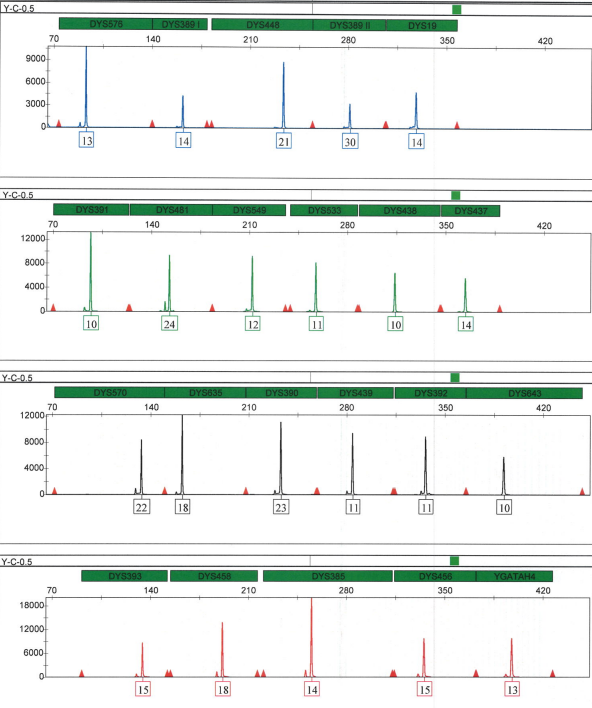
Figure 2 shows electropherogram for allele dropout obtained at input template DNA of 0.2 ng of the control DNA 2800M sample
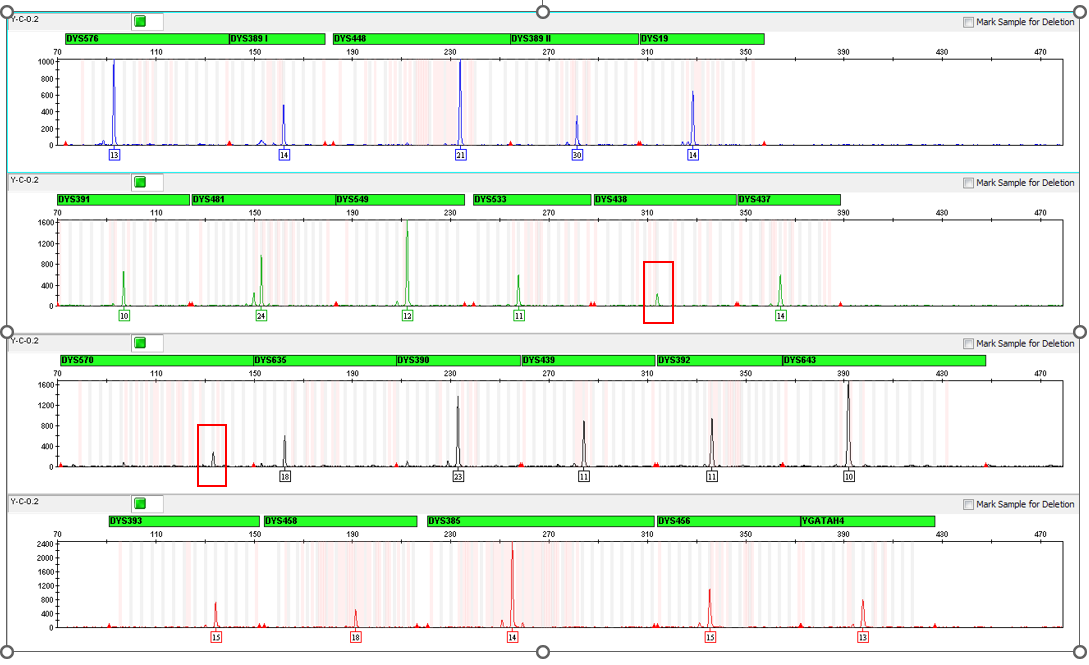
The results from both scenarios demonstrated that the PowerPlex® Y23 system can consistently generate complete Y-STR profiles with input DNA amounts as low as 0.25 ng. Within the range of 0.25 ng to 0.5 ng, the system effectively produces clear and complete DNA profiles. However, below the lower threshold, allele dropouts were noticed in the electropherogram, particularly when template DNA concentrations are getting decreased as the amount of DNA is not enough or degraded to produce the complete profile.
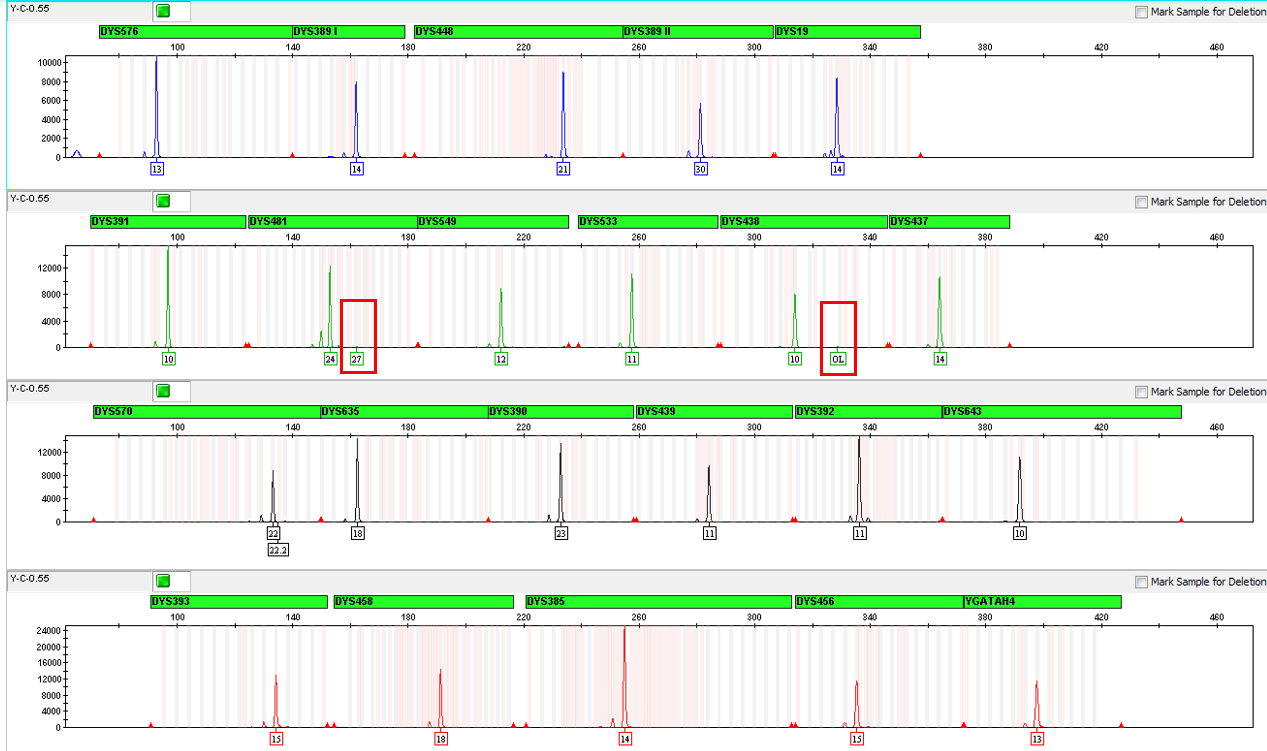
Template DNA concentrations exceeding 0.5 ng began to produce additional peaks in the electropherogram, such as pull-up peaks. These artifacts result from overamplification, causing saturation of the fluorescent signal that cannot be resolved by the visualization software’s matrix files [8].
Figure 3 shows artifacts on the electropherogram obtained at input of 0.55 ng of the control DNA 2800M sample
The sensitivity studies established that the system generates complete Y-STR profiles within an optimal working range of 0.25 to 0.5 ng, ensuring high analytical efficiency for forensic applications. According to the results, this system can be suggested to use for obtaining complete profiles for forensic samples which contain lower DNA amount.
The repeatability and reproducibility of the PowerPlex® Y-23 system were statistically evaluated using an unpaired t-test. This test compared the number of alleles called in the results from set-1 and set-2 for both Trial 1 and Trial 2, which were conducted using a control DNA 2800M sample and a male DNA sample (case study).
The t-stat values for set-1 and set-2 for Trial 1- control DNA 2800M sample, set-1 and set-2 for Trial 2- control DNA 2800M sample, set-1 and set-2 for Trial 1- male DNA sample (case study), set-1 and set-2 for Trial 2- male DNA sample (case study) were 0.98, 0.60, 0.48 and 0.075 respectively. There was no significant difference between the test results for set 1 and set 2 in Trial 1 and Trial 2 conducted for control DNA 2800M sample and male DNA sample (case study).
The t-stat values for Trial 1 and Trial 2 conducted for control DNA 2800M sample, and the male DNA sample (case study) were 0.46 and 0.86 respectively. There was no significant difference between the test results for Trial 1 and Trial 2 carried out for control DNA 2800M sample and the male DNA sample (case study). The results from both scenarios confirm the suitability of PowerPlex® Y-23 system in forensic analysis. According to the results, the repeatability and reproducibility studies showed the high similarity of the profiles obtained from independent trials. The generated Y-STR profiles from the same sample were identical, under the similar conditions.
Mixture Studies for Powerplex® Y23 System
The mixture studies were carried out to assess the system’s ability to distinguish multiple male contributors and behavior of these contributors (male sample-case study and control DNA 2800M) under different ratios.
Sample Set 1 examined the analysis of various DNA input ratios involving control DNA 2800M : Male DNA (case study sample), across binary mixture ratios of 0:1, 1:1, 1:3, 1:5, 1:9, and 1:19. In both trial 1 and trial 2, most loci consistently displayed both alleles as expected for the respective ratios. Notably, full allele recovery (100%) was achieved in all mixtures except for the 1:19 ratio. In this case, 97.5% of the alleles were called in trial 1, while full allele recovery (100%) was achieved in trial 2. This slight reduction in allele detection at the highest dilution suggests a minor loss of sensitivity in extremely unbalanced mixtures.
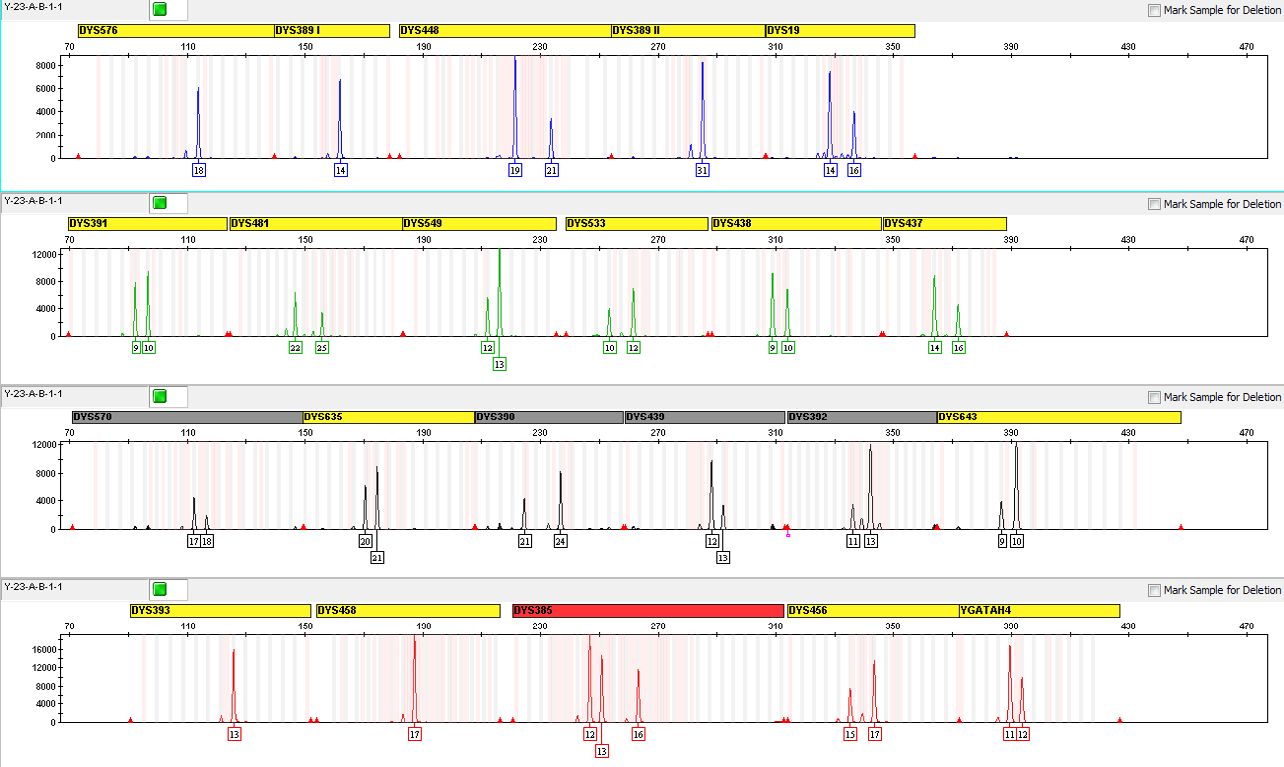
Sample Set 2 examined the analysis of various DNA input ratios involving male DNA (case study sample) : Control DNA 2800M, across binary mixture ratios of 0:1, 1:1, 1:3, 1:5, 1:9, and 1:19. In both trial 1 and trial 2 a clear profile was obtained for two male contributors at a 1:1 input DNA ratio, with all alleles present for each contributor.
Figure 4 displays the electropherogram showing all alleles present in a 1:1 input DNA ratio of male DNA (case study sample) and control DNA 2800M, where (A) represents the male DNA (case study sample) and (B) represents the control DNA 2800M, and (A:B) represents the mixture of the male DNA (case study sample) and control DNA 2800M.
However, as the proportion of male DNA (case study) decreased in the mixtures, the number of detected alleles also reduced. This allele dropout starts to occur at the ratio of 1:3. Therefore, the 1:3 allele dropout threshold would provide valuable insights into its forensic implications, particularly regarding the limits of detection in mixed samples. Figure 5 displays electropherogram showing allele drop out in a 1:3 input DNA ratio of male DNA (case study sample) and control DNA 2800M, where (A) represents the male DNA (case study sample) and (B) represents the control DNA 2800M, and (A:B) represents the mixture of the male DNA (case study sample) and control DNA 2800M.
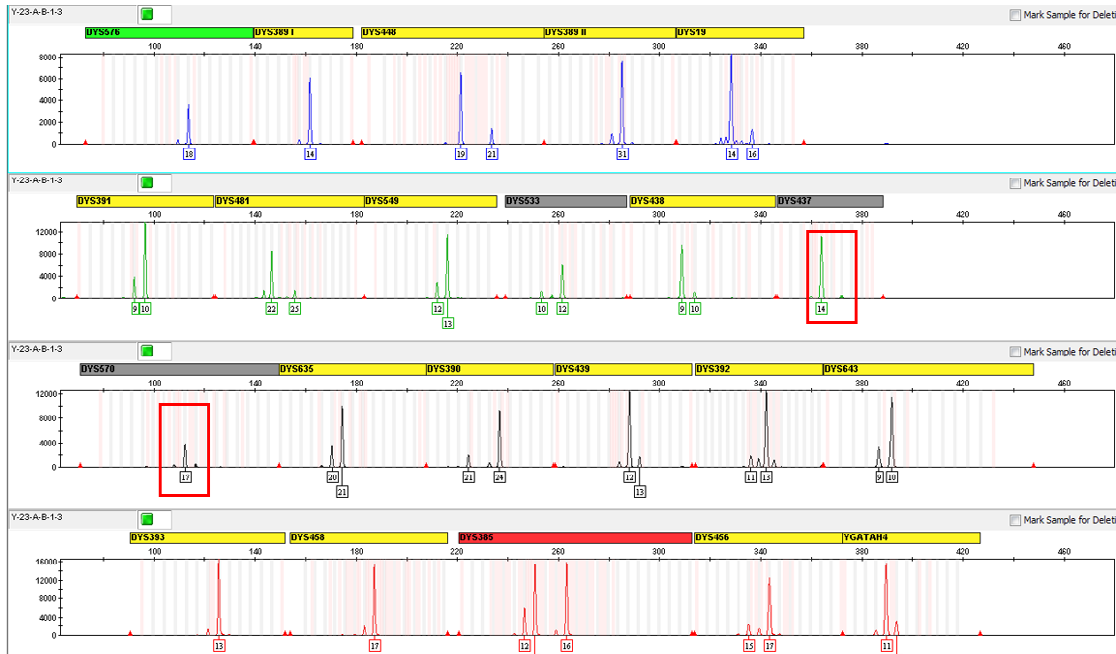
The mixture study involving control DNA 2800M: Male DNA (case study sample), also indicates that, while allele dropout begins to occur at the 1:3 ratio, alleles from the minor contributor can still be detected at a 1:19 ratio, but with reduced peak heights compared to the 1:1 ratio peak height. However, the results indicate reduced sensitivity at higher dilutions, highlighting potential allele drop-out in mixtures with low proportions of male DNA. The finding suggests that in real-world samples, such as the case study male sample, the mixture ratio may be limited to 1:3, with allele drop-out potentially beginning at this point. Additionally, the findings could also provide guidance on interpreting profiles in challenging scenarios such as degraded samples or trace DNA evidence. A more detailed analysis of this threshold would enhance understanding of its role in mixture interpretation, especially in complex casework where distinguishing between true alleles and stochastic effects is critical.
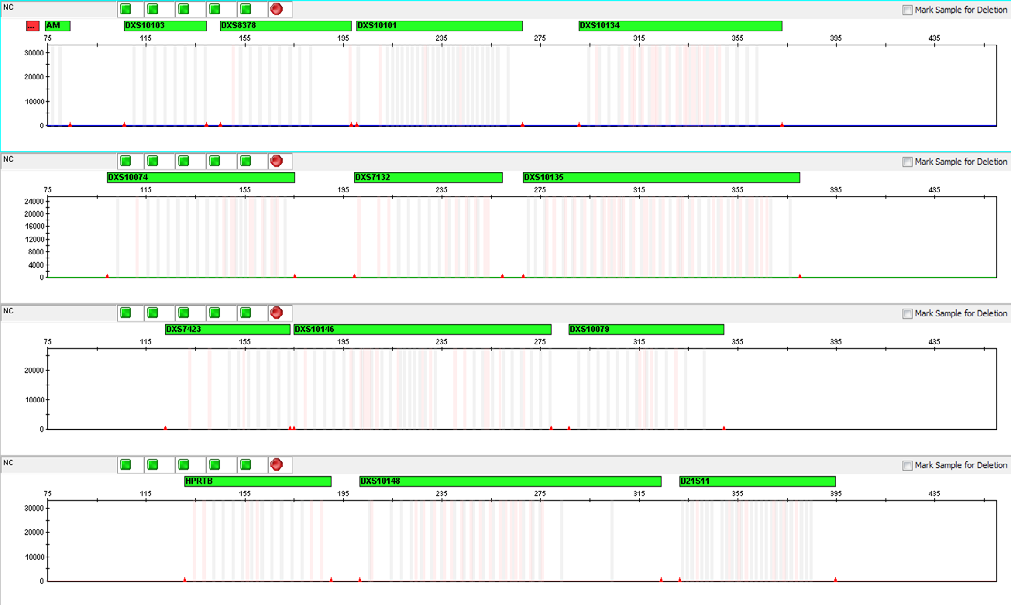
There was no amplification observed in any of the negative controls verifying the absence of foreign DNA materials throughout the validation process. We were able to achieve this as we ensure to maintain DNA-free reagents and consumables and also practicing good handling to maintain the laboratory as a contamination-free environment. Figure 6 shows the results of the negative control for the contamination test.
Overall, considering both Sample Set 1 and Sample Set 2 in trials 1 and 2, the PowerPlex® Y23 system effectively detects the capability to detect low-level DNA contributions and effectively resolve mixture profiles. This indicates the assay’s robust performance, indicating its sensitivity and reliability even in imbalanced DNA mixtures.
Contamination Studies
Conclusion
Y-STR analysis plays a vital role in forensic DNA investigations by tracing paternal lineage and analyzing male-specific DNA in sexual assault cases and other forensic investigations. The PowerPlex Y-23 kit was previously validated in the DNA laboratory at Government Analyst’s Department following the manufacturer’s recommendations for a full volume reaction of 25 µl. Considering the department allocates a substantial portion of its annual budget to chemicals for DNA analysis, an internal validation was performed to evaluate the kit’s performance using a reduced reaction volume of 12.5 µl.
The suitability of the PowerPlex® Y23 reduced- volume system for reference and forensic case samples was assessed through internal validation studies carried out at the DNA laboratory. The internal validation was conducted using key parameters including sensitivity, repeatability, reproducibility, mixture analysis, and contamination assessments. Sensitivity studies indicate that a minimum DNA template input of 0.25 ng is sufficient to generate a clear and comprehensive profile, and when the input ranges from 0.25 ng to 0.5 ng, the system consistently produces full and clear profiles. Additionally, the two trials, each with two sets of repeats conducted for control DNA 2800M and male sample (case study) confirmed the repeatability and reproducibility of the PowerPlex® Y23 system. The case study samples were selected from raw blood samples received in the DNA laboratory. Therefore, future studies involving other matrices and biological materials should assess the matrix effect to evaluate the correlation between DNA concentrations and STR profiling results.
The analysis of DNA mixtures at different ratios of male case study sample: control DNA 2800M demonstrates the effectiveness of the PowerPlex® Y23 system in distinguishing between the two contributors in a mixture. The 1:3 ratio of male case study sample to control DNA 2800M with compatible peak height ratios can be accurately analyzed using the PowerPlex® Y23 system. This demonstrates the system’s high sensitivity and resolving power, which are crucial for handling forensic cases in real-world situations. However, future research could perform the effect of stutter, other artifacts and analysis of inter and intra locus balance on the interpretation of DNA mixtures. Additionally, studies could investigate the impact of high concentrations of female DNA mixed with male DNA, as well as the potential for distinguishing individual alleles in mixtures containing DNA from more than two male contributors.
No amplification was detected in the negative controls throughout the process, confirming the absence of foreign DNA in the chemical reagents of the PowerPlex® Y23 system.
This is a critical aspect for ensuring the reliability of forensic DNA analysis.
Overall, the internal validation results for the reduced volume (12.5 µl) of the PowerPlex® Y23 system show that it can be successfully applied in the Government Analyst’s Department’s DNA laboratory with high precision and reliability for various reference and forensic samples for DNA analysis.
Acknowledgments
We extend our sincere gratitude to the Government Analyst’s Department for providing essential guidelines and facilities that enabled the successful completion of this research. We also acknowledge the valuable contributions of all individuals who supported who have contributed to this paper.
Conflict of Interest
No conflict of interest.
References
-
Jain T, Shrivastava P, Bansal DD, Dash HR, Trivedi VB (2016) PowerPlex Y23 system: a fast, sensitive and reliable Y-STR multiplex system for forensic and population genetic purpose. J Mol Biomark Diagn 7(3): 1-7.
-
Diegoli TM (2015) Forensic typing of short tandem repeat markers on the X and Y chromosomes. Forensic Science International: Genetics 18: 140-151.
-
Navarro-López B, Baeta M, Granizo-Rodríguez E, Moreno- López O, Kleinbielen T, et al. (2022) Development and validation of a new multiplex for upgrading Y-STRs population databases from 12 to 23 markers and its forensic casework application. Scientific Reports 12(1): 21734.
-
Barbaro A, Cormaci P (2015) Validation of PowerPlex® Y23 System (promega) using reduced reaction volume. Forensic Science International: Genetics Supplement Series 5: e373-734.
-
Technical Manual, PowerPlex® Y23 System for Use on the Applied Biosystems® Genetic Analyzers, Instructions for Use of Products DC2305 and DC2320, (Promega Corporation).
-
ENFSI Standing Committee for Quality and Competence (QCC) (2006) Validation and Implementation of (New) Methods, Ref. Code: QCC-VAL-001, 1.
-
(2012) Revised Validation Guidelines of Scientific Working Group on DNA Analysis Methods (SWGDAM).
-
Bader S (2016) A guide to forensic DNA profiling. John Wiley & Sons.
- Narcotics and Digital Forensics: Bridging Crimes in the Digital Age
- Ethics in Forensic Psychiatry: Principles, Dilemmas, and Human Rights
- Impact of Acute Stress on Attentional Orienting to Social Cues
- Head Injury and Intracranial Hemorrhage in Western Region of Libya
- A Forensic Study on Handedness: Examination of Handwriting Features in Right and Left Handed Writers
- Techniques for Latent Fingerprint Development Using Natural and Synthetic Powders: A Review