
An Insights of Bioactive Elements on Malignancy: Mechanistic Avenues
Background: Cancer is the world’s leading cause of death today. Cancer patients’ outcomes have significantly improved as surgery, radiotherapy, and pharmaceuticals have advanced. Moreover this article has been made to review some medicinal plants used for the treating cancer disease the plant sources of India are likely to provide effective anticancer agents. Herbs have a vital role in the prevention and treatment of cancer. Examples are provided in this review of promising bioactive compounds obtained from various plants with medicinal and other therapeutic uses. Main Body: Fortunately the basic mechanisms of cancer are unknown. Natural remedies have recently been shown to be beneficial for an extensive list of ailments, and they have played an important role in the development of new therapies. An extensive amount of research suggests that bioactive substances may improve the outcome of cancer patients using a variety of mechanisms such as inflammation of the endoplasmic reticulum, epigenetic changes, and oxidative stress reduction. Short Conclusion: In this part, we go over the most recent research on bioactive substances identified in organic goods for the treatment of cancer, as well as an overview of the underlying mechanisms of the pathological process.
Background
Cancer is a malignant disease that can be identified by uncontrollable proliferation of cells and unregulated cell expansion [1]. It is still one of the world’s most lethal weapons. According to the International Agency for Research on Cancer (IARC), 19.3 million new cancer cases will be determined in 2022, 10.0 million cancer-related deaths will occur, and 28.4 million new cancer cases will be confirmed in 2030, a 47% increase from 2020. Lung, liver, and stomach cancers were the leading causes of cancer deaths worldwide [2], followed by female breast cancer [3], lung, and prostate cancer. Cancer passing away has gone down substantially in recent decades as early detection and treatment rates have increased. Furthermore, advances in molecular biology and tumour biology have been made. Over the last 15 years, cancer treatment methods have changed [4]. Figure 1 depicts several cancer pathological features. Cancer cells’ biological abilities include resistance to antigrowth signals, cell death resistance, unlimited replication possibility, inducing angiogenesis, active invasion, and metastasis, deregulation of cellular energetics, and immune destruction resistance. Tumor-associated inflammatory processes, which may deliver bioactive substances to the tumour microcosm (TME) [5, 6], as well as cancer cell genomic instability, are both required for the aforementioned features to be acquired [7, 8]. TME [9] is a factor in growths that is integrated with neoplastic cells such as cancer stem cells, cancer-associated fibroblasts [10], and cancer-associated fibroblasts [10]. Endothelial cells, pericytes, and immune-inflammatory cells are every kind of cells. Tumor-associated inflammatory processes, which can provide bioactive substances to the tumour microcosm (TME) [5, 6], as well as carcinoma cell genomic instability, are both required for getting hold of the aforementioned characteristics [7, 8]. TME [9] is a tumour component that interacts with tumours stem cells, tumor-associated fibroblasts [10], cells of the blood vessels, pericytes, and immune-inflammatory cells.
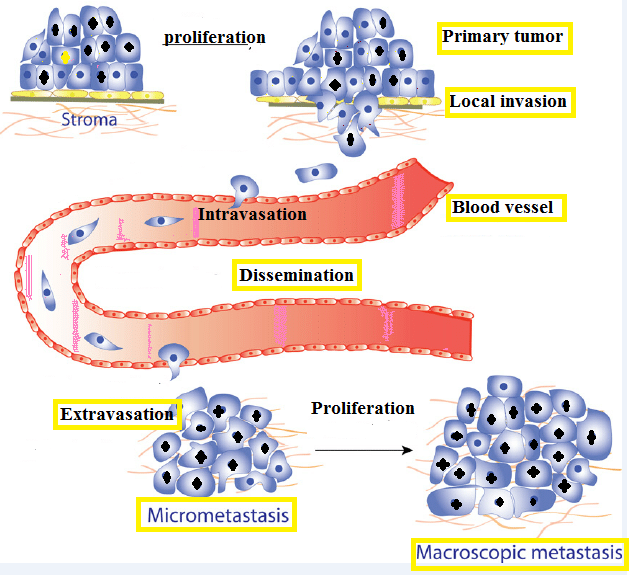
Bioactive compounds are becoming more credible as cancer preventative and therapeutic agents, according to growing evidence [11]. The American Institute for Cancer Research (AICR) recently revised its list of 26 anticancer foods in its “Global Diet and Cancer Research Update.” In response to the report, strong evidence is defined as research that clearly establishes a causal link between cancer and the condition, while limited evidence indicates that, while the overall findings are usually backed by data [12], the evidence is rarely sufficient to support cancer risk reduction recommendations. Additionally, we will go into greater detail about the drugs’ anticancer mechanisms in the following section. Finally, adjusting one’s diet could prove able to halt many tumours’ destructive processes [13]. This review will start by going over some common bioactive substances before summarising their effects on cancer and cancer-related pathways.The role of bioactive ingredients in cancer prevention is depicted in Table 1.
| Bioactive compounds | Natural products | Against cancer |
|---|---|---|
| Triterpenoid compounds | Apples | Colorectal cancer |
| Vit c, chlorogenic acid, proanthocyanidins | Blue berries | Colorectal cancer |
| Flavonols, folate | Asparagus | Breast cancer |
| Carotenoids, lutein | Broccoli and cruciferous vegetables | Colorectal cancer |
| Carotenoids,phenolic acid | Carrots | Lung cancer |
| Anthocyanins, melatonin, phenolicacids | Cherries | Colon cancer |
| Terpenes, coumarins, flavanones | Grapefruit | Breast cancer |
| Flavonones | Orange | Stomach cancer |
| Ellagitannins,anthocyanins | Raspberries | Lung cancer |
| Stilbenes, resveratrol | Strawberries | Esophageal cancer |
| Lycopene, beta-carotene | Tomtatoes | Lung and stomach cancer |
Table 1: Bioactive compound against cancer [14].
Main Text
Fruit Derived Bioactive Compounds (Polyphenols)
Polyphenolic compounds are naturally occurring substances that have varying phenolic tasks [15]. These substances are abundant in plants and play an important role in pathogen defence and cell growth control. Currently, numerous clinical studies are being conducted to determine how they are beneficial in the prevention of ageing, problems with metabolism, and cardiovascular disorders. More research has focused on polyphenols’ anticarcinogenic properties (such as reducing tumour expansion, metastasis, and angiogenesis) as a result of a better understanding of these compounds. Polyphenolic chemicals are classified into four groups based on the number of phenol rings and molecular structures: phenolic acids, stilbenes, lignans, and flavonoids. Table 2 shows examples and structures of phenolic acids.
| Phenolic compounds | Example | Structure |
|---|---|---|
| Flavanoids | Flavones, anthocyanine,isoflavanoids | |
| Stilbenes | Resveratrol | |
| Phenolic acids | Benzoic acid, cinnamic acid | |
| Lignans | Matairesinol |
Table 2: List of Polyphenols with few example and structure [16].
The majority of polyphenols present in foods exist as polymers, esters, or glycosides; when polyphenols enter the body, bacteria in the intestines hydrolyze them before intake [17]. Polyphenols then take part in methylation that exists sulfation, and glucuronidation reactions. These polyphenolic compounds were found in bloodstream but not in organic foods. Absorption, metabolism, and excretion rates are just a few of the factors that affect how polyphenols behave biologically. Furthermore, hepatic activity influences not only polyphenol metabolism but also the rate at which they enter cells and tissues. Polyphenols found in food have been shown to inhibit a variety of biochemical processes such as oxidation, tumour cell apoptosis, immune system activation, and anti-inflammatory properties. More information on these and other biochemical processes will be provided in the future. Figure 2 express the nanobased delivery of polyphenols.
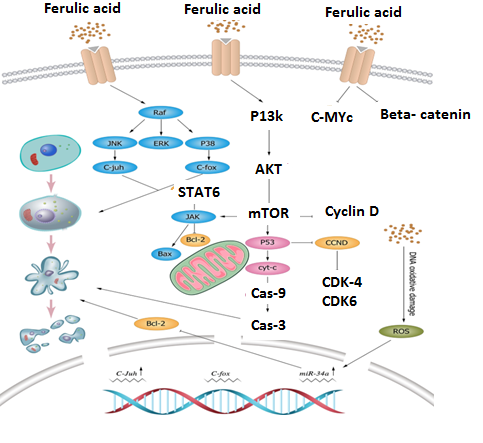
’ Figure 2: Polyphenols in nano-based delivery system.
Effects of Polyphenols Against Various Types of Cancer
The Effects Of Bioactive Compound Ferulic Acid
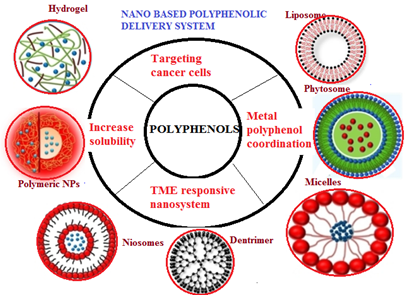
The process by which FA and its byproducts kill cancer cells. FA promotes cell death by increasing P53 expression, decreasing cyclin D1 and CDK 4/6 expression, increasing Mir- 43a expression, suppressing Bcl-2 expression, and activating the apoptotic pathway [18]. FA causes DNA oxidative damage and apoptosis by producing ROS (Figure 3). ERK, STAT signal transduction and transcriptional activator, C-fox forkhead box C, JAK the Janus kinase, Bcl-2-associated X (Bax), BCL-2 (B-cell lymphoma-2) and AKT protein kinase B are all names for JNK. JNK is also referred to as P53 (tumour protein 53) and caspase cysteinyl aspartate.
Pharmacological Role of Quercetin
There are antioxidant qualities to quercetin. Antioxidants help cells resist stress caused by oxidative stress. When the body’s defences against antioxidants are outnumbered by the body’s excess free radicals, oxidative damage occurs. In
Molecular Mechanism Of Quercetin Against Cancer
healthcare, this is referred to as oxidative stress.
Free radicals are erratic molecules in the body that can hasten ageing and increase the risk of disease. During routine metabolic functions such as energy synthesis, the body produces free radicals. Figure 5 depicts quercetin’s therapeutic role.
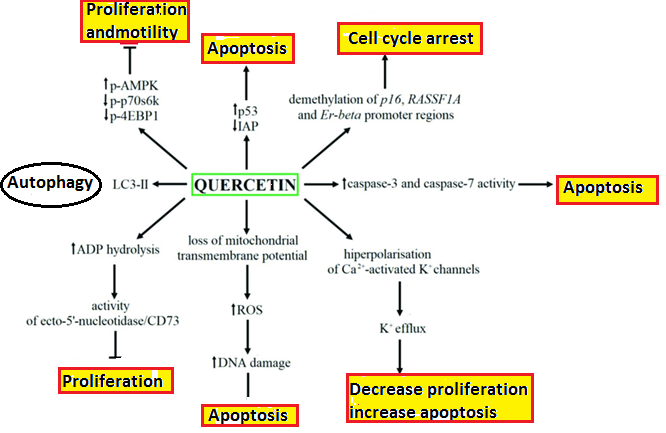
Quercetin increased DNA disintegration, subG0/G1 cell percentages, and caspase 3/7 activity (Figure 4). Autophagy, on the other hand, could be to blame for the quercetin- induced decrease in cell viability. After quercetin treatment, the concentration of a specific autophagy marker, such as LC3-II, increased in human BC cells. Quercetin in combination with an autophagy inhibitor (bafilomycinA1), on the other hand, may be used to more effectively suppress the growth of bladder cancer cells by improving apoptosis [19]. An in vivo study revealed that quercetin might lead BC cells to die by controlling p53. According to literature reviews, quercetin administration decreased the expression of the mutant P53 protein (mutP53). Furthermore, this treatment has been linked to a drop in survivin. It is also possible that quercetin’s antiproliferative action on bladder transitional cell carcinoma is mediated, at least in part, by changes in nucleotide extracellular catabolism [20, 21]. These changes could be the result of AMP accumulation or quercetin-blocked adenosine receptors. (The very first) Ecto-50-nucleotidase catalyses AMP hydrolysis into adenosine, which has been linked to cancer progression, cell proliferation, maturation, differentiation, treatment resistance, and tumour promotion. An in vivo study found that quercetin increased ADP hydrolysis, inhibited the activity of ecto-50-nucleotidase and CD73, and had no effect on protein production.
Effects of Bioactive Compounds Punica Granatum (Punica Granatum) on Various Types of Cancers
Pomegranate (Punica granatum L.), a member of the Lythraceae family, is a spherical berry with between 250 and 1500 white seeds that turn deep red or purple when ripe. Due to the presence of tannins and anthocyanins, seeds that are consumed have anti-inflammatory and antioxidant properties. Since ancient times, pomegranates have been used as medicine for a variety of ailments. It has antiparasitic properties and can help with stomach ulcers and diarrhea [22]. The Unani method of medicine, another conventional medical system, has even gained understanding for its effectiveness in the management of insulin resistance. Aside from the fruits, the bark, leaves, roots, and other parts of the plant have been found to shown to be composed of huge quantities of molecular components with medicinal properties. It contains a bioactive substance that has been shown to influence a number of signalling pathways involved in inflammation, carcinogenesis, hyperproliferation, cellular transformation, angiogenesis, and, eventually, metastasis. The bioactive ingredients in pomegranate have been found to modulate a wide range of transcription factors, pro- and anti-apoptotic molecules, cell cycle-regulating molecules, protein kinases, cell adhesion molecules, proinflammatory mediators, and growth factors.
Effect of Punicic Acid Against Cancers
Punicic Acid
Trichosanic acid, or punicic acid, is a polyunsaturated fatty acid with an 18:3 cis-9, trans-11, and cis-13 ratio. It is made from pomegranate seed oil and bears the name of the pomegranate, Punica granatum. It has also been discovered in snake gourd seed oils.
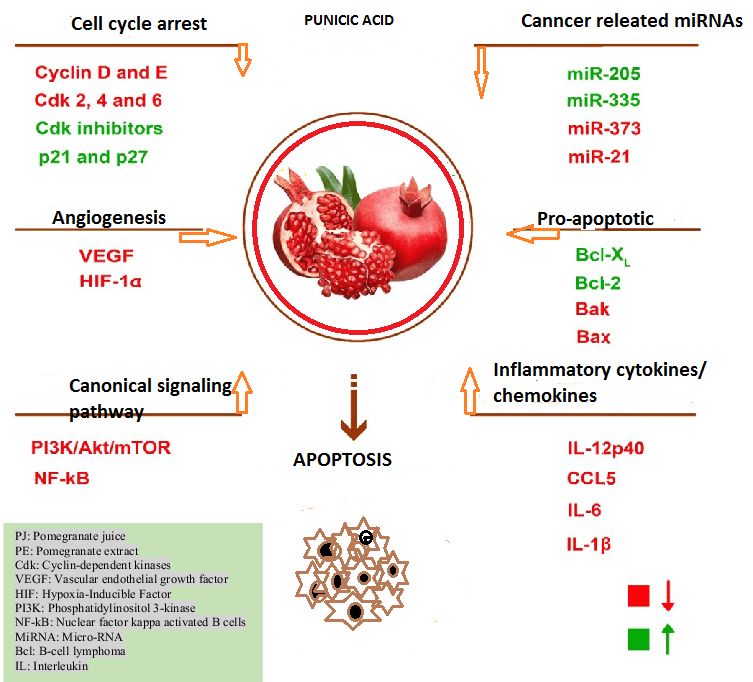
Sun exposure is the leading cause of skin cancer. UVB light activates several signalling pathways in the skin, making it a risk factor for skin cancer [23, 24]. Pomegranate fruit extract (PFE), pomegranate juice (PJ), and pomegranate seed oil (PSO) can all help prevent UVB-induced skin cancer. They’ve all been tested on skin cancer animal models, reconstituted human skin models, and cell culture. In Normal Human Epidermal Keratinocytes (NHEK), PFE inhibited the phosphorylation of UVB-induced Mitogen-Activated Protein Kinases (MAPK) (figure 5).
Breast Cancer
According to reports, polyphenols from the PJ, pericarp, and PSO inhibit the transformation of testosterone to oestrogen by preventing aromatase activity which may play an important part in breast cancer [25]. In addition to anti-estrogenic attributes, these polyphenols were found to inhibit cell proliferation in the cell lines MCF-7 and MB- MDA-231. Another study discovered that pomegranate ellagitannin variations inhibit the formation of breast cancer cells. PFE and its components, according to studies, are extremely important for chemoprevention against breast cancer due to their pro-apoptotic and antioxidant properties. Punicic acid, which is found in PSO, has also been shown to induce apoptosis in the breast cancer cell lines MDAMB-231 and MDA-ER-7, both of which are estrogen-sensitive and insensitive.
Effect of Caffeic Acid Against Cancer
Caffeic Acid
One type of chemical substance that falls under the hydroxycinnamic acid classification is caffeine. This yellow solid has functional groups that include acrylic and phenolic. Because it is an intermediary in the formation of lignin, one of the main constituents of the biomass and residues of woody plants, it is present in all plants.
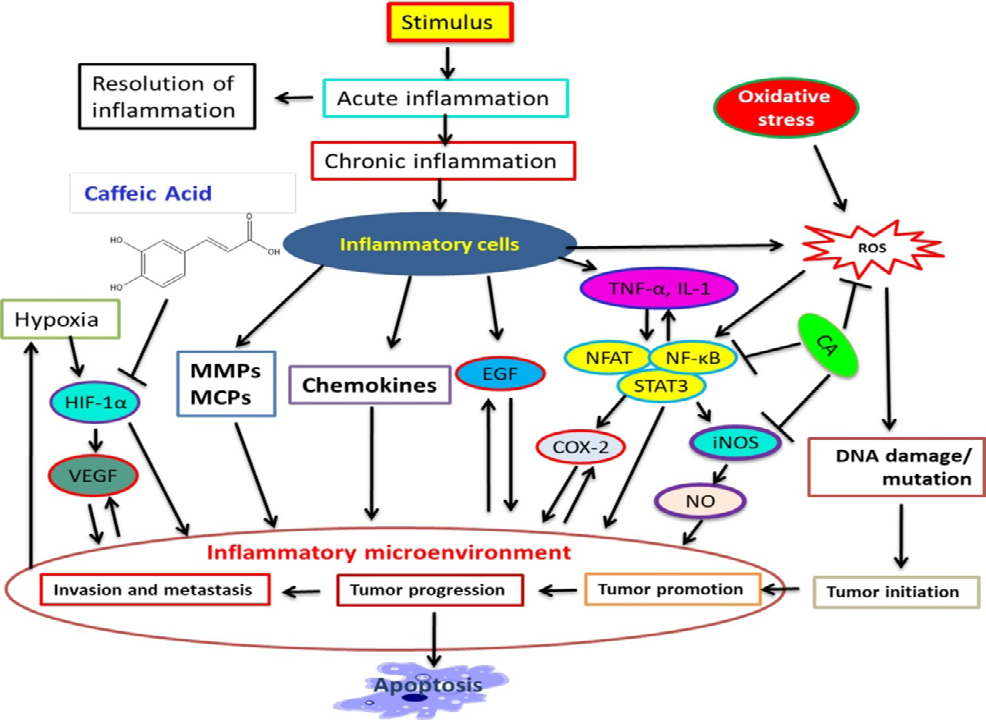
CA has been shown to inhibit 5-lipoxygenase and decrease IL-6, IL-1, and NF-B in the course of inflammatory responses (figure 6). CA suppresses STAT3 activity, which in turn reduces HIF-1 activity [26]. It contains potential STAT3 inhibiting agents and hampers tumour angiogenesis by inhibiting STAT3 activity as well as VEGF and HIF-1 expression. CA inhibited the phosphorylation of ERK as well as the transactivation of NF-B and AP-1. By targeting MEK1 and TOPK, CA, on the different hand, prevents tumour metastasis and neoplastic cell transformation. In fact, it connected with ERK1/2 in vitro and inhibited its activity.
Effect of Ellagic Acid Against Cancer
Ellagic acid (EA) is a bioactive polyphenol produced naturally by many plant species as a secondary metabolite. Significant amounts of EA are found in the pomegranate (Punica granatum L.), as well as the wood and bark of several tree species [27]. EA is a dilactone of the widely distributed
Molecular Mechanism of Ellagic Acid Against Cancer
class of secondary metabolites known as ellagitannins that is primarily formed by the hydrolysis of hexahydroxydiphenic acid (HHDP), a dimeric gallic acid derivative. EA’s antioxidant, anti-inflammatory, antimutagenic, and antiproliferative properties are attracting interest.
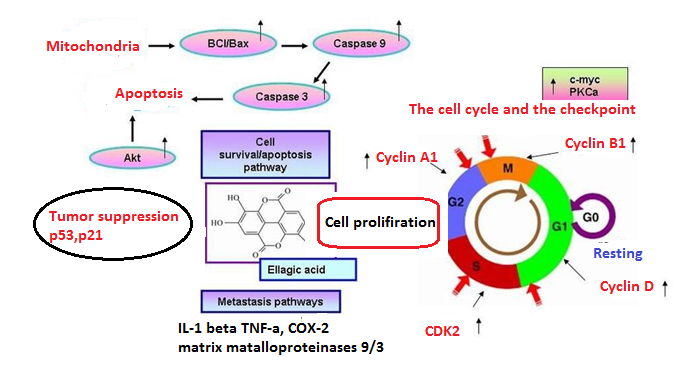
Ellagic acid, a benzopyranoid, is found in a variety of fruits and vegetables, including blackberries, cranberries, raspberries, strawberries, wolfberries, grapes, pomegranates, pecans, and walnuts. According to studies, ellagic acid and its metabolites are anti-cancer. Signalling pathways are modulated specifically [28]. Cell proliferation pathways (cyclin dependent kinase 2, cyclin A2, cyclin B1, cyclin D1, c-myc, PKCa), survival/apoptosis pathways (Bcl- XL, Bax, Caspase 9/3, Akt), angiogenesis pathways (VEGF), and inflammatory metastasis pathways are all involved (Figure 7).
Effect of Gallic Acid Against Cancer
The Euphorbiaceae family’s Emblica officinalis Gaertn. or Emblic myrobalans, additionally referred to as Indian gooseberry in the United States and amla in Hindi, is a medium-sized deciduous tree. All parts of the plant have health advantages and are utilised for healing various medical conditions, but the fruit is extremely useful in many traditional systems of medicine and is used for a variety of culinary purposes [29].
Amla is considered a powerful Rasayana or rejuvenator in Ayurveda because it helps to slow down the ageing process, promote longevity, benefit the eyes, improve digestion and treat constipation, prevent peptic ulcers, reduce fever, and purify the blood, as well as having hepatoprotective, cardioprotective, diuretic, and antiinflammatory properties [30]. It is used to treat a wide range of conditions, including anaemia, hyperacidity, diarrhoea, eye inflammation, leucorrhea, jaundice, nerve debility, liver complaints, cough, and hair loss.
The antiproliferative activity of amla extract was found to be very functional in human tumour cell lines of various histological origins, including human erythromyeloid K562, B-lymphoid Raji, T-lymphoid Jurkat, MCF7, and MDA-MB-231 breast cancer cell lines. In vitro, the aqueous extract triggered cytotoxicity in L 929 cells as well as apoptosis in Dalton’s lymphoma ascites and CeHa cell lines [31]. Normal and cancer cells differ primarily in their loss of distinctiveness, rather than indefinite replicative ability, increased discomfort, and metastasis. In the in-vitro matrigel invasion assay, amla constituents prohibit metastasis, and its liquid extract prevents MDAMB-231 cell invasion. The amla bioactive kaempferol has been shown to inhibit the expression of stromelysin 1 (MMP-3) in the MDA-MB-231 breast cancer cell line. Gallic acid, a polyphenol, has also been shown to inhibit the migration of gastric adenocarcinoma cells and the metastasis of P815 mastocytoma cells to the liver of DBA/2 mice.
Gallic Acid
Gallic acid, a naturally generated polyphenolic material, can be found in handled beverages such as red wine and green teas. It can be found in plants as hydrolysable tannins1-2, free acids, esters, catechin derivatives, and free acids. The medicinal benefit of these compounds as radical scavengers has sparked the interest investigators [32, 33]. It has been shown to have potential therapeutic and preventive effects in a wide range of oxidative stress-related illnesses, which includes ageing, cardiovascular disease, cancer, and neurological disorders.
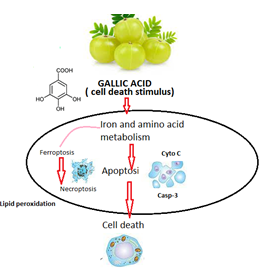
Gallic acid-induced cell death mechanisms have been proposed (Figure 8). Gallic acid activates the apoptotic, ferroptotic, and necroptotic pathways, resulting in cell death [34]. DFO, an iron chelator, has been shown to reduce certain types of cell death, proving that they are iron-dependent. Even when used in combination, inhibitors of three distinct cell death pathways, including the apoptosis inhibitor Z-VAD- FMK, ferroptosis inhibitors AOA and Fer-1, and necroptosis inhibitors Nec-1 and NSA, fail to prevent gallic acid-induced cell death [35]. This discovery suggests that cell death may occur via an unidentified downstream pathway.
Effect of Corilagin Against Cancer
Corilagin, also known as 1-O-galloyl-3,6-(R)- hexahydroxydiphenoyl-d-glucose, is a naturally occurring ellagitannin (ET) found in many plants [36]. Corilagin has been shown to have antioxidant, anti-inflammatory, hepatoprotective, antibacterial, antihypertensive, and anticancer properties. It has strong antistaphylococcal activity and inhibits RNA tumour virus reverse transcriptase activity (figure 9). ET’s antiproliferative effect has been attributed to a number of mechanisms, including cell cycle inhibition, mitochondrial apoptosis, and self-destruction after replication.
Molecular Mechanism of Corilagin Against Cancer
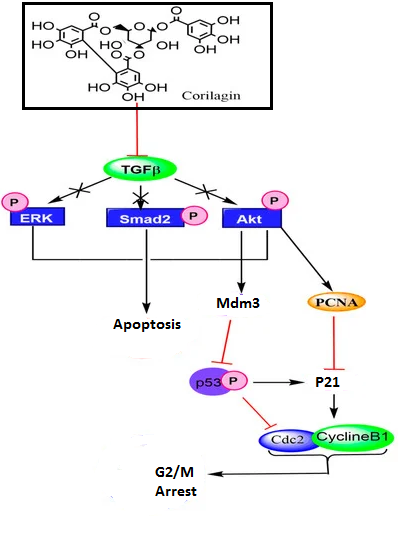
TGF-isoforms cause cancer cells to secrete pro- matrix metalloproteinase (MMP), which results in cell-to- cell contact loss, increased N-cadherin communication, reduced E-cadherin expression, and the development of a fibroblastoid phenotype. All of these processes match to the epithelial-mesenchymal transition. TGF- is also linked to receptors of type I (ThRI) and type II (ThRII). After binding to its ligands, ThRII is activated, resulting in the phosphorylation in of receptor-regulated Smads. Smads that have been phosphorylated bind to co-Smads and Smad4. The movement of this complex changes gene expression in the nucleus. TGF- activates PI3K and MAPK family members such as c-Jun-NH2-kinase, TAK1, p38, and extracellular signal- regulated kinase .Corilagin may stop the cell cycle in the S- and G2/M phases by inhibiting the cyclin B1/cdc2 complex, which is crucial for controlling the transition from the G2 to the M phase in SKOv3ip cells.
Effect of P-Coumaric Acid Against Cancer
P-Coumaric Acid
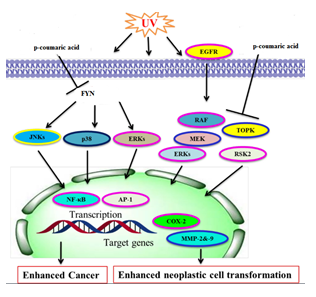
When it comes to inhibiting Fyn kinase and suppressing the activation of MAPK pathways) [37, 38], CA is more effective than chlorogenic acid. Nonetheless, B-Raf mutations are frequently seen in colon polyps and are a precursor to both colon cancer and melanoma (Figure 10). MEK1/2 is distinct from the other elements of MAPK pathways.
In rodent models and cell culture, constitutive MEK1 activation influences transformation and cancer, while an inhibitor of MEKs suppresses these processes. The kinase known as lymphokine-activated killer TOPK is known to activate ERKs, and TOPK activation is implicated in the carcinogenic role of TOPK in malignancies [39, 40]. Through inhibiting ERKs phosphorylation, CA inhibited neoplastic cell transformation and CT-26 cell-mediated lung metastasis in mice [41, 42]. CA or decaffeinated coffee inhibited the phosphorylation of ERKs and the actions of COX-2, MMP- 2, and -9 mediated by CT-26 cells (251,252). Results from laboratory trials and computational modeling studies demonstrated that CA specifically interacted with mitogen- activated MEK1 and TOPK with ATP, repressing their respective kinase activities [43, 44]. Attenuation of AP-1 and NF-κB transactivation, TPA-mediated ERKs and p90 RSK2, and suppression of TOPK and MEK1 have all been related [45, 46, 47]. Reduced ERK phosphorylation in colon cancer has been associated with CA/coffee consumption [48, 49, 50]. Nonetheless, a summary of the CA effects and molecular targets is provided. According to ERK/Nrf2 signaling, CA was shown to be a stimulant of HO-1, GCLC, and GCLM. As such, it may be a useful chemoprotective medication to protect liver injury from oxidative damage [51, 52]. Chemopreventive action is taken by CAagainst cancer [53, 54, 55, 56, 57, 58, 59, 60].
Conclusions
Cancer is the most common cause of illness and death on a global scale. It is critical to develop more effective and targeted treatment plans to halt the progression of cancer. Biologically active substances have been identified as cancer treatments the fact double as chemotherapeutic and chemopreventive. Furthermore, it has been proposed that the effect of bioactive chemicals on cancer may be impacted by a number of mechanisms, including ROS, ER stress, and epigenetic changes. More experiments will be conducted with the goal to better understand the mechanisms that underlie the anticancer effects. This information may be useful in developing synergistic combinations to improve efficacy.
Declaration
- Ethics approval: NA
- consent to participate: NA
- Consent for publication: No conflict to publication.
- Availability of data and material: Permission obtained.
- Competing interests: nll
- Funding: NA
- Authors’ contribution: SV made the draft and design of the manuscript
- Acknowledgements: Acknowledge the management
References
-
Bray F, Ren JS, Masuyer E, Ferlay J (2013) Global estimates of cancer prevalence for 27 sites in the adult population. Int J Cancer 2: 1133-1145.
-
Roy A, Datta S, Bhatia S, Bhumika, Priyanka, et al. (2022) Role of plant derived bioactive compounds against cancer. South African Journal of Botany 149: 1017-1028.
-
Singh N, Yadav S (2022) A review on health benefits of phenolics derived from dietary spices. Curr Res Food Sci 5: 1508-1523.
-
Gregoriou G, Christiana MN, Alexander V, Gregoriou Y, Hadjipakkou H, et al. (2021) Anti-Cancer Activity and Phenolic Content of Extracts Derived from Cypriot Carob (Ceratonia siliqua L.) Pods Using Different Solvents. Molecules 16: 5017.
-
Baloghova J, Michalková R, Zuzana B, Gabriela M, Fedáková Z, et al. (2023) Spice-Derived Phenolic Compounds: Potential for Skin Cancer Prevention and Therapy. Molecules 28(17): 6251.
-
Samec M, Liskova A, Kubatka P, Uramova S, Pavol, et al. (2019) The role of dietary phytochemicals in the carcinogenesis via the modulation of miRNA expression. J Cancer Res Clin Oncol 145: 1665-1679.
-
Eskra JN, Dodge A, Schlicht MJ, Bosland MC (2019) Effects of Black Raspberries and Their Constituents on Rat Prostate Carcinogenesis and Human Prostate Cancer Cell Growth in Vitro. Nutr Cancer 72(4): 672-685.
-
Asma ST, Acaroz U, Imre K, Morar A, Shah SRA, et al. (2022) Natural Products/Bioactive Compounds as a Source of Anticancer Drugs. Cancers 14(24): 6203.
-
Garbe C, Amaral T, Peris K, Hauschild A, Pert A, et al. (2022) European consensus-based interdisciplinary guideline for melanoma. Eur J Cancer 170: 236-255.
-
Leiter U, Keim U, Garbe C (2019) Epidemiology of Skin Cancer. Adv Exp Med Biol 1268: 123-139.
-
Garcia MO, Ruiz C, Gutierrez I, Illescas M, Lucia MR (2018) Benefits of olive oil phenolic compounds in disease prevention. Endocrine, Metabolic & Immune Disorders Drug Targets 18: 333-340.
-
Selvakumar P, Badgeley A, Murphy P, Anwar H, Sharma U, et al. (2020) Flavonoids and other polyphenols act as epigenetic modifiers in breast cancer. Nutrients 12: 761.
-
Shafaei N, Barkhordar SMA, Rahmani F, Nabi S, Idliki RB, et al. (2020) Protective effects of anethum graveolens seed’s oil nanoemulsion against cadmium-induced oxidative stress in mice. Biol Trace Elem Res 198(2): 583-591.
-
Huang W, Liu C, Liu F, Liu Z, Lai G, et al. (2020) Hinokiflavone induces apoptosis and inhibits migration of breast cancer cells via EMT signalling pathway. Cell Biochem Funct 38: 249-256.
-
Nwachukwu D, Aluko RE (2019) Structural and functional properties of food protein-derived antioxidant peptides. Journal of Food Biochemistry 43: 12761.
-
Oskoueian E, Karimi E, Noura R, Ebrahimi M, Shafaei N, et al. (2020) Nanoliposomes encapsulation of enriched phenolic fraction from pistachio hulls and its antioxidant, anti-inflammatory, and anti-melanogenic activities. J Microencapsul 37: 1-13.
-
Nongonierma B, Fitz Gerald RJ (2018) Enhancing bioactive peptide release and identification using targeted enzymatic hydrolysis of milk proteins. Analytical and Bioanalytical Chemistry 410: 3407-3423.
-
Fantini M, Benvenuto M, Masuell, Govanni, Llaria, et al. (2015) In vitro and in vivo antitumoral effects of combinations of polyphenols,or polyphenols and anticancer drugs: perspectives on cancer treatment. International Journal of Molecular Sciences 16: 9236- 9282.
-
Thyagarajan A, Forino SK (2020) pancreatic cancer. Antioxidants 9: 651.
-
Cojocneanu PR, Braicu C, Raduly L (2015) Phytochemicals modulate carcinogenic signaling pathways in breast and hormone-related cancers. Oncotargets and Therapy 8: 2053-2066.
-
Logan J, Bourassa W (2018) The rationale for a role for diet and nutrition in the prevention and treatment of cancer. European Journal of Cancer Prevention 27(4): 406-410.
-
Shanmugam M, Kannaiyan R, Sethi G (2011) Targeting cell signaling and apoptotic pathways by dietary agents: role in the prevention and treatment of cancer. Nutrition and Cancer 63(2): 161-173.
-
Sung H, Ferlay J, Siegel R, Mathieu L, Lsabella S, et al. (2021) Global cancer statistics 2020: GLOBOCAN estimates of incidence and mortality worldwide for 36 cancers in 185 countries. CA: a Cancer Journal for Clinicians 71(3): 209-249.
-
Aqil F, Radha M, Manica V, Hina K, Japrakash J, et al. (2012) Anti-proliferative activity and protection against oxidative DNA damage by punicalagin isolated from pomegranate husk. Food Research International 49(1): 345-353.
-
Albrecht M, Wenguo J, James K, Ephraim P, Lyndon M, et al. (2004) Pomegranate extracts potently suppress proliferation, xenograft growth, and invasion of human prostate cancer cells. J Med Food 7(3): 274-283.
-
Clinton S (2009) Lycopene: Chemistry, Biology, and Implications for Human Health and Disease. Nutrition Reviews 56(2): 35-51.
-
Faria A, Conceição C (2011) The bioactivity of pomegranate: Impact on health and disease. Critical Reviews in Food Science and Nutrition 51(7): 626-634.
-
Montané X, Kowalczyk O, Reig-Vano B, Anna B, Krzysztof R, et al. (2020) Current perspectives of the applications of polyphenols and flavonoids in cancer therapy. Molecules 25(15): 3342.
-
Sajadimajd S, Bahramsoltani R, Iranpanah A, Kumar PJ, Das G, et al. (2020) Advances on natural polyphenols as anticancer agents for skin cancer. Pharmacological Research 151: 104584.
-
Williamson G, Dionisi F, Renouf M (2011) Flavanols from green tea and phenolic acids from coffee: critical quantitative evaluation of the pharmacokinetic data in humans after consumption of single doses of beverages. Molecular Nutrition & Food Research 55: 864-873.
-
Jabbari N, Feghhi M, Esnaashari O, Soraya H, Rezaie J, et al. (2022) Inhibitory effects of gallic acid on the activity of exosomal secretory pathway in breast cancer cell lines: A possible anticancer impact. BioImpacts 12(6): 549-559.
-
Tang HO, Cheung P (2019) Gallic Acid Triggers Iron- Dependent Cell Death with Apoptotic, Ferroptotic, and Necroptotic Features. Toxins 11(9): 492.
-
Padma V, Sowmya P, Felix T, Baskaran R, Poornima P, et al. (2011) Protective effect of gallic acid against lindane induced toxicity in experimental rats. Food Chem Toxicol 49(4): 991-998.
-
Chuang C, Liu HC, Wu LC, Chen CY, Jinghua TC, et al. (2010) Gallic acid induces apoptosis of lung fibroblasts via a reactive oxygen species-dependent ataxia telangiectasia mutated-p53 activation pathway. J Agric Food Chem 58: 2943-2951.
-
Mesmar J, Fardoun M, Abdallah R (2021) Ziziphus nummularia Attenuates the Malignant Phenotype of Human Pancreatic Cancer Cells: Role of ROS. Molecules 26: 4295.
-
Ebikade E, Athaley A, Fisher, Kia Y, Changqing W, et al. (2020) The Future is Garbage: Repurposing of Food Waste to an Integrated Biorefinery. ACS Sustain Chem Eng 8: 8124-8136.
-
Cheung RCF, Ng TB, Wong JH, Chan WY (2015) Chitosan: an update on potential biomedical and pharmaceutical applications. Mar Drugs 13: 5156-5186.
-
Barazzuol L, Coppes R, Luijk P (2020) Prevention and treatment of radiotherapy-induced side effects. Mol Oncol 14: 1538-1554.
-
Shiri P, Ramezanpour S, Amani A, Dehaen W (2022) A patent review on efficient strategies for the total synthesis of pazopanib, regorafenib and lenvatinib as novel anti-angiogenesis receptor tyrosine kinase inhibitors for cancer therapy. Mol Divers 26: 2981-3002.
-
Sung H, Ferlay J, Siegel R, Laversanne M, Ahmedin J, et al. (2021) Global Cancer Statistics 2020: GLOBOCAN Estimates of Incidence and Mortality Worldwide for 36 Cancers in 185 Countries. CA Cancer J Clin 71: 209-249.
-
Sekhoacha M, Riet K, Motloung P, Gumenku L, Adegoke A, et al. (2022) Prostate Cancer Review: Genetics, Diagnosis, Treatment Options, and Alternative Approaches. Molecules 27(17): 5730.
-
Dissanayake R, Towner R, Ahmed M (2023) Metastatic Breast Cancer: Review of Emerging Nanotherapeutics. Cancers 15(11): 2906.
-
Hudita A, Radu IC, Galateanu B, Ginghina O, Herman H, et al. (2021) Bioinspired silk fibroin nano-delivery systems protect against 5-FU induced gastrointestinal mucositis in a mouse model and display antitumor effects on HT- 29 colorectal cancer cells in vitro. Nanotoxicology 15(7): 973-994.
-
Zhao Y, Jiang Q (2021) Roles of the polyphenol– gut microbiota interaction in alleviating colitis and preventing colitis-associated colorectal cancer. Adv Nutr 12(2): 546-565.
-
Sun D, Zou Y, Song L, Han S, Yang H, et al. (2022) A cyclodextrin-based nanoformulation achieves co- delivery of ginsenoside Rg3 and quercetin for chemo- immunotherapy in colorectal cancer. Acta Pharm Sin B 12(1): 378-393.
-
Guo Y, Sun Q, Wu F (2021) Polyphenol-Containing Nanoparticles: Synthesis, Properties, and Therapeutic Delivery. Adv Mater 33: 2007356.
-
Wang, Fan Y, Yan J, Yang M (2022) Engineering polyphenol-based polymeric nanoparticles for drug delivery and bioimaging. Chem Eng J 439: 135661.
-
Ferrari E, Bettuzzi S, Naponelli V (2022) The Potential of Epigallocatechin Gallate (EGCG) in Targeting Autophagy for Cancer Treatment: A Narrative Review. Int J Mol Sci 23: 6075.
-
Zhang Z, Qiu C (2021) Advances in research on interactions between polyphenols and biology-based nano-delivery systems and their applications in improving the bioavailability of polyphenols. Trends Food Sci Technol 116: 492-500.
-
Wang H, Gao L, Fan T, Chen Z, Bin Z (2021) Strategic Design of Intelligent-Responsive Nanogel Carriers for Cancer Therapy. ACS Appl Mater Interfaces 13: 54621- 54647.
-
Vittorio O, Curcio M, Cojoc M, Goya GF, Hampel S, et al. (2017) Polyphenols delivery by polymeric materials: challenges in cancer treatment. Drug Deliv 24: 162-180.
-
Karthikeyan S, Hoti SL, Prasad NR (2015) Resveratrol loaded gelatin nanoparticles synergistically inhibits cell cycle progression and constitutive NF-kappaB activation, and induces apoptosis in non-small cell lung cancer cells. Biomed Pharmacother 70: 274-282.
-
De S, Paul S, Manna A, Majumder C, Pal K, et al. (2023) Phenolic Phytochemicals for Prevention and Treatment of Colorectal Cancer: A Critical Evaluation of In Vivo Studies. Cancers 15: 993.
-
Menter T, Tzankov A, Dirnhofer S (2021) The tumor microenvironment of lymphomas: insights into the potential role and modes of actions of checkpoint inhibitors. Hematological Oncology 39: 3-10.
-
Moeini S, Karimi E, Oskoueian E (2022) Antiproliferation effects of nanophytosome-loaded phenolic compounds from fruit of Juniperus polycarpos against breast cancer in mice model: synthesis, characterization and therapeutic effects. Cancer Nano 13: 20.
-
Shonia S, Kanga R, Ammu K (2019) Bioactive Compounds: Natural Defense Against Cancer? Biomolecules 9: 758.
-
Logan J, Bourassa M (2018) The rationale for a role for diet and nutrition in the prevention and treatment of cancer. European Journal of Cancer Prevention 27: 406- 410.
-
Wada Y, Lönnerdal B (2020) Bioactive peptides derived from human milk proteins: an update. Current Opinion in Clinical Nutrition and Metabolic Care 23: 217-222..
-
Matteis V, Cascione M, Rizzello L, Manno DE, Guglielmo C, et al. (2021) Synergistic Effect Induced by Gold Nanoparticles with Polyphenols Shell during Thermal Therapy: Macrophage Inflammatory Response and Cancer Cell Death Assessment. Cancers 13(14): 3610.
-
Wang X, Li X, Liang X, Liang J, Zhang C, et al. (2018) ROS-responsive capsules engineered from green tea polyphenol-metal networks for anticancer drug delivery. J Mater Chem B 6: 1000-1010.
- Potential Medicinal Herbs and Secondary Metabolites in Combating Corona Virus
- Monkeypox and its Clinical Implications in Pregnancy
- Pharmacognostical Analysis of the Leaves of Important Nervine Medicinal Plant: Strychnos Nux-Vomica L
- Assessment of Antibacterial Activity of Various Solvent Extracts of Dictyota Dichotoma Against Multidrug Resistant Bacterial Strain
- Advances and Future Directions in Pharmacognosy and Chinese Medicine
- Pharmacognostical and Phytochemical Study of Hibiscus rosasinensis Linn.