
Proceeding of the International Workshop on Awareness for Conservation and Sustainable Use of Biodiversity in India (IWACASBI’17)
The mega event of Two Days ‘International Workshop on Awareness for Conservation and Sustainable Use of Biodiversity in India’ was held in joint collaboration of Thiruvalluvar University and National Biodiversity Authority of India, Government of India, Chennai in the Thiruvalluvar University, Vellore dated 18.09.2017 and 19.09.2017 in a grand success for the beneficial of academicians, student community, public, stakeholders and entrepreneurs, etc on the sake of understanding for the well being of conserving natural resources in our country.
Introduction
The mega event of Two Days ‘International Workshop on Awareness for Conservation and Sustainable Use of Biodiversity in India’ was held in joint collaboration of Thiruvalluvar University and National Biodiversity Authority of India, Government of India, Chennai in the Thiruvalluvar University, Vellore dated 18.09.2017 and 19.09.2017 in a grand success for the beneficial of academicians, student community, public, stakeholders and entrepreneurs, etc on the sake of understanding for the well being of conserving natural resources in our country. The university committee members and the Organizing Secretary Dr. K. Sivachandrabose are very much grateful to the National Biodiversity Authority in India due to for their financial assistance and encouragement to the programme by creating Memorandum of Understanding (MoU).
Conference Proceedings
The programme was well planned by inviting the veterans in the country and abroad as resource persons to share their experiences and study reports for conserving and sustainable use of biodiversity in India and elsewhere in the country. As a mark of creating awareness among the people, it was started with tree plantation around 400 hundred in numbers in the university campus supplied by Conservator of Forest, Forest Department, Vellore.
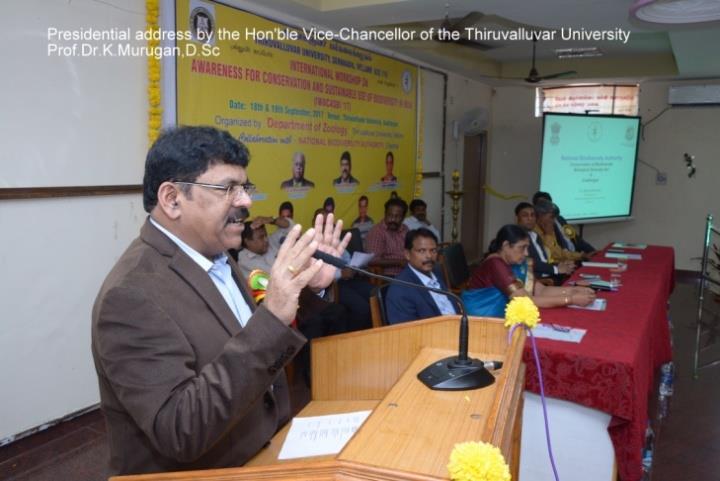
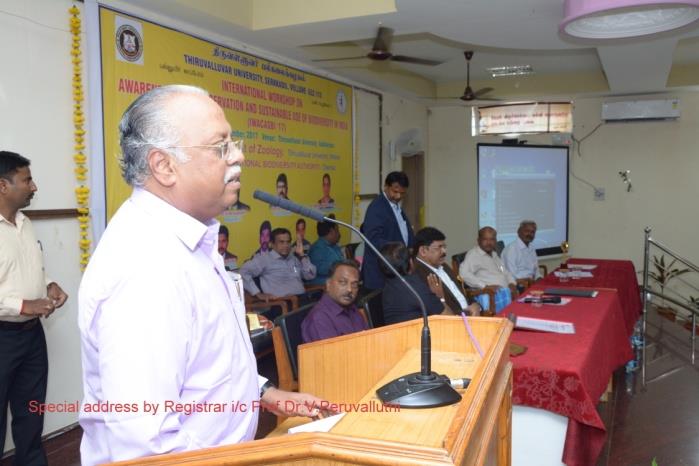
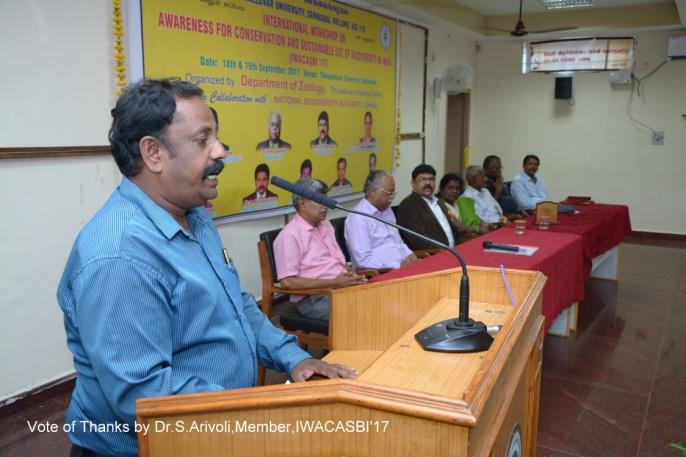
The programme was managed with duly constituted organizing committee consisting of Chief Patron and Vice- Chancellor of the university Prof. Dr. K. Murugan, D. Sc (Figure 1), Patron and Registrar in charge Dr. V. Peruvalluthi (Figure 2), Organizing Secretary Dr. K. Sivachandrabose, Convener Dr. B. Senthil kumar and members of organizing committee consisting of Dr. A. Panneerselvam, Dr. M. Chandran, Dr. G. Singaravelu and Dr. S. Arivoli (Figure 3).
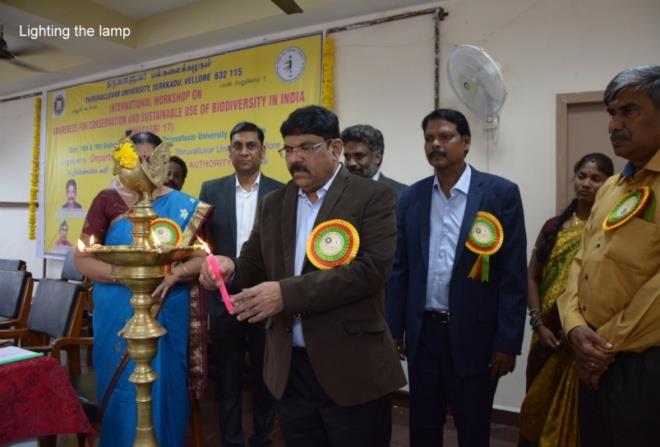
Advisory committee was constituted with the subject experts from India and abroad for successful conduct of this programme. The mile stone of the workshop in the university was organized on behalf of the Department of Zoology, Thiruvalluvar University, Serkkadu, Vellore, 632 115 (Figure 4).
We proud to state that India is one of the 10 mega biodiversity countries with biodiversity hot spots, viz. Himalayas, Indo-burma, the western ghats and sundaic occupying only 2.4% of the world’s land area and accounting for 7-8% recorded species of global biodiversity. The need of the hour and duty of the every citizen is to create awareness about conservation and sustainable use of biodiversity in India since some the living organisms are being endangered due to natural calamities, climatic change and globalization, etc. It is therefore, necessary to raise the public’s awareness of biodiversity in the process and ultimately the end consumer need to be educated to conserve biodiversity. Besides with this aim, the theme of the subject and objectives meant for the workshop were elaborately discussed with the following aspects: theme of the subjects discussed are 1) conservation of marine and freshwater aquatic ecosystem 2) preservation and conservation of wet land ecosystem, 3) conservation of terrestrial ecosystem, 4) conservation of endangering species, flora, fauna and wild life animals, 5) conservation of native plants, medicinal plants and food trophic organisms and 6) the recent crisis on climatic change, pollution and industrialization, etc. The objectives of the programme during the workshop reached are: 1) creation of awareness among academicians, students, entrepreneurs, industrialists, NGOs and public for conserving living resources, 2) natural calamities, climatic change and anthropogenic activities as cause of biodiversity loss, 3) protective measures for sustainable use of biodiversity in the present context of globalization,
4) understand about the conservation of biodiversity, sustainable use of the components and equitable sharing of benefits as enshrined in the biological diversity Act 2002 and 5) focus for future research on themes related with conservation of biodiversity. Participants and resource persons from various part of the country were provided for the visit of Amirthi and Palar river for hands on experience on the declining forest cover and shrinking water bodies. It is to note that the International
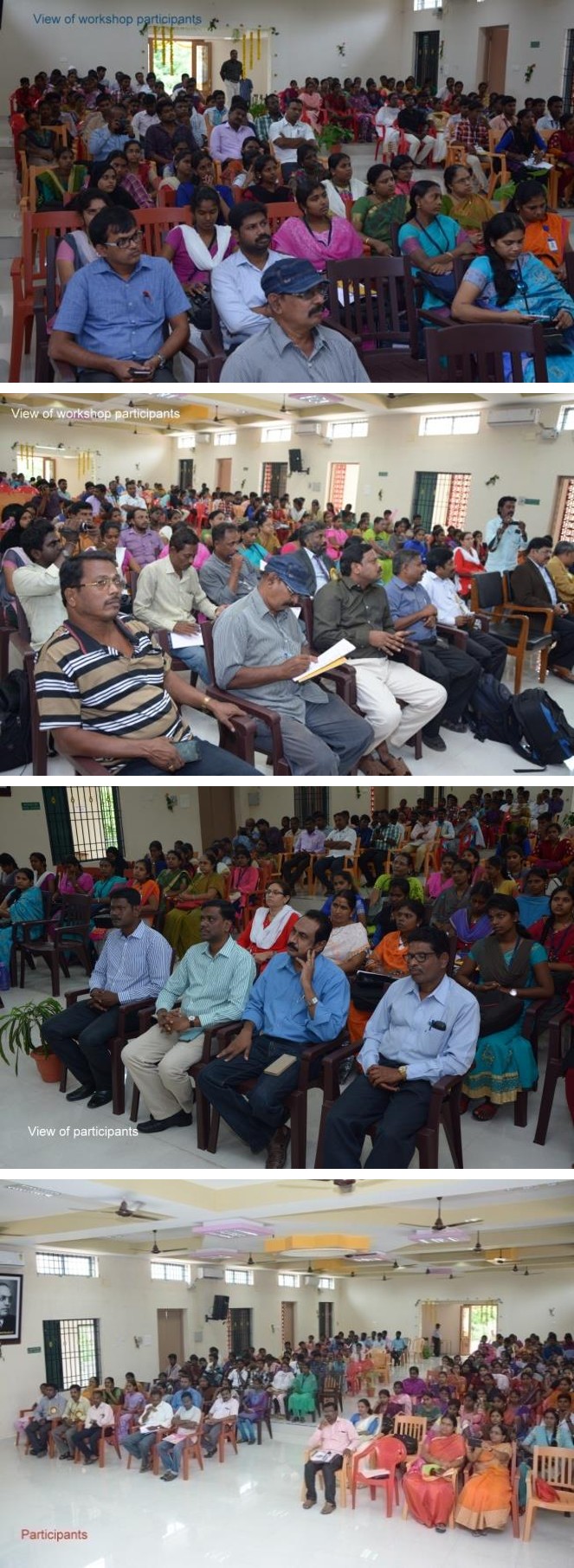
Workshop conducted on Awareness for Conservation and Sustainable Use of Biodiversity in India is first of its kind in the Thiruvalluvar University for creating awareness to the public, students, academician, stakeholders, entrepreneurs and industrialists, etc. During the workshop conducted dated 18.09.2017 and 19.09.2017 for two days, more than 600 participants were participated and benefitted (Figure 5).
Report of the First Day of Iwacasbi’17 on 18.09.2017
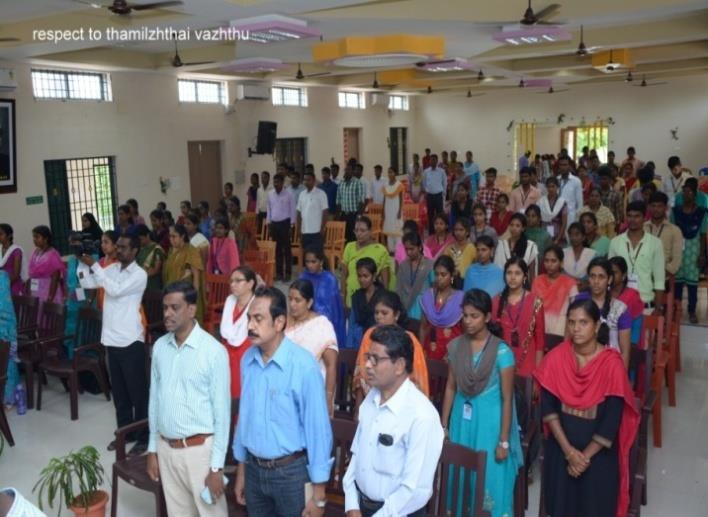
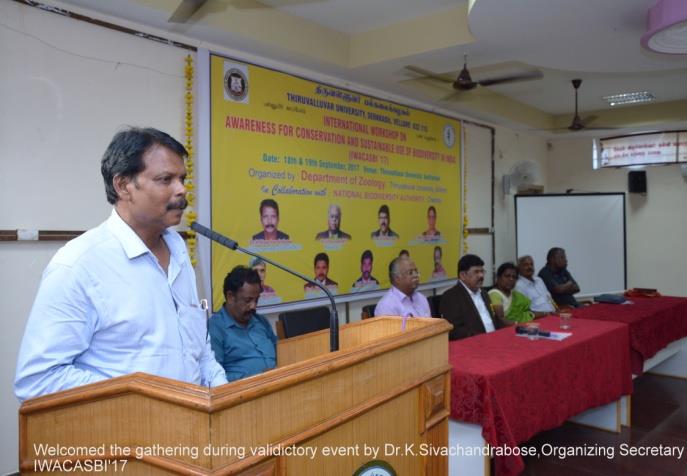
During the inaugural session on the first day of 18.09.2017, the function was begun by 10.30 am with the invocation of Tamizhthai vazhthu (Figure 6). All the participants stood up from their seat and respected while the sang was sung. Welcome address was given for the gathering by Dr. B. Senthil kumar (Figure 8), Convener and HOD of Zoology. Introductory address about the workshop, participants and dignitaries was given by Dr. K.
Sivachandrabose (Figure 7), Organizing Secretary IWACASBI’17. He has detailed about the role of Thiruvalluvar University in implementing National and International level programme in the university like IWACASBI’17 by giving encouragement in all the way, genesis of the IWACASBI’17 in the Thiruvalluvar University in consultation with National Biodiversity Authority in India located at Chennai and value of the workshop being conducted for the conservation of natural resources in India (Figure 9).
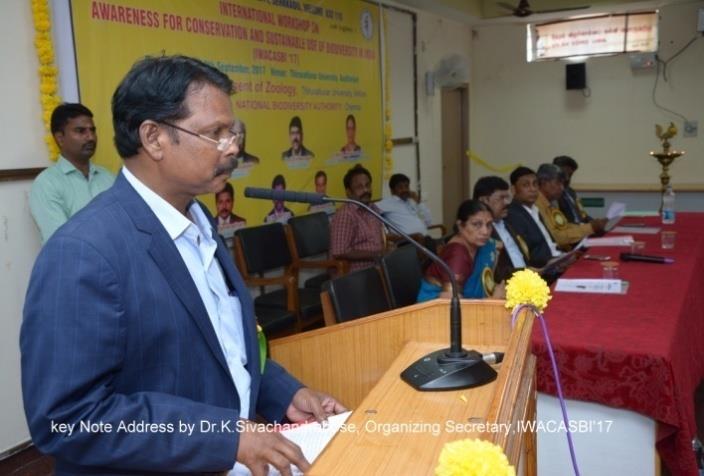
Introductory and presidential address was given by Prof. Dr. K. Murugan, D. Sc, (Figure 10) Vice-Chancellor of the Thiruvalluvar University and Chief patron of the workshop. While he addressed the gathering, he has emphasized about the duty of every citizen to conserve and protect the living organisms in a sustainable manner. In his speech, he has highlighted the India as one of the 10 mega biodiversity countries to protect the wealth of forestry and agriculture and also the butterfly role for wealth of the plant diversity by its pollination habit quoting with lot of examples (Figure 11). He has not only given the inaugural address emphasizing the importance of the function, he has also given in the next day (19.09.2017) plenary session address elaborately on the pollination nature of butterfly and its significant role in conserving the environment.
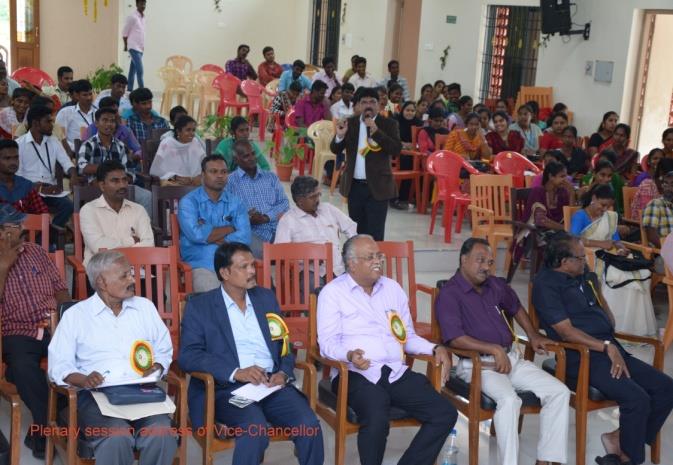
doubt over the use of National Biodiversity Authority in conserving the living organisms and its environment (Figure 14).
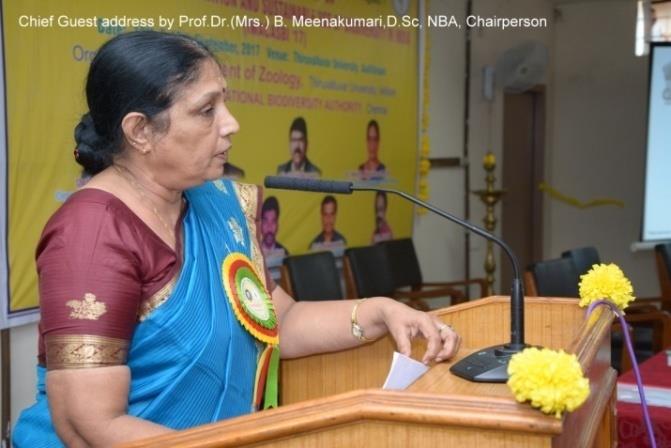
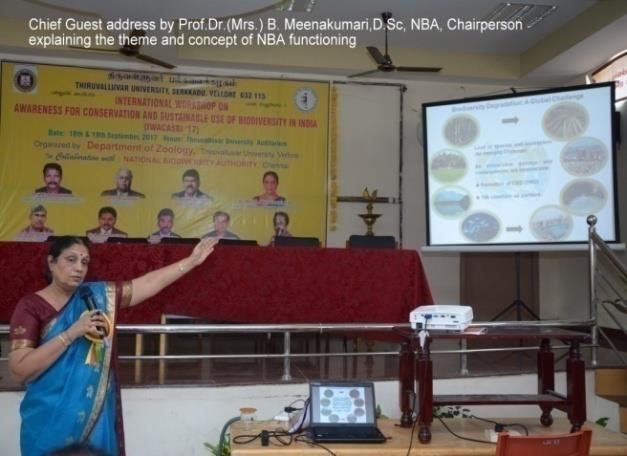
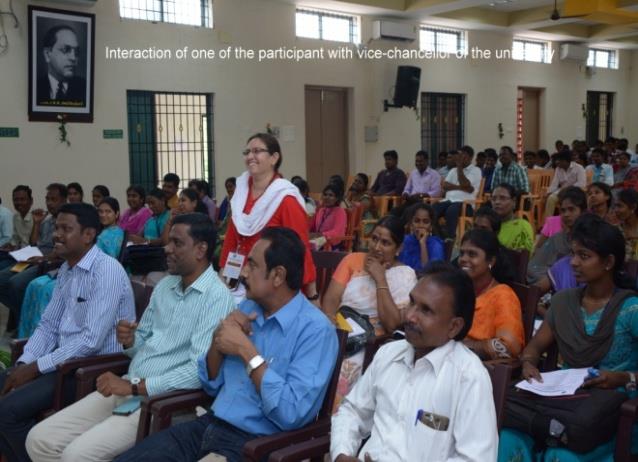
University Professors Dr. Earnst David, Dr. G. Singaravel, Dr. B. Senthil kumar, etc have clarified their doubts about conserving natural resources from NBA Chairperson and Chief Forest Conservator, Vellore Thiru Dinkar Kumar, IFS.
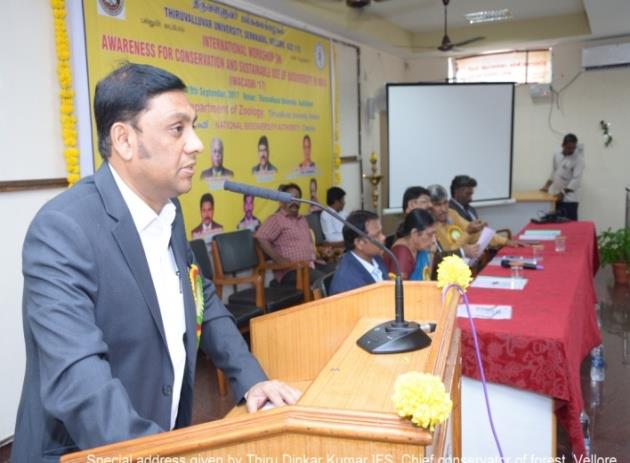
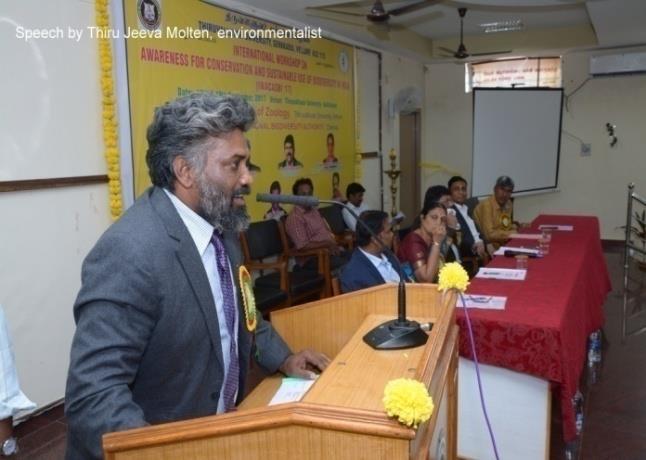
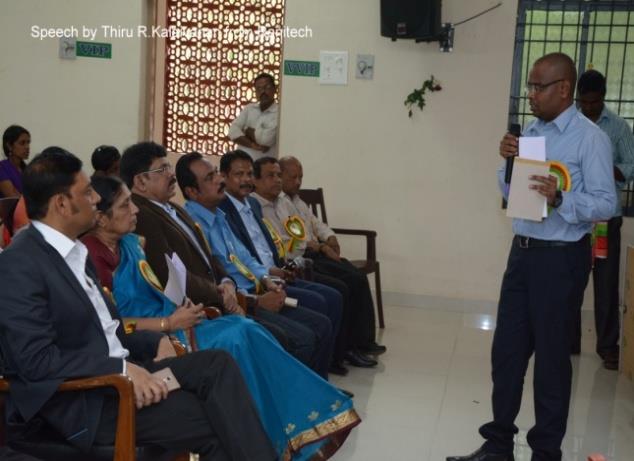
While Thiru Dinkar Kumar, IFS, Chief Forest Conservator, Vellore in his special address stressed upon to conserve the forest ecosystem by highlighting the human activities for the destruction of forest (Figure 15). He has given the statistical data about the hot spot of biodiversity in India. He has also highlighted about the importance of conserving wild animals. Dr. Munavarjan, former syndicate of the university felicitated the workshop. Thiru Jeeva Molten (Figure 16), environmentalist, Vellore has given his suggestions to conserve the environment. Thiru R. Kalaivanan (Figure 17), Senior technician and representative of Ranitech, walajapet, Vellore has reported about the role of Ranitech.
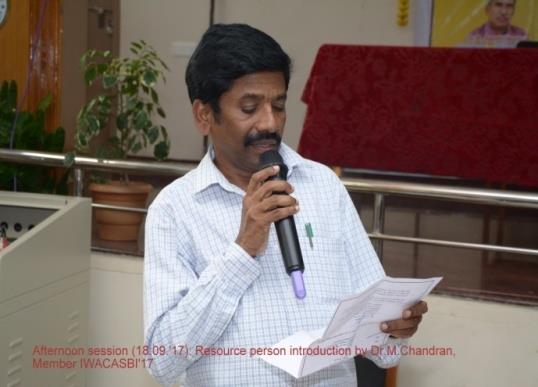
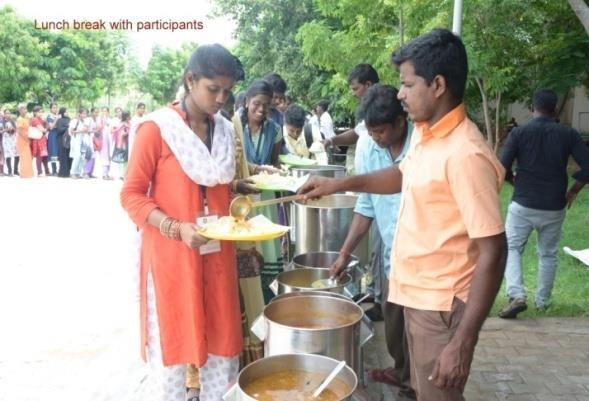
Vote of thanks was given by Dr. M. Chandran (Figure 18), member of the organizing committee of IWACASBI’17. 1.00 pm – 2.00 pm was scheduled to be a lunch breaks up (Figure 19).
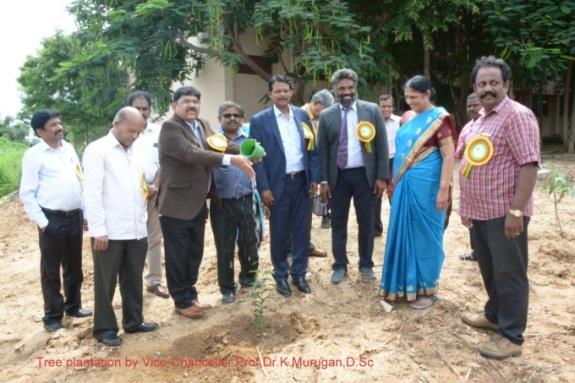
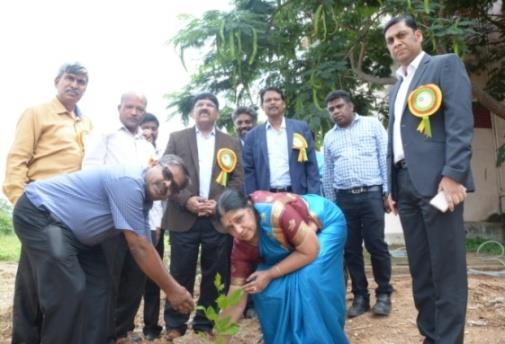
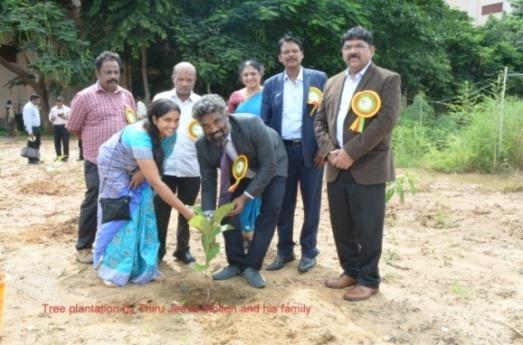
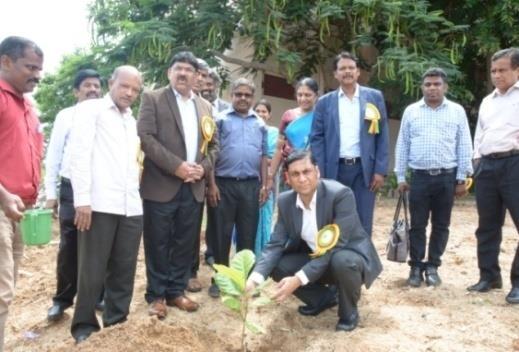
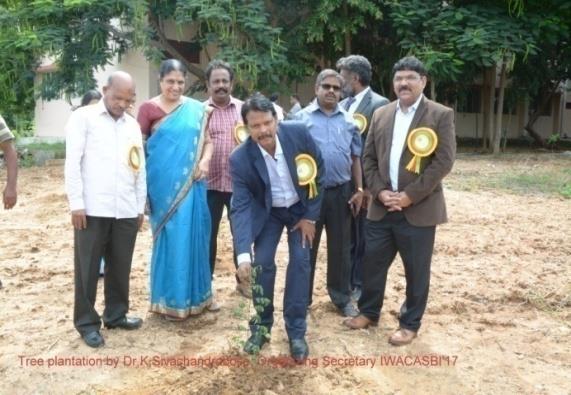
Prior to lunch break, there was a mega event of tree plantations in the university campus done by dignitaries of the workshop Prof. Dr. K. Murugan, D. Sc (Figure 20), Vice – Chancellor of the university, Prof. Dr. (Mrs.) B. Meenakumari, D. Sc (Figure 21), Chairperson of the National Biodiversity Authority in India, Thiru Dinkar Kumar, IFS, Chief Conservator of Forest, Vellore, Dr. B. Senthil kumar (Figure 22), Convener, Dr. K. Sivachandrabose (Figure 23), Organizing Secretary and university staff members and participants.
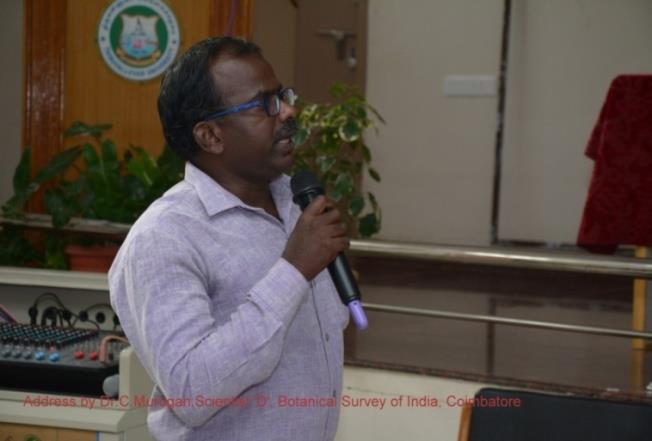
After the lunch break up, the session was started by 2.30 pm. Dr. C. Murugan, Scientist ‘D’ & Head of Office from Botanical Survey of India, Southern Regional Centre, and Coimbatore – 3 invited for his address. He has detailed in a elaborate manner on plant wealth and its conservation in western Ghats and other hot spots in the country. Field trip to Palar river and Amirthi Forest was begun by 3.30 pm hiring the bus with participants around 200 in numbers. While we were visiting the Palar River, participants coming for this programme have started realizing the condition of Palar River which is being polluted by various sources of domestic and industrial pollutants and dumping of plastic waste into the river with other anthropogenic activities, etc. Participants were enjoyed to see the Amirthi Forest consists of zoo where they have noticed all the kind of wild animals, snakes, reptiles, dears, crocodiles and variety of animals there, plant diversity and richness. While we returned back from the lovely and beautiful place of Amirthi Forest, we had a tea break and safely reached to the residing place. This trip was supported by the chief conservator of Forest, Vellore Thiru Dinkar Kumar, IFS.
Report of the Second Day of IWACASBI’17 ON 19.09.2017
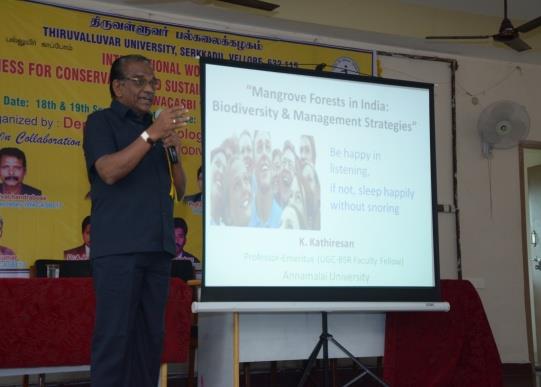
Prof. Dr. K. Kathiresan, who was the former Director and Dean of the CAS in Marine Biology, Faculty of Marine Sciences, Parangipettai, Annamalai University had highlighted his talk on the value of mangrove as one of his point by protecting thousands of human lives resided near the Vellar estuary from the tsunami happened during 2004. He was said to be a real hero at that time as the mangrove plantation he promoted protected human lives from tsunami. He had also highlighted about the importance of conserving wild life animal in Sundarban as well as Pitchavaram mangroves. Further, he had impressed upon the following points:
Mangrove forests in India are globally unique to have the highest record of biodiversity, gifted with the mangrove genetic paradise of the world at Bhitarkanika, Odisha and the globally threatened species in Sundarbans. The mangroves are floristically diverse in India with the highest world record of 130 species that include 44 species of true mangroves and 86 mangrove associates, belonging to 90 genera and 55 botanical families. Mangrove diversity is higher along the east coast and Andaman Islands than west coast. The mangrove diversity is the highest in Odisha (100 spp.) followed by Andaman and Nicobar (96 spp.), and Sundarbans (91 spp.) while it is the lowest in Gujarat (37 spp.). Sixteen mangroves and eight mangrove associates are of rare occurrence and restricted in distribution that also include two globally threatened mangrove species (Heritierafomes and Sonneratiagriffithii). India has a mangrove forest cover of 4,921 sq. km, and 66% of which are largely distributed in high energy tidal coast, vulnerable to sea level rise. In spite of increasing pressures, the mangrove cover is increasing annually at the rate of 1.9% in India, as against the global mangrove cover that disappears at 0.66%. However, the country has a large track of degrading mangrove stand. India is active in conservation of mangroves through promotory, regulatory, and participatory strategies.
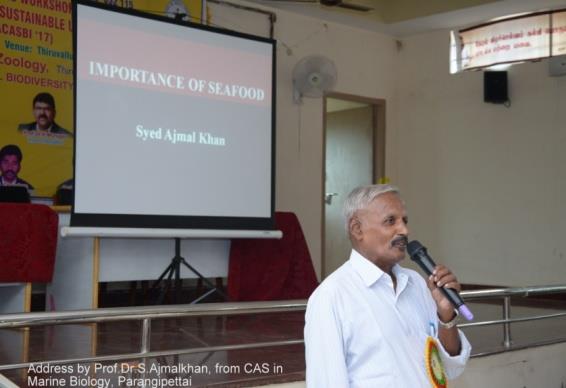
Prof. Dr. S. Ajmal khan (Figure 24) from CAS in Marine Biologly, faculty of Marine Sciences, Parangipettai, and Annamalai University spoke on the following points: The marine realm provides a unique set of goods and services to society, including moderation of climate, processing of waste and toxicants, provision of vital food, medicines and employment for significant numbers of people. Our coasts provide space to live and directly and indirectly create wealth, including millions of jobs in industries such as fishing, aquaculture and tourism. Looking at ecosystems in terms of the goods and services they provide allows us to realize their full value and our dependence on those systems in the broadest sense. Exploitation of the environment for one purpose can alter the environment's ability to provide other goods and services, so this knowledge is also a way of understanding what we stand to gain and lose by exploitation of certain aspects of the environment. Man is also a part of the biodiversity (Figure 25). His very survival and continuance on this earth is dependent on biodiversity. Therefore, protection of biodiversity with all its components deserves conservation on all counts. This presentation by explaining the importance of marine biodiversity tried to create an awareness regarding its protection and conservation of marine resources.
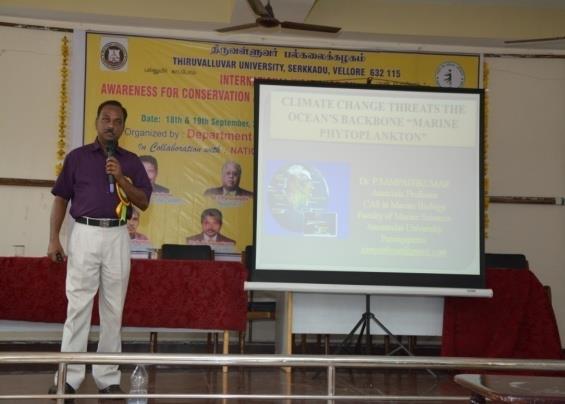
Dr. P. Sampath Kumar, Associate Professor from CAS in Marine Biology, Faculty of Marine Science, Parangipettai, and Annamalai University has delivered lecture on the climatic change thread on ocean backbone marine phytoplankton. He has also pointed out on the following line: Phytoplankton is tiny photosynthetic organisms that are the major producers of marine life. They form the foundation of the food web for most marine life. They are autotrophic organisms that possess chlorophyll, enabling them to use sunlight to convert inorganic material to organic material through the process of photosynthesis. Like all plant cells, phytoplankton have three major requirements for growth - namely sunlight, carbon dioxide, and nutrients in the form of nitrates and phosphates They are responsible for half of the photosynthetic activity on earth, making them important to both their local and the global ecosystems.. Their importance in carbon-dioxide sequestration has made them a target for controlling carbon dioxide in the atmosphere. Phytoplankton is the fuel on which marine ecosystems run. A decline of phytoplankton affects everything up the food chain, including humans. Even the largest being in existence, and to have ever existed, the blue whale, ultimately relies on a viable population of phytoplankton in order to sustain itself. The very small in many ways control and support the very large.
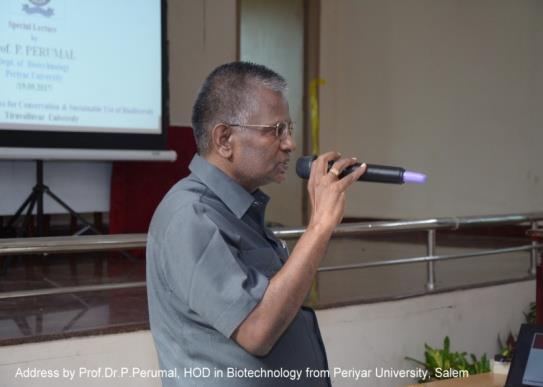
Dr. P. Perumal (Figure 27), Professor and Head, Department of Biotechnology, Periyar University, Salem has given his address on plankton diversity with special reference to marine copepods. He has also detailed about the importance of biodiversity conservation in the country by referring biodiversity concepts behind this. He also spoke on the following lines: The part of the earth that houses the living forms is called as biosphere. The biosphere comprised of three biocycles viz. terrestrial, marine and freshwater. Physically, the marine biocycle is 2.5 times more when compared in the other 2-biocycles (together), and ecologically it provides over >200 times more organisms-inhabitable space. Biodiversity of marine environment is more when compared to the other ecosystems. The variety and variability of the living organisms and their ecological complexes of which they are part referred to as biodiversity. Plankton, nekton and neuston are the important groups of organisms abound on the surface and sub-surface waters of the aquatic environs including sea. They are both phyto (plant) and zoo (animal) plankters and the latter is largely constituted by the minute crustaceans, “Copepods”. These Arthropodan-Zoo planktonic forms are much diverse and abundant aquatic forms with excellent nutritional content and hence they are popularly called as “Insects of the Sea” and as “Living Capsules”. They are the secondary producers and primary consumers and represented by calanoida, harpacticoida and cyclopoida. They are represented with over 10,000 species globally (marine) and more species are represented in both calanoda and benthic groups.
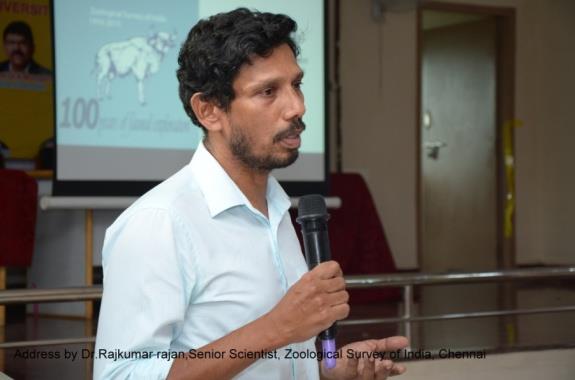
Dr. Rajkumar Rajan (Figure 28), Senior Scientist from Zoological Survey of India, Chennai detailed in his lead address about faunal diversity (epibenthic and epifauna) associated with sea grass ecosystem in Palk Bay and Gulf of Mannar.
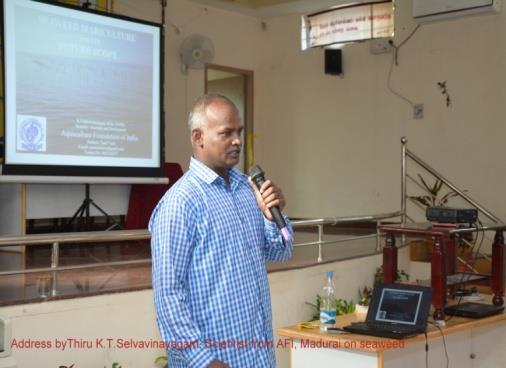
Thiru K. T. Selvavinayagam (Figure 29), Scientist from Aquaculture Foundation of India at Madurai has highlighted through his speech on the importance of seaweeds, seaweed resources in India and Tamil Nadu, habitat, commercially exploited seaweeds like Gelidiellaacerosa, Gracilariasp., Hypnea sp., Acanthophora sp., Turbinaria sp., Ulva sp. and Enteromorpha sp., seaweed cultivation Indian and World scenario, need for cultivation, advantages of cultivation, seaweed to slow down global warming, future scope and need of the present hour in details. After this session was over, valedictory function was begun by 3.30 pm on 19.09.2017.
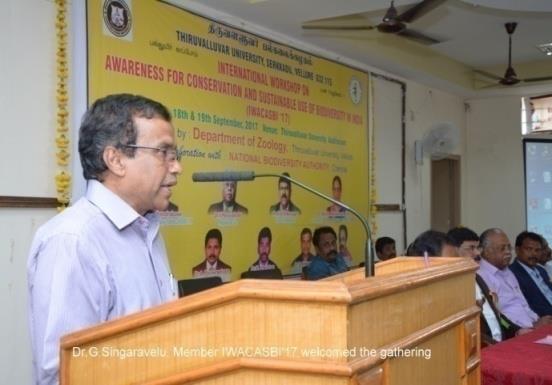
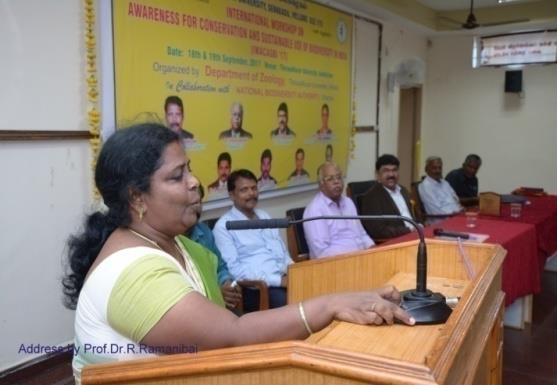
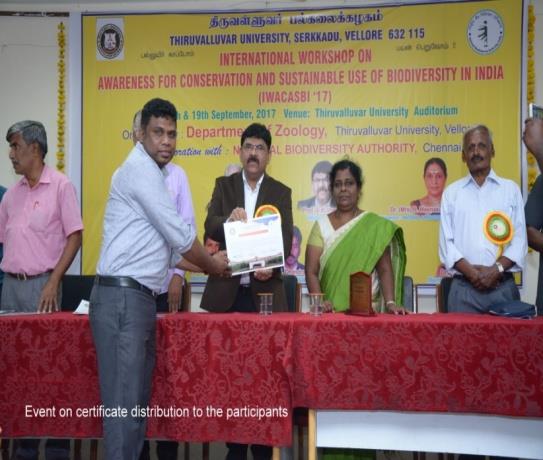
Dr. G. Singaravelu (Figure 30), Member IWACASBI’17 welcomed the gathering. It was presided over by Prof. Dr. K. Murugan, D.Sc, Vice- Chancellor of the university and he narrated the importance of two days International workshop on awareness for conservation and sustainable use of biodiversity in India. Dr. R. Ramanibai (Figure 31) who was HOD in zoology, University of Madras, Chennai and chief guest of this function invited has highlighted the points about the conservation of waters and their species dependent in the country. When the special address given by Prof. Dr. V. Pervalluthi, Registrar i/c, he has given an account on cultural diversity and its importance in the country. Prof. Dr. S. Ajmal khan and Prof. Dr. P. Perumal resource persons of this event have given their felicitation address. Certificates for the participants of workshop were distributed by vice-chancellor and other dignitaries those who were present in the valedictory function (Figure 32). Vote of thanks was given by Dr. S. Arivoli, member IWACASBI’17.
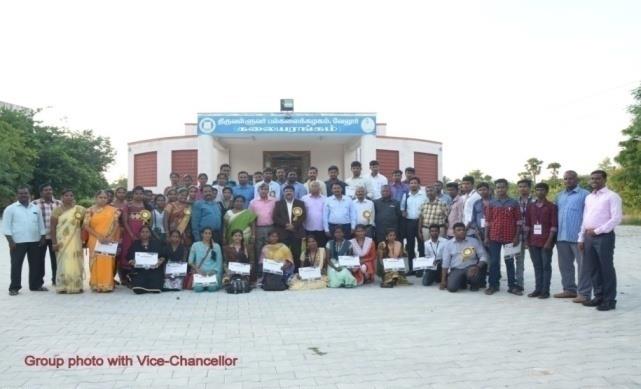
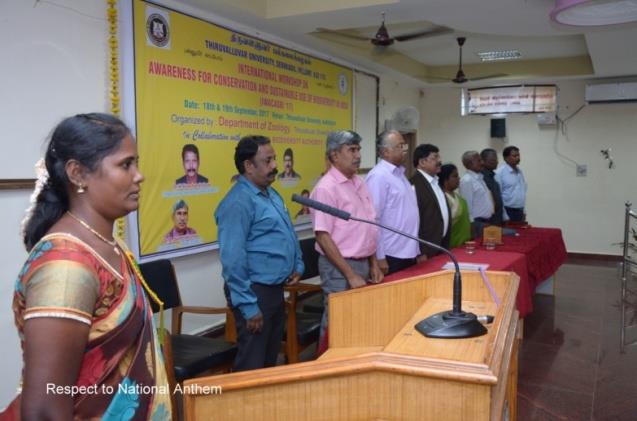
The mega event of two days International workshop on awareness for conservation and sustainable use of biodiversity in India conducted in the Thiruvalluvar University, Serkkadu, Vellore on 18-19th September, 2017 was ended with National Anthem. Before leaving from the venue of the programme, group photos of the participants with vice-chancellor of the university and dignitaries were taken (Figures 32 & 33).
Acknowledgement
Organizing Secretary of IWACASBI’17 Dr. K. Sivachandrabose is thankful to the Thiruvalluvar university authority for permission to conduct the programme and National Biodiversity Authority of India for financial assistance and support to conduct the programme successfully.
- Mitochondrial Bio-Logistics: Steering Co-Enzyme Q10 and Lycopene Synergies within the Science 4.0 Bio-OS Framework
- Hymenoptera Specimens from the Caño Negro Wetland, of the National Museum Collection, Costa Rica
- Science 4.0: Comprehensive Architecture of the Biological Operating System (Bio-OS) A Framework for Systemic Resilience and Industrialized Bio-Governance
- Rabbit on, or Hare Back? Understanding Climate Change
- Clinical Validation of Science 4.0: Flow Steering and Epigenetic Drift Inversion on a 76-Year-Old Hybrid System
- Seeds Planted by another Mind