
Biodiversity in Medical Entomology and its significance for Public Health
In December 1984, I started working at the Entomology Laboratory of the Superintendence of Public Health Campaigns - SUCAM, in the municipality of Rio de Janeiro, RJ, Brazil. The primary objective of this federal institution is the control of vectors, prevention, and treatment of rural endemic diseases. Consequently, we attended classes and courses on the taxonomy of disease vectors, particularly those belonging to the Diptera order, which encompassed the primary disease vectors of that moment, namely anopheline mosquitoes, culicids, and phlebotomine sandflies, responsible for malaria, yellow fever, dengue, Zika, chikungunya, and leishmaniases, respectively.
Opinion
In December 1984, I started working at the Entomology Laboratory of the Superintendence of Public Health Campaigns - SUCAM, in the municipality of Rio de Janeiro, RJ, Brazil. The primary objective of this federal institution is the control of vectors, prevention, and treatment of rural endemic diseases. Consequently, we attended classes and courses on the taxonomy of disease vectors, particularly those belonging to the Diptera order, which encompassed the primary disease vectors of that moment, namely anopheline mosquitoes, culicids, and phlebotomine sandflies, responsible for malaria, yellow fever, dengue, Zika, chikungunya, and leishmaniases, respectively.
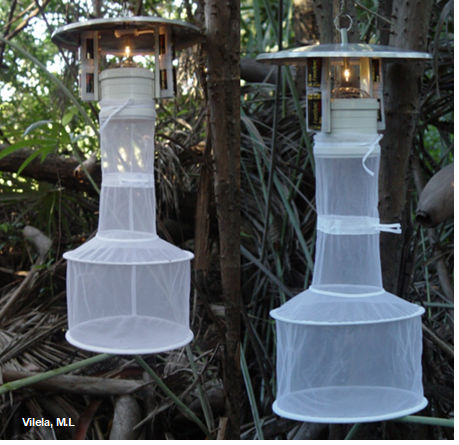
When a case of any of the aforementioned diseases was reported, we conducted mosquito collections at the registered location, whether it was a house, farm, or rural property. In intradomicile and peridomicile areas, we employed a Castro Captor for mosquito capture. Additionally, CDC or HP traps with light bait (Figure 1) were deployed in pigsties, stables, chicken coops, and trees near the house, if present in the surveyed area. The primary objective was to identify species of anopheline, culicid, and phlebotomine mosquitoes, which are scientifically known as vectors of the etiological agents responsible for these endemic diseases, whether viruses or protozoa.
Simultaneously, an epidemiological investigation was conducted to determine whether the case was autochthonous Opinion or imported. Thus, when the vector species were captured and the patient had not traveled away from the region, an autochthonous case was confirmed. Measures to control the vectors and prevent the appearance of new cases were proposed to the individuals in the surveyed region. If a person had traveled, relocated for work purposes, or changed their residence and later returned, the case was considered imported.
Therefore, it is imperative to acquire knowledge about the biodiversity of medical entomology, as the region may harbor multiple endemic disease vector species.
In 1994, a case of tegumentary leishmaniasis was reported in a resident of Lemgruber farm, located in the municipality of Carmo, in the hilly region of the state of Rio de Janeiro. Entomological captures were conducted at the site for two years (1994/1995), and Lutzomyia intermedia was found to be the predominant species. Scientifically recognized as a vector of tegumentary leishmaniasis, this species was captured. Epidemiological investigation confirmed it was an autochthonous case [1, 2, 3]. Upon returning to the area in 2006 to update the phlebotomine fauna I observed and captured an anopheline mosquito using the Castro capture method. Subsequent identification revealed it was An. aquasalis, a malaria vector species typically found in seaside areas of Brazil. Its presence in the hilly region of Rio de Janeiro state is uncommon.
It is worth noting that the municipality of Carmo is adjacent to the municipality of Além Paraíba, in the state of Minas Gerais, which is the type area of Leishmania (Viannia) braziliensis, the etiological agent of tegumentary leishmaniasis.
In 2001, three cases of malaria were recorded. One from the municipality of São Gonçalo and two from the municipality of Rio de Janeiro. The question arose: malaria in an urban area? It was revealed that these individuals used to spend their weekends in the district of Itaipuaçu, in the municipality of Maricá, in the state of Rio de Janeiro. Entomological surveys proved the presence of An. aquasalis in that region, which is considered a vector of Plasmodium vivax, the etiological agent of malaria on the Brazilian seashore. Subsequently, a person from the northern region, who came to work in Maricá, was diagnosed with malaria. Thus, the entomological and epidemiological investigation was completed, providing evidence that the vector, the disease-causing agent, and the host existed in that area [4].
In a publication from 2002, the concern with bromeliads as a breeding ground for Ae. aegypti began to grow, mostly in buildings located in more wealthy areas where they were used for decoration. Water reservoirs used to maintain humidity and support biological cycles also played a role in this. It is crucial to understand the true significance of these plants in dengue transmission, specifically focusing on domestically used bromeliads or those subject to anthropogenic influence, which favored the proliferation of these mosquitoes. Such bromeliads are considered important breeding grounds. Due to their often-abundant organic material content, bromeliads serve as microhabitats that can harbor immature forms of certain mosquitoes, including Aedes aegypti [5].
In 2008, the discovery of Aedes albopictus Skuse, 1894, was recorded at Sino Beach on Marambaia Island (Marambaia Island Training Center -CADIM), a unit of the Brazilian Navy. It was found in a plastic cup on a rock by the beach. This record is significant considering its entomological, epidemiological, and ecological importance [6]. It is worth noting that this mosquito species was introduced to Brazil in 1986, first identified at the Federal Rural University of Rio de Janeiro (UFRRJ) in Seropédica, RJ.
In 2012, during a preliminary survey of the phlebotomine fauna in a volcanic cave located in the municipality of Sumidouro, in the hilly region of Rio de Janeiro state, two new species of the genus Atrichopogon Kieffer were discovered: A. dactilus Felippe-Bauer and A. cavus Felippe-Bauer. This finding contributes to the growing number of species within the Ceratopogonidae family. Culicoides, which are vectors of viral diseases in both humans and animals, hold significant medical importance. In Brazil, the Oropouche virus has been responsible for several epidemics among humans in the Amazon region [7]. Additionally, in the same cave, in 2015, an infected Lutzomyia gasparviannai carrying Wuchereria bancrofti was documented, while in 2009, L. edwardsi was found to be infected with nematodes [8, 9].
Conclusion
Considering the entomological biodiversity of medical and veterinary importance in the aforementioned articles, it becomes evident that there is a need to reconsider the conduction of a comprehensive, yet fundamental, entomological study across various specialties, including forensic, agricultural, and livestock entomology. This study should not only focus on specific species or genera but also encompass the most relevant orders and families within each specialty.
References
-
JRC (2007) Species of Lutzomyia França (Diptera: Psychodidae, Phlebotominae) in Area with Cutaneous Leishmaniasis Case of Carmo County, Rio de Janeiro State, Brazil. Neotropical Entomology 36(4): 593-596.
-
Carreira-Alves JR (2008) Species of Phlebotominae (Diptera: Psychodidae) from the São José farm, Municipality of Carmo, State of Rio de Janeiro, Brazil. Masters dissertation, Federal Rural University Rio de Janeiro, Seropédica, Brazil.
-
Carreira-Alves JR, Vilela ML, Santos-Mallet JR (2022) Sandfly Fauna (Diptera: Psychodidae, Phlebotominae) of São José Farm, Carmo District, State of Rio de Janeiro, Brazil. An Acad Bras Cienc 94: e20200376.
-
Carreira-Alves JR (2001) Finding of anophelines, subgenus Nyssorhynchus in artificiais containers, Maricá, RJ, Brazil. Rev saúde Pública 35(4): 407-408.
-
Cunha SP, Alves JRC (2002) Presence of Aedes aegypti in Bromeliaceae and plant breeding place in the Municipality of Rio de Janeiro, RJ. Rev Saúde Pública 36(2): 244-245.
-
Alves JRC, Alencar J, Martins-Costa J (2008) Occurrence of Aedes albopictus (SKUSE, 1894) (Diptera, Culicidae), larvae in an artificial container, in Marambaia island, Mangaratiba, RJ, Brazil. Rev Patologia Tropical 37(2): 177-180.
-
Felippe-Bauer ML, Silva TN, Carreira-Alves JR (2012) Two new species of Atrichopogon Kieffer from Rio de Janeiro, Brazil (Diptera: Ceratopogonidae). Zootaxa 3566: 39-50.
-
Alves JRC (2019) Phlebotominae Fauna(Diptera: Psychodidae; Phlebotominae) and identification of Leishmania sp vectors in a cave region, in the municipality of Sumidouro, State of Rio de Janeiro, Brazil. Doctoral thesis, Federal Rural University Rio de Janeiro, Seropédica, Brazil.
-
Alves JRC, Menezes RC (2022) First Report of Lutzomyia edwardsi and Lutzomyia gasparviannai Infected by Nematodes in a Rio de Janeiro Cave. Int J Zoo Animal Biol 5(2): 000361.
- Mitochondrial Bio-Logistics: Steering Co-Enzyme Q10 and Lycopene Synergies within the Science 4.0 Bio-OS Framework
- Hymenoptera Specimens from the Caño Negro Wetland, of the National Museum Collection, Costa Rica
- Science 4.0: Comprehensive Architecture of the Biological Operating System (Bio-OS) A Framework for Systemic Resilience and Industrialized Bio-Governance
- Rabbit on, or Hare Back? Understanding Climate Change
- Clinical Validation of Science 4.0: Flow Steering and Epigenetic Drift Inversion on a 76-Year-Old Hybrid System
- Seeds Planted by another Mind