
Ocean Literacy Strategies Using Flag Animal as Environmental Awareness Model
In recent decades, anthropogenic pressures associated with the unsustainable use of resources have threatened the health of the oceans and the dynamics of life. Considering the importance of marine resources for the economy and maintaining the diversity of life on earth, effective and immediate measures are necessary to raise society's awareness of changes and the adoption of sustainable lifestyle habits. To this end, the United Nations (UN) created the decade of the oceans, 2020-2030, compiling a series of actions worldwide that can minimize impacts on marine ecosystems. One of the ways to reach and raise awareness in society is the use of animated flags, which are charismatic and, therefore, attract attention and make it possible to disseminate environmental education. Therefore, in this experience report, we describe the use of sea turtles as a flag animal for environmental awareness and the different strategies that were adopted to reach target audiences. Ocean education is considered one of the main mechanisms that can, in the medium and long term, establish a new dynamic in the use and relationship between men and marine ecosystems. By expanding joint actions between society and public authorities, effective and long-term ocean education strategies can be established, with the formation of citizens with environmental awareness and criticism.
Introduction
Oceans provide fundamental ecosystem services for the maintenance of life forms on Earth, regulating trophic chains, protecting the coastal zone, in addition to carbon sequestration and driving the economy of fishing, tourism and maritime transport [1, 2, 3]. According to the World Health Organization [4], the ocean is responsible for providing more than 15% of the total proteins consumed by humans. They are also responsible for absorbing around 40% of the carbon dioxide released daily into the atmosphere, thus minimizing the possible even more drastic effects of climate change [5].
Human beings continually interact with marine environments and, as they have exploited these resources in an unsustainable way, they have had a major impact on the health of the oceans, causing the loss of habitats and the extinction of species [6, 7, 8, 9]. Anthropogenic pressures threaten the dynamics of marine ecosystems and reflect the lack of oceanic awareness and culture. Ocean education is a strategy that aims to train citizens with a critical understanding of issues related to the marine environment [10]. Although it is not yet fully incorporated into the curriculum, in developing countries, educational activities associated with the principles and concepts of ocean literacy have shown success in the conservation and management of marine environments [11].
Educational methodologies focused on development and training for sustainability issues demand stimulation of active learning, providing methods that combine professional and social reality [12, 13, 14].
Therefore, it is necessary to raise awareness in society to adopt more sustainable practices and use of natural resources, which can be stimulated by the use of ocean education strategies [15, 16]. Oceanic culture has been disseminated mainly through non-formal activities, offering unique knowledge acquisition experiences, such as playful, practical and immersive actions [17].
The United Nations (UN) established the Decade of Ocean Science for Sustainable Development 2020-2030, aiming to bring together efforts in global actions that can achieve and implement the Sustainable Development Goals (SDGs). sustainable, the conservation of oceans, seas and their resources with sustainable use (UNESCO, 2015). The actions proposed by education are potential and effective in driving change and combating socio-environmental challenges [18]. In Brazil, the literature highlights the discrepancy in approach between education and sustainability [18].
In municipalities whose main economic activities are the oil industry and fishing, it is essential to raise awareness in society regarding the use of sustainable practices of natural resources, which can be stimulated by the use of ocean education strategies [15, 16]. To this end, it is extremely important to expand knowledge, promoting solutions relating to the main challenges facing municipalities, in line with the Sustainable Development Goals [19]. An ocean education proposal involving different social audiences, such as schools, squares and beaches, can work to raise awareness among the local population and visitors, proposing actions that contribute to developing critical awareness about the conservation of the marine environment and the species that inhabit it. Socio-environmental mobilization promotes the conservation of biodiversity and maintenance of ecosystem services that are fundamental to maintaining life on earth. In Brazil, projects and initiatives successfully use flagship animals, such as sea turtles for ocean education, with the pioneering work of the Tamar Project and the golden lion tamarin, a small primate, as a mascot for the conservation of the Atlantic Forest.
Considering the gap in ocean literacy and the need to develop awareness practices regarding the use of the environment and natural resources in the North of Rio de Janeiro, this experience report describes the actions of the Iurukuá Project: Ocean Education and Conservation of Sea Turtles, a university extension project at the Federal University of Rio de Janeiro (UFRJ). This aims to establish a permanent ocean education program operating in schools, beaches and public places. It is believed that actions in oceanic education, using flagship organizations, can raise awareness in communities, especially among children and young people, who are great multipliers of knowledge and sustainable practices of environmental responsibility.
Material and Methods
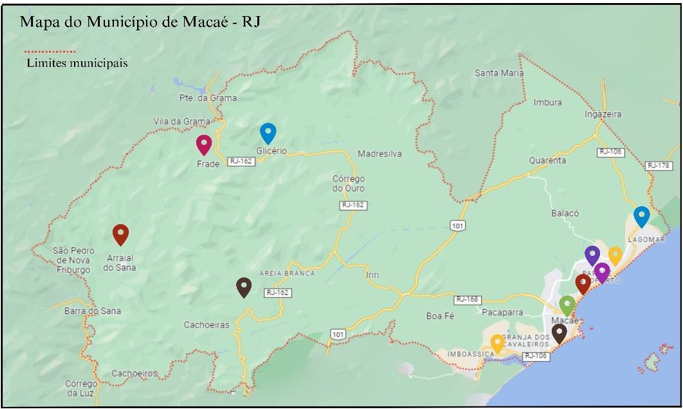
The study was developed in the municipality of Macaé, Rio de Janeiro by undergraduates from the Federal University of Rio de Janeiro, linked to the Iurukuá Project: Ocean Education and Conservation of Sea Turtles, from the Institute of Biodiversity and Sustainability (NUPEM). University students developed various teaching materials to increase the reach and interest of the target audience of the Iurukuá project, which involved elementary school students (5th to 9th grade) in 18 schools in the Municipal Public Network between August 2022 and March 2023 (Figure 1).
To facilitate understanding and better assimilation of the proposed ocean literacy actions, theoretical elements were included in all activities. This allows you to introduce concepts involving the biology and life cycle of sea turtles, their interaction with marine ecosystems and anthropogenic threats, using mainly illustrated banners.
During the thematic workshops in schools, interactive and playful activities were developed using a visually attractive themed tent, with simple communication to attract and raise awareness among the public. The materials used in environmental awareness included various models, such as banners with morphological characteristics, models and photos of the five species of sea turtles that occur in Brazil. In addition, fixed biological materials were also used, such as shells and skulls, eggs and hatchlings and, together, various solid waste removed from the intestinal tract of stranded turtles were presented, to demonstrate the impact and danger of this ingestion.
To work on the issue of solid waste and its correct disposal, the game “Rioàmar” (river to sea) was developed, which connects aquatic systems, rivers and the sea, integrating the various existing forms of life and their fundamental ecological services for maintaining life and the economy. human, as well as the threats promoted by human actions.
As a way of measuring the didactic pedagogical strategies that most aroused the public’s interest, the moment of greatest participation and interactivity of the participating students was observed and recorded in each of the actions in schools.
Results and Discussion
For the development of oceanic education in the long term and in an inclusive manner, different outreach strategies were developed, with the initial assumption being the use of a flag animal to awaken the public’s interest in themes related to marine ecosystems. The choice of sea turtles was based on the fact that they are animals with charisma in society and because they have a life cycle that includes life at sea and spawning and birth on beaches, which facilitates the demonstration and consequences of various anthropogenic threats. The morphological and behavioral differences of the five species of turtle that occur in Brazil - Chelonia mydas (Linnaeus, 1758), Caretta caretta (Linnaeus, 1758), Eretmochelys imbricata (Linnaeus, 1766), Lepidochelys olivacea (Eschscholtz, 1829) and Dermochelys coriacea (Vandelli, 1761) - were used to spark curiosity and encourage participation and interactivity in the workshops.
Themed Ocean Tent
The themed ocean tent was an initial tool built to house ocean education activities and visually attract the target audience. The 4x2m2 tent is personalized with the project logo, institutional coat of arms of UFRJ and the Rede Internacional Relato: Oceanic education network in Latin America and the Caribbean. In addition, it has a bottom closure with an illustrated diagram of the life cycle of sea turtles, including all development from birth to the reproductive phase at sea (Figure 2).
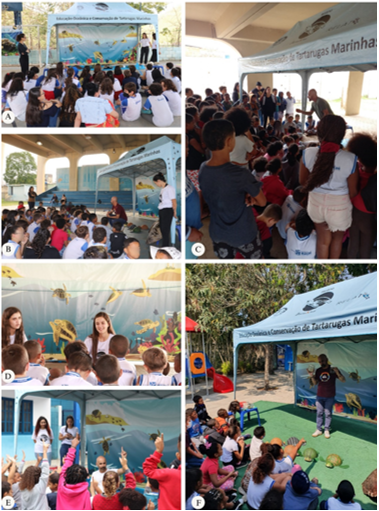
Figure 2: Iurukuá Project Themed Tent Used in Oceanic Education During Visits to Schools. A- Sana Municipal School (22°19′32″ S, 42°10′57″ W); B- CIEP 058 Oscar Cordeiro School (22°34′38″ S, 41°76′14″ W); C- CIEP Municipal Darcy Ribeiro (22°35′62″ S, 41°77′55″ W); D- Municipal School Tarcísio Paes (22°34′99″ S, 42°07′34″ W); E- Wolfgang Ferreira Municipal School (22°35′86″ S, 41°77′29″ W) And F- Municipal School Sonia Regina (22°32′54″ S, 41°75′26″ W). All Are Public Schools in The Municipality of Macaé-RJ Visited Between August 2022 And March 2023.
The Thematic Tent has a versatile, dynamic and, above all, inclusive format. The topics that were covered are interactive, these being:
Birth of Sea Turtles: Sea Turtles, In Addition to Being Flagship Animals, Connect the Terrestrial and Marine Environments, With Many Anthropogenic Obstacles. In This Phase Of The Workshop, The Path Taken By The Females To Build A Nest On A Beach, The Deposition Of Eggs In The Nest, The Morphology Of The Eggs, How The Sex Of The Chicks Is Defined, Hatching And Return To The Sea Were Discussed. Sea Turtle Diet: Hatchlings That Reach the Sea Have A Different Diet, Depending on The Species and Also the Stage of Development, As Some Hatchlings Have A Different Diet Than Adults. Reproduction: Regardless Of Age Group, Reproductive Issues Are Among Those That Most Arouse The Interest Of Those Interacting. At This Stage, Issues of Copulation In Water, Spawning Locations Along The Brazilian Coast, Number Of Eggs Per Clutch And Reproductive Season For Each Species Were Addressed. A Special Focus Was Given to The Loggerhead Turtle (Caretta Caretta), Due to The Fact That It Is the Species That Reproduces in Large Numbers Along the North Coast of Rio De Janeiro.
Educational Games
The game “Rioàmar” (river to sea) involves aquatic ecosystems and the dynamics and flow of water and inadequate disposal of solid waste. The objective was to stimulate a critical perception of the target audience by relating the three environments: river, beach and the seabed, in addition to increasing interactivity and the target audience’s protagonism in discussions during ocean education activities.
For the municipality of Macaé, this game can be of fundamental importance, as the municipality has coastal and mountainous regions, where it also has the springs of several important bodies of water for the region’s hydrographic basin. Children in the mountainous region felt interacted with oceanic education and were able to demonstrate their belonging to the local natural heritage, which involves waterfalls and bodies of water, which are greatly impacted by tourism and inappropriate use of resources.
The game has three canvases with three environments (river, beach and seabed), with fauna, flora and possible pollution from human activities related to each of them. Game participants were distributed laminated cards with animals and/or solid waste, so that they can identify the environments where these images are inserted. When the design on the card was identified with the design on the environment (canvas), the player placed the card on top of the image on the canvas. After identifying all the tokens in the environments, players were encouraged to discuss the interaction of garbage with the natural environment and how threatening inappropriate waste disposal is to different forms of life. Subsequently, all the tokens that indicated pollution, solid waste, were collected from the environments and the players separated this waste and discarded it in the respective selective bins, according to the standard colors designated in selective waste collection (blue, red, green, yellow, brown and gray, representing paper, plastic, glass, metal, organic and non-recyclable, respectively) (Figure 3).
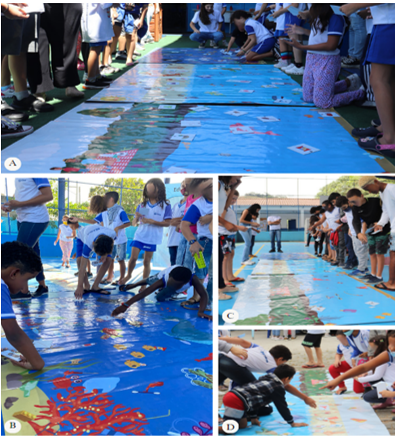
Figure 3: Ocean Education Game “Rioàmar” Applied by The Iurukuá Project During Visits to Schools. A- Dolores Garcia Rodriguez Municipal School (22°40′84″ S, 41°84′74″ W); B- Paulo Freire Municipal School (22°30′05″ S, 41°70′84″ W); C- Raul Veiga Municipal School (22°23′59″ S, 42°05′50″ W) And D- Fantina De Mello Municipal School (22°24′23″ S, 41°10′58″ W), Visited Between August 2022 And March 2023.
Flag Animal Model: Sea Turtles
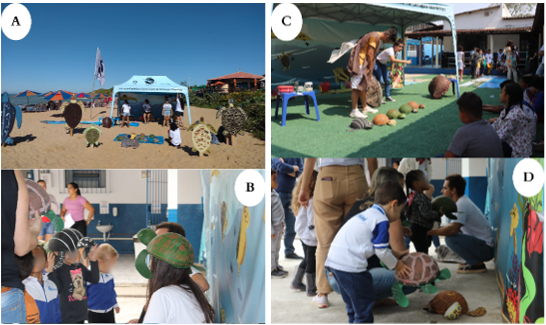
The development of sea turtle models had the purpose of working on the morphological differences between the species and encouraging the target audience to identify and recognize the species with a large occurrence on the north coast of Rio de Janeiro, the green turtle, Chelonia mydas.
Furthermore, the models enabled touch interaction, a very important resource for children up to 6 years old. The models also enabled public participation when comparative biology was discussed, for example, using the characteristics of the hooves and skull to differentiate species. The public participated and interacted in recognizing the species.
In addition to the models made with Styrofoam material, real-size wooden models of sea turtles for each species were produced, with the morphological characteristics of each of the five species that occur on the Brazilian coast being stickered on Figure 4.
Biological Material
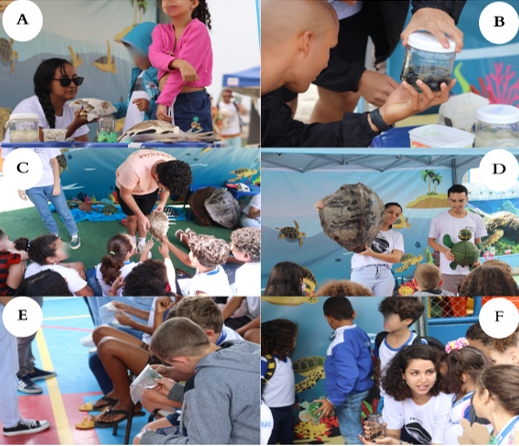
As a visual resource, one of the strategies included the use of fixed biological material. In general, the public showed a lot of interest in the attached hatchlings, eggs, eggshells, skull and real shells of some sea turtle species (Figure 5).
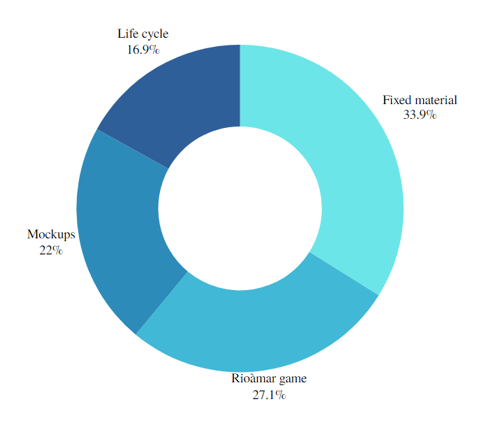
Considering the 18 schools where ocean education strategies were tested and used, it was observed that, on average, the fixed materials attracted the majority of interactants, followed by the Rioàmar game, models and life cycle. The measurement was made according to the preference indicated by the participants at the end of each of the presentations in the thematic tent (Figure 6).
According to Moita, et al. [20] pedagogical workshops are important pedagogical strategies that streamline the teaching and learning process, stimulating the participation and creativity of their participants. These workshops provide participants with a practical and interactive experience, different from what occurs in the traditional teaching method, making students actively participate in the teaching and learning process.
Afonso [21] guides the preparation of an educational workshop based on flexible planning, where the definition and organization of work takes place. This moment can be divided into three stages: contextualization, planning and reflection. In the contextualization stage, the participants’ prior knowledge on the topic is checked. The second stage is the time to plan actions to solve a common problem, always respecting the skills of the participants. And, the third and final stage is the reflection stage, where the activities carried out will be evaluated, allowing the analysis of what was obtained. For the strategies developed and described in this experience report, the strategic points that increased interest and allowed greater environmental awareness were diagnosed. Such a diagnosis seems to be fundamental for adapting and improving environmental educational actions.
Pedagogical workshops enable meaningful learning that can be defined as one in which symbolically expressed ideas interact in a substantive and non-arbitrary way with what the learner already knows. Noun means non-literal and non- arbitrary. In this way, it means that the interaction is not with any previous idea, but rather with some specifically relevant knowledge already existing in the cognitive structure of the learning subject [22]. Meaningful learning is an essential process in the individual’s development, allowing concepts to be assimilated and related in a relevant way to their prior knowledge. In this way, learning becomes more effective and lasting, working on affective, cognitive aspects and belonging to the natural heritage of the places where the interactants live.
The development of environmental education activities provides the training of multipliers, who represent hope for the future in the conservation of the country’s biodiversity. These agents represent significant potential in disseminating accurate and up-to-date information about the challenges facing ecosystems, as well as inspiring behavioral changes in their communities by becoming ambassadors for the environmental cause, able to unite people with similar goals and promote awareness at a national level. This collective approach has the potential to shape a sociopolitical panorama that is more conscious and committed to protecting the environment, highlighting the importance of environmental education and awareness as essential tools to combat the environmental threats that Brazil and the world face.
Conclusions
We consider that by expanding joint actions between society and public authorities, long-term strategies can be achieved, thus providing subsidies for the creation of public policies that are efficient and that allocate resources for the development of oceanic education and the consequent formation of citizens with environmental awareness and criticism.
Acknowledgment
The authors thank all the extension graduates linked to the Iurukuá project: oceanic education and sea turtle conservation of the Institute of Biodiversity and Sustainability NUPEM of the Federal University of Rio de Janeiro, who participated in the construction of materials and workshops applied in schools during the holding of the thematic workshops between 2022 and 2023. We also thank the hundreds of children and teenagers who participated in the environmental workshops. The authors would like to thank the municipal government of Macaé for subsidizing some of the school visits through the Conecta Macaé Project 2022/2023.
Authors’ Contributions
Nathália de Almeida Vinhas and Amanda Miranda Soares = data collection, analysis, and writing of the manuscript; Vinícius Albano Araújo = conception, design, data collection, analysis, and writing of the manuscript.
References
-
Cooley SR, Kite PHL, Doney SC (2015) Ocean Acidification’s Potential to Alter Global Marine Ecosystem Services. Oceanography 22(4): 172-181.
-
Fauville G, Strang C, Cannady MA, Chen Y (2019) Development of the International Ocean Literacy Survey: measuring knowledge across the world. Environmental Education Research 25(2): 238-263.
-
McCauley V, McHugh P, Davison K, Domegan C (2019) Collective intelligence for advancing ocean literacy. Environmental Education Research 25(2): 280-291.
-
Boyd CE, McNevin AA, Davis RP (2022) The contribution of fisheries and aquaculture to the global protein supply. Food Security 14: 805-827.
-
Devries T, Holzer M, Primeau F (2017) Recent increase in oceanic carbon uptake driven by weaker upper-ocean overturning. Nature 542: 215-218.
-
Sale PF, Agardy T, Ainsworth CH, Feist BE, Bell JD, et al. (2014) Transforming management of tropical coastal seas to cope with challenges of the 21st century. Marine Pollution Bulletin 5(1): 8-23.
-
Korpinen S, Andersen JH (2016) A Global Review of Cumulative Pressure and Impact Assessments in Marine Environments. Frontier Marine Science 3: 1-11.
-
Golden J, Virdin J, Nowacek D, Halpin P, Bennear L, et al. (2017) Making sure the blue economy is green. Nature Ecology and Evolution 1(2): 1-17.
-
Lotze HK, Guest H, O’Leary J, Tuda A, Wallace D (2018) Public perceptions of marine threats and protection from around the world. Ocean and Coastal Management 152(1): 14-22.
-
Fletcher S, Potts J (2007) Ocean Citizenship: An emergent geographical concept. Coastal Management 35(4): 511- 524.
-
Lucrezi S, Esfehani MH, Ferreti E, Cerrano C (2019) The effects of stakeholder education and capacity building in marine protected areas: A case study from southern Mozambique. Marine Policy 108.
-
Evans TL (2019) Competencies and Pedagogies for Sustainability Education: A Roadmap for Sustainability Studies Program Development in Colleges and Universities. Sustainability 11(19): 5526.
-
UNESCO (2023) Thematic indicators to monitor the Education 2030 Agenda: Technical Advisory Group proposal.
-
Wiek A, Withycombe L, Redman CL (2011) Key competencies in sustainability: a reference framework for academic program development. Sustainability Science 6: 203-218.
-
Rêgo RSC, Cutrim CHG, Miranda AS, Campos JLA, Araújo VA (2021) Ethnozoology Mediating Knowledge About Sea Turtles and Environmental Education Strategies in the North-Central Coast of Rio De Janeiro, Brazil. Tropical Conservation Science 14.
-
Saleme F, Braga MRA, Kurtz BC (2020) The qualification of educators on the sandbanks of the Lagos/RJ region: assessment and perspectives. Brazilian Biodiversity 10(2): 121-132.
-
Aguayo C, Eame C (2017) Using mobile learning in free-choice educational settings to enhance ecological literacy. Teachers and Curriculum 17(2): 7-14.
-
Zinkunegi GO, Rodríguez RI (2022) Employability within an Education for Sustainability Framework: The Ocean i3 Case Study. Education Sciences 12(4): 277.
-
Brennan C, Ashley M, Molloy O (2019) A System Dynamics Approach to Increasing Ocean Literacy. Frontiers in Marine Science 6: 360.
-
Moita FMGSC, Andrade FCB (2006) Knowledge from hand to hand: the pedagogical workshop as a device for teacher training and the construction of knowledge in public schools. Anped Annual Meeting 29: 1-16.
-
Afonso MLM (2010) How to build a workshop proposal. In: Afonso MLM (Ed.), Workshops on group dynamics in the health area. 2nd (Edn,). São Paulo: Casa do Psicólogo, Brazil, pp: 133-230.
-
Moreira MA (2011) Meaningful Learning: The Theory and Complementary Texts. São Paulo: Lf Editorial.
- Mitochondrial Bio-Logistics: Steering Co-Enzyme Q10 and Lycopene Synergies within the Science 4.0 Bio-OS Framework
- Hymenoptera Specimens from the Caño Negro Wetland, of the National Museum Collection, Costa Rica
- Science 4.0: Comprehensive Architecture of the Biological Operating System (Bio-OS) A Framework for Systemic Resilience and Industrialized Bio-Governance
- Rabbit on, or Hare Back? Understanding Climate Change
- Clinical Validation of Science 4.0: Flow Steering and Epigenetic Drift Inversion on a 76-Year-Old Hybrid System
- Seeds Planted by another Mind