
Malaria's Hidden Weapon: How Plasmodium Transforms Red Blood Cells to Evade and Invade
Plasmodium, the malaria-causing parasite, alters host red blood cell (RBC) membranes for survival.
Abbreviations
PC: Phosphatidylcholine; PE: Phosphatidylethanolamine; PS: Phsphatidylserine; PfEMP1: Plasmodium falciparum Erythrocyte Membrane Protein 1; RBC: Red Blood Cell.
Editorial
Plasmodium, the malaria-causing parasite, alters host red blood cell (RBC) membranes for survival. After entering the RBC, it forms a parasitophorous vacuole and secretes proteins that help transport nutrients and evade immune detection. The parasite also changes the RBC membrane’s lipid composition, making it more rigid and prone to vascular blockages, leading to symptoms like anemia. It exports proteins that cause infected RBCs to stick to blood vessel walls, helping them evade spleen clearance and contributing to severe complications like cerebral malaria. These membrane changes allow the parasite to avoid immune detection. Targeting these alterations, such as blocking RBC adhesions or restoring membrane flexibility, could improve malaria treatment. Understanding these processes helps to develop better therapies (Figure 1).
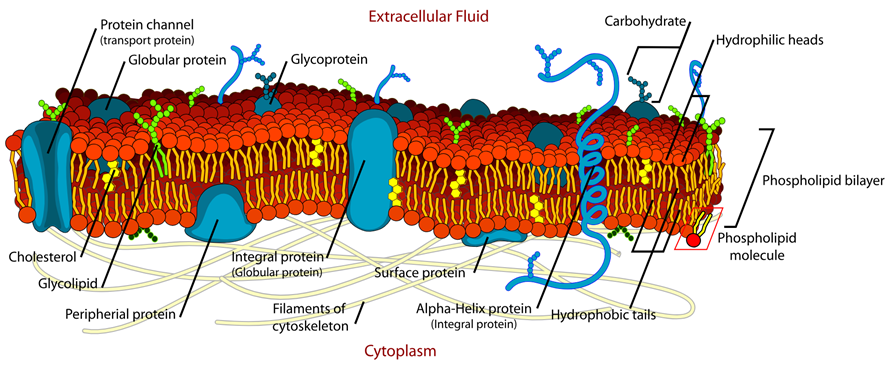
cholesterol affect membrane fluidity, stability, and flexibility, helping the parasite evade the immune system and enhance its survival. The infection also produces lipid metabolites that trigger inflammatory and immune evasion pathways. These lipid changes disrupt normal cellular functions and facilitate parasite replication, making them potential targets for developing new malaria treatments [1, 2].
In Plasmodium-infected erythrocytes, lipid composition changes, increasing phosphatidylcholine (PC) and phosphatidylethanolamine (PE), are essential for membrane integrity and parasite growth. They are reducing Phosphatidylserine (PS). The parasite acquires lipids through scavenging from the host and synthesizing them internally, ensuring it meets its metabolic needs. The parasite’s membrane, composed of lipids and proteins, supports nutrient exchange, signal transduction, and immune evasion. Lipids also serve as energy sources and signaling molecules, with the parasite manipulating these processes to survive. Disrupting these lipid pathways offers potential for antimalarial therapies [3, 4, 5, 6, 7].
Plasmodium, the parasite responsible for malaria, disrupts key processes in red blood cells by altering membrane proteins and transporters. These changes lead to ion imbalances, nutrient deprivation, and weakened immune responses, damaging the host cells. Early infection in liver cells also contributes to symptoms like fever, anemia, and organ dysfunction. Plasmodium’s manipulation of membrane proteins can lead to drug resistance by affecting how antimalarial drugs are processed. Understanding these disruptions helps to develop treatments that restore cellular balance, block nutrient access, and combat drug resistance, especially in resistant strains [8, 9, 10, 11].
Plasmodium parasites, responsible for malaria, modify red blood cell (RBC) membranes to promote their survival and growth. They change the membrane’s lipid composition, increasing its rigidity and permeability, leading to RBC fragility and anemia. The altered permeability aids nutrient absorption and waste removal by the parasite. Plasmodium also disrupts membrane proteins, affecting ion exchange, cell signaling, and vesicular trafficking, further weakening the RBC. Insights into these manipulations could help develop treatments targeting these disruptions to fight malaria [12, 13].
During Plasmodium infection, red blood cell (RBC) membranes undergo several critical changes contributing to malaria pathogenesis. The parasite alters RBC lipid composition, making the membrane more rigid and unstable, leading to the sequestration of infected cells in blood vessels, which worsens the disease. Plasmodium modifies host membrane proteins, such as PfEMP1, to avoid immune detection and disrupt nutrient transport, affecting cellular functions. Changing membrane fluidity and permeability help the parasite survive, evade the immune system, and contribute to inflammation. Modified membranes make infected cells adhere to tissues, blocking blood flow and causing severe symptoms like cerebral malaria. Targeting these membrane alterations could help restore normal cell function, disrupt parasite-host interactions, and lead to better treatments for malaria [14, 15, 16, 17].
Plasmodium extensively modifies host red blood cell (RBC) membranes to ensure its survival and replication, causing significant alterations in lipid composition, membrane rigidity, and protein function. These modifications enhance nutrient uptake and immune evasion while also driving the development of severe malaria symptoms, including anemia and vascular blockages. Understanding how Plasmodium manipulates host cell membranes and disrupts cellular functions helps identify new therapeutic targets. Potential treatments could focus on reversing these membrane alterations, blocking cell adhesions, or inhibiting lipid pathways critical for the parasite’s survival. This approach holds promise for enhancing malaria treatment and managing drug-resistant strains, paving the way for more effective interventions against this life-threatening disease [18, 19, 20, 21, 22, 23, 24, 25, 26, 27, 28, 29, 30, 31, 32, 33, 34, 35, 36, 37, 38, 39, 40, 41, 42, 43].
Acknowledgments
The author acknowledges Mrs. Norri Zahra and Mr. Regragui Moumaris. The author thinks Nisen Abuaf (Sorbonne University and AP-HP) and Said Youssouf Chanfi (Sorbonne University). The author thinks Jean-Michel Bretagne (AP-HP). The author thinks Marie-Hélène Maës and Monique Abuaf (16th arrondissement of Paris).
References
-
Hsiao LL, Howard RJ, Aikawa M, Taraschi TF (1991) Modification of host cell membrane lipid composition by the intra-erythrocytic human malaria parasite Plasmodium falciparum. Biochem J 274 (Pt1): 121-32.
-
Beck JR, Ho CM (2021) Transport mechanisms at the malaria parasite-host cell interface. PLoS Pathog 17(4): e1009394.
-
Haldar K, Mohandas N (2007) Erythrocyte remodeling by malaria parasites. Curr Opin Hematol 14(3): 203-209.
-
Beaumelle BD, Vial HJ, Bienvenüe A (1988) Enhanced transbilayer mobility of phospholipids in malaria- infected monkey erythrocytes: a spin-label study. J Cell Physiol 135(1): 94-100.
-
Vial HJ, Eldin P, Tielens AG, van Hellemond JJ (2003) Phospholipids in parasitic protozoa. Mol Biochem Parasitol 126(2): 143-154.
-
Gross W (1971) Biological membranes. Angew Chem Int Ed Engl 10(6): 388-395.
-
Eyster KM (2007) New paradigms in signal transduction. Biochem Pharmacol 73(10): 1511-1519.
-
Counihan NA, Modak JK, de Koning-Ward TF (2021) How Malaria Parasites Acquire Nutrients From Their Host. Front Cell Dev Biol 9: 649184.
-
Gabriela M, Matthews KM, Boshoven C, Kouskousis B, Jonsdottir TK, et al. (2022) A revised mechanism for how Plasmodium falciparum recruits and exports proteins into its erythrocytic host cell. PLoS Pathog 18(2): e1009977.
-
Wunderlich J (2022) Updated List of Transport Proteins in Plasmodium falciparum. Front Cell Infect Microbiol 12: 926541.
-
Raj DK, Mu J, Jiang H, Kabat J, Singh S, et al. (2009) Disruption of a Plasmodium falciparum multidrug resistance-associated protein (PfMRP) alters its fitness and transport of antimalarial drugs and glutathione. J Biol Chem 284(12): 7687-7696.
-
Mauritz JM, Esposito A, Ginsburg H, Kaminski CF, Tiffert T, et al. (2009) The homeostasis of Plasmodium falciparum-infected red blood cells. PLoS Comput Biol 5(4): e1000339.
-
Ahiya AI, Bhatnagar S, Morrisey JM, Beck JR, Vaidya AB (2022) Dramatic Consequences of Reducing Erythrocyte Membrane Cholesterol on Plasmodium falciparum. Microbiol Spectr 10(1): e0015822.
-
Fraser M, Matuschewski K, Maier AG (2021) Of membranes and malaria: phospholipid asymmetry in Plasmodium falciparum-infected red blood cells. Cell Mol Life Sci 78(10): 4545-4561.
-
Fraser M, Jing W, Bröer S, Kurth F, Sander LE, et al. (2021) Breakdown in membrane asymmetry regulation leads to monocyte recognition of P. falciparum-infected red blood cells. PLoS Pathog 17(2): e1009259.
-
Hernández-Castañeda MA, Lavergne M, Casanova P, Nydegger B, Merten C, et al. (2021) A Profound Membrane Reorganization Defines Susceptibility of Plasmodium falciparum Infected Red Blood Cells to Lysis by Granulysin and Perforin. Front Immunol 12: 643746.
-
Tran PN, Brown SH, Rug M, Ridgway MC, Mitchell TW, et al. (2016) Changes in lipid composition during sexual development of the malaria parasite Plasmodium falciparum. Malar J 15: 73.
-
Moumaris M (2024) Advancements in Diagnosing and Treatments Plasmodium knowlesi: Challenges and Innovations. Int J Zoo Animal Biol 7(5): 000622.
-
Moumaris M (2024) Confronting Plasmodium knowlesi: Challenges and Strategies in Malaria Healthcare. Int J Zoo Animal Biol 7(4): 000607.
-
Moumaris M (2024) Unraveling the Enigma: Tackling Knowlesi Malaria in Southeast Asia. Int J Zoo Animal Biol 7(2): 000585.
-
Moumaris M (2024) Unveiling the Enigmatic Plasmodium knowlesi: Insights, Challenges, and Promises in Malaria Research. Int J Zoo Animal Biol 7(1): 000566.
-
Moumaris M (2024) Unlocking the Potential: Overcoming Challenges in CAR-T Cell Therapy for Cancer Treatment. J Biotechnology and Bioprocessing 5(2): 2766-2314.
-
Moumaris M (2023) Revolutionizing Malaria Research: CRISPR unveils New Frontiers. J Biotechnology and Bioprocessing 4(5): 2766-2314.
-
Moumaris M (2024) Lyme Disease: A Zoonosis Tick- Borne Borrelia Bacterium [4/4]. Int J Zoo Animal Biol 7(1): 000549.
-
Moumaris M (2023) Lyme Disease: A Zoonosis Tick- Borne Borrelia Bacterium [3/4]. Int J Zoo Animal Biol 6(4): 000500.
-
Moumaris M (2023) Lyme Disease: A Zoonosis Tick- Borne Borrelia Bacterium [2/4]. Int J Zoo Animal Biol 6(2): 000465.
-
Moumaris M (2022) Lyme Disease: A Zoonosis Tick- Borne Borrelia Bacterium [1/4]. Int J Zoo Animal Biol 5(6): 000425.
-
Moumaris M, Bretagne JM, Abuaf N (2020) Nanomedical Devices and Cancer Theranostics. The Open Nanomedicine and Nanotechnology Journal 6: 1-11.
-
Moumaris M, Bretagne JM, Abuaf N (2019) Biological Membranes and Malaria-Parasites. The Open Parasitology Journal 7: 1-18.
-
Moumaris M, Bretagne JM, Abuaf N (2018) Hospital Engineering of Medical Devices in France. The Open Medical Devices Journal 6: 10-20.
-
Moumaris M, Rajoely B, Abuaf N (2015) Fluorescein Isothiocyanate-Dextran can track Apoptosis and Necrosis induced by heat shock of Peripheral Blood Mononuclear Cells and HeLa Cells. Open Biological Sciences Journal 1: 7-15.
-
Moumaris M, Rajoely B, Abuaf N (2012) The Naïve B Cells are the Lymphocytes with the Highest Anionic Phospholipid Binding Ratios. The Open Immunology Journal 5: 27-35.
-
Moumaris M (2007) Magnetic resonance imaging at the Hôtel-Dieu of Paris. Paris-Descartes University, France.
-
Moumaris M (2005) Identification of a new molecule to monitor apoptosis. Sorbonne-Paris-Nord University, France.
-
Moumaris M (2003) Biomedical research, the law of bioethics relating to the donation and use of elements and products of the human body. Paris-Descartes University, France.
-
Moumaris M, Abuaf N (2002) Use of labeled dextran for in-vitro assessment of increased cell permeability, cell death and apoptosis. Bulletin officiel de la propriété industrielle (Brevet n°00/09235) 2811682: A3.
-
Moumaris M, Benoliel S, Rouquette AM, Rajoely B, Abuaf N (2000) Phospholipid binding proteins on the plasma membrane of lymphocytes. J Autoimmun 15(2): 81-271.
-
Moumaris M, Ignoti S, Benoliel S, Oghina G, Rajoely B, et al. (1999) Characterization of B-cell adhering to the lamellar phospholipids. French Congress of Antiphospholipid Antibody, Paris, France.
-
Moumaris M (1996) Membranes érythrocytaires dans le paludisme: modèle d’étude: Souris- Plasmodium berghei anka. Université Pierre et Marie Curie, Paris, France.
-
Moumaris M, Sestier C, Miltgen F, Halbreitch A, Gentilini M, et al. (1995) Effect of Fatty Acid Treatment in Cerebral Malaria-Susceptible and Nonsusceptible Strains of Mice. The Journal of Parasitology 81(6): 997-999.
-
Sabolovic D, Moumaris M, Miltgen F, Sestier C, Halbreich A (1995) A subpopulation of red blood cells induced by bleeding or mosquito sucking. Chinese National Congress of Medical Biophysics, Shanghai, China.
-
Sabolovic D, Moumaris M, Miltgen F, Sestier C, Halbreich A (1995) Characterisation of subpopulation of red blood cells as a preferential target for malaria invasion. French Congress of Electrophoresis, Cell Electrophoresis, Pastor Institute, Paris, USA 19(7): 1215-1219.
-
Moumaris M (1994) Effet des acides gras sur la malaria cérébrale chez des souris susceptible et non susceptible. Université Paris XII, Faculté de Médecine, Créteil, France.
-
Moumaris M (1992) Lyme disease: Serological study. University of Orleans, France.
- Mitochondrial Bio-Logistics: Steering Co-Enzyme Q10 and Lycopene Synergies within the Science 4.0 Bio-OS Framework
- Hymenoptera Specimens from the Caño Negro Wetland, of the National Museum Collection, Costa Rica
- Science 4.0: Comprehensive Architecture of the Biological Operating System (Bio-OS) A Framework for Systemic Resilience and Industrialized Bio-Governance
- Rabbit on, or Hare Back? Understanding Climate Change
- Clinical Validation of Science 4.0: Flow Steering and Epigenetic Drift Inversion on a 76-Year-Old Hybrid System
- Seeds Planted by another Mind