
Return to Work Among Manual Workers After the Latarjet Procedure: A Cohort Study of 43 Patients
Introduction: Anterior shoulder instability with significant glenoid bone loss is a debilitating condition for heavy manual workers. While the Latarjet procedure is recognized for its mechanical robustness, data regarding the specific Return to Work (RTW) for this high-demand population remain limited. Hypothesis: The Latarjet procedure allows for a reliable return to heavy manual activity despite extreme physical constraints. Materials and Methods: We retrospectively reviewed 43 consecutive active manual workers (mean age 32.5 years; range 25–45) treated with open Latarjet for recurrent anterior instability and >20% glenoid bone defect. The cohort included masons, plumbers, electricians, plasterers, and facade workers. Evaluation at a mean follow-up of 3.7 years included range of motion and four scores: Constant-Murley (CMS), QuickDASH, WOSI, and SIRSI. Results: The procedure achieved a 93% stability rate, with 3 cases of recurrence (7%). While the majority of patients resumed work between the 3rd and 6th postoperative months, 19 patients (44.2%) required professional retraining. We noticed the primary causes for professional failure were persistent apprehension associated with external rotation limitation (n=8), residual pain (n=6), recurrence (n=3), and coracoid graft resorption (n=2). Statistical analysis indicated that these professional failures were associated with a SIRSI score < 56 (p<0.0001) and an external rotation (ER1) loss ≥15∘ (p=0.04). Discussion: This rate of professional retraining (44.2%) highlights that occupational success is not solely dependent on mechanical stability. The association between SIRSI scores below 56 and failure implies that psychological readiness may act as a factor for returning to high-intensity labor environments. Furthermore, the correlation between a moderate external rotation deficit (≥15∘) and professional failure suggests that for manual trades involving overhead lifting or heavy pivot gestures, preserving functional mobility is as critical as anatomical reconstruction. Conclusion: The Latarjet procedure provides a stable shoulder for manual workers. However, surgical success does not guarantee a full professional return; psychological readiness and the restoration of functional rotation appear to be predictors of a successful professional outcome. Level of Evidence: IV (Retrospective Cohort Study)
Ilhame Khmilech1,2*, Mohamed Hammouti1,2, Walid Bouziane1,2, Mohammed Sadougui1,2 and Abdelkrim Daoudi1,2
(RTW) for this high-demand population remain limited.
and four scores: Constant-Murley (CMS), QuickDASH, WOSI, and SIRSI.
gestures, preserving functional mobility is as critical as anatomical reconstruction.
of a successful professional outcome.
Level of Evidence: IV (Retrospective Cohort Study)
Keywords: Latarjet; Shoulder; Instability; Manual Worker; Return to Work; SIRSI
Highlights
- The Latarjet procedure provides reliable outcomes for heavy manual workers, with a 93% stability rate and a 55.8% return-to-work rate at pre-injury capacity.
- Small deficits in external rotation may have an occupational impact: a loss of 15° (ER1) was a statistical marker for failure to resume heavy lifting compared to a 10° loss in the success group (p=0.04).
- Psychological readiness appears to be a determinant of clinical success: All patients who failed to return to their initial trade scored systematically below the SIRSI benchmark of 56 (p<0.0001).
- Optimizing outcomes for manual trades requires a multifactorial strategy that addresses not only structural repair but also the preservation of functional mobility and the management of kinesiophobia.
Introduction
Traumatic anterior shoulder instability is a common pathology in young and active subjects, with an estimated incidence of 42 per 100,000 [1, 2, 3]with 90% of surgeons internationally choosing the Bankart repair as the initial treatment. There has been no previous review directly comparing the 2 techniques. Hence, we aimed to systematically review studies to compare the outcomes of Bankart repairs vs. the Latarjet procedure for recurrent instability of the shoulder.\nMethods: Six electronic databases were searched for original, English-language studies comparing the Bankart and Latarjet procedures. Studies were critically appraised using the Strengthening the Reporting of Observational Studies in Epidemiology (STROBE. For the manual worker, the shoulder is the essential pivot for carrying heavy loads, overhead work, and repetitive gestures [4, 5, 6]including collision and competitive athletes. However, the factors that prevent athletes from being able return to play (RTP. Each episode of dislocation generates not only immediate physical disability but also a devastating social and economic cost related to career interruption [7]. Indeed, the risk of recurrence and the need for revision surgery are multiplied by three when stabilization is performed with soft-tissue techniques (Bankart) rather than a Latarjet in the presence of bone lesions [3, 8].
The Latarjet procedure, described in 1954, has established itself as the reference treatment thanks to its triple effect: The bone-block effect increasing the glenoid surface [1, 5]with 90% of surgeons internationally choosing the Bankart repair as the initial treatment. There has been no previous review directly comparing the 2 techniques. Hence, we aimed to systematically review studies to compare the outcomes of Bankart repairs vs. the Latarjet procedure for recurrent instability of the shoulder.\nMethods: Six electronic databases were searched for original, English-language studies comparing the Bankart and Latarjet procedures. Studies were critically appraised using the Strengthening the Reporting of Observational Studies in Epidemiology (STROBE, the sling effect of the conjoint tendon stabilizing the humeral head during abduction and external rotation [1, 9, 10]with 90% of surgeons internationally choosing the Bankart repair as the initial treatment. There has been no previous review directly comparing the 2 techniques. Hence, we aimed to systematically review studies to compare the outcomes of Bankart repairs vs. the Latarjet procedure for recurrent instability of the shoulder.\nMethods: Six electronic databases were searched for original, English- language studies comparing the Bankart and Latarjet procedures. Studies were critically appraised using the Strengthening the Reporting of Observational Studies in Epidemiology (STROBE and the systematic capsular repair [1, 11, 12]with 90% of surgeons internationally choosing the Bankart repair as the initial treatment. There has been no previous review directly comparing the 2 techniques. Hence, we aimed to systematically review studies to compare the outcomes of Bankart repairs vs. the Latarjet procedure for recurrent instability of the shoulder.\nMethods: Six electronic databases were searched for original, English- language studies comparing the Bankart and Latarjet procedures. Studies were critically appraised using the Strengthening the Reporting of Observational Studies in Epidemiology (STROBE.
The surgical indication is dictated by bone loss [10, 13, 14]. While the classic glenoid threshold of 20% is widely accepted, major works by Shaha et al. highlight that subcritical losses as low as 13.5% already significantly alter functional scores, such as the WOSI, after a Bankart repair [7].
While Return to Sport is extensively documented with success rates ranging from 73% to 97% [4, 15, 16]including collision and competitive athletes. However, the factors that prevent athletes from being able return to play (RTP, Return to Work for heavy manual workers remains a clinical challenge, with rates of only 66.7% reported for heavy labor in the literature[4, 6]including collision and competitive athletes. However, the factors that prevent athletes from being able return to play (RTP. The objective of this study was to analyze the clinical and professional results of a cohort of 43 manual workers and identify the factors influencing the resumption of their initial profession.
Materials and Methods
Study Population
- We conducted a retrospective study including 43 male patients.
- Mean age 32.5 years; range 25–45
- Professional Profiles: masons, facade workers, plasterers, plumbers, and electricians.
- Inclusion Criteria: Active manual workers, dominant side affected, recurrent anterior instability (≥ 2 episodes), and glenoid bone defect > 20%.
- Exclusion Criteria: Associated complex fractures, hyperlaxity, or follow-up < 2 years.
Bone Loss Assessment: “Best-Fit Circle” Method
Following the methodology validated by Shaha et al. [7], bone loss was quantified on 3D sagittal CT slices. This “perfect circle” technique involves drawing a circle on the intact posteroinferior portion of the glenoid to extrapolate its original surface. The deficit is expressed as the ratio between the width of the missing segment and the circle’s diameter.
Surgical Technique and Rehabilitation
All patients underwent open Latarjet via a classic deltopectoral approach. The graft was fixed with one or two cortical screws. The subscapularis was managed via a horizontal split, a technique shown to offer better recovery of rotational endurance than tenotomy [17].
Postoperatively, patients followed a protocol emphasizing immediate self-rehabilitation to prevent stiffness. A sling was used for the first 3 weeks, with pendulum exercises and distal joint mobilization (elbow, wrist, hand) initiated on Day 1. Passive and active-assisted range of motion (ROM) exercises began at Week 4, with external rotation strictly limited to 30° during the first month to protect the subscapularis and graft. Progressive strengthening was introduced at Week 8, and resumption of heavy manual labor was authorized after Week 16 (mean: 4.5 months) upon radiographic confirmation of coracoid graft union and a negative clinical apprehension test.
Evaluation Tools
- Patients were evaluated at a mean follow-up of 3.7 years using four validated scores:
- Constant-Murley (CMS): Objective function [18, 19].
- QuickDASH: Professional functional disability [12, 20].
- WOSI: Quality of life related to instability [18].
- SIRSI: Psychological readiness and fear of reinjury [4, 21] including collision and competitive athletes. However, the factors that prevent athletes from being able return to play (RTP.
Results
Clinical Stability and Complications
Overall stability was 93%. Three cases of traumatic recurrence (7%) occurred following an accident on site.
Regarding complications, two cases (4.7) of coracoid graft resorption were identified, where subjective weakness and instability were reported, preventing a return to heavy lifting.
Mobility and Strength
A mean loss of external rotation (ER1) of 11° was observed in the entire cohort. However, subgroup analysis revealed a difference between groups (p = 0.04): patients who successfully returned to work (n=24) (Figure 1) had a mean loss of 10°, whereas those who failed to return to their previous occupation (n=19) (Figure 2) and required a career change demonstrated a mean loss of 15°.
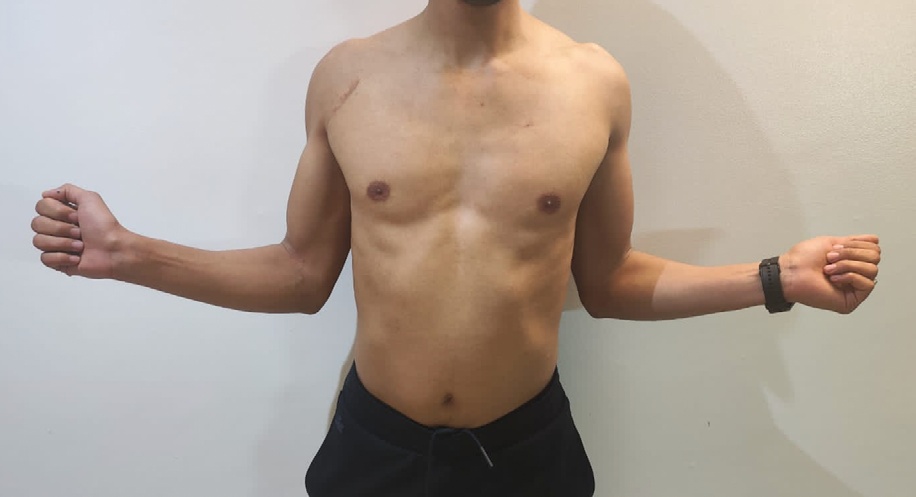
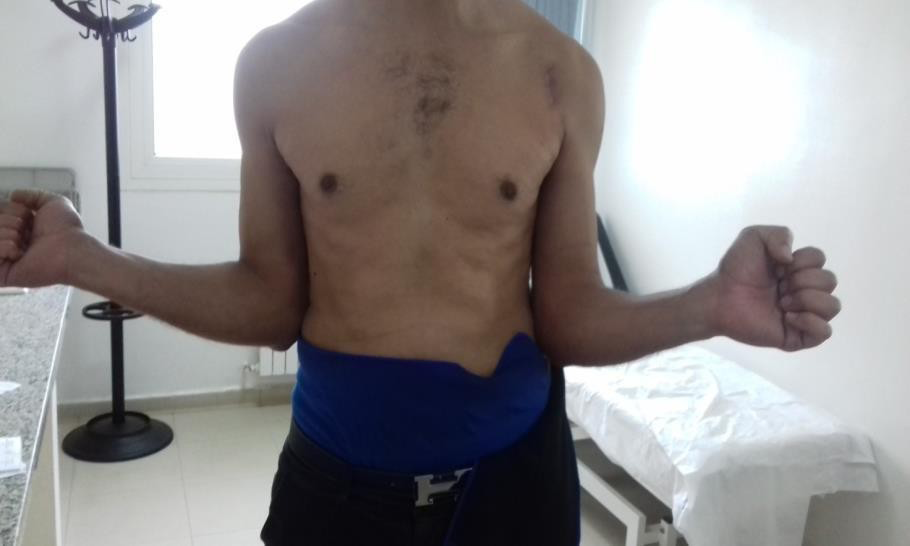
Notably, 8 of these professional failures were specifically associated with this discrete limitation in external rotation coupled with persistent apprehension during overhead or loading efforts on the worksite.
Analysis of time to Return to Work (RTW)
Twenty-four patients (55.8) returned to their original positions at full capacity between 3 and 6 postoperative months. The mean time to return to work was 4.5 months. The 19 patients (44.2%) who were unable to resume their initial occupations were declared unfit for heavy manual labor at the 6-month evaluation and subsequently required a career change.
Causes of failure to return to work
- The 19 cases (44.2%) of failure to return to the original trade were due to the following:
- Traumatic recurrence (n=3): Patients deemed unfit after a new dislocation episode.
- Graft resorption (n=2): Subjective weakness and instability were reported.
- Residual pain (n=6): limiting prolonged load-bearing.
- Stiffness and apprehension (n=8): Limitation of ER preventing technical pivot gestures.
Functional and Psychological Scores
In the total cohort of 43 manual workers, the mean Constant-Murley score was 90.2 and the mean QuickDASH was 10.5.
The cohort’s overall mean SIRSI score was 68. However, among the 19 patients who failed to return to their original trade, the SIRSI score was systematically below the benchmark of 56 (Mean: 41.5 in the failure group vs. 74.5 in the success group; p<0.0001).
Discussion
Mechanical Reliability and Stability in High- Demand Workers
The Latarjet procedure is recognized as the reference treatment for recurrent anterior shoulder instability associated with significant glenoid bone loss [1, 22, 23]with 90% of surgeons internationally choosing the Bankart repair as the initial treatment. There has been no previous review directly comparing the 2 techniques. Hence, we aimed to systematically review studies to compare the outcomes of Bankart repairs vs. the Latarjet procedure for recurrent instability of the shoulder.\nMethods: Six electronic databases were searched for original, English-language studies comparing the Bankart and Latarjet procedures. Studies were critically appraised using the Strengthening the Reporting of Observational Studies in Epidemiology (STROBE. In our series of 43 heavy manual workers, the overall stability rate reached 93%, which is consistent with the 0% to 15% recurrence range reported in major systematic reviews [13, 14, 24]. The triple effect allows manual workers to withstand extreme physical constraints [1, 23, 25]with 90% of surgeons internationally choosing the Bankart repair as the initial treatment. There has been no previous review directly comparing the 2 techniques. Hence, we aimed to systematically review studies to compare the outcomes of Bankart repairs vs. the Latarjet procedure for recurrent instability of the shoulder.\nMethods: Six electronic databases were searched for original, English-language studies comparing the Bankart and Latarjet procedures. Studies were critically appraised using the Strengthening the Reporting of Observational Studies in Epidemiology (STROBE. Our three reported recurrence were traumatic in nature, occurring during a high-energy site accident, which reinforces the procedure’s mechanical superiority over soft-tissue repairs in this specific population [26]patients had to have undergone surgery by one of the 2 techniques: Latarjet or arthroscopic Bankart between 2005 and 2011, and aged from 18 to 35 years. We excluded acromioclavicular dislocation, tendinous lesion, global or posterior instability, bone fracture or severe glenoid bone loss, neurological lesion, other surgical technique, and orthopedic treatment. Patients were contacted by telephone between 2009 and 2012 and asked to participate in follow-up after surgery. The primary endpoint was recurrence, evaluated by determining frequency and time to recurrence (or censoring.
Return to Work (RTW): Performance and Timing
Returning to high-intensity trades remains a significant clinical challenge. Our study demonstrated an RTW rate of 55.8% at full capacity. This outcome is lower than the 66.7% return rate for heavy manual labor reported by Agarwalla et al. [6] which underscores the extreme physical demands and risks inherent in the trades represented in our cohort. Interestingly, our mean time to resumption of 4.5 months was significantly faster than the 6.5 months often reported for high-intensity occupations in the literature [3, 6]previous systematic reviews have exclusively focused on the open Latarjet (OL. This finding may reflect the socioeconomic constraints faced by manual workers, who are required to return to their occupational activities as early as possible.
The External Rotation Loss
An interesting finding of our analysis was the significant difference in external rotation (ER1) loss between success and failure groups (10° vs. 15°, p=0.04). While a mean loss of 11° is considered standard and well-tolerated in sedentary patients [9]which determine the time to return to the preinjury level of activity. This study prospectively assessed whether the Latarjet procedure leads to a decrease in range of motion and muscle strength, affecting the time to return to the previous level of activity.\nMethods Fifty-one consecutive patients who underwent the Latarjet procedure for recurrent dislocation of the shoulder were included prospectively. The ROM, strength, Walch-Duplay score, and Rowe score were measured every 3 months for 1 year and then every 6 months for 2 years. Radiological assessments were performed to confirm the graft location, union, and the humeral head position in abduction and external rotation (ER, our data suggest that for workers performing overhead lifting or technical pivot gestures, every degree of mobility counts. Literature identifies 59° of ER as the functional threshold required for the activities of daily living [4, 15, 27] including collision and competitive athletes. However, the factors that prevent athletes from being able return to play (RTP. A 15° loss, combined with the extreme constraints of a heavy load, may push the shoulder below this functional range, leading to professional withdrawal.
Psychological Readiness
An important predictor of professional success in our cohort was the SIRSI score, showing a highly significant difference between groups (p<0.0001). All 19 patients who failed to return to their initial trade were systematically below the benchmark of 56 [4, 28, 29]including collision and competitive athletes. However, the factors that prevent athletes from being able return to play (RTP (mean: 41.5 in the failure group vs. 74.5 in the success group) (Table 1).
| Total Cohort (N=43) | Successful RTW (n=24) | Failed RTW (n=19) | p-value | |
|---|---|---|---|---|
| External Rotation Loss (ER1) | 11° (±3°) | 10° | 15° | 0.04* |
| Constant-Murley Score | 90.2 (±5.1) | 92.1 | 84.8 | 0.08 |
| QuickDASH | 10.5 (±4.2) | 8.4 | 16.4 | 0.06 (NS) |
| SIRSI Score | 68 (±12) | 74.5 | 41.5 | < 0.0001* |
Table 1: Comparative Analysis of Postoperative Clinical and Psychological Scores These findings align with the observations of Bo
NS: Non-Significant. *: Statistically significant (p<0.05). Table 1: Comparative Analysis of Postoperative Clinical and Psychological Scores These findings align with the observations of Bohu et al. and Gerometta et al., suggesting that psychological readiness is its own aspect of outcome and is not only determined by mechanical stability [4, 12, 28]including collision and competitive athletes. However, the factors that prevent athletes from being able return to play (RTP. For the manual worker, kinesiophobia (fear of movement) and fear of reinjury are often more limiting than raw muscle strength when returning to a high-risk environment like a construction site [4]including collision and competitive athletes. However, the factors that prevent athletes from being able return to play (RTP.
Limitations
The primary limitations of this study are its retrospective design and small sample size (n=43). However, this series remains unique in its focus on an exclusively manual worker population. The 3.7-year mean follow-up is sufficient to assess both surgical stability and definitive professional outcomes.
Conclusion
The Latarjet procedure provides high stability for the heavy manual worker with significant bone loss. Our findings demonstrate that surgical success must be evaluated beyond mechanical stability. Psychological readiness (SIRSI > 56) and the restoration of functional rotation (limiting ER1 loss to <15°) may be predictors of a successful professional outcome.
These results should be interpreted in light of the study’s limitations.
Consent
Consent was taken from the patients included in the study.
Funding
This research did not receive any specific grant from funding agencies in the public, commercial or not-for-profit sectors.
Declaration of Competing Interest
The authors declare that they have no conflict of interest.
References
-
An VVG, Sivakumar BS, Phan K, Trantalis J (2016). A systematic review and meta-analysis of clinical and patient-reported outcomes following two procedures for recurrent traumatic anterior instability of the shoulder: Latarjet procedure vs. Bankart repair. Journal of Shoulder and Elbow Surgery. 25(5): 853–863.
-
Hurley ET, Danilkowicz RM, Paul AV, Myers H, Anakwenze OA, et al. (2024). Majority of Studies Show Similar Rates of Return to Play After Arthroscopic Bankart Repair or Latarjet Procedure: A Systematic Review. Arthroscopy. 40(2): 515–522.
-
Deshpande V, Shah NS, Charles SJC, Wang KC, Gowd AK, et al. (2025). Similar outcomes, but significantly lower complication rate with arthroscopic Bankart repair with remplissage versus open or arthroscopic Latarjet for shoulder instability across a wide range of glenoid bone loss: a systematic review and meta-analysis. JSES Reviews, Reports, and Techniques. 5(4): 778–789.
-
Hurley ET, Danilkowicz RM, Montgomery C, Pauzenberger L, Mullett H, et al. (2022). Analysis of Athletes Who Did Not Return to Play After Open Latarjet. Orthopaedic Journal of Sports Medicine. 10(2): 23259671211071082.
-
Lafosse L, Boyle S (2010). Arthroscopic Latarjet procedure. Journal of Shoulder and Elbow Surgery. 19(2): 2–12.
-
Agarwalla A, Gowd AK, Liu JN, Garcia GH, Forsythe B, et al. (2022). High Rate of Return to Work by 3 Months Following Latarjet for Anterior Shoulder Instability. Arthroscopy. 38(3): 684–691.
-
Shaha JS, Cook JB, Song DJ, Rowles DJ, Bottoni CR, et al. (2015). Redefining “Critical” Bone Loss in Shoulder Instability: Functional Outcomes Worsen With “Subcritical” Bone Loss. American Journal of Sports Medicine. 43(7): 1719–1725.
-
Hossein Zadeh R, Daneshvar P, Mahmoudi S, Mohseni M, Ebrahimzadeh MH, et al. (2024). Arthroscopic Bankart repair vs. Latarjet procedure for recurrent shoulder instability: a meta-analysis of clinical outcomes and complication rates in general and athletic populations. Journal of Shoulder and Elbow Surgery. 33(12): e652– e674.
-
Sinha S, Naendrup JH, Srikumaran U, Schairer WW, Provencher MT, et al. (2021). Decreased motion with normal strength after Latarjet procedure has minimal impact on return to activity. Knee Surgery, Sports Traumatology, Arthroscopy. 29(8): 2579–2586.
-
Smith WR, Patel BH, Johnson KJ, Miller AE, Thompson RJ (2025). Long-term outcomes of the Latarjet procedure in a North American population. JSES International. 9(5): 1437–1442.
-
Privitera DM, Bisson LJ, Marzo JM (2018). Clinical Outcomes Following the Latarjet Procedure in Contact and Collision Athletes. Journal of Bone and Joint Surgery. 100(6): 459–465.
-
Rossi LA, Gorodischer T, Brandariz R, Tanoira I, Pasqualini I, et al. (2020). High Rate of Return to Sports and Low Recurrences With the Latarjet Procedure in High-Risk Competitive Athletes With Glenohumeral Instability and a Glenoid Bone Loss <20%. Arthroscopy, Sports Medicine, and Rehabilitation. 2(6).
-
Hurley ET, Lim Fat D, Farrington SK, Mullett H (2021). Both Open and Arthroscopic Latarjet Result in Excellent Outcomes and Low Recurrence Rates for Anterior Shoulder Instability. Arthroscopy, Sports Medicine, and Rehabilitation. 3(6).
-
Frantz TL, Everhart JS, Hettrich CM, Tjoumakaris FP, Ciccotti MG, et al. (2020). Are Patients Who Undergo the Latarjet Procedure Ready to Return to Play at 6 Months? A Multicenter Orthopaedic Outcomes Network (MOON) Shoulder Group Cohort Study. American Journal of Sports Medicine. 48(4): 923–930.
-
Dekker TJ, Goldenberg BT, Lacheta L, Horan MP, Millett PJ (2020). Anterior Shoulder Instability in the Professional Athlete: Return to Competition, Time to Return, and Career Length. Orthopaedic Journal of Sports Medicine. 8(11): 2325967120959728.
-
Gilat R, Haunschild ED, Lavoie-Gagne O, Fu MC, Tauro T, et al. (2020). Outcomes of the Latarjet procedure with minimum 5- and 10-year follow-up: A systematic review. Shoulder & Elbow. 12(5): 315–329.
-
Aurich M, Hofmann GO, Best N (2021). Clinical outcome and return to sports activity after surgical treatment for recurrent shoulder instability with a modified Latarjet procedure. Orthopaedics & Traumatology: Surgery & Research. 107(5): 102977.
-
Buckup J, Sternberg C, Smolen D, Leuzinger J (2020). Functional outcome and return to sports after the arthroscopic Latarjet procedure in young and physically active patients. Archives of Orthopaedic and Trauma Surgery. 140(10): 1487–1494.
-
Pelletier J, Barret H, Dalmas Y, Hamzaoui H, Mansat P, et al. (2025). Outcomes of arthroscopic cortical-button Latarjet procedure with minimum 5-year follow-up. Journal of Shoulder and Elbow Surgery. 34(5): 1216– 1224.
-
Yapp LZ, Nicholson JA, McCallum C, Macdonald DJ, Robinson CM (2020). Latarjet as a primary and revision procedure for anterior shoulder instability – A comparative study of survivorship, complications and functional outcomes in the medium to long-term. Shoulder & Elbow. 12(5): 338–348.
-
Rossi LA, Gorodischer T, Tanoira I, Pasqualini I, Ranalletta M, et al. (2022). Relationship of the SIRSI Score to Return to Sports After Surgical Stabilization of Glenohumeral Instability. American Journal of Sports Medicine. 50(12): 3318–3325.
-
Delgado C, Arce G, Mihata T, Mulckahey M, Calvo E (2025). Anterior shoulder instability in the teenage athlete: State of the art. Journal of ISAKOS. 15: 101016.
-
Bhatia S, Frank RM, Ghodadra NS, Hsu AR, Romeo AA, et al. (2014). The Outcomes and Surgical Techniques of the Latarjet Procedure. Arthroscopy. 30(2): 227–235.
-
Charles SJC, Shah NS, Wang KC, Gowd AK, Liu JN, et al. (2024). Arthroscopic Bankart repair with remplissage yields similar outcomes to open Latarjet for primary and revision stabilization in the setting of subcritical glenoid bone loss. Journal of Shoulder and Elbow Surgery. 33(12): 2805–2818.
-
Bliven KCH, Parr GP (2018). Outcomes of the Latarjet Procedure Compared With Bankart Repair for Recurrent Traumatic Anterior Shoulder Instability. Journal of Athletic Training. 53(2): 181–183.
-
Laboute E, Hoffmann R, Bealu A, Ucay O, Verhaeghe E (2021). Recurrence and return to sport after surgery for shoulder instability: arthroscopic Bankart versus Latarjet procedure. JSES International. 5(4): 609–615.
-
Jegatheesan V, Patel D, Lu V, Domos P (2023). Outcomes of primary Latarjet vs. revision Latarjet after prior surgery for anterior shoulder instability: a systematic review and meta-analysis. Journal of Shoulder and Elbow Surgery. 32(12): 2599–2612.
-
Bohu Y, Klouche S, Gerometta A, Herman S, Lefevre N, et al. (2021). Latarjet procedure enables 73% to return to play within 8 months depending on preoperative SIRSI and Rowe scores. Knee Surgery, Sports Traumatology, Arthroscopy. 29(8): 2606–2615.
-
Mouchantaf M, Bastard C, Corsia S, Métais P, Nourissat G (2024). High Rates of Return to Play and Low Recurrence Rate After Arthroscopic Latarjet Procedure for Anterior Shoulder Instability in Rugby Players. Arthroscopy, Sports Medicine, and Rehabilitation. 6(2): 100912.
- Refractory Pelvic Collection Following Modified Stoppa Approach for Both-Column Acetabular Fracture Fixation: A Case Report
- Comparative Study of Dynamic Knee Phenotypes Under Loaded and Unloaded Conditions: Clinical Impact
- Locked Intramedullary Nailing of the Tibia Using a Humeral Nail: A Care Case Report
- Subtalar Dislocation: About a Case Report
- Surgical Site Infection in Orthopedics in a Country with LimitedResources: Indications, Treatment and Results
- Management of Complications from Traditional Treatment of Locomotor System Injuries at the National Hospital of Niamey: A Report of 220 Cases