
How did the Cultural Revolution affect your Culture?
While serving as International Expert at the Research Institute of Anthropology and Ethnology, Jishou University in Xiangxi Autonomous Prefecture of Hunan Province, China, on United Nations Educational, Scientific and Cultural Organization-Local and Indigenous Knowledge Systems (UNESCO-LINKS) Natural Science Sector, United Nations Permanent Forum on Indigenous Issues (UNPFII), United Nations Department of Economic and Social Affairs (UNDESA) projects with the Kam people of China and ministries responsible for ethnic development, I asked my ethnic minority graduate students and colleagues of China this question, “How did the Cultural Revolution affect your culture?â€, and they thoughtfully shared their perspectives and experiences.
Commentary
“They took our last cooking pot to melt down into pig iron for the production of steel…. it was a failure.” “The Cultural Revolution was political athletics, which happened from 1966 to 1976 in China. It was led by Chairman Mao and utilized by some politicians, then to no longer have control, at last.” “The Cultural Revolution greatly affected our ethnic minority cultures of China. Many old buildings were destroyed and demolished. Cultural activities were stopped, and spiritual beliefs were cancelled. Student actions were magnified and there were no classes. Workers had no work. All the nations had fallen into chaos. Many teachers were not allowed to teach and were regarded as sinners.” “In the Kam Region, many valuable structures became the target of attack, especially temples. Nearly all disappeared during this political movement. Natural heritage was sacrificed, and ruined. Many kinds of good old books were burnt for fire. Knowledge was spoilt, conscientiousness suffered from unfair treatment, some were prisoners or put to death. Justice was buried, kindness vanished; living was Commentary fighting mutually without work, for survival.” “The Cultural Revolution brought great chaos to China, which placed the Chinese people in sad times and caused the national cultures to greatly lose their soul. As a result of not only losing practical value, but also there was the loss of extreme spiritual value for our cultures.” During the Cultural Revolution when food was in short supply, Kam agriculturists were ordered to deliver baskets of fish from their fields to Han officials in the nearby towns. The Cultural Revolution seriously impacted ethnic cultures of China, Kam cultural relics disappeared; drum towers were damaged, and temples were destroyed. Many drum towers and temples were destroyed in an attempt to extinguish Kam cultural heritage and identity. Since they were removable, almost all drums were burned.
Fortunately, some Kam communities have repaired and rebuilt their drum towers and temples, without assistance from the government. Today, there is a resurgence of drum towers, and Kam communities are attempting to reinvigorate the construction and use of these important historical and present-day cultural markers. Drum towers are the focus of cultural expression and community for the Kam people of China. Kam drum towers’ unique architectural design features the multi-tiered odd number of roofs, resembling the invaluable Cunninghamia tree. The Kam revere ancient and sacred trees. They believe that trees embody spirits. The tree’s spirit will ensure the peace and safety of the Kam village. If the trees are healthy and strong, the more prosperous and harmonious the village and its residents will be. Drum towers have been autochthonous to the Kam people for more than a millennium. They serve as community meeting places and are a symbol of village unity [1].
From 1958–1960, Kam people were conscripted into the “Great Leap Forward”, which was unfortunately detached from reality. Farmers had to leave their fields for the great steel-making initiative, while China’s national slogan was, “Surpass Britain and Overtake America”. The Kam were ordered to make steel in their villages. Coal was not produced in the Kam areas, except around Tianzhu, Guizhou Province, thus many trees were cut down, including the ancient trees that the Kam revered as hosts to benevolent spirits. The trees were used to fuel the furnaces to refine ore, however temperatures from burning timber were not sufficient to run the furnaces, and by the time this was realized, many trees had already been destroyed. This was a great leap backward that brought with it, tremendous suffering in the Kam areas and throughout China [2].
In the past, Oryza sativa, glutinous rice, oux lail (oux jos) in the Poaceaeae was the staff of life of the Kam people. It is referred to as Kam rice or good rice and is distinguished from another cultivar of Oryza sativa, which is Han (Chinese) rice, oux gax [3]. Glutinous rice is still preferred by Kam people today. Han rice culms are rather brittle when dry but glutinous rice culms are strong and can be used for making bed mats, brooms, straw sandals and rope [4] (Figures 1-5).
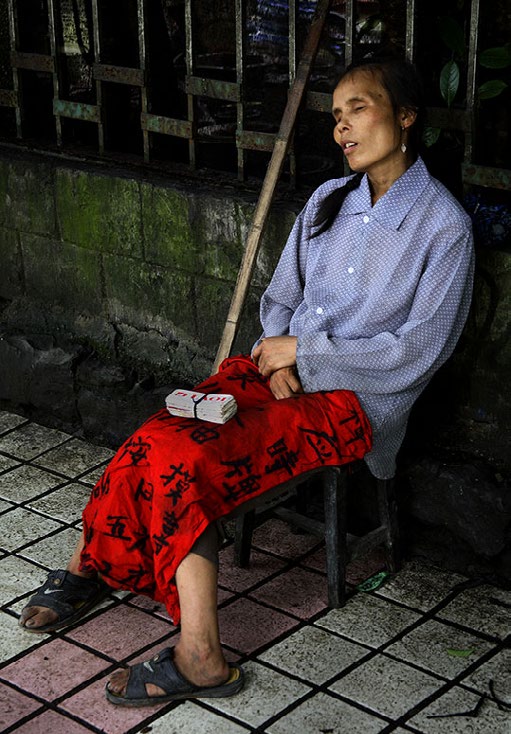
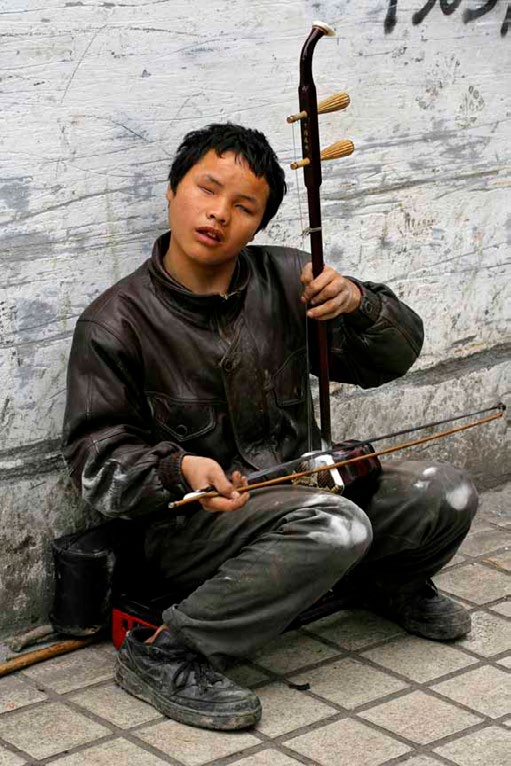
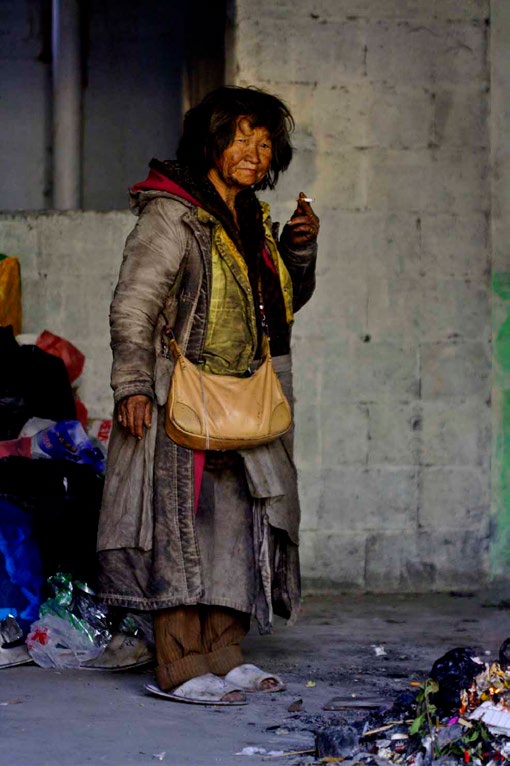
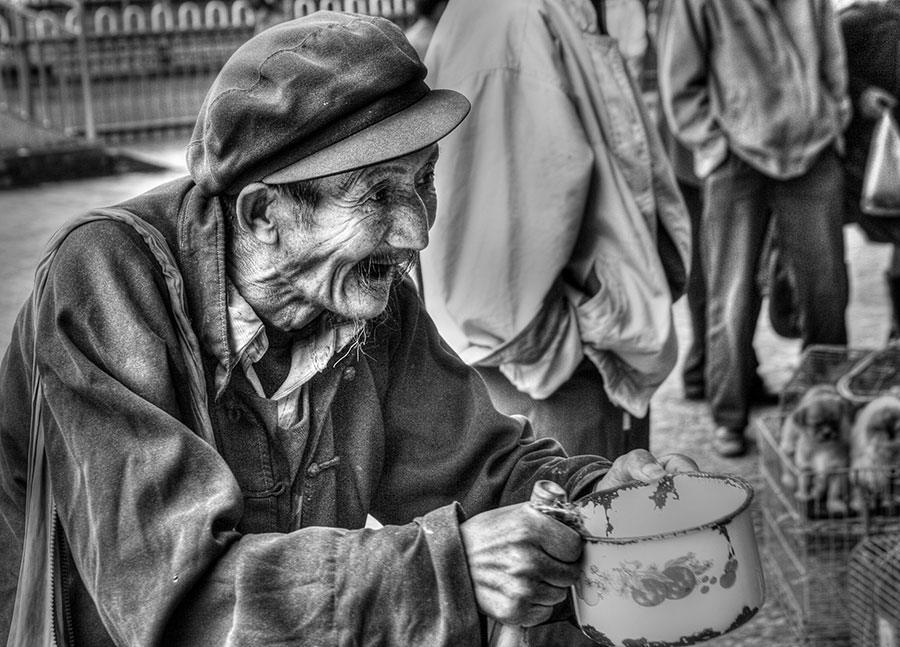
In the city of Jinping of Jinping County in Qian Dongnan Autonomous Minority Prefecture of Guizhou Province, Fei Shan Kam Temple artifacts were severely ravaged during the putative Cultural Revolution. Large, historical stone tablets with engraved names of contributors and members were cast into a trash heap in a yard adjoining the Temple grounds. A great, carved stone lintel was buried beneath rubbish along with historical paintings that were discarded and damaged. The devastation to Kam cultural artifacts is apparent today undermining the cultural patrimony of the Kam people [4] (Figures 6-10).
Kam people reflected on the Chinese acculturation policies and wanton acts of destruction during the nominal Cultural Revolution. They witnessed extensive burning and demolition during this period and those memories still cause pain today. A Kam colleague lamented, “The more one realizes the irreplaceable value the sacred and ceremonial places and relics have, the more painful it is” [4].
References
-
Amy E, Amato J (2017) Settlements and Drum Towers of the Kam People of China. In Habitat: Vernacular Architecture for a Changing Planet. London: Thames and Hudson Publishers, LTD, pp: 346-349.
-
Norman GD, Geary RB, Chaoquan O, Yaohong L, Daren J, et al. (2003) The Kam People of China. Routledge Curzon, London.
-
Somsonge B, Suraratdecha S, Quan Y, Edmondson JA, Guoyan Z (2000) Kam Chinese Thai English Dictionary. The Institute of Language and Culture for Rural Development, Mahidol University, Salaya, Thailand.
-
Amy E, Amato J, Tao D (2009) Kam Guilzhouh nyim Guangxxih di Benxtux Wenchual nyim Zihyuanc dih Gonxliix: Kam Local Indigenous Knowledge and Sustainable Resource Management in Guizhou and Guangxi Provinces, China. Journal of Ethnobotany Research and Applications 7: 67-113.
- Management of Ear Keloid with Ksharsutra: A Case Study
- Yoga and Global Sustainability: A Holistic Path to One Earth, One Health
- Autoimmune Diseases in Ayurveda: A Narrative Review with Classical and Modern Perspectives
- Management of Cluster Headache Associated with Pituitary Apophysitis by CERT (Chakrasiddh Energy Release Technique): A Case Report on Energy Rebalancing
- Zygophyllum Geslini Coss : Biochemicals and Antioxidant Activity
- Observations of a Beginner Vaidya