
Comparative Study of Clinical Efficacy of Antaparimarjan Chikista (Ghan Vati) and Bahiparimarjan Chikista (Udhavartana) in Atisthaulya W.S.R to Mustadi Yog in Obesity
Sthoulya (Obesity) is the major and basic cause of lifestyle disorders like Diabetes mellitus (T2DM), Coronary heart disease (CHD), Hypertension. Sthoulya (Obesity) is increasing at an alarming rate in developed industrialized countries which are undergoing rapid nutrition and lifestyle transition. Obesity is one of the most effective diseases which affect someone’s social, physical and mental status. In Ayurveda, Sthoulya (Obesity) is regarded as Medoroga, a disorder of Meda Dhatu, which includes fat tissue and fat metabolism. According to Ayurveda; Sthoulya begins with an imbalance of Doshas (Vata, Pitta and Kapha), Agni (digestive fire), Malas (waste products) or an imbalance of Srotas (microcirculatory channels). This collection of imbalances then interferes with the formation of tissues or Dhatus and leads to a tissue imbalance that we experience as excess weight. So in this study, tikta rasapradhan drugs in compound formulation of Mustadi Ghan vati as Antaparimarjan chikitsa (60 patients were selecte) and Mustadi churna Udhavartana as Bahiparimarjan chikitsa (60 patients were selected) has been selected. The result of study showed that excessive intake of oily and fatty food, sedentary lifestyle, and psychological factor along with genetically predisposition play a major role in aetiopathogenesis of sthaulya (obesity). Furthermore it was also found that Mustadi Ghan vati effectively helps in reducing Wt. & BMI ratio. The effect of study shows that Mustadi ghan vati provided better relief comparative to Mustadi churna Udhavartana in the management of Sthaulya.
Introduction
The nature has taught the man how to be healthy before science has discovered the law of health, but it is an irony of the fate that on this earth on one hand millions do not get enough food and roam in skeletal appearance while on the other hand there are so many more who, beside over eating leads sedentary life to march towards an untimely death. Obesity is blessing of modern age of machines and materialism. It is physiological and psychological as well as social disorder, which is most disfavored by modern society for social and medical reasons. The present day society expects peak physical and mental performance from each of Investigation Paper its member and obese person is unable to find out himself physically and mentally fit for it. It occurs as a result of physical activities with increased intake of daily diet results into clinical entity which can be called as obesity. According to WHO (report 2012), Obesity is one of disease among top ten selected risk to the health.
- 350 million Causes of obesity reported.
- 12%are of adult of total population.
- Total health care expenditure for obesity patients is 10- 15%.
The common way to find out whether you are Sthoulya or Atisthoola is ascertained by calculating the Body Mass Index
(BMI). BMI is an estimate of body fat and can indicate risk for disease. BMI is a simple index and calculated by dividing person weight in kilograms by his height in square meters. The World Health Organization [1] (WHO) defines as follows:
A definition of Swastha Purusha [2, 3]; a healthy body is the only one media to achieve ultimate goal among the Chaturvidh Purushartha. Acharya Sushrut also told that Madhyam sharir_is the best but _Atisthula and Atikrisha are always affected with some complaints. Acharya charaka has quoted a Sthoulya under the eight varieties of important which designated as Astaunindita purusha, Sthoulya comprises one of them. In pathogenesis of Sthoulya [3], kapha (kledak), vata(saman and vyana),medo dhatu (fats, lipid), medodhatwagni mandyata are main responsible factors. So in this study, tikta rasapradhan drugs in compound formulation of Mustadi Kwath Ghanvati for Antaparimarjan and Mustadi churna Udhavartana for Bahiparimarjan has been selected. Acharya Charaka [4.5] has stated that regular administration of Mustadi Kwath as a formulation can cure all the Santarpanjanya Vyadhis or diseases due to over nutrition [6].
The content of Mustadi Kwath is easily available throughout year. They have properties like lekhan, deepan, pachan, anuloman, karshan. All are kaph-pitta shamak, so they help in correcting the fat metabolism, restore cholesterol. Udhavartana normalize kapha and liquefies Meda by giving firmness and increased its complexion, increased sukradhatu and also give strength to the body. It increases formation of blood.
According to Acharya sushruta [7, 8], Udhavartana helps to restore the deranged vayu of to it the body its normal condition and also liquefies kapha and meda of the body by
Grouping (Table 1)
giving cleanness and smoothness to the skin. It also dilate orifices of sira and increase twakgat agni (bhrajak agni).
Aim
To study the clinical efficacy of Mustadi Kwath Ghan Vati_in _Antaparimarjan chikista and Mustadi Churna Udhavartana_in _Bahiparimarjan chikista in Sthoulya (obesity).
Objectives
- To assess the effect of compound formulation of Mustadi Kwath Ghanvati for Antaparimarjan in Sthoulya i.e. obesity.
- To assess the effect of Mustadi Churna Udhavartana for Bahiparimarjan in Sthoulya i.e. obesity.
- To evaluate the changes in lipid profile, weight and BMI due to Antaparimarjan and bahiparimarjana chikista.
- Comparison in between Mustadi Kwath Ghanvati for Antaparimarjan andMustadi Churna Udhavartana for Bahiparimarjan
Materials and Methods
Research Design
A Randomized Control Trial
Participant
- Patients: Sthoulya (Obesity)
- Gender-Both Male and Female
- Age- From 18 yrs-60 yrs of age.
Sampling Procedure
Comparative, Open, Random sampling
| No. of patients | Age | Sex | Intervention | Dose/day | Duration | |
|---|---|---|---|---|---|---|
| Group A | 30 | 18 yrs to 60 yrs | Male and Female | Mustadi kwath Ghanvati | 500mg Tab. 2tabs/day Before meals with Koshna jal | 6weeks |
| Group B | 30 | 18 yrs to 60 yrs | Male and Female | Mustadi churna Udhavartana | As required | 6weeks |
Table 1: Grouping.
Selection of Cases
Patients having classical signs and symptoms of Sthoulya were selected after clinical & objective examination. I had selected 60 patients of Sthoulya. These patients were selected randomly Follow-up assessment was done by specially prepared case record forms of every patient to meet all baseline requirement. Follow-up signs & symptoms were recorded.
Method of Selection of Patients
- Inclusion Criteria
- Patients having cardinal signs and symptoms of Sthoulya
- Age - 18 to 60 years.
- B.M.I. -25-30kg/m
- Both sexes
- Willing to give written informed consent.
- Exclusion Criteria Diagnosed cases of:
- Diabetes
- Cardiopulmonary disease
- Parkinson’s disease
- Pregnant and Lactating women
- Age below 18 and above 60
- BMI below 25 and above 30 kg/m2
- Patients who refuse to participate in study
- Investigations
- CBC with ESR
- Lipid profile
- BSL fasting & postprandial
- Urine routine & microscopic
- Drug Contents of Mustadi Kwath Ghanavati (cha.su.23/11) (Table 2).
| Sr. No. | Name | Latin name | Part |
|---|---|---|---|
| 1 | Musta | Cyperus rotundus Linn. | 1 part |
| 2 | Aragvadha | Cassia fistula Linn. | 1 part |
| 3 | Patha | Cissampelos pareira | 1 part |
| 4 | Amalki | Phyllanthus emblica | 1 part |
| 5 | Haritki | Terminalia chebula | 1 part |
| 6 | Bibhitak | Terminalia bellirica | 1 part |
| 7 | Devdaru | Cedrus deodara | 1 part |
| 8 | Gokshur | Tribulus terrestris | 1 part |
| 9 | Khadir | Senegalia catechu | 1 part |
| 10 | Nimba | Azadirachta indica | 1 part |
| 11 | Haridra | Curcuma longa | 1 part |
| 12 | Daruharidra | Berberis aristata | 1 part |
| 13 | Tvak | Cinnamomum verum Presl. | 1 part |
| 14 | Kutaj | Holarrhena antidysenterica wall. | 1 part |
Table 2: Name/Latin Name.
Method of Preparation
Mustadi kwatha ghanavati (MKG) was prepared in the laboratory by following classical method described in ‘Ayurvedic Formulary of India’. In addition, its main ingredients include 9 traditional medicinal herbs. All the ingredients of MKG were procured from the local market. For bahiparimarjan chikista–all the above drugs should be taken in powder form in equal amount.
Diet
All Pathyakar ahar vihar mentioned in Obesity.
Diagnostics Criteria
- Patients with Body Mass Index in between 25-30kg/m2 considered as Obese.
- Patients having clinical signs & symptoms of Sthoulya.
Follow up
- Symptomatic improvement, after every week.
- Lab Investigations done before and after treatment.
Case Record Form
Record, of all patients included in trial is documented & follow up is mentioned in case record forms.
Clinical Examination
Complete clinical examination from the point of view of obesity to diagnose & assess the condition of patient.
Criteria of Assessment
Symptoms of obesity plus Symptoms of Sthoulya mentioned in the text or practically observed are assessed at each follow up. Presence or absence of these symptoms will be registered. Different symptoms graded into four grade scales (0-3) on the basis of severity to assess the changes in clinical symptoms of Sthoulya. Study of changes in gradation of each symptom was done before and after treatment (Table 3).
| Parameters | Symptoms | Scoring | |
|---|---|---|---|
| 1 | Kshudrashwash | Shwas at rest. | 3 |
| 1 | Kshudrashwash | Shwas on little exertion | 2 |
| 1 | Kshudrashwash | Shwas on more exertion | 1 |
| 1 | Kshudrashwash | No kshudrashwas | 0 |
| 2 | Daurgandhya | Severe | 3 |
| 2 | Daurgandhya | Moderate | 2 |
| 2 | Daurgandhya | Mild | 1 |
| 2 | Daurgandhya | No Daurgandhya | 0 |
| 3 | Swedatipravritti | Swedatipravritti at rest. | 3 |
| 3 | Swedatipravritti | Swedatipravritti on little exertion | 2 |
| 3 | Swedatipravritti | Swedapravritti on more exertion | 1 |
| 3 | Swedatipravritti | No Swedapravritti. | 0 |
| 4 | Aalasya | Feels good than sleeping than lying. | 3 |
| 4 | Aalasya | Feels good while lying than sitting. | 2 |
| 4 | Aalasya | Feels good than sitting than standing. | 1 |
| 4 | Aalasya | Feels good while walking/standing than sitting | 0 |
| 5 | Daurbalya | Tierdness of the whole day. | 3 |
| 5 | Daurbalya | Tierdness upto 12hrs. | 2 |
| 5 | Daurbalya | Tierdness for the 6-8 hrs. | 1 |
| 5 | Daurbalya | No tiredness. | 0 |
| 6 | Constant Hunger correlated with Kshudhaativriddhi | Requires total 2 meals & 4 breakfast still feels hungry. | 3 |
| 6 | Constant Hunger correlated with Kshudhaativriddhi | Requires extra meal / heavy breakfast additional to regular 2 meals to satisfy | 2 |
| 6 | Constant Hunger correlated with Kshudhaativriddhi | Requires 1 extra breakfast with 2 meals & regular/Light breakfast to satisfy. | 1 |
| 6 | Constant Hunger correlated with Kshudhaativriddhi | Two meals a day with light breakfast satisfies hunger | 0 |
Table 3: Parameters/Symptoms.
Total Effects of Therapy
Percentage of relief in symptom & signs with respect to each of patient will be as follows & will be classified as per definition described of Cured, Markedly improved, Improved & Unchanged.
• Cured: Complete relief in signs and symptoms along with certain lab parameter & maintenance of same condition for about one yr. without medicine will be considered as cured.
- Markedly improved: 50% & more than 50% relief in sign & symptoms of the patients along with certain definite changes in physical & biochemical parameter will be considered as markedly improved.
- Improved: 25% to 50% relief in signs & symptoms as mentioned in criteria of assessment will be considered to be improved.
- Unchanged: Patient who does not have any relief in signs, symptoms & lab investigation will be considered as unchanged. Along with this, the patient exhibiting improvement < 25% is also kept in this group.
Observation and Results (Tables 4-8)
| Ahara pattern | No. of patients Gr. A(n=30) | No. of patients Gr. B (n=30) | Total no of patients studied (n=60) | Total % | |
|---|---|---|---|---|---|
| 1 | Veg | 8 | 6 | 14 | 23.33% |
| 2 | Mixed | 22 | 24 | 46 | 76.66% |
| Total | 30 | 30 | 60 | 100 |
Table 4: Showing Ahara pattern Distribution in 60 patients of Sthaulya.
| Prakriti | No. of patients Gr. A(n=30) | No. of patients Gr. B(n=30) | Total no of patients studied(n=60) | Total % | |
|---|---|---|---|---|---|
| 1 | Kapha-Vata | 3 | 5 | 8 | 13.33 |
| 2 | Kaph-Pitta | 15 | 15 | 30 | 50 |
| 3 | Pitta-Vata | 3 | 1 | 4 | 6.66 |
| 4 | Pitta-Kapha | 7 | 7 | 14 | 23.33 |
| 5 | Vata-Kapha | 1 | 1 | 2 | 3.33 |
| 6 | Vata-Pitta | 1 | 1 | 2 | 3.33 |
| Total | 30 | 30 | 60 | 100% |
Table 5: Showing _Prakriti_ of 60 patients of _Sthaulya._
| Sr. no | Agni | No.of patients Gr. A(n=30) | No. of patients Gr. B(n=30) | Total no of patients studied (n=60) | Total % |
|---|---|---|---|---|---|
| 1 | Mandagni | 8 | 8 | 16 | 26.66% |
| 2 | Tikshna | 12 | 13 | 25 | 41.66% |
| 3 | Visham | 10 | 9 | 19 | 31.66% |
| Total | 30 | 30 | 60 | 100% |
Table 6: Showing _Agni_ in 60 patients of _Sthaulya_.
| Sr. no. | Koshta | No. of patients Gr. A(n=30) | No. of patients Gr. B(n=30) | Total no of patients studied(n=60) | Total % |
|---|---|---|---|---|---|
| 1 | Krura | 8 | 9 | 17 | 28.33 |
| 2 | Madhyam | 12 | 11 | 23 | 38.33 |
| 3 | Mrudu | 5 | 5 | 10 | 16.66 |
| Total | 30 | 30 | 60 | 100% |
Table 7: Showing _Koshta_ of 60patients of _Sthaulya._
| Sr. no. | Symptoms | Group A | Group B | ||||||
|---|---|---|---|---|---|---|---|---|---|
| BT | AT | Diff. | % Relief | BT | AT | Diff. | % Relief | ||
| 1 | Kshudraswash | 53 | 20 | 33 | 62.26% | 52 | 42 | 10 | 19.23% |
| 2 | Daurgandhya | 42 | 19 | 23 | 54.76% | 48 | 24 | 24 | 50% |
| 3 | Swedatipravritti | 58 | 15 | 43 | 73.13% | 64 | 27 | 37 | 57.81% |
| 4 | Alasya | 50 | 14 | 36 | 72% | 54 | 34 | 20 | 37.10% |
| 5 | Daurgandhya | 46 | 16 | 30 | 65.21% | 54 | 36 | 18 | 33.33% |
| 6 | Atiksudha | 36 | 17 | 19 | 52.77% | 34 | 26 | 8 | 23.52% |
| Average score | 47.5 | 16.8 | 30.7 | 64.63% | 51 | 31.5 | 19.5 | 38.23% |
Table 8: Showing effect on Symptoms Score of 60 Patients of Sthaulya.
Discussion
A Study entitled Comparative Clinical Study of role of Mustadi Kwath Ghana vati in Sthaulya (Obesity) by Antaparimarjan and Mustadi Churna in Bahiparimarjan Chikista was under taken. At the end of the study, following points can be concluded on the basis of Observations made in the form of Tables & Graphs and minutely discussed in the previous chapters, following conclusion are drawn. • Majority of Patients were from the age group 30-50yrs.
• There was more number of Females than Males. Females are more prone to obesity due to feminine factor like menopause and aggravating factors like delivery, I.U.C.D., oral contraceptive pills, miscarriage.
• Maximum numbers of Patients were of Hindu religion.
• Most of the Patients were from middle and Upper Middle Class and were educated.
• Incidence of family History of Sthaulya was observed in 35%. While no such history was noted 65%.
• Most of the patients (76.66%) have mixed-diet Habit.
• Most of the patients work was of sedentary type causing Sthaulya.
- Most of the patients had habits related to Vihar like Asyasukh, Swapnasukh, Chankramandwesha
- Most of the Patients are of Kapha prdhan prakriti.
- Most of the patients having Madhyam Samhanan, Madhyam Satva & Madhyam vyayam shakti.
• All patients were residing at Anup Desha for a longer period.
• Meda, Mamsa&Rasa Dhatudushti were seen markedly in all the patients.
• Medovaha, Udakvaha, Mootravaha & Swedavaha Srotodushti were found remarkably in all the patients.
• A significant improvement was observed in symptoms of patients of group A.
• Comparison between two groups with respect to symptoms score was evaluated by Mann Whitney’s test & significant difference was noted in both groups for symptoms like- ksudraswash, Alasya, Daurbalya.
- No significant difference was noted in both groups for symptoms like swedatipravritti, Daurgandhya, Atiksudha.
- Also parameters of Group A like Weight, Waist circumference, BMI & hematological parameters like T. Cholesterol, showed extremely significant results by unpaired‘t’ test in comparison with Bahiparimarjan chikista.
- In Mustadi ghan Vati having Highly Significant results were obtained in comparison to Mustadi Churna Udhavartana.
- In case of Group A Patients-27(90%) were improved, patients 2(6.66%) were Markedly improved, 1(3.33%) patients remain unchanged & No one patient was cured completely.
• In case of Group B, 11(3.33%) Patients were improved, no patients were markedly improved, and 19 (63.33%) patients remain unchanged.
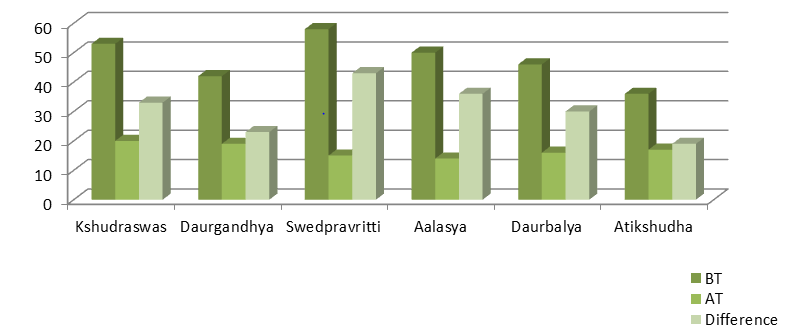
Figure 1 (Group A): Table showing effect on Symptoms Score of 30 Patients of Sthaulya
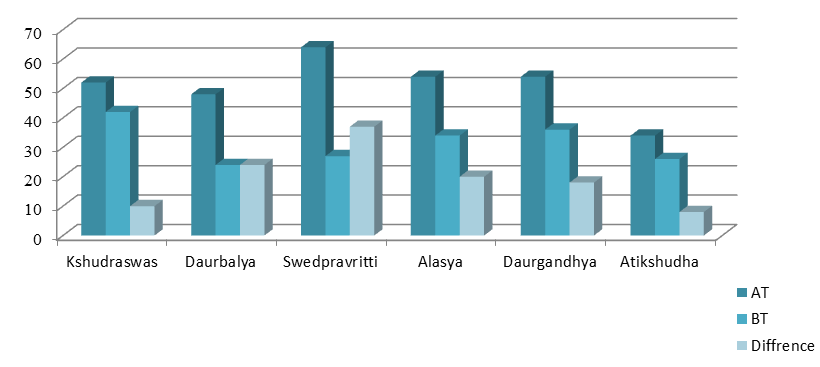
Figure 2 (Group B): Table showing effect on Symptoms Score of 30 Patients of Sthoulya
Conclusion
Mustdi Kwath Ghanvati (Antaparimarjan Chikista) has provided better result in almost all the parameters than_Mustadi churna_ (Udhavartana chikitsa) because it eliminates Doshas from the body and simultaneously absorbed drug perform its action of SampraptiVighatana at cellular level. Hence, it is concluded that ‘Antaparimarjan chikista’ is effective than ‘bahiparimarjan chikista’ in treating symptomatic conditions Sthaulya i.e Obesity. Though this is not a detailed study in the field of Ayurveda& Obesity, it has been carried out sincerely on its level. The results of this work are encouraging & may become a ray of hope that will split the darkness of ignorance about the concepts of Ayurveda. The efficacy of this drug can be evaluated further along both parallel treatments with larger sample size & prolonged duration of treatment in future.
References
-
Harrison’s Principles of Internal Medicine, 18th (Edn.), Vol 1, Chapter 78, pp: 631.
-
Sharma BRK (2009) Charaka Sam-hita; 1st (Edn.), Varnanasi: Chaukamba; Sanskrit series Vol-1, Santarpaniya Adhyaya, Chapter 23, Verse 6, pp: 395.
-
(2015) Chakradatta with Vaidayaprabha Hindi commentary, Chaukhambha Bharati Academy, Varanasi, Chikitsa Sthana 36/17, pp: 222.
-
Sharma RK, Dash VB, (2002) Chowkhamba Sanskrit Series 7th (Edn.), Varanasi: Sutra Sthana; Agnivesha, Charaka Samhita Text with English Translation & Critical Exposition Based on Chakrapanidatta’s ‘Ayurveda Dipika’, pp: 122.
-
Sharma BRK (2009) Charaka Samhita 1st (Edn.), Varanasi: Chaukamba Sanskrit series; 2009, Vol-1, Santarpaniya Adhyaya, Chapter 23, Verse 3, pp: 395.
-
Sharma BRK (2009) Charaka Samhitha 1st (Edn.), Varanasi: Chaukamba Sanskrit Series; Vol-1, Astuninditiya Adhyaya, Chapter 21, Verse 4, pp: 375.
-
Lohith BA (2016) Text Book on PanchaKarama 1st (Edn.), Varanasi: Chaukamba Orientalia Vol-1, Snehana Adhyaya, Chapter 2, pp: 107-108.
-
Shastri KA (2007) Sushruta Samhita of Maharishi Sushruta, Chaukhambha Bharati Academy, Varanasi, Sutra Sthana 15/37, pp: 62.
- Management of Ear Keloid with Ksharsutra: A Case Study
- Yoga and Global Sustainability: A Holistic Path to One Earth, One Health
- Autoimmune Diseases in Ayurveda: A Narrative Review with Classical and Modern Perspectives
- Management of Cluster Headache Associated with Pituitary Apophysitis by CERT (Chakrasiddh Energy Release Technique): A Case Report on Energy Rebalancing
- Zygophyllum Geslini Coss : Biochemicals and Antioxidant Activity
- Observations of a Beginner Vaidya