
Heavy Metal Mercury and its Toxicity – A Review
Mercury is a toxic heavy metal that naturally found in earth crust, air, water and food. The symbol of Mercury is Hg and atomic number is 80. It is also known as quick silver, liquid silver, para. Mercury is also known as parada. Parada has many blemishes like bhumija, girija, varija, nagaja, vangaja etc. If parada is consumed in this form, causes santapa, jadatwa, vata roga, kushta, murcha and even death, hence it is used after purification. After proper purification parada have been used in rasa aushadi preparation. It exist nature in three forms organic, inorganic and elemental. Organic compound of mercury is more toxic than inorganic compound. Elemental mercury is liquid at the room temperature and less toxic than the two other forms of mercury. Any form of mercury is toxic. The sign & symptoms of toxicity depend upon the type, route, dose and duration of exposure. Human exposed to mercury from breathing in contaminated air, seafood consumption, dental amalgam, gold mining, vaccines containing thiomersal etc. The chronic exposure of mercury damage CNS, lungs, kidney, heart and immune system etc. mercury toxicity can diagnosed by mercury level in hair, blood and urine. Beside the supportive measurement, BAL (british anti lewisite), diamercaprol, dimercaptopropanesulfoxid acid (DMPS), penicillamine and chelating agents are used in treatment for mercury toxicity.
Introduction
Heavy metal is a group of metal and metalloids with an atomic density, number, weight is higher. The most common heavy metal contaminants are Cooper, Chromium, Cadmium, Lead, Iron, Copper and Zinc including Mercury. Mercury is an inorganic metallic irritant poison that naturally found in earth crust, air, water and food. The symbol of Mercury is Hg and atomic number is 80. The symbol Hg comes from the name hydragyum, which means water silver and the name Mercury comes from the roman god mercury known for his swiftness [1]. It is also known as quick silver, liquid silver, para. Mercury is liquid metal, bright silvery appearance and is volatile at room temperature [2]. It exists in three forms in nature organic, inorganic, and elemental and each form have different properties, toxicity and uses. Organic compound is more toxic than inorganic compound. The pure metallic Mercury swallowed or taken orally is not toxic, because it not absorbed. If vapor of Mercury is breathed or inhaled, it is absorbed and exerts toxic effect [3]. Mercury and its salt has been used for centuries both as a medicine and a poison and many commercial purposes like making many instrument, batteries, streetlights, fluorescent lamps etc.
Mercury in Ayurveda
Rasashastra is a unique branch of Ayurveda. The term Rasa means Parada. Rasa and parada both terms are synonym of Mercury. As per the mythology it is the veerya of Lord Shiva. It has many synonyms and each synonym depicts for itself. Such as Rasa - it is the physical essence of lord shiva and also as it swallows other metals. Rasendra-
being supreme to maharasa, Soot - creation of healthy cells and tissues in human body. Chapal - means highly motile in nature. Rasaraj - king of all maharasa. Parada - to be able to pull out people from sludge of diseases. In kaiyadeva nighantu parada has been mentioned in dhatuvarga, dhanvantari nighantu in survanadivarga and rasashastra in rasa varga [4].
Main source of parada is hingula. Parada has many blemishes like bhumija, girija, varija, nagaja and vangaja etc. If parada is consumed in this form, causes santapa, jadatwa, vata roga, kushta, murcha and even death, hence it is used after purification. After proper purification parada have been used in rasa aushadi preparation [5].
Shuddha Parada Swaroop
The parade having blue tinge inside and bright outside and having lusture of sun as seen in noon, is said to be best. In modern chemistry a similar explanation regarding mercury states that mercury is a silvery white liquid metal with slight bluish tinge. In thin films, it emits violet light [6] Figure 1.
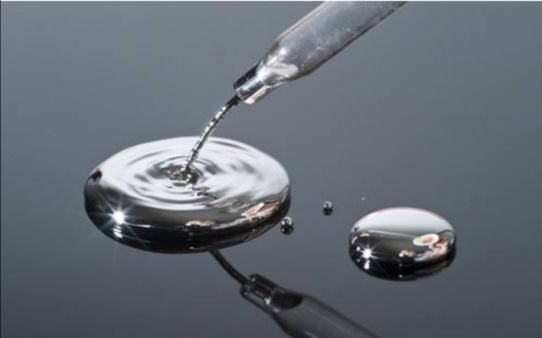
Properties of Sudhha Parada [7]
Rasa : Sadrasa Guna : Sara, Guru Veerya : Ushna Vipaka : Madhura Prabhava : Vrsya, Balya, Rasayana, Sodhana, Ropana, Sarva rogajit
• 125mg
Precaustion During while Consuming Parada Yogas [8]
- Pathya Eggplant (Solanum melongena), Pointed gourd (Trichosanthes dioica), Indian spinach (Amaranthus cruentus), Red spiderling (Boerhaavia diffusa), Lotus plant stem, Rice, Milk, Curd, , Green bean supa.
- Apathya Watermelon (Citrullus lanthus), Bitter gourd (Momordica charantia), Banana (Musa paradisiacal Linn.), Black nightshade (Solanum nigrum), Pumpkin (Benincasa hispida), Cucumber (Cucumis melo)
Compounds of Mercury
Organic Mercury Compound
These are formed when mercury combines with carbon. Mercurochrome, methyl mercury, ethyl mercury is organic compounds of mercury. These are used as diuretic, antiseptic, fungicides [9, 10].
Inorganic Mercury Compound
These are formed when mercury combines with other elements, such as sulfur or oxygen. Inorganic compounds can occur naturally in the environment. These are used in some industrial processes, making of other chemicals and cosmetic. Inorganic compounds are:
- Mercuric Chloride (HgCl2): It is odorless, white crystalline powder with acrid metallic taste.
- Mercuric Iodide (HgI2): It is red or scarlet red, odorless, tasteless powder, sensitive to light and insoluble in water.
- Mercuric Cyanide [Hg (CN)2]: It is an odorless, white crystalline powder and highly soluble in water, alcohol.
- Mercuric Sulfide (HgS): also known as Cinnabar, Hingul, Rasa sindoor, Cheena sindoor, Pigment vermillion.
- Mercuric Nitrate [Hg (No3)2]: appears as colorless, odorless, white crystalline powder.
- Mercurous Chloride (Hg2Cl2): also known as Calomel or Rasa kapoor. It is a heavy, dense, white or yellowish white odorless, tasteless powder.
Elemental Mercury Compound
It is liquid at room temperature. It is used in some industrial processes, electrical switches, fluorescent light and bulbs etc.
Fatal Dose [11]
Mercuric chloride – 0.5-1gm Mercuric cyanide - 0.6 -1.3 gm Mercurous chloride (calomel) - 1.5 – 2gm Mercuric nitrate - 4gm
Fatal Period [11]
• 3-5 Days
Uses of Mercury [11]
- Industrial Uses: manufacture of thermometer, barometer, ceramics, explosives and fireworks, electrical equipment, dry cell batteries, fluorescent light, mercury vapor lamp.
- Medicine & Dentistry: antiseptic, disinfectants, dental amalgam, diuretic, purgative and earlier used in the treatment of syphilis.
- Miscellaneous: photography, electroplating, germicide, pesticide, fingerprint powder, paints and embalming fluid, gold and silver extraction, fabric softener.
Sources of Mercury Exposure [11]
- Industrial Sources: The increase production of cement, fertilizers, chlorine, paper industries, natural gasses, burning of coal and discharge from hydroelectric increase level of mercury in the environment.
- Fish and Shellfish: It’s released directly into water through waste material and industrial discharges. It passes into tiny plants and animals that live in water and into the fish and shellfish that eat them. If eaten in large quantities of them, these can store and increase the amount of mercury in body.
- Dental Amalgam: It is a direct filling material used to fill cavities. Filling made with amalgam also known as silver filling. Amalgam is a mixture of metals like liquid mercury, silver, tin, copper and other elements. All mercury filling amalgam contain about 50% of liquid mercury. It release small amounts of mercury vapors during brushing, chewing.
- Thermometers: Each thermometer contain about 0.5- 1.5gm of liquid mercury. This thermometer can be dangerous if the glass breaks and the mercury is not clean properly. It will evaporated and can contaminate the air and become toxic.
- Batteries; Some batteries contain mercury that can enter the environment if they end up in land fill.
- Fluorescent Light and Bulb: contain less than 10mg of elemental mercury in vapor form. If broken this light and bulbs will continuously emit mercury vapor.
- Gold Mining: Metallic mercury is mixed with gold containing materials forming a mercury gold amalgam. Then heated this amalgam, vaporized the mercury and isolate the gold. This process is very dangerous and can lead to exposure of mercury.
Mechanism of Toxicity [2,12]
Mercury compound is rapidly absorbed through the alveolar membrane and enters the blood stream. Mercury is converted into mercuric ions (Hg++) in the blood which can lead to renal tubular damage during excretion. In the central nervous system, mercury acts mainly upon cerebellum, temporal lobe, basal ganglia and corpus callosum. Both organic and inorganic mercurials can be absorbed through intact skin.
Clinical Features [12,13]
Acute toxicity
- Acrid metallic taste and feeling of constriction in throat, hoarse voice, difficulty in breathing in breathing.
- The mouth and tongue become corroded, swollen and show grayish-white coating.
- Hot burning pain in the stomach and abdomen, followed by nausea, vomiting and vomit contains grayish slimy mucoid material with blood.
- Diarrhoea with bloodstrained stools and tenesmus.
- Glossitis and ulcerative gingivitis appear within 24 to 36 hours.
- Severe infection, loosening of teeth and necrosis and produce transient polyuria, albuminuria, uraemia and acidosis.
- Ulceration of colonic mucosa and hemorrahage.
Chronic Toxicity
- Excessive salivation with metallic taste in the mouth, loosening of teeth with painful inflamed gums and occasionally a blue black line on the gums.
- Irritation of skin.
- Gastrointestinal disturbances, anaemia, anorexia, loss of weight and chronic inflammation of kidneys with uraemia
- Melanosis coli
- Dementia
- Renal failure
- Concentric constriction of visual field
Specific Sign
- Danbury Tremor or Hatter’s Shakes or Glass- Blower’s Shakes: Tremors occur first in the hands, then progress to lips and tongue, involves arms and legs. The tremor is moderately coarse and is interspersed by jerky movements.
- Mercurial Erethism: Mainly found in mirror industry worker. It has a cluster of psychiatric symptoms like shyness, loss of self-confidence, excitability, irritability, mental depression, loss of memory, insomnia, progressing in later stages to delirium with hallucinations.
- Mercuria Lentis: It is a peculiar eye change due to exposure to the vapour of mercury. Discoloration of the capsule of the lens of eye due to deposition of mercury. There may be fine punctuate opacities.
- Acrodynia (pink disease): Mostly seen in children, formerly most cases were related to chronic use of teething powders containing mercurous chloride. It causes anorexia, insomnia, skin rashes, peeling of palm, profuse sweating and photophobia. The hand and feet become puffy, pinkish, painful, paraesthetic, perspiring and peeling. Teeth may be shed, with ulceration of gums.
- Mercury Dermatitis: From mercuric sulphide as red areas of tattoo has been reported.
- Minamata Disease: It is a disease of central nervous systems, caused by the consumption of fish and shellfish contaminated with methyl mercury compounds discharged into the water and environment as factory waste.
Management of Mercury Toxicity [12,14]
Acute Toxicity
- Give egg white or milk or vegetable glutens to precipitated mercury.
- Gastric lavage with 250ml of a 5% solution of sodium formaldehyde sulphoxylate.
- Demulcents
- Laxative
- Chelation therapy with BAL or DMPS- this drugs help remove the metal from organ and help body dispose of them.
- Give supportive management and symptomatic treatment
Chronic Toxicity
- Removal from the source of exposure to mercury and promoting elimination of mercury by bowels and kidney.
- Mouth wash with borax
- Use plenty of milk or Demulcent drink and saline purgative
- Symptomatic treatment
Medicolegal Importance [2]
- Accidental consumption of mercury as folk medicine, toothpaste, food poisoning, dental amalgam.
- Rare use for Homicide or suicide
- Occupational hazard – will be found among worker working in factories belonging mercury
- Domestic exposure
- Latrogenic poisoning
- Agriculture exposure
Autopsy Finding [12,2]
- Mouth, throat, stomach appear grayish with softening and corrosion with hemorrhagic areas
- Pale and swollen kidneys
- Necrotic changes in renal tubule
- Ulcerations in large intestine
- Fatty degeneration in liver and heart
Discussion
Heavy metal is a group of metal and metalloids with an atomic density, number, weight is higher. Mercury is a toxic heavy metal that found liquid in room temperature and it can be easily vaporized in environment. Mercury is naturally found in soil, air and water. It exists in three forms organic, inorganic and elemental. Organic compound is more toxic than inorganic compound. It has been used for medicinal and industrial purpose for centuries. Human exposed to mercury from breathing in contaminated air, eating or drinking contaminated food & water or skin contact with mercury. The high level exposure of mercury is toxic for all age group of humans, especially in foetus and infants. It can leads to toxic effect on brain, kidney, lung, cns and immune system etc. Diagnosis of mercury level in hair, urine and blood is helpful for the treatment of mercury toxicity.
Summary
Mercury atomic number 80 is a liquid at room temperature. It is also known as quick silver. It exists in three forms organic, inorganic and elemental mercury. All these forms are toxic. High exposure of mercury can harm the organ like brain, heart, lungs, kidney and immune system of all age groups of people. There is no standard cure for mercury toxicity, so it is best to avoid exposure to high amount of mercury when possible.
Conclusion
Heavy metal mercury is widely distributed in environment, soil and water etc. mercury toxicity occurs by exposure to mercury i.e. acute and chronic exposure. Symptoms of mercury toxicity depend on the type, route, dose, method and duration of exposure.
References
-
Gupta PK (2016) Fundamentals of Toxicology .Published by Mica Haley, pp: 199.
-
Narayan Reddy KS and Murty OP (2017) The essentials of Forensic Medicine & Toxicology. 34th (Edn.), Jaypee Brothers Medical Publishers, New Delhi, India, pp: 504- 648.
-
Rajesh Bardale (2017) Principles of Forensic Medicine & Toxicology. 2nd (Edn.), Jaypee Brothers Medical Publishers, pp: 513.
-
Nitin Urmaliya (2011) Text book of Agadtantra. 1st (Edn.), Published by Chaukhambha Orientalia Varanasi, India, pp: 350.
-
Prasad P V N R (2016) Illustrated AgadaTantra. 3rd (Edn.), Published by Chowkhamba Sanskrit Series Office, Varanasi, India, pp: 290.
-
Kashinath Shastri (2009) Rasatarangani, Pranacharya Shri Sadanand Sharma. 11th (Edn.), Published by Motilal Banarasi Das, pp: 72.
-
Kashinath Shastri (2009) Rasatarangani, Pranacharya Shri Sadanand Sharma. 11th (Edn.), Published by Motilal Banarasi Das, pp: 73
-
Anita Sharma (2016) Agadtantra. 1st (Edn.),Published by Chaukhambha Orientalia, Varanasi, India,pp: 268.
-
Satish k Garg (2002) Veterinary Toxicology. 1st (Edn.), CBS Publishers & Distributors, India, pp: 47.
-
Subrahmanyam(2019) Parikh’s text book of Medical Jurisprudence, Forensic Medicine and Toxicology. 8th(Edn.), CBS Publishers & Distributors, pp: 575
-
Rajesh Bardale (2017) Principles of Forensic Medicine & Toxicology.2nd (Edn.), Jaypee Brothers Medical Publishers, pp: 457
-
Pillay VV (2013) Modern Medical and Toxicology. 4th (Edn.),Jaypee Brothers Medical Publishers, New Delhi, India, pp: 91: 627.
-
Subrahmanyam (2019) Parikh’s text book of Medical Jurisprudence, Forensic Medicine and Toxicology. 8th (Edn.), CBS Publishers & Distributors, pp: 577-578.
-
Rajesh Bardale (2017) Principles of Forensic Medicine & Toxicology. 2nd (Edn.), Jaypee Brothers Medical Publishers, pp: 458.
- Management of Ear Keloid with Ksharsutra: A Case Study
- Yoga and Global Sustainability: A Holistic Path to One Earth, One Health
- Autoimmune Diseases in Ayurveda: A Narrative Review with Classical and Modern Perspectives
- Management of Cluster Headache Associated with Pituitary Apophysitis by CERT (Chakrasiddh Energy Release Technique): A Case Report on Energy Rebalancing
- Zygophyllum Geslini Coss : Biochemicals and Antioxidant Activity
- Observations of a Beginner Vaidya