
Phytochemical and Pharmacological Studies of Traditionally used Herbal Plants and their Potential Applications in Nutraceutical Formulations
Herbal plants are being used for therapeutic purposes to cure diverse forms of diseases since centuries ago. Many medicinal therapists across the world utilize these herbs for the treatment of diseases, such as ayurveda and traditional Chinese medicine. The use of herbal based medicines considered as safe with no side effects have increased at an alarming pace as compared to synthetic drugs globally. Medicinal herbs have been validated to eradicate the core of diseased ailments irrespective of age group and are having lesser chances of developing adverse effects due to chemical interactions and microbial resistance as induced by most of the synthetic drugs. Considering the multiple biological activities, which are beneficial for healthy functioning of human body including prevention of cancers, inflammations, infections, antiseptics, antimicrobial, antidiarrheal, antioxidants and innumerable healing characteristics. In this study, we assessed the potential benefits and bioactive compounds present in diverse ranges of medicinal herbs, so that it could provide a valid source for practitioners and those interested in formulation of health promoting supplements and nutraceuticals. The chemical composition of medicinal herbs not only enables a researcher to enhance health by curing a specific disease but also to preserve a formulated food product with natural based remedies. Products developed from herbal combinations have been found to reduce toxicity in human body along with improving efficacy.
Introduction
As man began to explore and expand his knowledge of plants, he discovered the healing properties of plants. He also discovered how they could be utilized to treat a variety of ailments. That hassled to the development of herbal and unani medicines, which has been used to treat a variety of illnesses from thousands of years. Using the ancient wisdom of Ayurveda and the advancement of modern medical science, these novel plant-derived drugs have the potential to revolutionize the healthcare industry [1]. Folk or traditional medicine consists of medical aspects developed over generations within a variety of societies before modern medicine took hold [2]. According to the World Health Organization (WHO), traditional medicine is defined as a set of knowledge, skills, and practices that are derived from the theories, beliefs, and experiences of various cultures, regardless of whether they can be explained. They are used to maintain health as well as to prevent, diagnose, improve or treat physical or mental illnesses. WHO has explored about 20,000 medicinal plants all over the world to utilise these for pharmological screening and therapeutic purposes. As per the reports of WHO, 80% population in less developing and some developing countries, still rely on the medicinal herbs for treatments of ailments due to adverse economic conditions and lack of synthetic medicines. In Chile, 71% of the population consumes herbal medicine, while in Colombia, the number is 40%. In India, 65% of those living in rural areas use Ayurveda and medicinal plants for primary health care needs [3]. Mahatma Gandhi once wrote: “Homeopathy cures a larger percentage of cases than any other form of treatment and is beyond doubt safer and more economical.” Herbal medicines are generally considered to be safe, effective and are having negligible side effects than synthetic drugs, and are particularly beneficial for treatment of chronic conditions. Additionally, plants often contain a variety of compounds that work together to produce therapeutic effects. This can provide a more holistic approach to healing, rather than just targeting a single cause. The use of medicinal plants dates back at least 5,000 years to the Sumerians, but the practice of herbal medicine is thought to date back as far as 60,000 years ago. Phytochemicals have been found to reduce inflammation, improve metabolic processes, and inhibit the growth of cancer cells. They are also known to protect the body from free radical damage, which is associated with aging and chronic disease. Additionally, they can boost the immune system, reduce cholesterol, and improve overall health. The plethora of benefits from phytochemicals is similar to a multivitamin, providing the body with a variety of nutrients and health benefits essential for maintaining health and vitality. This shows the significant role that these plants play in traditional medicine in industrialized and developing nations. The global market for traditional medicine is expected to continue growing. This paper will discuss several major herbs, including Kadipatta (Murrayakoenigii), Bhavadi (Ocimumbasilicum), Bana (Vitex negundo) and Mulathi (Glycyrrhiza glabra). As you may know, these herbs have been used in herbal medicine for ages for their medicinal uses and are known to have numerous health benefits, including reducing inflammation, boosting immunity, lowering blood sugar levels, and aiding digestion. Additionally, these herbs are also believed to help protect against certain types of cancer, support liver health, and act as natural detoxifiers. But don’t forget the one benefit that everyone knows and loves - they make excellent seasoning for your cooking.
Description
Murrayakoenigii (M. koenigii) (L) Spreng (Family: Rutaceae) referred to as “curry leaves”. In tropical and subtropical regions around the world, M.koenigii is widely distributed. Murraya has 14 species worldwide, but only two, M. koenigii and M. paniculate, are available in India. Murrayaspecieshas a wide range of medicinal properties that make it more important than other species [4]. In Indian Ayurvedic medicine, this plant has been used in a variety of ways for centuries, and is referred to as “krishnanimba”. Different parts of M. koenigii_are shown to promote a wide range of biological activities, including its leaves, roots, bark, and fruit [5]. Despite drying, _M. koenigii leaves retain their aromatic bioactive constituents. M. koenigii leaves have a flavor that is faintly bitter, a pungent odor, and a weak acidity. It is used in Indian cuisine as an antihelminthic, analgesic, digestion aid, and appetizer [6]. The green leaves of M. koeigii have anti-inflammatory, itching, and anti-bruise properties, and can be used for piles, inflammation, itching, and fresh cuts. A certain amount of purgative properties can be found in the roots [7]. A common body ache can be alleviated by using them because they are stimulating. It has been found that the bark of this tree is beneficial for treating snakebites. The essential oil derived from M. koenigii leaves exhibits antioxidative, antimicrobial, antifungal, anti-inflammatory, and nephroprotective effects in animals [8]. It has been hypothesized that the medicinal properties of different carbazole alkaloids are due to several chemical constituents, including terpenoids, flavonoids, and dihydropyridines, carbohydrates, carotenoids, vitamins, and nicotinic acid were obtained through multiple parts of the M. koenigii plant [9, 10].
There are many types of plants within the plant family Lamiaceae called Ocimum, most of them aromatic herbs and shrubs, such as, Ocimumbasilicum (sweet basil), O. tenuiflorum (Tulsi/holy basil), O. gratissimum (African basil), O. campechianum (Amazonian basil), etc. A number of therapeutic applications, pharmacological applications, and biomedical properties of O. basilicum have been reported. Several hundred years have passed since it was used as a medicinal plant, which is cost-effective and easy to obtain. Plants of this species are found throughout the globe, including in tropical, subtropical and temperate climate zones. They grow in India, Pakistan, Nepal (in the Himalayan tract), Sri Lanka, Southeast Asia, and other locations [11]. Since this herb is widely distributed throughout the world, it can be easily found and used in everyday life for its many benefits. Ayurvedic and Unani medicine treat the disease by using it as part of their treatment of various afflictions, both physiological and lifestyle-related. The “God of Spices” (Ocimumbasilicum) is regarded as a valuable spice in mythology, particularly for its culinary use. A number of health supplements contain basil, including those that promote and maintain health. In addition to its ornamental properties, this herb is also useful for therapeutic purposes, as a result of its wide range of pharmacological activities [12].
A plant with enormous medicinal properties, Vitex negundo (VN) is often called “chaste tree”. Different Vites species produce different phytochemicals due to their varying chemical compositions. In addition to volatile oils, flavonoids, lignans, iridoids, terpenes, and steroids, a number of bioactive compounds have been extracted from leaves, seeds, and roots [13]. There are anti-inflammatory, antioxidant, antidiabetic, anticancer, and antimicrobial properties of these bioactive compounds.
In most cases, VN modulates processes such as apoptosis, cell cycle, motility of sperms, polycystic ovary disease, and menstruation. It has been reported that VN perturbs many cancer-signaling pathways involving p38, p-ERK1/2, and p-JNK in cells stimulated by LPS, as well as N-terminal kinase (JNK), COX-1 pathways, MAPK, tumornecrosis factor, vascular endothelial growth factor, and hypoxia-inducible factor [14].
A perennial herb native to Eurasia, northern Africa, and western Asia, Glycyrrhiza glabra L is in the Fabaceae family_._ The herb is also known as liquorice, sweet wood, or mulaithi. More than 30 species are found in the Glycyrrhiza genus globally. The Latin word glaber, meaning bare or slick, is derived from the Greek words glykys, which means sweet, and rhiza, meaning root. Glabra refers to the smooth husks and is derived from the Latin word glaber. A liquorice plant grows in fertile, clay, or sandy soil near a river or stream where water is readily available [15]. The medicinal benefits of liquorice can be obtained from its roots and roots, which have been reported to be effective in treating digestive system disorders, respiratory tract disorders (e.g., cough and colic). As well as being used in food and beverage flavouring, it can be added to tobacco products to enhance their flavour [16].
Silybum marianum (SM) is a famous medicinal plant in the family Leucanthemum that is classified as a tree. It belongs to the genus Silybum, and its leaves are characterized by white veins. Due to its hepatoprotective properties, its seeds and fruits have been used as a natural remedy for more than 2000 years. It disperses stagnated liver qi and promotes bile flow in traditional Chinese medicine. Silymarin, a chemical compound found in the seeds of SM, has a variety of pharmacological effects, including hepatoprotective, anti- inflammatory, and antioxidant effects [17].
Chemical Constituents and Pharmacological Effects
Murrayakoenigii (L.) Spreng. contains substantial amounts of proximate composition, including moisture at 63.2%, protein at 8.8%, carbohydrates at 39.4%, nitrogen at 1.15 %, fat at 6.15%, sugars at 18.92%, starch at 14.6%, and crude fiber at 6.8%. Many vitamins can be found in the leaves, including vitamin A (B-carotene), which is found in 6.04 mg/100 grams, vitamin B3, (niacin), which is found in 2.73 mg/100 grams, vitamin B1 (thiamin), which contains 0.89 mg/100 g of 0.89 mg with a level of calcium is found in 19.73 milligrams per 100 g, magnesium in 49.06 milligrams per 100 g, and sodium in 16.50 milligrams per 100 g. The alcohol-soluble extract has a value of 1.82%, ash has a value of 13.06% acid-insoluble ash has a value of 1.35%, cold water (20 °C) extractive has a value of 27.33%, and maximum of hot-water-soluble extractive has a value of 33.45% [18].
Ocimumbasilicum Linn. herb is extremely nutritious - apart from fats, proteins, vitamins, such as C, E, K, A, 3-carotene, vitamins B1 (thiamine), B2 (riboflavin), B3 (niacin), B5 (pantothenic acid), B6, B9, and choline, it contains many secondary metabolites, including essential oils, phenols, flavonoids, anthocyanins, tannins, and steroids, along with minerals such as Fe, Ca, Mg, P, Mn, Na, K, and Zn. It was found that the plant contains terpenoids, alkaloids, phenolics, flavonoids, tannins, saponin, reducing sugars, cardiac glycosides, steroids, and glycosides according to a preliminary phytochemical analysis. The nutritive elements content/ 100g fresh weight were carbohydrate: 28.84, fat: 0.64 g, protein: 3.15 g, water: 92.06 g, vitamins (vitamin A: 264 μg, β-carotene: 3142 μg, thiamine: 34 μg, riboflavin: 76 μg, niacin: 902 μg, panthotenic acid: 209 μg, vitamin B6: 155 μg, vitamin B9: 68 μg, choline 11.4 mg, vitamin C 18.0 mg, vitamin E: 0.80 mg and vitamin K: 414.8 μg), and minerals (Ca: 177 mg, Fe: 3.17 mg, Mg: 64 mg, Mn: 1.148 mg, P: 56 mg, K: 295 mg, Na: 4 mg and Zn: 0.81 mg) [19, 20, 21].
The most common flavonoid glycosides from an ethanolic extract of the leaves of Vitex negundo are 5-hydroxy-3, 6, 7-trimethoxy-2-(3, 4-dimtoxypheny)-4H-chrome-4-on and 5, 7-dihydroxy-2-(3, 4-dihydroxyphenyl)-4H-chromen4-one. Negundoside, Agnuside, and Vitegnoside are also present in the methanolic extract. Phytosterol and p-hydroxybenzoic acid have been isolated from the bark of Vitex negundo Linn., and identified from methanol and hexane extracts. In the acetoacetate fraction of the seeds, two phenylnaphtha-lene- typelignans have been- obtained and identified as 6-hydroxy- 4-(4-hydroxy-3- methoxy-phenyl)-3-hydroxy-methyl-7- methoxy-3, 4-dihydro-2-naphthaldehyde and vitedoamine A. Leprosy, dyspepsia, colic, rheumatism, worms, boils, and rheumatism are all treated with it. The roots contain a furanoeremophilane. Methanol extracts of Vitex negundo Linn roots contain lignins that inhibit tyrosinase [22, 23].
Physicochemical analysis of Glycyrrhiza glabra roots revealed that extractive values were (petroleum ether 4.67 ± 0.23%, chloroform 10.56 ± 1.53%, n-butanol, 6.54 ± 0.84% and methanol 13.89 ± 2.42%); ash values were ( total ash 4.67 ± 0.35%, acid insoluble ash 0.56 ± 0.34% and water soluble ash 6.54 ± 0.22%); loss on drying 5.87 ± 0.65%, moisture contents 0.56 ±0.054%, pH of the extract (1% solution) 5.04 ± 0.65, pH of the extract (10% solution) 6.26 ± 0.54 [24].
Among the main compounds of Silybum marianum, flavonoids and fatty oils make up two major groups. Flavonolignans, including silybin, isosilybin, and silychristin, are the main active ingredients of SM. Silybin should constitute 0.6% of standardized SM herbs, according to the Chinese Pharmacopeia. Taxifolin, dihydrokaempferol, and quercetin are also flavonoid compounds in SM. There are a lot of unsaturated fatty acids in SM’s fatty oil, including oleic, linoleic, and palmitic acid [25]. SM seeds are commonly extracted with silymarin, a standardized extract. It is composed of 40-65% silybin, 20-45% silychristin, and 10- 20% isosilybin, constituting 70-80% of the plant’s hydro- alcoholic extract. Silymarin accounts for 70-80% of the plant’s hydro-alcoholic extract. SM dry extracts with a nominal silymarin content of 30 to 65% are listed in the European Pharmacopoeia. According to the European Pharmacopoeia and the United States National Formulary, mature fruits of SM yield no less than 1.5-2% silymarin [26]. Table 1 and Table 2 summaries the major chemical constituents and pharmacological activities of different herbs.
| S.No | Compound | Supplied Synonyms | Formula | Molecular Weight(g/mol) | Pub Chem CID |
|---|---|---|---|---|---|
| Murrayakoenigii (L.) Spreng. | |||||
| 1. | Mahanine | 1. (R)-3,5-Dimethyl-3-(4-methylpent-3-en-1-yl)- 3,11-dihydropyrano[3,2-a]carbazol-9-ol | C H NO 23 25 2 | 347.4 | 36689305 |
| 2. (3R)-3,5-dimethyl-3-(4-methylpent-3-enyl)-11H- pyrano[3,2-a]carbazol-9-ol | |||||
| 2. | Mahanimbine | 1. 3,5-dimethyl-3-(4-methylpent-3-enyl)-11H- pyrano[3,2-a]carbazole | C H NO 23 25 | 331.4 | 167963 |
| 2. 3,5-dimethyl-3-(4-methylpent-3-en-1-yl)-3,11- dihydropyrano[3,2-a]carbazole | |||||
| 3. | Isomahanine | 3,8-dimethyl-3-(4-methylpent-3-enyl)-11H- pyrano[3,2-a]carbazol-9-ol | C H NO 23 25 2 | 347.4 | 375148 |
| 4. | Koenimbine | 8-Methoxy-3,3,5-trimethyl-3,11- dihydropyrano[3,2-a]carbazole | C H NO 19 19 2 | 293.4 | 97487 |
| 5. | Girinimbine | 3,3,5-trimethyl-11H-pyrano[3,2-a]carbazole | C H NO 18 17 | 263.3 | 96943 |
| 6. | Isolongifolene | (2S)-1,3,4,5,6,7-Hexahydro-1,1,5,5-tetramethyl-2H- 2,4a-methanonaphthalene | C H 15 24 | 204.35 | 11127402 |
| 7. | Pyrayafoline D | 3,8-dimethyl-3-(4-methylpent-3-enyl)-11H- pyrano[3,2-a]carbazol-9-ol | C H NO 23 25 2 | 347.4 | 375148 |
| 8. | Murrayafoline | ||||
| 9. | Murrayazoline | (14R,17S,19S)-3,13,13,17-tetramethyl-21-oxa-12- azahexacyclo[10.7.1.12,17.05,20.06,11.014,19] henicosa-1,3,5(20),6,8,10-hexaene | C H NO 23 25 | 331.4 | 21770913 |
| 10. | Koenoline | 1-me-thoxy-3-hydroxymethylcarbazole | C H NO 14 13 2 | 227.26 | 375152 |
| 11. | 9-formyl-3-methyl carbazole | ||||
| 12. | O-Methylmurrayamine | 9-Methoxy-3,3,5-trimethyl-11H-pyrano[3,2-a] carbazole | C H NO 19 19 2 | 293.4 | 14892681 |
| 13. | Koenine | 3,11-Dihydro-3,3,5-trimethylpyrano[3,2-a] carbazol-8-ol | C H NO 18 17 2 | 279.3 | 5318827 |
| Ocimumbasilicum Linn. | |||||
| 1. | Linalool | C H O 10 18 | 154.25 | 6549 | |
| 2. | Linalyl acetate | C HO 12 2 | 196.29 | 8294 | |
| 3. | Estragole | C H O 10 12 | 148.2 | 8815 | |
| 4. | Geraniol | C H O 10 18 | 15425 | 637566 | |
| 5. | 1,8—cineole | C H O 10 18 | 154249 | 2758 | |
| 6. | Neryl acetate | C H O 12 20 2 | 196.29 | 1549025 | |
| 7. | Bergamotene | C H 15 24 | 204.35 | 6429302 | |
| 8. | Eugenol | C H O 10 12 2 | 164.2 | 3314 | |
| 9. | Methyl eugenol | C H O 11 14 2 | 178.23 | 7127 | |
| 10. | Nerol | C H O 10 18 | 15425 | 643820 | |
| 11. | a-Cadinol | C H O 15 26 | 222.37 | 6431302 | |
| 12. | Cyclohexanemethanol | C H O 7 14 | 114.19 | 7507 | |
| 13. | a- Terpineol | C H O 10 18 | 15425 | 17100 | |
| 14. | Elemol | C H O 15 26 | 222.37 | 92138 | |
| 15. | Methyl cinnamale | C H O 10 10 2 | 162.18 | 637520 | |
| Vitex negundo Linn. | |||||
| 1. | Linalool | C H O 10 18 | 154.25 | 6549 | |
| 2. | Vanillic acid | C H O 8 8 4 | 168.15 | 8468 | |
| 3. | Casticin | C H O 19 18 8 | 374.3 | 5315263 | |
| 4. | Luteolin | C H O 15 10 6 | 286.24 | 5280445 | |
| 5. | Leucoanthocyanidin | C H O 15 14 8 | 322.27 | 3081374 | |
| 6. | Betulinic acid | C H O 30 48 3 | 456.7 | 64971 | |
| 7. | Friedelin | C H O 30 50 | 426.7 | 91472 | |
| 8. | Squalene | C H 30 50 | 410.7 | 638072 | |
| 9. | Epifriedelinol | C H O 30 52 | 428.7 | 119242 | |
| Glycyrrhiza glabra | |||||
| 1. | Glycyrrhizin | C H O 42 62 16 | 822.9 | 14982 | |
| 2. | Glycyrrhizic acid | C H O 42 62 16 | 822.9 | 14982 | |
| 3. | Isoliquiritigenin | C H O 15 12 4 | 256.25 | 638278 | |
| 4. | Licochalcone A | C H O 21 22 | 338.4 | 5318998 | |
| 5. | Liquiritigenin | C H O 15 12 4 | 256.25 | 114829 | |
| 6. | Prenyllicoflavone A | C H O 25 26 4 | 390.5 | 11349817 | |
| 7. | Glabridin | C H O 20 20 4 | 324.4 | 124052 | |
| 8. | Glabrene | C H O 20 18 4 | 322.4 | 480774 | |
| 9. | Licocoumarin A | C H O 25 26 5 | 406.5 | 5324358 | |
| 10. | 18-β-Glycyrrhetinic acid | C H O 30 46 4 | 3230 | ||
| 11. | Liquiritin | C H O 21 22 9 | 418.4 | 503737 | |
| 12. | Kanzonol R | C H O 22 26 5 | 370.4 | 1.32E+08 |
13. α-Terpineol C10H18O 14. Glisoflavone C21H20O6 368.4 5487298 15. Shinpterocarpin C20H18O4 322.4 10336244 16. Isoangustone A C25H26O6 422.5 21591148 17. 2,3-Butanediol C4H10O2 90.12 262 18. 1-Methoxyficifolinol C26H30O5 422.5 480872 19. Licoriphenone C21H24O6 372.4 21591149 Silybum marianum 1. 2, 3-dehydrosilybin C25H20O10 480.4 5467200
- 2.
- Dehydrodiconiferyl alcohol
- C20H22O6
- 358.4
- 5372367
- 3.
- Silybin
- C25H22O10
- 482.4
- 31553
- 4.
- Silymarin
- C25H22O10
- 482.4
- 5213
Table 2: Phytochemical compounds identified in different herbs.
Uses Chemical Constituent Pharmacological Action On Murrayakoenigii (L.) Spreng.
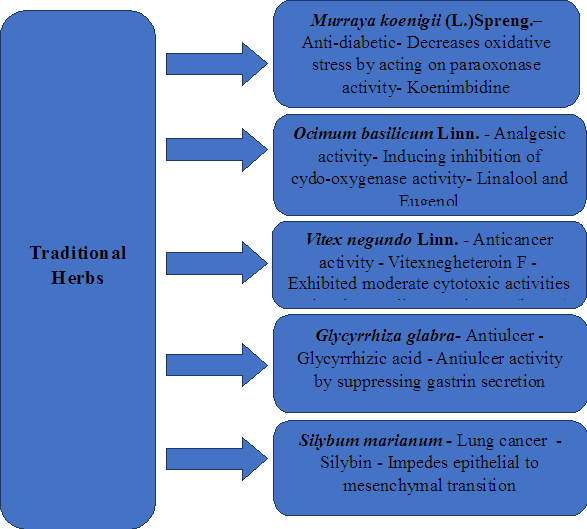
Anti-diabetic Koenimbidine, murrayacine, murrayazolinine. Decreases oxidative stress by acting on paraoxonasei activity Anti-trichomonal Ginnimbine, mahanimbilol, girinimbiol Act against trichomonas gallinae For oral health Essential oil By stimulating the salivation process Vasodilation Mahanimbilol, murrayazolinine. By acting on negative chronotropic effect Anti-oxidation activity Mahanimbine, koenigine Increases the ash content in the liver and reduction in hepatic malondialdehyde in kidney Anti-cancer activity Mahanimbine, girinimbine, mahanine. Murrayafoline Increase the death of cancerous cell proteasome inhibitor Effect on bronchial disorders Girinimbine, mahanine By blocking 5-lipooxygenase activity Effect on dental caries Isomahanine, murrayanol and mahanine Inhibition of cavity formation Anthelmintic activity Mahanine, koenimbidine Cause paralysis Wound healing effect Mahanine, mahanimbicine, mahanimbine and essential oil Act against inflammatory cells and the collagen deposition was reduces Protects the eyes and improves eyesight Essential oil, vitamin a Eye sight improvement Anti-ulcer activity Mahanimbine and essential oil Effect against lesion index, area and percentage of lesion and on ulcer Anti-microbial activity Mahanimbine, murrayanol and mahanine, Inhibition of topoisomerase I Anti-diarrheal activity Kurryam, koenimbine, koenine Prostaglandin E2-induccd enter pooling and reduction in gastrointestinal motility Immunomodulatory activity Mahanimbine, mahanince Increase in phagocytic index by removing carbon partical from blood Antipyretic activity Murrayacine, murrayazolinine. Decrease in fever Anti-alzheimer’s activity Isomahanimbine, murrayazolidine. Improves the values of protective antioxidants
| Anti-analgesic activity | Girinimbine, mahanine, mahanimbine, isomahanimbine | Anti -nociceptive effects |
|---|---|---|
| Effective digestive system | Mahanine, murrayafoline | Stimulates digestive enzymes |
| Anti-inflammatory activity | Ginnimbine, mahanine, mahanimbine, isornahanimbine | Cox-inhibitory property |
| Ocimumbasilicum Linn. | ||
| Analgesic activity | Linalool and Eugenol | Inducing inhibition of cydo-oxygenase activity. Inhibition of pain mediators biosynthesis like prostaglandin, prostacyclin and oploid receptor interactions |
| Anti-inflammatory activity | Estragole, methyl cinnamate, methyl eugenol, α-bergamotene, α-cadlnol, linalool, eugenol and linoleic acid | Inhibition of pro-inflammatory mediators along with the Stimulation of anti-Inflammatory cytokines. Decreased production of nitric oxide. Inhibition of lipoxygenase and cyclooxygenase enzymes |
| Antimicrobial activities | Eugenol, linalool and Estragole | Showed broad spectrum antimicrobial activity against various pathogenic strains of bacteria, virus, fungus, and parasites. |
| Anti-bacterial activity | Eugenol, linalool, Estragole, 1,8-cineole and α-terpineol | The degradation of the cell wall of bacteria, damage to cytoplasmic membrane proteins, the binding of proteins, leakage of cell contents, and coagulation of cytoplasm and depletion of the proton motive force. |
| Antiviral activity | Eugenol, apigenin, linalool and ursolic acid | The inhibitory activity by preventing the viral attachment and thereby preventing its entry Into the host cell. Inhibits the production of hepatitis B virus through the Interfering with viral infection and replication. |
| Anti-fungal activity | Estragole, linalol, eugenol and methyl cinnamate | Reducing DNA binding formation of aflatoxins, secondly by reacting with ROS increased by aflatoxins. Inhibition of the growth of mycelium, spore germination, and elongation of germ tube |
| Larvicidal, Insecticidal and Anti-parasitic activity | Linalool, ketones (2-Dodecanone, Pulegone) | Acts upon biosynthesis of isoprenoid that has been shown to restrict the growth of malarial parasite. Acts as a defense mechanism against herbivorous insects and as a repellent against various arthropods |
| Anti-neoplastic and anticancer properties | Eugenol, ursolic acid, linalool, isoeugenol | Restriction of the growth of cancer cells by induction of apoptosis and cellular blockade. The activity against cell proliferation in Michigan Cancer Foundation-i cells. Inhibition of synthesis of DNA and possess potent cytotoxic activity against tumour cell. |
| Anti-osteoporotic effect | Apigenin, linalool and eugenol | Induces apoptosis in mature osteodasts and inhibits bone resorption and induces osteoblastic differentiation. |
| Antioxidant activity | Rosmarinic acid, estragole, linalool, eugenol, methyl cinnamate, linoleic acid, α-cadinol and α-bergamotene | The scavenging of free radicals. The protection against oxidative stress by increasing the level of antioxidative defence enzymes. |
| Anti-ulcer activity | Eugenol, linalool, methyl eugenol, anthocyanins and 1,8-cineone | The decrease in the pepsin and acid production, lipoxygenase inhibitory, histamine antagonistic and antisecretory effects. |
| Cardioprotective and hepatoprotective properties | Eugenol, linalool, rosrnarlnic acid | The preventing hyperlipidemia, protecting hepatic tissue from oxidant damage, and preventing hepatic fibrosis |
| Hypoglycemic action | Apigenin, diosmetin, genistein, kaempferol, luteolin and rosmarinic acid | Glucose utilization, enhanced production of glycogen in liver due to Increase in the level of regulatory enzymes expression, and stimulation of secretion of insulin from pancreas |
| Immunomodulatory activity | Eucalyptol, linalool, methyl eugenol, estragole, germacrene, and α-becgamoten | Immune cell proliferation; thereby modulating both cell- mediated and humoral immune responses. Stimulation of anti-inflammatory cytokines. |
| Vitex negundo Linn. | ||
| Antioxidant activity | Vitexnegheteroins | Iridoid glycosides 19–20 exhibited weaker antioxidant effects with IC50 values >20 µm. |
| Antioxidant activity | Nishindacin A and Isonishindacin A | Compounds showed weak radical-scavenging effects on stable free radical, with scavenging activity (%) of 27.14% and 25.80%, respectively. |
| Antioxidant activity | (3S,5R,10S)-3-[(β-D- glucopyranosyl)oxy]- labd- 8,13-dien-16,15-olide and (3S,5R,10S)-3-hydroxy-labd-8,13- dien16,15-olide | Possessed inhibitory activities on LPS-induced NO production. Compounds exhibited strong the activity of inhibition against NO production, and was the strongest inhibitor with IC50 value of 15.8 ± 1.38 µm. Compounds also showed significant inhibition of IL-1β and IL-6 level. The anti-inflammatory mechanism of compound was associated with its inhibition on inos, COX-2 and NF-κb signal pathways. |
| Antimicrobial activity | 9-epivitexnegundin | Evaluated for its antimicrobial activity but the activity was not mentioned. No significant activity in cytotoxicity assays (IC50 > 100 µm) was reported. |
| Antifungal activity | Vitegnoside | Exhibited antifungal activity against T. Mentagrophytes and C. Neoformans with MIC value of 6.25 µg/ml. |
| Antifilarial activity | 4,5-diethyl-30 -ethoxy-pyro flavone | Exhibited significant antifilarial activity in dose dependent manner |
| Antioxidant activity | Vitexdoin F | Exhibited stronger activity than ascorbic acid using DPPH radical-scavenging assays |
| Antioxidant activity | Vitexnegheteroin E | Exhibited antioxidant and inhibitory activities on lipopolysaccharide-induced NO. |
| Anticancer activity | Vitexnegheteroin F | Exhibited moderate cytotoxic activities against human liver carcinoma (hepg2) cell lines |
| Antioxidant activity | Vitexnegheteroin G | Exhibited antioxidant activities using ABTS scavenging activities. |
| Anti-inflammatory activity | (9R)-O-β-D- glucopyranosyloxy-2,5- megastigmen-4-one and (3S,4R)- dihydroxy-7,8-dihydro-β-ionone 4-O-β-D-glucopyranoside | All compounds showed anti-inflammatory activity and obvious inhibitory activity (IC50 > 100 µm), respectively. |
| Glycyrrhiza glabra | ||
| Antiulcer | Glycyrrhizic acid and glabridin, glabrene | Antiulcer activity by suppressing gastrin secretion |
| Antimycobacterial | Isoliquiritigenin | The antibacterial efficacy of glabridin towards Gram- negative and Gram-positive bacteria was registered and the highest efficacy was shown towards Gram-positive bacteria as well as H37Ra and H37Rv mycobacterial strains. |
| Uterine relaxant and analgesic | Licocoumarin, licochalcone, isoliquiritigenin, and glabridin | Roots and rhizomes extract exhibited an aphrodisiac efficacy in vivo and this activity is attributed to the presence of glycyrrhizin as the active ingredient |
| Corticosteroidal activity | Liquiritigenin, glycyrrhizin, and 18-glycyrrhetinic acid | Glycyrrhizin is broken down in the intestine and exhibits an anti-inflammation effect comparable with that of corticosteroid hormones, including hydrocortisone. |
| Antiallergic | Glycyrrhizin | Glycyrrhizin, liquiritigenin, and 18 - glycyrrhetinic acid are the main components responsible for the antiallergic effects of licorice and they act by inhibiting Immunoglobulin E (IgE) production in ovalbumin-induced asthmatic mice and effectively prevented the scratching behavior and passive cutaneous anaphylactic reaction in mice. Therefore, they can be used to treat allergic diseases caused by IgE, such as dermatitis and asthma. |
| Hepatoprotective | Liquiritoside and glycyrrhetic A | Glycyrrhizin has been reported to be used in the treatment of acetaminophen-induced hepatotoxicity and it acts by inhibiting CCl4-induced membrane lipid peroxidation |
| Anti-inflammatory | Glycyrrhizin and glycvrrhetic A | Glycyrrhizic acid suppresses the activity of cyclooxygenase and the formation of prostaglandin E2, preventing platelet aggregation indirectly |
| Anticancer | Licochalcone A | Licochalcone E that was isolated from G. inflate root extract, showed potent cytotoxic activity in comparison with the famous antineoplastic drugs |
| Antimalarial | Glycyrrhizin, Iicohkone,glycvrrhetinic acid | The antimalarial efficacy of chalcones as they found that chalcones completely eradicated P. yoelii parasite in mice without any toxic side effects |
| Antiviral activity | Glycyrrhizin and 18-glycyrrhetinic acid | Methanolic licorice extract exhibits potent anti-fungal effectiveness towards Chaetomium funicola M002 and Arthriniumsacchari M001 and this activity is due to the glabridin active compound |
| Antihyperglycemic | Glycyrrhizin | Root extract of G. glabra exhibited antidiabetic and lipid- lowering activities when administered to albino mice at low doses |
| Antitussive activity | Isoliquiritigenin and glycyrthizin | Pharmacologically, it was reported to treat bronchial cough, catarrh, and sore throat and these activities may be attributed to the existence of glycyrrhizin, which helps relieve congestion in the upper respiratory tract by accelerating the secretion of the bronchial mucosa |
| Anti-HIV | Glycyrrhizin | Glycocoumarin, licopyranocoumarin, and licochalcone A exhibited growth inhibition of the giant cell structure in cell cultures infected with HIV without any cytotoxic activity |
| Silybum marianum | ||
| Antimicrobial activity | Silymarin | Destabilizes mature biofilm; inhibits tbe secretion of hydrolases; mediates destruction of membrane - Candida albicans |
| Antimicrobial activity | Silymarin | Interacts with beme - Plasmodium falciparum |
| Antimicrobial activity | Dehydroisosilybin | Inhibits Leishmania infantum promastigotes - Leishmania infantum |
| Antimicrobial activity | Silymarin | Reduces the granulomatous periovularreactionintbe liver and decreases hepatic fibrosis in mice infected with S.mansonii– schistosomiasis |
| Antimicrobial activity | Silymarin | Exerts antibacterial, antiadherence, and antibiofilm effects - MRSA 43300 |
| Antimicrobial activity | Silybin | Inhibits RNA and protein synthesis in gram-positive bacteria - B. Subtilis |
| Antimicrobial activity | Silybin | Inhibits RNA and protein synthesis in gram-positive bacteria - S. Epidermidis |
| Antimicrobial activity | Silymarin | Inhibits the expression of the HCV core gene in the 3a genotype; blocks viral entry and transmission – HCV |
| Antimicrobial activity | Silybin | Attenuates cellular functions involved in T-cell activation, proliferation, and HIV-I infection - HIV-I |
| Antimicrobial activity | Silymarin | Inhibits MAYV replication and attenuates MAYV-induced oxidative stress - Mayaro virus |
| Gastric cancer | Silymarin | Inhibits growth and apoptosis through modulation of the MAPK signaling pathway |
| Prostate cancer | Silymarin | Induces cytotoxicity |
| Hepatocarcinoma | Silybin | Downregulates the Slit-2/Robo-1 pathway and mir-92-3p; upregulates mir223-3p and mir16-5p |
| Lung cancer | Silybin meglumine | Impedes epithelial to mesenchymal transition |
| Breast cancer | Silybin | Induces autophagy via ROS-dependent mitochondrial dysfunction and loss of ATP involving BNIP3; prevents 12-O-tetradecanoylphorbol- 13-acetate (TPA) and phorbol 12-myristate 13-acetate (PMA) induced MMP-9 expression and VEGF secretion via inactivation of the Raf/MEK/ ERK pathway and blockade of AP-1 activation via MAPK signaling pathways |
| Breast cancer | Silybin | Reduces the migratory and adhesive capacities of MDA- MB-231 cells, as evidenced by evaluation of the levels of b1- integrin and the downstream molecules Cdc42, Raf-1 and D4GDI; impairs mitochondrial dynamics and biogenesis |
| Wound healing | Silymarin | Exerts antioxidative and anti-inflammatory effects |
| Silybin gel | 0.2% silybin gel treated wounds showed more collagen fibers, fibroblasts, and proliferating blood capillaries | |
| Dehydrodiconiferyl alcohol | Exerts anti-inflammatory activity through inactivation of NF-kb pathways | |
| UVA-induced skin damage | Silymarin | Targets infiltrating CD11b+ cells in mouse skin, prevents UV radiation-induced |
| Silymarin, silybin, and 2,3-dehydrosilybin | Immunosuppression and oxidative stress in mouse skin | |
| Silymarin | Prevents apoptosis partially through inhibition of the caspase-8 pathway | |
| 2,3dehydrosilybin | Reduces UV radiation-induced DNA damage | |
| Silymarin | Partially reduces UV-induced apoptosis by activating the Akt, SIRT1, and MAPK pathways | |
| Hair loss | Silybin | Increases hair-inductive properties via Akt and Wnt/- catenin signaling activation in human dermal papilla cells |
| Skin aging | Silybin | Prevents or manages advanced glycation end product (AGE)-mediated pathologies |
| Skin irritation | Silybin | Exhibits retinoic acid like activity in keratinocytes |
Table 3: Pharmacological activities of different herbs.
Herbal medicines contain more bioactive components than synthetic drugs, and possess health benefits superior to those provided by chemically synthesized drugs. Since consumers are increasingly focusing on natural food alternatives as a result of changing lifestyles, the application of herbs extracted bioactive components in the formulation of functional foods and nutraceuticals is gaining immense popularity in the modern era, in addition to basic nutrition. Globally, health organizations are focusing on using natural herbs for their identification, extraction, bioavailability, and pharmacological properties in the light of safety concerns regarding synthetic medicines. Plant phytochemicals in natural medicinal herbs possess higher antioxidant properties than chemically synthesized medicines in terms of radical scavengers, hydrogen donors, and singlet oxygen quenchers. Formulations for treating various ailments can be made from herbal medicines with quality assurance.
Role of Different Herbs in Prevention of COVID - 19
Infections of COVID-19 can be minimized by using curry leaves mouthwash containing essential oils and saponin [27]. Inhibitors of glycoprotein adhesion on the surface of SARS- CoV-2 found in essential oils and extracts of Ocimum genus species prevent viral replication and therefore strengthen the immune system. COVID-19 can be managed with Ocimum species [28]. As a potential drug molecule for treating SARS CoV-2 (COVID 19), phyto-compounds from Vitex negundo including oleanolic acid, ursolic acid, 3b-acetoxyolean- 12-en-27-oic acid, and isovitexin interact with the PLpro via hydrogen bonds [29]. A significant decrease in ACE2 expression in the small intestine is observed after treatment with Glycyrrhiza glabra root extract, which may represent an entry point for transport of nutrients SARS CoV-2.Silybin, an active constituent found in Silybum marianum exhibited higher binding affinity with targets in SARS-CoV-2 in comparison to the drugs against SARS-CoV-2 [30].
Application of Herbal Plants in Formulation of Functional Foods and Nutraceuticals
Large amounts of food formulation based on functional benefits of medicinal plants are marked throughout the world depending on nutrigenomics of inhabitants in a particular region. These food products ranging from baked items, snacks, ready to eatables and beverages are fetching higher marginal profits due to their therapeutic properties besides nutrition.A variety of developed food products have depicted to reduce the incidence of chronic and other commonly prevailing disabling disorders among consumers and thus have proved to potential contributors of enhancing health and wellness of consumers [31]. A number of herbal plant infusion available in market as ready to serve drinks, instant tea, or squashes have been found to possess antidiabetic properties due to presence of functional ingredients including phenols, flavonoids, tannins, alkaloids, essential oils that have been validated in increasing sugar metabolism by stimulating excessive insulin secretion and maximising excretion of sugar by causing excessiverenal dieresis [32]. The nutraceuticals made from derivatives of medicinal plants have revealed to possess antimicrobial, anti-depressant, anti- anxiety, anti-dementia, anti-convulsions, anti-inflammatory effects and prevent the body from metabolic diseases that leads to different types of complications. Nutritional therapist has becoming an emerging discipline with promising impact focusing on utilisation of plant-based nutraceuticals and functional foods for treatment of chronic ailments. Some of the commonly available herbal based nutraceuticals are discussed in table 3.
| S.NO. | Product name | Ingredients | Health benefits |
|---|---|---|---|
| 1. | Health Kart HK Vitals Multivitamin with Multimineral, Taurine& Ginseng Extract | 100% RDA of vitamins like Vitamin C, Vitamin A, Biotin and Vitamin B12, 8 essential minerals including iron, magnesium, copper, zinc, manganese, chromium, iodine and selenium, Standardised ginseng extracts derived from Panax ginseng, Special amino acids blend including essential amino acids and branched chain amino acids. | Get 3 times the amount of Zinc and Calcium for enhanced immunity |
| Fortified with amino acids to aid muscle development | |||
| Complete With Anti-Oxidising Natural Extracts Like Ginseng | |||
| Contains all essential vitamins and 8 essential minerals to conveniently balance your diet. | |||
| 2. | Nutrabay Wellness Curcumin Extract with Piperine 1000mg | Curcumin Extract, Piperine Nigrum Extract (Piperine), Glidant (INS 553 (iii)) and Diluent (INS 460 (i)) | Anti-inflammatory |
| Powerful Antioxidant | |||
| Mental Health Support |
Carbamide Forte Garcinia Cambogia 3000mg for Weight Loss Supplement, 60% HCA & Chromium Garcinia Cambogia Extract, Piper Nigrum Extract, Binder (INS 1404), Firming Agent (INS 341), Anticaking Agent (INS 460 (i) & INS 551), Stabilizer (INS 1201), Thickener (INS 464), Emulsifier (INS 466), Antifoaming Agent (INS 1521)
3.
Nutrabay Wellness Milk Thistle Extract (Silymarin Marianum)1000mg
Milk Thistle Extract (Silymarin Marianum), Glidant (INS 553 (iii)) and Diluent (INS 460 (i))
4.
Fast & Up Ashwagandha (KSM-66) 600mg, 5% Withanolides – Natural Vitality Booster
Ashwagandha (KSM-66) (Withaniasomnifera)- (5% Withanolides) Root Extract
5.
Wellbeing Nutrition Slow Liver Health | High Strength Milk Thistle, Arjuna &Berberry Milk Thistle, Kasani, Himsra, Vitamin D, Vitamin E, Berberry, Daruharidra, Arjuna
6.
7. Healthyhey Nutrition Panax Ginseng 400Mg
Foresta Organics Brain Health with Brahmi, Shankhpushpi& Gingko Biloba
8.
Shankhpushpi, Brahmi, Ginkgo Biloba
Wellbeing Nutrition Apple Cider Vinegar w/ Mother & Garcinia Cambogia
Himalayan Red and Gold Apples, Pomegranate, Garcinia Cambogia
Doctor’s Choice Trans4orm | 4 Forms of CARNITINE Blend | CLA | Garcinia Cambogia
Black Pepper Extract, CLA, Garcinia Cambogia, Vitamins, TRANS4ORM Blend
11.
Rapid Fat Burn, Appetite Suppression, Natural Weight Loss, Carb Blocker, Reduce Emotional Cravings, Improve Metabolism Liver Care Boost Metabolism Powerful Antioxidant Promotes Vitality, Energy and Vigor Promotes Muscle Strength and Endurance Supports Immune System and general wellness Liver protection Reduces Inflammation Control Cholestrol Improves Fat Metabolism Improve Digestion Panax Ginseng Root Extract 400mg (20% Ginsenosides) Supports physical & intellectual work capacity Improves Alertness Reduce Anxiety Control Mood Swings Better Eye Health Enhanced Memory Retention Heathy Weight Loss Boosts Metabolosm Improves Heart Health Supports Glowing Skin Helps Digestion Skin & Hair Blood Pressure Anti-Imflammatory Lowers Cholestrol Promotes Fat Burning Regulates Cravings Weight Management Increases Metabolism
| 12. | Neuherbs Plant Based Green Coffee Instant Charge in Classic Coffee Flavour (20 Effervescent tablets) | Green Coffee Beans Extract, Cholorogenic Acid, Natural Caffeine, Vitamin B6, Vitamin B12 | Helps boost up metabolism |
|---|---|---|---|
| Helps fuel up daily energy level instantly, Aids in reducing fatigue & daily body exhaustion | |||
| 13. | Foresta Organics Menz-X Health with Shilajit, Ashwagandha, Kaunch& Safed Musli | Shilajit, Kaunch, Akarkara, Ashwagandha & Safed Musli | Helps boost stamina |
| Helps enhance male libido | |||
| Helps improve energy levels | |||
| Helps improve potency | |||
| Manages stress and fatigue | |||
| 14. | Dr Vaidya’s Stress Relief | Ashwagandha, Tagar, Brahmi, Jatamansi | Helps combat anxiety & promote sound sleep |
| 15. | Bigmuscles Nutrition Natural Neem Extract (800mg) | Organic Neem Extract | Promotes Radiant Skin |
| Supports Immune System | |||
| Acne Relief | |||
| Improves Mood | |||
| 16. | Bigmuscles Nutrition Natural Neem Extract (800mg) | Tila (Sesamum indicum) seed powder, | Beneficial for skin elasticity |
| Honey, | Advanced anti-aging formula | ||
| Water, | |||
| Amino acid blend 7% (Glycine, L- Proline, L- Alanine, L-Hydroxyproline, L-Arginine, L-Lysine), Rose hips extract, Aloe vera extract, Gajar (Daucus carota) powder, | |||
| Glutathione, | |||
| Badam (Prunus amygdalus) Kernel powder, | |||
| Tila (Sesamum indicum) oil, | |||
| Pumpkin seed powder, | |||
| Agathi (Sesbania grandiflora) flower extract, | |||
| Nature Identical flavouring substances, | |||
| Flaxseed powder, | |||
| Cranberry extract, | |||
| Sodium Hyaluronate, | |||
| Moringa leaf extract, | |||
| Blueberry extract, | |||
| Vitamin E, | |||
| Zinc, | |||
| Green tea extract, | |||
| Preservatives (INS 202, INS 211), | |||
| Sitawar powder |
Table 5: Commonly available herbal supplements in market.
17. Patanjali Nutrela Diabetic Care
Himalayan Organics Pcos Multivitamin Supplement 2000Mg
Myo-Inositol, Alpha Lipoic Acid, AlgasCalcareas, Caonositol, Vitamin D2, Folate, Chromium Picolinate
18.
Fructo-oligosaccharides, Diabetic Care is a scientifically designed formulation to help manage blood sugar levels and weight. High Oleic, Sunflower Oil, Stabilizer (INS 414), Caseinates, Hydrolysed whey peptide, Diluent (Maltodextrin), Emulsifier {INS 322(i), INS 415}, Anti-caking agent (INS 551), Mineralsn 0.4% (Phosphorus, potassium, Zinc, Tricalcium phosphate, Maganesium, Ferrous fumarate, Manganese, Copper, Iodine, Selenium, Molybdenum, Chromium), Nature-identical flavouring substances, Bitter gourd, Gudmar (Gymnerasytvestre) Extract (0.1%), Kokam (Garcinia indica) Powder (0.1%), Giloy (Tinosporacardifolia), Taurine, Banaba leaves extract (0.1 %), Vitamin Premix (0.06%) {Vitamin B1, Vitamin B2 (Bio-fermented), Vitamin B3, Vitamin B5, Vitamin B6, Vitamin B7, Vitamin B12 (Bio-fermented)} Sweetener (INS 950), INS 955), Jamun seed powder, Licorice extract 0.01%, Fenugreek, Rosemary Extract (0.01 %), Cinnamon Extract (0.01%), Myo- inositol, Alpha-lipoic acid, L-camitine, Vitamin D (Bio-fermented) (0.01%) Acne Control Weight Management Hormonal Balance Minimizes Facial Hair
| 19. | Wellbeing Nutrition Melts Testo Power Testofen, Himalayan Shilajit, Ginkgo Biloba – Plant Based (30 Oral Strips) | Testofen*(A patented Fenugreek extract), Pure Himalayan Shilajit, Ginkgo Biloba, Saffron | Increases Testosterone Production |
|---|---|---|---|
| Reduce Stress & Uplifts Mood | |||
| Supports Lean Muscle Gain | |||
| Enhance Performance | |||
| Improve Stamina | |||
| Boosts Energy Levels | |||
| 20. | Nutrova Complete Omega 3 | Algal extract containing 17% DHA | DHA is an omega-3 fat that forms structures of our brain, nerves, eyes and skin and also regulates inflammation |
Table 6: Commonly available herbal supplements in market.
| Taxonomy | Murrayakoenigii | Ocimumbasilicum | Vitex negundo | Glycyrrhiza glabra | Silybum marianum |
|---|---|---|---|---|---|
| Kingdom | Plantae | Plantae | Plantae | Plantae | Plantae |
| Subkingdom | Tracheobionta | Tracheobionta | Tracheobionta | Tracheobionta | Tracheobionta |
| Super division | Spermatophyta | Spermatophyta | Spermatophyte | Spermatophyte | Spermatophyte |
| Division | Magnoliophyta | Magnoliophyta | Magnoliophyta | Magnoliophyta | Magnoliophyta |
| Class | Magnoliopsida | Magnoliopsida | Magnoliopsida | Magnoliopsida | Magnoliopsida |
| Subclass | Rosidae | Asteridae | Asteridae | Rosidae | Asteridae |
| Family | Rutaceae | Lamiaceae | Verbenaceae | Fabaceae | Asteraceae |
| Genus | Murraya J. Koenig ex L. | Ocimum | Vitex Linn. | Glycyrrhiza | Silybum |
| Species | Murrayakoenigii (L.) Spreng. | Ocimumbasilicum Linn. | Vitex negundo Linn. | Glycyrrhiza glabra | Silybum marianum |
Table 7: Taxonomy classification of herbs.
Conclusion
An overview of the distribution, ethnobotany, metabolites, ethnopharmacology, and potential medicinal uses of different herbs was provided in this review. It is also important to explore and discuss the clinical efficacy and toxicity studies. Due to the controversy surrounding herbal drug characterization, the secondary metabolites in extracts of all herbs must be identified and characterized analytically. Considering that herbal drugs may interact with other drugs and with foods, the effects of herbal extracts on drug-food interactions must be experimentally validated in a clinical setting. A study of high-throughput experiments and DNA microarrays may also provide a platform for researching and developing drugs from natural products thanks to advances in experimental research.
Conflict of Interest
The authors are having no conflict of interest with anyone related to publishing this review paper.
References
-
Gunjan M, Naing TW, Saini RS, Ahmad A, Naidu JR, et al (2015) Marketing trends & future prospects of herbal medicine in the treatment of various diseases. World J Pharm Res 4(9): 132-155.
-
Wojdyło A, Oszmian´ski J, Czemerys R (2007) Antioxidant activity and phenolic compounds in 32 selected herbs. Food Chem 105(3): 940-949.
-
WHO, Food safety.
-
Yankuzo H, Ahmed QU, Santosa RI, Akter SFU, Talib NA (2011) Beneficial effect of the leaves of _Murrayakoenigii_ (Linn.) Spreng (Rutaceae) on diabetes-induced renal damage in vivo. J Ethnopharmacology 135(1): 88-94.
-
Husna F, Suyatna FD, Arozal W, Poerwaningsih EH (2018) Anti-Diabetic Potential of _Murrayakoenigii_ (L) and its Antioxidant Capacity in Nicotinamide-Streptozotocin Induced Diabetic Rats. Drug Res (Stuttg) 68(11): 631- 636.
-
Amna U, Halimatussakdiah, Wahyuningsih P, Saidi N, Nasution R (2019) Evaluation of cytotoxic activity from Temurui (_Murrayakoenigii_ [Linn.] Spreng) leaf extracts against Hela cell line using MTT assay. J Adv Pharm Technol Res 10(2): 51-55
-
Yeap SK, Abu N, Mohamad NE, Beh BK, Ho WY, et al (2015) Chemopreventive and immunomodulatory effects of Murrayakoenigii aqueous extract on 4T1 breast cancer cell-challenged mice. BMC Complement Altern Med 4: 306.
-
Bhandari PR (2012) Curry leaf (_Murrayakoenigii_) or cure leaf: review of its curative properties. Journal of Medical Nutrition and Nutraceuticals 1(2): 92-97.
-
Desai SN, Patel DK, Devkar RV, Patel PV, Ramachandran AV (2012) Hepatoprotective potential of polyphenol rich extract of _Murrayakoenigii_ L.: An in vivo study. Food Chem Toxicol 50(2): 310-314.
-
Gajaria TK, Patel DK, Devkar RV, Ramachandran AV (2015) Flavonoid rich extract of _Murrayakoenigii_ alleviates in-vitro LDL oxidation and oxidized LDL induced apoptosis in raw 264.7 Murine macrophage cells. J Food Sci Technol 52(6): 3367-3375.
-
Sestili P, Ismail T, Calcabrini C, Guescini M, Catanzaro E, et al. (2018) The Potential Effects of _OcimumBasilicum_ on Health: A Review of Pharmacological and Toxicological Studies. Expert Opin Drug Metab Toxicol 14(7): 679-692.
-
Abdoly M, FarnamA, Fathiazad F, Khaki A, Ibrahimi A, et al. (2012) Antidepressant-like Activities of _Ocimum_ _Basilicum_ (Sweet Basil) in the Forced Swimming Test of Rats Exposed to Electromagnetic Field (EMF). Afr J Pharm Pharmacol 6(3): 211-215.
-
Khan MF, Arora P, Dhobi M (2021) A prospective review on phyto-pharmacological aspects of _Vitex negundo_ Linn. Current Traditional Medicine _7_(1): 138-150.
-
Neha B, Jannavi R, Sukumaran P (2021) Phyto- pharmacological and biological aspects of _vitex negundo_ medicinal plant-A review. Journal of pharmaceutical research International 33(29A): 17-32.
-
Saber Batiha GE, Beshbishy AM, Mleeh AE, Abdel- Daim MM, Prasad Devkota H (2020) Traditional uses, bioactive chemical constituents, and pharmacological and toxicological activities of _Glycyrrhiza glabra_ L (Fabaceae). Biomolecules _10_(3): 352.
-
Hasan MK, Ara I, Mondal MSA, Kabir Y (2021) Phytochemistry, pharmacological activity, and potential health benefits of _Glycyrrhiza glabra_. Heliyon 7(6): e07240.
-
Abdel-Latif HM, Shukry M, Noreldin AE, Ahmed HA, Bahrawy AE, et al. (2023) Milk thistle (Silybum marianum) extract improves growth, immunity, serum biochemical indices, antioxidant state, hepatic histoarchitecture, and intestinal histomorphometry of striped catfish, Pangasianodon hypophthalmus. Aquaculture 562: 738761.
-
Jan R, Shah AJ, Wani TU, Farooq S, Jachak SM (2021) Curry Leaf: An insight into its Pharmacological Activities, Medicinal Profile, and Phytochemistry. Science of Spices and Culinary Herbs-Latest Laboratory, Pre-clinical, and Clinical Studies 4: 145-168.
-
McCance KR, Flanigan PM, Quick MM, Niemeyer ED (2016) Influence of Plant Maturity on Anthocyanin Concentrations, Phenolic Composition, and Antioxidant Properties of 3 Purple Basil (_OcimumBasilicum_ L.) Cultivars. J Food Compos Anal 53: 30-39.
-
Ilić AS, Antić MP, Jelačić SC, Šolević Knudsen TM (2019) Chemical Composition of the Essential Oils of Three _Ocimum Basilicum_ L Cultivars from Serbia. NotulaeBotanicae Horti Agrobotanici Cluj-Napoca 47(2): 347-351.
-
Li H, Ge Y, Luo Z, Zhou Y, Zhang X, et al. (2017) Evaluation of the Chemical Composition, Antioxidant and Anti- inflammatory Activities of Distillate and Residue Fractions of Sweet Basil Essential Oil. J Food Sci Technol 54(2): 1882-1890.
-
Gautam LM, SL Shrestha, P Wagle, BM Tamrakar (2008) Chemical constituents from _Vitex negundo_ (Linn.) of Nepalese origin. The Scientific world 6(6): 27-32.
-
Koirala N, Dhakal C, Munankarmi NN, Ali SW, Hameed A, et al (2020) _Vitex negundo_ Linn.: phytochemical composition, nutritional analysis, and antioxidant and antimicrobial activity. Cellular and Molecular Biology 66(4): 1-7.
-
Husain A, Ahmad A, Mujeeb M, Khan SA, Alghamdi AG, et al. (2015) Quantitative analysis of total phenolic, flavonoid contents and HPTLC fingerprinting for standardization of _Glycyrrhiza glabra_ Linn. roots. Herb Med 1(11): 1-9.
-
Wang X, Zhang Z, Wu SC (2020) Health benefits of Silybum marianum: Phytochemistry, pharmacology, and applications. Journal of Agricultural and Food Chemistry _68_(42): 11644-11664.
-
Marceddu R, Dinolfo L, CarrubbaA, Sarno M, Di Miceli G (2022) Milk thistle (_Silybum Marianum_ L.) as a novel multipurpose crop for agriculture in marginal environments: A review. Agronomy 12(3): 729.
-
Gautam S, Shirolkar S, Ahamed SE, Banerjee S, Pal AK, et al (2022) Preprocedural Mouth Rinse in COVID-19 Era- Chemical and Phytotherapeutic Approach. Journal of Primary Care Dentistry and Oral Health 3(1): 1-4.
-
Tshilanda DD, Ngoyi EM, Kabengele CN, Matondo A, Bongo GN, et al (2020) Ocimum species as potential bioresources against COVID-19: A review of their phytochemistry and antiviral activity. International Journal of Pathogen Research 5(4): 42-54.
-
Mitra D, Verma D, Mahakur B, Kamboj A, Srivastava R, et al. (2022) Molecular docking and simulation studies of natural compounds of Vitex negundo L. against papain- like protease (PLpro) of SARS CoV-2 (coronavirus) to conquer the pandemic situation in the world. Journal of Biomolecular Structure and Dynamics 40(12): 5665- 5686.
-
Armanini D, Fiore C, Bielenberg J, Sabbadin C, Bordin L (2020) Coronavirus-19: possible therapeutic implications of spironolactone and dry extract of _Glycyrrhiza glabra_ L.(licorice). Frontiers in pharmacology 11: 558418.
-
Dastpeyman M, Motamed N, Azadmanesh K, Mostafavi E, Kia V, et al (2012) Inhibition of silibinin on migration and adhesion capacity of human highly metastatic breast cancer cell line, MDA-MB-231, by evaluation of beta1- integrin and downstream molecules, Cdc42, Raf-1 and D4GDI. Med Oncol 29(4): 2512-2518.
-
Purohit P, Mishra B (2017) Systematic review on interaction studies of synthetic antidiabetic drugs and herbal therapies. J Pharm Res 16(2): 86-94.
- Management of Ear Keloid with Ksharsutra: A Case Study
- Yoga and Global Sustainability: A Holistic Path to One Earth, One Health
- Autoimmune Diseases in Ayurveda: A Narrative Review with Classical and Modern Perspectives
- Management of Cluster Headache Associated with Pituitary Apophysitis by CERT (Chakrasiddh Energy Release Technique): A Case Report on Energy Rebalancing
- Zygophyllum Geslini Coss : Biochemicals and Antioxidant Activity
- Observations of a Beginner Vaidya