
An Investigation on the Medicinal Plants Promoting Women's Health in the Punjab Province of Pakistan
Pakistan is home to a wide variety of plants used for medicinal purposes, and its citizens regularly use traditional medicine to treat a wide range of conditions. Research excursions were taken throughout the Punjab province, encompassing various rural and tribally populated regions, to document ethno pharmacological herbs used by females to cure multiple ailments. Many women worldwide use natural remedies, and their numbers continue to grow as more and more people reap the potential of herbal medicines for illness prevention and treatment. Plants have historically been used in Pakistan and the nations around it to treat women's health issues. Medicinal plants play a big part in women's healthcare in many rural places. A significant portion of contemporary medications has been generated from medicinal plants. Historically, plants have developed new treatments with a considerable body of adequate data. In light of this, the study was conducted to learn more about the plants used to treat various issues relating to women's health. According to the results, native plants are used a lot in the Punjab region of Pakistan as essential medicines for women's health problems.
Introduction
Traditional Indigenous knowledge about natural products has been handed down orally from generation to generation for as long as human civilizations have existed. However, the value of ethno-medical knowledge in modern pharmacology is in producing innovative drugs. As a result, folklore and conventional medicine have been reduced to several modern pharmaceuticals [1, 2, 3]. By establishing uniform standards, we can ensure that medicinal plants retain their full therapeutic potential.
The history of natural commodities precedes the emergence of human civilizations. Since the beginning, people have had a close relationship with plants. Ancient standing therapies are intended to ensure the therapeutic efficacy of medicinal herbs [1, 4]. Ethnobotany is the scientific study of how people in different cultures see and interact with plants. Humans have always relied on Mother Nature for all their fundamental requirements, and the botanical variety around them piqued his interest. Man’s first interest in plants sprang from his need for food, shelter, and protection; subsequently, his focus switched to treating injuries and illnesses. In truth, pharmacy and botany have always had solid and tight ties since most current medications are derived from plants. However, ethno medical knowledge’s value in modern pharmacology lies in developing innovative drugs. As a result, contemporary medicines have replaced some ancient folk remedies [5]. Almost every kind of illness has been cured by plant resources worldwide, including those affecting the skin, lungs, digestive system, kidneys, heart, ears, ears, nose, throat, kidneys, neurological system, and immune system [6, 7]. There are 265,000 plant species on earth, but less than half have been investigated for their medicinal capabilities and chemical composition. For a decade, it was believed that more than 80 percent of the population in underdeveloped countries depended on medicinal plants to cure various diseases [8, 9]. Today, this number has climbed to about 90 percent. Nevertheless, the World Health Organisation (WHO) has observed that a significant proportion of individuals residing in rural areas of developing countries continue to depend on medications derived from indigenous traditional medicine systems [10, 11]. In general, the human race depends on many plant species, and their requirements are growing as more and more time passes [3].
Pakistan is home to around 6000 medicinal plant species, 600 medicinally significant [12, 13]. These medicinal plants are recommended for use by local healers (akhuns and hakims), responsible for providing advice about health care in rural areas. Approximately 80% of rural Pakistanis rely on Unani, and homeopathic medicine is derived directly or indirectly from medicinal plants [8]. Pakistan’s
Methodology
The literature search was initiated by conducting an extensive background study, specifically emphasizing treatments, including herbal medicines to treat female ailment. A systematic and comprehensive exploration of several electronic databases, including PubMed, Google Scholar, Cochrane Database, Science Direct, Springer Link, Scopus, offline printed books and local civilians, was undertaken to identify pertinent papers published in English from 1975 to June 2023. The search technique diverse biodiversity encompasses nine primary ecological amplitudes, with certain sections endowed with exceptional biodiversity [9]. Pakistan comes somewhat late to the science of ethnobotany compared to other countries. However, in recent decades, researchers from around the country have done extensive work in this area.
Materials and Methods
Study area
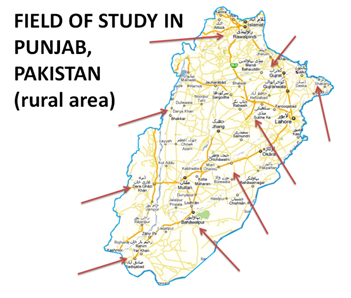
Punjab is mostly a rich region within river basins, but Cholistan southern belt deserts are arid. Weather extremes are noticeable, ranging from the scorching and dry south to the chilly highlands of the north. The Himalayan Mountains can also be located in the far north. Punjab is situated in the north-eastern part of Pakistan, between 31°15′ - 31°45′ N and 74°01′- 74°39′ E in terms of latitude and longitude. On the northern outskirts of Punjab, the Ravi River runs (Figure 1). The environment is ideal for growing a wide variety of medicinal plants. Several medicinal plants supply raw materials for the pharmaceutical industry that thrive in the state’s climatic conditions.
included a variety of terms, such as “herbs,” “medicinal plants,” “herbal compounds,” “herbal remedies,” “ female sickness,” ”gynaecology,” ”amenorrhea,” “anemia,” “oligomenorrhea,” “dysmenorrhea,” “menorrhagia,” “uterine” and “haemorrhaging.” The papers were first evaluated based on their titles and abstracts. A thorough assessment of their whole texts was undertaken to ensure the independence of the chosen studies. In contrast, supplementary examinations were located by meticulously examining the bibliographies of the desired articles.
Results and Discussion
Plant species come from different families that are used to treat female diseases. The plant species, names in the local language, and the plant parts utilized to cure female ailments are listed below. Amaranthaceae and Malvaceae had two plants documented in the family, except for the Asteraceae, which had three plants reported. It was roots that were used most often, followed by leaves, stem bark, and fruits that were used the least. Previous research has shown that these plants contain many phytochemicals (Table 1).
| Plant | Phytochemicals | Reference |
|---|---|---|
| Abrus precatorius Linn. | Flavonoids, triterpene glycosides, saponins, steroids and other terpenoids, fixed oil carbohydrate, protein, tannins, anthocyanins and amino acids. | [14] |
| Achyranthes aspera L. | Terpenoids, quinones, flavonoids, tannins, alkaloids, saponins, glycosides, steroids | [15] |
| Artemisia vulgaris L. | Sesquiterpenoid lactones, flavonoids, coumarins, phenolic acids, sterols, polyacetylenes, carotenoids, vitamins, and cyanogenic glycosides | [16] |
| Artemisia absinthium | Lactones, terpenoids, essential oils, organic acids, resins, tannins, phenols, flavonoids, flavonoid glycosides, phenolic acids, isoflavone glycosides | [17] |
| Cuscuta reflexa Roxb | Alkaloids, flavonoids, lignans, saponins, phenolics, tannins and fatty acids | [18] |
| Abutilon indicum, G. Don. | Flavonoids, phenolic acids, sterols, triterpenes, | [19] |
| coumarins, alkaloids, lactones, megastigmanes and iridoids | ||
| Allium cepa Linn. | Flavonoids, carbohydrates, glycosides, proteins, alkaloids, saponins, acid compounds, reducing sugars and oils | [20] |
| Blumea balsamifera | Monoterpenes, sesquiterpenes, diterpenes, flavonoids, organic acids, esters, alcohols, dihydroflavone, and sterol | [21] |
| Carica papaya L. | Tannin, saponin, alkaloid, flavonoids, and glycoside | [22] |
| Curcuma longa L. | Curcuminoids, alkaloids, tannins, flavonoids, carbohydrates, saponins, and phenols | [23] |
| Hibiscus rosa-sinensis L | Tannins, anthraquinones, quinines, phenols, flavanoides, alkaloids, terpenoids, saponins, cardiac glycosides, protein, free amino acids, carbohydrates, reducing sugars, mucilage, essential oils, and steroids | [24] |
| Psidium guajava L. | Terpenoid steroid, steroids, flavonoids, glycoside, cardiac glycoside, alkaloid, phlobatannin, polyphenol, saponin anthraquinones | [25] |
| Ricinus communis L. | Steroids, terpenoids, saponins, alkaloids, flavonoids, and glycosides | [26] |
Abrus precatorius Linn.
Family: Papilionaceae; Fabaceae Common name: ratti, qirat Uses: Previous literature surveys indicated that Abrus precatorius had been employed in several alternative medical systems. The leaves could treat mouth sores, boils, and other wounds and calm the nerves. Abrus precatorius is not only a powerful aphrodisiac but also an abortifacient, laxative, soothing, and digestive aid. The roots are used to treat gonorrhea, hepatitis, and hemoglobinuria bile. It is believed that the oil that may be derived from the seeds can encourage the development of human hair [27]. Local people used the paste of roots for curing abdominal pains, tumors, and abortion.
Achyranthes aspera L.
Family: Amaranthaceae Common name: aghara, chirchira Uses: The findings of a previous study made it abundantly evident that Achyranthes aspera is a significant medicinal plant. The root extract has a considerable amount of the hormonal action that causes insect molting. They also treat wounds, abdominal tumors, and stomach discomfort. It is often believed that this plant may protect from dangerous animals like wasps and reptiles [28]. Women in the area ground up the roots, leaves, and stem and used it as a paste in the vagina after birth to relieve vaginal discomfort. When cotton wool is soaked in this plant’s root juice and kept in the vagina, it relieves vaginal pain and flows menstruation blockage.
Artemisia vulgaris L.
Family: Asteraceae Common name: majtari, mastaru, buer, charmar Uses: According to the results of previous research, Artemisia vulgaris is often used in traditional Asian medicine to control gastrointestinal discomfort and cure gynecological disorders. As a traditional Chinese medicine, it has a long history of use in treating leprosy and cholera. For the treatment of diarrhea and sores, an essential oil is recommended [29]. The herb is also highly effective in addressing pregnancy issues, labor pain, and severe leucorrhoea. In addition, taking the water extracts (10-20 ml) made from the front part of the flower and the leaves is beneficial in menstrual-related diseases and menopausal disorders.
Artemisia absinthium
Family: Asteraceae Common name: afsanteen, qaisoom Uses: The results of previous research made it clear that Artemisia absinthium is used in Unani medicine to treat chronic fever, hepatitis, and oedema, as well as in Traditional Chinese medicine to treat malignancy by reducing angiogenesis. The Artemisia absinthium plant›s blooms help treat digestive problems, while the leaves lower fever. Its tincture has a high market value and is used as a tonic and digestive aid. Numerous medical disorders, including jaundice, dyspepsia, obesity, anaemia, insomnia, and urinary ailments, have all been linked to the use of this plant. This plant is the source of several topical skin care treatments, wounds that are difficult to heal, and menstrual cramps [30]. Local herbal practitioners use alcoholic extract (10 drops three times a day) to treat premature menopause and to alleviate discomfort in the ovaries.
Cuscuta reflexa Roxb
Family: Cuscutaceae/Convolvulaceae Common name: amar bel Uses: Numerous research studies have shown the effectiveness of Cuscuta reflexa juice as a diaphoretic, astringent, anti- fertility agent, and treatment for itchy skin and jaundice. The entire plant may make a decoction that treats skin conditions, hepatitis, coughing, pneumonia, temperature, sex excitation, irritable bowel syndrome, ulcers, dandruff, and bone joining. Stem decoction reveals beneficial effects in ulcer and liver problems, including laxatives, antihelmintics, sedatives, and diuretics. At the same time, the leaf extract is utilized as an anti-diarrheal and anti-hypertensive. The paste from this plant’s roots treats enlarged testicles, rheumatism, and joint discomfort. It also has abortion, anti-rheumatic, and analgesic effects. Fruit juice is beneficial for jaundice and effective for eczema and scabies as an antipyretic and cough suppressant [31]. According to Dais, washing the vagina after producing an amar bel decoction treats vaginal problems.
Abutilon indicum G. Don.
Family: Malvaceae Common name: kanghi Uses: Previous findings that have been published showed that this plant had been reported in many traditional Indian systems of medicine. Inflammations, ulcers, stomach cramps, headaches, hyperglycaemia, and infections have responded well to treatments, including all or part of this plant. It was utilized by traditional healers to treat various conditions, including gout, TB, ulcers, hepatitis, leprosy, gonorrhoea, pneumonia, malarial fever, piles, and many hemorrhage problems. A decoction from its roots and seeds treats fever and cough. The plant’s roots are a nerve tonic for treating paralyzed and rheumatic pain. Some indigenous communities in India use a powder made from the dry leaves of this herb combined with wheat flour to cure uterine dislocation. A decoction of leaves and roots is often employed to treat oral issues. It has been said that applying a paste made from leaves directly to the site of a scorpion sting may help reduce the agony [32]. Locals made paste from leaves, milk, and sugar crystals (mishri) for leucorrhoea treatment.
Allium cepa Linn.
Family: Amaryllidaceae Common name: onion, piyaz Uses: Allium cepa has been traditionally used for its remedial characteristics in managing various ailments. The essence of Allium cepa proliferated into ancient Greece, where it was used as a blood purifier for athletes. The Greek and Phoenician sailors consumed it to prevent scurvy. Moreover, the Greek physician Hippocrates prescribed onion as a wound healer, diuretic, and pneumonia fighter. Published investigations have shown that Allium cepa is used in homeopathic medicine as a mother tincture to treat various conditions, including diarrhoea, facial paralysis, hay fever, hernia, laryngitis, pneumonia, and trauma. Onion has been used for healing both internally and externally. Internally, onion has been recommended to treat bronchitis, whooping, asthma, and other respiratory problems. It is believed to help loosen lung congestion and expand the airways. Maceration of Allium cepa is used in Hypertension, Diabetes, asthma, bronchitis, expectorant, flu, cough with catarrh, and snake bite. The juice of its bulb is given three times a day for a month for kidney stone disease. Moreover, bulb extracts mixed with mentha leaves are taken orally for a week for epilepsy, hypoglycaemic, hypolipidemic, bacteriostatic, anthelmintic, and rubefacient. They are also used for pulmonary infections, ear infections, demulcent, and mouth ulcers [33]. For menstrual problems, the juice of the bulb is heated and given as four spoonful twice a day. To treat various skin conditions, including acne, gonorrhoea, and skin infections, one or two onion scales are boiled in mustard oil and pulverized, then applied twice daily for 2–3 days.
Blumea balsamifera
Family: Asteraceae Common name: ngai camphor Uses: Previous research has shown that Blume balsaminifera may effectively treat various medical conditions, including wounds, diarrhea, anemia, kidney problems, migraines, stomach issues, and arthritis. The plant’s dried leaves may be smoked to treat symptoms of bronchitis, abdominal pain, and coughing, and they can also be mixed with the leaves of other herbs to create a bath component for women immediately after birth [34]. The locals make a paste from the leaves to relieve painful periods.
Carica papaya L.
Family: Caricaceae Common name: papaya_, papita Uses: Based on the findings of past investigations, the juice extracted from papaya leaves has significantly improved blood coagulation, liver health, and overall platelet count. When the seed is eaten, it kills worms in the intestines. Coughing, pneumonia, and other related diseases are treated by chewing the root and swallowing the juice. Nasal congestion may also be alleviated by chewing the seeds of a ripe pawpaw fruit. Unripe, green papaya has medicinal use as an antibacterial. Green papaya leaf tea is beneficial for various digestive and metabolic issues, including but not limited to chronic indigestion, excessive weight, coronary artery disease, hypertension, and cardiac weakness. The ripe fruit treats bleeding piles, dyspepsia, gastrointestinal, renal, purgative, hypnotic, and tonic issues. Fruits high in chlorophyll are effective against many diseases, including malaria, high blood pressure, insulin resistance, high blood cholesterol, and hepatitis. Roots and bark have been used to treat syphilis, toothaches, abortions, and digestive issues [35]. For thousands of years, _Carica papaya has been used as an abortion agent, prevents pregnancy, increases menstrual flow, and induces lactation. Local used to treat menstrual irregularities (no menstruation, heavy bleeding during menstruation, and pain during menstruation) and to help the mother recuperate after pregnancy.
Curcuma longa L.
Family: Zingiberaceae Common name: turmeric, haldi Uses: According to evidence from previous studies, Curcuma longa is a traditional medicine in Pakistan and India to aid in healing wounds and reducing acne in folk medicine used as a tonic, an antiviral, an antimicrobial, an anti- inflammatory, and a preservation. In addition, it is also used in treating gastrointestinal difficulties such as heartburn, bloating, flatulence, and sores, as well as a variety of other dental and gastrointestinal complaints. Indian villagers traditionally apply a rhizome paste to sore muscles and joints for immediate relief. To treat skin infections and enhance their appearance, tribal women use a paste made from freshly ground rhizomes. Daily use of Curcuma longa reduces the risk of blood clots and high blood sugar levels. Some evidence is that turmeric may help reduce discomfort in the mucous membranes that border the lungs, throat, stomach, and intestines. As a traditional home medicine, turmeric has been used to speed the healing of wounds. It also treats gastrointestinal problems, liver difficulties, leukemia, cardiovascular, rheumatism, menstruation disorders, infectious diseases, and glaucoma. Curcumin is currently considered a good potential “unique drug” often used as a supplement in many countries [36]. Locals mixed turmeric and lodhra herb powder in water and applying it on the breasts is beneficial for breast-related diseases.
Hibiscus rosa-sinensis L.
Family: Malvaceae Common name: gudhal Uses: According to evidence from previous studies, people have relied on the healing properties of the flower to alleviate symptoms of anything from high blood pressure and abdominal discomfort to liver issues. Much evidence indicates that hibiscus has a diuretic effect. Additionally, the fruits may be used to treat sprains, wounds, and other ailments. The flowers may help with heart disease, insulin levels, epilepsy, tuberculosis, etc. A root infusion is employed to cure vaginal infections [37]. Local women use this plant to treat menstrual abnormalities, such as excessive bleeding during menstruation and venereal illnesses. They make a cup of honey-enhanced hibiscus tea to control heavy menstrual bleeding, and drink this 1-2 times per day to reduce symptoms.
Psidium guajava L.
Family: Myrtaceae Common name: amrood, guava Uses: The prior literature survey reveals that eating raw guava leaves first thing in the morning helps to control diabetes. In India, it is common for indigenous communities to employ a traditional practice of utilizing guava leaf-infused tea to manage and averter episodes of diarrhea. Patients with gastrointestinal disorders are sometimes prescribed guava leaf extracts. Guava seeds are a powerful laxative that may relieve bowel problems and empty the intestines in addition to their other applications. The leaves may be eaten right away in the case of a toothache. Guava leaf consumption has been linked to reduced cold and flu symptoms severity. Incredibly beneficial effects have been linked to using guava leaf to alleviate hyperacidity in the stomach [38]. Locals said that root barks of Psidium guajava alleviate symptoms of monthly irregularities and discomfort, and it can also act as an emmenagogue and stop uterine bleeding. Moreover leaf extract resulted in reduced pain intensity.
Ricinus communis L.
Family: Euphorbiaceae Common name: arandi Uses: Evidence from the existing body of work suggested that the oil of Ricinus communis has several practical uses, including as a laxative, a lubricant, and a light source. Moreover, it is often used to induce labor in late pregnancies, on its own or in combination with quinine sulphate. The oil may be injected intramuscular injections or subcutaneously to deliver steroid hormones. Leaves are sometimes given to cattle to boost milk production. A dry powder of the leaves is applied to the skin to ward off aphids, mosquitoes, insects, and rust lice. Oiled and warmed leaves are traditionally applied to the stomachs of youngsters suffering from flatulence. Leaves infused in water are used topically to the eyes and to soothe stomach aches. Lumbago and related pain may be treated with a decoction from the roots, while toothache can be alleviated with a paste from the same ingredients. Some people claim that the bark of some roots may be used as an effective laxative. The juice of the leaves or a poultice rubbed on the breasts stimulates lactation. In cases of drugs like opium poisoning, the fresh juice of the leaves is used as an emetic; it is also said to be effective in jaundice [39]. The locals claim that three seeds are administered to women for anti-fertility after removing their seed coatings, and they will not be able to conceive for several years. Moreover, to stimulate menstruation, take 1-2 leaf juice orally daily in the morning.
Conclusion
In conclusion, this research lays the groundwork for using traditional plants in women’s health care. By assessing the unknown medicinal plants stated, this study is a gift for academics interested in developing and carrying out research-based activities in women’s sickness. Identifying the chemical components responsible for medicinal benefits and exploring their mechanistic routes will help us better understand their folkloric usage. Throughout many rural regions of Punjab, these traditions are ubiquitous and pervasive and serve as the foundation for secondary women’s reproductive health. However, different plants used in women’s healthcare are rarely studied in detail. General ethno pharmacological studies frequently ignore plants’ diversity and relative significance in women’s health issues. Naturally occurring flavonoids are abundant in these medicinal plants, which are potent antioxidants and thus beneficial in female health issues. As the rate of integration with mainstream society rises, expanding the current ethnic pharmacological record of the ethnicities inhabiting Pakistan is critical. It will yield favourable outcomes and potentially increase the value of Pakistan’s abundant natural resources. The current research shows that plants are efficacious in curing various disorders that affect females. Furthermore, as mentioned earlier, all plants contain various bioactive compounds in different chemical categories. Therefore, pharmacological and phytochemical researchers interested in studying plants with bioactive compounds, particularly those with the potential for treating disorders affecting women, should give these plants some attention.
References
-
Pan SY, Litscher G, Gao SH, Zhou SF, Yu ZL, et al. (2014) Historical perspective of traditional indigenous medical practices: the current renaissance and conservation of herbal resources. Evid Based Complement Alternat Med 2014: 525340.
-
Mushtaq S, Abbasi BH, Uzair B, Abbasi R (2018) Natural products as reservoirs of novel therapeutic agents. EXCLI J 17: 420-451.
-
Hosseinzadeh S, Jafarikukhdan A, Hosseini A, Armand R (2015) The Application of Medicinal Plants in Traditional and Modern Medicine: A Review of _Thymus vulgaris_. International Journal of Clinical Medicine 6(9): 635-642.
-
Jamshidi Kia F, Lorigooini Z, Amini Khoei H (2018) Medicinal plants: Past history and future perspective. Journal of Herb med Pharmacology 7(1): 1-7.
-
Akash A, Navneet N, Bhandari BS (2020) Ethnomedicinal Plant Use and Practice in Traditional Medicine. IGI Global, pp: 380.
-
Inoue M, Hayashi S, Craker L (2019) Role of Medicinal and Aromatic Plants: Past, Present and Future. In: Perveen S, et al (Eds.), Pharmacognosy - Medicinal Plants, pp: 320.
-
Mintah SO, Agyei TA, Archer MA, Adjei Junior PA, Boamah D, et al. (2019) Medicinal Plants for Treatment of Prevalent Diseases. In: Perveen S, et al. (Eds.), Pharmacognosy-Medicinal Plants, pp. 320.
-
Ali H, Qaiser M (2009) The ethnobotany of chitral valley Pakistan with particular reference to medicinal plants. Pak J Bot 41(4): 2009-2041.
-
Johnsy G, Sargunam SD, Kaviyarasan V (2012) Indigenous knowledge of medicinal plants used for the treatment of skin diseases by the Kaani tribe of Kanyakumari District. Int Pharm Pharmaceut Sci 4(1): 309-313.
-
Murad W, Azizullah A, Adnan M, Tariq A, Khan KU, et al. (2013) Ethnobotanical assessment of plant resources of Banda Daud Shah, district Karak. Pakistan Journal of Ethnobiology and Ethnomedicine 9(1): 77.
-
Shi Y, Zhang C, Li X (2021) Traditional medicine in India. Journal of traditional Chinese Medical Sciences 8(1): S51-S55.
-
Jan G, Khan MA, Farhatullah JF, Ahmad M, Jan M, et al. (2011) Ethnobotanical studies on some useful plants of Dir Kohistan valleys, KPK Pakistan, Pak J Bot 43(4): 1849-1852.
-
Alamgeer, Sharif A, Asif H, Younis W, Riaz H, et al. (2018) Indigenous medicinal plants of Pakistan used to treat skin diseases: A review. Chin Med 13: 52.
-
Garaniya N, Bapodra A (2014) Ethno botanical and Phytophrmacological potential of Abrus precatorius L.: A review. Asian Pac J Trop Biomed 4(S1): S27-34.
-
Nargatti P, Sudhir P, Kiran W (2021) Phytochemical Profile and Pharmacological Aspects of Achyranthes Aspera Linn- An Overview. Journal of Pharmaceutical Research International 33(34B): 187-206.
-
Ekiert H, Pajor J, Klin P, Rzepiela A, Slesak H, et al. (2020) Significance of Artemisia Vulgaris L. (Common Mugwort) in the History of Medicine and Its Possible Contemporary Applications Substantiated by Phytochemical and Pharmacological Studies. Molecules 25(19): 4415.
-
Batiha GE, Olatunde A, El-Mleeh A, Hetta HF, Al-Rejaie S, et al. (2020) Bioactive Compounds, Pharmacological Actions, and Pharmacokinetics of Wormwood (Artemisia absinthium). Antibiotics (Basel) 9(6): 353.
-
Nooreen Z, Tandon S, Yadav NP, Ahmad A (2021) New chemical constituent from the stem of Cuscuta reflexa Roxb. and its biological activities. Nat Prod Res 35(14): 2429-2432.
-
Gomaa AA, Mamdouh NS, Samar YD, Mohamed SK (2018) Phytochemistry and Pharmacological Activities of Genus Abutilon: A Review (1972-2015). Journal of Advanced Biomedical and Pharmaceutical Sciences 1(2): 56-74.
-
Marefati N, Ghorani V, Shakeri F, Boskabady M, Kianian F (2021) A review of anti-inflammatory, antioxidant, and immunomodulatory effects of Allium cepa and its main constituents. Pharm Biol 59(1): 287-302.
-
Pang Y, Wang D, Fan Z, Chen X, Yu F (2014) Blumea balsamifera- A Phytochemical and Pharmacological Review. Molecules 19(7): 9453-9477.
-
Sharma A, Bachheti A, Sharma P, Bachheti RK, Husen A (2020) Phytochemistry, pharmacological activities, nanoparticle fabrication, commercial products and waste utilization of Carica papaya L.: A comprehensive review. Current Research in Biotechnology 2: 145-160.
-
Kandel B, Mukhopadhyay S (2022) Phytochemical and pharmacological properties of Curcuma longa Linn. Int J Health Sci 6(S6): 3501-3510.
-
Al-Snafi A (2018) Chemical constituents, pharmacological effects and therapeutic importance of Hibiscus rosa- sinensis- A review. IOSR Journal of Pharmacy 8(7): 101- 119.
-
Weli A, Al-Kaabi A, Al-Sabahi J, Said S, Hossain MA, et al. (2019) Chemical composition and biological activities of the essential oils of Psidium guajava leaf. Journal of King Saud University-Science 31(4): 993-998.
-
Yeboah A, Ying S, Lu J, Xie Y, Amoanimaa D, et al. (2021) Castor oil (Ricinus communis): a review on the chemical composition and physicochemical properties. Food Sci Technol 41(2): 399-413.
-
Das A, Jain V, Mishra A (2016) A brief review on a traditional herb: _Abrus precatorius_ (L). IP International Journal of Forensic Medicine and Toxicological Sciences 1(1): 1-10.
-
Anuradha R, Aafrin T (2017) Preliminary phytochemical analysis of _Achyranthes Aspera_. World Journal of Pharmaceutical Research 6(7): 895-904.
-
Ekiert H, Pajor J, Klin P, Rzepiela A, Slesak H, et al. (2020) Significance of _Artemisia_ _vulgaris_ L (common mugwort) in the history of medicine and its possible contemporary applications substantiated by phytochemical and pharmacological studies. Molecules 25(19): 4415.
-
Szopa A, Pajor J, Klin P, Rzepiela A, Elansary HO, et al. (2020) _Artemisia absinthium_ L-Importance in the History of Medicine, the Latest Advances in Phytochemistry and Therapeutical, Cosmetological and Culinary Uses. Plants (Basel) 9(9): 1063.
-
Narmatha G, Sandhiya S, Kokila J, Poovizhi T, Savitha T (2021) Review on Pharmacological and Therapeutic Potential of Cuscuta species. Medicon Medical Sciences 15: 18-31.
-
Abat JK, Kumar S, Mohanty A (2017) Ethnomedicinal, Phytochemical and Ethnopharmacological Aspects of Four Medicinal Plants of Malvaceae Used in Indian Traditional Medicines: A Review. Medicines (Basel) 4(4): 75.
-
Teshika JD, Zakariyyah AM, Zaynab T, Zengin G, Rengasamy KR, et al. (2018) Traditional and modern uses of onion bulb (_Allium cepa_ L): a systematic review Critical Reviews in Food Science and Nutrition 59(sup1): S39-S70.
-
Silalahi M (2021) Utilization and bioactivity of _Blumea_ _balsaminifera_ (L) DC. GSC Biological and Pharmaceutical Sciences 16(2): 224-228.
-
Kaur M, Talniya NC, Sahrawat S, Kumar A, Stashenko E (2019) Ethnomedicinal uses, phytochemistry and pharmacology of _Carica Papaya_ Plant: A compendious review. Mini-Reviews in Organic Chemistry 16(5): 463- 480.
-
Fuloria S, Mehta J, Chandel A, Sekar M, Rani NNIM, et al. (2022) A Comprehensive Review on the Therapeutic Potential of _Curcuma longa_ Linn in Relation to its Major Active Constituent. Curcumin Front Pharmacol 13: 820806.
-
Sivaraman CM, Saju F (2021) Medicinal value of _Hibiscus_ _Rosa_ sinensis: A Review. International Journal of Pharmacognosy and Chemistry 2(1).
-
Ahamad A, Ansari SH (2022) A Review On Multipurpose Medicinal Properties Of Traditionally Used Psidium Guajava Leaves. Asian J Pharm Clin Res 15 (8): 9-22.
-
Ch Malathi S, Sriya P, Md A, Pavan (2018) A Review on Phytochemical and Pharmacological Properties of _Ricinus communis._ Int J Pharma Res Health Sci 6(4): 2651-2655.
- Management of Ear Keloid with Ksharsutra: A Case Study
- Yoga and Global Sustainability: A Holistic Path to One Earth, One Health
- Autoimmune Diseases in Ayurveda: A Narrative Review with Classical and Modern Perspectives
- Management of Cluster Headache Associated with Pituitary Apophysitis by CERT (Chakrasiddh Energy Release Technique): A Case Report on Energy Rebalancing
- Zygophyllum Geslini Coss : Biochemicals and Antioxidant Activity
- Observations of a Beginner Vaidya