
Biodiversity and Ethnobotany of Medicinal Plants of the Small Songo City, Angola
This study is the first ethnobotanical survey investigating the biodiversity of medicinal plants in the small Songo city (Northern Angola), as well as the indigenous knowledge related to the use of plant resources in healthcare by the local population. The study aims to document and help preserve and pass on this invaluable heritage to future generations. A field study was conducted between March 2020 and September 2021. A total of 522 informants were interviewed using the semi-structured method and random sampling technique. Demographic characteristics of the participants, local names of plants, parts used, and plant preparation methods were investigated and recorded. The database was analyzed using Relative Citation Frequency. The majority (71%) of the medicinal plants in Songo are of exotic origin compared to 29% of the native plants. Of the 62 species identified and considered medicinal according to popular use in the small Songo city, 53 spp. (85.5%) are dicots and 9 spp (14.5%) are monocots. The study recorded 62 plant species belonging to 57 genera and 30 families used as medicines for the treatment of various human diseases in Songo city. The most common families were Fabaceae (7 spp., 11.5%), Solanaceae (6 spp., 9.8%), Asteraceae (4 spp., 6.6%), Malvaceae (4 spp., 6.6%), Poaceae (4 spp., 6.6%), Anacardiaceae (3 spp., 4.9%), and Euphorbiaceae (3 spp., 4.9%). The main morphological forms are shrubs (36.0%), tree (26.1%), and herbs (23.6%). Leaves are the most commonly used organ (69.9%). Decoction (44.4%) and oral intake (60.4%) are the most common modes of remedy preparation and administration (47%), respectively. The main human diseases recorded are cough (10.3%), anaemia (7.9%), malaria (6.9%), diarrhea (6.1%), and yellow fever (5.7%). This high number of medicinal plant species documented shows that herbal remedies are highly utilized to treat various diseases among the local community living in the small city of Songo. Therefore, efforts are needed to improve the level of conservation of these species, and also to preserve traditional knowledge of remedies. We conclude that pharmacological and biological studies are necessary to scientifically support the medical potential of these species in the laboratory since they are constantly used in small city of Songo.
Introduction
Since ancient times man has always used plants for his basic needs of food, housing, clothing, health, fuel, flavoring, ornamentation, and handicrafts, among others [1, 2, 3]. Indigenous knowledge about the use of medicinal plants for the treatment of various diseases is a traditional and cultural practice since the beginning of human evolution [4]. Approximately 85% of the world’s population living in developing countries rely exclusively on traditional medicinal plants for their health care [5, 6]. In Africa, up to 80% of the population uses traditional medicine for primary health care [7]. Some people use only traditional medicine, while others combine it with conventional medicines. The use of medicinal plants by the local population accounts for 70% or more of the basic health care delivery system [8]. Also, 80% of the population of southern Africa uses traditional medicine to meet their primary health care needs, with the diverse genetic base of medicinal plants offering the opportunity for bio-prospecting [9, 10, 11]. Due to their perceived negligible side effects and low cost, the use of medicinal plants in healthcare systems is becoming popular worldwide [12].
A great deal of research has been conducted worldwide on medicinal plants and their phytotherapeutic properties in the treatment of various diseases have been validated. According to Salmerón-Manzano, et al. [13] compounds of plant origin have been and still are an important source of compounds for drugs. Within this context, the need to preserve this popular knowledge is gaining traction, stimulating the intensification of studies on the properties and molecules present in each plant that is still unknown in Angolan flora, particularly in the small city of Songo. According to Pilla, et al. [14], as the relationship with the land undergoes modernization and contact with urban centers intensifies, the transmission network of knowledge about medicinal plants may change, making it urgent to rescue this knowledge and traditional therapeutic techniques. Rescuing this knowledge and its therapeutic techniques is a way of recording an informal way of learning that contributes to the appreciation of popular medicine, as well as generating information on the health of the local community.
Angola is one of the countries vulnerable to epidemic diseases such as yellow fever, malaria, or cholera, specific events that can overburden (formal) health services. Malaria, acute respiratory and diarrheal diseases, tetanus, and malnutrition, combined with poor access to health care, damaged infrastructure, and lack of qualified health professionals, are the main causes of mortality [15]. Despite the great diversity of Angola’s vascular flora, with a total of 7,296 taxa, of which 1,069 are endemic [16], and the recognized importance of plants for local populations [17, 18], only a few studies have addressed the traditional use of plants in Angola. For exemple, Monizi, et al. [18], Lautenschläger, et al. [19], Heinze, et al. [20], Göhre, et al. [21], Mawunu, et al. [22] and Urso, et al. [23]. Angola’s plant pharmacopeia is still lacking information [24]. There is therefore an urgent need for ethnobotanical studies in the biologically and culturally diverse regions of Angola, in order to get at least an idea of the relative importance of existing traditional knowledge, which is threatened by increasing pressure on vegetation due to socio-economic development and global change [25]. These studies are also essential to evaluate the diversity of medicinal species in our country, allowing comparison with other continents and with the African continent as a whole, in which it is estimated that about 10% of its flora is used in traditional medicine [26].
Most of the residential areas in the northern region of Angola, such as Songo city, benefit from good soil and climate conditions that favor the growth of plants of various uses, including medicinal, ornamental, and food plants, whether cultivated or wild, which are known and used by the local populations. However, the ethnopharmacological knowledge held by these populations is not recorded and is still transmitted orally from generation to generation. In order to prevent the complete disappearance of this cultural heritage and to enrich the traditional Angolan pharmacopeia, this research was carried out with the aim of safeguarding the ancestral knowledge held by the residents of northern Angola, specifically of the small Songo city.
Material and Methods
Study Area Characterization
Small city of Songo is the seat of Songo municipality, the latter being one of the 16 municipalities that make up Uíge province. Small city of Songo is about 40 km north of Uíge city (Figure 1) [27].
Songo town is located 40 km from the capital of Uíge Province. The municipality of Songo occupies a land area of 2,800 km2 and has a population of 65,323 inhabitants. It is bounded to the north by the Municipalities of Damba and Bembe, to the east by the Municipalities of Mucaba and Bungo, to the west by the Municipality of Ambuila, and to the south by the Municipality of Uíge [28]. Subsistence agriculture constitutes the main source of income and food for the people of Songo city. The main crops are grown: Manihot esculenta, Musa spp., Phaseolus vulgaris, Ipomoea batatas, Persea americana, Pachylobus edulis, Coffea canephora, Zea mays, Arachis hypogaea, Brassica spp., Solanum spp. among others.
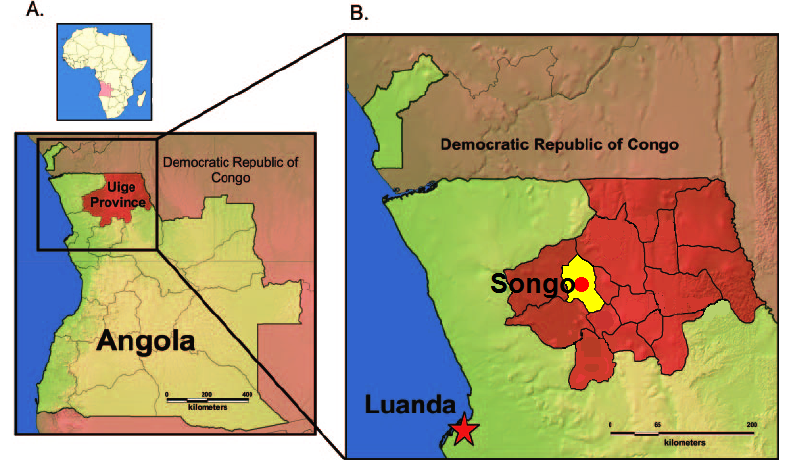
According to Diniz, et al. [29], Songo municipality is located in agricultural zone 3 with alternating wet and dry climates due to its altitude. The zone presents a hot and humid tropical climate, with two seasons (rainy and dry). The rainy season is longer from September to December and from February to May. The dry season is from May to September. The average annual temperatures are around 21- 23°C and the relative humidity is very high throughout the year, ranging from 81-90% with an average value of 86%. According to the Köppen classification [30], the region’s climate is type AW, considered tropical savannah and forest, with a dry winter and rainy summer and annual rainfall of around 1,152 mm. The rainy season coincides with the hot season, and has an average duration of about 7 months, starting at the end of September and lasting until the middle or beginning of May. For most of the area, the rainiest month is November, December, and sometimes March and April. As regards the hydrographical basin in Songo, the municipality is crossed by several rivers and lagoons, of which the most important are: Lukunga and Loge.
Data Collection and Taxonomic Identification
The ethnobotanical data survey took place from March 2020 to September 2021. A semi-structured questionnaire on the use of medicinal plants was prepared and submitted orally to 250 informants, of which 143 (57.1%) were females and 107 (42.9%) males. Some Socio-demographic indicators were considered such as gender, age, level of education of informant, etc. The ethnobotanical and biodiversity aspects studied were: the part (s) of the plant used in traditional medicine, the habit, the methods of preparation and administration of therapeutic recipes, and the medicinal indications based on the knowledge of the local community.
Data collection was carried out in a randomized manner, applying an interview based on a semi-structured questionnaire followed by direct observation in the field. The inclusion criteria adopted were that the informant should reside in the study area, have traditional knowledge of the use of medicinal plants, be willing to participate in the interview, and be between 18 and 78 years old.
In order to identify the plants mentioned, informants were asked to show the medicinal species. For taxonomic identification and nomenclature, the APG III [31] was followed. Also, the names of the species and their authors were confirmed and updated by specific bibliography and also through the website https://powo.science.kew.org. In addition, the specimens were taxonomically identified at the Department of Agronomy of the Polytechnic Institute of the University of Kimpa Vita.
Data Analysis
The medicinal plant species reported in this study were classified on the basis of their ecological characteristics, including morphological type and biological type. The following parameters were used for further data analysis: number of plant species, number of recipes, number of citations, number of informants, etc. The study data were coded using Microsoft Excel version 2010; Origin 8.5 Pro was used to construct the graphs. Further, the usual descriptive statistics were used for the calculation of the average.
Results and Discussion
Socio-Demographic Characteristics of the Informants
Table 1 presents the sociodemographic characterization of the informants interviewed in the small city of Songo.
| Parameters | Percentage | |
|---|---|---|
| Gender | Male | 43 |
| Gender | Female | 57 |
| Age group (years) | [≥ 35] | 45 |
| Age group (years) | [36; 55] | 32 |
| Age group (years) | [56 ≤] | 24 |
| Educational level | Illiterate | 6 |
| Educational level | Adult literacy school | 7 |
| Educational level | Primary school | 14 |
| Educational level | Secondary school | 42 |
| Educational level | University | 31 |
| Main activity | Unemployed | 6 |
| Main activity | Civil Service | 16 |
| Main activity | Agriculture | 65 |
| Main activity | Trade | 8 |
| Main activity | Other activities | 5 |
Table 1: Profile of the informants.
A total of 522 informants were interviewed, of which 57% were women and 43% were men (Table 1). In the culture of the Kongo people since ancient times, women have a historical and cultural value acquired from their mothers and grandmothers in which they play an important role in the health and food security of the family. Moreover, in rural and peri-urban areas of northern Angola, women use traditional therapy more often than men because they are the guarantors of household activities [32] and family health. In agreement with Monizi, et al. [32] and Vasconcelos, et al. [33], the predominance of women can be justified by considering that throughout history, in various societies, women have been assigned the responsibility for domestic chores and childcare. Also, they are the main ones responsible for the home treatment of the simplest illnesses through plants. Regarding Carvalho [34], women are very evident in the transmission and maintenance of knowledge and habits associated with the plant world, since they are the main holders of ethnobotanical knowledge. This also follows the same patterns found by Salhi, et al. [35] and Hmamouchi [36], where women use medicinal plants more than men.
The average age of the respondents was 35 years. The majority (45%) of the informants are aged 35 years or less, of which 25% are women and 20% are men (Table 1). In addition, the average age of the women interviewed in this study is higher (50 years) than that of the men (33 years) and the general average (35 years). In the African oral tradition and of the Kongo people in particular, the older the individuals, the more ethnobotanical knowledge they accumulate and the more experienced they are, the longer they live, making them the great living libraries of the traditional society. Also, the average age of the informants in this study shows that the major holders of knowledge on medicinal plants are young, so it is possible that this cultural heritage will be conserved for a long time to come. Moreover, the art of healing with plants is thus linked to age and experience. According to Vwakyanakazi, et al. [37], the oldest have the confidence of their entourage and enjoyed a good reputation as healers in their environment, which confirms the writings.
With regard to marital status, married people are in the majority (70%), both women (45%) and men (25%), followed by single people (10%), separated (8%) and divorced with only 2% (Table 1). The fact that most of the informants are married would be in line with the socio-cultural context of the region, where married people take care of the health of their children and grandchildren.
As for the level of education, the greatest majority (94%) of the informants are literate and only 6% are illiterate (Table 1). Of the 94% literate informants, 42% have done secondary school, 31% have done higher education, 14% have done primary school and only 7% have done adult literacy school. The fact that the vast majority of informants know how to read and write can prevent the erosion of traditional knowledge because it can be written down and easily transmitted to future generations.
With regard to the main source of income and food, the majority (65%) of informants live from subsistence agriculture, selling the surplus of their agricultural production (Table 1). Furthermore, 16% of informants are civil servants, 8% are traders, 6% have odd jobs, and 5% practice other activities (hunting, fishing, tailoring, etc.). According to data from the Angolan National Census [28], agriculture is practiced by 46% of the Angolan population and is the largest source of income and employment.
Diversity of Medicinal Plants
The scientific name, voucher sample number, local name, methods of preparation and administration, and categories of use of the medicinal plants used in the small city of Songo are presented in Table 2. We documented a total of 85 vernacular names of medicinal plants. A total of 62 species distributed in 57 genera and 30 botanical families were identified. Of the 62 species identified and considered medicinal according to popular use in the region, 53 spp. (85.5%) are dicots and 9 spp. (14.5%) are monocots. Furthermore, the families with the highest number of genera are Asteraceae, Lamiaceae, Malvaceae, and Poaceae with 4 genera each. In addition, the genus that presented the highest number of species was Solanum (4 species), with the other genera presenting only one species each.
| Taxa | Vernacular names | Status of Medicinal Plants | Life forms | Parts used | Ethnomedicinal Use | Preparation Methods | Administration route |
|---|---|---|---|---|---|---|---|
| 1. Acanthaceae | |||||||
| Brillantaisia owariensia P.Beauv | Malembalemba (Kik.) | Native | Shrubby | Leaves | Eczema, Bladder pain, Cough, open Frontanella, Hypertension, Pulmonary infection | Grinding, decoction, Toast, | Dermal, Oral intake, Head tie, Drops on wound, Agglutination |
| Dianthera secunda (Lam.) Griseb. | Makaya ma menga (Kik.), Folha de jeová | Exotic | Shrub | Leaves | Anaemia | Decoction | Oral intake |
| 2. Amaranthaceae | |||||||
| Dysphania ambrosioides (L.) Mosyakin & Clemants | Kinsidi nsimba (Kik.), Santa maria (Port.) | Exotic | Perrenial herb | Leaves | Anaemia, Fever, Cough, Inflammation, Asthma | Decoction, Grinding, | Oral intake, Anal route, Dermal, Friction, Bath |
| 3. Amaryllidaceae | |||||||
| Allium sativum L. | Alho (Port.) | Exotic | Perrenial herb | Bulb | Worms (Amoeba), Low blood pressure, Diarrhoea | Maceration, Chewing | Oral intake |
| 4. Anacardiaceae | |||||||
| Anacardium occidentale L. | Nkaziwa (Kik.), Cajueiro (Port.) | Exotic | Shrub | Leaves, Stem bark | Caries, Toothache, Cough, Diarrhoea, Vertige | Decoction | Agglutination, Oral intake, |
| Mangifera indica L. | Mangueira (Port.) | Exotic | Tree | Stem bark | Backache, Diarrhoea, Hemorroids, Urinary tract infection | Grinding, Maceration, Trituration | Oral intake, Anal route, Bath |
| Spondias mombin L. | Mingiengie (Kik.), Gajageira (Port.) | Exotic | Tree | Leaf | Liquid breastmilk, Anaemia | Chewing, Decoction, Grinding | Oral intake, Agglutination |
| 5. Annonaceae | |||||||
| Annona muricata L. | Sapi sapi (Port.) | Exotic | Shrub | Leaf | Stomach ache, Hepatitis, Gastric, Yellow fever, Stomach ache, Anaemia, Hypertension | Decoction | Oral intake |
| 6. Apocynaceae | |||||||
| Catharanthus roseus (L.) G.Don | Pervenche de Madagascar (Fr.), Beija mulata (Port.) | Exotic | Shrub | Leaf | Diabetes, Worms (amoeba), | Decoction | Oral intake |
| 7. Arecaceae | |||||||
| Elaeis guineensis Jacq. | Ba dia ngazi (Kik.), Palmeira (Port.) | Native | Tree | Fruit | Spleen | Trituration, Grinding, Chewing, Decoction, | Dermal, Oral intake, |
| 8. Asphodelaceae | |||||||
| Aloe buettneri A. Borger | Ba dia nseke (Kik.) | Native | Perrenial herb | Leaf | Cough, Typhoid, Cough | Maceration | Oral intake |
| 9. Asteraceae | |||||||
| Aspilia kotschyi (Sch. Bip. ex Hochst.) Oliv | Lubindi lua mbwa (Kik.) | Native | Annual herb | Leaf, Inflorescence | Cough, Asthma | Decoction | Oral intake |
| Chromolaena odorata (L.) R.M. King & H.Rob. | Kongo ya sika (Ling.) | Exotic | Shrub | Leaf | Injury | Grinding | Drops on wound |
| Emilia coccinea (Sims) G.Don | Malalalu (Kik.) | Native | Annual herb | Leaf | Dermal infection | Trituration | Dermal |
| Gymnanthemum amygdalinum (Delile) Sch.Bip. | Malulu, Nlulu (Kik.) | Native | Small Tree | Leaf | Swollen belly, stomach ache, Dermal infection, Anaemia, Varicella, Malaria, Measles, Worms | Trituration, Decoction, Grinding | Anal route, Oral intake, Dermal Anal route |
| 10. Brassicaceae | |||||||
| Brassica rapa subsp. chinensis | Lezo (Kik.), Couve-branca (Port.) | Exotic | Perrenial herb | Leaf | Anaemia, diabetes | Decoction | Oral intake |
| 11. Burseraceae | |||||||
| Pachylobus edulis G.Don | N’safu (Kik.), Safueiro (Port.) | Native | Tree | Leaf | Toothache, Caries, Anaemia, Yellow fever, Diarrhoea | Decoction, Grinding | Agglutination, Oral intake, |
| 12. Caricaceae | |||||||
| Carica papaya L. | Kikila (Kik.), Mamoeiro (Port.) | Exotic | Shrub | Leaf, Root bark, seed | Malaria, Hepatitis, Swollen belly, worms, stomach ache, Typhoid, Yellow, fever, backache, toothache, anaemia, diarrhoea, caries | Decoction, trituration, chewing, maceration, Grinding | Oral intake, bath, anal route |
| 13. Combretaceae | |||||||
| Terminalia catappa L. | Figueira (Port.) | Exotic | Shrub | Stem bark | Diarrhoea | Grinding | Oral intake |
| 14. Convolvulaceae | |||||||
| Ipomoea batatas (L.) Lam. | Mbala za nzenzo (Kik.), Batateira (Port.) | Exotic | Creeping | Leaf | Gastric ulcer, anaemia, gastric, hypertension | Trituration, cooking | Oral intake |
| 15. Crassulaceae | |||||||
| Kalanchoe petitiana A.Rich. | Luyikiyika, Ntontozi (Kik.) | Exotic | Undershrubs | Leaf | Spleen | Grinding, decoction | Anal route |
| 16. Euphorbiaceae | |||||||
| Manihot esculenta Crantz | Madioko (Kik.), Mandioqueira (Port.) | Exotic | Shrub | Leaf | Bee-sting | Grinding | Dermal |
| Alchornea cordifolia (Schumach. & Thonn.) Müll.Arg. | Gunze (Kik.) | Native | Small Tree | Leaf | Vaginal wall inflammation, anaemia | Maceration, decoction | Vaginal bath, oral intake |
| Jatropha curcas L. | Mpuluka (Kik.) | Exotic | Shrub | Leaf | Teigns, dermal infection, stomach ache | Grinding | Dermal |
| Manihot esculenta Crantz | Madioko (Kik.), Mandioqueira (Port.) | Exotic | Shrub | Tuber | Eye problems, Inflammation, Hepatitis, Eye problems, bee- sting | Chewing | Eye drops, dermal, anal route, |
| 17. Fabaceae | |||||||
| Cajanus cajan (L.) Huth | Wuandu (Kik.), Ervilha (Port.) | Exotic | Shrub | Leaf | Vertige | Grinding, maceration | Head wash, bath |
| Erythrina abyssinica DC. | Mungomenena (Kik.) | Native | Small Tree | Leaves, Stem bark | Anaemia, yellow fever | Decoction | Bath, oral intake |
| Millettia versicolor Welw. ex Baker | Mbota (Kik.) | Native | Tree | Stem bark | Sprain | Peeling | Tying |
| Phaseolus lunatus L. | Mambandi (Kik.) | Exotic | Climbing | Leaf | Dermal infection | Grinding | Dermal |
| Senna occidentalis (L.) Link | Manioka nioka (Kik.) | Exotic | Shrub | Root bark | Stomach ache | Grinding | Anal route, Oral intake |
| Tephrosia vogelii Hook.f. | Bualala, Mbaka (Kik.) | Native | Shrub | Leaf | Fever | Trituration | Bath |
| Vigna unguiculata (L.) Walp. | Mbuengue (Kik.), Feijão macunde (Port.) | Native | Climbing | Seed, Leaves | Yellow fever, Abscess, stretch mark | Decoction, grinding | Oral intake, dermal, anal route |
| 18. Hypericaceae | |||||||
| Harungana madagascariensis Lam. ex Poir. | Ntunu (Kik.) | Native | Tree | Stem bark | Yellow fever | Grinding | Bath |
| 19. Lamiaceae | |||||||
| Mentha arvensis L. | Hortelã (Port.), Manguentena (Kik.) | Exotic | Annual herb | Leaf | Spleen, impotence | Grinding | Anal route, oral intake |
| Mesosphaerum suaveolens (L.) Kuntze | Nkama nsongo (Kik.) | Exotic | Shrub | Leaf | Fever, asthma, cough | Decoction, gringing | Bath, oral intake, dermal |
| Ocimum americanum L. | Mansusunsusu (Kik.) | Native | Shrub | Leaves, Stem bark | Cough | Decoction, grinding, squeeze | Oral intake, dermal, friction, bath |
| 20. Lauraceae | |||||||
| Persea americana Mill. | Mvoka (Kik.), Abacateiro (Port.) | Exotic | Tree | Seed, Leaves, stem bark | Scabies, anaemia, measles, varicella, hypertension, typhoid, | Decoction, gringing | Dermal , Oral intake, agglutination, friction, |
| 21. Malvaceae | |||||||
| Abelmoschus esculentus (L.) Moench | Kingombo (Kik.), Quiabo (Port.) | Exotic | Annual herb | Leaves, fruit | Scorch marks, diabetes, stomach ache, swollen belly, impotence, gastric | Trituration, maceration, decoction, cooking | Dermal, Oral intake, |
| Adansonia digitata L. | Nkondo (Kik.), Imbondeiro (Port.) | Native | Tree | Stem bark | Typhoid | Grinding | Oral intake |
| Cola acuminata (P.Beauv.) Schott & Endl. | Nkazu, Makazu (Kk.), Cola (Port.) | Native | Tree | Nuts | Fontanella | Grinding | Head tie |
| Hibiscus acetosella Welw | Ngai-ngai (Ling.), Ozélia (Port.) | Native | Shrub | Leaf | Anaemia | Cooking, decoction | Oral intake |
| 22. Meliaceae | |||||||
| Azadirachta indica A.Juss | Cura tudo (Port.) | Exotic | Tree | Stem bark | Malaria, Diabetes | Decoction, maceration | Oral intake, Agglutination |
| 23. Myrtaceae |
Ngavua, Mfuluta (Kik.), Goiabeira (Port.)
Psidium guajava L.
Exotic Small tree Leaves, fruit Gastric, diarrhoea, cough, nauses, Chewing, decoction Oral intake
24. Nyctaginaceae
Boerhavia diffusa L. Linioko ya tembe (Ling.) Exotic Perrenial herb Seed Poisoning Grinding Oral intake
25. Poaceae
Sinde Sinde, Sinda (Kik.), Chá cachinde (Port.)
Cymbopogon citratus (DC.) Stapf
Eleusine indica (L.) Gae Kimbanzi (Kik.) Native Annual herb Leaf Toothache Decoction Agglutination Mukuku (Kik.), Cana-de-açucar (Port.) Exotic Annual herb Stem,leaves Saccharum officinarum L. Zea mays L. Masangu (Kik.), Milheiro (Port.) Exotic Perrenial herb Silk, seed Exotic Perrenial herb Leaf Yellow fever Decoction Oral intake Yellow fever, hypertension, vomiting, hepatitis Chewing, decoction, squeeze Oral intake Decoction, toast, place the seed in the child’s hand Kidney stones, bladder pain, pharyngitis, cough Oral intake, dermal, sowing
26. Rubiaceae
Morinda lucida Benth Nsiki, Munsiki (Kik.) Native Tree Leaves, root bark, stem bark Nauclea latifolia Sm. Lolo (Kik.) Native Shrub Root bark, stem bark Malaria, typhoid, worms, diabetes Decoction Oral intake, bath Malaria, worms, diabetes Decoction Oral intake
27. Rutaceae
Lala dia nsa (Kik.), Limoeiro (Port.)
Citrus × limon (L.) Osbeck Exotic Shrub Root bark, leaves, fruit Lala dia nsa (Kik.), Limoeiro (Port.) Citrus latifolia (Yu. Tanaka) Yu.Tanaka Grinding, decoction, sucking, squeeze Stomach ache, cough, high cholesterol level Oral intake Exotic Shrub Leaf Cough, hypertension Decoction Oral intake
28. Solaceae
Capsicum frutescens L. Ndungu (Kik.) Exotic Shrub Leaf Malaria Maceration Oral intake Nicotiana tabacum L. Mfomo (Kik.),Tabaco (Port.) Exotic Perrenial herb Leaf Hemorroids Grinding Dermal, friction Solanum aethiopicum L. Beringela (Port.) Exotic Shrub Leaves, fruit Teigns, hiccups Toast, chewing Dermal, Oral intake,
| Solanum lycopersicum L. | Tomateiro (Port.) | Exotic | Perrenial herb | Leaves | Fever, hepatitis, blood flow, headache, migraine, typhoid | Grinding | Dermal, anal route, nose drpos, friction, oral intake |
|---|---|---|---|---|---|---|---|
| Solanum macrocarpon L. | Lezo (Kik.), Couve-preta (Port.) | Native | Shrub | Leaf | Stomach ache, hypertension, breast pain | Cooking, decoction, grinding | Oral intake, friction |
| Solanum scabrum Mill. | Kinsumba (Kik.) | Native | Perrenial herb | Fruit | Hiccups | Cooking | Oral intake |
| 29. Urticaceae | |||||||
| Laportea aestuans (L.) Chew | Vidi (Kik.) | leaves/ native | Perrenial herb | Leaf | Anaemia | Decoction | Agglutination |
| 30. Zingiberaceae | |||||||
| Aframomum melegueta K.Schum. | Ndungo za nzo (Kik.) | Native | Perrenial herb | Seed | Cough | Chewing | Oral intake |
| Zingiber officinale Roscoe | Nzibidi (Kik.), Gengibre (Port.) | Exotic | Perrenial herb | Rhizome | Influenza, cough, angina | Chewing | Oral intake |
Table 3: Medicinal plants collected in the residential area of the small city of Songo. Legend: Fr. (French), Kik. (Kikongo), Lin
Species richness by the botanical family shows that Fabaceae (7 spp., 11.5%), Solanaceae (6 spp., 9.8%), Asteraceae (4 spp., 6.6%), Lamiaceae (4 spp., 6.6%), Malvaceae (4 spp., 6.6%), Anacardiaceae (3 spp., 4.9%) and Euphorbiaceae (3 spp., 4.9%) were the plant families with most relevant species used for medicinal purposes. Also, of the remaining 23 families, each has only one or two species. Our findings agree with research conducted by Pathy, et al. [38] in the DRC; Ong, et al. [39] in Bangladesh in India, and Myanmar; Novotna, et al. [40], Jendras, et al. [41], Gonçalves, et al. [42], Lautenschläger, et al. [19], Göhre, et al. [21], Urso, et al. [23] in Angola; Mahwasane, et al. [43] in South Africa, Ribeiro, et al. [44] in Brazil and Amujoyegbe, et al. [45] in Nigeria or Ngarivhume, et al. [46] in Zimbabwe which reported Leguminosae to be dominant family. In accordance with Van Wyk [47], traditional African medicine is dominated by plants of the Fabaceae family. Furthermore, the Fabaceae, are typically used in traditional medicine in Angola and also have other uses [48]. Also, the medicinal use of taxa from this family can probably be explained by the numerous bioactive elements they contain, including tannins, alkaloids, coumarins, steroids, saponosides, flavonoids, and isoflavonoids [49].
Other families found to be important in this study, such as Solanaceae, Asteraceae, Lamiaceae, Malvaceae, Anacardiaceae, and Euphorbiaceae are, like the legumes, large tropical families [50], and they are common and species-rich in Angola.
The families Asteraceae, Euphorbiaceae, Solanaceae, Lamiaceae, and Anacardiaceae have accounted for the highest number of the small city of Songo medicinal plants which could probably be due to their high species and the compositions of secondary metabolites, for instance, Asteraceae contained triterpenoid, saponin, and steroid [51]; Euphorbiaceae contained diterpenes, triterpenes, flavonoids, saponin, and tannin [52].
The species of Fabaceae/Leguminosae are commonly used as medicinal plants for treating fever, malaria, diarrhea, stomach pain, and worms [19, 40, 42, 53].
Plants of the Malvaceae families such as Abelmoschus esculentus, Adansonia digitata, Cola acuminata, Gossypium barbadense, Hibiscus acetosella, medicinal plants of the Lamiaceae family, are used to cure skin disease, diabetes, hemorrhoids, headache, caries, anaemia, infertility women, etc.; further those of Solanaceae, Datura metel, Lycopersicum esculentum, Nicotiana tabacum, Solanum macrocarpon, are used to treat Rheumatism, migraine, hemorrhoids, headache, tooth decay, etc. Also, medicinal plants of the Lamiaceae family, such as Ocimum basilicum, O. gratissimum, O. minimum, Vitex mandiensis, are used to treat migraine, hemorrhoids, and cough, asthma, pneumonia, fever, malaria, and anaemia. Anacardiaceae
species (e.g., Mangifera indica, Pseudospondias microcarpa, and Spondias mombin) are used to treat caries, diarrhoea, hemorrhoids, anaemia, yellow fever, and human breast milk. Finally, another important medicinal plant family is Asteraceae, which is widely used in traditional medicine in many African countries such as Angola and DRC. In DRC and Angola, species of Asteraceae such as Ageratum conyzoides, Bidens pilosa, Chromolaena odorata, Emilia coccinea, Tithonia diversifolia, Vernonia amygdalina are commonly used in the treatment of malaria, hookworm, bronchitis, female infertility, cough, hemorrhoids, wounds, repeated abortion [19, 21, 38, 41, 53].
However, with regard to the status of the medicinal plants documented in the small city of Songo, the majority (67.4%) are of exotic origin - that is, they are plants introduced voluntarily or not by man or by abiotic factors. In addition, the remaining 32.6% of the medicinal plants encountered are native of the African continent. Human activities, in particular urban agriculture and uncontrolled urbanization, contribute to the impoverishment of the native urban flora of Songo, leaving room for exotic plants introduced voluntarily or not by man. According to Kimpouni, et al. [54], anthropic actions remain the causes of changes in floristic diversity. They can be broken down as follows: anarchic urbanization not responding to any urban planning master plan, construction of physical infrastructure without prior environmental and social impact study.
Relative frequency of citation
Table 3 shows the eight top ethnomedicine species most used in the small city of Songo.
| Records (FC) | RFC | |
|---|---|---|
| Carica papaya L. | 37 | 0.07 |
| Mangifera indica L. | 29 | 0.06 |
| Persea americana Mill. | 27 | 0.05 |
| Pachylobus edulis G.Don | 24 | 0.05 |
| Annona muricata L. | 23 | 0.04 |
| Spondias mombin L. | 21 | 0.04 |
| Gymnanthemum amygdalinum (Delile) Sch.Bip. | 20 | 0.04 |
| Mesosphaerum suaveolens (L.) Kuntze | 20 | 0.04 |
Table 4: Evaluation of useful most ethnomedicine species used in the small city of Songo.
In the present study, RFC values ranged from 0.002 to 0.07. The most important and widely (Table 3) used medicinal plants species were Carica papaya (Caricaceae) with a use relative frequency of citation (RFC) of 0.07 (37 citations) followed by Mangifera indica (0.06, 29 citations), Persea americana (0.05, 27 citations), Pachylobus edulis (0.05, 24 citations), Annona muricata (0.04, 23 citations), Spondias mombin (0.04, 21 citations), Gymnanthemum amygdalinum (0.04, 20 citations), and Mesosphaerum suaveolens (0.04, 20 citations). The ethnomedicinal plant species having high RFC values indicated their abundant use and widespread knowledge among the local communities.
Life Forms and Plant Parts Used
Figure 2 shows the percentage of morphological types of plants used for therapeutic purposes in small city of Songo households.
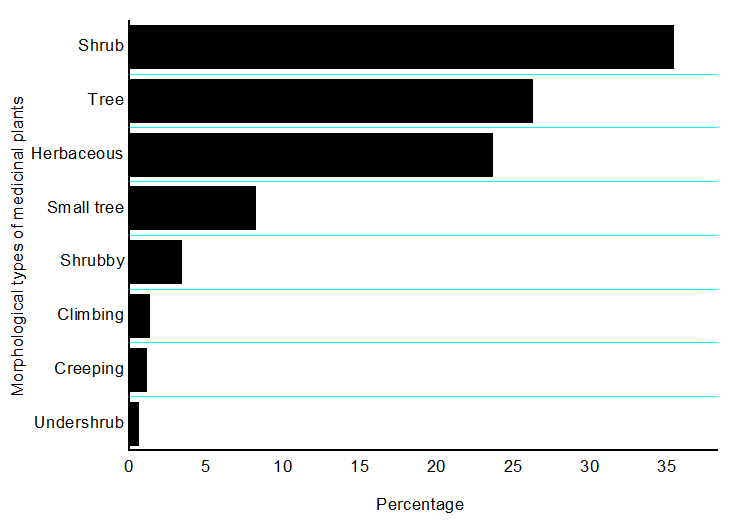
The results of this research (Figure 2) show that the medicinal flora documented consists of shrubs (36.0%), followed by tree (26.1%), and herbaceous plants (23.6%), being perennial herbs (14.0%), and annual herbs (9.6%). Other morphological forms found in the study area are small tree (8,2%), shrubby (3.1%), climbing (1.3%), creeping (1%), and undershrub (0.6%). Lautenschläger et al. [19] in their study on the first large-scale ethnobotanical survey in Uíge province (Angola) reported that 35% of the plants were trees, 26% were perennial herbs, 16% were shrubs, 12% were vines, 10% were annuals and less than 1% were parasites.
Also, figure 3 shows the percentage of which plant parts are used for medicinal purposes by the residents of Songo city.
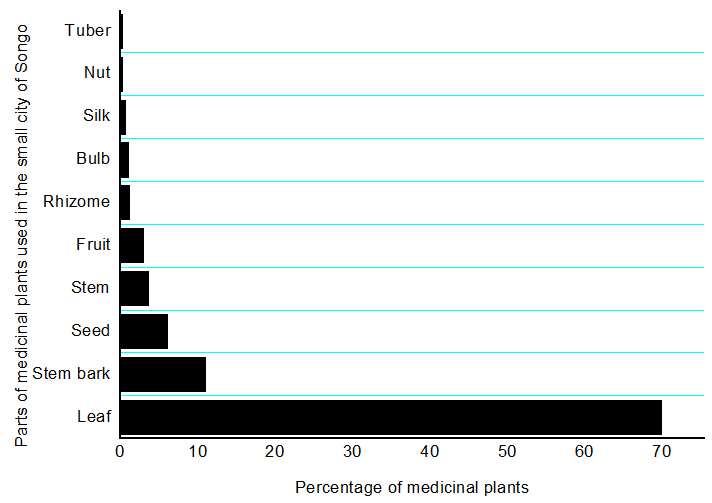
The data in Figure 3 show that the plant organs were used in traditional medicine in small Songo city. Leaf was the most frequently used plant part (69.9%), followed by stem bark (10.7%), seed (6.1%), and stem (3.6%). The other plant organs used in traditional medicine are, root bark (3.6%), fruit (2.9%), rhizome (1.1%), bulb (1.0%), silks (0.6%), nut (0.2%), and tuber (0.2%). The preponderance of the leaf as the most used organ in traditional therapeutic prescriptions has been reported by several authors, such as Pathy, et al. [38], Rusaati, et al. [53] in DRC, Gumisiriza, et al. [55] in Uganda, and Lautenschläger, et al. [19] in Angola. The preference for the use of leaves is justified by the fact that they are easy to collect, store, and process during most of the year, but also because they are the main organs that synthesize and store secondary metabolites [56, 57]. Moreover, in those studies, the preference for leaves was said to be for their abundance and easy of harvest, high therapeutic potency, and because leaves contain high concentrations of compounds with various medicinal properties.
Compared to leaves, however, roots have the ability to maintain bioactive compounds for a long time after harvesting [58]. The common use of roots in the preparation of herbal remedies poses a great threat to the future survival of natural plant sources since harvesting involves the destruction of the whole plant [59]. While the use of the whole plant is equally destructive, it was not common in the study area.
Harvesting of roots and whole plant has the potential to damage the plant and could be unsustainable for some species and more unsustainable than harvest of leaves and fruits which are constantly produced and can be harvested without causing irreversible damage to the plant [57, 58, 59, 60].
For some plants, more than one part was used to prepare herbal medicines, for either similar or different diseases.
Therefore, domestication and propagation strategies of medicinal plants need to be adopted for sustainability. Further, the residents of small Songo city use various techniques in the acquisition of medicinal plant organs. The techniques used are harvesting (80%), cutting (10%), stripping (6%), and uprooting (4%). These last two techniques are not sustainable because they can cause genetic erosion of the medicinal flora of the small Songo city [22, 32]. Finally, most of the medicinal plants found in Songo townhouses were cultivated (71%) and the remaining plants are spontaneous (29%).
Symptoms and Ailments treated
Table 4 presents the different symptoms and ailments treated with the help of medicinal plants in the small city of Songo.
Medicinal Use Categories Ailments and Citation Percentage
Dermatological diseases
Respiratory system diseases
symptoms treated Measles 2.1
Teigns 0.4
Varicellae 0.6
Abscess 0.8
Dermal infection 1.5
Stretchmarks 0.2
Scabies 0.6
Eczema 1.3
Injury /wounds/ulcers 1.1
Cough 10.3
Influenza 0.2
Hiccup 0.6
Asthma 2.5
Pulmonary infection 0.2
Endocrinal desorder Diabetes 1.3
Excretory system diseases
Digestive system diseases
Circulatory system diseases
Bladder pain 0.4
Kidney stones 0.2
Hepatitis 1.9
Hemorrhoid 1.1
Gastric 1.5
Stomach ache 3.4
Diarrhoea/Dysentery 6.1
Vomiting 1
Toothache 4
Caries 1.5
Swollen belly 2.5
Nauses 0.2
Pharyngitis 0.4
Swollen belly 2.5
Inflammation 0.8
Anemia 7.9
Splenomegaly 0.7
Blood flow 0.4
Low blood pressure 0.2
Liquid breastmilk 3.4
Impotence/vaginal canal inflammation 2.5
Criptochirdy 2.3
| Reproductive system diseases | Breast pain | 0.2 |
|---|---|---|
| Urinary tract infection | 0.2 | |
| Angina | 0.6 | |
| Hypertension | 1.7 | |
| High cholesterol level | 0.2 | |
| Cardiovascular system diseases | Lowering blood pressure | 0.2 |
| Muscular pain | 0.4 | |
| Open Fontanella | 0.4 | |
| Sprain | 0.4 | |
| Nervous system diseases | Backache | 2.3 |
| Vertige | 0.8 | |
| Migraine | 0.2 | |
| Headache | 1 | |
| Malaria | 6.9 | |
| Fever | 3.3 | |
| Yellow fevers | 5.7 | |
| Infectious disease | Worms/Parasites | 3.2 |
| Typhoid | 2.3 | |
| Ophthamological diseases | Eye parasites/eye problems | 2.3 |
| Poisoning | 0.8 |
Table 5: Ailments and symptoms cured with medicinal plants by category (%).
The total number of ailments and symptoms treated by the local people of Songo city was 51 (Table 4).
The results of this study documented eleven (11) categories of diseases treated with traditional medicine in the small city of Songo (Table 4). In addition, sixty (60) symptoms and ailments recognized according to the popular diagnosis were recorded in the small Songo city households (Table 4). The seventeen (17) main symptoms and ailments recorded in the residential area in small Songo city that were treated with medicinal plants were cough (10.3%), anaemia (7.9%), malaria (6.9%), diarrhoea (6.1%), yellow fever (5.7%), toothache (4.0%), liquid breast milk (3.4%), stomach ache (3.4%), fever (3.3%), worms (3.2%), asthma (2.5%), eye problems (2.5%%), swollen belly (2.5%), impotence/vaginal wall inflammation (2.5%), typhoid (2.3%), cryptorchidy (2.3%), and backache (2.3%).
Regarding the therapeutic indications of the medicinal plants cited, the most representative categories were those related to diseases and symptoms of the digestive (23.6%), infectious (21.4%), circulatory (13.4%), and respiratory (11.3%) systems. The most common ailments suffered by the small city Songo people could be attributed to the major health problem in communities.
Ethnopharmacological studies have shown that in some parts of the world, respiratory, infectious, and gastrointestinal disorder is the first use category [21, 61, 62, 63]. In addition, according to the World Health Organization (WHO) [15] that, malaria, acute respiratory and diarrheal diseases are the main causes of mortality in Angola. Regarding Nankaya, et al. [64], diarrhea is a common disease in Africa and is reported to cause death in children. Also, Malaria was the fourth disorder treated with medicinal plants in the study area. Malaria is caused by parasitic protozoa and is reported to cause over a million deaths in Sub-Saharan Africa [65].
Modes of remedy preparation
The figure 4 shows the percentage of the preparation of plant remedies by the people residents in the small city of Songo.
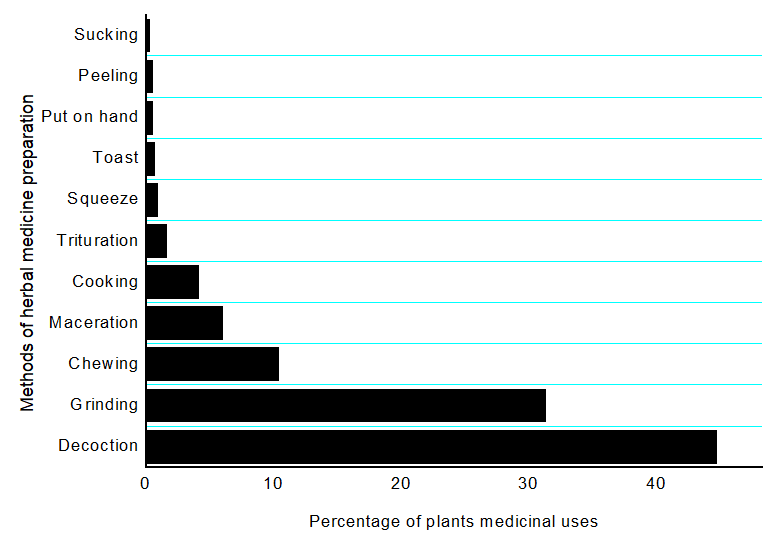
The informants used eleven (11) different methods that they used to prepare plant medicines. The five main methods of traditional medicine preparation used in Songo city represent 95.9%. A decoction was the most relevant common preparation method with 44.4% of use reports, followed by grinding (31.2%), chewing (10,2%) maceration (6.1%), and cooking (4.0%). Moreover, the other modes of therapeutic preparation represent just under 5% or 3.9%. Authors such as Rusaati, et al. [53], Junsongduang, et al. [66], and Lautenschläger, et al. [19], reported that decoction is the main method of preparation in the traditional therapeutic recipes. According to Umair, et al. [67] decoction is widely used because it is easy to prepare by mixing herbs with water, tea, or soup. The common practice of decoction as a method of preparing medicinal plants can be explained by the fact that it allows to easily collect the compounds of active medicinal principles and attenuates or eliminate toxic substances in certain medicinal plants [68].
Route of administration
The figure 5 shows the percentage of the administration route of plant remedies by the people residents in the small city of Songo.
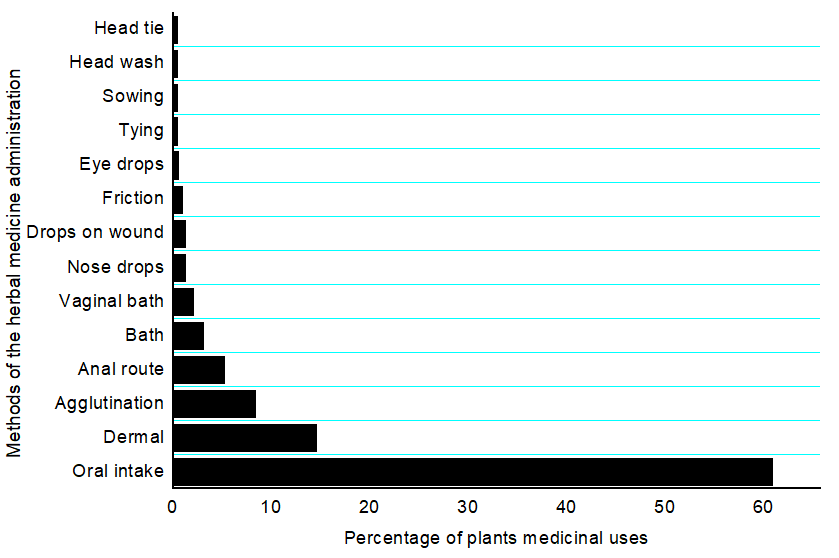
A total of fourteen (14) therapeutic delivery systems were registered in the small city of Songo (Figure 5). Seven main methods of traditional medicine administration used in small Songo city represent 96.7%. Oral administration was the most relevant common route of applying for medicine with 60.4% of use reports followed by dermal (14.5%), agglutination (8.4%), anal route (5.4%), bath (3.3%), vaginal bath (2.1%), drops (1.3%), and nose drops (1.3%). Also, the other modes of therapeutic administration represent less than 5%, namely friction, eye drops, head tie, head wash, sowing, and tying. Authors such as Pathy, et al. [38] and Lautenschläger, et al. [19] reported that the oral route is the main traditional route of therapeutic administration. The frequent use of oral absorption as a route of administration of medicinal plants could be linked to the fact that it is rapid and provides a large effective surface area for the absorption of the active components of the drug [69]. Once absorbed, the drug passes through the intestinal wall and liver before being transported to the target site via the bloodstream [70].
Relationship between medicinal plant families and the number of different therapeutic Figure 6 shows the relationship between the medicinal plants inventoried and the number of different therapeutic uses practiced by the inhabitants of the small city of Songo.
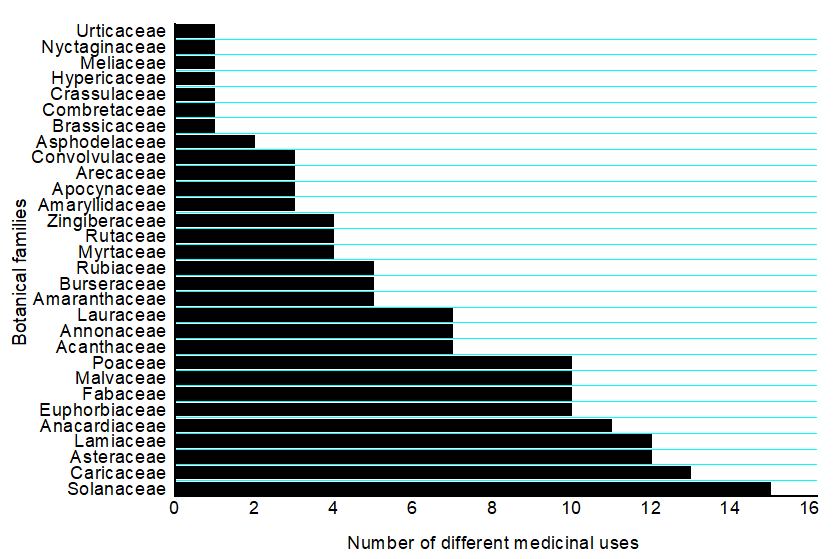
The data in Figure 6 show that, the Solanaceae family is the most used in traditional medicine in the small city of Songo with 15 different therapeutic uses. The other main families are Caricaceae (13 medicinal uses), Lamiaceae (12 medicinal uses), Asteraceae (12 medicinal uses), Anacardiaceae (11 medicinal uses), Poaceae (10 medicinal uses), Malvaceae (10 medicinal uses), Fabaceae (10 medicinal uses), Euphorbiaceae (10 medicinal uses), Lauraceae (7 medicinal uses), Annonaceae (7 medicinal uses), Acanthaceae (7 medicinal uses), Amaranthaceae (5 medicinal uses), Burseraceae (5 medicinal uses), and Rubiaceae (5 medicinal uses).
Relationship between medicinal species and the number of different therapeutic uses Figure 7 shows the different medicinal uses of 28 of the 62 most cited plants in the small city of Songo.
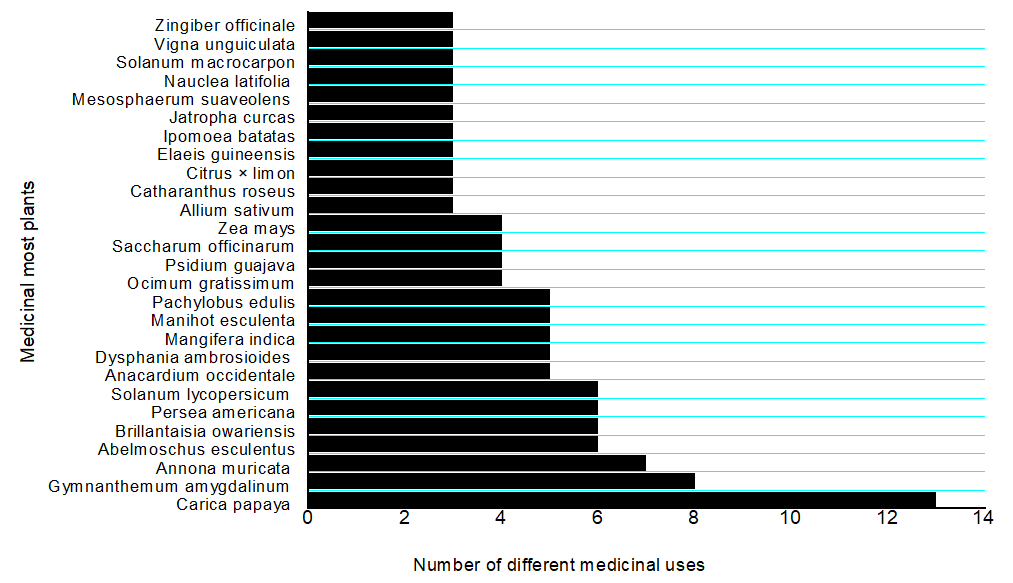
It is revealed from figure 7 that out of the 28 of 62 most used plants in traditional medicine, Carica papaya is used in the treatment of 13 different symptoms and diseases commonly documented in the small town of Songo. The other top 20 most used plants are Gymnathemum amygdalinum with 8 medicinal uses, Annona muricata (7 medicinal uses), Solanum lycopersicum (6 medicinal uses), Persea americana (6 medicinal uses), Brillantaisia owariensia (6 medicinal uses) Abelmoschus esculentus (6 medicinal uses), Pachylobus edulis (5 medicinal uses), Manihot esculenta (5 medicinal uses), Mangifera indica (5 medicinal uses), Dysphania ambrosioides (5 medicinal uses), Anacardium occidentale (5 medicinal uses), Ocimum gratissimum (4 medicinal uses), Psidium guajava (4 medicinal uses), Saccharum officinarum (4 medicinal uses), Zea mays ( 4 medicinal uses), Allium sativum ( 3 medicinal uses), Catharanthus roseus (3 medicinal uses), Citrus × limon (3 medicinal uses), Elaeis guineensis (3 medicinal uses), Ipomoea batatas (3 medicinal uses), Jatropha curcas (3 medicinal uses), Mesosphaerum suaveolens, Nauclea latifolia (_3 medicinal uses), _Solanum macrocarpon (3 medicinal uses), Vigna unguiculata (3 medicinal uses), and Z_ingiber officinale_ (3 medicinal uses). The scientific validation of the therapeutic action of these medicinal plants and the agreement on the use of certain plants in a community may partly explain why some species are among the most commonly cited or used in popular pharmacopoeias.
Relationship between ailments and the number of plant species used in traditherapy Figure 8 shows the relationship between the 60 ailments and the 62 plant species used by the inhabitants of the small city of Songo in traditional therapeutic management.
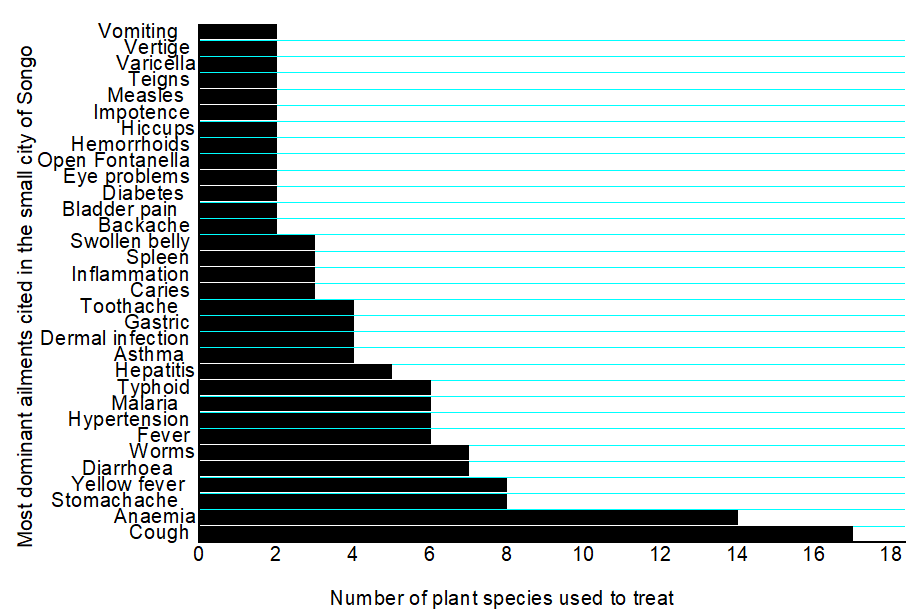
Figure 8: Most dominant ailments and the number of plant species used by local people of stuty area of the 60 diseases and symptoms treated with medicinal plants (Figure 8), cough is the main disease treated with the highest number of medicinal plants in the small city of Songo, a total of 17 species. This is followed by anaemia (14 spp.), stomachache (8 spp.), yellow fever (8 spp.), diarrhoea (7 spp.), fever (6 spp.), hypertension (6 spp.), malaria (6 spp.), typhoid (6 spp.), hepatitis (5 spp.), worms (5 spp.), asthma (4 spp.), dermal infection (4 spp.), gastric (4 spp.), and toothache (4 spp.).
Experience in the Practice of Traditional Medicine
The data of this investigation shows that 65% of the informants had 10 years or less experience in ethnobotanical knowledge. Further, 22 % of the informants were more than 32 years old, 10 % were 22-32 years old and only 3 % had 11-21 years of experience in using medicinal plants present in their home plots.
Acquisition and Transfer of Traditional Medicine Knowledge
The greatest majority (80%) of the informants acquired traditional knowledge about medicinal plants through parents (80%) such as grandparents, uncles, and aunts; 17% with friends, healers, elders in the community, or formal training, and 6% with other sources (books, school each, television programs). Similar results have been described in other surveys such as Giraldi, et al. [63]. Also, the oral route is the most preponderant (99%) mode of transmission of traditional knowledge used by the local population in the small city of Songo, while only 1% of the informants acquired their knowledge of the using medicinal plant in the media, books, television or educator. Mawunu, et al. [71], as for its transmission it is done according to the oral tradition of the region, a millennial means of preserving the know-how. Authors such as Monizi, et al. [1], Monizi, et al. [18], and Heinze, et al. [20] reported similar results regarding the transmission of traditional knowledge in northern Angola.
Other Uses of Medicinal Plants
Figure 9 presents the other uses of the medicinal plants cataloged in the small Songo city households.
$$ = \frac {1}{2} $$
$$ \mathrm {E} = \frac {1}{2} \mathrm {A} ^ {2} + \mathrm {B} ^ {2} $$
Figure 9 illustrates that besides medicinal use, the plants cataloged in the small Songo city e households are also used for various purposes, such as shadow (71%), Tea substitute (12%), fodder (8%), and bioenergy (5%). Lastly, the others (4%) are used as windbreaks and stimulants, such as tobacco. According to Mawunu, et al. [72], wild food plants are used as traditional medicine (32%), bioenergy (firewood, 24%; charcoal, 12%), construction material (22%), charcoal $$ \mathrm {E} = \frac {1}{2} \mathrm {A} ^ {2} + \mathrm {B} ^ {2} $$ $$ \mathrm {E} = \frac {1}{2} \mathrm {A} ^ {2} + \mathrm {B} ^ {2} $$ Figure 10: Organs Consumed (%).
Figure 10 illustrates that fruits are the main edible organs (77%) of the cataloged plants. Next, come the leaves (10%), the stem (7%). Also, the other edible plant organs documented in the small city of Songo are root (%), seeds (2%) and rhizome with 1%.
$$ - \frac {1}{2} $$ $$ - 1 $$
$$ - 1 $$ $$ - \frac {1}{2} $$
$$ - 1 $$ $$ \| $$
$$ - 1 $$ $$ - \frac {1}{2} $$
$$ - 1 $$ $$ - \frac {1}{2} $$
$$ - 1 $$ $$ - 1 $$
$$ - \frac {1}{2} $$ $$ \| $$
$$ \mathrm {C O} _ {2} + \mathrm {H} _ {2} \mathrm {O} = \mathrm {H C O} _ {3} ^ {-} + \mathrm {O H} ^ {-} $$ $$ \vert $$ $$ - \frac {1}{2} $$ $$ \mathrm {E} = \mathrm {E} _ {1} + \mathrm {E} _ {2} + \dots + \mathrm {E} _ {n} $$ $$ - 1 $$ $$ - 1 $$ $$ \cdot $$ $$ - 1 $$ (12%), handicrafts (7%), and as stimulants or aphrodisiacs (2%).
Figure 10 shows the organs of medicinal plants found in the small Songo city households that also serve as food.
$$ = \mathrm {红} $$ $$ - \frac {1}{2} $$
$$ - 1 $$ $$ - \mathrm {I} $$
$$ \mathrm {法} = \mathrm {法} $$
$$ \mathrm {C O} _ {2} + \mathrm {H} _ {2} \mathrm {O} = \mathrm {H C O} _ {3} + \mathrm {H} _ {2} \mathrm {O} $$ $$ - 1 $$ $$ - 1 $$ $$ - 1 $$ $$ - 1 $$ $$ - 1 $$ $$ - 1 $$ $$ = \mathrm {P} \times \mathrm {S} $$ $$ = \frac {1}{2} $$ $$ - \frac {1}{2} $$ $$ \mathrm {法} = \mathrm {法} $$ $$ \| $$ $$ - 1 $$ $$ - \Delta $$ $$ - 1 $$ $$ \mathrm {E} = \frac {1}{2} \mathrm {A} ^ {2} + \mathrm {B} ^ {2} $$ $$ - \frac {1}{2} $$ $$ - 1 $$ $$ - 1 $$ $$ - 1 $$ Figure 11 shows the different consumption patterns of the nutraceutical plants inventoried in the small city of Songo.
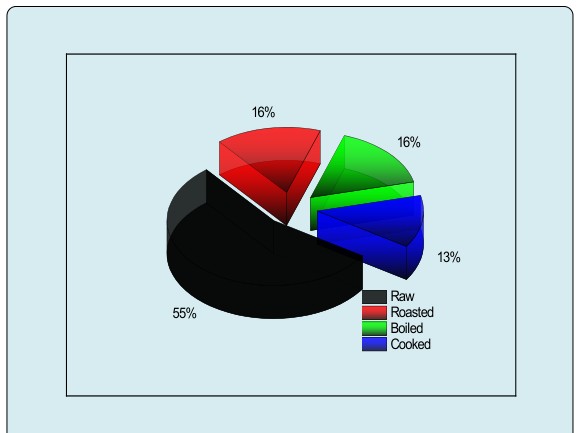
As for the mode of consumption, 55% of the organs of the food plants cultivated in the Songo dwellings are consumed raw or in nature, 16% are roasted, 16% boiled and 13% cooked. Mawunu, et al. [22], reported that most (56%) NTFPs of plant origin are consumed processed, i.e., prepared, boiled, or grilled. The remaining plant organs are consumed raw (41.4%) and 5.7% are consumed either raw or processed. Also, Mawunu, et al. [72], reported that 65% of wild food plants documented in the municipality of Mucaba are consumed processed (prepared, boiled) and the rest of the plants are consumed raw.
Markets of Nutraceutical Plants
The food plants are grown in the small Songo city residences also serve as a source of income. These plants are sold in bunches (57%), per unit (24%), bundles (16%), and in 3% buckets. According to Mawunu, et al. [73], the sale of food plants on a hillside is the main method (69%) of selling food plants in Uíge province. The money collected from the sale of food plants is used mainly to buy basic necessities (87%) and school materials (10%). The results of this study partially corroborate the studies of Monizi, et al. [1, 18], Mawunu, et al. [71], Mawunu, et al. [73], and Mawunu, et al. [74], who reported that the income from the sale of non-mandated forest products (food and non-food) contributes towards strengthening food security and the acquisition of goods and services (purchase of school materials, health care, basic needs, contributions in deaths and weddings, etc.).
Conclusion
The present study aimed at documenting the ethnopharmacological knowledge and biological richness of the medicinal plants used in the residential area of small Songo city for their primary health care. The results obtained showed that the cataloging resulted in 62 medicinal plant species belonging to 57 genera and 30 botanical families. The residents of this small city know and use the plant resources available in their environment for the treatment of various diseases and symptoms and also for other purposes. Analysis of traditional therapeutic prescriptions reveals the predominance of leaves, stem bark, and herbs. The main modes of preparation and administration of the studied prescriptions are, decoction or boiling and oral intake, respectively. Most ailments inventoried in the small city of Songo are cough, anaemia, malaria, diarrhoea, and yellow fever. The population of Songo city traditionally uses the cataloged plants for the treatment of various ailments, and knowledge about the species and ways of using them is learned and passed on orally from generation to generation. The high reliance of local people on medicinal plants may be due to strong cultural beliefs, the high cost of other kinds of health care in the country, the inaccessibility of government health facilities, and the quick and free accessibility of medicinal plants. We would like biological and pharmacological investigations to be carried out to explore the therapeutic potential of these medicinal plants. The therapeutic effectiveness of the species cited needs to be scientifically tested so that they can be used in future medical assistance programs in the region and guarantee the perpetuation of the transmission of knowledge acquired over generations.
Finally, the abundance of medicinal plants and their different applications in human health reflect the rich ethnobotanical knowledge of the inhabitants of the study area, where the man-nature relationship has always been strong since ancient times. It should be noted that, although modern medicine is the official form of healing, traditional medicine still has many followers. The preservation of this traditional knowledge is due to the continuous use of plants for the well-being of the local community.
Acknowledgment
This scientific article would not have been possible without the knowledge of the inhabitants of the small city of Songo and the municipal administration of Songo. We thank them all for their cooperation. Also, the authors thank all reviewers for their great contribution to this scientific article.
References
-
Monizi M, Julio F, Ndiku L, Ngbolua KN, Neinhuis C, et al. (2018a) Traditional Knowledge and Skills in Rural Bakongo Communities: A Case Study in the Uíge Province, Angola. American Journal of Environment and Sustainable Development 3(3): 33-45.
-
Cassas F, Silva D, Reis N, Rodrigues E (2016) Canteiros de plantas medicinais, dimentas e tóxicas como ferramenta de produção à saúde no Jardim de Diadema, SP, Brasil. Brasil: Revista ciência Extv 2: 37-46.
-
Roger JDA (2002) saúde pelas plantas. Enciclopédia da educação e saúde nº 2. Espanha: Safeliz.
-
Gertsch J (2009) How scientific is the science in ethnopharmacology? Historical perspectives and epistemological problems. Journal of Ethnopharmacology 122: 177-183.
-
Calixto JB (2005) Twenty-five years of research on medicinal plants in Latin America: a personal view. Journal of Ethnopharmacology 100(1-2): 131-134.
-
Bouyahya Abrini J, Et-Touys A, Bakri Y, Dakka N (2017) Indigenous knowledge of the use of medicinal plants in the North-West of Morocco and their biological activities, European Journal Integrative Medicine 13: 9-25.
-
WHO (World Health Organization) Fact Sheet, Traditional Medicine, Geneva. USA.
-
(2004) ICS-UNIDO United Nations Industrial Development Organization and the International Centre for Science and high Technology. Compendium of medicinal and aromatic plants. Africa 11: 120.
-
Oyebode O, Kandala NB, Chilton PJ, Lilford RJ (2016) Use of traditional medicine in middle-income countries: a WHO-SAGE study. Health policy and planning 31(8): 984-991.
-
(2000) WHO Promoting the role of traditional medicine in health systems A strategy for the African region Harare. World Health Organization Regional Office for Africa.
-
Bannerman RH (1983) Traditional Medicine and Healthcare Coverage. Geneva: World Health Organization.
-
Sureshkumar J, Silambarasan R, Ayyanar M (2017) An ethnopharmacological analysis of medicinal plants used by the Adiyan community in Wayanad district of Kerala, India. European Journal Integrative Medicine 12: 60-73.
-
Salmerón-Manzano E, Garrido Cardenas JA, Manzano Agugliaro F (2020) Worldwide Research Trends on Medicinal Plants_._ Int. J. Environ. Res. Public Health 17_:_ 3376.
-
Pilla M, Amorozo M, Furlan A (2006) Obtenção e o uso de plantas medicinais no distrito de Martim Francisco, Município de Mogi Mirim, SP, Brasil_._ Brasil: Acta Botanica Brasilica 20(4): 789-802.
-
WHO (2008) Angola. Country cooperation strategy.
-
Figueiredo E, Smith GF (2008) Plants of Angola: first record of diversity and endemism. Taxon 58(1): 233- 236.
-
Huntley B, Russo V, Ferrand N, Lages F, Ferrand N (2019) Biodiversity of Angola. Science & Conservation: A Modern Synthesis. Springer Nature.
-
Monizi M, Mayawa V, Fernando J, Neinhuis C, Lautenschläger T, et al. (2018b) The Cultural and socio- economic role of raffia palm wine in Uíge Province, Angola. Discovery 54(268): 119-129.
-
Lautenschläger T, Mawunu M, Macutima P, Lau MJ, Makaya FB, et al. (2018) First large-scale ethnobotanical survey in the province of Uíge, northern Angola. Journal of Ethnobiology and Ethnomedicine 14: 51.
-
Heinze C, Ditsch B, Congo MF, Lautenschläger T, Neinhuis C (2017) First ethnobotanical analysis of useful plants in Cuanza Norte, North Angola. Res Rev J Bot Sci 6: 44-53.
-
Göhre A, Toto Nienguesse ÁB, Futuro M, Neinhuis C, Lautenschläger T (2016) Plants from disturbed savannah vegetation and their usage by Bakongo tribes in Uíge, Northern Angola. Journal Ethnobiol Ethnomedicine 12: 42.
-
Mawunu M, Bongo K, Eduardo A, Vua MMZ, Ndiku L, et al. (2016) Contribution to the knowledge of no-timber forest products of Ambuila Municipality (Uíge, Angola): the wild edible plants. Int J Innovat Sci Res 26(1): 190-
-
Urso V, Signorini MA, Tonini M, Bruschi P (2016) Wild medicinal and food plants used by communities living in Mopane woodlands of southern Angola: Results of an ethnobotanical field investigation. Journal of Ethnopharmacology 177: 126-139.
-
Queza AJ (2010) Sistema nacional de Saude Angolano e Contributos luz da reformorma de SNS Português.
-
Revermann R, Finckh M (2019) Vegetation survey, classification and mapping in Angola. Biodiversity of Angola. Springer pp: 97-107.
-
Van Wyk BE (2011) The potential South African plants in the development of new medicinal products. South African Journal of Botany 77(4): 812-829.
-
Songo AM (2019) Memorando da situação real do município.
-
(2016) INE, Resultados definitivos: Recenseamento Geral da População e Habitação 2014_._ Luanda.
-
Diniz AC (2006) Caracteristicas mesológicas de Angola descrição e correlação dos aspectos fisiográficos, dos solos e da vegetação das zonas agrícolas angolanas. 2ª ed. Lisboa: Instituto Portugues de Apoio ao Desenvolvimento pp: 546.
-
Koeppen A (1948) Climatologia_._ México: Ed Fondo de cultura Económica pp: 466.
-
APG III (2009) An update of the angiosperm phylogeny group classification for the orders and families of flowering plants. Botanic Journal Linnean Soc 161: 105- 121.
-
Monizi M, André Canga D, Luyeye L, Ngbolua KN, Ndiku L (2019) Ethnobotanical and Socio-economics of _Dracaena camerooniana_ Baker in Uíge Province, Northern Angola. Journal of Agriculture and Ecology Research International 20(2): 1-15.
-
Vasconcelos EM (2001) Educação popular e terapia médica. In: Scocuglia A C, Melo N, Educação JF, et al. (Eds.), popular: outros caminhos. João Pessoa: Editora Universitária pp: 123-134.
-
Carvalho AM (2005) Etnobotánica del Parque Natural de Montesinho. Plantas, tradición y saber popular em un territorio del nordeste de Portugal. Tese de Doutorado. Biología y Biomedicina. Universidad Autónoma de Madrid, Spain, pp: 475.
-
Salhi S, Fadli M, Zidane L, Douira A (2010) Etudes floristique et ethnobotanique des plantes médicinales de la ville de Kénitra (Maroc), Lazaroa 31: 133-143.
-
Hmamouchi M (2001) Les plantes médicinales et aromatiques marocaines. pp : 389.
-
Vwakyanakazi M, Petit P (2004) Bunganga ya mici : guérisseurs et plantes médicinales à Lubumbashi : rapport des recherches effectuées durant la douzième session des travaux de l’Observatoire, octobre 2003- mars 2004, Université de Lubumbashi, Lubumbashi, Observatoire du changement urbain, Coopération universitaire au développement pp : 125.
-
Pathy KK, Flavien NB, Honoré BK, Vanhove W, Van Damme P (2021) Ethnobotanical characterization of medicinal plants used in Kisantu and Mbanza-Ngungu territories, Kongo-Central Province in DR Congo. J Ethnobiology Ethnomedicine 17: 5.
-
Ong HG, Kim YD (2020) Medicinal plants for gastrointestinal diseases among the Kuki-Chin ethnolinguistic groups across Bangladesh, India, and Myanmar: A comparative and network analysis study. Journal of Ethnopharmacology 6: 251: 112415.
-
Novotna B, Polesny Z, Pinto Basto MF, Van Damme P, Pudil P, et al. (2020) Medicinal plants used by ‘root doctors’, local traditional healers in Bié province, Angola. Journal of Ethnopharmacology 260: 112662.
-
Jendras G, Monizi M, Neinhuis C, Lautenschläger T (2020) Plants, food and treatments used by Bakongo tribes in Uíge (northern Angola) to affect the quality and quantity of human breast milk. International Breastfeeding Journal 15: 88.
-
Gonçalves FMP, Tchamba JE, Lages FMOP, Alexandre JLM (2019) Conhecimento etnobotânico da Província da Huíla (Angola): um contributo baseado nos registos de campo do colector José Maria Daniel. RILP-Revista Internacional em Lingua Portuesa _n°35_ pp: 83-102.
-
Mahwasane ST, Middleton L, Boaduo N (2013) An ethnobotanical survey of indigenous knowledge on medicinal plants used by the traditional healers of the Lwamondo area, Limpopo province, South Africa. South Afr J Bot 88: 69-75.
-
Ribeiro A, Romeiras MM, Tavares J, Faria MT (2010) Ethnobotanical survey in Canhane village, district of Massingir, Mozambique: medicinal plants and traditional knowledge. J Ethnobiol Ethnomed 6: 33.
-
Amujoyegbe OO, Idu M, Agbedahunsi JM, Erhabor JO (2016) Ethnomedicinal survey of medicinal plants used in the management of sickle cell disorder in Southern Nigeria. Journal of Ethnopharmacology 5(185): 347-360.
-
Ngarivhume T, Van Klooster CHIEA, Se Jong JTVM, Van der Westhuizen JH (2015) Medicinal plants used by traditional healers for the treatment of malaria in the Chipinge district in Zimbabwe. Journal of Ethnopharmacology 159: 224-237.
-
Van Wyk BE (2019) A family-level floristic inventory and analysis of medicinal plants used in Traditional African Medicine. Journal of Ethnopharmacology 249: 112351.
-
Catarino S, Duarte MC, Costa E, Carrero PG, Romeiras MM (2019) Conservation and sustainable use of the medicinal Leguminosae plants from Angola. Peer J 7: e6736.
-
Mekkiou R (2005) Recherche et détermination structurale des métabolites secondaires d’espèces du Genre _Genista_ (_Fabaceae_) : _G. Saharae, G. Ferox.”_ Thèse de doctorat, Faculté des sciences, Université Mentouri- Constantine pp : 199.
-
Neamsuvan O, Madeebing N, Mah L, Lateh W (2015) A survey of medicinal plants for diabetes treating from Chana and Nathawee district, Songkhla province, Thailand. Journal of Ethnopharmacology 174: 82-90.
-
Bhom BA, Stuessy TF (2001) In Flavonoids of the Sunflower Family (Asteraceae), Springer-Verlag: Wien. pp: 3-17.
-
Mwine JT, Damme PV (2011) Why do Euphorbiaceae tick as medicinal plants? A review of Euphorbiaceae family and its medicinal features. Medicinal Plants Research 5(5): 652-662.
-
Rusaati BIW, Gendusa AP, Joo SH, Park JW, Masumbuko NC, et al. (2021) A systematic review of antimalarial medicinal plants in Democratic Republic of the Congo. Bois et Forêts des Tropiques 347: 11-27.
-
Kimpouni V, Lenga-Sacadura MY, Mamboueni JC, Nsika Mikoko (2011) E. Phytodiversité et Pharmacopée traditionnelle de la communauté Kaamba de Madingou (Bouenza-Congo). European Scientific Journal 14(3): 191.
-
Gumisiriza H, Birungi G, Apio Olet E, Sesaazi CD (2019) Medicinal plant species used by local communities around Queen Elizabeth National Park, Maramagambo Central Forest Reserve and Ihimbo Central Forest Reserve, South western Uganda. Journal of Ethnopharmacology 239: 111926.
-
Amjad MS, Qaseem MF, Ahmad I, Khan SU, Chaudhari SK, et al. (2017) Descriptive study of plant resources in the context of the ethnomedicinal relevance of indigenous flora: a case study from Toli peer National Park, Azad Jammu and Kashmir, Pakistan. PLoS One 12: e0171896.
-
Srithi K, Balslev H, Wangpakapattanawong P, Srisanga P, Trisonthi C (2009) Medicinal plant knowledge and its erosion among the Mien (Yao) in northern Thailand. Journal Ethnopharmacology 123(2): 335-342.
-
Phumthum M, Srithi K, Inta A, Junsongduang A, Tangjitman K, et al. (2018) Ethnomedicinal plant diversity in Thailand. Journal of Ethnopharmacology 214_:_ 90-98.
-
Kamatenesi MM, Oryem Origa H, Acipa A (2011) Medicinal plants of Otwal and Ngai sub counties in Oyam district, Nothern Uganda. J Ethnobiol Ethnomed 7_:_ 7.
-
Alebie G, Urga B, Worku A (2017) Systematic review on traditional medicinal plants used for the treatment of malaria in Ethiopia: Trends and perspectives. Malaria Journal 16: 307.
-
Diop DR, Mbaye MS, DIOP I, Bassene C, SARR O, et al. (2019) Usages médicinaux des plantes par la population riveraine du conservatoire botanique Michel Adanson de Mbour (Sénégal). Journal of Animal & Plant Sciences 40(3): 6690-6711.
-
Bibi T, Ahmad M, Tareen RB, Tareen NM, Jabeen R, et al. (2014) Ethnobotany of medicinal plants in district Mastung of Balochistan province-Pakistan. Journal of Ethnopharmacology 157: 79-89.
-
Giraldi M, Hanazaki N (2010) Uso e conhecimento tradicional de plantas medicinais no Sertão do Ribeirão, Florianópolis, SC, Brasil. Acta bot bras 24(2): 395-406.
-
Nankaya J, Gichuki N, Lukhoba C, Balslev H (2020) Medicinal Plants of the Maasai of Kenya: A Review. _Plants_ 9: 44.
-
Gruca M, Blach Overgaard A, Balslev H (2015) African palm ethno-medicine. J Ethnopharmacol 165_:_ 227-237.
-
Junsongduang A, Kasemwan W, Lumjoomjung S, Sabprachai W, Tanming W, et al. (2020) Ethnomedicinal Knowledge of Traditional Healers in Roi Et, Thailand. Plants 9(9): 1177.
-
Umair M, Altaf M, Bussmann RW, Abbasi AM (20190 Ethnomedicinal uses of the local flora in Chenab riverine area, Punjab province Pakistan. J. Ethnobiol Ethnomed 15(1): 7.
-
Lazli A, Moncef B, Ghouri L, Nouri NEH (2019) Étude ethnobotanique et inventaire des plantes médicinales dans la région de Bougous (Parc National d’El Kala, - Nord-est algérien). Bulletin de la Société Royale des Sciences de Liège pp: 22-43.
-
Hillery AM, Lloyd AW, Swarbrick J (2001) Drug delivery and targeting for pharmacists and pharmaceutical scientists. Taylor & Francis pp: 2387-268.
-
Jean-François J (2004) Synthèse et évaluation in vivo de microparticules d’hydrogel, Thèse doctorat, Université du Québec à Montréal pp : 266.
-
Mawunu M, Fernando A, de AC, Panzo AZ, Mawunu NFE, et al. (2021b) Socio-economic Contributions of The Retail Sale of Mfumbwa (_Gnetum africanum_ Welw.) Among Traders in the Uíge city, Angola. European Journal of Applied Sciences 9(6): 564-575.
-
Mawunu M, Panzo MHG, António Telo A, Ngbolua KN, Luyeye L, et al. (2022) Ethnobotanical uses of wild edible plants of Mucaba municipality, Angola. Natural Resources for Human Health pp: 1-10.
-
Mawunu M, Makuntima P, Masidivinga L, Lautenschläger T, Luyindula N, et al. (2020) First Survey on the Edible Non-Wood Forest Products Sold in Uíge Province, Northern Angola. European Journal of Agriculture and Food Sciences 2(6).
-
Mawunu M, Miguel AET, Bengui IJ, Mawunu NFE, Landu M, et al. (2021a) Influence of the Socio-Economic Profile of the Head of Household on Domestic Energy Use for Cooking in the City of Uíge, Angola. Journal of Energy Research and Reviews 8(2): 30-43.
- Capacity Constraints in Pediatric Inpatient Psychiatric Care: A Cross-Sectional Analysis of Bed Availability and Geographic Access in North Carolina
- Why Healthcare Analytics Still Optimizes the Wrong Things
- Coding, Coverage, and Care: The Infrastructure of Transgender Health Inequities
- The Effect of Classroom Attendance on Academic Achievement of Management and Leadership Discipline of Nursing Students at Instituto Superior Cristal and Universidade de Dili, Timor-Leste, 2024: A Case Study
- The Role of Social Bonds in Facilitating Shared Investments and Resource Allocation: Addressing the “Wrong Pocket Problem” in Public Health and Healthcare
- Social-Cultural Factors Contributing to Antimicrobial Resistance in Livestock Farmers and Community Households in Kayonza District, Rwanda