
The Asbestos Remediation: The Experience of the Lazio Region
With the enactment of Law 257/92, ‘Regulations on the cessation of the use of asbestos’, Italy established the goal of phasing out asbestos use and preventing occupational and environmental exposures. Article 9 of the aforementioned law mandates that companies using asbestos, directly or indirectly in production processes, or those involved in the remediation, transport, storage, and/or disposal of asbestos-containing materials (ACMs), submit an annual detailed report to the Regional Authorities and the Occupational Health and Safety Services of the relevant local health units (ASL). This report must include, in addition to the types and quantities of asbestos remediated, the type of waste subject to disposal and/or remediation, the activities and procedures applied, as well as data on the workers involved, specifying the nature and duration of their activities, the type of exposure they face, and the measures taken to protect their health and the environment. This study compares the annual data on asbestos operations within the Lazio Region to identify potential improvements in asbestos remediation processes. The study also assesses the potential impact of the COVID-19 pandemic on the activities of companies dealing with asbestos in the Lazio Region. The data, collected and processed by the U.O.C. Regional Asbestos Reference Center (CRRA) and published as annual reports pursuant to Article 9 of Law 257/92 on the website www.prevenzioneonline.net, cover the period from 2012 to 2022. The analysis of the collected data highlights the usefulness of the digital tools developed by the CRRA and made available to companies. It is hoped that the online data submission system for asbestos operations will be extended nationwide to achieve a standardized representation of the issue. The annual data on asbestos operations in the Lazio Region show a significant number of interventions, which has remained relatively stable over time. Given the large quantities of ACMs still present in the area, the CRRA, drawing on experiences already gained in some Italian regions, is considering experimenting with the remediation technique through autonomous micro-collections. Regarding the impact of the COVID-19 pandemic on the activities of asbestos-related companies in the Lazio Region, the data analysis for the years 2020-2022 shows that the remediation sector did not suffer significant negative effects due to the pandemic or the resulting state of emergency.
Pacchiarotti L¹, Carai A², Malerba RM¹, Chiodo A², Corea F³, Dari S⁴* and Aquilani S³
¹School of Specialization in Hygiene and Public Health, University of Rome ‘Tor Vergata’, Italy ²Regional Reference Center for Asbestos, ASL (Local Health Authority) of Viterbo, Italy ³Public Health and Hygiene Service, ASL (Local Health Authority) of Viterbo, Italy ⁴Vaccination Program Coordination, ASL (Local Health Authority) of Viterbo, Italy Keywords: Asbestos; Remediation; Removal; Disposal; Storage; Transportation; Public Health
Abbreviations
ACM: Asbestos-Containing Materials; CRRA: Regional Asbestos Reference Center.
Introduction
The term asbestos refers to a group of silicates characterized by their ability to crystallize in fibrous form. Due to its chemical properties, asbestos has high resistance to fire and heat, as well as to the action of chemical and biological agents, abrasion, and wear. It is also a good electrical insulator. These exceptional technical characteristics, combined with relatively low costs, have contributed to its widespread use in a wide range of applications over just a little more than a century [1].
The same morphological and structural characteristics of asbestos fibers, so crucial to their technical properties, are also responsible for their harmful effects on health. All asbestos fibers, in fact, tend to split longitudinally into thinner fibrils with diameters fine enough (less than 3 microns) to be inhaled and penetrate deeply into the pulmonary alveoli [1]. The high resistance of asbestos fibers to acids and alkalis provides them with extraordinary bio-persistence in the lungs; once inhaled, they can lead to the development of tumors, primarily affecting the lungs, pharynx, and serous membranes (pleura, peritoneum, pericardium, tunica vaginalis of the testicle), and potentially other organs [1].
For asbestos to exert its negative effects, the fibers must disperse into the air and be inhaled. The presence of asbestos, in the absence of any mechanical disturbance, does not cause fiber release, and the risk arises from the pollution that can be released from these materials when they are pulverized [2].
With the enactment of Law 257/92 “Regulations concerning the cessation of asbestos use,” Italy also set the general goal of phasing out the use of asbestos and preventing occupational and environmental exposures. The regulatory scope includes the discontinuation of production and trade, the cessation of asbestos extraction, import, export, and utilization activities, the implementation of decontamination and remediation measures in areas affected by asbestos pollution, and the search for substitute materials [3].
To oversee remediation activities, the aforementioned law, in Article 9, mandates that companies using asbestos, either directly or indirectly in production processes, or engaged in asbestos remediation, transportation, storage, and/or disposal of asbestos-containing materials (ACM), must annually submit a detailed report to the Region and the Prevention and Safety Services of the relevant Local Health Authorities (ASL). This report must include, in addition to the types and quantities of asbestos remediated, the type of waste subjected to disposal and/or remediation, the activities and procedures applied, as well as data on workers, specifying the nature and duration of their activities, the type of exposures they face, and the measures taken to protect their health and the environment [3].
Until 2009, the only method for companies to submit these reports was on paper, to be completed without a shared format and submitted in duplicate (one for the ASL and one for the Region) [4]. This method posed several problems: the reports, often structured according to different formats, contained data that was difficult to manage and compare [4]. There was a strong need for a more effective system that could simplify communications while making the data more uniform and accessible. For this reason, in 2010, the Health Department of the Lazio Region promoted and initiated a process of simplifying notifications through the use of electronic means; on July 20, 2010, the Asbestos Study Group approved the document: ‘Unified model of the report template referred to in Article 9, paragraphs 1 and 3, of Law 257 of March 27, 1992, concerning companies that use asbestos in production processes or carry out asbestos disposal or remediation activities’ [4].
At the same time, the Regional Asbestos Reference Center (CRRA), through the website www.prevenzioneonline.net, enabled the Prevention Services of the ASLs and the Regional Administration to conduct the necessary controls more appropriately and to maintain a constantly updated overview of the asbestos phase-out process initiated by Law 257/1992 [5]. This procedure therefore had the merit of allowing dual simplification—both bureaucratic and economic—while simultaneously enabling centralized management of the collected data. Companies are simply required to fill in all the fields of the model available on the platform with their data, allowing the Public Entity to conduct accurate quality control of the information provided [5].
As in the rest of Italy, in Lazio, tons of ACM, in both compact and/or friable form, are handled each year, involving significant engagement and substantial investments by companies in the area. The data collected at the regional level is pre-selected and sent to the Prevention Departments in the territory, relieving companies of the burden of double notification; the resulting databases allow for work on finally homogeneous, easily readable, and comparable data, enabling cross-checks and monitoring, including the potential integration of different risk images, thanks to the possibility of georeferencing sites through a GIS system [5].
Starting in 2010, the old method of submitting reports was gradually replaced by the more efficient and effective electronic one [6]. Over the years, paper reports have decreased until they eventually disappeared, leaving only those submitted electronically [7] (Table 1).
| Transmission mode | ‘04 | ‘05 | ‘06 | ‘07 | ‘09 | ‘10 | ‘11 | ‘12 | ‘13 | ‘14 | ‘15 | ‘16 | ‘17 | ‘18 | ‘19 | ‘20 | ‘21 | ‘22 |
|---|---|---|---|---|---|---|---|---|---|---|---|---|---|---|---|---|---|---|
| Telematic mode | 120 | 135 | 147 | 149 | 155 | 155 | 162 | 165 | 164 | 155 | 157 | 144 | 132 | |||||
| Paper mode | 103 | 91 | 88 | 88 | 108 | 4 | 6 | 11 | 12 | 2 | 2 | 0 | 0 | 1 | 0 | 0 | 0 | 0 |
Table 1: Comparison of Reporting Transmission Methods Over Time, 2004-2022 (2008 Data Not Available).
Furthermore, the implementation of a feedback service between companies and the CRRA (Regional Asbestos Reference Center) since 2012 has proven to be important. Through this service, companies can express and justify their assessments, which serves as a starting point for CRRA technicians to offer increasingly effective support by addressing the reported issues [8].
Aims of the Study
In this study, in addition to evaluating the impact of the IT tools developed by the CRRA and made available to companies to simplify administrative procedures, annual data on asbestos operations under the jurisdiction of the Lazio Region (derived from the mandatory reports for companies that use asbestos, directly or indirectly, in production processes or engage in remediation, transportation, storage, and/or disposal of ACM, through the “Unified Model” approved by the Asbestos Study Group of the Lazio Region) were compared in order to identify potential actions for improving asbestos remediation processes.
The study also assessed the potential impact of the COVID-19 pandemic on the activities of companies dealing with asbestos in the Lazio Region.
Materials and Methods
The study compared data from companies operating in the asbestos sector within the Lazio Region for the period 2012-2022, collected and processed by the U.O.C. Regional Asbestos Reference Center and published as annual reports under Article 9 of Law 257/92 on the website www. prevenzioneonline.net. For each report extracted from the aforementioned site, the data analyzed included:
- The method of transmission of annual reports by individual companies;
- Remediation activities through the removal of ACM, broken down into friable, compact, and total ACM in terms of interventions and quantities in tons;
- ACM remediation interventions through confinement and/or encapsulation during the decade 2012-2022;
- ACM transportation interventions in the decade 2012- 2022;
- Removal, transportation, and storage activities of ACM in tons;
- Territorial distribution of companies operating in the sector in 2022.
Results
Remediation Activities through Removal
The comparison of data on ACM removals from 2012 to 2022 showed that the quantities of friable matrix removed in the region generally represent a small percentage compared to those with a compact matrix (Table 2).
In the first year considered (2012), the total number of ACM removal interventions was 5,516 [7], with a quantity of 16,940 tons of ACM removed. Of these, 16,731 tons (98.8% of the total) were of compact matrix, while 209 tons (1.2%) were of friable matrix.
Looking at the data during the pandemic period, 2020 [9] saw 335 removal interventions for friable ACM (756.4 tons) and 3,958 interventions for compact ACM (9,398.8 tons) for a total of 4,293 interventions (10,125.2 tons).
The latest data, from 2022 [10], showed the removal of a total of 9,924 tons of ACM (4,253 total interventions), of which 9,664 tons (97.4% of the total) were compact ACM (4,060 interventions) and 260 tons (2.6% of the total) were friable ACM (193 interventions). Friable ACM removed represents only a small percentage (about 7%) of the total ACM removed in the region, a percentage similar to that in 2021 [11].
| Total ACM removed | Compact Matrix ACM (Tons) | Friable Matrix ACM (Tons) | ||
|---|---|---|---|---|
| 2022 | n. of interventions | 4.253 | 4.060 (95,5%) | 193 (4,5%) |
| 2022 | total Tons Removed | 9.923 | 9.664 (97.4%) | 260 (2.6%) |
| 2021 | n. of interventions | 4.398 | 4.102 (93.3%) | 296 (2.7%) |
| 2021 | total Tons Removed | 9.494 | 8.827 (93%) | 667 (7%) |
| 2020 | n. of interventions | 4.293 | 3.958 (92.2%) | 335 (7.8%) |
| 2020 | total Tons Removed | 10.125 | 9.399 (92.8%) | 756 (7.2%) |
| 2019 | n. of interventions | 4.885 | 4.702 (96.3%) | 183 (3.7%) |
| 2019 | total Tons Removed | 10.014 | 9.573 (95.6%) | 442 (4.4%) |
| 2018 | n. of interventions | 4.57 | 4.367 (95.5%) | 203 (4.5%) |
| 2018 | total Tons Removed | 10.582 | 9.652 (91.2%) | 903 (8.8%) |
| 2017 | n. of interventions | 4.903 | 4.744 (96.7%) | 159 (3.3%) |
| 2017 | total Tons Removed | 8.718 | 8.494 (97.4%) | 223 (2.6%) |
| 2016 | n. of interventions | 6.605 | 4.455 (67.4%) | 150 (32.6%) |
| 2016 | total Tons Removed | 8.362 | 8.105 (96.9%) | 257 (3.1%) |
| 2015 | n. of interventions | 5.211 | 5.100 (97.9%) | 111 (2.1%) |
| 2015 | total Tons Removed | 10.9 | 10.555 (96.8%) | 345 (3.2%) |
| 2014 | n. of interventions | 4.986 | 4.884 (97.9%) | 102 (2.1%) |
| 2014 | total Tons Removed | 10.831 | 10.621 (98.1%) | 210 (1.9%) |
| 2013 | n. of interventions | 4.908 | 4.816 (98.1%) | 92 (1.9%) |
| 2013 | total Tons Removed | 11.388 | 11.212 (98.4%) | 176 (1.6%) |
| 2012 | n. of interventions | 5.516 | 5.441 (98.6%) | 75 (1.4%) |
| 2012 | total Tons Removed | 16.94 | 16.731 (98.8%) | 209 (1.2%) |
Table 2: ACM Removals in the Lazio Region, 2012-2022.
Remediation through Confinement or Encapsulation
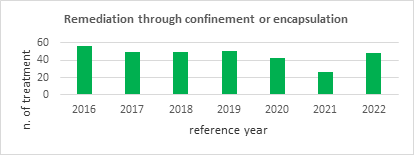
The data regarding interventions involving the confinement and/or encapsulation of ACM, aimed at maintaining ACM in good condition, indicate that in 2016 there were 56 such interventions [12], the highest number in the historical series from 2016 to 2022. In the following three years, remediation interventions remained relatively stable, around 50. In 2022, there was a resurgence in remediation activities, returning to pre-pandemic levels (Figure 1).
Transportation of Asbestos-Containing Waste
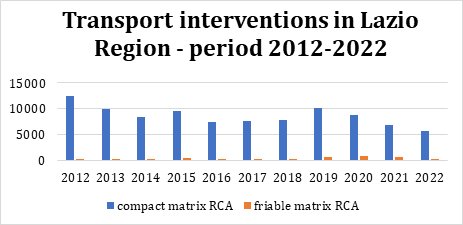
Comparing data on the transportation of asbestos- containing waste in the Lazio Region over the ten-year period, it is observed that the year with the highest number of interventions for compact matrix ACM was 2012, with 12,404 interventions (Figure 2).
In the three years from 2013 to 2015, the data remained relatively stable, although there was a decrease compared to the first year of observation. A further decline was noted in the subsequent three-year period (2016-2018).
The year 2019 saw a new peak in interventions, reaching 10,101.
The three-year period from 2020 to 2022 experienced another decline in interventions, nearly halving the number of interventions by 2022, with 5,737. This decrease is attributed to the effects of the COVID-19 pandemic.
Removal, Transportation, and Storage of ACM from 2012-202
The data related to removal, transportation, and storage activities conducted during the decade 2012-2022, as shown in Table 3, reveal a significant variability between the quantities of ACM removed, transported, and stored.
In 2022, there was an increase in the discrepancy between the quantities of ACM removed (9,923 tons) and those transported (6,035 tons), a discrepancy that had appeared to be decreasing over the years. One possible explanation for this is the reduced oversight of companies that handle only the transportation of ACM (resulting from removal interventions) (Table 3).
| ACM Removed (Tons) | ACM Removed (Tons) | ACM Removed (Tons) | |
|---|---|---|---|
| 2012 | 16.94 | 12.539 | 9.573 |
| 2013 | 11.388 | 10.075 | 7.087 |
| 2014 | 10.831 | 8.63 | 5.563 |
| 2015 | 10.9 | 9.99 | 6.029 |
| 2016 | 8.362 | 7.630,4 | 6.204,2 |
| 2017 | 8.717,6 | 7.784,5 | 5.305,8 |
| 2018 | 10.582 | 8.026 | 4.943,0 |
| 2019 | 10.014,2 | 10.651,6 | 5.551,3 |
| 2020 | 10.125 | 9.591 | 4.233,2 |
| 2021 | 9.493 | 7.312 | 4.916,2 |
| 2022 (2023 report) | 9.923,5 | 6.035,1 | 4.916,2 |
Table 3: Removal, Transportation, and Storage of ACM in the Lazio Region, 2012-2022.
A significant obstacle to evaluating the entire asbestos management chain is the “regional” nature of the declarations, which prevents tracking data from different regions (e.g., ACM removed in one region and disposed of in another).
In this regard, it is deemed essential to implement the State-Region agreement established in 2016 by the Unified Conference of the Presidency of the Council on managing asbestos-related issues. This agreement aims for the complete digitization of the obligations outlined in Article 9 of Law 257/92 and Articles 250 and 256 of Legislative Decree 81/08, which mandates the adoption of an electronic reporting model across the entire national territory.
An additional important consideration is that within the regional territory, there are no authorized landfills, only temporary storage facilities for disposal to other regional or international landfills. Thus, the weak point in the remediation process is the lack of definitive disposal of ACM.
Territorial Distribution of Companies Operating in the Sector in 2022
The 132 companies listed in the latest 2023 report, covering the year 2022, are geographically distributed within the Lazio Region as follows: 65 are located in the province of Rome, 13 in the province of Frosinone, 13 in the province of Latina, 4 in the province of Rieti, and 4 in the province of Viterbo. The remaining 33 companies have their legal headquarters outside the Lazio Region [10] (Figure 3).
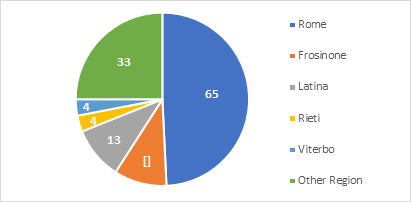
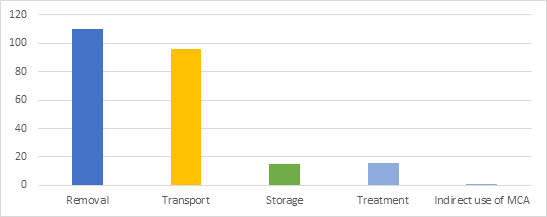
Figure 3: Territorial Distribution of Companies Registered in the CRRA Database, 2022 Considering that companies may simultaneously engage in multiple ACM-related activities, the distribution is as follows (Figure 4):
- 110 companies involved in removal activities;
- 96 companies engaged in transportation activities;
- 15 companies involved in storage activities (including one outside the region);
- 16 companies conducting remediation through encapsulation or confinement;
• 1 company performing indirect use of ACM (related to workplace management and maintenance of facilities where the company’s activities are carried out).
It is important to note that, since there are no authorized landfills within the regional boundaries, no company can directly carry out the disposal of removed and/or transported material.
Conclusion
The data received demonstrate the utility of the IT tools provided by the CRRA to companies. As regulations to protect public health and the environment concerning asbestos operations become more refined, the use of software that simplifies administrative procedures while significantly reducing costs in terms of time and resources becomes increasingly important. It is hoped that the electronic data entry method for asbestos operations will be extended nationwide to achieve a uniform representation of the subject. Annual data on asbestos operations in the Lazio Region show a significant volume of interventions that remains relatively stable over the years, following an initial surge in removals from 2012 to 2014, and alternating decreases in remediation, transportation, storage, and/ or disposal activities, as deduced from the mandatory reports for companies using the ‘Unified Model’ approved by the Asbestos Study Group of the Lazio Region. Given the substantial quantities of ACM still present in our territory, the CRRA, drawing on experiences from other Italian regions, is considering the possibility of experimenting with a self- collection remediation technique: an opportunity for private citizens to safely remove small amounts of well-preserved compact ACM from their homes and/or related premises and deliver it to the public service through a dedicated home collection circuit. This could provide an effective solution for managing asbestos removal at the local level, particularly for small-scale residential interventions, contributing to the wider effort of reducing ACM presence in the community.
Regarding the impact of the COVID-19 pandemic on the activities of companies dealing with asbestos in the Lazio Region, data analysis shows that the remediation sector in 2020-2022 did not suffer negative effects from the pandemic or the state of emergency it caused, nor from the Russo- Ukrainian conflict.
Indeed, the quantity of ACM removed is consistent with that of previous years. This is likely due to many clients, especially public ones, taking advantage of the absence of people in their properties to carry out remediation work, such as interventions in school buildings.
Looking ahead, the continued evolution and integration of digital tools in asbestos management, alongside innovative remediation techniques such as self-collection, offer significant potential to further enhance efficiency and safety in asbestos operations. By fostering a more streamlined, cost-effective, and standardized approach to managing asbestos risks, the Lazio Region can serve as a model for broader national efforts to mitigate the long- term public health and environmental impacts of asbestos. Expanding these initiatives on a national scale will be critical to ensuring comprehensive and sustainable solutions for asbestos removal and disposal across Italy.
References
-
(2011) Ministry of Health, Directorate-General for Health Prevention, Summary of Knowledge Related to Asbestos Exposure and Toxicological Profile, Asbestos.
-
Angelini A, Cavariani F, Sala O, Silvestri S (2022) A vaccine for asbestos? An appeal from researchers, epidemiologists, occupational hygienists and physicians, engineers, chemists, prevention technicians and scientists.
-
(1992) Provisions on the Cessation of Asbestos Use. UN Environment Programme.
-
(2009) Operations with asbestos in the Lazio Region (art. 9 L.257/1992). U.O.C. Regional Reference Center for Asbestos. Industrial Hygiene Laboratory – Prevention Department, Local Health Authority of Viterbo, Italy.
-
(2010) Operations with asbestos in the Lazio Region (art. 9 L.257/1992). U.O.C. Regional Asbestos Reference Centre. Industrial Hygiene Laboratory – Prevention Department, Local Health Authority of Viterbo, Italy.
-
(2011) Operations with asbestos in the Lazio Region (art. 9 L.257/1992). U.O.C. Regional Asbestos Reference Centre. Industrial Hygiene Laboratory - Prevention Department, Local Health Authority of Viterbo, Italy.
-
(2012) Operations with asbestos in the Lazio Region (art. 9 L.257/1992). U.O.C. Regional Asbestos Reference Centre. Industrial Hygiene Laboratory – Prevention Department, Local Health Authority of Viterbo, Italy.
-
(2013) Operations with asbestos in the Lazio Region (art. 9 L.257/1992). U.O.C. Regional Asbestos Reference Centre. Industrial Hygiene Laboratory – Prevention Department, Local Health Authority of Viterbo, Italy.
-
(2020) Operations with asbestos in the Lazio Region (art. 9 L.257/1992). Regional Asbestos Reference Centre. Industrial Hygiene Laboratory – Prevention Department, Local Health Authority of Viterbo, Italy.
-
(2023) Operations with asbestos in the Lazio Region (art. 9 L.257/1992). U.O.C. Regional Asbestos Reference Centre. Industrial Hygiene Laboratory - Prevention Department, Local Health Authority of Viterbo, Italy.
-
(2021) Operations with asbestos in the Lazio Region (art. 9 L.257/1992). U.O.C. Regional Asbestos Reference Centre. Industrial Hygiene Laboratory - Prevention Department, Local Health Authority of Viterbo - Prevention Department, Local Health Authority of Viterbo, Italy.
-
(2017) Operations with asbestos in the Lazio Region (art. 9 L.257/1992). U.O.C. Regional Asbestos Reference Centre. Industrial Hygiene Laboratory – Prevention Department, Local Health Authority of Viterbo, Italy.
- Capacity Constraints in Pediatric Inpatient Psychiatric Care: A Cross-Sectional Analysis of Bed Availability and Geographic Access in North Carolina
- Why Healthcare Analytics Still Optimizes the Wrong Things
- Coding, Coverage, and Care: The Infrastructure of Transgender Health Inequities
- The Effect of Classroom Attendance on Academic Achievement of Management and Leadership Discipline of Nursing Students at Instituto Superior Cristal and Universidade de Dili, Timor-Leste, 2024: A Case Study
- The Role of Social Bonds in Facilitating Shared Investments and Resource Allocation: Addressing the “Wrong Pocket Problem” in Public Health and Healthcare
- Social-Cultural Factors Contributing to Antimicrobial Resistance in Livestock Farmers and Community Households in Kayonza District, Rwanda