
Ion Beam Therapy
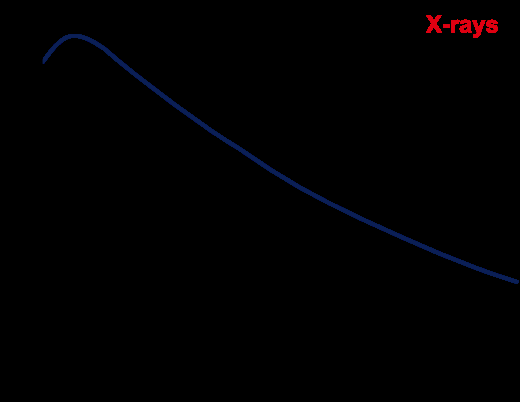
Of the various treatments for cancer, one of the most used over recent years has been radiation. Originally, the radiation used was x-rays as its properties, both physical and medical, have been well known for many years. The treatment is due to deposition of x-ray beam energy into the molecules in the tumor, destroying them and thus killing the tumor.
**References**
1. (1981) More detailed presentations of stopping may be found in Bonderup E, "Penetration of Charged Particles through Matter," Fysik Institutes trykkeri, Århus Universitet, 2nd (edn), Århus.
2. Bragg WH, Kleeman R (1905) On the Alpha Particles of Radium and Their Loss of Range on Passing through Various Atoms and Molecules. Philos Mag 10(57): 318-340.
3. Sabin JR (2013) "On the Calculation of Biomolecular Mean Excitation Energies". J Phys Chem Biophys 3: 1 e110.
4. Sabin JR (2015) "Stopping Power of Biological Systems". J Phys Chem Biophys 5: 2, e125.
5. Jensen PWK, Sauer SPA, Oddershede J, Sabin JR (2017) "Mean Excitation Energies for Molecular Ions" Nucl Instr Meth B 394, 73.
6. cf. e.g. Sauer SPA, Oddershede J, Sabin JR (2011) "Mean Excitation Energies for Biomolecules: Glycine to DNA," Adv. Quantum Chem 62: 215-243.
7. Moribayashi K (2016) "Simulation Study of Radial Dose due to the Irradiation of a Swift Ion Aiming to Advance the Treatment Planning System for Heave Particle Cancer Therapy
8. (2015) The Effect of Emission Angles of Secondary Electrons," Nucl Instur Meth 365, 592
9. Story M, Pompos A, Timmerman R "On the Value of Carbon-Ion Therapy," Phys. Today 69(11): 14.
References
-
(1981) More detailed presentations of stopping may be found in Bonderup E, "Penetration of Charged Particles through Matter," Fysik Institutes trykkeri, Århus Universitet, 2nd (edn), Århus.
-
Bragg WH, Kleeman R (1905) On the Alpha Particles of Radium and Their Loss of Range on Passing through Various Atoms and Molecules. Philos Mag 10(57): 318-340.
-
Sabin JR (2013) "On the Calculation of Biomolecular Mean Excitation Energies". J Phys Chem Biophys 3: 1 e110.
-
Sabin JR (2015) "Stopping Power of Biological Systems". J Phys Chem Biophys 5: 2, e125.
-
Jensen PWK, Sauer SPA, Oddershede J, Sabin JR (2017) "Mean Excitation Energies for Molecular Ions" Nucl Instr Meth B 394, 73.
-
cf. e.g. Sauer SPA, Oddershede J, Sabin JR (2011) "Mean Excitation Energies for Biomolecules: Glycine to DNA," Adv. Quantum Chem 62: 215-243.
-
Moribayashi K (2016) "Simulation Study of Radial Dose due to the Irradiation of a Swift Ion Aiming to Advance the Treatment Planning System for Heave Particle Cancer Therapy
-
(2015) The Effect of Emission Angles of Secondary Electrons," Nucl Instur Meth 365, 592
-
Story M, Pompos A, Timmerman R "On the Value of Carbon-Ion Therapy," Phys. Today 69(11): 14.
- Spectrophotometric Determination of Lanthanum (III) and Some Rare Earths with Xylenol Orange
- Introduction and Sources of Molluscicides
- Trimetazidine: An Antianginal Drug and Not Only!
- Nature Inspired Discovery and Development of Antibacterials: An Update
- Fungal Biodegradation of Polycyclic Aromatic Hydrocarbons (PAHs)
- Recent Approaches of Impurity Profiling in Pharmaceutical Analysis: A Concise Review