
Hyperdontia- A Rare Non Syndromic Case
Hyperdontia or Multiple supernumerary teeth have been associated with syndromes and metabolic disorders. Supernumerary teeth without associated syndrome are an uncommon entity. Non-syndromic supernumerary teeth, if asymptomatic, need to be periodically assessed radio graphically because there are chances for it to develop into pathological conditions.
Introduction
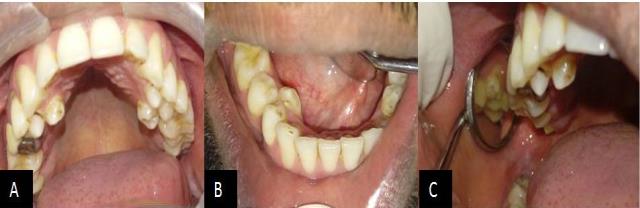
Supernumerary teeth (ST) are defined as the existence of an excessive number of teeth in relation to the normal dental formula. It is also termed as hyperdontia. They may develop at any location in the upper or lower dental arch [1]. Multiple supernumerary teeth are usually associated with syndromes and metabolic disorders. But till date only very few cases of multiple supernumerary teeth not associated with any syndromes have been reported. Supernumerary teeth can be asymptomic or may affect the neighboring dentition, disturb the eruption of a tooth related to them causing crowding, displacement, diastema, retention or delayed/ectopic eruption, root resorption, dental caries, periodontal lesions due to compression of adjacent roots and pulp necrosis and, in some cases, dentigerous cyst formation [2].Here we report a case Non syndromic multiple supernumerary teeth in a patient who presented with 9 supernumerary teeth without any associated syndrome or development anomaly A medically fit 40 year old male patient came to Dental Out Patient Department for routine dental check up. His family and past dental history were non-contributory. There was no abnormality detected on extra oral examination (Figure 1). On intraoral examination, all the teeth were well aligned in the arch except for the fact that there were three supernumerary teeth in the upper arch and one in the lower arch. Out of the three supernumerary teeth in the upper arch, one was placed palatally between the canine and first premolar region in relation to right side and the other, in the first and second premolar region in relation to the left side (Figure 2A), a paramolar in relation to the first and second molar region placed labially in relation to the right side (Figure 2C). One supernumerary tooth was placed in the right side of the lower arch, lingually, between the first and second premolar (Figure 2B).
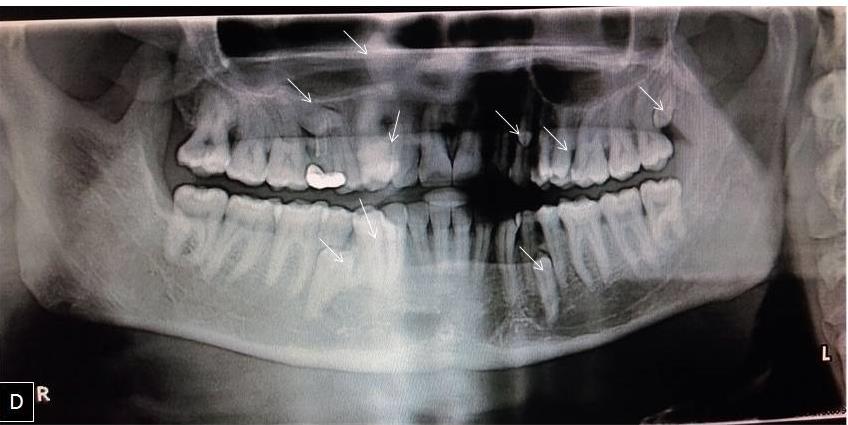
Figure1: Extraoral facial profile.
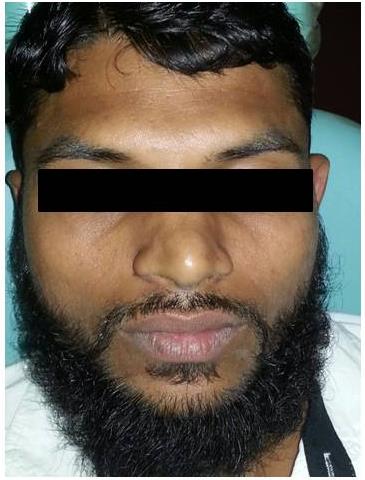
Figure 2A: Showing maxillary arch with palatally placed supernumerary teeth. Figure 2B: Lingually placed supernumerary teeth. Figure 2C: Paramolar of right quadrant. The patient was informed and educated about the presence of multiple supernumerary teeth. To rule out the presence of any associated syndrome, a thorough general examination was done. The patient was hence diagnosed with Non syndromic multiple supernumerary teeth. Panoramic radiograph was advised to check for the presence of undetected supernumerary teeth. Panoramic radiographic examination revealed presence of nine supernumerary teeth, six in the upper arch and three in the lower arch (Figure 3). Since associated systemic illnesses and other pathologies were ruled out, it was diagnosed as Non Syndromic Multiple Supernumerary teeth.
Discussion
Supernumerary teeth are defined as teeth that exceed the normal dental formula, irrespective of their location and normal morphology. Various terminologies have been put forth to describe this condition that includes hyperdontia, polyhyodontism, third dentition, duplicate teeth, supplemental, aberrant, conoidal teeth and hyperdontia. Hyperdontia is termed “real” when there is an actual increase in the number of teeth and “false” if there is delay in the shedding of deciduous teeth [3]. The exact etiology of supernumerary teeth remains unclear. One theory states that these teeth are formed because of hyperactivity of the dental lamina another which suggests the theory of dichotomy of tooth bud. Hereditary and environmental factors have also been considered in the etiology in the occurrence of supernumerary teeth [4]. Multiple supernumerary teeth usually are syndromic and are mostly seen in association with syndromes like cleidocranial dysplasia and familial adenomatous polyposis (FAP), gardner’s syndrome, Fabry-Anderson syndrome, Ehlers-Danlos syndrome, labial palatal cleft or cleidocranial dysostosis. Non-syndromic multiple supernumerary teeth is considered rare and its prevalence for is stated to be nearly 1%. The literature shows that 76 to 86% of non syndromic cases involve only one supernumerary tooth and cases involving eight to nine teeth are very rare [5]. In our case, there was presence of nine supernumerary teeth without any of the above mentioned syndromic features which provides evidence that it was a non syndromic case. The incidence of ST is generally higher in men, affecting premolars in approximately 10% of cases and almost 75% of these cases occur in the mandible [6]. In our case also premolar region in the maxillary and mandibular arch of a male patient was involved clinically.
Approximately, 75% of the supernumerary teeth are impacted and asymptomatic and seen as incidental findings on routine radiographs. In our case to the presence of impacted supernumerary teeth were confirmed by OPG [7]. Patients diagnosed with non syndromic supernumerary teeth might have an underlying heredity factor; therefore familial history should be carefully examined and ruled out [8]. In our case it was ruled out. On diagnosis, each case should be managed appropriately so as to minimize complications to the adjacent dentition. In our case, there were no relevant findings noted on intra-oral examination in terms of any disturbances to the adjacent dentition. The patient was informed about the presence of supernumerary teeth, its location, and possible complication. A periodic follow up was planned to review the status every six months.
Conclusion
In cases with multiple supernumerary teeth, a proper clinical and family history as well as a thorough examination to rule out the presence of syndromic association is inevitable. Radiographic assessment plays an important role as early diagnosis can help avoid the possible complications associated with supernumerary teeth as most of them remain asymptomatic thus masking the underlying pathology if any.
References
-
LecoBerrocal MI, Martín Morales JF, Martínez González JM (2007) An observational study of the frequency of supernumerary teeth in a population of 2000 patients. Med Oral Patol Oral Cir Bucal 12(2): 134-138.
-
Yeluri R, Hegde M, Baliga S, Munshi AK (2012) Multiple supernumerary teeth associated with an impacted maxillary central incisor: Surgical and orthodontic management. Contemp Clin Dent 3(2): 219-222.
-
Krishnan B, Narasimhan B, Nirupama C (2012) Non syndromic multiple supernumerary teeth: A case report of 11 supernumerary teeth. J Indian Acad Oral Med Radiol 24(4): 296-299.
-
Liu JF (1995) Characteristics of premaxillary supernumerary teeth: A survey of 112 cases. ASDC J Dent Child 62(4): 262-265.
-
Thiago de Santana Santos, Erick Ricardo Silva, Ana Célia Faria, Francisco Veríssimo de Mello Filho, Samuel Porfírio Xavier (2014) Multiple Supernumerary Teeth in a Nonsyndromic 12-Year- Old Female Patient - A Case Report. Braz Dent J 25(1): 79-82.
-
Hyun HK, Lee SJ, Ahn BD, Lee ZH, Heo MS, et al. (2008) Nonsyndromic multiple mandibular supernumerary premolars. J Oral Maxillofac Surg 66(7): 1366-1369.
-
Thumati P, David CM, Tiwari R (2014) Non- syndromic multiple supernumerary teeth: A case report and Review of Literature. IJSS Case Reports & Reviews 1(5): 1-5.
-
Mali S, Karjodkar FR, Sontakke S, Sansare K (2012) Supernumerary teeth in non-syndromic patients. Imaging Science in Dentistry 42(1): 41-45.
- Psychogenic Erectile Dysfunction in Late Adulthood: A Case Report on Clinical Intervention and Intimacy Restoration
- Clinical Trials on COVID-19 in 2025: A New Chapter in Global Health Research
- Innovations and Challenges in Contemporary Medical Clinical Trials: An Editorial Perspective
- Innovations and Challenges in Contemporary Medical Clinical Trials: A Critical Perspective
- Reimagining Clinical Trials: The Power of Continuous Feedback from Medical Reports
- Factors Influencing Brain Drain: Perspectives from a Medical School in Turkey