
Knowledge, Attitude and Practice towards Prevention of Mother to Child Transmission of HIV among Pregnant Women Attending Antenatal Care in Southeast Ethiopia
Introduction: Globally, HIV/AIDS is a major public health problem; and mother to child transmission is the largest source of HIV infection in children below the age of 15 especially in developing countries. Approximately 1800 children were newly infected and 1400 were died per day in the world. Among this figure around 90% of the infections and deaths were happening in developing countries. Objective: The aim of this study was to determine knowledge, attitude and practice towards prevention of mother to child transmission among pregnant women attending antenatal care in Goba referral hospital. Methodology: An institutional based cross-sectional descriptive study was conducted from March, 2019 to May, 2019 to determine knowledge, attitude and practice towards preventions of mother to child transmission of HIV among pregnant women attending antenatal care in Goba referral hospital. A systematic random sampling technique was used to select the study participants. Data was analysed using SPSS version 20 software. Result: This study showed 94.6% of the respondents reported that they have ever heard about HIV/AIDS. About 93.6% of mothers were knowledgeable, 62.6% have good attitude and 37.4% have good practice towards PMTCT. Conclusion: In this study the knowledge was high among pregnant women. However, the practice of the participants was low. It is due to all knowledge can’t be changed into action. So, health service organizations and other responsible bodies should perform activities which can impart behavioural change.
Introduction
Background
Acquired Immune Deficiency Syndrome (AIDS) is a syndrome first described in 1981. The consequence of progressive immune debilitation. AIDS pandemic has succumbed millions of people all over the world since it was first recognized in early 1980s, and no continent is free from the pandemic [1, 2]. Human immunodeficiency virus (HIV-1) and human immunodeficiency virus (HIV - 2) are retroviruses with RNA genomes; they are the etiologic agents of HIV infection and diseases AIDS. Forty million people infected with HIV worldwide, of which 50% are women. Communicable disease control center (CDC) estimates 40,000 new infections per year in US; about 70% among men, and 30% are women; 2,000 new infections/day in children <15 years [3, 4]. Due to effective retroviral therapy, number of individuals with chronic HIV was increasing in spite of decline in new infections in the 1990s; as a result fifteen percent of HIV infected pregnant women in the US obtain no prenatal care [5].
The main route of HIV transmission includes sexual contact, blood contact and mother to child transmission (MTCT). MTCT of HIV remains a major public health problem worldwide. It is the most common mode of transmission in children under the age of 15years, which is vertically transmitted from HIV positive pregnant women to her unborn baby [4, 6]. Male to female transmission more efficient than female to male and anal receptive sex more likely to transmit than vaginal sex, because of fragile nature of rectal mucosa and high viral load is present in rectal mucosa [4]. Exposure to infected blood through parenteral exposure via transfusions or sharing needles or occupational exposure, risk of transmission is 0.3% and 0.09% after mucous-membrane Lette A, et al. Knowledge, Attitude and Practice towards Prevention of Mother to Child Transmission of HIV among Pregnant Women Attending Antenatal Care in Southeast Ethiopia. Nurs Health Care Int J 2019, 3(5): 000201.
exposure, with needle stick injury, risk of transmission is 1/300 and the overall transmission risk of HIV/AIDS in breast fed child is as high as 30-40% [7]. Additional HIV/AIDS transmission mechanisms are in uterus or during labor/delivery 20% of transmission occurs <36 weeks, 50% in days before delivery, 30% intrapartum, risk of infant to be infected is ~20% increased rate of transmission if low CD4 counts or if high viral loads are recorded. And in patient who previously diagnose of HIV/AIDS, who have vaginal delivery, especially with ROM >4 hours, increases risk of infant infection up to around 40% [7, 8]. Untreated STDs, prematurity, and chorio-amnionitis increase the risk of mother-to-child transmission of HIV [9]. However, HIV is not believed to be transmitted by bites, sharing, utensils, bathrooms, bathtubs, exposure to urine, feces, vomitus (except if grossly contaminated with blood, and even then transmission is rare, if at all) [10].
More than 70% of over 42 million people living with HIV/AIDS worldwide live in sub-Saharan Africa. Of this 17 million are women and 2.5 million are children under the age of 15 years. AIDS has now become the leading cause of death in these countries and it has further worsened the morbidity and mortality of infants and children [4, 11]. Similarly, the virus continued to spread at a rapid pace, sparing no part of Ethiopia unaffected by the virus. In 2003 alone 90,000 adults and 25,000 children died of AIDS. This makes a cumulative total of 90,000 deaths leaving 539,000 orphans by the end of 2003 [2, 7, 11].
For the achievement of millennium development goals (MDGs), creating awareness and enhancing PMTCT practice has great importance particularly in the reduction of childhood and maternal morbidity and mortality which in turn has enormous impacts on socio- economic development of the country. This study determined knowledge, attitude and practice towards prevention of mother to child transmission among pregnant women attending antenatal care.
Methods
Study Area, Period and Design
An institutional based cross-sectional study was conducted from March, 2019 to May, 2019. The study was conducted in Goba referral hospital which is found in Goba town, Bale Zone, Southeast Ethiopia. Goba town is located 445 km from Addis Ababa. According to population and housing census of Ethiopia, the total population of the town is estimated to be over 32,000 Copyright© Lette A, et al.
[12]. Goba referral hospital has four Emergency OPD such as; gynecology, internal medicine, surgery, and pediatrics, ten ROPD including minor unit like dermatology, ophthalmology, dentistry, psychiatry, and also one operation room, four ward admission room, MCH, NICU, laboratory and drug store staff. There is respective specialist: four internist, three surgeon, two pediatrician, two gynecologist and obstetrician, 60 general practitioner, 128 nurses, 6 midwives and 40 medical interns working there, and there is also liaison officer, clinical director and respective department head to supervise them. The last year’s quarter report of patient flow at the ANC from registration book of MCH unit which was found to be 25 per day, 415 monthly and around 4,000 annually. During the study period the number of pregnant women attending ANC is increasing; estimated to be 31 per day and 600 monthly.
Sample Size Determination
The required sample size was calculated using a single population proportion formula assuming P=84.6%, Z= standard normal distribution taken as 1.96 at 95% confidence level, d= margin of error taken as 5%, 10% non-response rate and the final sample size calculated to be 220.
Data Collection and Sampling Procedure
The questionnaires were adapted from different literatures. Data was collected by face to face interview using structured and pretested questionnaire filled for respondent. This was first prepared in English and translated to Amharic then back to English again to check for its consistency. Four 12 graduates and one BSc nurse were recruited for data collectors and supervisor respectively. The interview was conducted after ANC service and each client was being interviewed privately. The study participants were selected by systematic random sampling; and we used medical registration number from their cards as lottery enrolment with sampling frame.
Data Quality Control
The supervisor and data collectors were trained for two days before data collection. Before actual data collection, the questionnaire was pre-tested for validity and reliability on 11 mothers; thereby possible adjustment or modification was made accordingly. The pre-test was done in Adaba health center among pregnant women attending ANC and was not included in our data analysis. The supervisor checked the data daily for its completeness.
Data Processing and Analysis
Data was cleaned, coded, explored for outliers and missed values. The data was entered into the computer and analysed and processed using SPSS software version 20 for window package. Descriptive analysis was carried out to examine the distribution of each of study variables.
Operational Definitions
Knowledge: Is that knowing what is diseases, the mode of transmission, the natural history of the disease means that whether it is cured or not, and the impact of diseases in day to day activity, future hope and how make to be not suffered the diseases. Knowledge was assessed by 11 questions.
- Knowledgeable: The study participants who score half or more than half (≥5 out of 11) of the knowledge questions are considered as knowledgeable.
- Not knowledgeable: The study participants who score less than or equal to half (≤5 out of 11) of the knowledge questions are considered as not knowledgeable.
Attitude: Measured by the understanding about the diseases, and attitude toward the suffered individuals. Attitude was assessed by asking 8 questions.
- Positive attitude: The study participants who score half or more than half (≥4 out of 8) of the attitude questions are considered as positive attitude.
- Negative attitude: The study participants who score less than or equal to half (≤4 out of 8) of the attitude questions are considered as negative attitude.
Practice: It sees and changes it in to meaning, full thing and uses it to prevent themselves and community from diseases, teach the other friends and relatives about it. Practice was assessed by asking 11 questions.
- Good practice: the study participants who score half or more than (>5 out of 11) of the practice questions are considered as good practice.
- Poor practice: study participants who score less than or equal to half (≤5 out of 11) of the practice questions are considered as poor attitude.
MTCT: Mother to child transmission of HIV/AIDS either prenatal (Trans placental), Intrapartum (during Labor), and post natal (breast feeding, needle sharing, body secretion) periods. Any way means if it is transmitted to her child [6]. Antenatal care: A general and/or medical care given to pregnant women before delivery [13].
Ethical Consideration
Ethical clearance letter was obtained from student research program of Madda Walabu University College of Medicine and Health Sciences. The respondents were informed about the purpose of the study, and verbal consent was obtained. The respondents’ right to refuse or withdraw from participating in the interview was fully maintained.
Result
Socio-demographic Characteristics
A total of 220 pregnant mothers were interviewed yield the response rate of 100%. The median age of the respondents was 28 years with majority 84(38.18%) of the respondents are between the age groups of 20-24 years. Regarding their residence, most of the respondents came from the rural area 119(54.09%). The majority 115(52.3%) were orthodox followers. One thirds 66(30 %) attended no formal education. More than half, 117(53.2%) were housewives (Table 1).
| Variables | Frequency | Percent | |||||||
|---|---|---|---|---|---|---|---|---|---|
| Age group | 15-19 | 15 | 6.81 | ||||||
| 20-24 | 84 | 38.18 | |||||||
| 25-29 | 58 | 26.36 | |||||||
| 30-34 | 44 | 20.02 | |||||||
| 35 and above | 19 | 8.63 | |||||||
| Residence | Rural | 119 | 54.09 | ||||||
| Urban | 101 | 45.91 | |||||||
| Ethnic group | Oromo | 120 | 54.5 | ||||||
| Amhara | 72 | 32.82 | |||||||
| Tigre | 18 | 8.18 | |||||||
| Others | 10 | 4.5 | |||||||
| Religion | Orthodox | 108 | 48.57 | ||||||
| Muslim | 74 | 34.29 | |||||||
| Protestant | 38 | 17.14 | |||||||
| Educational status | No formal education | 66 | 30 | ||||||
| Primary | 51 | 23.2 | |||||||
| Secondary | 56 | 25.5 | |||||||
| Tertiary and above | 47 | 21.4 | |||||||
| Occupation | Housewife | 117 | 53.2 | ||||||
| Government employee | 64 | 29.1 | |||||||
| Student | 6 | 2.25 | |||||||
| Day worker | 6 | 2.25 | |||||||
| Merchant | 27 | 12.3 | |||||||
| Parity | Primi-para | 74 | 15.5 | ||||||
| Grand multi- Para | 19 | 8.6 | |||||||
| Multi-para | 127 | 57.7 | |||||||
| Husband’s occupation | Farmer | 34 | 15.5 | ||||||
| Government worker | 104 | 47.3 | |||||||
| Private worker | 30 | 13.6 | |||||||
| Merchant | 48 | 21.8 | |||||||
| Others | 4 | 1.8 |
Table 1: Socio-demographic characteristics of ANC clients in Goba referral hospital, 2019.
Lette A, et al. Knowledge, Attitude and Practice towards Prevention of Mother to Child Transmission of HIV among Pregnant Women Attending Antenatal Care in Southeast Ethiopia. Nurs Health Care Int J 2019, 3(5): 000201.
Copyright© Lette A, et al.
| Family income(monthly) | <1000 ETB | 75 | 34.09 |
|---|---|---|---|
| 1001 ETB -3000 ETB | 83 | 37.77 | |
| 3001 ETB-5000ETB | 38 | 17.27 | |
| >5000 ETB | 24 | 10.6 |
Table 2: Socio-demographic characteristics of ANC clients in Goba referral hospital, 2019.
- Variables
- Frequency Percent
- Ever heard about HIV/ADIS
- Yes
- 208
- 94.6
- No
- 12
- 5.4
- Route of transmission
- Aware about MTCT
- Yes
- 160
- 72.7
- No
- 60
- 27.3
- Means of transmission
- Does MTCT is preventable?
- Yes
- 140
- 63.6
- No
- 80
- 36.4
- By which Preventive methods?
- Can HIV infected mother do anything to reduce risk of HIV transmission, if she decides to breast feed her baby?
- Ways of reducing the risk, if the above answer is yes.
- Excusive breast feeding
- 57
- 63.6
- By taking ART drugs to treat HIV
- 33
- 36.4
- Have you ever heard about PMTCT of HIV?
- Yes
- 145
- 65.9
- No
- 75
- 34.1
- Have you ever heard of the drugs that can prevent a baby from getting HIV from mother?
- Does it is important to know HIV status during pregnancy?
- Yes
- 161
- 73.18
- No
- 59
- 26.82
Table 3: Knowledge of ANC clients towards PMTCT in Goba referral hospital, 2019.
Lette A, et al. Knowledge, Attitude and Practice towards Prevention of Mother to Child Transmission of HIV among Pregnant Women Attending Antenatal Care in Southeast Ethiopia. Nurs Health Care Int J 2019, 3(5): 000201.
Copyright© Lette A, et al.
Attitude towards MTCT and PMTCT among ANC Clients
The majority 151(68.6%) believed that HIV positive women should have a baby. About sixty percent of participants thought that HIV positive women should breast feed her baby. The majority 118(55.2%) believed that if HIV positive women decided to breast feed her baby their husbands will support. Around eighty four percent of the participants thought that the community will reject them if HIV positive women decided to breast feed her baby. The majority 75(55.6%) believed that breast feeding for HIV positive women is natural obligation (Table 3).
| Variables | Frequency | Percent | ||||||
|---|---|---|---|---|---|---|---|---|
| Believe that HIV positive women should have a baby | Yes | 151 | 68.6 | |||||
| No | 69 | 31.4 | ||||||
| Believe that HIV positive women should breast feed her baby | Yes | 135 | 61.4 | |||||
| No | 85 | 38.6 | ||||||
| Reasons for saying, yes | Obligation | 75 | 55.6 | |||||
| Can’t afford formula | 36 | 26.7 | ||||||
| Fear of rejection | 24 | 17.8 | ||||||
| HIV positive mother decided not to breast feed her baby. Believe that their husband react as | Will reject | 74 | 33.5 | |||||
| Will support | 118 | 55.2 | ||||||
| Do not know | 28 | 11.3 | ||||||
| HIV positive mother decided not to breast feed her baby. Believe that the community react as | Will reject | 183 | 83.18 | |||||
| Will support | 30 | 13.64 | ||||||
| Do not know | 7 | 3.18 |
Table 4: Attitude towards PMTCT of HIV among pregnant women attending ANC in Goba referral hospital, 2019.
than half, 127 (57.73%) haven’t ever been tested for HIV. The majority 189(85.9%) were willing to have HIV test for the current pregnancy (Table 4).
| Variables | Frequency | Percentage | ||||||
|---|---|---|---|---|---|---|---|---|
| Risks involved in providing replacement food in breast feeding baby | Child will be malnourished | 77 | 35 | |||||
| Child will be infected | 14 | 6.36 | ||||||
| Child will not grow well | 129 | 58.64 | ||||||
| Satisfied with health worker advice about PMTCT | Yes | 204 | 92.72 | |||||
| No | 16 | 7.28 | ||||||
| Who do you prefer to take advice regarding PMTCT | Family | 10 | 4.54 | |||||
| Health workers | 113 | 51.37 | ||||||
| Friends | 88 | 40 | ||||||
| Partner | 9 | 4.09 | ||||||
| Breast feeding is nutritional complete | Agree | 153 | 69.6 | |||||
| Disagree | 32 | 14.5 | ||||||
| Neutral | 35 | 15.9 | ||||||
| Formula food is nutritionally complete | Agree | 63 | 28.7 | |||||
| Disagree | 40 | 18.3 | ||||||
| Neutral | 33 | 15.2 | ||||||
| Willing to have HIV test | Yes | 210 | 95.5 | |||||
| No | 10 | 4.5 | ||||||
| Fear of rejection by husband | 3 | 30 | ||||||
| Fear of rejection by community | 1 | 10 | ||||||
| Fear to deal with stress full | 2 | 20 |
Table 5: Practice towards MTCT and PMTCT of ANC clients in Goba referral hospital in 2019.
Lette A, et al. Knowledge, Attitude and Practice towards Prevention of Mother to Child Transmission of HIV among Pregnant Women Attending Antenatal Care in Southeast Ethiopia. Nurs Health Care Int J 2019, 3(5): 000201.
Copyright© Lette A, et al.
- Reason for not being tested condition
- Believe of having no risk faced to acquire the virus
- 4
- 40
- Reason for being tested
- To prevent my partner/husband
- 97
- 44.11
- To protect my child from HIV
- 113
- 51.39
- Ever visited ANC in previous pregnancy
- Yes
- 108
- 49.09
- No
- 112
- 50.91
- Ever been tested for HIV
- Yes
- 93
- 42.27
- No
- 127
- 57.73
- Willing to have HIV test in the current pregnancy
- Yes
- 185
- 85.9
- No
- 31
- 14.1
- Willing to accept your result
- Yes
- 216
- 98.6
- No
- 4
- 1.4
- Willing to disclose the result
- Yes
- 141
- 64.09
- No
- 79
- 35.91
Table 6: Practice towards MTCT and PMTCT of ANC clients in Goba referral hospital in 2019.
Prevalence of Knowledge, Attitude, and Practice
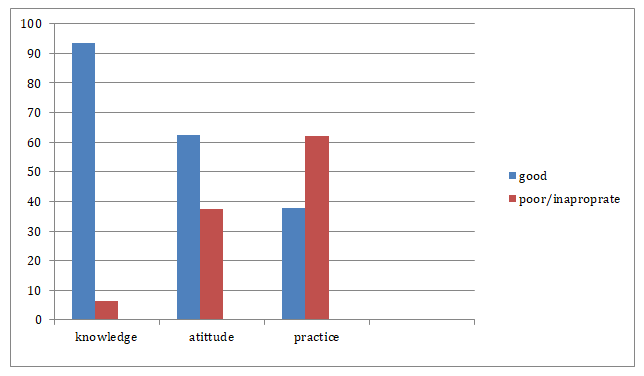
Generally, 206(93.6%) of mothers were knowledgeable, among this figure 129(62.6%) have good
Discussion
Of the total respondents about 208 (94.6%) have heard about HIV/AIDS which is comparable with a finding in Addis Ababa [15]. One thirds of them have identified all Lette A, et al. Knowledge, Attitude and Practice towards Prevention of Mother to Child Transmission of HIV among Pregnant Women Attending Antenatal Care in Southeast Ethiopia. Nurs Health Care Int J 2019, 3(5): 000201.
the major routes of HIV transmission. This finding was in line with a study conducted in Asela town [16]. One hundred forty five (65.9%) of respondents have heard about PMTCT, this result is consistent with a study done in Uganda [17]. One hundred sixty (72.7%) respondents Copyright© Lette A, et al.
knew that HIV can be transmitted from an infected mother to her unborn baby. This is consistent with findings from Arba Minch hospital and health center [18] and the higher prevalence were reported from Mekelle town [19]. In this study, 140 (63.6%) of respondents knew MTCT of HIV is preventable. This result higher than the finding in Burkina Faso [20]. Around sixty four percent of the mothers mentioned exclusive breast feeding and 36.7% mentioned that the mother should take ART as a means of reducing risk of transmission if a mother decides to breast feed her baby. This is comparable with a study done in Gondar town [21]. Majority (93.5%) of the respondents in this study agreed on importance of knowing HIV status during pregnancy which is similar with a study done in Nigeria [22]. In this study, 63% of the respondents heard of drug that can prevent MTCT of HIV. This study was high from a study done in primary health center of Nigeria [22]. In our study around 68.6% of the respondent think that HIV positive should have a baby. It was similar with a study done in Mekelle [23]. In our study, 121 (55.2%) of them think that her husband will support if HIV positive women decided not to breast feed her baby, this consistent with a study done at south India [24]. A study conducted at regional hospital in Hong Kong showed, 78.5% tested HIV to protect their partners, 72.8% to care for their child and 77% to know their status [25, 26, 27, 28, 29, 30]. It was higher than our results, 42.2% to protect their partner, 57.8% to protect their child and 64% to know their status. This difference may be due to health information disseminations, and geographical difference.
Generally, about 93.6% of the respondents are knowledgeable among those 62.6% had good attitude and 37.4% had good practice. The good knowledge positively affects attitude and practice. Counseling pregnant women attending ANC has greater impact to enhance knowledge, attitude and practice about MTCT and to encourage PMTCT service utilizations [31, 32, 33]. Accordingly, counselling during ANC has greater impact on PMTCT utilization. Also factors like providing ART drugs can also increase PMTCT utilization.
Conclusion
In this study the knowledge of pregnant women was high compared with another study conducted in Ethiopia [34, 35, 36]. The attitude and practice of the participants were low even though there is high knowledge. This is because all pregnant women couldn’t apply their knowledge in to practice. Therefore, health service organizations and other responsible bodies should do activities such as Lette A, et al. Knowledge, Attitude and Practice towards Prevention of Mother to Child Transmission of HIV among Pregnant Women Attending Antenatal Care in Southeast Ethiopia. Nurs Health Care Int J 2019, 3(5): 000201.
counselling on PMTCT utilization during antenatal care and providing ART drugs will be essential to enhance prevention of mother to child transmission. The counselling should be designed to impart behavioral change among pregnant women.
Ethics Approval and Informed Consent
The study was performed by interviewing pregnant mothers after an ethical consent was obtained from Madda Walabu University ethical clearance committee and individual verbal consent is obtained from the study participants. This manuscript has never been submitted and considered for publication to any other journal.
Consent for Publication
Not applicable.
Data Availability
The data will be available upon request.
Funding
This study was supported by Madda Walabu University.
Competing Interests
The authors declare no competing interests.
Authors' Contributions
This work was carried out in collaboration between all authors and the authors have equal contribution for this research. All authors read and approved the final manuscript.
Acknowledgments
The authors are grateful to Madda Walabu University for supporting this study. We are also very grateful to Goba Referral Hospital and data collectors to undertake this study.
Authors' information
SK, DC, EE and GO are students at Madda Walabu University, and GM, AL, AA and AY are lecturers at Madda Walabu University.
Copyright© Lette A, et al.
References
-
Reis C, Heisler M, Amowitz LL, Moreland RS, Mafeni JO, et al. (2005) Discriminatory attitudes and practices by health workers toward patients with HIV/AIDS in Nigeria. PLoS Med 2(8): e246.
-
Training manual (2007) Prevention of MTCT OF HIV.
-
Ivers LC, Cullen KA, Freedberg KA, Block S, Coates J (2009) HIV/AIDS, undernutrition, and food insecurity. Clin Infect Dis 49(7): 1096-1102.
-
WHO (2011) Mother to Child Transmission of HIV.
-
Colombrini MR, De Iopes MH, De Figueiredo RM (2006) Adherence to the antiretroviral therapy for HIV/AIDS. Rev Esc Enferm USP 40: 576-581.
-
UNPO (2013) Global report: UNAIDS report on the global AIDS epidemic In: HIV/AIDS, UNPO (ed.).
-
FMOH (2013) Atitudes on PMTCT and Associated factors on HIV/AIDS and its Prevalence. In: HIV/AIDS, OFTP (ed.), Addis ababa Ethiopia.
-
Kapoor AV (2012) Mother- to-child Transmission of HIV. Indian J pediatric.
-
Weiser SD, Heisler M, Leiter K, Percy De Korte F, Tlou S, et al. (2006) Routine HIV testing in Botswana: a population-based study on attitudes, practices, and human rights concerns. PLoS Med 3(7): e261.
-
Lynne M, Mofenson PM (2002) Saftey on anti- retroviral prophylaxis of perinatal transmission of HIV infected pregnant women and their children.
-
MOH Addis Ababa (2011) National Guide line on PMTCT of HIV in Ethiopia.
-
Ethiopia PAHCO (2011) 2007 Population and Housing Census of Ethiopia. Results for Oromia Region.
-
UNAIDS (2012) Report on Global HIV Epidemics. In: HIV/AIDS, JUPO (ed.).
-
Nachega JB, Hislop M, Dowdy DW, Lo M, Omer SB, et al. (2006) Adherence to highly active antiretroviral therapy assessed by pharmacy claims predicts survival in HIV-infected South African adults. J Acquir Immune Defic Syndr 43(1): 78-84.
-
MOH AIDS In Ethiopia (2007) Addis ababa, Ethiopia. Lette A, et al. Knowledge, Attitude and Practice towards Prevention of Mother to Child Transmission of HIV among Pregnant Women Attending Antenatal Care in Southeast Ethiopia. Nurs Health Care Int J 2019, 3(5): 000201.
-
Mesfin YM, Hailemariam D, Biadgilign S, Kibret KT (2014) Association between HIV/AIDS and multi- drug resistance tuberculosis: a systematic review and meta-analysis. PLoS One 9(1): e82235.
-
Muldoon KA, King R, Zhang W, Birungi J, Nanfuka M, et al. (2018) Sexual Health Consequences of Forced Sexual Debut Among Ugandan Women in HIV Serodiscordant Partnerships: Results From the HAARP Study. J Interpers Violence 33(11): 1731- 1747.
-
Mesfinhaddis, Jerene D (2011) Awareness of ANC clients on MTCT of HIV and its prevention in Arba Minch 20(1): 57-58.
-
Dawit (2018) Main routes of HIV/AIDS transmission and its determinant factors in some rural area tigray Ethiopia. mekelle: faculty of medicine and health science, Mekelle University.
-
Cheyns K, Banza Lubaba Nkulu C, Ngombe LK, Asosa JN, Haufroid V, et al. (2014) Pathways of human exposure to cobalt in Katanga, a mining area of the DR Congo. Sci Total Environ 490: 313-321.
-
Gessese (2016) KAP on Exclusive Breast feedings to prevent MTCT and their ssociation with ART drugs. In: Science, Gufomah (ed.), KAP on EBF and factors associated. Gondar university.
-
MA Tolle (2008) Prevention of MTCT of HIV. Nigeria.
-
Assefa (2014) KAP towards Mother to child transmission of HIV/AIDS. In: UFTHS (ed.), KAP on PMTCT and associated factors. mekelle: faculty of medicine and health science.
-
Rogers A, Meundi A, Amma A, Rao A, Shetty P, et al. (2006) HIV related Knowledge, Attitude, Perceived benefits, and risk of HIV testing among pregnant women in rural Southern India 20(11): 803-811.
-
Fung C (2014) HIV/AIDS knowledge and risk behavior in Hong Kong Chinese pregnant women.
-
Aishat U, Olubunmi A (2016) Prevention of Mother- to-Child Transmission of HIV/AIDS: Perception of Health Care Workers in Rural Areas of Oyo State. Scientifica (Cairo).
-
Dekock KM (2010) Prevention of MTCT of HIV in resource poor setting. Copyright© Lette A, et al.
-
FDRE (2008) Report on progress towards implementation of the declaration of commitment on HIV/AIDS.
-
Hailu C (2005) Assessment of Knowledge, Attitude, & Practice among Mothers about VCT and Feeding of Infants Born to HIV Positive Women in Jimma Town, Ethiopia, pp: 1-136.
-
Juliet K (2008) KAP on pregnant women attending ANC Mablereginal hospital.
-
Addis M Org (2007) AIDS in Ethiopia. Report No. 6th report in English.
-
Nompumelelomtshali T (2010) Pregnant women’s attitude towards us in VCT, Zimbabwe. Lette A, et al. Knowledge, Attitude and Practice towards Prevention of Mother to Child Transmission of HIV among Pregnant Women Attending Antenatal Care in Southeast Ethiopia. Nurs Health Care Int J 2019, 3(5): 000201.
-
Sison N, Yolken A, Poceta J, Mena L, Chan PA, et al. (2013) Healthcare provider attitudes, practices, and recommendations for enhancing routine HIV testing and linkage to care in the Mississippi Delta region. AIDS Patient Care STDS 27(9): 511-517.
-
UNAIDS (2007) ADIS epidemic update.
-
Williams WB, Liao HX, Moody MA, Kepler TB, Alam SM, et al. (2015) HIV-1 VACCINES. Diversion of HIV-1 vaccine-induced immunity by gp41-microbiota cross- reactive antibodies. Science 349(6249): aab1253.
-
Lee YK, Graces MM, Lartey A (2009) Knowledge, attitude about MTCT among pregnant women in Ghana. Copyright© Lette A, et al.
- Teaching Cognitive Behavioral Therapy to Graduate Psychiatric Mental Health Nurse Practitioner Students: Utilizing A Mixed Methods Course Evaluation
- The Role of Pharmacogenetic Testing in Clinical Practice: A Path toward more Effective, Personalized and Cost-effective Care
- Implementing Screening with the GAD-7 in an Outpatient Mental Health Setting: A Quality Improvement Project
- Social Media and Health Promotion
- Impact of Covid-19 Pandemic on the Academic Performance and Attitude of Nursing Students towards E-Learning
- A Study to Assess the Knowledge Regarding Ill Effects of Tobacco Consumption on Health among Adolescents in Selected Higher Secondary School in Nadiad City