
Governing Technology: “Nanotechnology Risk Management and Public Health Protection Act” A Harmonized Approach to Promoting Innovation While Protecting Global Health
Nanotechnology is globally in food, clothing, aviation, transport, housing construction, weaponry, medical devices, new medicines and outer space exploration. Since risks associated with the new technology emerge slowly there is time to create a rational global oversight mechanism that promotes innovation and protects public health, Because no commercial product is made entirely in the same place from start to finish without any components from other nations, nor is it marketed only in the place where it was made, innovators, must catalogue a multitude of laws and drill down into key subjects across jurisdictions1 in order to comply with law2 and thus soon find their compliance efforts in a swamp of legal documents, regulations and guidance without a compass to figure out which regulatory path works best or is appropriate. This plethora of laws, regardless how well intended, creates disinformation and blocking both public education and the free flow of commerce. This article proposes an international nano-risk governance framework with a bioethics commission, empowered to examine questions about nanotechnology and its commercial applications and to disseminate information to the general public. The “Nanotechnology Risk Management and Public Health Protection Act” fills a void in the nanoregulatory landscape, where information is plentiful but trustworthy sources are rare.
Introduction
Purpose of the “Nanotechnology Risk Management and Public Health Protection Act” Promoting Innovation, Protecting Global Health Providing all workers and consumers accurate detailed information about Nanomaterial Exposure is a major global health Challenge1. Scientists and governments agree that the application of nanotechnology2 to commerce poses potential risks to human health and the environment3, but disagree about methods of risk management,4 how to design compliance5 and which risks require highest priority6. s7. The In 2011, WHO started bridging health rights regarding nanoscience from the lab to law8. Its Committee of Experts prepared Guidelines, finalized in 2017, offering unprecedented, visionary opportunities to operationalize precautionary principles advancing global health, before any established link between workplace exposure to nanomaterials and subsequent harm. The Guidelines training that delivers information to workers, it incorporated by reference the treaty, Global Harmonization for Chemical Safety (GHS)9 a multiphase stepwise disclosure model for employer-based training and information dissemination Committee focussed on methods but left issues about health hazards for aother day [1].
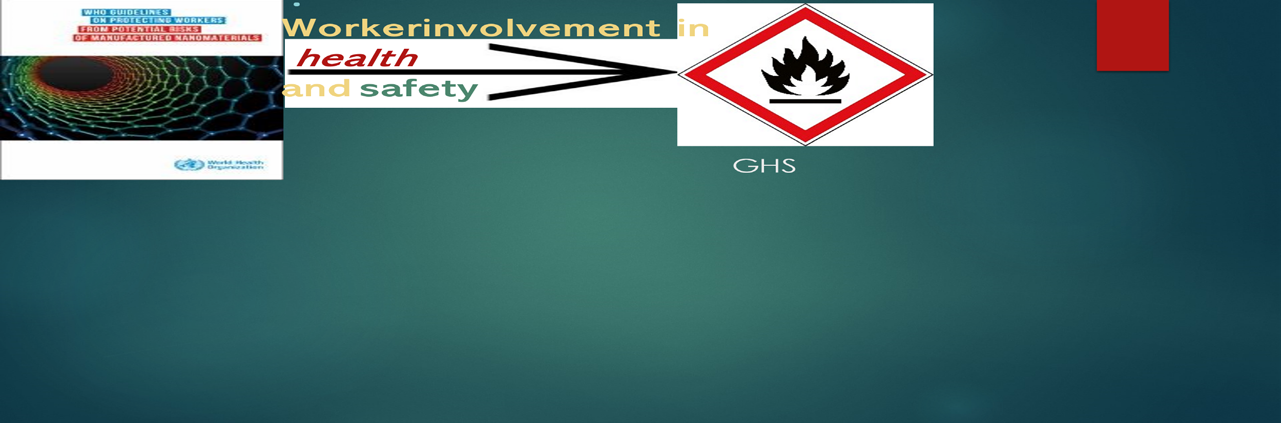
“Recommendations: E. Training and involvement of workers: “The GDG considers training of workers and worker involvement in health and safety issues to be best practice but cannot recommend one form of training… This glaring lacunae jeopardizing global health requires asking: how to deliver clear and accurate training to workers using nanomaterials. Absent the “Nanotechnology Risk Management and Public Health Protection Act” , workers using nanomaterials are without reliable tools to assess nanorisk-information where trustworthy experts can describe nanomaterial hazards that they face in their work environment. Although application of nanotechnology may be novel, applying a vibrant corpus of international law operationalizes the precautionary principle, to contain or manage risk while incubating new industries is not new. A plethora of nanoregulations and laws that exist without a hierarchy to prioritize these rules pose an immediate, but not insurmountable, obstacle to sound international commerce, because obeying one law does not ensure that another competing law has been obeyed. Sometimes, specific text of the laws differs across jurisdictions. For example the text of laws in the EU12 seem to be diametrically opposed to the principles articulated in US even when implementation blurs these contrasts. Taken together, however, these laws do empirically demonstrate a global consensus that law and science must partner together to achieve global health and commercial goals.. In this context it is not surprising that there is no single regulatory space where authority has been clearly established in order to sort out complex issues of responsibility under law and the trade-offs in science policy. Nor is there any regulatory space that is authorized to organize competing laws and guidelines or prioritize their role within the legal hierarchy. The“Nanotechnology Risk Management and Public Health Protection Act” Model Act fills this unmet need to advance public health protection and innovation by enabling stakeholders to have a central place for inquiry and discussion with a view to problem-solving about global health issues raised by nanotechnology.13 The provisions establishing a Bioethical Commission in Section 5authorize a wide variety of experts and stakeholders to work together within a legal framework that will generate empirically sound information for all about legal determinants14 of global health law in general and nanotechnologies in particular [2].
Scientific Consensus: Unquantified Risks Bring Uncertain Results
Desire to regulate nanotechnology has been clearly articulated by many draft laws and several key statutes at the national, multinational and UN level. Existing nanoregulations, environmental laws, international treaties and trade agreements, exemplify the transnational character of this jurisprudence and underscore a global need for clear limits and permissions regarding the use of nanomaterials in commerce A bottom-up approach is advocated to hear which problems are salient and prioritize information accordingly [3]. To do so involves using information about exposure assessment, risk assessment, hazard analysis and data collection; using the tools of risk mitigation and best practices so that manufacture, use, handling, transport and safe disposal of nanotechnology applications is feasible and so that risks are understood by people exposed to risk [4]. Globally, great efforts have been devoted to developing nano-specific testing guidelines, guidance, and risk assessment or risk management frameworks, either on larger collaborative data platforms or as stand-alone data sources. 15 For example, commerce must bow to local laws about permits regarding uses and zoning of the places that engage in nanotechnology research and its applications; taxes, prohibitions against discrimination and respect for privacy. Even when they have the same goal, there can be conflicts of language or interpretation among the national laws in a world of over 195 nations; plus regional laws that bring together several nations such as the Organization of American States (OAS) the Organization for African Unity (OAU), the ASEAN group in Asia and the European Union (EU). An overwhelming majority of nations agree, 16 the Right to health is enshrined as a “fundamental” right in the WHO Constitution without ratifying additional treaties 17 These efforts18 enhance the ability of manufacturers, regulators, end-users and the general public to incentivize the release of information that forms the underpining of safety-bydesign,19 in an attempt to speed up innovation without overlooking very costly potential adverse health impacts to ecosystem environments on earth and in outer space, 20and human health. 21Consistent with with this goal, European research is rapidly developing a risk governance framework for nanomaterials covering all levels as exemplified by the Nano RIGO and RISKGONE projects [5]. 22
III GHS: Successful Precedent Protecting Global Health and Advancing Commerce
History shows that innovation can thrive when there is a superstructure that consistently operationalizes precautionary principles across jurisdictions, because enterprises and economic actors, (including governments in their employment capacity) cannot be held liable when obeying the law23. On the contrary, legal principles that support obeying the law create an “affirmative defense”: when a defendant has obeyed the law with the result that harm arises from acts that are legally in compliance with the relevant law, then the fault lies in weak laws, not bad acts. The linchpin of an affirmative defense, however, is that the defendant accused of creating liability has obeyed the relevant law, not merely any old law that they choose. A flexible framework can laser focus its terms on a particularly problematic aspect of nano-enabled applications to the greater society, using the priorities that stakeholders want and those legislative drafters believe will work best [6]. Many well-intended and widely accepted nongovernmental sources of nanotechnology standards, guidelines and consensus documents, so-called “soft law” have been generated to address nanotechnologies. Soft laws may be more attuned to the needs of users or more aligned with the needs of a particular interest group, but lack power; soft laws cannot provide the protection that compliance with laws provides against liability in the event of harm. The resulting admixture of guidance and government- empowered regulations, with new laws springing up like mushrooms24.
One outstanding model for coherent and efficient harmonization of laws is the Global Harmonization of Chemical Safety, (GHS) 25 which is respected worldwide and followed by hundreds of nations. Even in the case of the USA, which does not typically ratify the major global treaties, the government has seen fit to create an end-run around the typical treaty ratification process, by creating an interagency entity with oversight to monitor compliance with GHS under the auspices of over 100 agencies ranging from US Department of State, Food and Drug Administration (FDA) Occupational Safety and Health Administration (OSHA) and Homeland Security. Under GHS suppliers, distributers and end users meet their globally shared need predictable laws and consistency. Requirements to pass forward the information about toxicity nanotoxicity, adverse health effects and possible hazards in the context of other materials are embodied in the Safety Data Sheets (SDS) that travel the world and often can be found on the web. Furthermore the goals of information transmittal are operationalized by requirements for labelling under a new universal code of pictograms and requirements for training in the use of SDS, the use of materials, safe handling methods and detailed explanations for clean-up in the event of spills or unplanned exposures. All sectors and across all job descriptions, employer entities, including government entities acting in their capacity as employers, are required to offer this information free of charge and update it annually in training. Many nations including the USA have incorporated these requirements by reference into their existing laws about occupational health and safety and therefore fulfilling these requirements is a subject of national enforcement, subject to inspection, fines, abatement requirements or penalties such as closing down the facilities involved. These precepts are also included in unexpected places such as university experimental facilities and government labs around the world. As a result, GHS provides pre-emptory protection for the health of the general public and buffers participants against liability. GHS is inherently transparent because any participant in the process, including end-users (whether consumers or an enterprise incorporating final products into their new product) is entitled to trace back along the supply chain to obtain detailed information [7, 8, 9, 10, 11].
Suppliers, distributers and end users need predictable laws and consistency and they need reliable information when purchasing goods from abroad or shipping their goods from their home country. Therefore GHS has been viewed by many companies as a sigh of relief, ending previous confusion regarding labeling and the right of companies to know the accurate information from their suppliers, regarding chemicals that are shipped around the world and used in thousands of different applications in international trade. Providing consistent and predictable data from manufacturers and suppliers to downstream users is central to the GHS rationale. Each link in the supply chain must operationalize the right to know by providing training about materials and attaching that information to products, by using a unified template called Safety Data Sheet (SDS). Plugging-in data they used and then passing that information along to the next link in the chain of commerce enables each participant in the chain of commerce to enjoy the right to know about relevant health hazard information.
Therefore, GHS has been viewed by many companies as a sigh of relief, ending previous confusion regarding labelling and the right of companies to know the accurate information from their suppliers, regarding chemicals that are shipped around the world and used in thousands of different applications in international trade. Under GHS suppliers, distributers and end users have the opportunity to enjoy predictable laws and consistency and they need reliable information when purchasing goods from abroad or shipping their goods from their home country. Providing consistent and predictable data from manufacturers and suppliers to downstream users is central to the GHS rationale. Each link in the supply chain must operationalize the right to know by providing training about materials and attaching that information to products, by using a unified template called Safety Data Sheet (SDS). Plugging-in data they used and then passing that information along to the next link in the chain of commerce enables each participant in the chain of commerce to enjoy the right to know about relevant health hazard information. GHS process is inherently transparent because any participant in the process, including end-users (whether consumers or an enterprise incorporating final products into their new product) is entitled to trace back along the supply chain to obtain detailed information about products that are in use, whether already in the workplace or the subject of possible purchase [12, 13, 14].
GHS is Self-Enforcing Rather than Subject to Inspections
GHS is widely accepted and subject to detailed training and certification in schools of public health, programs for industrial hygiene or occupational hygiene and its international scope includes training by UNITAR, (United Nations Institute for Training and Research). Its impact has clearly become a pre-emptory strike against long negotiations about whether a product is safe or how to characterize its risks when starting negotiations for purchase or sale, thus saving money time and staffing resources from the outset of any commercial negotiation regardless whom is the purchaser or the supplier.
GHS operationalizes a legal theory called “Stepwise analysis”. The stepwise approach is a lock and key theory, wherein each step unlocks a series of questions, and those questions determine whether the next step of analysis is required26. False information and missteps can be easily discovered by the next partners in the supply chain, and any resulting harm caused by inaccurate disclosure can result in liability. The notion that the next entity in the supply chain will accept responsibility and possible liability for adverse health impacts following use or exposure to toxic and hazardous substances is an important underpinning of the stepwise analysis triggered by accepting materials that have an SDS, and therefore the next user in the supply chain will always need reliable information when purchasing goods from abroad or shipping their goods from their home country [15].
Each recipient of information has a burden to confirm the information disclosed to them is correct, in order to avoid potential liability when passing forward the same data. This does not require specific standards or arbitrary language to ensure the quality of data, which remains the responsibility of those who send the information, because of the so- called “garbage in, garbage out” risk of stepping incorrectly. Implementing GHS therefore favors candid selfevaluation before disclosure. Missteps produce mistakes; inaccurate disclosure causing harm is traceable, so that the source of the error becomes accountable for consequences. Stepwise, but step carefully, with due diligence supporting decisions about unquantifiable risks! [16].
Precedents for Harmonization of Laws Across the Globe
Harmonization across jurisdictions is not a new challenge; but acceptance of a harmonized regime for nanotechnology requires that governments forsake a piece of their sovereign power in order to bend to the will of other governments so that a nanoregulatory process can emerge with one unified law [17].
Therefore harmonization of the existing and emerging
nanotechnology laws requires a hierarchical superstructure set forth in the framework proposed here to meet civil society’s need for predictability in trade, to meet the private and public need for data collection regarding risks, to answer the universal need for consistent requirements regarding risk communication within industry and among industrial users and consumers of nanotechnology applications and to provide risk communication to directly impacted and secondary passive exposed populations. Tools for benchmarking, data collection, archiving data and synthesizing data from several sources with a view to protecting health is toooften misunderstood as a needless restraint on industry and not the invaluable resource for establishing commerce and industry that regulation has proven to be. A threshold need for clear mechanisms to encourage harmonization of conflicting nanotechnology laws swiftly takes centre stage in order to reconcile conflicts of law. Without a framework to guide application of diverse standards and guidelines, global nanoregulation can be a jungle hampering future development and use of nanotechnology in commerce regardless how logical, popular or well-intended these nanoregulations and parallel commercial or public health laws may be. This process is unlikely to be completed quickly, but inevitably some laws will take center stage and others will stay in the periphery as societal needs change. In order to facilitate trade and protect global health, governments relinquish sovereignty, thereby bowing to international law. If realized however, this structure could meet civil society’s need for predictability in trade, the private and public need for data collection regarding risks, answer the universal need for consistent requirements regarding risk communication, including a clear transfer path for risk communication [18].
Key Points: “Nanotechnology Risk Management and Public Health Protection Act”
The goal of our overarching superstructure is to design a package for the tools that already exist in law and the science of risk management, A strong and clear framework can organize the relationship between existing laws, existing guidelines and standards and indicate the gaps where new laws may be required. This also helps to harmonize the already large and unwieldy body of nanoregulations by bringing clarity to priorities [19].
Compliance with Existing Global Systems
27Embedding the existing body of well-respected established GHS law into a new legislative framework enables the new law to have benchmarks from the time of its effective date, even if those benchmarks are modified at a later time. A central feature of our proposed structure is a commission or governance council with (a) power of oversight for bioethical issues in the applications of nanotechnology (b) procedures for investigation and (c) redress to consumers and the general public in the event of explosions, spills or emergencies. A proposed structure embedded within the Model Act embraces data generation, risk evaluation and related management by creating compliance oversight structure across the life cycle of products that contain nanomaterials or self-styled “nano” products in order to enable products sale and distribution to flow across the chain of commerce throughout each product life cycle while safeguarding the environment and without sacrificing health. These provisions are enforceable because Section 9 enables individual citizens to trigger enforcement by petition with clear and convincing evidence to the Commission. The last sections address penalties, a legislative “Saving Clause” in case part of the law is repealed or deemed unenforceable and Effective Date [20].
New Model for Risk Communication to the Public
Nanotechnology information for all is a fundamental tenet of this proposed legal initiative28. This notion of Nanotechnology information for all is inspired by the practical reality that nano-enabled products are ubiquitous in society: nanotechnology has become a foundational methodology for several new disciplines including AI (artificial intelligence) big data collection and use, genetic manipulations (such as CRSPR mRNA vaccines) and a host of products for packaging, transport, food, drugs, cosmetics, housing construction materials, instant clothing, communication by telephone and internet, and novel consumer objects that everyone encounters every day.29 Innovation in nanotechnology is a catalyst for prosperity that can both innovate to bring economic benefits and overcome environmental challenges, if managed correctly30. Response to the multifaceted problems of informing workers and their families about risks associated with nanomaterials in the workplace requires a new paradigm for risk communication within the context of risk management31. Countless nanotechnology guides and sets of best practices are available [21].
There is global health precedent for this approach, but it is not found in hard law. The World Health Organization (WHO) without regulatory authority has nonetheless issued a well-respected set of guidelines about workplace exposure to nanomaterials after several years of careful expert consultations. Similarly, the USA National Institute of Occupational Safety and Health (NIOSH), also well respected worldwide without regulatory authority to inspect workplaces or enforce occupational health standards, has generated accessible information and guidelines about the use of nanomaterials such as titanium dioxide and also general guidelines.32 Many of the same experts worked on these guidelines so it is not surprising that their texts dovetail nicely, but these words are not enforceable under law and are not accountable to the public under principles of transparency or delegation of authority33.
Section 1 of the Model Act Framework for Nano Risk Governance
This section sets forth the importance of advancing a culture of innovation while protecting environment and health safety across the lifecycle of nano-enabled commercial products [21].
The background description of the economic and public health problems addressed in the proposed Model Act embraces steps from data generation to the actual risk evaluation and related management, positive incentives for inhouse compliance programs and an oversight commission. Finding that use of a flexible framework enables targeting broader societal and environmental concerns, the Model Act allows for a mechanism to generate responsible nanotechnology research and use consistently, across cultures and jurisdictions. The findings that justify the framework recognize the interdisciplinary character of nanotechnology research and applications, which generates the need for stakeholders to be heard, while reflecting perspectives from the general public and the media, legal theory and good science by Zooming in on nanoregulation decisionmaking: the center of the interface between public health, emerging technologies and international laws [22]. Purposes in Section 2 Target Broader Societal and Environmental Concerns This includes to construct a regulatory framework: To Anticipate, Recognize, Evaluate, Control, and Confirm risks to human health and the environment on a case-by-case basis, that applies precautionary principles to control and manage risks and communicate those risks when applying nanotechnology [23]. To require and develop ongoing regulatory mechanisms for oversight and monitoring of communication about risk, safe handling and projected long term health effects of nanotechnology products and, their biological fate the ecosystem and human beings [24].
To provide positive incentives for compliance with requirements for risk communication Section 3 Definitions include: “Corporate Criminal Sanctions” For Violations, “Due Diligence”; “Risk Management”, “Risk Mitigation”, and “Inhouse Compliance”
Definitions found in the Model Act explain to whom the legislature has granted authority, limit the scope of jurisdiction and clarify the roles of key players in the implementation of the new law. Clearly written definitions therefore enable consistent interpretations. For example, “Due diligence” is the fundamental concept for crafting and implementing effective in-house management systems. Our proposed Act therefore offers details about how t construct compliance programs, which in turn offer concrete proof of due diligence, ultimately allowing an entity to enjoy a presumption that activities are reasonable although the limits for preventing harm are unknown. The scope of the Model Act in Section 4 applies to end-use impacts of engineered or manufactured nanomaterials without regard to size, including materials in commerce that self-characterize as “nanomaterials”, “using nanotechnology” or listing “nano” among product features in labelling, publicity or using “nano” in trade names [25]. Section 5 Creating A “Commission for Bioethical Oversight of Nanotechnology Risk Communication in the Department of Health” is the Heart of the Model Act This central structure provides a reasonable alternative to the present chaos created by inconsistent laws with varying degrees of efficiency and conflicting jurisdiction. These components of the proposed framework will enable predictable oversight that will enable products to flow across the chain of commerce throughout the product life-cycle while safeguarding the environment and without sacrificing health. Oversight for risk communication embraces fairness, informed consent, and human health parameters of any applications of nanotechnology. The Commission can act as a conduit for monitoring and oversight, confirming ongoing free flow of information from the manufacturers, industrial consumers and product distributors of applications of nanotechnology to workers, consumers, the general public and end-users. It has power to: hear complaints from organizations and individuals regarding the failure to disclose required risk communication, authorize remedies to correct failures; set (or waive) penalties or fines; and create an accessible bi-annual report about best practices for maximizing benefits of nanotechnology, while minimizing risk [26]. Section 6, “Rewards For Proven Due Diligence In Risk Management” Enables The Commission To Offer “Positive Incentives” For Compliance With Requirements For: Disclosure; Risk Management; Risk Communication And Risk Mitigation. The Key Components For Operationalizing These Tasks Are Detailed In Section7, “Risk Management To Promote Responsible Development Of Nanotechnology” Setting
forth: components of risk management systems; data to Hazard analysis, quality-controlled, remotely accessible, searchable archives of comparable characterization, toxicological exposure information, methods for exposure assessment, and risk communication, with ongoing discourse between the Commission, regulated entities and stakeholders. Due diligence is required for auditing and periodic reviews about compliance; the Commission could require an entity to rewrite their risk management plan in the event of system failure leading to harm. Section 8, GHS applies an ancient legislative drafting technique called incorporation by reference Embedding the existing body of well-respected established GHS law into a new legislative framework enables the new law to have benchmarks from the time of its effective date, even if those benchmarks are modified at a later time. Section 9 enables individual citizens to trigger enforcement by petition with clear and convincing evidence to the Commission. The final sections address penalties, “Saving Clause” and Date for taking effect [27]. Can Law Govern EHS Issues for Applied Nanotechnology to Prevent Liability and Harm? Harmonization across jurisdictions is not a new challenge, but acceptance of a harmonized regime for nanotechnology law must be bottomed on more than consensus-- achieving harmonization requires that governments forsake a piece of their sovereign power in order to bend to the will of other governments so that a nanoregulatory process can emerge with one unified law. Therefore harmonization of the existing and emerging nanotechnology laws, requires a hierarchical superstructure set forth in the framework proposed here to meet civil society’s need for predictability in trade, to meet the private and public need for data collection regarding risks, to answer the universal need for consistent requirements regarding risk communication within industry and among industrial users and consumers of nanotechnology applications and to provide risk communication to directly impacted and secondary passive exposed populations. This process is unlikely to be completed quickly, if at all. Inevitably some laws will take center stage and others will stay in the periphery once there is a framework with clear priorities. It is not to expect that governments will relinquish sovereignty or that any administration responsible for public and environmental health would give up its power, thereby bowing to international law [28]. While plenty of global efforts for harmonisation exist, there is no clear indication which harmonized body of nanoregulations will become the most important. Simultaneously, well intended researchers in academia and governments and private industry are nonetheless filling the regulatory void with scientific guidance and guideline development aiming for a risk testing framework In sum, the rapidly changing nanoregulatory situation cries out for harmonization, transparency and consistency across hundreds of possible jurisdictions that are home to legitimate and enforceable laws. Regarding the substantive steps to be followed, risk management, employing best practices and exposure assessment and tools for risk communication provides the best answer to the problem of avoiding liability and forseeable harms, and for anticipating problems that cannot be predicted at the time of its writing. Therefore a base is needed to ensure the flow of data throughout the process of nanotechnology commercialization ensuring sound and replicable risk management: exposure assessment, risk assessment34, followed by education and training that will ensure the ongoing flow of data for stakeholder feedback in a cyclical process [29].
Conclusion
Harmonization is Key and a Commission is Needed to Traffic the Process
Historically, law and science have successfully partnered together throughout the 20th century to take on ”Big science” projects that were fraught with risk, and succeeded in harnessing atomic energy and decoding the human genome without blowing up the world or unleashing mutant monsters. Each of those endeavors undertook innovative projects that were fraught with risk, promoted new industries and ameliorated the quality of life for humanity. And, each of those projects had strong overarching legal frameworks to guide their discovery and provide oversight for their compliance with law. Therefore, a vast field of long and often inconsistent text governing commercialization of nanoenabled processes already exists. Regulations are the detailed rules created under laws by the administrative agency that has been delegated the authority by a duly elected legislature to create the fine-tuning of achieving the goals and mission of the law. It is enforce required and not subject to dispute. But, when scientists develop various regulatory minded nano-risk framework they often are not aware of that such a framework will operate under various laws in different jurisdictions, laws covering many different related issues. Thus, the plethora of nanoregulations and laws that exist without a hierarchy to prioritize them becomes an immediate obstacle to sound international commerce because obeying one law does not ensure than another, competing law has also been obeyed. The complex area of jurisprudence concerning the questions about which law applies involves resolving conflicts of law. A threshold need for clear mechanisms to encourage harmonization of conflicting nanotechnology laws swiftly takes center stage in order to reconcile conflicts of law. Without any proposed framework to guide application of diverse standards and guidelines, global nanoregulation becomes a jungle hampering future development and use of nanotechnology in commerce regardless how logical, popular or well-intended these nanoregulations and environmental, commercial or public health laws may be. Legal analysis of these rules within the larger superstructure can also yield important policy benefits by indicating gaps where new laws may be required, but also can demonstrate where duplicative or useless provisions can be removed [30].
The world needs nanotechnology and therefore, it is not surprising that its application across all industrial sectors and throughout commerce has become ubiquitous, as its proponnents in the previous century envisioned. The resulting plethora of nanoregulations, an admixture of statutory laws, treaties, private contracts and soft law, leaves many gaps and many overlapping areas of conflicting jurisdiction.
While plenty of global efforts for harmonisation exist, there is no clear indication which harmonized body of nanoregulations will become the most important. Simultaneously, well intended researchers in academia and governments and private industry are nonetheless filling the regulatory void with scientific guidance and guideline development aiming for a risk testing framework In sum, the rapidly changing nanoregulatory situation cries out for harmonization, transparency and consistency across hundreds of possible jurisdictions that are home to legitimate and enforceable laws. Regarding the substantive steps to be followed, risk management, employing best practices and exposure assessment and tools for risk communication provides the best answer to the problem of avoiding liability and forseeable harms, and for anticipating problems that cannot be predicted at the time of its writing. Therefore a base is needed to ensure the flow of data throughout the process of nanotechnology commercialization ensuring sound and replicable risk management: exposure assessment, risk assessment, risk mitigation through education and training, and to ensure the ongoing flow of data for stakeholder feedback in a cyclical process.
Oversight by a Commission comprised of an admixture of experts and novices gives a wide range of relevant perspectives for open discussion of technical points so that regulators have clarity regarding swiftly changing benchmarks, such as the Integrated Approaches to Testing and Assessment (IATA). Ultimately the result of these long discussions will enable manufacturers, employers including government entities, and consumers to know where they stand in relation to information about risk management when making choices about products that deploy nanotechnologies or nano-enabled offshoots of baseline nanotechnology [31].
The proposed Nanotechnology Risk Management and Public Health Protection Act does not override or repeal any of those laws or rewrite guides for best practices. Instead it offers an overarching superstructure to prioritize rules, to sort out the useful wheat from the chaff of duplicative, politically biased or otherwise flawed risk management analysis, and to clarify the roadmap for implementing nanotechnology information for all so that every stakeholder can become aware of and enable sound practices that foster innovation and protect global health across the legal landscape. Consequently, a commission created under a “Nanotechnology Risk Management and Public Health Protection Act” offering oversight of communication; following the blueprint of the GHS treaty; and incorporating by reference its terms as a start-up source for benchmarks can provide accountability for self-enforcing responsibility among those who send the information to protect the work health and survival of civil society and posterity [32, 33, 34, 35, 36].
Acknowledgements
Special thanks to Janeck James Scott-Fordsmand, Senior Researcher Department of Bioscience - Terrestrial Ecology Aarhus University Denmark, Dr. Chrysovalanto Louka (Irene) Project manager for contactpointnano.ch, Swiss national platform for regulatory knowledge and expertise on synthetic nanomaterials and Dr. Chrysovalanto Louka (Irene) Project manager for contactpointnano.ch, Swiss national platform for regulatory knowledge and expertise on synthetic nanomaterials Dr Mark Hoover, Scientist Emeritus, US National Institute for Occupational Safety and Health USA.
Endnotes
1. World Health Organization, Who Guidelines On Protecting Workers From Potential Risks Of Manufactured Nanomaterials Who Geneva Switzerland 2 February 2017 isbn: 9789241550048 purpose: “these guidelines aim to facilitate improvements in occupational health and safety of workers potentially exposed to nanomaterials in a broad range of manufacturing and social environments. the guidelines will incorporate elements of risk assessment and risk management and contextual issues. they will provide recommendations to improve occupational safety and protect the health of workers using nanomaterials in all countries and especially in low and medium-income countries.”
2. USA National Nanotechnology Initiative About Nanotechnology www.http://nano.gov “Nanotechnology is the understanding and control of matter at the nanoscale, at dimensions between approximately 1 and 100 nanometers, where unique phenomena enable novel applications. Matter can exhibit unusual physical, chemical, and biological properties at the nanoscale, differing in important ways from the properties of bulk materials, single atoms, and molecules https://www. nano.gov/about-nanotechnology
3. Ilise Feitshans Global Health Impacts Of Nanotechnology Law Panstanford Publishers Singapore 2018. Citing The Swiss Precautionary Matrix For Synthetic Nanomaterials Publication date 09/08/2017 - 00:00 Established 2013, Modification date 11/02/2018 - 18:45. Allows to estimate ‘nanospecific risk potentials’ for synthetic nanomaterials and applications for workers, consumers and environment. It also provides the basis for early decision-making for or against new projects.
4. European Agency for Safety and Health at Work, Risk Perception And Risk Communication With Regard To Nanomaterials In The Workplace: European Risk Observatory Literature Review Luxembourg, Publications Office of the European .Union ISBN 978-92-9191-738-9 2012
5. USA National Institute for Occupational Safety and Health, (NIOSH) Current Strategies For Engineering Controls In Nanomaterial Production And Downstream Handling Processes. Cincinnati, OH: U.S. Department of Health and Human Services, Centers for Disease Control and Prevention, National Institute for Occupational Safety and Health, DHHS (NIOSH) Publication No. 2014– 102. DHHS (NIOSH) Pub. No. 2014– 102, See also: USA National Institute for Occupational Safety and Health, (NIOSH) Protecting The Nanotechnology Workforce: Niosh Nanotechnology Research And Guidance Strategic Plan 2013-2016 U.S. Department of Health and Human Services, Centers for Disease Control and Prevention, National Institute for Occupational Safety and Health, DHHS (NIOSH) Publication No. 2014–102. DHHS (NIOSH) Pub. No. 2014–106, Cincinnati, OH 2014
6. US Food and Drug Administration (FDA) GUIDANCE DOCUMENT 2014, “At this time, we do not have an adequate basis on which to determine a particle number threshold or a list of “unique” or “novel” properties that are applicable across the range of FDA-regulated products. In addition, challenges related to measurement methods and biological effects add further complexity to recommending use of particle number, weight, or surface area as the most appropriate units of measure. FDA intends to actively follow scientific developments on this issue”
7. EU Safe Implementation of Innovative Nanoscience and Nanotechnology (SIINN) FINAL REPORT 2015. “The precautionary principle is directly applicable to emerging nanotechnologies …inadequate information, until the results from research studies can fully elucidate the characteristics of MNMs that may potentially pose a health risk (warrants) precautionary measures.” http:// www.siinn.eu
8. World Health Organization, Who Guidelines On Protecting Workers From Potential Risks Of Manufactured Nanomaterials Who Geneva Switzerland 2 February 2017 ISBN: 9789241550048
9. Globally Harmonized System of Classification and Labelling of Chemicals (GHS) https://www.unece.org/ fileadmin/DAM/trans/danger/ publi/ghs/ghs_rev06/ English/ST-SG-AC10-30-Rev6e.pdf GHS requires that suppliers, distributers and end users pass forward the information about toxicity nanotoxicity, adverse health effects and possible hazards. Key points include: (1) literature review and information preparation for Safety Data Sheets (SDS) that travel the world (and may be posted on the web), (2) transmission of data, (3)labelling under a universal code of pictograms, (4) transfer of the SDS to workers and (5) requirements for training in the use of SDS, the use of materials, safe handling methods and detailed explanations for clean-up after spills.
10. Information disclosed under GHS travels along the stream of commerce but is not collected for review at any point in that stream. In theory, the self-enforcing component of this law is triggered by the ability of downstream purchasers or users of materials to go back up the supply chain and request clarification or better data. The ability to collect such data is within the powers of the WHO Committee of Experts, but is not part of GHS. This is the reverse of the accepted paradigm for using social science data to implement a law. See: Laurens Walker & John Monahan, Social Facts: Scientific Methodology as Legal Precedent, 76 CAL. L. REV. 877, 877 (1988).
11. World Health Organization, Who Guidelines On Protecting Workers From Potential Risks Of Manufactured Nanomaterials, WHO Geneva Switzerland 2 February 2017 p 13 states: “ Recommendations: E. Training and involvement of workers.
12. The GDG considers training of workers and worker involvement in health and safety issues to be best practice but cannot recommend one form of training of workers over another, or one form of worker involvement over another, owing to the lack of studies available. It is expected that there will be considerable progress in validated measurement methods and risk assessment. Therefore, the GDG proposes to update these guidelines in five years’ time, in 2022”
13. Globally Harmonized System of Classification and Labelling of Chemicals (GHS) https://www.unece.org/ fileadmin/DAM/trans/danger/ publi/ghs/ghs_rev06/ English/ST-SG-AC10-30-Rev6e.pdf
14. Lancet Commission Report, The legal determinants of health: harnessing the power of law for global health and sustainable development (Links to an external site.)
15. (OECD, 2013/2016) (Franken et al. , 2020, Giubilato et al. , 2020,16 Ilise L. Feitshans, Chapter 4 “Integrating Nanotechnology into International Laws
16. Protecting Health” IN: Global Health Impacts Of Nanotechnology Law a Tool for Stakeholder Engagement Panstanford Singapore 2018, (French version: Nanotechnologies Pour Tous La Révolution Scientifique de Nôtre Epoque Lambert Academic Publishers 2021) P.153-4 “A vast and vibrant corpus of laws protects health. This concept of government obligation to protect its citizens is as old as the Great Wall of China… Strong international consensus among laws across a majority of nations and a parallel system of codified international norms demonstrate a universal desire to protect consumers, protect the environment throughoput the life cycle of product use, and enhance occupational health protections for all societies” 17
17. Isigonis et al. , 2019, OECD, 2016, Oomen et al. , 2014, Oomen et al. , 2015, Scott-Fordsmand et al. , 2017, Scott- Fordsmand et al. , 2014).
18. https://apps.who.int/iris/bitstream/ h a n d l e / 1 0 6 6 5 / 2 5 9 6 7 1 / 9 7 8 9 2 4 1 5 5 0 0 4 8 - e n g .
19. pdf;jsessionid=843D930DE9300E8098304D4CA17857 31?sequence=1
23. Ilise Feitshans Global Health Impacts of Nanotechnology Law Chapter 2 “Lessons Learned from Asbestos” Panstanford Singapore 2018
24. Ilise Feitshans, Emerging Nanoregulations: Zapping the Mythical Absence of Nanotechnology Law IN: Marcel van de voorde and Gunjan Jeswani, Ethics in Nanotechnology ISBN 978-3-11-071984-0 e-ISBN (PDF) 978-3-11- 071993-2 e-ISBN (EPUB) 978-3-11-071999-4 Library of Congress Control Number: 2021933281
25. Globally Harmonized System of Classification and Labelling of Chemicals (GHS)https://www.unece.org/ fileadmin/DAM/trans/danger/ publi/ghs/ghs_rev06/ English/ST-SG-AC10-30-Rev6e.pdf
26. ilise feitshans and philippe sabatier Global health impacts of Nanotechnology Law:
27. The Growth of Safernano Regulations and Guidelines Materials today proceedings for nanotexnology 2020, Feitshans, 2018) Ilise global cite findings and purposes act
28. Feitshans and zebal oviedo Jerome Rose, Melanie Auffan, Camille de Garidel-Thoron, Sebastien Artous, Claire Auplat, Gregory Brochard, Isabelle Capron, Marie Carriere, Bernard Cathala, Laurent Charlet, Simon Clavaguera, Thierry Heulin, Jerome Labille, Thierry Orsiere, Stephane Peyron, Thierry Rabilloud, Catherine Santaella, Delphine Truffier-Boutry, Henri Wortham, Armand Masion The SERENADE project; a step forward in the Safe by Design process of nanomaterials: The benefits of a diverse and interdisciplinary approach.Nanotoday ttps://doi.org/10.1016/j. nantod.2020.101065
29. Ilise Feitshans Global Health Impacts of Nanotechnology Law Panstanford Singapore 2018
30. www.cdc.gov/niosh/topics/nanotech/pubs.html.See
also NIOSH, Continuing to Protect the Nanotechnology Workforce, 2019.
31. World Health Organization Guidelines for Workplace Exposure to Nanomaterials, “Protecting Workers from Potential Risks of Manufactured Nanomaterials” WHO Publications Geneva Switzerland December 2017.
See also ilise L Feitshans « Global Health Impacts Of Nanotechnology Law » Panstanford Publications Singapore 2018, chapter 4 34
32. http://www.oecd.org/chemicalsafety/risk-assessment/ iataintegrated-approaches-to-testing-and-assessment. htm
References
-
Ilise Feitshans (2018) Global Health Impacts of Nanotechnology Law: A Tool for Stakeholder Engagement, In: 1st (Edn.), Pan Stanford, Singapore, pp: 1-444.
-
Roco MC, Mirkin CA, Hersam MC (2011) Nanotechnology Research Directions For Societal Needs In 2020, In: 1st (Edn.), Retrospective And Outlook Summary, Springer Dordrecht, Germany, pp: 631-690.
-
National Science Foundation/ WTEC Springer Publications (2011) Revised (2016).
-
Scott-Fordsmand JJ, João de Barros Amorim M, Feitshans I, Garidel-Thoron C, Castranova V, et al, (2021) Bridging international approaches on environmental, health and safety aspects of nanotechnology. Nature Nanotechnology 16: 608-611.
-
Feitshans IL (2021) Nanoethics for safe work; philosophical foundations of safer nanodesign protecting workplace health, Handbook of Nanoethics, Walter de Gruyter , Berlin/ Boston, pp: 209-272.
-
Feitshans I (2018) Global health impacts of nanotechnology law A Tool for Stakeholder Engagement, In: 1st (Edn.) Jenny Stanford, Newyork, USA, pp: 1-484.
-
World Health Organization, Who Guidelines On Protecting Workers From Potential Risks Of Manufactured Nanomaterials Who Geneva Switzerland 2 February 2017 isbn: 9789241550048 purpose: “these guidelines aim to facilitate improvements in occupational health and safety of workers potentially exposed to nanomaterials in a broad range of manufacturing and social environments. the guidelines will incorporate elements of risk assessment and risk management and contextual issues. they will provide recommendations to improve occupational safety and protect the health of workers using nanomaterials in all countries and especially in low and medium-income countries.”
-
National Nanotechnology Initiative About Nanotechnology “Nanotechnology is the understanding and control of matter at the nanoscale, at dimensions between approximately 1 and 100 nanometers, where unique phenomena enable novel applications. Matter can exhibit unusual physical, chemical, and biological properties at the nanoscale, differing in important ways from the properties of bulk materials, single atoms, and molecules.
-
Ilise Feitshans (2013) Global Health Impacts of Nanotechnology Law Panstanford Publishers Singapore 2018. Citing The Swiss Precautionary Matrix For Synthetic Nanomaterials Allows to estimate ‘nanospecific risk potentials’ for synthetic nanomaterials and applications for workers, consumers and environment. It also provides the basis for early decision-making for or against new projects.
-
European Agency for Safety and Health at Work, Risk Perception And Risk Communication With Regard To Nanomaterials In The Workplace: European Risk Observatory Literature Review Luxembourg, Publications Office of the European .Union ISBN 978-92-9191-738-9 2012
-
USA National Institute for Occupational Safety and Health, (NIOSH) Current Strategies For Engineering Controls In Nanomaterial Production And Downstream Handling Processes. Cincinnati, OH: U.S. Department of Health and Human Services, Centers for Disease Control and Prevention, National Institute for Occupational Safety and Health, DHHS (NIOSH) Publication No. 2014– 102. DHHS (NIOSH) Pub. No. 2014–102, See also: USA National Institute for Occupational Safety and Health, (NIOSH) Protecting The Nanotechnology Workforce: Niosh Nanotechnology Research And Guidance Strategic Plan 2013-2016 U.S. Department of Health and Human Services, Centers for Disease Control and Prevention, National Institute for Occupational Safety and Health, DHHS (NIOSH) Publication No. 2014–102. DHHS (NIOSH) Pub. No. 2014–106, Cincinnati, OH 2014.
-
US Food and Drug Administration (FDA) GUIDANCE DOCUMENT (2014) At this time, we do not have an adequate basis on which to determine a particle number threshold or a list of “unique” or “novel” properties that are applicable across the range of FDA-regulated products. In addition, challenges related to measurement methods and biological effects add further complexity to recommending use of particle number, weight, or surface area as the most appropriate units of measure. FDA intends to actively follow scientific developments on this issue.
-
EU Safe Implementation of Innovative Nanoscience and Nanotechnology (SIINN) FINAL REPORT (2015) The precautionary principle is directly applicable to emerging nanotechnologies …inadequate information, until the results from research studies can fully elucidate the characteristics of MNMs that may potentially pose a health risk (warrants) precautionary measures.
-
World Health Organization (2017) Who Guidelines On Protecting Workers From Potential Risks Of Manufactured Nanomaterials Who Geneva Switzerland ISBN: 9789241550048.
-
Globally Harmonized System of Classification and Labelling of Chemicals (GHS) GHS requires that suppliers, distributers and end users pass forward the information about toxicity nanotoxicity, adverse health effects and possible hazards. Key points include: (1) literature review and information preparation for Safety Data Sheets (SDS) that travel the world (and may be posted on the web), (2) transmission of data, (3)labelling under a universal code of pictograms, (4) transfer of the SDS to workers and (5) requirements for training in the use of SDS, the use of materials, safe handling methods and detailed explanations for clean-up after spills.
-
(1988) Information disclosed under GHS travels along the stream of commerce but is not collected for review at any point in that stream. In theory, the self-enforcing component of this law is triggered by the ability of downstream purchasers or users of materials to go back up the supply chain and request clarification or better data. The ability to collect such data is within the powers of the WHO Committee of Experts, but is not part of GHS. This is the reverse of the accepted paradigm for using social science data to implement a law. See: Laurens Walker & John Monahan, Social Facts: Scientific Methodology as Legal Precedent.
-
World Health Organization (2017) Who Guidelines On Protecting Workers From Potential Risks Of Manufactured Nanomaterials, WHO Geneva Switzerland Recommendations: E. Training and involvement of workers The GDG considers training of workers and worker involvement in health and safety issues to be best practice but cannot recommend one form of training of workers over another, or one form of worker involvement over another, owing to the lack of studies available. It is expected that there will be considerable progress in validated measurement methods and risk assessment. Therefore, the GDG proposes to update these guidelines in five years’ time, in 2022.
-
REACH (2016) Registration, Evaluation, Authorisation and Restriction of Chemicals” (REACH).
-
(2015) Globally Harmonized System of Classification and Labelling of Chemicals (GHS) In: 6th (Edn.), Newyork, pp: 1-521.
-
Gostin LO, Monahan JT, Kaldor J, DeBartolo M, Friedman EA, et al. (2019) The legal determinants of health: harnessing the power of law for global health and sustainable development. The Lancet Commissions 393 pp: 1857-1910.
-
Franken (2020) Integrating Nanotechnology into International Laws Protecting Health In: Global Health Impacts Of Nanotechnology Law a Tool for Stakeholder Engagement Panstanford Singapore 2018, (French version: Nanotechnologies Pour Tous La Révolution Scientifique de Nôtre Epoque Lambert Academic Publishers 2021) A vast and vibrant corpus of laws protects health. This concept of government obligation to protect its citizens is as old as the Great Wall of China… Strong international consensus among laws across a majority of nations and a parallel system of codified international norms demonstrate a universal desire to protect consumers, protect the environment throughoput the life cycle of product use, and enhance occupational health protections for all societies pp: 153- 154.
-
Frank P Grad, Ilise L Feitshans (2020) “Article 12 Right to Health” IN Hurst Hannum and Dana D. Fischer US Ratification of the International Covenants on Human Rights Transnational Publishers Irvington-on-Hudson New York p206 “Under Article 12 the States Parties recognize the right to physical and mental health” 234-235 There appears to be no need for a statement of understanding, declaration or reservation…While unfavorable comparisons with other industrial states are possible; Article 2(1) affords adequate legal protection against potential allegations of non-compliance.
-
Isigonis (2019). $$ \begin{array}{l} 6 6 5 / 2 5 9 6 7 1 / 9 7 8 9 2 4 1 5 5 0 4 8 - e n g. p d f; j s e s s i o n i d = 8 4 3 D 9 3 0 D E 9 3 0 0 E 8 0 9 8 3 0 4 D 4 C A 1 7 8 5 7 3 1? s e q u e n c e = 1 \end{array} $$
-
Fordsmand, Keynote Speech ESI Safernano Beyond Global Health 2021 European Scie3ntific Institute Archamps France on Vimeo.
-
Soeteman-Hernandez, Apostolova (2019)
-
(2018) Ilise Feitshans Global Health Impacts of Nanotechnology Law Chapter 2 “Lessons Learned from Asbestos” Panstanford Singapore.
-
Ilise Feitshans, Emerging Nanoregulations: Zapping the Mythical Absence of Nanotechnology Law IN: Marcel van de voorde and Gunjan Jeswani, Ethics in Nanotechnology ISBN 978-3-11-071984-0 e-ISBN (PDF) 978-3-11- 071993-2 e-ISBN (EPUB) 978-3-11-071999-4.
-
Library of Congress Control Number: 2021933281.
-
(2015) Globally Harmonized System of Classification and Labelling of Chemicals (GHS) In: (6th edn) United Nations Newyork and Geneva pp: 1-521.
-
Feitshans I, Sabatier P (2018) Global health impacts of Nanotechnology Law: The Growth of Safernano Regulations and Guidelines Materials today proceedings for nanotexnology 2020, Ilise global cite findings and purposes act Feitshans and zebal oviedo.
-
Rose J, Auffan M, Thoron CG, Artous S, Auplat C, et al. (2021) The SERENADE project; a step forward in the Safe by Design process of nanomaterials: The benefits of a diverse and interdisciplinary approach. Nanotoday 37: 101065.
-
(2018) Ilise Feitshans Global Health Impacts of Nanotechnology Law Panstanford Singapore.
-
Niosh (2019) Continuing to Protect the Nanotechnology Workforce.
-
(2018) World Health Organization Guidelines for Workplace Exposure to Nanomaterials, “Protecting Workers from Potential Risks of Manufactured Nanomaterials” WHO Publications Geneva Switzerland December 2017. See also ilise L Feitshans « Global Health Impacts Of Nanotechnology Law » Panstanford Publications Singapore.
- Solution-Processed Chiral Perovskites for Biomedical Applications
- Nanotechnology in Health Chemistry and Medicine: Current Challenges and Future Directions
- Human Exposure to Micro- and Nanoplastics: Pathways, Toxicity, and Intervention Strategies
- Exosome Nanomedicine for Cancer Therapy
- Micro and Nanoplastics–Plastisphere, Biotoxicity, Impact on Human Health, and Mitigation Strategies
- Process Validation of Cefixime Powder for Suspension Dosage Form, 50 mL