
Advanced Nano Research on Titanium Dioxide Nanoparticles: Prospects, General and Green Synthesis with Applications in Nanotechnology and Nanomedicine
Large volumes of titanium dioxide (TiO2) nanoparticles (NPs) are produced globally for a variety of uses. The physicochemical characteristics of TiO2 nanoparticles differ from those of their fine particle (FP) analogues, potentially modifying their bioactivity. The majority of the research included here has addressed the respiratory system and demonstrated the significance of inhalation as the main method of exposure to TiO2 NP in the workplace. TiO2 NPs have the potential to move from the gastrointestinal tract (GIT) and lung to systemic organs, albeit this appears to happen at a slow rate. Additionally, research has been conducted on other human exposure pathways. TiO2 nanoparticulate carriers can be injected intravenously to enter the human body and be used in nanomedicine. Intravenous exposure to TiO2 NPs can result in pathological lesions in the brain, kidneys, liver, and spleen. Additionally, as we have demonstrated here, the majority of these effects might result from the use of extremely high concentrations of TiO2 NPs. Despite the rising manufacturing and usage of TiO2 NPs, there is also a dearth of epidemiological data on this topic. Lung tumors have been documented in long-term rat inhalation trials, however. This study outlines the present state of knowledge about the general and green synthesis methods of TiO2 nanoparticles with applications in medicine.
Introduction
A collection of procedures and approaches known as nanotechnology is used to create materials with new functions and enhanced properties. Richard Feynman first proposed the idea of nanotechnology in 1959, and it is now regarded as one of the areas of science and technology development with the quickest rate of growth worldwide. Nanoparticle use and application are mostly concentrated in the fields of cosmetics, energy, healthcare, and chemistry. Ferritins, liposomes, micelles, dendrimers, and NPs with magnetic properties, as well as metal and semiconductor NPs including oxides, nitrides, and sulfides, are examples of organic and inorganic modules that include nanoparticles [1, 2, 3, 4].
Titania is understood to be the oxide of titanium, with distinct optical, thermal, electric, and magnetic characteristics made up of nanoparticles of metal oxides. TiO2 is very stable, insoluble in water under normal circumstances, and has a refractive index of n = 2.4, which allows it to be used as a white pigment. The common crystalline polymorphs of TiO2 are anatase, rutile, and brookite. Anatase and rutile have comparable qualities among the three polymorphs, with the exception that rutile is lighter and more corrosion resistant. Furthermore, because brookite is unstable at high temperatures and changes into rutile form, it is rarely discovered [5].
There are three forms of titanium dioxide (TiO2): rutile, anatase (octahedrite), and brookite. Since it is a modified byproduct of some titanium minerals, brookite is not a common mineral. The TiO2 reservoirs in their various states. High specific surface area, appropriate electronic band structure, high quantum efficiency, chemical innerness, and stability are just a few of the numerous advantages of TiO2 nanoparticles. The large-scale, economically viable biological production of TiO2 is generating a great deal of interest in research. TiO2 nanoparticle uses have been reported. The world produces 1.4 million tonnes of cyanide annually, mostly for use in gold mine. However, the majority of the industry’s cyanide leaks into the environment, where it becomes extremely hazardous. Cyanide may be removed in a number of ways, but it takes time and money. Using the hydrolysis process, the photocatalytic qualities of titanium dioxide nanoparticles aid in the elimination of cyanide from waste water. In a similar vein, a research describes the use of TiO2-activated carbon composites in the photocatalytic destruction of β-naphthol in wastewater [6].
TiO2 nanoparticles have generated a lot of attention because to their special properties, which include inexpensive preparation costs, non-toxicity, advantageous band edge placements, and a wide range of possible morphologies. The synthesis pathways utilised to create TiO2 nanoparticles are the primary determinants of the factors influencing these final attributes. Sol-gel synthesis has been the predominant technique used since 1971 to produce multi-component oxides, including TiO2. The resulting TiO2 nanoparticles have different characteristics depending on factors including the kind of precursors used, the pH of the solution, the treatment of the initial solution, and the temperature of calcination.
These days, more than four million tonnes of TiO2 are produced annually, and this molecule is used in many commonplace items, such as an excipient in the pharmaceutical business and in the cosmetics industry to make sun cream industry, as a colourant in white polymers, and as a reasonably priced, nontoxic food pigment that has been authorised for food additive safety by the appropriate European Union agencies [7].
Numerous synthesis techniques are available for producing nanostructured titanium dioxide, including sol-gel, hydrothermal, solvothermal, liquid-phase low- temperature, microwave, chemical vapour deposition, sonochemical, electrodeposition, and template techniques. Thus, this article’s goal was to examine and compile the most recent scientific findings in the subject of titanium dioxide using a variety of techniques.
General Synthesis Methods of Tio2 Nps
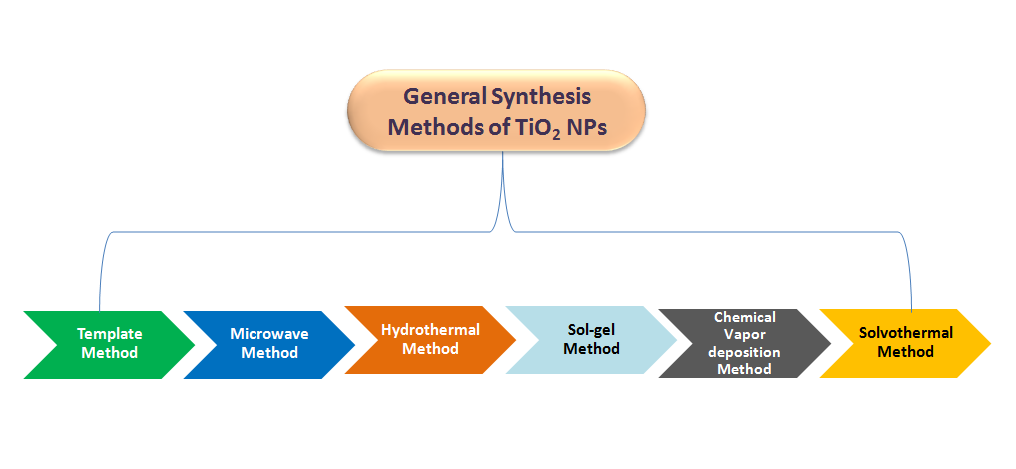
Different general synthesis methods of TiO2 Nps are schematically represented in Figure 1 and all methods are explained in this section in detail.
Template Method
The synthesis of titanium dioxide in the form of nanorods, nanotubes, or porous materials with one-dimensional pores orientated in a single direction can be accomplished using the template approach. Such materials are synthesized by applying liquid-phase sol-gel technique for the TiO2 deposition in the pore volume of a porous template [8]. Titanium is opropoxide was the starting material for the synthesis of the mesoporous TiO2 nanoparticles in study, which used a soft template technique. As templates, a variety of cationic surfactant molecules were employed, including DTAB (dodecyl trimethylammonium bromide), SDS (sodium dodecyl sulfate), and CTAB (acetyl trimethylammonium bromide). The reference material was P25, a commercial TiO2 powder with a crystallite size of 21 nm. A 4:1 volume ratio was used to dissolve the measured quantity of CTAB (3.64 g) in a mixture of deionized water and ethanol. 14.31 ml of titanium isopropoxide was steadily added to this mixture dropwise while being violently agitated. After that, the final gel was continually churned for a few hours. The precipitate was separated by centrifugation. The resulting powder was calcined for 2 hours at 450 °C to remove the soft template and to increase the crosslinking of the inorganic base. The same procedure was followed for the mesoporous TiO2 synthesis with SDS and DTAB as templates. The size of the synthesized nanoparticles of TiO2 was 10 - 14 nm [9].
Microwave Method
High-frequency electromagnetic energy is capable of processing the dielectric substance. Microwave heating occurs at frequencies in the range of 900 to 2450 MHz. Ionic component mobility causes a current to flow inside the material at lower microwave frequencies, which can transfer energy from the microwave field to the substance. Dipole molecules, which are reoriented by a microwave electric field, are the main source of energy absorption at higher microwave frequencies. Different TiO2 NPs are obtained by the microwave synthesis approach [10].
The metallic TiO2 powder was generated in from titanium slags by microwave activation (Figure 6), and the effects of the Na2CO3 addition on the calcined product’s surface functional groups, crystallinity, phase change, and surface microstructure were examined. The following elements make up titanium slag: 75.34 percent TiO2, 9.72% Fe, 5.87 percent Al2O3, 5.23 percent SiO2, 1.23 percent MgO, 1.81 percent CaO, and other trace elements like S and P. Using a planetary ball mill (model: QM-3SP4), the sample was first crushed into a powder for 180 minutes in order to improve the specific surface area of the ingot. Next, five equal portions of the prepared titanium slag sample weighing 100 g were each mixed separately with Na2CO3 in an agate mortar for ten minutes. TIn the case of mixes, the mass ratios of Na2CO3 to titanium slag were 0.2, 0.3, 0.4, 0.5, and 0.6. After that, the mixture was put in a corundum crucible and heated to 850 °C for 30 minutes using a 1 kW microwave. This was done in a microwave box reactor. Using a magnetic stirrer, 10 g of calcined slag was leached for 4 hours at 92–95 °C with 20% HCl (liquid/solid mass ratio of 4:1). Following three rounds of water washing, the residue from the leaching process was collected and put in a corundum crucible for high- temperature annealing in a microwave box reactor set to 900 °C for 60 minutes with a 1 kW microwave heating power. Subsequently, the calcined result was the results showed that the optimal mass ratio of Na2CO3 was 0.4, at which the crystallinity of rutile TiO2 reached highest value (99.21 %), and the average crystallites size was 43.5 nm [11].
Hydrothermal Method
Autoclaves are steel vessels used for hydrothermal synthesis, often used for aqueous solutions under controlled pressure and/or temperature. It is possible to raise the temperature over the boiling point of water and achieve the saturation pressure of vapor. The internal pressure of the autoclave is primarily determined by its temperature and the volume of solution supplied. The ceramics industry uses this process extensively to produce fine particles. Numerous researchers create TiO2 nanoparticles using the hydrothermal technique. The glycolate-oxo-peroxotitanium (IV) complex was hydrothermally treated in work to produce titanium dioxide. In an ice bath at room temperature, 20 mmol of titanium metal powder was dissolved in a solution of 40 ml hydrogen peroxide and 10 ml ammonia [12].
After two hours, the titanium powder had entirely dissolved, and the peroxo-titanium complex had created a yellow solution. Subsequently, 30 mmol of glycolic acid was added right away, and the mixture was heated to 353 K to promote complexation and eliminate surplus ammonia and hydrogen peroxide until it took on the consistency of an orange gel. To create an aqueous solution of the ammonium salt of the glycolate-oxo-peroxo-titanium (IV) complex, it was dissolved in distilled water. The next stage was to generate 40 cm3 of titanium solutions using 2, 4, 8, 12, and 16 cm3 of stock solution and the necessary amount of distilled water. The concentrations of Ti = 12.5, 25.0, 50.0, 75.0, and 100 mM were achieved. The solution was poured into a 50 cm³ tank, sealed with a stainless steel cover, and baked for one to one and a half to eight hundred and sixty-seven hours at 473 K [13]. After that, the autoclaves were allowed to cool to ambient temperature. Centrifugation was used to separate the resultant precipitate, and distilled water was used to wash it three times. After drying in an oven set to 353 K for the entire night, the sample was retrieved. Table 1 displays the TiO2 polymorphs’ particle sizes in the samples that were taken from a Ti complex solution with a concentration of 50.0 mM depending on process duration.
The authors of a study used a hydrothermal technique to successfully grow nanocrystalline TiO2 nanorods. To reduce hydrolysis and condensation, the same volume of acetylacetone was combined with tetrabutyl orthotitanate. Following that, the mixture was gradually mixed for five minutes at room temperature while 40 milliliters of water were added. Thirty milliliters of a 28–30% aqueous ammonia solution was gradually added to the mixture dropwise after continuous stirring. After that, the solution was moved to a 250 ml autoclave made of stainless steel and submerged in a silicone oil bath [14].
Subsequently, the precursor solution was heated to 170 °C and stirred continuously for a whole day at that temperature. After that, the autoclave spontaneously cooled to ambient temperature. The final product was repeatedly thoroughly cleaned with aqueous HCl, 2-propanol, and water. It was then dried for 12 hours at 120 °C. Ultimately, the collected samples were burned for an hour in a high- temperature furnace at 450 °C. A greater percentage of the anatase nanorods, with an average pore width of 3.1 nm and a specific surface area of about 34.82 m2/g, were validated by X-ray examination of the samples.
Using the same technology in another study, the authors synthesized TiO2 nanorods/nanoparticles by the hydrothermal method in order to improve the charge transport properties. The specific surface area of the synthesized nanoparticles was 84.83 m2 /g and the pore width was 5.7 nm [15].
Sol-Gel Method
Various ceramic materials can be produced using the versatile sol-gel technique. Precursors undergo hydrolysis and polymerize to generate a colloidal solution, or sol, in a typical solgel process. Precursors usually consist of metallic organic molecules, such as metal alkoxides, or salts of inorganic metals. The liquid sol develops into the solid gel upon complete polymerization and solvent loss. A common way for forming fine coatings on certain areas of the substrate is squeezing or dipping [16]. After the sol has been put into a mold and dried and heated, it solidifies into a dense ceramic, forming the wet gel. An aerogel is a material that has a high porosity and extremely low density. If the wet gel’s solvent is removed below the supercritical state, it can be obtained. Spray pyrolysis, emulsion technique, or precipitation are the methods used to generate ultrathin and homogenous ceramic particles [9]. The sol-gel technique for producing titanium dioxide involves converting solutions of organotitanium compounds or titanium salts chemically into monomeric titanium hydroxide (Ti(OH)4), which then polycondenses to produce colloidal particles. Compared to alternative techniques, sol-gel technologies allow for the control of the shape and size of TiO2 particles, the optimization of energy consumption, and the employment of low-cost, straightforward technology [17].
The coagulation processes occur at the stages of structural ordering and initial particle growth. They cause the main particles to aggregate and agglomerate. Particle morphology, texture, and dispersion are all impacted by the rate at which these events occur. If the reaction media is supersaturated, the rate of nucleus formation and nucleation outpaces the rate of particle growth. In these circumstances, a metastable, poorly ordered substance containing a lot of tiny particles forms [18].
The gel’s volume decreases by an amount equal to the volume of water removed when it evaporatively dries. The lowering of the huge pore volume causes the gel to restructure along with its compression. The gel volume experiences severe stresses as a result, which leads to breaking. In order to avoid breaking, the water is extracted from the gel volume using techniques like freezing (sublimation) or supercritical conditions, as these circumstances cause the water’s surface tension to vanish [19].
The optical and structural aspects of the multiwall carbon nanotube-decorated synthetic TiO2 nanocomposite are examined. The sol-gel process was utilized to create the anatase TiO2 nanoparticles. To create a homogenous solution, 20 milliliters of titanium isopropoxide and 40 milliliters of acetic acid were combined and agitated using a magnetic stirrer for a duration of 15 minutes. The mixture was then agitated for two hours while 120 ml of deionized water was added dropwise. After the solution was baked for 12 hours at 90 °C, the gel began to form. The gel was dried for two hours at 200 °C to produce the yellow powder [20].
Following that, the powder was ground in a porcelain mortar and burned for four hours at 400 °C. In order to create the TiO2 nanocomposite with carbon nanotube decoration, 0.01 g of multiwall carbon nanotubes and 20 ml of deionized water were combined, and the mixture was subjected to ultrasonic waves for 30 minutes. In a different experiment, 0.04 g of TiO2 nanoparticles were added to 20 ml of deionized water and agitated for 15 minutes using a magnetic stirrer. The mixture was then added to the carbon nanotube solution and subjected to ultrasound for an additional 15 minutes. After 18 hours of stirring with a magnetic stirrer, the mixture was centrifuged, and the precipitate was dried for two hours at 50 °C in an oven [21].
Chemical Vapor Deposition Method
Any procedure that condenses materials in the vapor state into a solid state is referred to as the vapor deposition method. These procedures are typically employed to create coatings that modify the mechanical, electrical, thermal, and optical characteristics as well as the wear and corrosion resistance of different substrates [22]. These techniques have received a lot of attention lately as a means of producing different TiO2-based nanomaterials. Usually, the vacuum chamber is where the vapor deposition operations take place. Physical vapor deposition (PVD) is the term for this process in the absence of a chemical reaction. If not, it’s referred to as chemical vapor deposition, or CVD [23]. In study, pure anatase was synthesized on glass substrates using the CVD technique. By dissolving acetylacetone (0.9 ml) and titanium tetraisopropoxide (0.9 ml) in methanol and water, a precursor solution (150 ml) was created. The volume ratio of water to methanol was set at 0%, 1%, 5%, 10%, and 20% for comparison in order to investigate the impact of this ratio on the structural, optical, and photocatalytic properties of TiO2 films [24]. N2 gas is used as a carrier to move the mist droplets, which are created by ultrasonic atomization at 2.4 MHz and delivered to the reaction chamber during the chemical vapor deposition process from the precursor solution. Thick TiO2 films (300 nm) were deposited on glass substrates, which were placed in a reaction chamber and heated to a temperature of 400 °C during the deposition process [25].
Solvothermal Method
A non-aqueous solvent is used in a hydrothermal process known as the solvothermal method. Thus, organic solvents with high boiling points can be chosen for the solvothermal process [26]. The temperature can be raised significantly higher in these processes than it can be in hydrothermal procedures. TiO2 nanoparticles can have their size, shape, and crystallinity controlled via the solvothermal technique [27]. In study Kurajica S, et al. [27] the solvothermal technique at 180 °C was used to produce titanium dioxide nanoparticles with varying morphologies. As surfactants, oleylamine and acetic acid were employed.
Absolute ethanol and acetic acid were combined, then titanium isopropoxide was added. The mixture was agitated for an hour at room temperature. A stainless steel autoclave was used to transform (transmute) the suspension. The reaction produced a monodisperse titanium dioxide powder that was cooled to room temperature after being run for 24 hours at 180 °C. After that, the mixture was centrifuged at 12,000 rpm/min and given three ethanol washes. The resultant precipitate was pulverized extremely finely and dried under ambient conditions. Lastly, the dried TiO2 powder was calcined for 18 and 24 hours, at 550 and 950 °C, respectively [28].
The solvothermal approach was used by the authors to generate TiO2 particles. Ethyl acetoacetate and titanium (IV) n-butoxide were used to prepare the samples. As a solvent, isopropyl alcohol was employed. To represent THC and THN, respectively, two samples were prepared: one with and one without ethyl acetoacetate. First, 0.5 mol (30.4 g) of solvent was mixed with 0.1 mol (13.1 g) of ethyl acetoacetate (THC sample only). After that, 0.1 mol (35.1 g) of titanium (IV) n-butoxide was dissolved in an ethyl acetoacetate/solvent solution. Using a syringe, titanium (IV) n-butoxide was added to the mixture to reduce the impact of humidity. At room temperature, the mixture was agitated in a closed reactor [29]. A solution of 0.5 mol (9.0 g) of water and 0.2 mol (12.1 g) of isopropanol was added to the mixture dropwise after an hour, and it was then agitated for an additional hour in a closed reactor at room temperature. As the reaction continued at 150 °C, the mixture was then moved to a stainless steel autoclave and sealed. The produced powders were separated by decantation and allowed to dry at room temperature once the autoclave had been cooled to room temperature for a full day. The size of the anatase crystallites was smaller than 10 nm [30].
Green Synthesis of TiO2 Nanoparticles from Different Sources
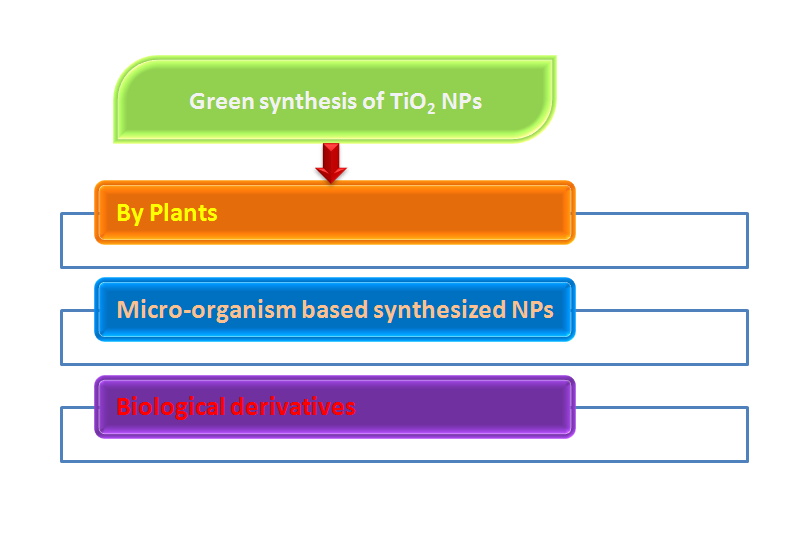
Different green synthesis of TiO2 NPs are explained in this section.
In attempt to develop a cost effective, eco-friendly and energy efficient approach, researchers have exploited the potential of biological resources for the synthesis of TiO2 NP Pantidos and Horsfall. The complete biosynthesis process as shown in Figure 1, a simple precursor salt is mixed with biological extract; the metabolites present in the extract can then reduce and stabilize the bulk metal into elemental form following various mechanical steps. This biosynthetic approach offers many advantages and has emerged as a simple, safe and feasible substitute to chemical and physical methods. Apart from these, biological approach can effectively catalyze the synthesis process at any scale and condition. Moreover, NPs with controlled size and shape can also be produced. Owing to these benefits, numerous researchers have intended to explore diverse species for their potential to synthesize TiO2 NPs. The Schematical picture of different green synthesis methods are shown on Figure 2.
Plants
Because they are readily available, inexpensive, and safe, plants are thought to be among the most promising candidates among the biological species under study for the synthesis of NPs. The production of NPs Dobrucka is regulated by a wide range of plant chemicals, including phenolic acids, alkaloids, proteins, and among them enzymes, as well as carbohydrates, through reduction and stabilization processes. TiO2 NPs in a variety of forms have been synthesized using a wide variety of plant species .When a precursor TiO2 salt is contaminated with plant extract, the reaction mixtures ignite quickly. A color shift signals the beginning of synthesis, which may then be verified using spectroscopic methods [31].
In a similar vein, it has been reported that a leaf extract from Calotropis gigantea (L.) Dryand can convert TiO2 to nanoparticles in just six hours. The presence of primary amines in the extract was attributed to its strong bio-reduction capacity. When used against the larvae of Hipicephalus microplus and Haemaphysalis bispinosa, the bio-mediated TiO2 NPs shown good acaricidal action. The aliphatic alcohols and amines present in the extract contributed to synthesis of TiO2 NPs. The particle size ranged between 25–110 nm with irregular morphologies [32]. Bio- mediated TiO2 NPs have also been obtained from L. extracts. The resultant NPs were confirmed by EDX, FTIR, SEM and XRD The average size revealed via SEM was 15 nm, FTIR spectral data showed the presence of anthraquinones and various phenolic compounds which are supposed to be active reactants for the reduction of TiCl4 to TiO2 NPs. leaf extract was used to synthesize 100 nm nanoparticles with different structures and having good wound healing potential.TiO2 NPs from Hibiscus rosa-sinensis L. leaf extract showed high antimicrobial activity against both gram-negative and positive strains of bacteria. Nyctanthes leaves extracts derived TiO2 NPs ranged in size from roughly 100 to 510 nm and had a consistent spherical shape. TiO2 NPs (14 nm) from Cicer arietinum L. beans extract were produced, and FTIR analysis verified that the presence of various phenolic chemicals in the extract is responsible for the reduction.
Improvements in these parameters can therefore be made because they have an impact on the synthesis mechanism. Additionally, a variety of promising plant extracts remain to be investigated for the synthesis of TiO2 [33].
Microorganism-Based Synthesized NPs
Metallic nanoparticles have been produced by utilizing a variety of microbiological species. Recently, reports of TiO2 NPs in a range of sizes and forms have been made Table 2. In this sense, bacterial extracts have also been applied to the environmentally friendly manufacture of TiO2 NPs. Bacterial metabolites are essential for the bio-reduction and stability of TiO2 NPs, just as their plant counterparts. According to Írdenes-Aenishanslins and colleagues (TiO2 NPs were synthesized using Bacillus mycoides, and the spherical NPs (40–60 nm) were validated by FTIR, UV, TEM, and DLS. When produced using Aeromonas hydrophila extract, TiO2 NPs (28–54 nm) shown strong inhibitory action against both S. pyogenes (31 mm inhibition zone) and Staphylococcus aureus (33 mm inhibition zone). The biosynthesis of TiO2 NPs by the bacterium Lactobacillus and proposed that these NPs were synthesized through the combined action of oxidoreductases and glucose at mild pH. However, owing to their potential pathogenicity and laborious process bacterial synthesis have fever chances to be commercialized [34].
Due to their advantages over bacterial synthesis, fungi have drawn a lot of attention for their usage in the synthesis of metallic nanoparticles. Considerable benefits include economic feasibility, vast surface area, ease of scaling up, and ease of extraction. In recent years, different shaped and sized TiO2 NPs mediated by fungi have also been observed. By using enzymes or metabolites, fungi are naturally able to convert bulk salt to an elemental or ionic form [35]. It has been observed that Aspergillus flavus extract can reduce TiO2 ions to TiO2 NPs. According to Rajakumar, et al. the NPs has good antibacterial action against E. coli. Saccharomyces cerevisa extract has also been used to synthesize TiO2 NPs (12.6 nm). The surface chemistry and pH of culture media also play an important role in synthesis of TiO2 NPs. Like bacteria, fungi mediated TiO2 NPs also have safety drawbacks. However, the application of non-pathogenic strains will wipe out the risk and could be used for commercial purposes [36].
Biological Derivatives
In addition to micro and macro organisms, a variety of biological derivatives have also been used as a green source for nanoparticle production. Nevertheless, the application of biological derivatives for the biomimetic manufacture of TiO2 nanoparticles has not received much attention from researchers [37]. For example, Farag et al. (Citation63)
synthesized TiO2 nanoparticles with an average size of 5–10 nm using cellulose. TiO2 nanoparticles have also been synthesized using the peptide R5, a biological product of Cylindrothica fusirormis employed bacterial flagella as a template to produce titanium nanotubes. TiO2 nanoparticles have also been synthesized using the lignocellulose waste material obtained from rice straw [38]. Using several enzymes, biomimetic synthesis to create TiO2 nanoparticles. Using the glucose oxidase enzyme produced rutile TiO2 nanoparticles; catalase produced anatase TiO2 nanoparticles; lysozyme produced monoclinic anatase TiO2 nanoparticles. A few more significant biological derivatives that are utilized in the biomimetic manufacture of TiO2 nanoparticles. Similar to NPs formed from microbes, these derivative-based NPs are scalable, affordable, and safe. These NPs might be scaled up for use in food and medicine, among other commercial applications. However, additional research is needed to address their toxicity and safety [39].
Applications of TiO2 Nanoparticles
Photocatalysis
Water Purification: TiO2 nanoparticles are used to degrade organic pollutants and contaminants in water through photocatalytic reactions when exposed to UV light. Air Purification: They help break down harmful organic compounds and nitrogen oxides in the air, improving air quality.
Solar Energy
Dye-Sensitized Solar Cells (DSSCs): TiO2 nanoparticles serve as photoanodes in DSSCs, enhancing the efficiency of converting sunlight into electricity. Photovoltaic Cells: They are also used in other types of solar cells to improve light absorption and charge transport.
Medical Applications
Antimicrobial Coatings: TiO2 nanoparticles exhibit antibacterial properties, making them useful in medical devices and surfaces to prevent infections. Drug Delivery: They are explored as carriers for targeted drug delivery due to their biocompatibility and ability to be functionalized with various molecules. Cancer Treatment: In photodynamic therapy, TiO2 nanoparticles can generate reactive oxygen species under light irradiation to kill cancer cells.
Cosmetics and Sunscreens
UV Protection: TiO2 nanoparticles are widely used in sunscreens and cosmetics to provide protection against UV radiation due to their high UV-blocking capabilities without being absorbed by the skin [37, 38].
Coatings And Paints
Self-Cleaning Surfaces: TiO2 coatings can decompose organic materials on surfaces upon exposure to sunlight, keeping them clean and reducing maintenance costs.
White Pigments: Due to their high refractive index, TiO2 nanoparticles are used as white pigments in paints, providing brightness and opacity.
Environmental Applications
Decomposition of Pollutants: They are used to break down organic pollutants and volatile organic compounds (VOCs) in the environment. Antifouling Agents: TiO2 coatings can prevent the growth of microorganisms and biofilms on surfaces in marine and industrial settings.
Electronics
Sensors: TiO2 nanoparticles are employed in various types of sensors, including gas sensors and biosensors, due to their sensitivity to environmental changes.
Energy Storage: They are explored in the development of advanced batteries and supercapacitors for improved energy storage solutions.
Food Industry
Preservation: TiO2 nanoparticles are used in food packaging materials to extend the shelf life of products by preventing microbial growth and oxidation.
Catalysis
Chemical Reactions: TiO2 nanoparticles act as catalysts in chemical reactions, enhancing reaction rates and efficiencies in industrial processes.
Textiles
Functional Fabrics: TiO2 nanoparticles are incorporated into textiles to impart properties such as UV resistance, antimicrobial activity, and self-cleaning abilities [39].
The versatility of TiO2 nanoparticles stems from their unique chemical and physical properties, making them valuable in a wide range of innovative applications.
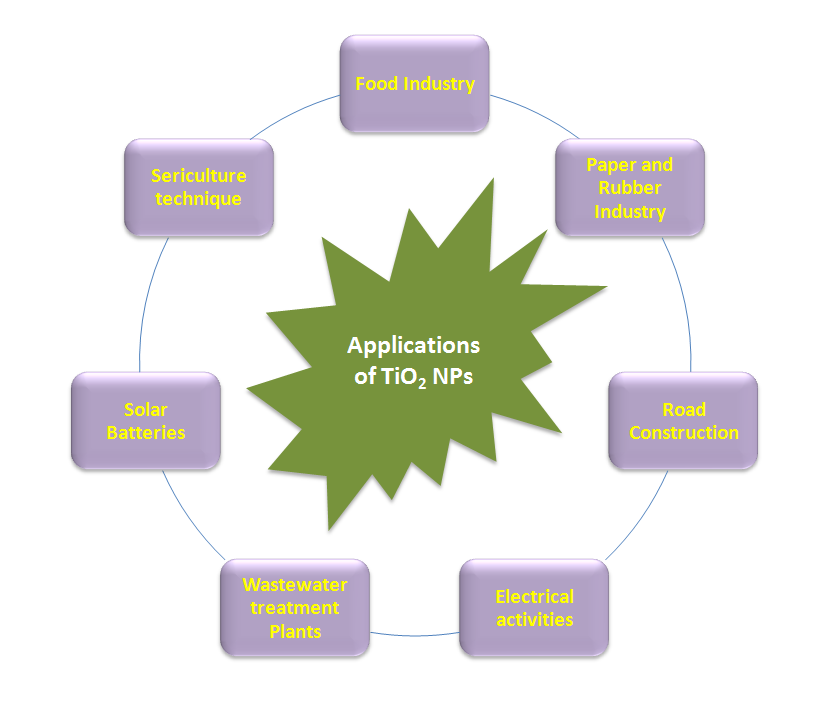
Titanium dioxide nanoparticles have diverse utilities and applications. These nanoparticles play a vital role in food packaging and preparation of other food products, cosmetic industry and personal care products, and photovoltaic cells for converting solar energy into electrical energy [39]. Different applications of TiO2 NPs are schematically shown on Figure 3.
Photovoltaic Cells
Solar energy is now the most environmentally friendly energy source available because it is a renewable energy source. Dyesensitized solar cells are the most widely utilized type of solar cell among all those that are available. Because of their semiconductor behavior, TiO2 NPs are utilized in these kinds of cells to convert solar energy into electrical energy. Using various dyes, TiO2 nanofilms are adhered to the conductive glass plate of solar cells. ZnO and TiO2 are known to have significant photocatalytic activity when exposed to UV light. TiO2 is preferred over other metal oxides in semiconductors due to its superior photo-conversion efficiency and wide bandgap. For this reason, a material called TiO2 is used in solar photocatalysts. The TiO2 NP samples were examined at a wavelength of 365 nm using UV-A radiation. Methylene orange and methylene blue are the dyes employed in the procedure, and the suspension is magnetically agitated for 150 minutes to produce the photocatalytic effect. Additionally, dye-sensitized solar cells are used to prepare several kinds of photoanodes. Under UV light, the photodegradation efficiency of TiO2 NPs for the dyes methylene blue and methylene orange was found [40].
Food Products
TiO2 is commonly employed in chewing gum and other beverages, as well as for the whiteness of sauces, cheeses, and creams. Food-grade TiO2 has a smaller particle size and a higher nanoparticle ratio. These nanoparticles have strong antimicrobial properties and function as photocatalysts in food packaging. Food packaging film uses TiO2 nanoparticles as a coating material. UV, fluorescent light, and the antibacterial effect were seen, and the E. Coli that was present on the surface had been rendered inactive. E. Coli did not grow as much on the nanoparticle-coated film, indicating that this film can be used as an antibacterial when packing food [41].
In Cosmetics
TiO2 is a white pigment found in a lot of personal care items, such as ointments, toothpaste, and lotions. They are utilized in a variety of cosmetics because of their slippery flavor. In sunscreen products applied topically, TiO2 functions as an inorganic UV absorber to prevent skin irritation. The items include TiO2 NPs in a variety of sizes, shapes, and crystal forms. More specifically, sunscreen products contain spherical-shaped nanoparticles. To boost their effectiveness, silica-coated TiO2 NPs are occasionally added to sunscreen formulations [42].
Environmental Air Purification
Animal and human health are at risk due to air pollutants such as nitrates and other substances. TiO2 NPs are utilized to enhance air filtration. To eliminate the smoke produced by smoking cigarettes, titanium mesh filters are utilized. TiO2 aids in the transformation of air pollutants into the least harmful form of carbon dioxide when activated by solar radiation. 6.5. In sericulture, feeding Bombyx mori TiO2 NPs causes the growth of genes and reproductive organs. Silkworm productivity can be raised, allowing for more covert reproduction. 6.6. Plants that treat wastewater TiO2 NPs use a solid phase extraction process to remove heavy metals from water. Both surface and groundwater contain different dyes, such as rhodamine R. TiO2 NPs and UV light are used in combination to break down these dyes. Additionally, these particles aid in the removal of hazardous chemicals and pesticides from wastewater [43].
Green Applications: Applications of Green TiO2 NPs
There are numerous uses for green mediated nanoparticles in the physical sciences, medicine, and engineering technologies. On the other hand, biogenic TiO2
NPs are being investigated for less real-world uses. In contrast to chemical and physical modes of synthesis, studies indicate that these green produced NPs have enormous potential. Their amazing photocatalytic activity is the most significant and extensively used use, which cleans contaminated water and gets rid of environmental toxins. It also demonstrates a wide range of applications in the fields of electronics, energy production, battery manufacturing, and sensing. Green mediated TiO2 NPs have also been used to explore their medicinal potential; photodynamic cancer treatment, antileishmanial agents, and antibacterial medicines are among their main stream applications [44].
Photocatalytic Activity
Numerous dangerous pollutants, including nitroarene compounds and poisonous colors, are present in both household and industrial effluents. They pose numerous risks to aquatic life because of their high stability and limited solubility. Metallic nanoparticles’ unique architectures and great catalytic potential have been used recently. They are effective heterogeneous catalysts because of their huge surface area. Furthermore, the reaction mixture including these nanostructure catalysts may be readily recovered and recycled. TiO2 NPs have been used mostly in catalyzing various reactions, due to their benign properties, low toxicity, high stability, excellent photocatalytic potential and optical properties [45].
Anti-Parasitic Activities
The efficacy of metallic nanoparticles in combating a variety of parasitic larval and adult insect species. The effectiveness of green produced TiO2 NPs as larvicidal agents against different parasitic insect species. Decrease in the biochemical parameters involved in growth and development is one of the intracellular events leading to mortality. Less is known about TiO2’s antiparasitic properties as of yet. But it also has a lot of potential for creating anti-insect creams and lotions, among many other things that will be revealed as the technology advances [46].
Antimicrobial Potential
In literature, different metallic NPs have been used against various strains of bacteria. Similar to this, TiO2 NPs’ intense oxidizing capability is thought to be the reason for their environmentally beneficial biocidal qualities. Numerous bacterial strains, endospores, fungus, algae, viruses, microbial toxins, and prions are among the many infectious microorganisms that have been targeted by these NPs. Reactive oxygen species (ROS) are initiated by TiO2 NPs in response to microbial cells [47]. These ROS cause diminished adhesion and skewed ionic balance by oxidizing phospholipids, which compromises the integrity of the cell wall and kills the microorganisms. It alters the architecture of macromolecules and inhibits respiratory cytosolic enzymes inside the cytosol, which has a significant impact on gene expression and cellular integrity. Moreover, it lessens intracellular communication inside the cell and phosphate uptake. A potential method of action is explained. TiO2 NPs produced chemically and environmentally both kill microorganisms in the same way, however the biologically derived NPs exhibit superior antibacterial activity. Antibacterial action is strongly influenced by the type of bacteria, NP morphology, and membrane biochemistry. Though it is more reactive against gram-positive bacteria because of the relative structural complexity of gram- negative bacterial cell walls, green produced TiO2 NPs may effectively inhibit both gram-positive and gram-negative bacteria. If biomediated TiO2 NPs are exposed to UV and fluorescent light, their antibacterial activity can be amplified. When green produced TiO2 NPs were put to Leishmanial cells, Detected reduced cell viability, slowed growth, and DNA fragmentation. TiO2 NPs Nano composites also exhibit increased antileshmanial action. TiO2 NPs demonstrated superior antibacterial action when compared to typical antibiotic disks. Therefore, with such increased antibacterial action, the likelihood of antibiotic resistance to pathogenic stains is significantly reduced [48].
Applications of TiO2 NPs in Medicine
TiO2-Based Medication Delivery Systems For Treating Cancer
A growing number of people are using nanotechnology in cancer detection and therapy these days, thanks to the harsh side effects of standard chemotherapeutic drugs’ cytotoxicity to healthy cells. The most difficult goal in nanotechnology research for cancer treatment is to find nanostructures for drug administration and release that maximise therapeutic benefit and minimise negative effects. The two primary methods for achieving this goal are controlled medication release and targeted drug delivery. TiO2 nanostructures are acknowledged as a suitable option to enhance the clinical therapeutic impact of traditional chemotherapeutic drugs by targeted administration and controlled release because of their high biocompatibility, adjustable drug releasing capacity, and low toxicity. Strong systems for the targeted delivery and controlled release of cytotoxic anticancer drugs are TiO2-based nanostructures. The key research on TiO2 nanostructures in targeted medication administration and other controlled release methods is reviewed here [49].
TiO2-Based Antibacterial Devices for Prevention and Treatment of Infections
Materials like metals and metal oxides have been identified as efficient microbicide agents since the development of nanotechnology. These agents have the benefit of being safer and more stable than organic antibacterial agents. Numerous studies demonstrate the inhibitory action of TiO2 owing to photocatalytic action, which is caused by the generation of ROS, including O2, OH, and H2O2. The end result of redox interactions between an adsorbent and illustrates the schematic representation of how bacteria are destroyed by lighted TiO2 when exposed to UV light with a wavelength shorter than 385 nm. (water or oxygen) and electrons of TiO2. The primary disadvantage of TiO2 is that it requires UV light irradiation to activate the photocatalyst. Nevertheless, recent research has found a solution to this issue through the use of doped-TiO2 nanostructures and visible light-activated photocatalysts, such as Ag/AgBr/TiO2 [50].
Conclusion and Future Outlook
Nanostructures materials have triggered a considerable attention in every field of science. Though metallic nanoparticles are produced by physio chemical process, but their toxicity, cost and laborious synthesis have led scientists to devolop new approaches for designing nanostructures. The solution of this dilemma resulted in an easy, safe and scalable approach known as the green synthesis method. In this method a precursor metallic salts is reduced by the metabolites of the organism. Moreover, NPs with high yield and better morphologies are also obtained. In this review article, we have discussed the synthesis of titanium oxide nanoparticles from different biological sources (plants, microbes and related bio-products). Furthermore the applications of green mediated titanium oxide NPs have also been described. Though, Titanium NPs have been reported by many authors till now but the synthesis steps have to be better characterized and need to be elaborated further by the identification of the responsible compounds in the extracts, the optimization of different factors such as pH, temperature or the amount of precursor salt, and extract should be studied for optimal yield and stable NPs production at feasible commercial scale.
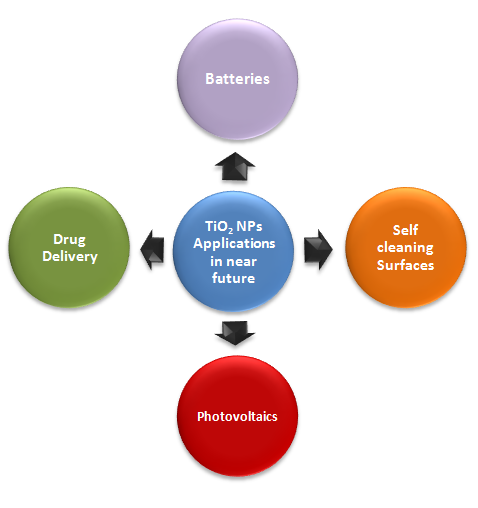
The advocating sensation for green synthesis is due to the numerous substantial benefits linked to this route. Green synthesis eliminates the harmful effects of the produced NPs in various applications. Moreover, it is eco-friendly, time saving, cost-effective, safe and easily bolster process. The physically controlled properties of the synthesized material, i. e. size, surface and TEM analysis may disclose the clustered form spherical NPs. The Energy dispersive spectroscopy (EDS) specifies the efficiency of real output of TiO2 NPs during the synthesis process. Green method is proven more efficient than chemically synthesized NPs because of the less use of precursors during the green synthesis. Still plenty of work is awaiting in this area as recently fewer plants are utilized for the green-synthesis of TiO2 NPs and these green-synthesized NPs can be employed safely in the biomedical applications as they are equally compatible with the chemically synthesized NPs in all the other possible applications. TiO2 NPs can be affectively employed for the treatment of polluted wastewater and in metal contaminated soils and the response varied with the metal types, duration of exposure, doses and shapes of NPs etc. Some of the strong future applications of TiO2 NPs are shown in Figure 4.
The following future research about TiO2 NPs is required for better understanding of their production and utilization.
- Green synthesis method requires more optimization to synthesize TiO2 NPs of desired shape and size.
- Likewise, there is a need for more research to synthesize TiO2 NPs with desired physicochemical characteristics by employing green methods.
- More studies should be focused on the analysis of metabolites present in biological extracts to determine their usefulness towards NPs synthesis.
- More exploration should be carried out to study the mechanistic feature of TiO2 NPs synthesized by green approach.
- The stability of TiO2 NPs synthesized by green synthesis approach needs more investigation.
- The effect of parameters on the TiO2 NPs properties and stability, including salt concentration, pH, and temperature in the context of the biological extract utilized are lacking. The utilization of TiO2 NPs still shows minimized applications based on the only UV light absorption of TiO2 NPs.
- Insignificant research has been carried out to identify the fate of TiO2 NPs and extent of toxicity in the human body.
- The aspect of large-scale production of TiO2 NPs with green and sustainable methods still needs significant consideration.
References
-
Wu CM, Motora KG, Kuo DH, Lai CC, Huang BR, et al. (2021) Cesium tungsten bronze nanostructures and their highly enhanced hydrogen gas sensing properties at room temperature. International Journal of Hydrogen Energy 46(50): 25752-25762.
-
Wu CM, Shrisha, Motora KG, Chen GY, Kuo DH, et al. (2022) Highly efficient MoS2/CsxWO3 nanocomposite hydrogen gas sensors. Frontiers in Materials 9: 831725.
-
Wu CM, Motora KG, Chen GY, Chu JP, Cheng Y, et al. (2023) Development of p-type zinc oxide nanorods on zirconium-based metallic glass nanotube arrays by facile hydrothermal method for gas sensing applications. Chemical Engineering Journal 463: 142381.
-
Wu CM, Motora KG, Chen GY, Kuo DH, et al. (2023) Highly efficient reduced tungsten oxide-based hydrogen gas sensor at room temperature. Materials Science and Engineering 289: 116285.
-
Vijayalakshmi R, Rajendran V (2012) Synthesis and characterization of nano-TiO2 via different methods. Arch Appl Sci Res 4(2): 1183-1190.
-
Carp O, Huisman CL, Reller A (2004) Photoinduced reactivity of titanium dioxide. Progress in solid state chemistry 32(1-2): 33-177.
-
Blundell R, Butterworth P, Charlier A, Daurio D, Degenhardt M, et al. (2022) The role of titanium dioxide (E171) and the requirements for replacement materials in oral solid dosage forms: An IQ Consortium Working Group Review. Journal of Pharmaceutical Sciences 111(11): 2943-2954.
-
Wongchareon S, Panomsuwan G (2018) Easy synthesis of TiO2 hollow fibers using kapok as a biotemplate for photocatalytic degradation of the herbicide paraquat. Materials Letters 228: 482- 485.
-
Cabello G, Davoglio RA, Pereira EC, (2017) Microwave- assisted synthesis of anatase-TiO2 nanoparticles with catalytic activity in oxygen reduction. J Electroanal Chem 794: 36.
-
Kang J, Gao L, Zhang M, Pu J, He L, et al. (2020) Synthesis of rutile TiO2 powder by microwave-enhanced roasting followed by hydrochloric acid leaching. Adv Powder Technol 31(3): 1140.
-
Alosfur FKM, Ouda AA, Ridha NJ, Abud SH (2019) High photocatalytic activity of TiO2 nanorods prepared by simple method. Mater Res Express 6(6): 065028.
-
Mironyuk I, Tatarchuk T, Naushad M, Vasylyeva H, Mykytyn I (2019) Highly efficient adsorption of strontium ions by carbonated mesoporous TiO2. J Mol Liq 285: 742.
-
Kobayashi M, Kato H, Miyazaki T, Kakihana M (2019) Hydrothermal Synthesis of Pseudocubic Rutile-Type Titania Particles. Ceramics 2(1): 56-63.
-
Kundu S, Polshettiwar V (2018) Hydrothermal Crystallization of Nano-Titanium Dioxide for Enhanced Photocatalytic Hydrogen Generation. Chem Photo Chem 2(9): 796-800.
-
Govindaraj R, Santhosh N, Senthil Pandian M, Ramasamy P (2017) Synthesis of nanocrystalline TiO2 nanorods via hydrothermal method: An efficient photoanode material for dye sensitized solar cells. J Cryst Growth 468: 125- 128.
-
Askari MB, Banizi ZT, Seifi M, Bagheri S, Dehaghi, et al. (2017) Synthesis of TiO2 nanoparticles and decorated multi-wall carbon nanotube (MWCNT) with anatase TiO2 nanoparticles and study of optical properties and structural characterization of TiO2/MWCNT nanocomposite. Optik 149: 447-454.
-
Dorosheva IB, Valeeva AA, Rempel AA (2017) Sol-gel synthesis of nanosized titanium dioxide at various pH of the initial solution. AIP Conf Proc 1886(1): 020006.
-
Ramelan AH, Wahyuningsih S, Saputro S, Supriyanto E, Hanif QA (2017) TiO2 Nanostructure Synthesized by Sol- Gel for Dye Sensitized Solar Cells as Renewable Energy Source. IOP Conf Ser Mater Sci Eng 176(1): 012013.
-
Dubey RS (2018) Temperature-dependent phase transformation of TiO2 nanoparticles synthesized by sol- gel method. Mater Lett 215: 312-317.
-
Sharma R, Sarkar A, Jha R, Sharma AK, Sharma D (2020) Sol-gel–mediated synthesis of TiO2 nanocrystals: Structural, optical, and electrochemical properties. Int J Appl Ceram Technol 17(3): 1400-1409.
-
Farooq T, Surana K, Mukherjee S (2020) Synthesis of titanium dioxide TiO2 thin film to achieve resistive switching property for the application of nonvolatile memory. Mater Today Proc 2.
-
Zhang Q, Li C (2019) Effects of water-to-methanol ratio on the structural, optical and photocatalytic properties of titanium dioxide thin films prepared by mist chemical vapor deposition. Catal Today 358: 172-176.
-
Zhang Q, Li C (2020) High Temperature Stable Anatase Phase Titanium Dioxide Films Synthesized by Mist Chemical Vapor Deposition. Nanomaterials 10(5).
-
Jedrzejczak A, Batory D, Prowizor M, Dominik M, Smietana M, et al. (2020) Titanium(IV) isopropoxide as a source of titanium and oxygen atoms in carbon based coatings deposited by Radio Frequency Plasma Enhanced Chemical Vapour Deposition method. Thin Solid Films 693: 137697.
-
Subramaniam MN, Goh PS, Lau WJ, Ismail AF, Gürsoy M, et al. (2019) Synthesis of Titania nanotubes/polyaniline via rotating bed-plasma enhanced chemical vapor deposition for enhanced visible light photodegradation. Appl Surf Sci 484: 740.
-
Dastan D, Chaure N, Kartha M (2017) Comparison of Surface Characteristics of Mesoporous Titania Prepared in Matrix-Free Solutions and Using Triton X Reverse Micelles. J Mater Sci Mater Electron 11(11): 7784-7766.
-
Kurajica S, Minga I, Grčić I, Mandić V, Plodinec M (2017) The utilization of modified alkoxide as a precursor for solvothermal synthesis of nanocrystalline titania. Mater Chem Phys 196: 194.
-
Liu W, Xu Y, Zhou W, Zhang X, Cheng X, et al. (2017) A Facile Synthesis of Hierarchically Porous TiO2 Microspheres with Carbonaceous Species for Visible- light Photocatalysis. J Mater Sci Technol 33(1): 39-46.
-
Mezni A, Ben Saber N, Ibrahim MM, El-Kemary M, Aldalbahi A, et al. (2017) Facile synthesis of highly thermally stable TiO2 photocatalysts. New J Chem 41(12): 5021-5027.
-
Alosfur FKM, Ouda AA, Ridha NJ, Abud SH (2019) High photocatalytic activity of TiO2 nanorods prepared by simple method. Mater Res Express 6(6): 065028.
-
Bao SJ, Lei C, Xu MW, Cai CJ, Jia DZ (2012) Environment- friendly Biomimetic Synthesis of TiO2 Nanomaterials for Photocatalytic Application. Nanotechnology 23(20): 205601.
-
Mittal AK, Bhaumik J, Kumar S, Banerjee UC (2014) Biosynthesis of Silver Nanoparticles: Elucidation of Prospective Mechanism and Therapeutic Potential. J Colloid Interface Sci 415: 39-47.
-
Rajakumar G, Rahuman AA, Priyamvada B, Khanna VG, Kumar DK (2012) Eclipta Prostrata Leaf Aqueous Extract Mediated Synthesis of Titanium Dioxide Nanoparticles. Mater Lett 68: 115-117.
-
Órdenes-Aenishanslins NA, Saona LA, Durán-Toro VM, Monrás JP, Bravo DM, et al. (2014) Use of Titanium Dioxide Nanoparticles Biosynthesized by Bacillus Mycoides in Quantum dot Sensitized Solar Cells. Microb Cell Fact 13(1): 90.
-
Jayaseelan C, Rahuman AA, Roopan SM, Kirthi AV, Venkatesan J, et al. (2013) Biological Approach to Synthesize TiO2 Nanoparticles Using Aeromonas Hydrophila and Its Antibacterial Activity. Spectrochim Acta 107: 82-89.
-
Pantidos N, Horsfall LE (2014) Biological Synthesis of Metallic Nanoparticles by Bacteria, Fungi and Plants. J. Nanomed. Nanotechnol 5(5):1.
-
Nadeem M, Abbasi BH, Younas M, Ahmad W, Khan T (2017) A Review of the Green Syntheses and Anti- microbial Applications of Gold Nanoparticles. Green Chem. Lett Rev 10(4): 216-227.
-
Balasooriya ER, Jayasinghe CD, Jayawardena UA, Ruwanthika RWD, Mendis de Silva R (2017) Honey Mediated Green Synthesis of Nanoparticles: New Era of Safe Nanotechnology. J Nanomater PP: 1-10.
-
Farag AA, El-shafei A, Ibrahim HM, Asker MS (2016) Influence of Bacterial Cellulose for Synthesis and Application of Titanium Dioxide Nanoparticles Compared with Sol-Gel Method. Int J Life Sci Res 4(1): 69-75.
-
Cole KE, Ortiz AN, Schoonen MA, Valentine AM (2006) Peptide-and Long-chain Polyamine-Induced Synthesis of Micro-and Nanostructured Titanium Phosphate and Protein Encapsulation. Chem Mater 18(19): 4592-4599.
-
Yan Y, Hao B, Wang X, Chen G (2013) Bio-inspired Synthesis of Titania with Polyamine Induced Morphology and Phase Transformation at Room-temperature: Insight into the Role of the Protonated Amino Group. Dalton Trans 42(34): 12179-12184.
-
KyuáKim J, HyeokáPark J (2014) Lysozyme-mediated Biomineralization of Titanium–Tungsten Oxide Hybrid Nanoparticles with High Photocatalytic Activity. Chem Commun 50(82): 12392-12395.
-
Zhang G, Zhang T, Li B, Zhang X, Chen X (2016) Biomimetic Synthesis of Interlaced Mesh Structures TiO2 Nanofibers with Enhanced Photocatalytic Activity. J Alloys Compd 668: 113-120.
-
Bansal V, Rautaray D, Bharde A, Ahire K, Sanyal A, et al. (2005) Fungus-mediated Biosynthesis of Silica and Titania Particles. J Mater Chem 15(26): 2583-2589.
-
Rodrigues TS, Fajardo HV, Dias A, Mezalira DZ, Probst LF, et al. (2016) Synthesis, Characterization and Catalytic Potential of MgNiO2 Nanoparticles Obtained From a Novel [MgNi (Opba)]n•9nH2O Chain. Ceram Int 42(12): 13635-13641.
-
Salomatina E, Loginova A, Ignatov S, Knyazev A, Spirina I et al. (2016) Structure and Catalytic Activity of Poly (Titanium Oxide) Doped by Gold Nanoparticles in Organic Polymeric Matrix. J Inorg Organomet Polym Mater 26(6): 1280-1291.
-
Jiang Y, Yang D, Zhang L, Sun Q, Sun X et al. (2009) Preparation of Protamine–Titania Microcapsules Through Synergy Between Layer-by-layer Assembly and Biomimetic Mineralization. Adv Funct Mater 19(1): 150- 156.
-
Yan Y, Hao B, Wang X, Chen G (2013) Bio-inspired Synthesis of Titania with Polyamine Induced Morphology and Phase Transformation at Room-temperature: Insight into the Role of the Protonated Amino Group. Dalton Trans 42(34): 12179-12184.
-
Jafari S, Mahyad B, Hashemzadeh H, Janfaza S, Gholikhani T et al. (2020) Biomedical applications of TiO2 nanostructures: recent advances. International journal of Nanomedicine 15: 3447-3470.
-
Çeşmeli S, Biray Avci C (2019) Application of titanium dioxide (tio2) nanoparticles in cancer therapies. J Drug Target. 27(7): 762-766.
- Solution-Processed Chiral Perovskites for Biomedical Applications
- Nanotechnology in Health Chemistry and Medicine: Current Challenges and Future Directions
- Human Exposure to Micro- and Nanoplastics: Pathways, Toxicity, and Intervention Strategies
- Exosome Nanomedicine for Cancer Therapy
- Micro and Nanoplastics–Plastisphere, Biotoxicity, Impact on Human Health, and Mitigation Strategies
- Process Validation of Cefixime Powder for Suspension Dosage Form, 50 mL