
The Human Security-Development Nexus and its Local Articulation in Ethiopia since 1991: The Case of Eastern Wallagga
This research investigates the conflicts between human security and development policies in Eastern Wallagga, Ethiopia. The study employed qualitative research methods such as interviews, focus groups, and observations to gather data from primary and secondary sources. The findings indicate that addressing the underlying causes of conflict, promoting social and economic development, and involving communities in decision-making processes are vital to address human security issues in Eastern Wallagga. Despite attempts to provide humanitarian aid and development assistance, progress has been slow, and more work is required to achieve sustainable and fair growth. The study suggests a tailored approach that considers the complex and interrelated nature of human security and development challenges in the area.
Introduction
The connection between security and development has become more prevalent in discussions and actual policies, resulting in the complex human security-development nexus. In the early 1990s, following the end of the Cold War, there was a hopeful expectation that improved collaboration between major powers would bring peace and prosperity to the world. However, in 1994, the United Nations Development Programme (UNDP) [1] released a Human Development Report that highlighted the prevalence of conflict and violence worldwide, and identified poverty and underdevelopment as a underlying cause of human insecurity. The report challenged the conventional state- centric approach to security, and instead proposed a new, more comprehensive approach to human security that included economic and social rights (such as freedom from poverty, hunger, disease, violence, and environmental degradation) as well as political and cultural rights (such as the freedom to exercise basic human rights and cultural identity).
Even before the emergence of the “security and development nexus” paradigm in the 1990s, there were already many connections to be explored and examined at various levels of analysis. However, historically, the two concepts of security and development were viewed as separate fields with different goals and ideas, belonging to distinct academic disciplines. This approach was present prior to the integration of the two concepts in the research fields of international relations, international security, and international development in the 1990s, as noted by Duffield, et al. [2].
Stephen Commins [3] has pointed out that the broadness of the security and development concepts makes it difficult to clearly identify their relationship. The concept of development encompasses a wide range of ideas, from human rights and environmental sustainability to economic growth and governance. Similarly, the concept of security has evolved beyond the traditional state-centric understanding. Critics have raised concerns about merging these two complex concepts, citing the potential for policy confusion and incoherence. This criticism is often directed at the feasibility of managing the nexus, as noted by Boonstra, et al. [4, 5]. The United Nations Commission on Human Security [6] has stated that human security complements state security, strengthens human development, and enhances human rights. However, there is often confusion about the differences between these two concepts. The CHS emphasizes that while state security focuses on military attacks against the state, human security addresses a wide range of threats faced by individuals and communities, and seeks to address root causes of insecurity through locally-driven, comprehensive, and sustainable solutions. Human security involves a broader range of actors, including local communities, international organizations, civil society, and the state itself. Importantly, human security is not intended to replace state security, but rather the two concepts are mutually reinforcing and dependent on each other. This statement can be rephrased as the achievement of state security is dependent on human security, and vice versa.
The Organization for Economic Co-operation and Development [7] identifies four ways of connecting human security and development: policy-wise, empirically, theoretically, and discursively. Development aid is an example of the clear policy links between the two concepts, and their interconnections have become more apparent due to global attention on humanitarian crises. Current policy emphasizes the “inextricable links” between human security and development, covering a wide range of issues and policy goals. Empirical evidence also supports the notion that violent conflict has significant development costs, and development can indirectly contribute to conflict prevention. In the sae way of argued Sen [8] that security should be broadly understood to encompass economic, social, and environmental security in addition to military and political security by Tsegaye, et al. [9] similarly asserted that human security and development aim to empower individuals and communities to take control of their development through access to basic services and resources, economic opportunities, and political rights. In her article “The politics of human security in the Anthropocene,” Selchow S [10] examines the challenges posed by the Anthropocene era and argues for a new approach to address the complex and interconnected threats facing humanity.
Additionally, there is a growing body of evidence supporting the empirical link between human security and development in Ethiopia. Gebreegziabher et al. [11] found that improving access to basic services such as healthcare, education, water, and sanitation can have a positive impact on both human security and economic development. Alemu et al. [12] also concluded that promoting gender equality and women’s empowerment can improve human security and contribute to sustainable development in Ethiopia. Nilsson, et al. [13, 14, 15, 16] have conducted on-the-ground studies to analyze the nexus between human security and development through projects aimed at fostering these goals. According to FAO [17] sustainable land use practices, such as conservation agriculture and agroforestry, have also been implemented in East Wallagga as an example of how the nexus between human security and development can be applied at the local level. These practices can enhance soil fertility, increase crop yields, and promote environmental sustainability, all of which can contribute to both human security and economic development.
There is a theoretical connection between human security and development that cannot be ignored. A world that is more secure can only be achieved if there is a genuine opportunity for the poor to develop. Poverty and infectious diseases not only directly threaten many individuals but also create a favorable environment for other threats, such as civil conflicts. Even individuals in wealthy nations can benefit from their governments helping poor countries achieve the Millennium Development Goals by overcoming poverty and disease, as stated by UN Secretary-General Kofi Annan.
Dessalegn et al. [18] have observed that initiatives aimed at promoting women’s empowerment in East Wallagga, such as women’s savings and credit groups, as well as advocacy for women’s rights, align with both human security and development theory. By supporting gender equality and empowering women, these interventions can foster sustainable development and enhance human security. These efforts highlight the significance of a development approach that prioritizes the safety and well-being of individuals and communities and is centered on people, consistent with the principles of human security and development theory.
Scholars such as Tschirgi [5, 19] view the connection between security and development as a challenging and rhetorical issue from a discursive standpoint. Attempting to understand, or to implement a security-development nexus is a daunting task. The varied ontologies and empirical realities associated with both “security” and “development” creates much debate over their meanings. On one hand, scholars and policy analysts use these concepts to analyze international processes and generate knowledge. On the other hand, actors applying these concepts use them to determine outcomes and prescribe processes. However, critical scholars argue that these concepts are also discursive constructions that create the reality they appear to reflect and serve certain purposes and interests.
In Ethiopia, a closer examination of various policy statements reveals some conflicts between state security, human security, and development. The country’s major plans and policies, including the Sustainable Development and Poverty Reduction Plan (SDPRP) (2002-2005), the Plan for Accelerated and Sustainable Development to End Poverty (PASDEP) (2005/06-2009/10), the Growth and Transformation Plan I (GTP-I) (2010/11-2014/15), and the Growth and Transformation Plan II (GTP-II) (2015/2016- 2019/20), are all focused on an export-oriented ideology and attracting investors from around the world to bolster the economy. Belachew G [20] contends that economic securitization implies that economic growth is not only an economic matter, but it can also become a matter of national security. Therefore, Ethiopia’s national security is reliant on its economic growth, according to this notion. However, a dilemma arises due to a contradiction between policies and their implementation. While the country’s policies are focused on human security, their implementation prioritizes state security.
The issues of human security and development at the local level, which are the main focus of this article, have gained increased relevance in recent times. With the convergence of security and development paradigms, scholars, policymakers, and practitioners are actively seeking innovative solutions to address the current challenges. The concept of human security, originally developed by the UNDP, implies that individuals and groups should have a reasonable standard of living, safety, and protection within their societies. However, further investigation into the nexus between human security and development reveals that not everyone shares this belief. In Ethiopia, particularly at the local level in Eastern Wallagga, the relationship between state security, human security, and development is complex and far from straightforward.
Study area
The research was conducted in Eastern Wallagga Zone, which is one of the nineteen zones in the Oromia National Regional State. This administrative area is named after the former province of Wallagga and is bounded on the southwest by Illubabor, on the west by the Didessa River, on the north and northwest by the Benshangul Gumuz and Amhara National Regional States, on the east by West Shewa and Horro Guduru Wallagga, and on the southeast by the Jimma Zones, according to the Central Statistical Agency [21].
The population of Eastern Wallagga Zone is 1,213,503, with 606,379 men and 607,124 women residing in an area of 12,579.77 square kilometers. The population density is 96.46, and 7.72% of the population lives in urban areas, while 28% are agro-pastoralists. There are 255,534 households in the zone, with an average of 4.75 people per household and 246,680 housing units. The Oromo and Amhara ethnic groups are the two largest in the area, making up 87.74% and 10.89% of the population, respectively, while other groups account for 1.37%. The majority of the population, 88.13%, speaks Oromo as their first language, while 10.85% speak Amharic, and the remaining 1.02% speaks other languages. Protestant is the predominant religion, with 48.42% of the population practicing it, followed by Ethiopian Orthodox Christianity with 37.04%, and Islam covering 12.09%, according to the East Wallagga Zone Administration Bulletin of 2020 (Figure 1).
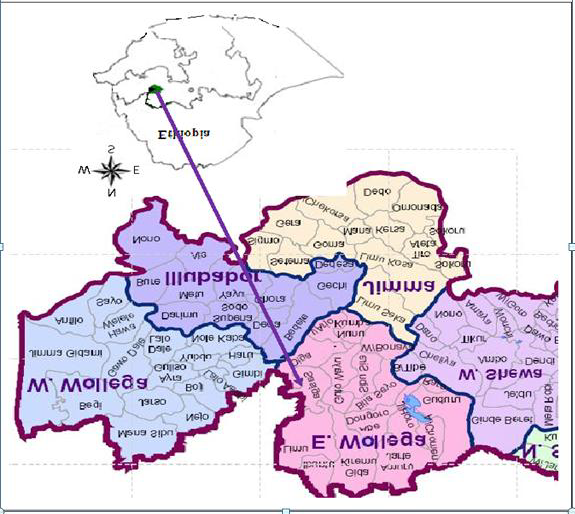
Figure 1: The Location map of the study area Eastern Wallagga was chosen as a case study for human security and development nexus due to four main reasons. Firstly, the region has experienced conflict and violence for the past three decades, starting from the 1990s. This period has been marked by internal political factionalism, armed revolt, and sustained civil unrest. As a result, human security has been compromised in various ways, depending on the specific circumstances of each individual. Therefore, Eastern Wallagga serves as a comprehensive and diverse example of the different factors, both at the local and national levels that impact human security and development relations in various situations. The second reason for selecting Eastern Wallagga as a case study for human security and development nexus is that despite agreements, sporadic civil conflicts and political instability have persisted for years. While the overall conditions for the people have improved, the promise of human rights, development, and political freedom has not been fully realized. This suggests that economic growth alone did not guarantee human security. Thirdly, the Ethiopian government has adopted internationally promoted norms of human rights, poverty reduction strategies, and human development in its policies since 1991. The Oromia Regional State has also embraced these principles in its development strategy, making it a unique case for analyzing the outcomes of human security and development policies and practices in all its zones, including Eastern Wallagga. Finally, resource-based conflict has complex dynamics and a significant impact on people’s livelihoods in the area. Therefore, it is essential to understand how actors on the ground articulate the relationship between human security and development.
Study methodologies
According to Leedy [22], research design refers to a study plan that outlines the framework for gathering data. Ashe J, et al. [23] define research design as a plan for selecting research sites, subjects, and data collection methods to address research questions. They also note that a robust research design aims to produce credible results. In this study, a qualitative approach using a case study design was employed to investigate how the human security and development nexus is articulated at the local level.
The chosen method for this study involved direct contact with participants, enabling the collection of data on their perspectives and interpretations of major concerns, as outlined by Creswell [24]. By using a case study approach, this study has the potential to bring new validity to the conceptualization of the security-development nexus and to identify new variables and hypotheses that are particularly relevant at the local level and have not been previously analyzed. This is because a case study allows for a detailed analysis of a specific situation or phenomenon, which may reveal new causal relations and provide a deeper understanding of the issue at hand. The study employs a hermeneutic approach, which prioritizes interpreting, and understanding phenomena rather than explaining them, as defined by Bryman [25]. As such, the study aims to comprehend the local perspective of the relationship between human security and development. This philosophical approach is aligned with social constructivism, which Creswell [24] describes as an understanding of the world and its context based on participants’ views of the situation. To achieve this, the interview questions used in the study are broad and open-ended.
Study participants and Sampling techniques
The study employed purposive sampling to select participants, which involved identifying an area where human security and development are complex issues and identifying actors who could affect or be affected by the levels of human security and development in the zone. Participants were selected based on specific criteria, and the sample cannot be generalized due to its non-random nature. Snowball sampling was also used, with initial respondents proposing other participants with relevant experiences for the study.
A total of 18 interviews were conducted with 38 respondents, using key informant, individual, and group interviews. 16 individual interviews were conducted with government and NGO workers, as well as internally displaced community members, who had different opinions and relationships to human security and development in the area. The sample was diverse, including individuals from different ethnic groups, ages, genders, and roles in society, such as members of religious groups, village peace committees, village chiefs, and police.
Six key informant interviews were conducted with individuals who had special insight into the study topic and could help create contacts with other respondents. These included village administrators, police heads, and zonal heads and security coordinators who had special knowledge of human security and development in the area. Additionally, two group interviews were conducted, one with a group of two elders, one local chief, and one internally displaced community member, and another with a group of five women.
The sample size was determined by information saturation, which meant that data collection stopped when no new relevant information emerged during interviews.
Method of Data Collection
The data collection mechanisms were designed and implemented with the appropriate procedures and in adherence to research ethics and norms. Multiple data collection tools were utilized in the study, including key informant interviews, focus group discussions, and document reviews.
The primary sources of data for the study were obtained from eight semi-structured individual interviews, two semi-structured group interviews, and four unstructured interviews. Focus group discussions were used in conjunction with key informant interviews, and four FGDs were conducted with groups consisting of elders (both women and men), youth, community leaders, and government representatives. Each group comprised 6-10 members, and the discussions lasted for no more than an hour. The FGDs were facilitated by a research assistant who was familiar with the local area and cultural context. A tape recorder was used to capture all the information provided by the participants during the FGDs, with the permission of the interviewees. All interviews and FGDs were conducted in Nekemt Town, Angar Gute Town, Gidda Ayana, and Kiramu between December 21, 2022, and January 20, 2023.
Furthermore, I also conducted a review of relevant documents related to the study. This provided valuable insights into the current state-of-the-art methods and research in the study area. These documents, which included annual plans, annual reports, policy manuals, strategic plans, directives, published and unpublished documents, online magazines, and broadcast media conversations about the human security-development nexus, served as secondary sources that covered a wide range of areas and provided useful information for the study.
Methods of data analysis
Data analysis is crucial in research as it helps to collect and connect findings to higher-level concepts. In this study, data was collected and analyzed simultaneously. The qualitative data analysis involved several techniques such as content analysis, narrative analysis, discourse analysis, and thematic analysis, which were carried out step-by-step.
Following Creswell’s [24] approach, the first step in qualitative data analysis was to organize all the data collected from the field into a computer file. The next step was to transcribe the information obtained from interviews and audiotapes into written form. The information was then categorized, and the need for additional information was assessed. This approach helped to ensure credible results by balancing the data collected with the researcher’s understanding and interpretation.
Result and discussions
This section of the paper outlines the results of the study, which reflect the viewpoints and opinions of the interviewees. The findings indicate that the interviewees perceive the security-development nexus as an idea that highlights the interdependence and mutual reinforcement between security and development. Improvements in one area are seen as leading to gains in the other. The concept of the security-development nexus has been a key component of the Ethiopian government’s development strategy since 1991, and this is particularly evident in Eastern Wallagga.
According to all the interviewees and focus group discussants, the human security-development nexus in Eastern Wallagga Zone is perceived as prioritizing the protection and well-being of individuals and communities over mere economic growth. This finding is in consistence with the report by Human Rights Watch in 2021, which highlights that the Ethiopian government has acknowledged the significance of the human security-development nexus and has implemented policies and programs aimed at addressing various social and economic issues facing the country.
The case of Eastern Wallagga provides an example of the human security-development nexus in action. This zone has historically been marginalized and underdeveloped, but the government has implemented initiatives aimed at improving the standard of living for its residents while also addressing broader economic and social challenges. Similarly, as noted by Dessalegn et al. [18], balancing economic growth with environmental sustainability requires the promotion of sustainable agriculture and natural resource management through appropriate policies and practices.
The in-depth interviews with participants highlighted the issue of human security from the perspective of those who have been directly affected by challenges such as conflict, displacement, poverty, and inequality. These participants emphasized the importance of protecting and empowering individuals and communities to promote their well-being and dignity. They also acknowledged the responsibility of the government to pursue security-related initiatives, including the management of ethnic conflicts and other forms of instability. The government has established a strong security apparatus, including well-trained and well- equipped military, police force, and intelligence services.
The focus group discussions further emphasized the profound impact of human security challenges on the lives and livelihoods of individuals and communities. Participants emphasized the importance of a human-centered approach to human security, which prioritizes the protection and empowerment of individuals and communities, and recognizes the diverse and intersectional dimensions of human security challenges. The participants also noted that conflict and displacement can uproot families, disrupt social networks, and cause physical and psychological trauma, which can lead to poverty. Poverty can then limit access to basic necessities such as food, water, healthcare, and education, and can hamper social and economic mobility. This finding is consistent with that of Amnesty International (2021), inter-communal conflict and displacement can lead to human rights abuses, including sexual violence and forced displacement.
One of the major challenges in implementing the security-development nexus in Eastern Wallagga Zone is the complex and diverse ethnic makeup of the area. The various vicinities within the zone have distinct cultures and traditions, which can make it challenging to implement policies that are effective across the board. Moreover, the government’s emphasis on security has been criticized for potentially impinging on democratic freedoms and human rights, with some arguing that security concerns have been used as an excuse to stifle dissent and opposition. As noted by the OECD [26], political instability and conflict can undermine the security-development nexus by creating an insecure environment that limits economic growth and development. In such contexts, implementing development programs that require stability and security can be difficult.
My findings indicate that despite the challenges faced, the government has maintained its focus on the security- development nexus as a crucial aspect of its development strategy. This approach prioritizes expanding access to basic services and building critical infrastructure in the area. While it is uncertain whether this approach will ultimately result in promoting stability and security in the region, it is evident that the government considers the security- development nexus as a fundamental component of its long- term development objectives.
All the interviewees and focus group discussion participants agree that healthcare is one of the most important basic services in Eastern Wallagga Zone. However, studies show that historically, the area has had the lowest levels of healthcare access and quality in Ethiopia, with high rates of infant and maternal mortality, and a high burden of communicable diseases such as malaria and tuberculosis. Tsegaye’s et al. [9] study on the healthcare status of Eastern Wallagga Zone and confirmed that the area has limited healthcare infrastructure, with few hospitals and health centers serving a large population. According to him, many health facilities lack basic equipment and supplies, which limits their ability to provide adequate care. Despite these challenges, one in-depth interviewee noted that the government has made significant investments in the healthcare system in recent years. This includes expanding access to primary care facilities and training more healthcare workers. As a result, there has been significant progress in improving healthcare outcomes in the zone, although challenges still remain.
Education is another fundamental service in Eastern Wallagga Zone. However, the area has one of the highest rates of illiteracy in the country, particularly among women and girls. My findings indicate that access to education is a significant issue in the area, with many children and youth facing barriers to accessing quality education. In their study noted that numerous schools in Eastern Wallagga lack basic infrastructure, such as classrooms, libraries, and sanitation facilities, which can limit the quality of education and hinder the learning abilities of children. Likewise, Dessalegn et al. [18] found that many children in rural areas of Eastern Wallagga live far from schools and lack access to transportation, which can make it challenging for them to attend school regularly. Additionally, as per Belay et al. [27], poverty is a major obstacle to education in the area, with many families unable to afford school fees, uniforms, and other associated costs. This can lead to children dropping out of school or prevent them from enrolling in the first place, particularly in rural areas.
My finding also confirms that poverty can be a significant obstacle to education in many areas. When families are struggling to meet their basic needs such as food, shelter, and healthcare, they may not have the resources to invest in their children’s education. Poverty can also have an impact on the quality of education that students receive. Schools in low- income areas may have fewer resources and less experienced teachers, which can lead to lower academic achievement and less opportunity for students to succeed. However, it’s important to note that poverty is not the only factor that can affect education. Other factors such as discrimination, inadequate school infrastructure, and cultural attitudes towards education can also play a role. Addressing these issues can be challenging, but it is essential to ensure that all children have access to a quality education regardless of their socioeconomic background.
In other ways, access to clean water and sanitation is also a crucial basic service in Eastern Wallagga Zone. However, my findings indicate that historically, the area has had limited access to clean water, with many communities relying on unsafe sources of water like rivers and springs. In the same way, noted that many communities in Eastern Wallagga lack basic water and sanitation infrastructure, such as piped water systems and latrines. This can lead to the spread of waterborne diseases and other health problems. Even where water sources are available, many people in the area rely on unsafe water sources, such as rivers and ponds, which can be contaminated with bacteria and other pollutants. According to my observations, the government has made substantial investments in constructing water and sanitation infrastructure in Eastern Wallagga Zone, including drilling new wells and building water treatment plants. This has led to a significant increase in access to clean water in recent years. However, despite these efforts, there are still several communities in the area that lack access to safe water and basic sanitation facilities.
The challenge of balancing the need for immediate humanitarian assistance with the long-term goal of promoting sustainable development and addressing the root causes of human insecurity is the human security and development dilemma in Eastern Wallagga. Political instability and conflict can be detrimental to both human security and development efforts in the area by creating an insecure environment that hinders economic growth and development. As a result, implementing development programs that require stability and security can be challenging in such contexts.
In conclusion, achieving human security and development in Eastern Wallaga requires a comprehensive approach. The government can address the root causes of conflict, invest in critical infrastructure, expand access to basic services, promote social inclusion, reduce inequality, and tackle ongoing challenges to create a more equitable and sustainable society that benefits all citizens [28, 29, 30, 31, 32, 33, 34].
Based on the challenges and opportunities identified in Eastern Wallaga, the following recommendations can be made to promote human security and development in the area. It is crucial to address the underlying causes of ethnic conflict. This involves prioritizing efforts to tackle issues related to competition over resources, political power, and cultural or religious differences. With this regard, investing in critical infrastructure, such as healthcare facilities, roads, and bridges, is crucial for promoting economic growth and development in Eastern Wallaga. Such investments will not only enhance the well-being of residents but also create new opportunities for trade and commerce, thus contributing to the zone’s development. Promoting social inclusion and reducing inequality should also be a priority for the government to promote human security and development. This involves addressing ethnic and cultural divisions and implementing policies that promote social equality and empowerment. Finally, it is crucial to address ongoing challenges such as political instability, economic difficulties, and environmental degradation. Addressing these challenges will require sustained efforts and continued investment from stakeholders, including civil society organizations and the government.
References
-
United Nations Development Program (UNDP) (1994) Human Development Report. New York: Oxford University Press.
-
Duffield, Mark (2010) The Liberal way of Development and the Development-Security Impasse: Exploring the Global Life-Chance Divide. Security Dialogue 41(1): 53- 76.
-
Stephen C (2020) Study on the Inter-Linkages between the Development, Peace and Security, Human Rights and Humanitarian Pillars in the Sahel and West and Central Africa Subregions. Inception Report Final draft.
-
Boonstra J, Shapovalova N (2012) The Problematic Security-Development Nexus, Thinking Security, doing Development? The Security-Development nexus in European Policies towards Tajikistan (working paper). Brussel: EUCAM.
-
Tschirgi N (2005) New Interfaces between Security and Development. German Development Institute.
-
Commission on Human Security (CHS) (2003) Human Security Now: Protecting and Empowering People. New York.
-
OECD (2019) Making the Security-Development Nexus Work: Principles. Practice and Challenges.
-
Sen A (2000) “Why Human Security?” Presentation at the International Symposium on Human Security. Tokyo, pp: 1-11.
-
Tsegaye M, Alemayehu T, Melak T (2016) Assessment of Health System Challenges and Opportunities for Possible Integration of Diabetes Mellitus and Tuberculosis Services in South-Eastern Amhara Region, Ethiopia: A Qualitative Study. BMC Health Services Research.
-
Selchow S (2021) The Politics of Human Security in the Anthropocene. International Affairs 97(2): 381-400.
-
Gebreegziabher Z, Gebrehiwot TG, Hagos H (2018) Linking human security and economic development in Ethiopia: An empirical analysis. Journal of Human Security 14(2): 54-66.
-
Alemu G, Alemu AM, Kebede G (2019) Gender Equality and Women’s Empowerment for Sustainable Development and Human Security in Ethiopia. Journal of Sustainable Development 12(6): 92-102.
-
Nilsson M, Taylor LK (2016) Applying the Security- Development Nexus on the Ground: Land Restitution in Colombia. Conflict, Security & Development 17(1): 73- 89.
-
Howe G, Sims J (2011) Citizenship and the Pursuit of the Worthy Life. Palgrave Macmillan.
-
Jensen CB (2010) The Reality of the Global Knowledge Economy: A Symmetrical Knowledge and the Limits to Knowledge Networking. Global Networks 10(1): 113- 131.
-
Denney J (2011) Exploring the Relationship between Governance and Adaptive Capacity: Evidence from Ghana. World Development 39(6): 1043-1054.
-
FAO (2021) Conservation Agriculture in Ethiopia.
-
Dessalegn G, et al. (2019) Promoting Peace and Security in East Wallagga, Ethiopia: A Case Study of Community- Based Conflict Resolution. Journal of Human Security 15(1): 31-45.
-
Chandler D (2007) The Security-Development Nexus and the Rise of “Anti-Foreign Policy”. Journal of International Relations and Development 10(4): 362-386.
-
Belachew G (2014) The Ethiopian Dilemma between State Security and Human Security. Human Security Perspectives 10(1): 1-26.
-
(2007) Central Statistical Agency of Ethiopia (CSA).
-
Leedy PD (1997) Practical Research: Planning and Design 6th (Edn.), New Jersey: Prentice-Hall.
-
Ashe J, Appenteng K, et al. (2001) Getting to Scale: How to Bring Development Solutions to Millions of Poor People. Kumarian Press.
-
Creswell JW (2015) A Concise Introduction to Mixed Methods Research. Sage Publications Ltd.
-
Bryman A (2016) Social Research Methods. Oxford University Press.
-
OECD (2018) Security and Development: Policies and Practices.
-
Belay GM, Demeke TB, Wondimu GT (2020) School Dropout and its Associated Factors among Primary School Children in East Wollega Zone, Ethiopia. BMC research notes 13: 1-7.
-
Birhanu M, Eticha T, Tadesse M (2019) Assessment of Barriers to Utilization of Maternal Health Care Services in Eastern Ethiopia. Journal of Primary Care & Community Health 10: 2150132719880787.
-
(2020) East Wollega Zone Administration Bulletin.
-
(2021) Country Reports on Human Rights Practices: Ethiopia.
-
International Peace Academy (2005) Strengthening the Security-Development Nexus: Assessing International Policy and Practice since the 1990s. New York: International Peace Academy.
-
Ojendal J, Lilja M (2009) Beyond Democracy in Cambodia: Political Reconstruction in a Post-Conflict Society. Copenhagen: Niaspress.
-
United Nations Development Programme (UNDP) (2005) Human Development Report 2005, International Cooperation at a Crossroads: Aid, Trade and Security in an Unequal World. New York: UNDP.
-
Gudina E, Demissie D, Tsegaye M (2020) School dropout and associated factors among Secondary School Students in Nekemte town, East Wollega Zone, Ethiopia. PloS one 15(4): e0231578.
- Reassessing Baldus Study Data
- Suicide and the Emotions of Men and Women in Uniform
- The Need to Teach Research Methods to Criminal Justice Students
- Combating Cyber VAT Fraud in the EU Member States: A Comparative Study of Criminal and Criminal Procedure Law
- Cyber VAT Fraud in the EU: A Criminological Analysis
- Advancing Compassionate Justice: Redefining Victim and Offender Rights in Victimology and Penology