
Developing a College Students’ Cyberbullying Scale
This research is an attempt to narrow the gap in cyberbullying measurement, and the purpose of this study is to develop a cyberbullying scale applicable to youth in Jordan that can be extended to Arab States. We can apply and test this scale, which offers insights for formulating policies and understanding the implications for law and security. The scale can identify conceptual constructs of cyberbullying, aid policy formation, and provide legal and security implications for youth prevention. We developed the scale in three stages: generation, refinement, and validation. We utilized a literature review and nomological network to illustrate the dimensions of the scale, their correlations, and other pertinent variables (like LSE). A sample of 1000 Tafila Technical University students found that 45.4% were males and 54.6% were females from 12 Jordanian governorates. Science colleges and arts and social colleges split the sample almost equally (49.6% vs. 50.4%), respectively. All students are using the internet, and most of them use it intensively (73%), compared to regular use (27%). About 26% of students experienced bullying, 27% knew about cyberbullying victims, and 24% knew about its perpetrators. The scale's 37 items spread across three factors, collectively accounting for 76.6% of the variance in youth cyberbullying, according to the findings. The first factor, labeled "self and bystander cyberbullying perpetration" (25 items), accounted for 67.5% of the variance; the second factor (9 items), "self and bystander cyberbullying victimization," was responsible for 4.7%; and the third factor (5 items), "vicarious and group perpetration and victimization cyberbullying," contributed 4.4% of the variance. Findings showed significant differences between males and females in cyberbullying (F = 4.726, α ≤0.000), with males having a higher mean of cyberbullying than females (mean = 35.9 vs. 32.7), with a variation of 1.6 vs. 1.4. Future research is required to test the scale across various educational levels and workplace settings, including teachers, police officers, and parents. Also, there is a need to test the scale on different age groups, settings, and cultures. There is a need for an atheoretical and empirical framework for understanding and preventing youth cyberbullying while promoting a more cohesive and resilient youth society.
Abbreviations
BGCM: Barlett and Gentile Cyberbullying Model; F2F: Face- to-Face; WHO: World Health Organization; KMO: Kaiser- Meyer-Olkin.
Introduction
The Internet has become a ubiquitous communication tool, with violent extremists using it to socialize, learn, and become activists. Internet 2.0 technology has transformed social media platforms like Twitter and Facebook, transforming daily activities like education, business, entertainment, and e-government. By 2021, these networks will have over 3.02 billion active users globally. The Internet and social media raise issues like cyberbullying due to misunderstandings about freedom of speech. It is critical to detect cyberbullying without victim involvement [1]. Contemporary youth rely heavily on social networking tools to maintain their social circles, potentially making them vulnerable to cyberbullying and associated victimization [2].
Bullying, dating back to the 1530s, involves a bully or intimidator abusing a victim through physical, verbal, or other means to gain a sense of superiority and power. Prevention and statistics are crucial in addressing this issue [3]. Since the 1980s, schools have grappled with bullying as a significant issue, often ignoring or denying it. Since then, social scientists, educators, teachers, and parents have worked together to raise awareness and find ways to reduce and prevent it. A research program on school bullying has developed through four phases: origins in western Scandinavia, spreading ideas to other countries, establishing an international research program, and the advent of cyberbullying. Cyberbullying has revitalized the bullying research program by bringing in a new mix of disciplines and researchers, leading to increased publications and resources for anti-bullying programs [4].
Amanda Todd and Rehtaeh Parsons’ high-profile cases highlight the severe consequences of cyberbullying. In 2012, Todd, a 15-year-old Canadian, took her own life due to cyberbullying. She received pressure from an anonymous individual to send explicit images of herself to her school students. In 2014, authorities arrested a 35-year-old Dutch citizen on charges of extortion, Internet luring, criminal harassment, and child pornography. These events caused Todd to suffer anxiety, depression, and panic attacks, culminating in several attempts to harm herself. Rehtaeh Parsons, a teen from Nova Scotia, committed suicide in 2013 following her rape in 2011. The incident was considered “he said, she said” by police, leading to no further action. One individual pleaded guilty and received a conditional discharge with 12 months of probation in 2014. These incidents highlight the harm of cyberbullying [2].
Cyberbullying, a growing concern in the 21st century, involves sending intimidating messages online, allowing perpetrators to escalate abuse and traumatize victims. The internet has connected youths, leading to an increase in students using the internet at home or in school. Cyberbullying can worsen depression and post-traumatic stress disorder symptoms in young inpatients, especially those with a history of abuse. It is more pernicious than traditional bullying due to its viral and persistent nature. Victims often feel isolated and helpless, leading to feelings of depression and anxiety. Cyberbullying is more dangerous because of its anonymity, repetition, and location, which make it difficult to detect. Altering the university and school climate and providing psychological support are crucial for behavioral change and reducing strain. Evidence also suggests that cyberbullying among college students and school-age children is associated with problem behaviors and other adverse school performance constructs. Consequently, educators have developed and implemented numerous school-based programs aimed at reducing cyberbullying perpetration and victimization [5].
Cyberbullying has become a significant social and political issue, prompting governments and educational institutions to focus on combating this issue through all means, including legal, social, health, and political means. Cyberbullying is more dangerous because of its anonymity, repetition, and location, which make it difficult to detect. Altering the university and school climate and providing psychological support are crucial for behavioral change and reducing strain [2].
Cyberbullying: The Definition
Patchin and Hinduja’s definition of cyberbullying is “willful and repeated harm inflicted through the use of computers, cell phones, and other electronic devices” [6] (p.11). “Willful” denotes an unwavering commitment to a particular activity, while “repetition” describes the regular use of electronic devices to transmit and consume harmful content. Bullying extends beyond campus and into the home, posing a threat to safety due to technological advancements [6]. Cyberbullying, often perpetrated through cellular phones and internet-enabled computers, presents a unique balance of power due to the perceived anonymity of the perpetrator, the lack of immediate victim response observation, and the potential for an infinite audience, making it a prevalent issue with little parental or school community guardianship [5]. Cyberbullying is characterized by anonymity, rapid dissemination of information, a lack of face-to-face confrontation, and a lack of parental control. Only 40–50% of victims know the perpetrator’s identity, leading to frustration and helplessness. Cyberbullying often reaches a wider audience, making it difficult for victims to remove content. Lack of visual signals and written communication can also contribute to cyberbullying. High levels of parental supervision and support can help prevent children from participating in bullying [7].
Cyberbullying is defined as an aggressive, intentional act carried out by a group or individual using electronic forms of contact repeatedly and over time against a victim who cannot easily defend themselves. It is a form of willful and repeated harm inflicted through the use of computers, cell phones, and other electronic devices. The definitions highlight common elements such as the use of electronic media, intent to harm, repetition, and power imbalance between the bully and the victim. These definitions are frequently cited in academic literature and practical guidelines addressing cyberbullying. The most cited definitions are from Smith PK, Patchin JW, Tokunaga RS, Menesini E, Willard N [8, 9, 10, 11, 12].
Theoretical Framework
Cyberbullying is a complex issue that has been studied by various researchers from psychology, sociology, and communication studies. Some of the most influential theories include the Social Learning Theory, General Strain Theory, Routine Activity Theory, Anonymity and Deindividuation Theory, Self-Control Theory, Social Identity Theory, and The Theory of Planned Behavior. These theories provide a comprehensive understanding of cyberbullying, encompassing individual psychological factors, social influences, environmental conditions, and the unique characteristics of online interactions. Social Learning Theory suggests that individuals learn behaviors through observation, imitation, and modeling, The Barlett and Gentile Cyberbullying Model (BGCM) is a learning- based theory that posits the importance of positive cyberbullying attitudes predicting subsequent cyberbullying perpetration. Furthermore, the tenants of the BGCM state that cyberbullying attitude are likely to form when the online aggressor believes that the online environment allows individuals of all physical sizes to harm others and they are perceived as anonymous [13]. General Strain Theory suggests that individuals experiencing stress or strain are more likely to engage in deviant behaviors, including cyberbullying. According to General Strain Theory, youth who experience strain are more likely to engage in both traditional and non-traditional forms of bullying [14]. Patchin and Hinduja [14] found that strain in youth increases cyberbullying, but anger or frustration doesn’t mediate the relationship, unlike traditional bullying experiences. Jang [15] investigated the relationship between traditional bullying victimization and cyberbullying engagement, positing that offline bullying victimization positively correlates with cyberbullying. Navarro and Jasinski [16] found that suitability and availability significantly correlate with cyberbullying experiences among youth. Routine Activity Theory focuses on the circumstances that make cyberbullying more likely to occur, such as the availability of targets, lack of capable guardianship, and the presence of motivated offenders. Routine Activities Theory. They found that 61.5% of youth use the internet daily, and 90% use it weekly. Targeting social networking sites increased, with cyberbullying emerging as the most prevalent form. Parents used browser history, website filters, and software to protect their children.
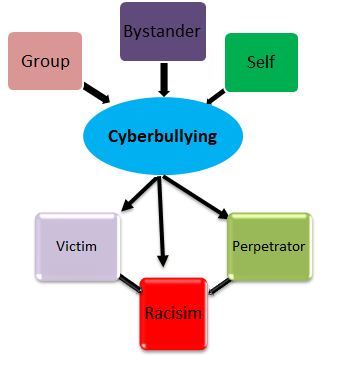
Over the years, there has been a significant increase in studies on cyberbullying, with a total of 195 papers published in 2018. However, there is a lack of consensus among the findings due to common limitations in the concept’s definition and operationalization. The National Crime Victimization Survey: School Crime Supplement (NCVS:SCS) BJS [17] has expanded the subject to include Internet, instant messaging, and text messaging but has not included cyberspace. As awareness of cyberbullying grows, so does the desire to capture this phenomenon more accurately. Measurement tools for cyberbullying frequently fail to accurately reflect technological advancements, and clear estimates of reliability and validity are often lacking. Additionally, study samples differ widely, and most studies are cross-sectional, making it difficult to determine causality and the direction of the relationship between variables. Previous studies on cyberbullying have limitations, including the definition, conceptualization, and operationalization of the concept, as well as the validity and reliability of the instruments used to measure it. Only about half of the instruments were used for “cyberbullying,” and there are few reports on the instruments’ reliability and validity. Additionally, data should be collected from sources such as parents, peers, and teachers [5]. Olweus and Limber [18] report that prevalence estimates vary from 3% to 40%, likely due to differences in measurement Figure 1.
Cyberbullying’s psychological variables and processes require further research, particularly for adolescent samples. The Barlett Gentile Cyberbullying Model (BGCM)
is the only validated theory to predict cyberbullying perpetration. Applying the BGCM to adolescents presents both challenges and opportunities for future research and intervention development [19]. The integration of cyber-racism perpetration into the broader cyberbullying context, highlighting similarities and differences between the two types of online behavior. It focuses on a cyber- racism model that emphasizes anonymity perceptions as a key factor in causing cyber-racism, including online disinhibition, deindividuation, group polarization, and stereotypes. The review concludes with a discussion of theoretical and intervention implications, aiming to spark further research on cyber-racism and cyberbullying [20]. Cyberbullying significantly impacts students, causing reduced concentration, school avoidance, increased absences, isolation, and negative school climate perceptions, particularly affecting girls. Perpetrators of cyberbullying cause adverse health effects, including increased depression, anxiety, substance use, and comorbidities. Understanding risk factors is crucial for preventing morbidity and mortality [21]. The study examines the impact of strain variables on cyberbullying victimization among college students in Qatar. It found that a significant percentage of students were exposed to bullying, with gender differences and mean differences. The findings suggest that cyberbullying victimization could lead to delinquency and strains [22].
In their systematic review and meta-analysis of interventions to decrease cyberbullying perpetration and victimization [5]. analyzed programming to reduce cyberbullying perpetration and victimization, dividing it into seven categories: skill-building, curricula and prepared materials, psychoeducation, multimedia materials, training, school climate or policy, and group or individual targeted responses. Nearly 80% of programs included some form of skill-building, with many using curricula, other prepackaged materials, or multimedia materials. Skill-building focuses on teaching students to develop competencies they can apply independently in real-time situations, particularly when adults or peers are absent. Curricula and prepared materials refer to uniform content that guides students through the curriculum. Programs targeting cyberbullying behavior were more effective in reducing cyberbullying compared to general violence prevention programs. The average effects of most bullying prevention program meta-analyses ranged from 0.15 to 0.20, a value that is lower than the average effect of incorporating a cyberbullying component in this meta-analysis (0.25). We need future research to confirm whether incorporating a cyberbullying component within the prevention program can reduce traditional bullying. The study also found that only 18% of studies met the highest World Health Organization (WHO) rating, and 44% did not meet WWC standards. Schools must also carefully consider the availability of resources for program implementation [5].
Al-badayneh, et al. found that 44.5% of students said they had been bullied, and 9.6% said they had been the target of cyberbullying and 5% were cyberbullying. Face- to-face (F2F) bullying was more prevalent in males, who were both victims and bullies. According to the findings, bullying differed significantly between males and females. Compared to women, men are more likely to be bullied [23]. A study on expats in Qatar found that 10.8% reported cyberbullying victimization, with 46% being male and 54% being female. Victims came from intact families (62.4%) and had a lack of a father during childhood (31.7%). About a third of victims found it easy to talk to their father when needed. Additionally, 50% of victims were victims of face- to-face bullying [24].
The Purpose of the Study
This research is an attempt to narrow the gap in cyberbullying measurement and aims to develop a cyberbullying scale applicable to youth in Jordan that can be extended to Arab States. We can apply and test this scale, which offers insights for formulating policies and understanding the implications for law and security. The scale can identify conceptual constructs of cyberbullying, aid policy formation, and provide legal and security implications for youth prevention.
Rationale of the Study
The number of studies on cyberbullying has increased significantly, with 195 published in 2018. However, there is a lack of consensus due to limitations in definition and operationalization. The National Crime Victimization Survey; School Crime Supplement has expanded the subject, but not cyberspace. Measurement tools often fail to accurately reflect technological advancements, and reliability and validity are lacking. We should collect data from sources such as parents, peers, and teachers, with prevalence estimates ranging from 3% to 40%.
Research on cyberbullying requires strong theoretical frameworks, strict methods, and reliable measurements. Public policies should be based on relevant information as well as national and international goals. Cyberbullying threatens youth’s right to a safe university environment. Scale construction aims to create accurate and valid measures of constructs to evaluate attributes. However, this process is challenging due to the difficulty of observing non-observable constructs like self-report and their complexity. Validation is critical when creating scales, and researchers may develop standardized measures based on large heterogeneous samples to improve theory construction and testing. Future joint research may also help establish measurements.
Methodology
Scale development is a complex and time-consuming process that provides accurate and valid measures of constructs, such as abstract and complex constructs like self- perception. These instruments are often difficult to create due to their complexity and the need for validation [4].
Participants
A study of 1000 Tafila Technical University students found that 45.4% were males and 54.6% were females from 12 Jordanian governorates. Cyberbullying exposed 26% to violence. Science colleges and arts and social colleges split the sample almost equally (49.6% vs. 50.4%), respectively. More than a quarter of fathers were unemployed (27%). All students are using the internet, and most of them use it intensively (73%), compared to regular use (27%). About 26% of students experienced bullying, 27% knew about cyberbullying victims, and 24% knew about its perpetrators (Table 1).
| Governate | # | % | Governate | # | % |
|---|---|---|---|---|---|
| Amman | 109 | 10.9 | Zarka | 79 | 7.9 |
| Irbed | 82 | 8.2 | Madaba | 47 | 4.7 |
| Balka | 50 | 5 | Karak | 101 | 10.1 |
| Jarash | 58 | 5.8 | Tafilah | 257 | 25.7 |
| Ajloon | 49 | 4.9 | Maan | 23 | 2.3 |
| Mafrak | 35 | 3.5 | Aqaba | 110 | 11 |
| Total | 1000 | 100% |
Table 1: Sample according to the participating governate.
Item Generation (Question Development)
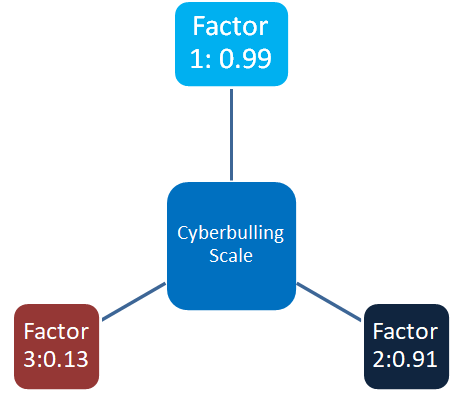
We used the following techniques to determine the scale’s relevant questions: The deductive approach: This is based on the relevant domain description and item identification. We accomplish this by reviewing the existing literature and evaluating the scales and indicators in that domain. Content validity Experts and target population judges evaluated the content validity of 37 questions related to Jordanian cyberbullying, with ten experts and target population judges assessing the relevance of the scale. Nomological Network: The study explores the multidimensional construct definition of cyberbullying, focusing on its dimensions and factors. The principal component factor analysis identifies three factors: self- and bystanders’ perpetration, victimization, and vicarious and group perpetration, victimization. The nomological network is crucial for validation, ensuring convergent and divergent validity (Figure 2).
Scale Refinement
Results of the Principle Factor Analysis
Dimensionality Method: The study measured cyberbullying using 37 items from a literature review. The items included:
- Self and bystander cyberbullying perpetration 17 items
- Self and bystander cyberbullying victimization 13 items
- Vicarious and Group perpetration and victimization cyberbullying 7 items (Table 2).
| Factor 1 | Factor 2 | Factor 3 | |
|---|---|---|---|
| 1. I took photos or videos of a student without his or her knowledge and posted them online. | 0.871 | ||
| 2. I posted embarrassing photos or videos (sexual content) of a student online. | 0.87 | ||
| 3. I sent a student a short message containing threats, or accusations of harming their reputation. | 0.868 | ||
| 4. I sent a picture to a student’s mobile phone with the intention of threatening or insulting | 0.865 | ||
| 5. I threatened a student through email with the intention of harming his or her reputation. | 0.864 | ||
| 6. I sent bad-content emails about a student to numerous other individuals. | 0.864 | ||
| 7. I sent hurtful text messages about a male student to a number of people. | 0.863 | ||
| 8. Someone posted embarrassing photos or videos of a student online. | 0.852 | ||
| 9. I blackmailed a student with inappropriate photos or videos SR Blackmailed. | 0.852 | ||
| 10. A student sent hurtful text messages about another student to many other people. | 0.849 | ||
| 11. A student distributed malicious emails about another student to a large number of recipients. | 0.846 | ||
| 12. A student blackmailed another student with inappropriate photos or videos. | 0.84 | ||
| 13. I bullied a student in different ways. | 0.826 | ||
| 14. I forced or threatened the student to do things he or she did not like. | 0.824 | ||
| 15. I bullied students for things because of their clan or region. | 0.818 | ||
| 16. A student took pictures or recorded video of another student without their permission and published it on the internet. | 0.816 | ||
| 17. I hit, kicked, pushed, imprisoned, etc. other students. | 0.812 | ||
| 18. I took money or things or destroyed things of a student. | 0.807 | ||
| 19. I and some students spread lies about other students and made others dislike him/her p4 | 0.795 | ||
| 20. I hit, kicked, pushed, imprisoned, etc. a student. | 0.772 | ||
| 21. I called a student’s name in a meaningful way, or provoked them in a hurtful way. | 0.728 | ||
| 22. I, along with some students, completely ignored a student and excluded him/her from our group. | 0.725 | ||
| 23. I made a threat via email with the intention of discrediting the message. | 0.717 | ||
| 24. They sent me pictures on my mobile phone with the intention of threatening or insulting me. | 0.689 | ||
| 25. Someone sent me threatening SMS messages, or accusations of harming my reputation | 0.65 | ||
| 1. Some students completely ignore me and exclude me from their group. | 0.769 | ||
| 2. I was called names, or teased in a hurtful way. | 0.762 | ||
| 3. They hit, kicked, pushed, held back, and so on. | 0.707 | ||
| 4. Some students spread false information about me, leading others to dislike me. | 0.707 | ||
| 5. They either stole my money or destroyed my belongings. | 0.653 | ||
| 6. I was bullied in different ways. | 0.646 | ||
| 7. Bullies have targeted me based on my clan or region. | 0.63 | ||
| 8. Those who bullied me used names or innuendos with sexual overtones. | 0.616 | ||
| 9. Threats or coercion forced me to do things I didn’t like. | 0.614 | ||
| 1. To what extent do you know someone who was a cyberbullying perpetrator. | 0.818 | ||
| 2. To what extent do you know someone who was a victim of cyberbullying? | 0.8 | ||
| 3. To what extent do you have you experienced any type of cyberbullying. | -0.561 |
Table 2: Items distributed on the factors based on rotated components matrix.
Findings
Instruments of Data Collection
We calculated correlation coefficients and found them to be statistically significant when we tested the correlation matrix and sampling size. However, the determinant (t = 4.82) and the correlation matrix are not singular and statistically significant using Bartlett’s test of sphericity (c = 48389.597, α = 0.000), which indicates that the correlation matrix is not an identity matrix.
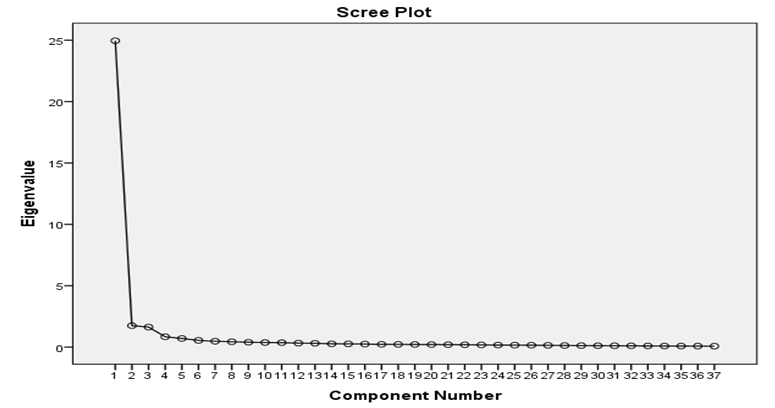
We used the Kaiser-Meyer-Olkin (KMO) test to examine sample adequacy (homogeneity of the sample), and the KMO value in this study was 0.985. A value greater than zero (Kaiser, 1974) recommends that values greater than 0.5 are acceptable, values between 0.7 and 0.8) are acceptable, values between 0.8 and 0.9) are great, and values above 0.90 are superb. Bartlett’s Test of Sphericity clearly identifies three factors (Table 3). Figure 2 Scree plot representing the number of 3 cyberbullying factors
| Kaiser-Meyer-Olkin Measure of Sampling Adequacy. | 0.985 |
|---|---|
| Bartlett’s Test of Sphericity Approx. Chi-Square | 48389.6 |
| Df | 666 |
| Sig. | 0 |
Table 3: KMO and Bartlett’s Test of Sphericity.
According to the screen plot, the recommended number of dimensions is three. Also, factor loading analysis revealed three factors (components) (Figure 3).
Item Reduction
The 37-item Cyberbullying Scale is distributed around the following factors:
- Self and bystanders cyberbullying perpetration
- Self and by standards cyberbullying victimization
- Vicarious and Group perpetration and victimization cyberbullying We empirically estimated the number of factors using a principal component factor analysis with varimax and Kaiser normalization rotation through SPSS (version 22) to determine which questions to retain. A scree plot was examined using the graphical method called the Screen test, first proposed by Cattell [25], and eigenvalue analysis (i.e., eigenvalue ≥ 1) suggested a 3-factor solution was appropriate for the data (Figure 2). The factor analysis employed Varimax and Maximum Likelihood Rotation, along with the Kaiser- Meyer-Olkin Measure of Sampling Adequacy Stopping Rule. The factor analysis led to the identification of a factor solution. According to the scatter plot analysis, the three factors accounted for 76.6 percent of the scale’s variance.
The first factor, labeled “self and bystanders cyberbullying perpetration” (25 items), accounted for 67.5% of the variance; the second factor (9 items), “self and bystanders cyberbullying victimization,” was responsible for 4.7%; and the third factor (5 items), “Vicarious and Group perpetration and victimization cyberbullying,” contributed 4.4% of the variance.
Reliability Analysis
The Cronbach Alpha for the 37-item Cyberbullying Scale was high (0.99), which means that the scale was very consistent within itself. Concurrent validity focuses on the accuracy of criteria for predicting a specific outcome. We estimated the validity of the scale by calculating the correlation between the Cyberbullying Scale and the Low Self-Control Scale. Results showed a significant positive relationship of 0.29, α = 0.000, indicating that the scale is valid (Table 5). Table 4 shows the correlation coefficients between the Cyberbullying Scale and constructs, a proof of internal reliability.
| Cyberbullying scale | F1 | F2 | F3 | |
|---|---|---|---|---|
| F1 Self and bystanders cyberbullying perpetration | .99** | |||
| F2 Self and bystanders cyberbullying victimization | .91** | .85** | ||
| F3 Vicarious and Group perpetration and victimization cyberbullying | .14** | .12** | .07* | |
| Low self-control scale | .29** | .28** | .26** | -.08** |
Table 4: Construct validity, correlation coefficients between Cyberbullying scale and Constructs.
**Correlation is significant at the 0.00 level (2-tailed). * Correlation is significant at the 0.05 level Table 4: Construct validity, correlation coefficients between Cyberbullying scale and Constructs.
Validity
In order to have good construct validity, one must have a strong relationship with convergent construct validity and no relationship with discriminant construct validity. In the table, the grand correlation is greater than.05, as shown, indicating good convergent validity. Moreover, all Cronbach alpha coefficients are higher than 0.70, considered acceptable for validity.
| Factors | # items | Mean | Cronbach’s alpha |
|---|---|---|---|
| F1 Self and bystanders cyberbullying perpetration | 25 | 26.6 | .99** |
| F2 Self and bystanders cyberbullying victimization | 9 | .91** | |
| F3 Vicarious and Group perpetration and victimization cyberbullying | 3 | .13** | |
| Cyberbullying scale | 37 | 0.99 |
Table 5: ** Construct validity – Convergent validity.
AVE all≥.o5 Table 5: Construct validity – Convergent validity.
As can be seen from the following Table 6, all correlation coefficient means for each item is greater than .05 and this indicates a good convergent validity.
| Cyberbullying scale correlation coefficients | r |
|---|---|
| F1 Self and bystanders cyberbullying perpetration | Mean= .81 |
| 1. I took photos or videos of a student without his or her knowledge and posted them online. | .897** |
| 2. I posted embarrassing photos or videos (sexual content) of a student online. | .887** |
| 3. I sent a student a short message containing threats, or accusations of harming their reputation. | .903** |
| 4. I sent a picture to a student’s mobile phone with the intention of threatening or insulting | .894** |
| 5. I threatened a student through email with the intention of harming his or her reputation. | .894** |
| 6. I sent bad-content emails about a student to numerous other individuals. | .889** |
| 7. I sent hurtful text messages about a male student to a number of people. | .897** |
| 8. Someone posted embarrassing photos or videos of a student online. | .872** |
| 9. I blackmailed a student with inappropriate photos or videos SR Blackmailed. | .895** |
| 10. A student sent hurtful text messages about another student to many other people. | .884** |
| 11. A student distributed malicious emails about another student to a large number of recipients. | .886** |
| 12. A student blackmailed another student with inappropriate photos or videos. | .871** |
| 13. I bullied a student in different ways. | .894** |
| 14. I forced or threatened the student to do things he or she did not like. | .901** |
| 15. I bullied students for things because of their clan or region. | .889** |
| 16. A student took pictures or recorded video of another student without their permission and published it on the internet. | .883** |
| 17. I hit, kicked, pushed, imprisoned, etc. other students. | 0.807 |
| 18. I took money or things or destroyed things of a student. | .894** |
| 19. I and some students spread lies about other students and made others dislike him/her p4 | .891** |
| 20. I hit, kicked, pushed, imprisoned, etc. a student. | .886** |
| 21. I called a student’s name in a meaningful way, or provoked them in a hurtful way. | .883** |
| 22. I, along with some students, completely ignored a student and excluded him/her from our group. | 0.874 |
| 23. I made a threat via email with the intention of discrediting the message. | 0.87 |
| 24. They sent me pictures on my mobile phone with the intention of threatening or insulting me. | 0.882 |
| 25. Someone sent me threatening SMS messages, or accusations of harming my reputation | 0.872 |
| F2 Self and bystanders cyberbullying Victimization | 0.68 |
| 1. Some students completely ignore me and exclude me from their group. | 0.616 |
| 2. I was called names, or teased in a hurtful way. | 0.526 |
| 3. They hit, kicked, pushed, held back, and so on. | 0.775 |
| 4. Some students spread false information about me, leading others to dislike me. | 0.73 |
| 5. They either stole my money or destroyed my belongings. | 0.816 |
| 6. I was bullied in different ways. | 0.833 |
| 7. Bullies have targeted me based on my clan or region. | 0.849 |
| 8. Those who bullied me used names or innuendos with sexual overtones. | 0.837 |
| 9. Threats or coercion forced me to do things I didn’t like. | 0.833 |
| F3 Vicarious and Group perpetration and victimization cyberbullying | 0.076 |
| 1. To what extent do you know someone who was a cyberbullying perpetrator. | .07* |
| 2. To what extent do you know someone who was a victim of cyberbullying? | .09** |
| 3. To what extent do you have you experienced any type of cyberbullying. | .07* |
| Item | Loading |
| F1 Self and bystanders cyberbullying perpetration | 50.896 |
| 1. I took photos or videos of a student without his or her knowledge and posted them online. | 67.451 |
| 2. I posted embarrassing photos or videos (sexual content) of a student online. | 4.721 |
| 3. I sent a student a short message containing threats, or accusations of harming their reputation. | 4.411 |
| 4. I sent a picture to a student’s mobile phone with the intention of threatening or insulting | 2.284 |
| 5. I threatened a student through email with the intention of harming his or her reputation. | 1.905 |
| 6. I sent bad-content emails about a student to numerous other individuals. | 1.479 |
| 7. I sent hurtful text messages about a male student to a number of people. | 1.292 |
| 8. Someone posted embarrassing photos or videos of a student online . | 1.178 |
| 9. I blackmailed a student with inappropriate photos or videos SR Blackmailed. | 1.08 |
| 10. A student sent hurtful text messages about another student to many other people. | 1.016 |
| 11. A student distributed malicious emails about another student to a large number of recipients. | 0.985 |
| 12. A student blackmailed another student with inappropriate photos or videos. | 0.875 |
| 13. I bullied a student in different ways. | 0.846 |
| 14. I forced or threatened the student to do things he or she did not like. | 0.733 |
| 15. I bullied students for things because of their clan or region. | 0.715 |
| 16. A student took pictures or recorded video of another student without their permission and published it on the internet. | 0.67 |
| 17. I hit, kicked, pushed, imprisoned, etc. other students. | 0.617 |
| 18. I took money or things or destroyed things of a student. | 0.596 |
| 19. I and some students spread lies about other students and made others dislike him/her p4 | 0.582 |
| 20. I hit, kicked, pushed, imprisoned, etc. a student. | 0.561 |
| 21. I called a student’s name in a meaningful way, or provoked them in a hurtful way. | 0.538 |
| 22. I, along with some students, completely ignored a student and excluded him/her from our group. | 0.519 |
| 23. I made a threat via email with the intention of discrediting the message. | 0.485 |
| 24. They sent me pictures on my mobile phone with the intention of threatening or insulting me. | 0.453 |
| 25. Someone sent me threatening SMS messages, or accusations of harming my reputation | 0.437 |
| F2 Self and bystanders cyberbullying Victimization | 21.237 |
| 1. Some students completely ignore me and exclude me from their group. | 0.423 |
| 2. I was called names, or teased in a hurtful way. | 0.391 |
| 3. They hit, kicked, pushed, held back, and so on. | 0.352 |
| 4. Some students spread false information about me, leading others to dislike me. | 0.327 |
| 5. They either stole my money or destroyed my belongings. | 0.307 |
| 6. I was bullied in different ways. | 0.299 |
| 7. Bullies have targeted me based on my clan or region. | 0.284 |
| 8. Those who bullied me used names or innuendos with sexual overtones. | 0.264 |
| 9. Threats or coercion forced me to do things I didn’t like. | 0.25 |
| F3 Vicarious perpetration and victimization cyberbullying | 4.451 |
| 1. To what extent do you know someone who was a cyberbullying perpetrator. | 0.236 |
| 2. To what extent do you know someone who was a victim of cyberbullying? | 0.229 |
| 3. To what extent do you have you experienced any type of cyberbullying. | 0.206 |
Table 6: ** Cyberbullying scale correlation coefficients.
Convergent criteria correlations must be between 30-70 Table 6: Cyberbullying scale correlation coefficients.
Scale Validation
Conformity Factor Analysis
Note: Extraction Method: Principal Component Analysis. Rotation Method: Varimax with Kaiser Normalization. Table 7: Total variance explained for the Cyberbullying Scale’s items.
Gender Differences
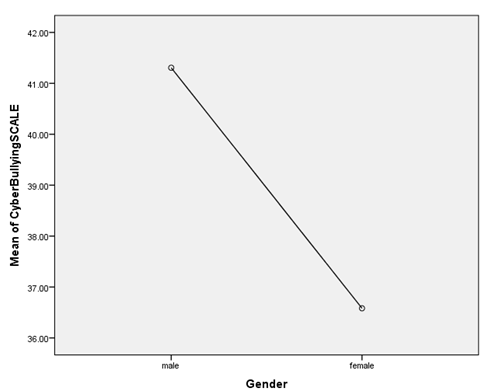
As can be seen from Table 10 and Figure 3, the study found significant differences between males and females in cyberbullying (F = 4.726, α ≤0.000), with males having a higher mean of cyberbullying than females(Mean =35.9 vs. 32.7), with a variation of 1.6 vs. 1.4.
| Sum of Squares | Mean Square | df | F | Sig. | |
|---|---|---|---|---|---|
| Between Groups | 5531.237 | 1 | 5531.237 | 4.726 | 0.03 |
| Within Groups | 1167965.234 | 998 | 1170.306 | ||
| Total | 1173496.471 | 999 |
Table 7: ANOVA Analysis for the Gender Differences in Cyberbullying.
Discussion
Cyberbullying, a form of violence and crime involving new technologies, requires a comprehensive understanding from a criminal law perspective [24]. Cyberbullying has become a severe social, health and legal problem in modern societies. We need a reliable tool to measure cyberbullying and understand its causes and effects. We should update and approve youth policies based on universal human values to address the deficiency in research-based education and development strategies.
The research aims to develop a youth cyberbullying scale for Jordan that can be generalized and applicable for Arab States, providing insights for policy formulation and understanding law and security implications. The findings revealed that six factors, comprising the 37 items of the scale, collectively accounted for 76.6% of the variance in youth cyberbullying. The first factor, labeled “self and bystanders cyberbullying perpetration” (25 items), accounted for 67.5% of the variance; the second factor (9 items), “self and bystanders cyberbullying victimization,” was responsible for 4.7%; and the third factor (5 items), “vicarious and group perpetration and victimization cyberbullying,” contributed 4.4% of the variance. Findings showed Looking at Table 10 and Figure 3, the study found big differences between cyberbullying rates for boys and girls (F = 4.726, ± ≤0.000). Boys were more likely to be cyberbullied than girls (mean = 35.9 vs. 32.7), with a range of 1.6 to 1.4.
Conclusion
The study presents a reliable scale for measuring youth cyberbullying, suitable for Arab cultures and countries. It suggests younger students are suitable for prevention due to potential crime involvement. The scale is valid and comprehensive. To address cyberbullying, we need a research-based policy that focuses on victim experiences, prevention strategies, online communication education, ensures effective treatment, and balances technological advancements.
References
-
Muneer A, Fati SM (2020) A Comparative Analysis of Machine Learning Techniques for Cyberbullying Detection on Twitter. Future Internet 12(11): 187.
-
Reyhani N (2015) A Critical Examination of Educational Policies Designed to Combat Cyberbullying Among Youth.
-
Donegan R (2020) The Elon Journal of Undergraduate Research in Communications Spring 2012. Bullying and Cyberbullying: History, Statistics, Law, Prevention and Analysis 3(1).
-
Smith PK (2014) Understanding school bullying. Sage Publications.
-
Polanin J, Espelage DL, Grotpeter JK, Ingram K, Michaelson L (2021) A Systematic Review and Meta‑analysis of Interventions to Decrease Cyberbullying Perpetration and Victimization. Prev Sci 23(3): 439-454.
-
Patchin JW, Hinduja S (2010) Traditional and nontraditional bullying among youth: A test of general strain theory. Youth and Society 43(2): 727-751.
-
Agus M, Mascia ML, Zanetti MA, Perrone S, Rollo D, et al. (2021) Who Are the Victims of Cyberbullying? Preliminary Data towards Validation of “Cyberbullying Victim Questionnaire”. Contemporary Educational Technology 13(3): 310.
-
Smith PK, Mahdavi J, Carvalho M, Fisher S, Russell S, et al. (2008) Cyberbullying its Nature and Impact in Secondary School Pupils. J Child Psychol Psychiatry 49(4): 376-385.
-
Patchin JW, Hinduja S (2006) Bullies Move Beyond the Schoolyard a Preliminary Look at Cyberbullying. Youth Violence and Juvenile Justice 4(2): 148-169.
-
Tokunaga RS (2010) Following You Home from School a Critical Review and Synthesis of Research on Cyberbullying Victimization. Computers in Human Behavior 26(3): 277-287.
-
Menesini E, Nocentini A (2009) Cyberbullying Definition and Measurement Some Critical Considerations. Zeitschrift fur Psychologie/Journal of Psychology 217(4): 230-232.
-
Willard N (2007) Cyberbullying and Cyberthreats Responding to the Challenge of Online Social Aggression Threats and Distress. Research Press.
-
Barlett C, Chamberlin K, Witkower Z (2017) Predicting Cyberbullying Perpetration in Emerging Adults a Theoretical Test of the Barlett Gentile Cyberbullying Model. Aggress Behav 43(2): 147-154.
-
Hinduja S, Patchin JW (2008) Cyberbullying an Exploratory Analysis of Factors Related to Offending and Victimization. Deviant Behavior 29(2): 129-156.
-
Jang H, Song J, Kim R (2014) Does the Offline Bully Victimization Influence Cyberbullying Behavior Among Youths Application of General Strain Theory. Computers in Human Behavior 31: 85-93.
-
Navarro JN, Jasinski JL (2011) Going Cyber Using Routine Activities Theory to Predict Cyberbullying Experiences. Sociological Spectrum 32(1): 81-94.
-
BJS (2022) School Crime Supplement (SCS). The National Crime Victimization Survey (NCVS).
-
Olweus D, Limber SP (2018) Some Problems with Cyberbullying Research. Curr Opin Psychol 19: 139-143.
-
Barlett CP, Bennardi C, Williams S, Zlupko T (2021) Theoretically Predicting Cyberbullying Perpetration in Youth with the BGCM Unique Challenges and Promising Research Opportunities. Front Psychol 12: 708277.
-
Scott JE, Barlett CP (2023) Understanding Cyber Racism Perpetration within the Broader Context of Cyberbullying Theory A Theoretical Integration. Children (Basel) 10(7): 1156.
-
Al Badayneh D, Khelifa M, Aladra I (2024) The Relationship Between Cyberbullying and Depression Among College Students. Int J Forens Sci 9(3): 000395.
-
Al Badayneh D, Al Hagry D, Brik AB (2022) Cyberbullying Victimization Strains and Delinquency in Qatar. European Journal of Science and Theology 18(6): 37-45.
-
Al-Badayneh A, Al Khattar R, Al Kresha K, Al Hassan (2012) Bullying Victimization Among College Students a Transnational Problem a Test of Agnews General Strain Theory. The Homeland Security Review 6(2): 83-108.
-
Badayneh DA, Brik AB, Elwakad O (2023) A Partial Empirical Test of the General Strain Theory on Cyberbullying Victimization among Expatriate Students. Journal of Criminological Research Policy and Practice 10(1): 35-52.
-
Cattell RB (1966) The Scree Plot Test for the Number of Factors. Multivariate Behav Res 1(2): 245-276.
- Reassessing Baldus Study Data
- Suicide and the Emotions of Men and Women in Uniform
- The Need to Teach Research Methods to Criminal Justice Students
- Combating Cyber VAT Fraud in the EU Member States: A Comparative Study of Criminal and Criminal Procedure Law
- Cyber VAT Fraud in the EU: A Criminological Analysis
- Advancing Compassionate Justice: Redefining Victim and Offender Rights in Victimology and Penology