
Case Report: Treatment of Childhood Bruxism through the Rehabilitation Neuro-Occlusal
Currently has been observed an increase in the therapeutic demand in relation to bruxism in children, so we present a case of a girl in mixed dentition first phase, whose reason for consultation is the treatment of night bruxism. The therapeutic applied in this case is based on the technique of Neuro-Occlusal Rehabilitation.
Introduction
Bruxism is defined as a repetitive jaw-muscle activity characterized by clenching or grinding of the teeth and/or by bracing or thrusting the mandible. Bruxism has two distinct circadian manifestations: it can occur during sleep or during wakefulness [1]. Other authors define it as the habitual non functional forceful contact between occlusal tooth surfaces [2]. Bruxism is much more than just teeth wearing. It is currently linked to orofacial pain; headaches; sleep disorders; sleep breathing disorders, such as apnea and hypopnea sleep syndrome; behavior disorders, or those associated with the use of medications [3]. We suggest that assessment of head posture should be included in the evaluation of children with bruxism [4]. According to some authors, children with night bruxism were more likely to present low concentrations of awakening salivary cortisol [5]. The prevalence of bruxism has a wide range due to the difficult diagnosis of this dysfunctional habit and different methodologies. Evidence-based studies with standardized and validated diagnostic criteria are necessary to assess the prevalence in children more accurately [6]. The etiology of bruxism is multifactorial [7]. It is considered as the most deleterious dysfunctional activity of the stomatognathic system, causing abnormal tooth wear and damage to periodontal tissues, temporomandibular joints and muscles [8]. Behavioral and potential emotional problems can be considered as risk factors for bruxism in children [9]. Screening for the various forms of bruxism in children and adolescents requires a sound knowledge of the physiopathology of this parafunction, in addition to the etiologic and associated factors and comorbidities. The optimal therapeutic approach often involves multidisciplinary management of these young patients. Dental professionals are responsible for the detection and prevention of these harmful impacts on the patient's oral health [10]. The dentist and the pediatrician are in charge of its early detection, diagnosis, management, and prevention of its possible consequences on the patients [3]. According to Restrepo y cols [9] the available literature does not provide an adequate support to treat bruxism in children, as the diagnosis methods in the studies are insufficient and are not comparable to confirm the presence of bruxism. Very few studies about therapies for bruxism in children meet the quality criteria required for the evidence-based practice [11].
Neuro-Occlusal Rehabilitation is the part of dentistry that studies the etiology of functional disorders of the stomatognathic system. It aim is to investigate the causes that produce these alterations and to revert them as soon as possible, without damaging the remaining tissues. One of the etiological factors of bruxism is the presence of any malocclusion that prevents or hinders lateral movements, causing a functional problem at TMJ level, in an attempt to resolve this alteration, the nervous system induces the generation of this functional habit, since the wear of the occlusal tooth surface would favor laterality mandibular movements. For this treatment Planas [12] proposes the therapy based on selective carving, the placement of flat tracks and in more extreme cases the placement of aparatology, with the intention to functionalize the stomatognathic system [12].
Case Study
We present the case of a 9-year-old and 6-month-old girl who attended the pediatric dentistry consultation accompanied by her parents, due to their inability to sleep because of the noise their daughter made with her mouth during the night. The girl had no relevant medical history. She was very active but cooperative. After the extra and intraoral examination, a brachycephalic biotype was observed, and no pathological signs in the temporomandibular joint or habits were detected. She was in a stage of mixed dentition first stage, and she had no noticeable decay or weariness. From the occlusal standpoint, canine class I was observed on both sides and in temporal dentition, class I molar and an overbite of two-thirds. After the mandibular functional analysis, interferences in lateral movements were observed. Radiographic records revealed no pathology. After the story told by the parents, who stressed that the girl didn’t move her mouth and only clenched her teeth, taking into account the diagnosis of limitations in mandibular dynamics and the presence of deep overbite, we decided to perform a selective cutting in several scheduled sessions, with the aim of stimulating lateral movements. The definitive diagnosis was based on the data collected in the clinical history regarding the reason for consultation and the limitation of mandibular movements. Demonstrations were performed on the girl without and with drill. The material used for this treatment consisted in a turbine, a donut-type diamond drill, using the flat surface. We also required the use of a 200 micron blue articulating paper, cotton rolls and cheek retractor, as well as fluorine varnish. Previous registration with articulation paper in centric occlusion, we began by drilling the distal slopes of the lower temporal canines, eliminating the mark left by the articulating paper from top to bottom, but without completely eliminating the lower limit of the mark. Next, a register was made with articulating paper in lateral movements, in this case the mesial slopes of the upper canines were drilled. Three months later, a control of the first selective carving was performed, and parents were asked about possible bruxism symptoms. They reported that clenching episodes had decreased. In order to continue the mouth functionalization and increase the vertical dimension, we decided to carry out a treatment with functional appliances based on the method proposed by Planas [12], Neuro-Occlusal Rehabilitation, improving the maxillary development in the vertical plane and thus, correcting the overbite. Keeping this objective in mind, we use in a traditional resin tracks to promote lateral movements while at the same time they stimulate and favor the bone development of the jaws vertically (Figure 1-5). As they act by presence, they don’t inhibit the child´s normal growth at oral level.
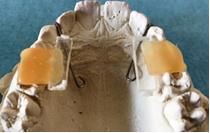
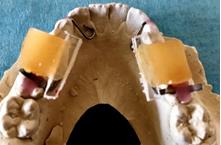
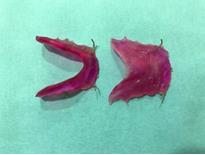
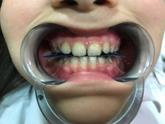
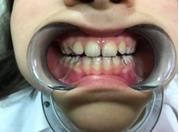
Afterwards to the adjustment in mouth of the device, the girl was again referred next week and next month to verify the correct functioning of the device. Three months later, the patient was seen again and the parents were asked about the existence or not of changes, saying that the girl no longer clenchened so much at night, which allowed them to sleep.
Discussion
Bruxism is an oral health problem that affects children population. Its diagnosis is based on the history that the patient or his parents relates in relation to nocturnal mouth noises and dental morphological modifications. It´s a pathological habit of interest because of the problems that it can cause in the future, hence the importance of the search for a therapeutic adapted to the needs of the child [13]. There is little literature about this topic and basically the treatment that usually applies is psychological, widening of the airways, the use of occlusal splints, occlusal adjustment for a short period of time until symptomatology improves or disappears [11]. In order to not interfere with the child´s growth we have opted to apply another therapy, with which we have obtained good results and there has not been a temporal limitation of it, retiring the device at the moment that all the clinical signs and symptoms of bruxism disappear.
Conclusion
Neuro occlusal rehabilitation is a functional technique that, although unknown, has a wide range of possibilities in Pediatric Dentistry, not only as an alternative to the early treatment of bruxism, but also in the treatment of malocclusions in temporal dentition and mixed first phase. The main advantage of this kind of device is that it does not interfere with the child's oral development. The experience of this case shows that selective carving in temporal dentition and the use of Planas [12] devices can be effective in the treatment of bruxism in children.
References
-
Lobbezoo F, Ahlberg J, Glaros A, Kato T, Koyano K, et al. (2013) Bruxism defined and graded: an international consensus. J Oral Rehabil 40(1): 2-4.
-
Seraj B, Shahrabi M, Ghadimi S, Ahmadi R, Nikfarjam J, et al. (2010) The Prevalence of Bruxism and Correlated Factors in Children Referred to Dental Schools of Tehran, Based on Parents' Report. Iran J Pediatr 20(2): 174-180.
-
Firmani M, Reyes M, Becerra N, Flores G, Weitzman M, et al. (2015) Sleep bruxism in children and adolescents. Rev Chil Pediatr 86(5): 373-379.
-
Motta LJ, Martins MD, Fernandes KPS, Mesquita‐Ferrari RA, Biasotto‐Gonzalez DA, et al. (2011) Craniocervical posture and bruxism in children. Physiother Res Int 16(1): 57-61.
-
Castelo PM, Souza Barbosa Tde, Pereira LJ, Fonseca FL, Gavião MB (2012) Awakening salivary cortisol levels of children with sleep bruxism. Clin Biochem 45(9): 651-654.
-
Machado E, Dal-Fabbro C, Cunali PA, Kaizer OB (2014) Prevalence of sleep bruxism in children: A systematic review. Dental press journal of orthodontics 19(6): 54-61.
-
Seraj B, Ahmadi R, Mirkarimi M, Ghadimi S, Beheshti M (2009) Temporomandibular disorders and parafunctional habits in children and adolescence: A review. Journal of Dentistry of Tehran University of Medical Sciences 6(1): 37-45.
-
Okeson JP (1996) Orofacial pain: guidelines for assessment, diagnosis, and management: Quintessence Publishing (IL).
-
Ferreira-Bacci AdV, Cardoso CLC, Díaz-Serrano KV (2012) Behavioral problems and emotional stress in children with bruxism. Braz Dent J 23(3): 246-251.
-
De Luca Canto G, Singh V, Conti P, Dick BD, Gozal D, et al. (2015) Association between sleep bruxism and psychosocial factors in children and adolescents: a systematic review. Clin Pediatr (Phila) 2015 54(5): 469-478.
-
Restrepo C, Gómez S, Manrique R (2009) Treatment of bruxism in children: a systematic review. Quintessence Int 40(10): 849-855.
-
Planas P (1987) Rehabilitación neuro-oclusal (RNO): Salvat Editores.
-
Azeredo L, Antunes A, Castilho T, Marinho M, Silva R, et al. (2015) Childhood bruxism: Related factors and impact on oral health-related quality of life Spec Care Dentist 36(1): 7-12.
- Diagnosis and Management of Mental Nerve Paresthesia Secondary to Apical Periodontitis of Mandibular Second Premolar: A CBCT Based Case Report
- A Randomized, Double Blinded Clinical Trial to Compare the Effect of Oral Premedication (Diclofenac Potassium or Dexamethasone) on Post-Operative Pain Following Pulpectomy
- Modified Lip Repositioning Technique for the Management of Excessive Gingival Display
- Integral Role of Non-Dental Providers and Fluoride Dissemination
- Root Canal Treatment Rate in Deciduous Teeth Among 6-Year- Olds in the Era of Discontinuing Water Fluoridation - Historical Cohort Study
- The Impact of the Notch1 on the Migratory Capacity and the Expression of E-Cadherin and CyclinD1 in Ameloblastoma Cells