
Antioxidant and Hepatoprotective Potentials of 22 Wild Mushrooms from the Western Highlands of Cameroon
Some fungi species thanks to their antioxidant activities have been found able to protect the liver against toxic substances. There is a lack of data on the antioxidant and the hepatoprotective potential of tropical Africa mushrooms. This study was to assess the antioxidant and protective effects of 22 wild mushrooms from the Noun Division in Cameroon against the hepatotoxicity induced by cisplatin in rat liver slices. Mushroom extracts were used for polyphenols, flavonoids, thiols and total amino acids content determinations and in vitro antioxidant properties assessment in comparison to that of vitamin C using 2,2-diphenyl- 1-picryl-hydrazyl (DPPH) radical scavenging, ferric reducing power (FRAP) and the superoxide dismutase-like (SOD-like) activity assays. The hepatoprotective capacity of the mushrooms extracts was evaluated by measuring their ability to inhibit the enzyme alanine aminotransferase (ALAT) leakage from rat liver slices and formation of malondialdehyde (MDA). As results, the species Afroboletus luteolus, Amanita rubescens, Ganoderma applanatum, Neonothopothanus hygrophanus, Termitomyces schimperi and Tylopilus sp. demonstrated the highest antioxidant activity. In addition to this activity, A. luteolus, A. rubescens, T. schimperi and Tylopilus sp. exhibited the greatest protection effect against cisplatine toxicity. This study shows that the studied wild mushroom species possess prominent antioxidant and hepatoprotective activities and, consumption could provide both nutritional and health benefits to the population promoting contribution of fungi in food security.
Introduction
Macro fungi especially Ascomycota and Basidiomycetes that produce fruiting bodies (ascocarps and basidiocarps respectively) have been used as food or medicines for centuries all over the world. As food, edible species are well appreciated for their taste and flavor and nutrient contents. Also, they are poor in calories and rich in proteins, fibers, carbohydrates, and vitamins like thiamin, riboflavin, ascorbic acid and minerals. These characteristics make them being considered as healthy food [1]. As medicines, many species have potential effects for treatment of cancer, diabetes, inflammation, heart ailments, high blood pressure, hepatic damage, constipation, renal failure and infectious diseases [2, 3]. This therapeutic potential of edible and medicinal mushrooms is due to their capacity to produce many active secondary metabolites such as tannins, alkaloids, flavonoids and phenolics known to have antioxidant effects [3]. There are about 2 000 species of edible mushroom with approximately 700 effectively having pharmacological activities among which 200 are hepatoprotective [4, 5, 6]. These statistics is mainly based on mushroom species from Asia, Europe and North America as mycological and ethno mycological studies are relatively recent in tropical Africa where many species are not yet documented.
In the central African area, nearly 300 species edible mushrooms are listed [7]. Also, many species effectively used in the traditional pharmacopeia have been mentioned in this area [8, 9, 10]. However, very few works have been performed to assess the pharmacological potential of these species especially in Cameroon. The pioneer work to valorize the medicinal potential of Cameroonian mushroom species include those of Mahamat O, et al. [11, 12] on the immunomodulatory and antibacterial activity of Termitomyces letestui (Pat.) Heim and T. clypeatus R. Heim. And that of Njouonkou AL, et al. [13] on the antioxidants of T. reticulates Van der Westh. & Eicker.
As it has been shown that some mushroom species have Hepatoprotective potentials thanks to their antioxidant content, we suspect that some local tropical African, especially Cameroon may also have such potentials. Hence, the purpose of the present study is to screen in vitro antioxidant and hepatoprotective potentials of some mushroom species of the Noun division in Cameroon against cisplatin-induced hepatotoxicity.
Material and Methods
Sample Collection and Extracts Preparation
Fruits bodies of 22 mushrooms including ectomycorrhizal and saprotrophic species were collected from savanna and gallery forest dominated by Uapaca guineensis Mull. Arg. in the Noun division mainly in Mamarom, Mamevoue and the Malap Reserve Forest. These samples were identified base on their morphology at the Laboratory of Biological Sciences of the University of Bamenda using documentations on tropical African mushrooms [7, 14]. After collection, samples of each specie were washed separately using tap water, minced, dried at 42°C using in fruit dryer (until constant weight), powdered and extracted with water or methanol. The aqueous extract was prepared by mixing 10 g of fine powder of each specie with distilled water sufficient for 100 mL, boiled for 30 minutes, centrifuged (1620g, 15min, 4°C) after cooling and the supernatant stored at -20°C until use. The methanolic extract was prepared according to Sharma SK, et al [15].
Amino Acids and Antioxidant Compounds Content Determination
Total amino acids content was quantitatively determined according to Yemm EW, et al. [16] and the concentration expressed in mg equivalence of glycine/g extract (mgEG/g extract). Cystein and other components with thiol (-SH) group were assayed as described by Ellman GL, et al. [17] and the concentration expressed in mg equivalence of cysteine/g extract (mgEC/g extract). Estimation of total phenolic compounds was performed using Folin-Ciocalteu method, according to the procedure described by Dhar P, et al. [18]. For total flavonoids, Aluminuim chloride (AlCl3) method was used and the concentration expressed in mg equivalence of gallic acid/g extract (mgEGA/g extract)/ quercetin equivalent/g extract (mg EQ/g extract).
Antioxidant Properties Determination
These properties were determined by measuring the ability of the extracts to scavenge the 2,2-diphenyl-1-picryl- hydrazyl (DPPH°) radical, reduce potassium ferricyanide and inhibit auto-oxidation of pyrogallol as described by Njouonkou AL, et al. [13].
Hepatoprotective Potential Evaluation
The hepatotoxic model based on rat liver slices according to Wormser U, et al. [19] modified by Njayou FN, et al. [20] was used with cisplatin as hepatotoxin.
Preparation of Rat Liver Slices and Incubation Time Determination
A rat was anesthetized with ketamine, quickly dissected and the liver excised, washed in phosphate buffered saline (PBS; pH7.4; 0.1 M), wrung out using filter paper. Then, the organ was cut into fine pieces, 120 mg of tissue put into the tubes containing 5 mL of phosphate buffered saline (PBS), which were centrifuged (1620g, 5 min, 4°C) and the supernatant removed. This washing was repeated once more and liver slices suspended in 2 mL of Dubelcco’s Modified Eagle’s Medium (DMEM) medium were incubated (37°C; 5% CO2; 24 h). The aliquots (200 µL) of the incubation medium were sampled at 0, 4, 8, 12, 16 and 24h incubation times. At the end, the liver slices were crushed, centrifuged (1620g, 5min, 4°C) and the total supernatant collected, kept on ice along with the samples and used for the assay of the activity of the enzyme alanine aminotransferase (ALAT) following colorimetric method of Reitman S, et al. [21]. The absorbance read against the blank at 505 nm were recorded, the percentage of ALAT leakage (% ALT leakage) calculated and the incubation time obtained from the graph % ALT leakage against incubation times plotted.
Determination of Toxic Concentration 50 (CT50) of Cisplatin
The liver slices suspended in DMEM medium were intoxicated with cisplatin diluted in 0.9% NaCl (w/v) at different final concentrations of 0.01; 0.1; 1 and 10 µg/ mL. In the control tube, 0.9% NaCl was put. The whole was homogenized and incubated (37°C; 5% CO2) for the predetermined time. At the end of the incubation, 200 µL of culture medium were sampled from each tube and the liver slices were crushed, centrifuged (1620g, 5min, 4°C) and supernatants collected for ALAT activity assay. % ALT leakage was calculated and the CT50 obtained from the graph % ALT leakage against the logarithm of the concentration of cisplatin.
Hepatoprotective Effect Assessment
Four series of tubes containing rat liver slices were used: the negative control treated with 0.9% NaCl, the intoxicated control treated with cisplatin at predetermined CT50, the test tubes and the positive control pretreated with mushroom extract and silymarin at final concentration of 100 µg/mL respectively, for 30 min before being intoxicated with cisplatin for 30 min. Tubes were then incubated (37°C, 5% CO2) for the predetermined incubation time, sampled, homogenate prepared, centrifuged (1620g, 5min, 4°C) and the supernatant collected for ALAT activity assessment and malondialdehyde (MDA) according to Wilbur KM, et al. [22] for hepatoprotective percentage calculation.
Statistical Analysis
The experiments were carried out in triplicated and the results presented as mean ± standard deviation. The statistical analysis was carried out using GRAPHPAD PRISM 5.03 software. Comparisons between the standard and control series were made by one-way analysis of variances (ANOVA). For the series showing a significant difference between the variances, the means were compared by the turkey test. The probability p<0.05 was considered as significant.
Results
Amino Acids and Antioxidant Compounds Content
Amino acids, polyphenols, flavonoids, and thiol compounds were determined at variable levels in mushroom extracts (Table 1). The total amino acids content varies from 0.770 mg GlyE/g extract in Lentinus squarrosulus to 26.338 mg GlyE/g extract in Chamaemyces fracidus. That of thiols coumpounds from 0.020 mg CysE/g extract in Ganoderma applanatum to 1.758mg CysE/g extract in T. aurantiacus. The flavonoid content was ranged from 0.357 mg GAE/g extract in Lactifluus longipes to 12.376 mg GAE/g extract in Tylopilus sp.. The highest polyphenols content was obtained in Afroboletus luteolus (235.984 mgQE/g extract) followed by Lactifluus rubroviolascens, and Ganoderma applanatum with 82.954 mg QE/g extract and 59.848mg QE/g extract, respectively. In general, for all Termitomyces, the lowest polyphenols content was 28.030mg QE/g extract in T. aurantiacus.
Antioxidant Properties of the Mushroom Extracts
All tested species exhibited antiradical and superoxide dismutase inhibition of pyrogallol autoxidation (SOD-like activity) and ferric reducing antioxidant power (FRAP) at variable levels compare to vitamin C used as a reference antioxidant.
| Polyphenols (mg QE/g extract) | Flavonoids (mg GAE/g extract) | Total amino acids mg GlyE/g extract | Thiols (mg CysE/g extract) | |
|---|---|---|---|---|
| Afroboletus luteolus (Heinem.) Pegler & T.W.K. Young | 235.98 ± 0.54 | 3.04 ± 0.15 | 1.07 ± 0.12 | 0.38 ± 0.04 |
| Amanita rubescens Pers. | 23.11 ± 2.68 | 1.19 ± 0.15 | 11.95 ± 1.70 | 0.05 ± 0.01 |
| Chamaemyces fracidus (Fr.) Donk | 4.942 ± 0.535 | 1.14 ± 0.10 | 26.34 ± 2.36 | 0.89 ± 0.01 |
| Ganoderma applanatum (Pers.) Pat. | 59.85 ± 2.14 | 2.04 ± 0.25 | 1.71 ± 0.06 | 0.02 ± 0.01 |
| Gymnopilus zenkeri (Henn.) Sing. | 21.97 ± 3.21 | 3.86 ± 0.10 | 5.35 ± 1.70 | 0.12 ± 0.01 |
| Lactifluus gymnocarpus (Heim ex Sing.) Verbeken | 46.59 ± 0.54 | 1.76 ± 1.31 | 2.40 ± 0.91 | 0.45 ± 0.01 |
| Lactifluus longipes (Verbeken) Verbeken | 6.82 ± 3.21 | 0.36 ± 0.00 | 2.76 ± 0.33 | 1.07 ± 0.03 |
| Lactifluus persicinus Delgat & De Crop | 23.86 ± 8.04 | 2.36 ± 0.61 | 6.85 ± 1.15 | 0.45 ± 0.01 |
| Lactifluus rubroviolascens (Heim) Verbeken | 82.95 ± 0.55 | 2.89 ± 0.25 | 13.39 ± 0.67 | 0.52 ± 0.06 |
| Lentinus cladopus Lev. | 47.35 ± 0.54 | 1.21 ± 0.10 | 7.52 ± 0.33 | 0.35 ± 0.02 |
| Lentinus squarrosulus Mont. | 6.06 ± 1.07 | 1.14 ± 0.00 | 0.77 ± 0.12 | 0.26 ± 0.04 |
| Neonothopanus hygrophanus (Mont.) De Kesel & Degr. | 43.94 ± 5.34 | 4.36 ± 0.10 | 1.84 ± 0.12 | 0.62 ±0.07 |
| Pleurotus pulmonarius (Fr.) Quel. | 19.70 ± 2.14 | 0.79 ± 0.30 | 10.06 ± 0.55 | 0.22 ± 0.00 |
| Russula meleagris Heim | 21.97 ± 3.21 | 2.21 ± 0.30 | 1.41 ± 0.12 | 0.74 ± 0.03 |
| Schizophyllum commune Fr. | 48.86 ±1.61 | 3.96 ± 0.35 | 2.85 ± 0.58 | 0.27 ± 0.04 |
| Termitomyces aurantiacus (Heim) Heim | 28.03 ± 5.36 | 0.82 ± 0.15 | 17.24 ± 2.15 | 1.76 ± 0.01 |
| Termitomyces clypeatus Heim | 36.36 ± 3.21 | 1.79 ± 0.10 | 19.08 ± 1.36 | 0.68 ± 0.04 |
| Termitomyces letestui (Pat.) Heim | 43.94 ± 0.00 | 0.43 ± 0.00 | 19.42 ± 0.09 | 0.48 ±0.09 |
| Termitomyces mboudaena Mossebo | 50.00 ± 7.45 | 9.32 ± 0.45 | 17.52 ± 1.51 | 0.74 ± 0.05 |
| Termitomyces schimperi (Pat.) Heim | 37.88 ± 3.21 | 8.61 ± 0.51 | 20.75 ± 0.27 | 0.75 ± 0.02 |
| Termitomyces umkowaan (Cooke & M.assee) Reid. | 51.89 ± 5.89 | 2.93 ± 0.61 | 21.84 ± 0.18 | 0.54 ± 0.04 |
| Tylopilus sp. | 87.88 ± 0.06 | 5.38 ± 0.97 | 12.38 ± 0.97 | 1.34 ± 0.06 |
Table 1: Total amino acids and antioxidant contents of studied mushroom species. QE: Quercetin Equivalent; GAE: Gallic Acid Equiv
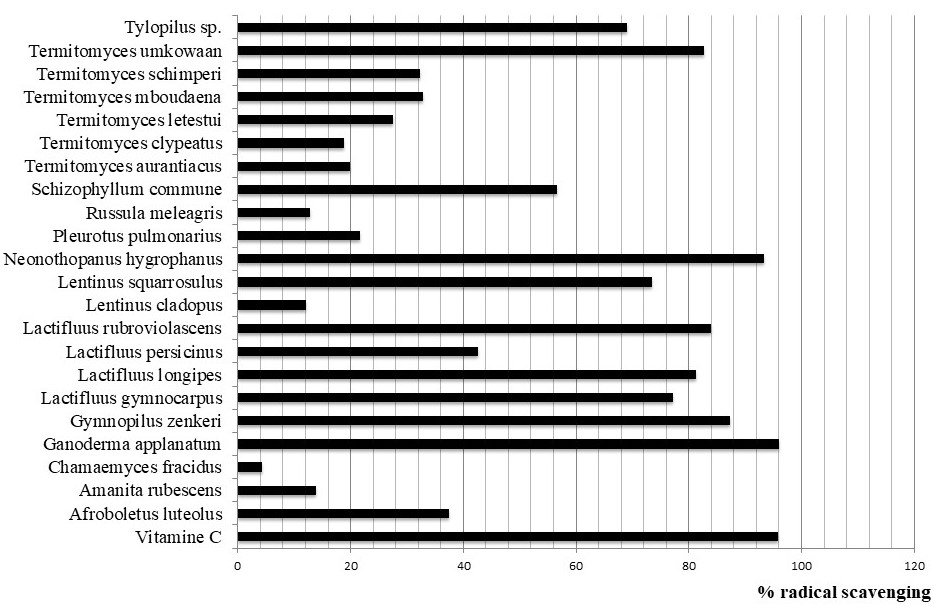
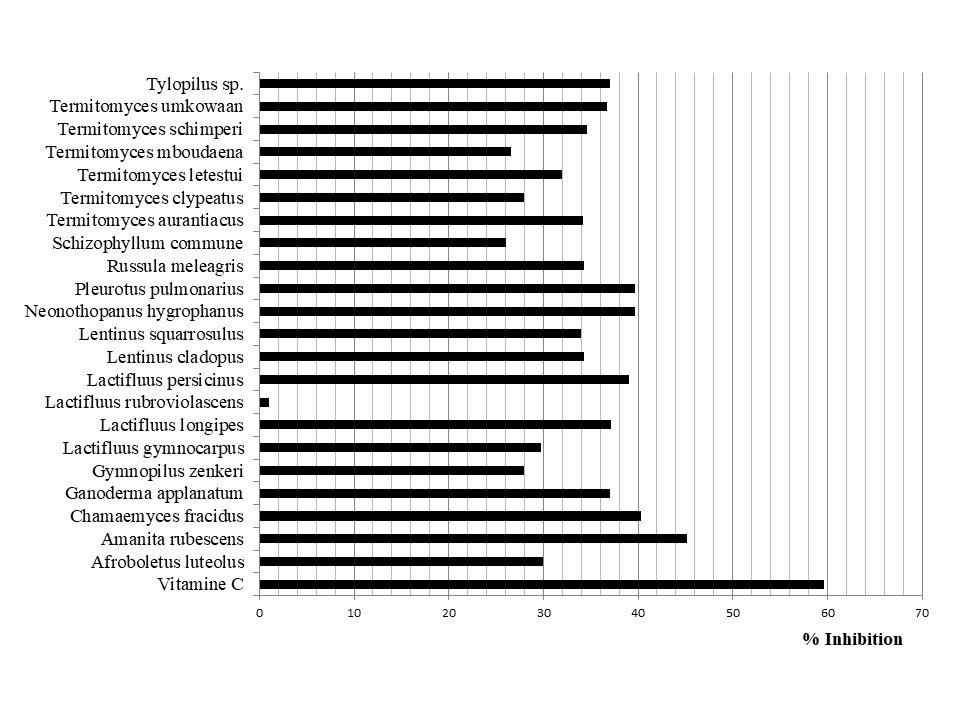
Table 1: Total amino acids and antioxidant contents of studied mushroom species. QE: Quercetin Equivalent; GAE: Gallic Acid Equivalent; GlyE: Glycin Equivalent; CysE: Cysteine Equivalent The scavenging effect of the DPPH radical varied from 4.28 in Chamaemyces fracidus to 96.06% in Ganoderma applanatum (Figure 1) the effect of this latter species being more or less equal to that of vitamin C. The percentage inhibition of the auto-oxidation of pyrogallol by the different extracts and vitamin C is presented in the (Figure 2). All the species had low inhibition percentage compared to vitamine C that yield (59.60%). The highest inhibition was obtained with A. rubescens (45.16%) and the lowest with L.
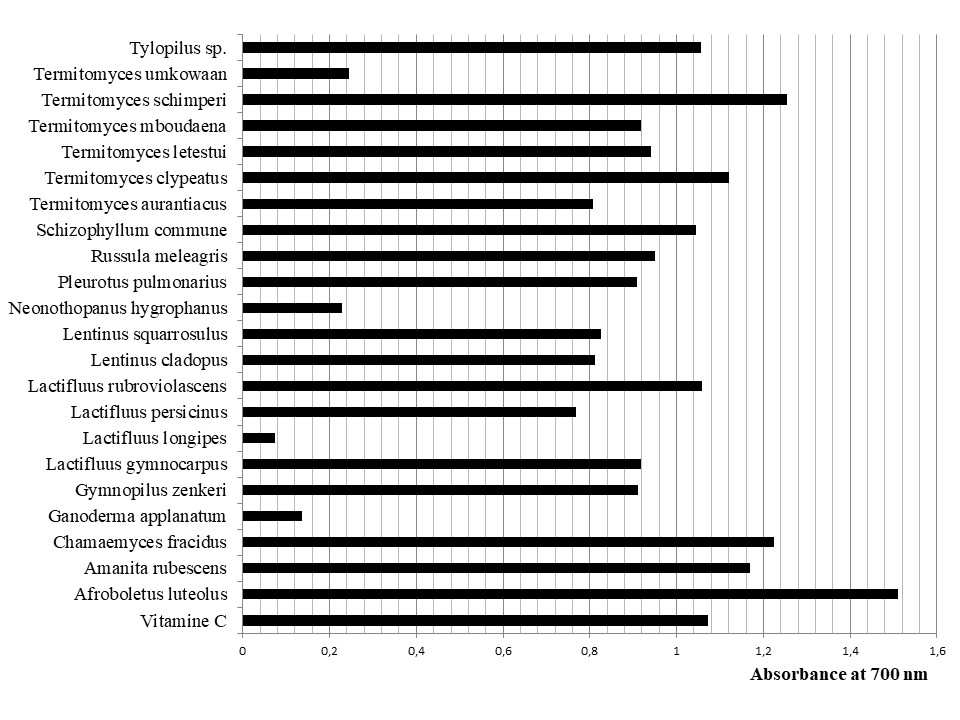
persicinus (39.10%). Regarding the FRAP property shown in the (Figure 3), Lactifluus longipes and Afroboletus luteolus had respectively the lowest and the highest activities 0.074 and 1.711. Moreover, Afroboletus luteolus (1.51 ± 0.08), Termitomyces shimperi (1.25 ± 0.01), Chamaemyces fracidus. (1.22 ± 0.01), Amanita rubescens (1.17 ± 0.01), Termitomyces clypeatus (1.12 ± 0.02) showed an activity greater than that of vitamin C (1.072 ± 0.00).
Hepatoprotective Effect of the Mushroom Extracts
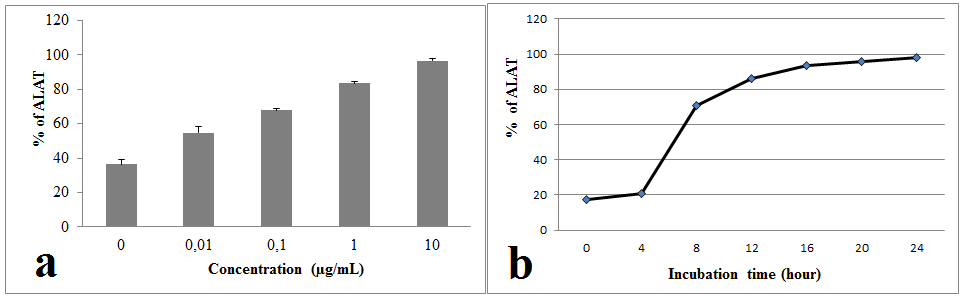
Incubation Time of Rat Liver Slices and the Toxic Concentration 50 (CT50) of Cisplatin As shown in the figure 4a, the percentage of ALAT leakage increased with the concentration of cisplatin and the CT50 was estimated at 1.135 ± 0.135µg/mL. Therefore, the lower limit of the interval (1µg /mL) was used for the study. Similarly, in the (Figure 4b), the percentage of ALAT leakage from rat liver slices in the absence of cisplatin was only 20.70 ± 0.03 not significantly different from the initial activity (17.06%) after 4 hours of incubation. Therefore, the chosen incubation time of the rat liver slices was 4 hours.
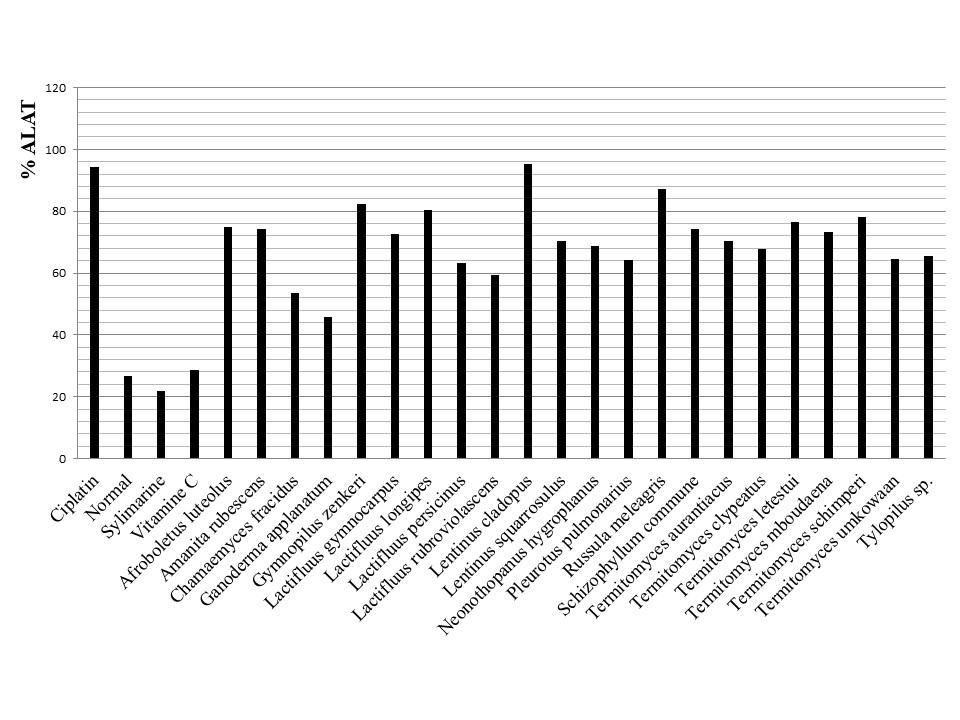
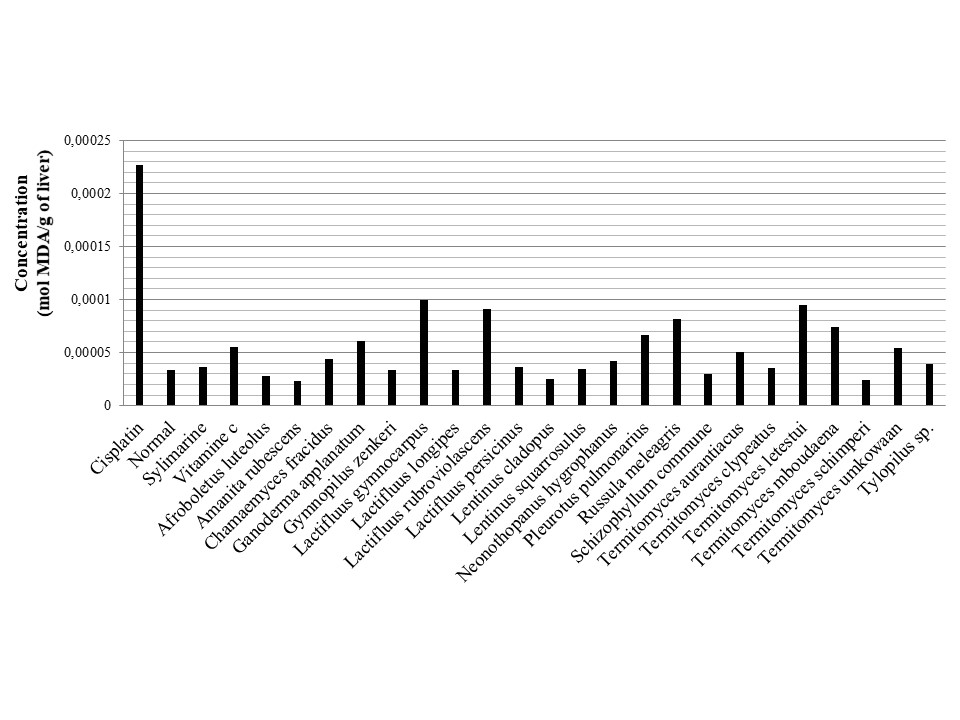
Effect of pretreatment with the mushroom extracts on hepatotoxicity induced by cisplatin in rat liver slices The mushroom extracts significantly inhibited cisplatin hepatotoxicity. This inhibition activity is presented on (Figures 5 & 6) showing effect on ALAT leakage and MDA formation respectively. Compared to the intoxicated and untreated (81.73 % and 22.71 E-05 mol MDA/g of liver) rat liver slices, apart from Lactifluus gymnocarpus, the pretreatment significantly (p<0.05) inhibited ALAT leakage and MDA formation in the incubation medium. Interestingly, inhibition effect observed with Termitomyces schimperi (23.43% and 2.40 E-05 mol MDA/g of liver), Amanita rubescens (23.92% and 2.34 E-05 mol MDA/g of liver), Gymnopilus zenkeri (26,82% and 3.33 E-05 mol MDA/g of liver), Afroboletus luteolus (26.42% and 2.80 E-05 mol MDA/g of liver) and Lentinus cladopus (25.10% and 2.54 E-05 mol MDA/g of liver) was very close to that of non- intoxicated (normal) liver slices (23.90% and 3.39 E-05 mol MDA/g of liver).
Discussion
There are many evidence that antioxidants protect against chronic diseases and aging by inhibiting or reducing the oxidation processes that produce free radicals [23]. So, the antioxidant properties of mushroom species from Cameroon were investigated. At the best of our knowledge, this is the first time the investigation is carried out. Some of the studied species including A. rubescens, G. applanatum, L. squarrosulus, L. cladopus, T. clypeatus, T. letestui, T. schimperi, P. pulmonarus and S. commune had been screened elsewhere for their antioxidant potential [15, 24, 25, 26, 27, 28]. The amino acids contribute and display potent antioxidant activities in edible mushrooms [29, 30]. The range of amino acids contents felt more or less within the intervals found for many mushroom species [30] but were far lower than that of some Korean cultivated species [31]. C. fracidus has the highest amount (26.34 ± 2.36 GlyE/g extract) of amino acids contents. Globally, the Termitomyces had high content of amino acid compared to that of T. reticulatus obtained by Njouonkou A-L, et al. [13] but lower than in T. eurrhizus, T. globulus and T. microcarpus [30, 32]. The total amino acids contents of mushrooms species may be ranked as follow: C. fracidus> T. umkowaani>T. schimperi>T. letestui>T. clypeatus>T. mboudaena>T. aurantiacus>L. rubroviolascens>T. sp.>A. rubescens>P. pulmonarius>L. cladopus>L. pirsicinus>G. zenkeri>S. commune>L. longipes>L. gymnocarpus>G. applanatum>N. hygrophanus>R. meleagris>A. luteolus> L. squarrosulus.
Thiols include many organic compounds that contain a sulphydryl group (-SH) [33]. Recorded 7 thiol compounds in Pleurotus ostreatus. These compounds are important antioxidant and those present on protein are considered as major plasma antioxidants in vivo [24, 34]. T. aurantiacus was found to possess the highest thiols content (1.76 ± 0.01 mg CysE/g extract). Even though the presence of thiols metabolites may lower the food quality of mushrooms, they increased the medicinal value [33].
Phenolic compounds have antioxidant properties due to their ability to act as hydrogen donor and metal chelating [35]. Flavonoids are phenolic compounds widely distributed in plants and create a significant portion of the human diet [36]. The extract of A. luteolus has the highest amount of the total phenolic content (235.98 ± 0.54 mg QE/g extract) while that of T. mboudaena has the highest amount of the total flavonoid content (9.32 ± 0.45 mg GAE/g extract). However, flavonoid content in wild Ganoderma applanatum was higher than that obtained by Moyen UPK, et al. [37] from cultivated samples of G. lucidum (Curt: Fr.) P. Karst. in Bangladesh, but lower than the one found by Siangu BN, et al. [38] from Kenya. The total phenolic contents of mushroom species were found in the following order: A. luteolus> L. rubroviolascens> G. applanatum> T. umkowaani> T. mboudaena> S. commune> L. cladopus> L. gymnocarpus> T. letestui> N. hygrophanus> T. schimperi> T. clypeatus> T. aurantiacus> > L. pirsicinus A. rubescens> G. zenkeri > R. meleagris> P. pulmonarius > L. longipes> L. squarrosulus > C. fracidus> Tylopilus sp.
The antioxidant properties of the mushroom extracts were studied assaying their DPPH free radical scavenging, Ferric reducing antioxidant power and SOD-like activity effects. All the extracts demonstrated antiradicalar activity scavenging DPPH and the activity of G. applanatum was comparable to that of vitamine C. In the literature, methanolic extract of Suillus luteus and Boletus edulis was also found to be as antiradicalar as vitamine C [39]. Species of the genus Ganoderma especially G. lucidum are known as a popular medicinal mushroom efficient against a variety of human disease, containing several bioactive compounds and having noticeable antioxidant activities [26, 40, 41]. Hence, these results are a support of the universally recognized bioactive richness and pharmacological potential of Ganoderma. Globally, other saprotrophic species including G. zenkeri, L. squarrosulus, N. hygrophanus, P. pulmonarius and S. commune presented great antioxidant activities. Apart from G. zenkeri and N. hygrophanus that the antioxidant potentials seem to be investigated for the first time, the three others are largely consumed as food or medicine especially in the tropical area and have been noticed to have antioxidant [27, 42, 43, 44].
In this study, all extract of termite associated mushrooms have shown effective antioxidant activities in accordance with previous results concerning Termitomyces [13, 43, 45, 46, 47]. Among investigated members of this genus, T. umkowaan had the highest DPPH and SOD-like activities while T. schimperi had the strongest FRAP activity. According to Karun NC, et al. [46] T. umkowaan from India possesses high nutritional value including antioxidant components with bioactive principles that are not affected by pressure cooking. Also, Abena AA , et al. [48] found that steamed extract of T. schimperi from Ghana had the strongest scavenger of DPPH than the unprocessed extract.
Ectomycorrhizal species investigated also shown important antioxidant activities. In this group, L. longipes had the highest percentage of DPPH scavenging activity, A. luteolus the best FRAP and A. rubescens the greatest percentage of SOD-like activity. Most of the species of this trophic group investigated in the present study have never been studied for their antioxidant activity properties. But, many studies demonstrated these potential for some members of the family of Boletaceae and Russulaceae [27, 39, 43, 49]. A. rubescens in this study had considerable antioxidant capacity; this was also observed by other researchers Mbayo MK, et al. & Kosanic M, et al. [50, 51] Liver damage is a largely spread health problem involving oxidative stress resulting into the liver injury associated with dysfunction of hepatocytes due to exposure to drug or viruses [6]. When membrane integrity of the liver cells is lost upon oxidation of membrane polyunsaturated lipid, cellular malondialdehyde (MDA) content increases and the cytoplasmic enzymes such as ALAT are released into the blood stream or the incubation medium [6]. Hence, ALAT activity and MDA content of the culture medium are important markers of hepatotoxicity. Thus, a substance preventing ALAT leakage and membrane lipid peroxidation is Hepatoprotective.
In the present study, intoxication of rat liver slices with cisplatin induced damage evidenced by the high level of ALAT and MDA in the culture medium. Pretreatment of liver slices by mushroom extracts lowered the level of both markers supporting the hepatoprotective activity of the tested species against cisplatin induced-damage. Several studies have demonstrated the hepatoprotective effect of mushrooms against toxicity induced by various toxins including carbon tetrachloride, cisplatin, deltametrin, ethanol, paracetamol and thioacetamide [6, 52].
Concerning especially mushroom Hepatoprotection against cisplatin, [52] found that extract of G. lucidum suppressed cisplatin-induced hepatic injury in rats. In the present study, the hepatoprotective effect of G. applanatum was also observed and species that shown the highest protective effect were A. rubescens, T. schimperi, L. cladopus and A. luteolus. The two first species have been mentioned in many studies for their antioxidant activities as well as bioactive potentials [24, 27, 50, 53].
A. Luteolus is an ectomycorrhizal species growing in association with many tropical African autotrophic trees; it is eaten by some local communities but with lesser interest [45]. Up to date, there is a scarcity of data on its biochemical and biotechnological potentials; this study reveals that it possesses nutritional and pharmacological interest. L. cladopus a wood-associated edible species is also of poor interest in many area; however, it possesses putative antimicrobial potentials [54]. Also, the present study highlights antioxidant activities and the liver protection capacity of this species.
Globally, the hepatoprotective potentials of the studied species could be assigned to the antioxidant activities of various species; however, as some species with low antioxidant activities shown high liver protection effect, it can be suggested that other bioactive compounds are responsible of these activities.
Liver damage is a largely spread health problem involving oxidative stress resulting into the liver injury associated with dysfunction of hepatocytes due to exposure to drug or viruses [6]. When membrane integrity of the liver cells is lost upon oxidation of membrane polyunsaturated lipid, cellular malondialdehyde (MDA) content increases and the cytoplasmic enzymes such as ALAT are released into the blood stream or the incubation medium [6]. Hence, ALAT activity and MDA content of the culture medium are important markers of hepatotoxicity. Thus, a substance preventing ALAT leakage and membrane lipid peroxidation is hepatoprotective.
In the present study, intoxication of rat liver slices with cisplatin induced damage evidenced by the high level of ALAT and MDA in the culture medium. Pretreatment of liver slices by mushroom extracts lowered the level of both markers supporting the hepatoprotective activity of the tested species against cisplatin induced-damage. Several studies have demonstrated the hepatoprotective effect of mushrooms against toxicity induced by various toxins including carbon tetrachloride, cisplatin, deltametrin, ethanol, paracetamol and thioacetamide [6, 52].
Concerning especially mushroom Hepatoprotection against cisplatin, Hassan HM, et al. [52] found that extract of G. lucidum suppressed cisplatin-induced hepatic injury in rats. In the present study, the hepatoprotective effect of G. applanatum was also observed and species that shown the highest protective effect were A. rubescens, T. schimperi, L. cladopus and A. luteolus. The two first species have been mentioned in many studies for their antioxidant activities as well as bioactive potentials [24, 27, 50, 53].
A. Luteolus is an ectomycorrhizal species growing in association with many tropical African autotrophic trees; it is eaten by some local communities but with lesser interest [45]. Up to date, there is a scarcity of data on its biochemical and biotechnological potentials; this study reveals that it possesses nutritional and pharmacological interest. L. cladopus a wood-associated edible species is also of poor interest in many area; however, it possesses putative antimicrobial potentials [54]. Also, the present study highlights antioxidant activities and the liver protection capacity of this species.
Globally, the Hepatoprotective potentials of the studied species could be assigned to the antioxidant activities of various species; however, as some species with low antioxidant activities shown high liver protection effect, it can be suggested that other bioactive compounds are responsible of these activities.
Conclusion
This study shows that the selected edible and medicinal wild mushroom species possess prominent antioxidant activities. Species including A. luteolus, A. rubescens, G. applanatum, N. hygrophanus, T. schimperi and Tylopilus sp. exhibited the highest antioxidant activity. In addition to this activity, A. luteolus, A. rubescens, T. schimperi and Tylopilus sp. demonstrated the greatest protection effect against cisplatin toxicity. Hence, it appears that consumption of these wild mushrooms could provide both nutritional and health benefits to the population. It is then interesting to extend the study to other species in order to promote contribution of mushrooms in food security in tropical Africa especially in Cameroon.
References
-
Raghavendra VB, Venkitasamy C, Pan Z, Nayak C (2018) Functional Foods from Mushroom In Gupta VK, et al. (Eds.), Microbial Functional Foods and Nutraceuticals. USA, Wiley & Sons Ltd. 65-91.
-
Acharya K, Chatterjee S, Biswas G, Chatterjee A, Saha G (2012) Hepatoprotective Effect of a Wild Edible Mushroom On Carbon Tetrachloride-Induced Hepatotoxicity in Mice. Int J Pharm 4(3): 285-288.
-
Gargano ML, Van Griensven LJLD, Isikhuemhen OS, Lindequist U, Venturella G, et al. (2017) Medicinal Mushrooms: Valuable Biological Resources of High Exploitation Potential. Plant Bio systems 151(3): 548- 565.
-
Wasser SP, Weis (1999) Medicinal properties of substances occurring in higher Basidiomycetes mushrooms: current perspectives (review). International Journal of Medicinal Mushrooms 1(1): 31-62.
-
Karaman M, Vesic M, Stahl M, Novakovic M, Janjic L, et al. (2011) Bioactive properties of wild-growing mushroom species Ganoderma applanatum (Pers.) Pat. From Fruska Gora Forest (Serbia). Ethno med Ther Valid 32: 361-377.
-
Soares AA, Sa Nakanishi AB, Bracht A, Da Costa SMG, Koehnlein EA, et al. (2013) Hepatoprotective Effects of Mushrooms. Molecules 18(7): 7609-7630.
-
Eyi-Ndong HC, Degreef J, De Kessel A (Eds.), (2011) Champignons comestibles des forêts denses d’Afrique central Taxonomies et Identification. Abc Taxa 10, Meise, Belgique.
-
Kouagou YR, Tsopmbeng NG, Njouonkou AL (2016) Diversite et ethnomycologie des champignons sauvages utilizes dans la prefecture de la Lobaye en Republique Centrafricaine. Bull Sci Env Biodivers 1: 30-38.
-
Njouonkou AL, De Crop E, Mbenmoun MA, Kinge TR, Biye EH, et al. (2016) Diversity of Edible and Medicinal Mushrooms Used in the Noun Division of the West Region of Cameroon. Int J Med Mushrooms 18(5): 387-396.
-
Eyi Ndong HC, Eyi SM, Njouonkou AL, JTC Codjia (2017) Contribution a la connaissance des champignons medicinaux du Gabon Identification et importance locale. Bulletin Societe Mycologique de France 133(1-2): 159-176.
-
Mahamat O, Njouonkou AL, Tume C, Abamukong AM, Kamanyi A (2018) Assessment of antimicrobial and immunomodulatory activities of termite associated fungi, Termitomyces clypeatus R. Heim (Lyophyllaceae, Basidiomycetes). Clinical Phytoscience 4(28).
-
Mahamat O, Tume C, Njouonkou AL, Amadoh J, Nfor N, et al. (2018) Screening of the immunomodulatory and antibacterial activity of Termitomyces letestui (Pat.) Heim (Lyophyllaceae), an edible mushroom from Cameroon. J. Basic and Clinical Physio & Pharmacol. 29(6): 645-650.
-
Njouonkou AL, Ekobo SAB, Njayou FN, Raspe O, Moundipa PF, et al. (2020) Occurrence, use and antioxidant potential of Termitomyces reticulates in Cameroon. Czech Mycol 72(1): 19-32.
-
Pegler DN (Eds.), (1977) A preliminary agaric flora of East Africa Kew Bull. Additional Series 6, Kew, England.
-
Sharma SK, Atri NS (2014) Nutraceuticals composition of wild species of genus Lentinus from Northern India. CREAM 4(1): 11-32.
-
Yemm EW, Cocking EC (1955) the determination of amino acids with ninhydrin. The analyst 80: 209-213.
-
Ellman GL (1959) Plasma antioxidants. Arch. Bioch Bioph 82: 70-77.
-
Dhar P, Tayade AB, Saurav SK, Chaurasia OP, Ravi B, et al. (2012) Antioxidant capacities and phytochemical composition of Hippophaer hamnoides L. leaves methanol and aqueous extracts from trans-Himalaya. Medi Plants Res 6(47): 5780-5788.
-
Wormser U, Zakine BS, Stivelband E, Eisen O, Nyska A (1990) The liver slice system: A rapid in vitro acute toxicity test for primary screening of hepatotoxic agents. Toxicology in vitro 4(6): 783-789.
-
Njayou FN, Moundipa FP, Tchana NA, Tchounguep F (2004) Ant hepatotoxic potential of three Bamoun folk medicinal plants. Cameroonian J Bioch sciences 4: 425- 330.
-
Reitman S, Frankel S (1957) A colorimetric method for determination of serum glutamic oxaloacetic acid, glutamic pyruvic transaminases. American Journal of Clinical Pathology 28: 56-58.
-
Wilbur KM, Bernhein F, Shapiro OW (1949) the thiobarbituric acid reagent as a test for the oxidation of unsatured fatty acid by various agents. Archives of Biochemistry and Biophysics 24(2): 305-313.
-
Tabet N (2006) Acetyl cholinesterase inhibitors for Alzheimer’s disease: Anti-inflammatories in acetylcholine clothing. Age Ageing 35(4): 336-338.
-
Sushila D, Adhiraj D, Mayukh CSK, Borthakur SK (2014) Chemical Composition and Antioxidant Activity of Schizophyllum Commune. International Journal of Pharmaceutical Sciences 27(2): 173-177.
-
Kozarski M, Klaus A, Jakovljevic D, Todorovic N, Vunduk J, et al. (2015) Antioxidants of Edible Mushrooms. Molecules 20(10): 19489-19525.
-
Kouassi KA, Kouadio EJP, Konan KH, Due AE, Kouame LP (2016) Phenolic compounds, organic acid and antioxidant activity of Lactarius subsericatus, Cantharellus platyphyllus and Amanita rubescens, three edible ectomycorrhizal mushrooms from center of Côte d’Ivoire. Eurasian Journal of Analytical Chemistry 11(3): 127-139.
-
Obodai M, Narh MDL, Fernandes A, Kortei NK, Dzomeku M, et al. (2017) Chemical Characterization and Antioxidant Potential of Wild Ganoderma Species from Ghana. Molecules 22(2). 196.
-
Sanchez C (2017) Reactive oxygen species and antioxidant properties from mushrooms. Synthetic and Systems Biotechnology 2(1): 13-22.
-
Fu HY, Shieh DE, Ho CT (2002) Antioxidant and free radical scavenging activities of edible mushrooms. J Food Lipid 9(1): 35-43.
-
Sun LP, Bao CJ, Chang WD, Zhuang YL (2017) Preparation, characterization, antioxidant and antiglycation activities of the novel polysaccharides from the pileus of Dictyophora rubrovol-vata. Int J Food Sci Technol 52(1): 161-170.
-
Kim MY, Chung LM, Lee SJ, Ahn JK, Kim EH, et al. (2009) Comparison of free amino acid, carbohydrates concentrations in Korean edible and medicinal mushrooms. Food Chem. 113(2): 386-393.
-
Nakalembe I, Kabasa JD (2013) Fatty and amino acids composition of selected wild edible mushrooms of bun Yoro sub-region, Uganda. Afr. J. Food Agri Nutr Dev 13(1): 7225-7241.
-
Mohamed EM, Farghaly FA (2014) Bioactive Compounds of Fresh and Dried Pleurotus ostreatus Mushroom. International Journal of Biotechnology for Wellness Industries 3: 4-14.
-
Prakash D, Gupta KR (2009) The Antioxidant Phytochemicals of Nutraceuticals Importance. The Open Nutraceuticals J 2: 20-35.
-
Pereira DM, Valentao P, Pereira JA, Andrade PD (2009) Phenolics: From chemistry to biology. Molecules 14(6): 2202-2211.
-
Jovanovic SC, Steenken S, Tosic M, Marjanovic B, Simic MG (1994) Flavonoids as antioxidants. J Am Chem Soc. 116: 4846-4851.
-
Moyen UPK, Rabiul IT, Mohammad KIS, Tasnia R, Rumana P, et al. (2019) Effect of Solvents on Phytochemicals Content and Antioxidant Activity of Ganoderma lucidum. The Open Microbiology Journal 13: 10-15.
-
Siangu BN, Sauda S, John MK, Njue WM (2019) Antioxidant activity, total phenolic and flavonoid content of selected Kenyan medicinal plants, sea algae and medicinal wild mushrooms. Afri J Pure and Applied Chemistry 13(3): 43-48.
-
Keles A, Koca I, Genccelep H (2011) Antioxidant Properties of Wild Edible Mushrooms. J Food Process Technol 2(6):130.
-
Cor D, Knez Z, Hrncic MK (2018) Antitumor, Antimicrobial, Antioxidant and Antiacetylcholinesterase Effect of Ganoderma Lucidum Terpenoids and Polysaccharides: a Review. Molecules 23(3): 649.
-
Saltarelli R, Palma F, Gioacchini AM, Calcabrini C, Mancini U, et al. (2019) Phytochemical composition, antioxidant and ant proliferative activities and effects on nuclear DNA of ethanolic extract from an Italian mycelial isolate of Ganoderma lucidum. J Ethnopharmacol 231: 464-473.
-
Okoro IO (2011) Antioxidant activities and phenolic contents of three mushroom species, Lentinus squarrosulus Mont., Volvariella esculenta (Massee) Singer and Pleurocybella porrigens (Pers.) Singer. Inter J Nutrition and Metabolism 4(5): 72-76.
-
Podkowa A, Kryczyk Poprawa A, Opoka W, Muszy Nska B (2021) Culinary-medicinal mushrooms: a review of organic compounds and bio elements with antioxidant activity. European Food Research and Technology 247: 513-533.
-
Fasoranti OF, Ogidi CO, Oyetayo VO (2019) Nutrient contents and antioxidant properties of Pleurotus spp. cultivated on substrate fortified with selenium. CREAM 9(1): 66-76.
-
Tibuhwa DD (2013) Wild mushroom--an underutilized healthy food resource and income generator: experience from Tanzania rural areas. Jo Ethnobiol Ethnomed 9(49).
-
Karun NC, Sridhar KR, Niveditha VR, Ghate SD (2016) Bioactive potential of two wild edible mushrooms of the Western Ghats of India In: Watson RR, et al. (Eds.), Fruits, vegetables, and herbs: bioactive voods in health promotion. Oxford Elsevier 344-362.
-
Mitra P, Mandal NC, Acharya K (2015) Polyphenolic extract of Termitomyces heimii: antioxidant activity and phytochemical constituents. Journal fur Verbraucherschutz und Lebensmittelsicherheit 11: 25- 31.
-
Abena AA, Essel EA, Agbenorhevi JK, Oduro IN (2018) Effect of Processing Methods on the Proximate Composition, Total Phenols and Antioxidant Properties of Two Mushroom Varieties. Am J Food and Nutrition 6(2): 55-59.
-
Kostic M, Ivanov M, Fernandes A, Pinela J, Calhelha RC, et al. (2020) Antioxidant Extracts of Three Russula Genus Species Express Diverse Biological Activity. Molecules 25(18): 4336.
-
Mbayo MK, Kalonda EM, Tshisand PT, Tatchoua O, Kamulete S, et al. (2015) Criblage chimique de quelques champignons du Katanga (RDC) et evaluation de leur activite biologique. Int J Innovation and Applied Studies 10(1): 435-449.
-
Kosanic M, Rankovic B (2016) Bioactivity of Edible Mushrooms. Zbornik radova 21(24): 645-650.
-
Hassan HM, Al Wahaibi LH, Elmorsy MA, Mahran YF (2020) Suppression of Cisplatin-Induced Hepatic Injury in Rats Through Alarmin High-Mobility Group Box- 1 Pathway by Ganoderma lucidum: Theoretical and Experimental Study. Drug Design, Development and Therapy 14: 2335-2353.
-
Sajon SR, Sana S, Rana S, Rahman SMR, Nishi ZM (2019) Mushrooms: Natural factory of anti-oxidant, anti-inflammatory, analgesic and nutrition. Journal of Pharmacognosy and Phytochemistry 7(1): 464-475.
-
Sharma K, Gautam N (2015) Chemical, Bioactive, and Antioxidant Potential of Twenty Wild Culinary Mushroom Species. Biomed Research International.
- Diversity of Candida sp and Antifungal Susceptibility Patterns in Digestive Candidiasis among People Living with HIV in CHU of Libreville, Gabon
- Vulvovaginal candidiasis: Retrospective study (2019- 2021) at the Centre Hospitalier National de Pikine, Suburban Dakar, Senegal
- Identification of Environmental Fungal Species in Clinical Services of University Hospital of Angre, Abidjan (Cote d’Ivoire)
- New Location of some Gasteroid Basidiomycetes in Western Kazakhstan
- Evaluation of Various Extracellular Enzymes of Ectomycorrhizal Mushrooms
- Morphology and Phylogeny of Lactarius Wallichianae sp. nov and Xerula magnispora sp. nov. from India