
Antioxidant Potential of Ferulic Acid on the Freezability of Bull Semen
Ejaculates were collected twice a week from the bulls, via an artificial vagina, during two weeks. The suitable ejaculates obtained for sperm density (≥ 1.4 × 10⁹ spermatozoa / ml) and for motility (≥ 75%) were used for dilution and freezing of semen. A Tris-based extender (Tris 297.58mM, citric acid 96.32mM, fructose 82.66mM, egg yolk 15% (v/v), glycerol 5% (v/v), gentamicin 0.1 ml / 100ml, pH 6.8-7.0) was used as the base extender (cryopreservation diluent). Pooled ejaculate was split into 2 equal aliquots and diluted at 32 °C with base extender containing ferulic acid (100 μM) and no antioxidant (control), respectively. Each aliquot was diluted to a final semen concentration of approximately 1.2×10⁸ sperm/ml (single step dilution), in 15-ml polypropylene centrifuge tubes. After dilution, semen samples were kept at room temperature for 10 minutes then, the diluted semen samples were aspirated into 0.25 ml French straws, sealed with polyvinyl alcohol powder and equilibrated at 5 °C for 3 h. After equilibration, the straws were frozen in liquid nitrogen vapour (4 cm above the liquid nitrogen, ~-100oC) for 10 min and then plunged into liquid nitrogen for storage, -196oC. In the study, sperm samples containing antioxidant and non-antioxidant were evaluated for spermatozoa motility and membrane integrity after freezing / thawing. In the present study, no statistically significant difference was found between the control and experimental groups for motility and membrane integrity after freeze-thawing. The application consisted of 4 replications.
Introductıon
The easy lipid peroxidation of frozen / thawed spermatozoa and the fact that the membranes contain a large amount of lipids led to the investigation of effective antioxidant systems against peroxidative damage and sperm dysfunction [1, 2].
In addition, low fertility rates obtained from frozen- thawed bull semen led the researchers to work on this subject and led to the finding the different diluent formulations and the addition of various hormones, vitamins, sugars, and antioxidants to the diluent [3, 4].
Various cryoprotective agents incorporated in the diluent adversely affect the fertility of the frozen-thawed semen. Therefore, it is suggested that reducing the ratio of cryoprotectants with contraceptive properties such as glycerol depends on the antioxidants to be included in the diluent [5, 6]. The antioxidant, antiatherogenic, neuroprotective and radioprotective effects of ferulic acid, also known as coniferic acid, have been reported [7, 8].
Materials and Methods
Semen samples from three bulls (two years of age) were used in this study. The bulls were maintained under uniform optimal nutritional conditions. Ejaculates were collected twice a week from the bulls, via an artificial vagina, during two weeks. The suitable ejaculates obtained for sperm density (≥ 1.4 × 10⁹ spermatozoa / ml) and for motility (≥ 75%) were used for dilution and freezing of semen.
A Tris-based extender (Tris 297.58mM, citric acid 96.32mM, fructose 82.66mM, egg yolk 15% (v/v), glycerol 5% (v/v), gentamicin 0.1 ml / 100ml, pH 6.8-7.0) was used as the base extender (cryopreservation diluent). Pooled ejaculate was split into 2 equal aliquots and diluted at 32 °C with base extender containing ferulic acid (100 μM) and no antioxidant (control), respectively. Each aliquot was diluted to a final semen concentration of approximately 1.2×10⁸ sperm/ml (single step dilution), in 15-ml polypropylene centrifuge tubes. After dilution, semen samples were kept at room temperature for 10 minutes then, the diluted semen samples were aspirated into 0.25 ml French straws, sealed with polyvinyl alcohol powder and equilibrated at 5°C for 3 h. After equilibration, the straws were frozen in liquid nitrogen vapour (4 cm above the liquid nitrogen) for 10 min and then plunged into liquid nitrogen for storage. The application consisted of 4 replications.
In the study, sperm samples containing antioxidant and non-antioxidant were evaluated for spermatozoa motility and membrane integrity after freezing / thawing.
Subjective motility was assessed using a phase- contrast microscope (magnification × 100), with a warm stage maintained at 37°C. A wet mount was made using a 5μl drop of semen placed directly on a microscope slide and covered by a cover slip. Sperm motility estimations were performed in three different microscopic fields for each semen sample. The mean of the three successive estimations was recorded as the final motility score.
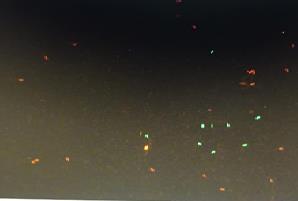
Assessment of the integrity of sperm plasma membrane was performed by staining with the Sperm Viability Kit (SYBR-14/PI Molecular Probe: L 7011 Invitrogen). This staining protocol was modified from Garner and Johnson [9]. A working solution of SYBR-14 was diluted 1:10 with DMSO (Appli-chem A3006), then divided into equal aliquots (30μl) after filtering through a 0.22 μm Millipore Millex GV filter, and stored at –20 °C. Propidium iodide (PI) was dissolved in distilled water at 2 mg/ml, divided into equal aliquots (30 μl) after filtering through a 0.22 μm Millipore Millex GV filter, and stored at –20 °C. The thawed straw was diluted 1:3 with Tris stock solution without glycerol and egg yolk, and then 30 μl of diluted semen was mixed with 6 μl of SYBR- 14 and 2.5 μl of PI. The sample was gently mixed, incubated at 37 °C in the dark for 20 min, and then 10 μl of Hancock solution was added to stop sperm movement. A wet mount was made using a 2.5 μl drop of sample placed directly on a microscope slide and covered by a cover slip. At least 200 spermatozoa were examined at 400 × magnification under a fluorescence microscope (Leica DM 3000 Microsystems GmbH, Ernst-Leitz-Strase, Wetzlar, Germany; excitation at 450–490 nm, emission at 520 nm) to assess the sperm membrane integrity. Sperm displaying green–red or red colourisation were considered as having damaged membranes, while green colourisation was considered as indicating an intact membrane.
Statistical Analysis
The results were analyzed by independent t test (SPSS, version 20) and the possible statistical status was determined.
Results
The statistical table of spermatological parameters after freezing-thawing in the control and experimental groups is presented below.
Open Access Journal of Veterinary Science & Research
| Motility (%) | Membran Integrity (%) | |||||
|---|---|---|---|---|---|---|
| Control | 50±6,1 | 62±2 | ||||
| Ferulic acid (100 μM ) | 48,75±7,2 | 58,25±3,5 |
Table 1: Spermatological parameters after freezing- thawing (x ± SEM).
When table 1 is examined, no statistical significance was found after freeze-thawing in terms of motility and membrane integrity values.
Discussion
Freezing of the sperm causes cold shock during the freezing process, damage due to phase change in membrane structures and oxidative stress. Developing oxidative stress and cytotoxic aldehydes (malondialdehyde etc.) cause damage to spermatozoon functions [10]. For this reason, cold shock damage in the environment can be minimized by adding some cryoprotective and antioxidative additives to semen diluents. The fact that antioxidant compounds also have cryoprotectant properties provides better results from semen frozen with these substances [11, 12].
In this research project, the effects of ferulic acid added to 100 μM diluent in terms of motility and membrane integrity as spermatological parameters after freezing- thawing process were investigated. Spermatozoon progression in the female genital canal depends on the whip movements of the tail and movement frequency [13]. Another factor regulating motility is cAMP. Increased concentration of cAMP increases protein kinase activation and as a result of this, axonem protein phosphorolized and it leads to increasing of spermatozoon motility and hyperactivity [14].
When the present study was evaluated separately for motility and membrane integrity after freeze-thawing, no statistically significant difference was found between the control and experimental groups.
Antioxidant, antiatherogenic, neuroprotective and radioprotective effects of ferulic acid have been reported [7, 8]. There are also studies showing the protective efficacy of ferulic acid on testes [15, 16]. However, the results obtained with ferulic acid (100 μM) after freezing- thawing with a mean of 48.75 ± 7.2 (%) motility - considering that the lower limit of 40% motility for valuable stud-can be evaluated positively in terms of reproduction [13].
On the other hand, after freeze-thawing process, ferulic acid (100 μM) with an average of 58.25 ± 3.5 (%) membrane integrity values corresponds to the membrane integrity values obtained after freeze-thawing with different antioxidants [17].
Conclusion
The findings obtained in spermatological parameters after freezing-thawing vary depending on the techniques used in dilution and freezing of semen, changes in solution time and temperature or depending on the person performing the analysis. In addition to all these, factors such as species, race, season and individual have important effects on spermatozoon motility and membrane integrity. In vitro examination parameters should be supported with in vitro / in vivo fertility parameters.
References
-
Alvarez JG, Storey BT (1983) Role of superoxide dismutase in protecting rabbit spermatozoa from O2 toxicity due to lipd peroxidation. Biology of Reproduction 28(5): 1129-1136.
-
Bilodeau JF, Chatterjee S, Sirard MA, Gagnon C (2000) Levels of antioxidant defenses are decreased in bovine spermatozoa after a cycle of freezing and thawing. Molecular Reproduction and Development 55(3): 282-288.
-
Gökçen H, Aştı RN, Çekgül E, Şener E (1985) Research on acrosome morphology and fertility in frozen ram Open Access Journal of Veterinary Science & Research semen by adding prostaglandin F2 alpha and Vit E. Journal of Veterinary Faculty 4: 1-3.
-
Chen Y, Foote RH, Brockett CC (1993) Effect of sucrose, trehalose, hypotaurine, taurine, and blood serum on survival of frozen bull sperm. Cryobiology 30(4): 423-431.
-
Purdy PH (2006) A review on goat sperm cryopreservation. Small Ruminat Research 63(3): 215-225.
-
Bucak MN, Ateşşahin A, Varışlı Ö, Yüce A, Tekin N, et al. (2007) The influence of trehalose, taurine, cysteamine and hyaluronan on ram semen: Microscopic and oxidative stress parameters after freeze-thawing process. Theriogenology 67(5): 1060- 1067.
-
Mamiya T, Kise M, Morikawa K (2008) Ferulic acid attenuated cognitive deficits and increase in carbonyl proteins induced by buthionine-sulfoximine in mice. Neuroscience Letters 430(2): 115-118.
-
Soobrattee MA, Neergheen VS, Luximon-Ramma A, Aruoma OI, Bahorun T (2005) Phenolics as potential antioxidant therapeutic agents: mechanisms and actions. Mutation Research: Fundamental and Molecular Mechanisms of Mutagenesis 579(1-2): 200- 213.
-
Garner DL, Johnson LA (1995) Viability assessment of mammalian sperm using SYBR-14 and propidium iodide. Biology of Reproduction 53(2): 276-284.
-
Aitken RJ (1994) Pathophysiology of human spermatozoa. Curr Opin Obstet Gynecol 6(2): 128- 135.
-
Alvarez JG, Touchstone JC, Blasco L, Storey BT (1987) Spontaneous lipid peroxidation and production of hydrogen peroxide and superoxide in human spermatozoa. Superoxide dismutase as major enzyme protectant against oxygen toxicity. J Androl 8(5): 338- 348.
-
Kobayashi T, Miyasaki T, Natori M, Nozawa S (1991) Protective role of superoxide dismutase in human sperm motility: Superoxide dismutase activity and lipid peroxidase in human seminal plasma and spermatozoa. Hum Reprod 6(7): 987-991.
-
Coyan K, Ataman MB, Kaya A, Karaca F (2002) Reproduction and Artificial Insemination in Domestic Animals, Selcuk University Faculty of Veterinary Medicine Publication Unit.
-
Vitt U (1997) Fruchtbarkeitskriterien aufgetauter Bullenspermien in vitro und die Beeinflussung dieser durch Seminalplasmaaustausch vor der Gefrierkonservierung Diss. Vet Med Freien Universitat Berlin.
-
Thyagaraju BM, Muralidhara (2008) Ferulic acid supplements abrogate oxidative impairments in liver and testis in the streptozotocin-diabetic rat. Zoolog Sci 25(8): 854-860.
-
Roy S, Metya SK, Rahaman N, Sannigrahi S, Ahmed F (2014) Ferulic acid in the treatment of post-diabetes testicular damage: relevance to the down regulation of apoptosis correlates with antioxidant status via modulation of TGF-β1, IL-1β and Akt signalling. Cell Biochem Funct 32(1): 115-24.
-
Omur AD, Coyan K (2016) Protective effects of the antioxidants curcumin, ellagic acid and methionine on motility, mitochondrial transmembrane potential, plasma membrane and acrosome integrity in freeze- thawed Merino ram sperm. Veterinarni Medicina 61(1): 10-16.
- The Digital Stethoscope: Harnessing AI in Veterinary Medicine Without Losing Our Healing Touch
- Meningoencephalomyelitis of Unknown Etiology: Short-Term Effect of Two Treatment Protocols on Cerebrospinal Fluid
- Safety and Efficacy of the HomeoPet Cough in Domestic Pets –A Clinical and Correction Analysis Based Upon User Response Survey
- Non Human Animals Responses to Social Loss
- Owner Reported Clinical Outcomes of a Homeopathic Proprietary Preparation for the Treatment of Upper Respiratory and Nasal Disorders in Companion Animals
- Effects and Diagnostic Approach of Ultrasound in Veterinary Practice: A Systematic Review