
A Brief Review of the Thermochemical Platform as a Promising Way to Produce Sustainable Liquid Biofuels in Biorefinery Concept
Energy need of the world is rapidly increasing due to the developing technology, industrialization, and population growth. Nowadays, the alternative resources have been very imported for chemical, fuel and energy production due to decrease in fossil fuel reserves and increase in prices of traditional fuels that supply a significant amount of world’s primary energy demand. Biomass-based sources are the most attractive feedstock among these alternative resources and have a high potential to produce power, valuable chemicals, biofuels, and biopolymers. Biomass can be converted into these products by thermochemical, biological or catalytic routes. Thermochemical processes arevery useful and promising way to obtain a wide range of value-added fine chemicals and biofuels from biomass. This review discusses key points of the thermochemical conversion methods and the biofuels obtained as a part of the biorefinery.
Introduction
The scientists have made many investigations on the replacing biomass resources with fossil fuels due to environmental, economic and political issues. The biomass and biomass-based waste resources are renewable, abundant, economic, easily accessible, sustainable, clean, and have the potential to replace oil in the production of liquid hydrocarbon fuels for the transportation sector with a zero-carbon footprint [1]. Today, lignocellulosic biomass can be converted by thermal, biological or catalytic routes to a broad range of value-added fine chemicals, biofuels and green polymeric materials via biorefinery concept. The biorefinery is analogous to today’s petroleum refinery and it works like a facility that defragments the conversion methods of biomass and equipment to obtain above-mentioned products from different kind of feedstock [2]. A simplified flow chart that compares these two different concepts was given in Figure 1. The biorefinery is not a single or fixed technology. It is collection of processes that utilize renewable grain, lignocellulosic or high moisture content biomass to produce a final product, or products, in a manner that is a no waste leaving behind, and by means of every component from the process is converted or used in a manner to add value, and therefore sustainability to the plant. Biomass can be converted into a great variety of energy and fuels by using different kind of chemical, biological and thermal techniques. The biorefinery concept basically consists of sugar and thermochemical platforms [3].
![Figure 1: The biorefinery is not a single or fixed technology. It is collection of processes that utilize renewable grain, lignocellulosic or high moisture content biomass to produce a final product, or products, in a manner that is a no waste leaving behind, and by means of every component from the process is converted or used in a manner to add value, and therefore sustainability to the plant. Biomass can be converted into a great variety of energy and fuels by using different kind of chemical, biological and thermal techniques. The biorefinery concept basically consists of sugar and thermochemical platforms [3].](/fulltextimages/1010/fig_1.png)
and fructose via hydrolysis reactions. Then, these sugar molecules are transformedto furfural and HMF in the presence of an acid catalyst using dehydration reactions. Finally, these intermediates are converted to liquid alkanes (C9-C15) by aldol-condensation over a solid base catalyst and hydrogenation over a metal-acid bifunctional catalyst [5]. The “thermochemical platform” aims to convert biomass to intermediates such as bio-oil, syngas, and bio- polyols. Liquid transport fuels, top value chemicals and environmental-friendly polymeric materials obtained via different liquefaction techniques. In this platform, for the production of liquid fuels from lignocellulosic biomass, the common practices consist of the removal of the extensive oxygen content from raw material for the purpose of the increasing the energy density and the molecular weight of the obtained hydrocarbons generating C–C bonds between the intermediate compounds. The procedure for reaching this target usually involves two principal stages. In the first stage, the lignocellulosic raw material converted into a gaseous or liquid phase that involves a diverse range of compound via partial reduction of oxygen. Then, in the second stage, these compounds are upgraded catalytically to the targeted hydrocarbons via controlled C–C coupling reactions and reduction of the remaining oxygen content [6].
Figure 2 presents the temperatures and pressures of the thermochemical methods mostly used for the conversion of petroleum and biomass based raw materials. Petroleum operations are generally carried out at raised high temperatures, and most of these operations are performed in the vapour phase. On the other hand, the thermochemical processing of biomass based raw materials are usually carried out at moderate temperatures, and these operations are predominantly performed in the liquid phase.
![Figure 2: Diagram of approximate reaction conditions for the catalytic processing of petroleum versus biomass [7].](/fulltextimages/1010/fig_2.jpeg)
Biofuels via Biorefinery
The biofuel is defined as the solid, liquid, or gaseous fuels that are overwhelmingly obtained from renewable biomass based raw materials. To eliminate the contradiction in terms, these fuels can be classified as first generation, second generation, third generation, and fourth generation depending on their production methods and feedstock. Some key information about these 4 different generations was briefly summarized in Table 1. The first generation biofuels such as biodiesel,
| Generation | Typical | Feedstock | Production/ | Catalyst/Enzyme/Microorganism | By-product/ Residue | ||||
|---|---|---|---|---|---|---|---|---|---|
| Biofuel | Conversion | ||||||||
| Example | Method | ||||||||
| First | Biodiesel | Vegetable oils (e.g. Rapeseed, Canola, Palm) | -Oil extraction - Transesterification | NaOH, KOH, Lipase | Glycerol, Grain pomace | ||||
| Bioethanol | Plants plenty in carbohydrates (e.g. Corn, Sugar Cane) | -Enzymatic hydrolysis - Saccharification - Fermentation | Amylase, Pullulanase, Glucoamylase, Yeast (Saccharomyces spp.), Bacteria (Zymomonas spp.), | Dried distiller’s grain with solubles (DDGS) | |||||
| Second | Bio-oil | Lignocellulosic biomass (e.g., Bagasse, Straw, Forest residues) | -Pyrolysis, -Catalytic upgrading | Zeolite, Ion-exchange resins, Aluminum silicate | Char, Non- condensable gases (e.g., CH , H ) 4 2 | ||||
| Gasoline, Diesel | Lignocellulosic biomass (e.g., Bagasse, Straw, Forest residues) | -Gasification (Syn- gas production), - Fischer-Tropsch (FT) synthesis | Iron catalysts, Cobalt catalysts | Ash, Particulates, Tar, Nitrogenand Sulphur compounds | |||||
| Liquid Hydrocarbons (Alkanes) | Aqueous sugars from acid hydrolyzed lignocellulosics | Aqueous phase processing: -Dehydration -Aldol Condensation -Hydrogenation | Mineral and organic acids Organocatalysts, Salts, Solid acids, Bases, Metal catalysts such as Pd, Pt, Ni, or Ru | Lignin derivatives | |||||
| Third | Biodiesel | Algae based oils | -Oil extraction - Transesterification | NaOH, KOH, Lipase | Glycerol, Protein, Animal feed | ||||
| Fourth | Bioethanol | Syngas | -Fermentation | Genetically engineered Clostridium spp. | Biomass | ||||
| Biobutanol | Sun light, CO , 2 H O 2 | -Photosynthesis | Genetically engineered S. elongatus | Biomass |
Table 1: The first generation biofuels such as biodiesel,
Table 1: Key information and examples for different generations of biofuel. With the exception of the production of first generation biofuels and conventional direct combustion of biomass, several thermochemical processes have been used for the production of second-generation biofuels such as bioalcohols, bio-oil, Fischer–Tropsch diesel and gasoline, biohydrogen and liquid alkanes. Second-generation technologies use a wide range of biomass resources, from agriculture to forestmostly non-food lignocellulosicssuch as straw, wood and energy crops. Moreover, during the production of second-generation biofuels a great majority of the raw material is converted to end-product with very low or zero residue which is a major problem for the first- generation biofuels [10]. The third generation biofuels involve the fuels that obtained from photosynthetic microorganisms such as microalgae which have any rivalry with edible oily seeds and agricultural energy crops. Microalgae have a substantial lipid content that encourages the researchers to utilize it as a biofuel feedstock. The high growth rate, short harvesting cycle and limited land necessity of microalgae were also another factors that made it an important candidate to meet the cumulative demand for biofuels. The algal biomass or lipids extracted can be converted into various types of renewable biofuels such as biodiesel via transesterification of algal oil along with bio-alcohols, bio-oils from via hydrolysis, fermentation, and liquefaction of whole algal biomass or extraction wastes [11, 12] . Recently, the desire to produce biofuels in a more efficient way with alternative raw materials brought about a new generation of biofuels. Scientists assume that the fourth generation biofuels (i.e. photobiological solar fuels, electrofuels) will generate a novel perspective in the field of biofuels. The idea grounds on a new concept called “synthetic biology”, in which biological systems can be genetically modified via metabolic engineering techniques in order to improve the productivity of the microorganisms. The genetically modified microbes are able to convert the solar energy to fourth generation biofuels using non-depletable feedstocks such as light, water, and CO2.A considerable amount of biofuel would be obtained via engineered photosynthetic microorganisms or synthetic “living factories” in near future. For example, the cyanobacteria have been genetically modified to produce a variety of biofuels and value added chemicals (e.g. H2, ethanol, isobutanol, isoprene, lactic acid). Transformation of various genes about fermentative metabolism pathways into cyanobacteria via metabolic engineering methods has made it possible to obtain biofuels directly from sun light and Calvin–Benson cycle intermediates [13, 14]. From a sustainability perspective, biofuels have both advantages (e.g., energy security, GHG reductions, and reduced air pollution) and disadvantages (e.g., intensive use of resources, monocultures, reduced biodiversity, and even higher GHGs through land use change). The sustainability of biofuel is based on three fundamental columns of economic, environmental and social sustainability in an integrated way to maximize benefits and minimize risks. Competitiveness of biofuels in the long terms will continue to depend on the economics of fossil based energy, the policy support environment, and the comparative incentives and disincentives to bolster the renewable versus fossil-energy resources. Several sustainability initiatives were described via standards, principals and criteria as a regulating tool for biofuel and raw material trading. Both national and international initiatives lead for a lot of biofuel-specific certification schemes either pointing all biofuels as an entirety or predisposed to specific biofuel feedstock (e.g., sugarcane, soybeans, palm oil). Although they have a variety, the most of the biofuel certification schemes pursued a ruler kind of governance: voluntary, industry-led, multi- stakeholder forum with some input from civil society [15]. Economic sustainability (viability) needs to long-term benefit, minimum rivalry with the food chain and competitiveness with fossil based fuels. The financial aspects of biofuels have been in part maintained via active policy consolidation standards (grants and mandates) which make it hard to estimate the long-term economic viability of biofuel systems current or future. On the other hand, economic sustainability ay conflict with ecological contemplations when the requirement to the augment returns on ventures directs seeking after escalated administration practices that could conflict with the economical utilization of assets, and intensify rivalry with food for gainful sources such as land. Consequently, extensive profitability gains are required to limit such clashes and conquer any hindrance amongst proficiency and long-run supportability [15]. Environmental sustainability appraisals for biofuels are tough due to the multifaceted nature and the assortment of the indicators, some of which are worldwide (e.g., GHG, renewable energy), while others are local or regional (water management, soil and source exhaustion, local contamination, etc.). Activities on maintainability by means of controls, mandates or private-drove certification plans have had no reasonable and quantifiable effect, aside from expanded consciousness of their significance, and this despite the various activities and the great sustainability debates. A key issue keeps on being an absence of agreement on estimation procedures (e.g., life-cycle assessments and the best approach to handle indirect land utilize change) [15]. The social effects of biofuel certification plans remain the weakest connection in most manageability activity up to this point. Most certification plans, scorecards, and regulations go on about social effects but only look to relieve few of the conspicuous negative effects (e.g., child labor, minimum wage, compensation for lost land and resources) or call for adherence to national laws or worldwide traditions. Besides, confirmation of how these measures are really actualized, or their effects on the ground, has been exceptionally restricted, and fruitful cases are uncommon. Unambiguously, the social sustainability measurement requires a subjective reconsider that goes beyond moderating couple of negative effects, yet rather incorporates participatory procedures that guarantee more extensive monetary advantages to negligible stakeholders and local groups, and therefore ensures more extensive acknowledgment and dependable stewardship of sources [15].
Thermochemical Processing of Biomass for the Production of Liquid Fuels
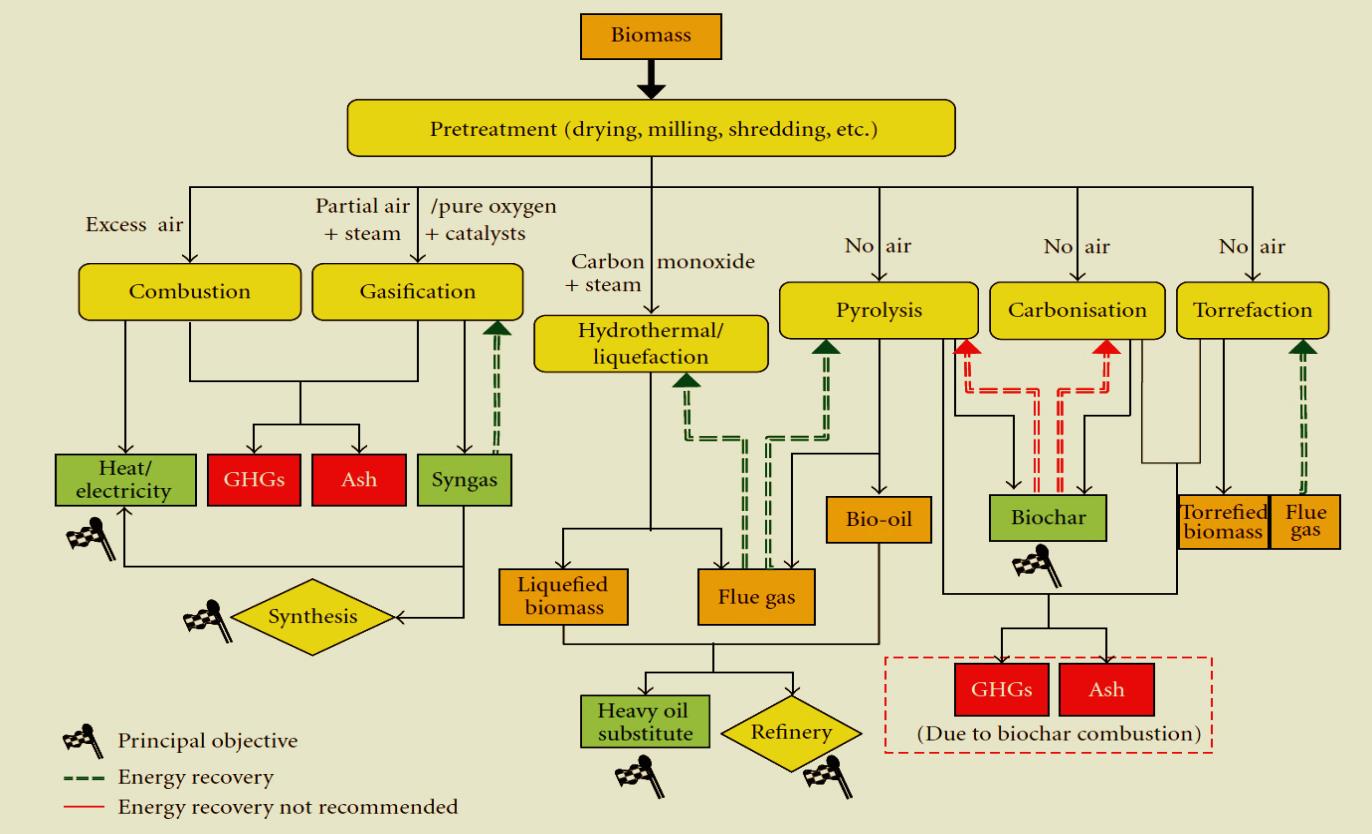
In the thermochemical conversion of biomass, the heat and sometimes catalysts are used to convert the bio- polymers of raw material into fuels, chemicals, heat or power. This process is carried out at elevated temperatures of several hundred (ºC) and in some cases over thousand (ºC). At these temperatures, the process functions very quickly and productively whether in the presence of a catalysts or not. Despite the thermochemical methods might be defined as insatiable in the speed of reaction and the diversity of structural compounds (e.g., cellulose, lignin, lipids, and proteins) that decomposed during the process, the functionality of the process is not always randomly. Because every compound has a unique degradation or destruction temperature. Thus, the process can be modified and arranged according to the properties of the targeted products. The cellulose is thermally decomposed mostly into levoglucosan which is an hydro sugar of the monosaccharide glucose without an alkali or alkaline earth metals. On the other hand, lignin cleavages to monomeric phenolic constituents under certain conditions. Thus, the thermochemical process provides great opportunities for rapid conversion of different raw materials and unique intermediate compounds, for the production of fuels and value added chemicals under specific thermal conditions [16]. These processes have usually higher yield than those of the biochemical processes such as fermentation due to lower reaction time and minimum waste/residue remained after the process. Sometimes a few seconds or minutes is enough to obtain the final product in thermochemical processes, while several days, weeks or even longer are needed for the biological processes. Moreover, thermochemical processes have an outstanding ability to destruct the most of the organic polymers. For instance, the lignin is a non-fermentable polymer and most of it remained due to uncompleted decomposition in biological methods whereas it can be completely converted important compounds such as guaiacol and syringolvia thermochemical techniques [17]. Figure 3 summarizes the thermochemical conversion pathways for the production of different kind of products. Every steps and method have unique process condition and output, which distinguishes each process sharply. The processes, which are directly or indirectly used for the production of liquid biofuels, was tried to outline below.
Indirect Liquid Biofuel Production from Gasified Biomass
This procedure involves the successive production of an intermediate called synthesis gas (i.e., syngas) and its conversion processes to liquid products. Syngas is produced via gasification of biomass in the presence of partial O2/air at a very high temperature more than 1000°C. The process consists of multiple phenomena: dehydration, pyrolysis, combustion, and reduction by a stream of reactions, such as partial oxidation, methanation, water-gas shift (WGS), Boudouard reaction etc. The composition of syngas comprises of varied compounds of water, carbon dioxide, methane, and a few impurities such as H2S, NH3, COS, HCl, or HCN [19]. These gas mixture can be converted hydrocarbons via Fisher- Tropsch synthesis, methanol via catalytic routes, and ethanol via thermochemical or biochemical routes and so on [20]. In Fisher-Tropsch reactions, Fe-, Co-, Ru- and Ni- based catalysts are mostly used at high temperature around 340°C or low temperature around 230°C to produce olefins and gasoline or diesel and linear waxes respectively [21]. The hydrogen and carbon monoxide in the syngas are reacted over a catalyst to yield a large variety of hydrocarbon in various lengths. Generally, iron or cobalt based catalysts are used. The reactions are carried out at a temperature range of 200-250˚C or 300-350˚C depending on the target product at a pressure range of 20-40 bar. The olefins for a lighter gasoline product are usually obtained over the iron catalysts at the higher temperature range. On the other hand, long-chained waxy compounds that can be cracked to diesel are generally generated over cobalt catalysts at the lower temperature range [22]. Another way to obtain liquid fuels from syngas is the anaerobic gas fermentation using metabolically engineered microorganism. The products such as ethanol, 2,3-butanedioland other liquid biofuels could be obtained via gas fermentation process that is a biochemical route uses CO and H2 as a feedstock. In this strategy, an anaerobic bacteria family Clostridium, which is an acetogenic organism, is fed with the syngas in a specific bioreactor along with a nutrient medium contains mostly water along with salts and metals. The bacteria use the CO as a carbon source and H2 as an energy source in the Wood-Ljungdahl pathway to generate biomass and ethanol. Other valuable chemicals such as acetate, acetone, isopropanol, and butanol can also be obtained by different biosynthetic pathways available or genetically transformed in various microorganism species [23].
Pyrolysis
The pyrolysis process can be defined as the thermal destruction of biomass in the absence of oxygen or air under inert atmosphere producing three main valuable product solid char, noncondensable gases and a liquid rich in oxygenated compounds called as bio-oil [24]. Depending on the process conditions, the proportion of these fractions varies significantly. Pyrolysis process usually operates in the range of 300-500 ˚C temperatures and sometimes goes up to 700˚C. During the pyrolysis operation, raw biomass undergoes a number of reactions including depolymerization, dehydration, decarboxylation, esterification, and C–C bond breaking which lead to the formation of reactive vapors [25]. The carbohydrate polymers partially depolymerize into smaller sugar units, after raw material is heated at low temperatures (<200°C) for prolonged reaction times (i.e., hours). The dehydration process occurs at higher temperatures about 300°C, generating unsaturated polymers and char. After it is heated at higher temperatures, an extended cracking of C-C and C-H bonds occurs, which gives varied C2-C4 oxygenates and over 700°C gas mixture contains CO, CO2, H2 and CH4 [26]. Bio-oil is a potential source of fuel and energy applications with a higher heating value of around 17 MJ/kg. Bio-oil can substitute for fuel oil or diesel in many stable applications including boilers, furnaces, engines, and turbines. However, the bio-oil has different chemical and physical properties combustion characteristics due to pyrolysis condition and raw material. That situation makesfull-scale processes more difficult. Nevertheless, compared to traditional biomass fuels such as black liquor or hog fuel, bio-oil has a higher energy density which presents a much better opportunity for high-efficiency energy production [27, 28]. Although pyrolysis bio-oil can be used directly in furnaces, boilers and turbines for heat and electricity production, its utilization as a transportation fuel has various lacks. Because some unfavorable properties of bio-oil such as high oxygen content, high water content, high density, high viscosity, high acidity, low heating value and incompatibility with oil derived hydrocarbons adversely affect fuel quality of bio-oil [29]. Therefore, an upgrading process such as catalytic cracking is required in order to obtain a suitable fuel before its application for transportation. Many techniques have been developed to upgrade the bio-oil to conventional hydrocarbons fuels such as gasoline, diesel, kerosene, LPG and methane [30].
Hydrothermal/Solvolytic Liquefaction
The high-pressure liquefaction is an elevated temperature process during which high molecular weight components of biomass is broken into smaller molecules in the hot compressed water or alcohols (e.g. ethanol), acetone and mixtures of the solvents like alcohol-water, water-phenol and dioxane-water co-solvents in the presence of the most commonly used alkaline catalysts (e.g. sodium carbonate, sodium hydroxide) and different catalysts (e.g. Raney nickel, iron (II) sulfate, hydrochloric acid) or without the presence of a catalyst with/without reducing gas such as H2 and CO [31, 32, 33, 34, 35, 36, 37, 38, 39, 40, 41]. Even though water is an inexpensive and extensive solvent for the high-pressure liquefaction, it has some technical problems because of its vapor-liquid critical point (374.3°C, 22.1 MPa). This high pressure and corrosive properties of water cause compelling process conditions. Moreover, water environment as a solvent for liquefaction of biomass, yields a liquid product which has higher oxygen content, therefore lower heating value. Hence, because of the critical values of organic solvents are lower than that of water, many scientists have used hot pressurized mixtures of water-solvent or only organic solvents as the reaction medium. It was reported organic solvents improve liquid product yield with lower oxygen content and mixed solvents show positive synergistic effects on liquefaction of biomass with the loweramount of the solid residue [42, 43]. Hydrothermal liquefaction is usually operated at a temperature range of 280-370°C and pressure range of 10 and 25 MPa. In this process, unlike the pyrolysis process, the raw material with high moisture can be directly converted into liquid products without an energy- consuming drying step [44]. Generally, feedstocks containing 80% water are subjected to subcritical temperatures with reactive hydrogen or carbon monoxide. The oxygen content of biomass is removed mainly as carbon dioxide (CO2) during the process. The liquid product obtained after the high-pressure liquefaction usually called as “bio-crude” and bio-crude is a mixture with a broad molecular weight distribution and consists of different kinds of molecules. It is not miscible with water, the heating value is in the range 30–36 MJ/kg, the atomic H/C ratio is 1.0–1.3 and average molecular weight is about 300 [45, 46]. Hydrothermal liquefaction process can be operated both at sub- and super-critical solvent conditions. The water behaves as a reactant and catalyst at the same time during the process. The water has a few very interesting properties such as low viscosity and high solubility of organic substances at the conditions near its critical point. This makes the sub-critical water an excellent medium for productive, homogeneous and rapid reactions [47]. Subcritical water acts very differently from water at room temperature and in some way from supercritical water. The dielectric constant decreases from 78 Fm-1 at 25°C and 0.1 MPa to 14.07 Fm-1 at 350°C and 20 MPa. Thus, the solubility of hydrophobic organic compounds, such as free fatty acids is increased [48]. Usually, liquefaction efficiency of the process is correspondingly relevant with the dielectric constant of the solvent [49]. The most attractive approach to such improvement was believed to direct high-pressure liquefaction of biomass by using supercritical solvents [50, 51]. The supercritical fluid environment has unmatched transport properties which are diffusivity similar to gases and density similar to liquids and has perfect complete miscibility with the liquid/vapor products. Also, materials which are insoluble in both liquid and gaseous state of the solvent can dissolve in the supercritical phase of solvent and supercritical solvents can ensure a single state medium for reactions that would otherwise happen in a multiphase medium under conventional conditions [52].
Conclusions
Nowadays alternative resources have been very imported for chemical, fuel and energy production due to economic and environmental issues about fossil fuels. Biomass based resources as an alternative feedstock have a great potential for the production of sustainable liquid biofuels. Because of abundance, easy availability, carbon neutrality, clean and eco-friendly features of biomass, there is a growing interest in “green production” by using biorefinery concept. Today, thermochemical conversion technology is seen the most feasible and practicable platform to convert biomass into value-added products via complex chemical and thermal reactions with a minimum residue. However, it still needs more research & development studies for the commercialization and competition with the petroleum refinery. Thus, a significant majority of the main transportation fuels would be obtained from biomass using this platform in the near future. This also will help overcome some critical concerns about land use, economic viability and long- term security of food based crops etc.
References
-
Zhou CH, Xia X, Lin CX, Tong DS, Beltramini J (2011) Catalytic conversion of lignocellulosic biomass to fine chemicals and fuels. Chem Soc Rev 40(11): 5588- 5617.
-
Smith W, Consultancy T (2007) Mapping the development of UK biorefinery complexes. UK National Non Food Crops Centre (NNFCC).
-
Xiu S, Zhang B, Shahbazi A (2011) Biorefinery processes for biomass conversion to liquid fuel. Marco Aurélio Dos Santos Bernardes (Ed.), Biofuel's Engineering Process Technology, InTech.
-
Crocker M, Crofcheck C (2006) Biomass conversion to liquid fuels and chemicals. Energeia 17(6): 1-6.
-
Dedsuksophon W, Champreda V, Laosiripojana N (2010) Study of liquid alkanes production from biomass-derived carbohydrates by aldol- condensation and hydrogenation processes. Engineering Journal 14(4): 1-10.
-
Alonso DM, Bond JQ, Dumesic JA (2010) Catalytic conversion of biomass to biofuels. Green Chem. 12(9): 1493-1513.
-
Chheda JN, Huber GW, Dumesic JA (2007) Liquid‐phase catalytic processing of biomass‐derived oxygenated hydrocarbons to fuels and chemicals. Angewandte Chemie International Edition 46(38): 7164-7183.
-
Scragg AH (2009) Biofuels: production, application and development, CABI.
-
Taylor G (2008) Biofuels and the biorefinery concept. Energy Policy 36(12): 4406-4409.
-
Goyal HB, Seal D, Saxena RC (2008) Bio-fuels from thermochemical conversion of renewable resources: a review. Renewable and Sustainable Energy Reviews 12: 504-517.
-
Behera S, Singh R, Arora R, Sharma NK, Shukla M, Kumar S (2014) Scope of algae as third generation biofuels. Front Bioeng Biotechnol 2(90): 1-13.
-
Demirbas MF (2011) Biofuels from algae for sustainable development. Appl Energ 88: 3473-3480.
-
Aro E-M (2016) From first generation biofuels to advanced solar biofuels. Ambio 45: 24-31.
-
Lü J, Sheahan C, Fu P (2011) Metabolic engineering of algae for fourth generation biofuels production. Energ Environ Sci 4: 2451-2466.
-
Elbehri A, Segerstedt A, Liu P (2013) Biofuels and the sustainability challenge: a global assessment of sustainability issues, trends and policies for biofuels and related feedstocks. Food and Agriculture Organization of the United Nations (FAO), Trade and Markets Division, Rome, Italy.
-
Brown RC (2011) Introduction to thermochemical processing of biomass into fuels, chemicals, and power. Wiley.
-
Zhang L, Xu CC, Champagne P (2010) Overview of recent advances in thermo-chemical conversion of biomass. Energ Convers Manage 51: 969-982.
-
Verma M, Godbout S, Brar S, Solomatnikova O, Lemay S, et al. (2012) Biofuels production from biomass by thermochemical conversion technologies. International Journal of Chemical Engineering: 1-18.
-
Kumar A, Jones DD, Hanna MA(2009) Thermochemical biomass gasification: a review of the current status of the technology. Energies 2(3): 556- 581.
-
Basu P (2010) Biomass gasification and pyrolysis: practical design and theory. 1st (Edn.) Academic Press.
-
Hu J, Yu F, Lu Y (2012) Application of Fischer– Tropsch synthesis in biomass to liquid conversion. Catalysts 2(2): 303-326.
-
Griffin DW, Schultz MA (2012) Fuel and chemical products from biomass syngas: a comparison of gas fermentation to thermochemical conversion routes. Environ Prog Sustain 31(2): 219-224.
-
Daniell J, Köpke M, Simpson SD (2012) Commercial biomass syngas fermentation. Energies 5(12): 5372- 5417.
-
Stevens C (2011) Thermochemical processing of biomass: conversion into fuels, chemicals and power. Brown RC, John Wiley & Sons.
-
Lange JP (2007) Lignocellulose conversion: an introduction to chemistry, process and economics. Biofuels, Bioproducts and Biorefining 1(1): 39-48.
-
Lomax J, Commandeur J, Arisz P, Boon J (1991) Characterisation of oligomers and sugar ring-cleavage products in the pyrolysate of cellulose. J Anal Appl Pyrol 19: 65-79.
-
Bridgwater AV (2012) Review of fast pyrolysis of biomass and product upgrading. Biomass and Bioenergy 38: 68-94.
-
Czernik S, Bridgwater AV (2004) Overview of applications of biomass fast pyrolysis oil. Energy Fuels 18(2): 590-598.
-
Li H-Y, Yan Y-J, Ren Z-W (2008) Online upgrading of organic vapors from the fast pyrolysis of biomass. Journal of Fuel Chemistry and Technology 36(6): 666- 671.
-
Bulushev DA, Ross JR (2011) Catalysis for conversion of biomass to fuels via pyrolysis and gasification: a review. Catal Today 171: 1-13.
-
Sun P, Heng M, Sun S, Chen J (2010) Direct liquefaction of paulownia in hot compressed water: Influence of catalysts. Energy 35(12): 5421-5429.
-
Xu J, Jiang J, Dai W, Xu Y(2012) Liquefaction of sawdust in hot compressed ethanol for the production of bio-oils. Process Saf Environ 90(4): 333-338.
-
Liu Z, Zhang F-S (2008) Effects of various solvents on the liquefaction of biomass to produce fuels and chemical feedstocks. Energ Convers Manage 49: 3498-3504.
-
Cheng S, D’cruz I, Wang M, Leitch M, Xu C (2010) Highly efficient liquefaction of woody biomass in hot- compressed alcohol−water co-solvents. Energy Fuel 24(9): 4659-4667.
-
Li H, Yuan X, Zeng G, Tong J, Yan Y, et al. (2009) Liquefaction of rice straw in sub-and supercritical 1, 4-dioxane–water mixture. Fuel Process Technol 90(5): 657-663.
-
Wang M, Xu CC, Leitch M (2009) Liquefaction of cornstalk in hot-compressed phenol–water medium to phenolic feedstock for the synthesis of phenol– formaldehyde resin. Bioresour Technol 100(7): 2305- 2307.
-
Mazaheri H, Lee KT, Bhatia S, Mohamed AR (2010) Subcritical water liquefaction of oil palm fruit press fiber for the production of bio-oil: effect of catalysts. Bioresource Technol 101(2): 745-751.
-
Boocock DGB, Mackay D, Lee P (1982) Wood liquefaction: extended batch reactions using Raney nickel catalyst. The Canadian Journal of Chemical Engineering 60(6): 802-808.
-
Xu C, Etcheverry T (2008) Hydro-liquefaction of woody biomass in sub-and super-critical ethanol with iron-based catalysts. Fuel 87(3): 335-345.
-
Yin S, Tan Z (2012) Hydrothermal liquefaction of cellulose to bio-oil under acidic, neutral and alkaline conditions. Appl Energ 92: 234-239.
-
Akhtar J, Amin NAS (2011) A review on process conditions for optimum bio-oil yield in hydrothermal liquefaction of biomass. Renewable and Sustainable Energy Reviews 15(3): 1615-1624.
-
Zou S, Wu Y, Yang M, Li C, Tong J (2009) Thermochemical catalytic liquefaction of the marine microalgae Dunaliella tertiolecta and characterization of bio-oils. Energy Fuels 23(7): 3753-3758.
-
Chen Y, Wu Y, Zhang P, Hua D, Yang M, et al. (2012) Direct liquefaction of Dunaliella tertiolecta for bio-oil in sub/supercritical ethanol–water. Bioresour Technol 124: 190-198.
-
Behrendt F, Neubauer Y, Oevermann M, Wilmes B, Zobel N (2008) Direct liquefaction of biomass. Chem Eng Technol 31(5): 667-677.
-
Balat M (2008) Mechanisms of thermochemical biomass conversion processes. Part 3: reactions of liquefaction. Energy Sources Part A 30: 649-659.
-
Demirbas A (2011) Competitive liquid biofuels from biomass. Appl Energ 88: 17-28.
-
Toor SS, Rosendahl L, Rudolf A (2011) Hydrothermal liquefaction of biomass: a review of subcritical water technologies. Energy 36(5): 2328-2342.
-
Uematsu M, Frank EU (1980) Static dielectric constant of water and steam. Journal of Physical and Chemical Reference Data 9(4): 1291-1306.
-
Liang L, Mao Z, Li Y, Wan C, Wang T, et al. (2007) Liquefaction of crop residues for polyol production. BioRes 1(2): 248-256.
-
Qian Y, Zuo C, Tan J, He J (2007) Structural analysis of bio-oils from sub-and supercritical water liquefaction of woody biomass. Energy 32(3): 196-202.
-
Yang Y, Gilbert A, Xu C (2009) Hydro-liquefaction of forestry waste in near-/super-critical methanol for the production of bio-crude. AIChE J 55: 807-819.
-
Zhao W, Xu WJ, Lu XJ, Sheng C, Zhong ST, et al. (2009) Preparation and property measurement of liquid fuel from supercritical ethanolysis of wheat stalk. Energy Fuels 24(1): 136-144.
- Nigeria’s Vulnerability in the Face of Global Energy Policy
- A Simulation Study of Investigation of Optimum Oil Production Performance by Applying Various Gas Injection Methods in Oil Reservoir
- Characterization of Permo-Triassic Reservoirs through Thermal Maturity Assessment of Westphalian Source Rocks in the Cheshire Basin
- Influence of Microwax on the Rheological and Thermal Behaviour of a Wax Crude Oil
- Real-Time Monitoring and Performance Optimization of Steam Injection in Heavy Oil Reservoirs Using Fiber Optic Sensing and Integrated Predictive Simulation Models
- Rapid On-Site Determination of the Total Petroleum Hydrocarbon Content of Soils by Handheld Fourier Transform Near-Infrared Spectroscopy: Development of a Global, Site- and Scanner- Independent Calibration Model