
Thermobarometric and Petrological Study of Mafic Xenolithes in Plagiogranites of the River Lotta Area of the Central Zone of the Lapland Granulite Belt
Thermobarometric data, fluid inclusions data and carbon isotope data confirm the conclusion that leucocratic garnet-bearing plagiogranites of the Lapland Granulite Belt (LGB) are associated with the anatexis of country khondalites during peak of metamorphism. The formation of these magmas occurred at depths of 25-30 km. During ascent, granitic magmas trapped mafic (two pyroxene-plagioclase) xenoliths at pressures 6.0-6.4 kbar. The interaction of predominantly aqueous-salt fluids issued by the magmas with the xenoliths during cooling at depths less than 20 km (5.0-5.5 kbar) led to their widespread amphibolization at temperatures of 740-780°C.
Introduction
When studying the Lapland Granulite Belt (LGB), plagiogranites attract special attention, since they are formed at high P-T parameters and often carry information about the "peak" conditions of metamorphic mineral formation. Garnet and orthopyroxene plagiogranites within the LGB are confined to its northeastern part, forming large areas in the area of the Lotta and Lovnaozera rivers and extending westward to the Ivalo and further northern Norway [1]. With such a wide distribution of these rocks, the question of the origin of their protoliths has been little studied and, is, to the end, not elucidated. Here are a few points of view about the genesis of plagiogranites. Taking into account the similarity of the chemical and mineral composition of garnet plagiogranites and acid granulites, a number of authors considered them to be coarse-grained varieties of granulites. In the future, the origin of synmetamorphic garnet- bearing plagiogranites (1.917-1.909 Ga) of the River Lotta Area of the Central Zone of the Lapland Granulite Belt is associated with the anatexis processes of high-alumina metapelites (khondalites) of the complex at the peak of granulite metamorphism [1, 2, 3, 4]. It should be noted, according to geological observations, the crystallization of plagiogranites from the melt is beyond doubt. This is indicated by finds within the granulite belt of the River
Lotta Area of the LGB of magmatic breccias, in plagiogranite cement of which fragments composed of the main rocks occur, among which plagiogranites are of particular interest, with the xenoliths of apogabbro-norite of granulite composition included. These mafic rocks against the background of a good study of the LGB are practically not investigated, but they play an important role in the genesis and synmetamorphic transformations of plagiogranites and can be a source of information about the origin of the melt and the nature of the interaction of rocks as the melt is raised. In connection with the above, the purpose of this work is to reveal the genesis of plagiogranites, based on a detailed petrologic- mineralogical and thermobarometric study of the main xenoliths of plagiogranites in the River Lotta Area of the Central Zone of the LGB.
| Abbreviations: | Ab: albite; Amph: amphibole; An: | |
|---|---|---|
| anorthite; Cherm: chermakite; Cpx: clinopyroxene; Ed: | ||
| edenite; Opx: orthopyroxene, Pl: plagioclase; Parg: | ||
| pargasite; Qtz: quartz; Tre: tremolite |
Petrological and Mineralogical Study of Mafic Xenolithes
Analytical Methods
The main methods for studying natural samples are: a) mineralogical and petrographic study using an Eclipse polarization microscope from Nikon LV100 POL; and b) electron microscopy and polarization analysis of samples on an electron microscope CamScan MV2300 (VEGA TS 5130MM) equipped with a Link INCA Energy 450 energy dispersive microanalyzer and an Oxford INCA Wave 700 wave dispersion spectrometer at the IEM RAS, in lithosphere laboratory and physical research laboratory.
| Amphibolized Two-Pyroxene-Plagioclase | |
|---|---|
| Granulite |
Xenoliths are uniformly grained rocks with a massive texture and granoblastic structure. Mineral composition: orthopyroxene (20%) + clinopyroxene (10%) +
| Orthopyroxene (hypersthene), subidiomorphic grains | |
|---|---|
| from 0.1 to 1 mm, hypersthene pleochroism. It is replaced | |
| by a secondary amphibole with the formation of an ore | |
| mineral (Figures 1a & 1b). Often fissuring of the | |
| orthopyroxene occurs, as well as the formation of the ore | |
| rim. |
| №№ | 16 | 20 | 26 | 29 | 33 | 18 | 21 | 25 | |||||||||||||||||
|---|---|---|---|---|---|---|---|---|---|---|---|---|---|---|---|---|---|---|---|---|---|---|---|---|---|
| Com-nt | center | center | center | center | center | center | rim | rim | |||||||||||||||||
| SiO2 | 49,68 | 50,55 | 49,37 | 49,88 | 49,50 | 49,33 | 50,11 | 49,96 | |||||||||||||||||
| TiO2 | 0,17 | 0,14 | 0,07 | 0,00 | 0,31 | 0,00 | 0,00 | 0,14 | |||||||||||||||||
| Al2O3 | 1,26 | 1,33 | 1,31 | 1,37 | 0,98 | 1,29 | 1,28 | 1,24 | |||||||||||||||||
| FeO | 32,93 | 31,77 | 32,66 | 32,29 | 32,18 | 32,50 | 32,26 | 32,26 | |||||||||||||||||
| MnO | 0,83 | 0,92 | 1,19 | 0,98 | 1,26 | 1,14 | 1,14 | 1,23 | |||||||||||||||||
| MgO | 14,56 | 14,58 | 14,56 | 14,41 | 14,66 | 14,36 | 14,59 | 14,20 | |||||||||||||||||
| CaO | 0,57 | 0,70 | 0,76 | 0,69 | 0,91 | 0,60 | 0,53 | 0,88 | |||||||||||||||||
| Na2O | 0,00 | 0,00 | 0,00 | 0,22 | 0,15 | 0,49 | 0,00 | 0,08 | |||||||||||||||||
| Total | 100,00 | 100,00 | 100,00 | 100,00 | 100,00 | 100,00 | 100,00 | 100,00 | |||||||||||||||||
| Formula units | |||||||||||||||||||||||||
| Si | 1,96 | 1,98 | 1,95 | 1,96 | 1,95 | 1,95 | 1,97 | 1,97 |
| Ti | 0,01 | 0,00 | 0,02 | 0,00 | 0,01 | 0,00 | 0,00 | 0,00 |
|---|---|---|---|---|---|---|---|---|
| Al | 0,06 | 0,06 | 0,06 | 0,05 | 0,06 | 0,06 | 0,06 | 0,06 |
| Fe | 1,08 | 1,04 | 1,08 | 1,06 | 1,08 | 1,07 | 1,06 | 1,06 |
| Mn | 0,03 | 0,03 | 0,04 | 0,03 | 0,04 | 0,04 | 0,04 | 0,04 |
| Mg | 0,85 | 0,85 | 0,86 | 0,84 | 0,86 | 0,84 | 0,85 | 0,83 |
| Ca | 0,02 | 0,03 | 0,03 | 0,03 | 0,04 | 0,03 | 0,02 | 0,04 |
| Na | 0,00 | 0,00 | 0,00 | 0,02 | 0,01 | 0,04 | 0,00 | 0,01 |
Table 1a: Electron microprobe analyses of orthopyroxenes from amphibolized two-pyroxene-plagioclase granulite of the River Lotta Area of the LGB. *Note: Electron microprobe analyzes of minerals were performed in the IEM RAS on the Camscan microanalyzer.
| №№ | 17 | 2 | 3 | 4 | 5 | 6 | 7 | 8 | 9 | ||||||||||||||||||||
|---|---|---|---|---|---|---|---|---|---|---|---|---|---|---|---|---|---|---|---|---|---|---|---|---|---|---|---|---|---|
| SiO2 | 49,98 | 50,55 | 49,81 | 50,49 | 49,99 | 50,71 | 50,18 | 50,68 | 50,33 | ||||||||||||||||||||
| TiO2 | 0,25 | 0,31 | 0,38 | 0,36 | 0,44 | 0,36 | 0,31 | 0,36 | 0,24 | ||||||||||||||||||||
| Al2O3 | 2,23 | 2,28 | 2,12 | 2,21 | 2,13 | 2,41 | 2,22 | 2,09 | 2,26 | ||||||||||||||||||||
| FeO | 14,69 | 14,03 | 14,23 | 14,08 | 13,84 | 14,52 | 13,27 | 13,65 | 14,05 | ||||||||||||||||||||
| MnO | 0,54 | 0,86 | 0,64 | 0,69 | 0,39 | 0,50 | 0,45 | 0,33 | 0,47 | ||||||||||||||||||||
| MgO | 10,25 | 10,24 | 10,75 | 10,73 | 10,87 | 10,51 | 10,42 | 11,00 | 10,77 | ||||||||||||||||||||
| CaO | 21,20 | 21,43 | 21,50 | 21,04 | 21,58 | 20,64 | 22,24 | 21,40 | 21,11 | ||||||||||||||||||||
| Na2O | 0,81 | 0,26 | 0,57 | 0,33 | 0,58 | 0,27 | 0,70 | 0,48 | 0,53 | ||||||||||||||||||||
| Total | 100,00 | 100,00 | 100,00 | 100,00 | 100,00 | 100,00 | 100,00 | 100,00 | 100,00 | ||||||||||||||||||||
| Si | 1,92 | 1,94 | 1,92 | 1,93 | 1,92 | 1,94 | 1,92 | 1,94 | 1,93 | ||||||||||||||||||||
| Ti | 0,01 | 0,01 | 0,01 | 0,01 | 0,01 | 0,01 | 0,01 | 0,01 | 0,01 | ||||||||||||||||||||
| Al | 0,10 | 0,10 | 0,10 | 0,10 | 0,10 | 0,11 | 0,10 | 0,09 | 0,10 | ||||||||||||||||||||
| Fe | 0,47 | 0,45 | 0,46 | 0,45 | 0,44 | 0,46 | 0,43 | 0,44 | 0,45 | ||||||||||||||||||||
| Mn | 0,02 | 0,02 | 0,02 | 0,02 | 0,01 | 0,02 | 0,01 | 0,01 | 0,02 | ||||||||||||||||||||
| Mg | 0,59 | 0,59 | 0,62 | 0,61 | 0,62 | 0,60 | 0,60 | 0,63 | 0,62 | ||||||||||||||||||||
| Ca | 0,87 | 0,88 | 0,89 | 0,86 | 0,89 | 0,84 | 0,91 | 0,88 | 0,87 | ||||||||||||||||||||
| Na | 0,06 | 0,02 | 0,04 | 0,02 | 0,04 | 0,02 | 0,05 | 0,04 | 0,04 |
Table 1b: Electron microprobe analyses of clinopyroxenes from amphibolized two-pyroxene-plagioclase granulite of the River Lotta Area of the LGB. *Note: Electron microprobe analyzes of minerals were performed in the IEM RAS on the Camscan microanalyzer
| №№ | 35 | 36 | 37 | 38 | 39 | 40 | 41 | 42 | 43 | ||||||||||||||||||||
|---|---|---|---|---|---|---|---|---|---|---|---|---|---|---|---|---|---|---|---|---|---|---|---|---|---|---|---|---|---|
| Com-nt | center | rim | rim | center | center | center | center | center | center | ||||||||||||||||||||
| SiO2 | 55,82 | 55,67 | 55,57 | 56,58 | 56,06 | 55,71 | 57,41 | 56,50 | 56,26 | ||||||||||||||||||||
| TiO2 | 0,00 | 0,04 | 0,14 | 0,08 | 0,09 | 0,00 | 0,21 | 0,06 | 0,00 | ||||||||||||||||||||
| Al2O3 | 27,54 | 27,52 | 27,75 | 27,62 | 27,56 | 27,95 | 26,34 | 27,64 | 26,76 | ||||||||||||||||||||
| FeO | 0,24 | 0,17 | 0,20 | 0,00 | 0,04 | 0,06 | 0,26 | 0,32 | 0,46 | ||||||||||||||||||||
| MnO | 0,20 | 0,00 | 0,07 | 0,09 | 0,00 | 0,00 | 0,00 | 0,00 | 0,00 | ||||||||||||||||||||
| MgO | 0,14 | 0,05 | 0,20 | 0,01 | 0,14 | 0,20 | 0,11 | 0,09 | 0,29 | ||||||||||||||||||||
| CaO | 10,77 | 10,09 | 10,65 | 10,31 | 10,59 | 10,04 | 9,47 | 9,46 | 9,93 | ||||||||||||||||||||
| Na2O | 5,10 | 6,12 | 5,25 | 5,12 | 5,29 | 5,83 | 5,84 | 5,66 | 6,15 | ||||||||||||||||||||
| Total | 100,00 | 100,00 | 100,00 | 100,00 | 100,00 | 100,00 | 100,00 | 100,00 | 100,00 | ||||||||||||||||||||
| Si | 2,51 | 2,50 | 2,50 | 2,54 | 2,52 | 2,50 | 2,51 | 2,53 | 2,53 | ||||||||||||||||||||
| Ti | 0,00 | 0,00 | 0,00 | 0,00 | 0,00 | 0,00 | 0,01 | 0,00 | 0,00 | ||||||||||||||||||||
| Al | 1,46 | 1,46 | 1,47 | 1,46 | 1,46 | 1,48 | 1,39 | 1,46 | 1,42 | ||||||||||||||||||||
| Fe | 0,01 | 0,01 | 0,01 | 0,00 | 0,00 | 0,00 | 0,01 | 0,01 | 0,02 |
| Mn | 0,01 | 0,00 | 0,00 | 0,00 | 0,00 | 0,00 | 0,00 | 0,00 | 0,00 |
|---|---|---|---|---|---|---|---|---|---|
| Mg | 0,01 | 0,00 | 0,01 | 0,00 | 0,01 | 0,01 | 0,01 | 0,01 | 0,02 |
| Ca | 0,52 | 0,49 | 0,51 | 0,49 | 0,51 | 0,48 | 0,45 | 0,45 | 0,48 |
| Na | 0,44 | 0,53 | 0,46 | 0,44 | 0,46 | 0,51 | 0,51 | 0,49 | 0,54 |
Table 1c: Electron microprobe analyses of plagioclases from amphibolized two-pyroxene-plagioclase granulite of the River Lotta Area of the LGB. *Note: Electron microprobe analyzes of minerals were performed in the IEM RAS on the Camscan microanalyzer.
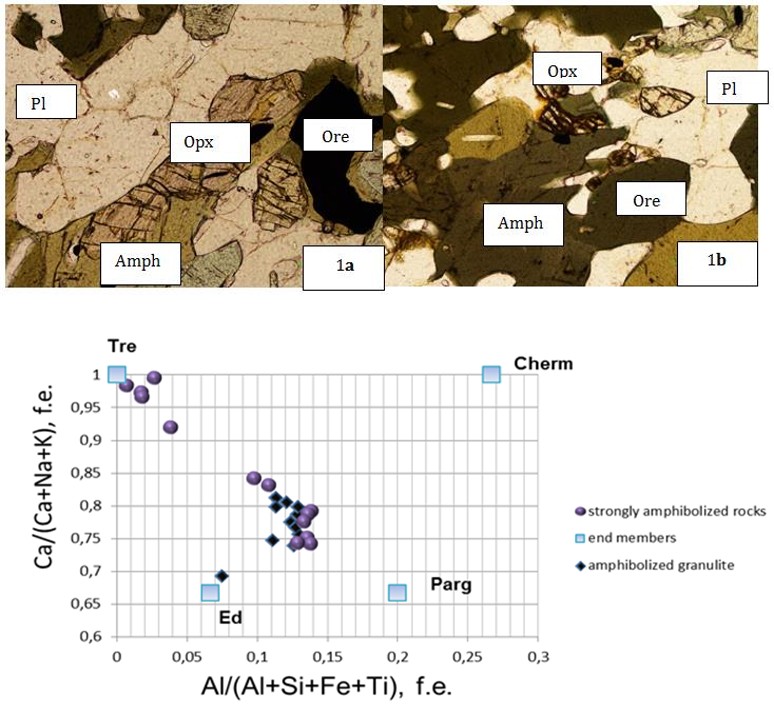
Figure 1a & 1b: Photomicrographs of granulite samples and their reaction textures. All figures are 5 mm wide.
orthopyroxene along cleavage cracks and the formation of an ore mineral (magnetite ± ilmenite ± rutile), indicating the addition of additional components to the xenoliths. Amphibole forms elongated (up to 2.5 mm in length) crystals with a ratio of width to length of 1: 3 and forms reaction zones with orthopyroxene (Figure 1a), forms rims around the ore minera, (according to microanalysis is represented by two types of amphibole (Figure 2). Accessory minerals: zircon, apatite, magnetite, ilmenite and pyrite and also pyrrhotite (sometimes sphalerite).
Thermobarometric Study of Mafic Xenolithes and the Discussion of the Results
Using the TWQ 2.32 software package, a pressure of 6.0-6.4 kbar was estimated for equilibrium clinopyroxene + orthopyroxene + plagioclase + quartz in non- amphibolized sections of xenoliths (Table 2) [5]. The temperatures corresponding to this association are 800- 860 °C and are within the crystallization temperature range of plagiogranites, as well as peak temperatures of the tectono-thermal stage M2 in the Lapland granulite belt [3, 4]. The amphibole-plagioclase equilibrium recorded the temperatures of the process of amphibolization of xenoliths 740-780 °C at a pressure of 5.0-5.5 kbar 9 (Table 3) [6]. Based on certain thermodynamic conditions for the formation of the main xenoliths in the Lotta region of LGB, we can confidently confirm the assumption that the formation of plagiogranite magmas probably occurred at depths of the order of 25-30 km. As they went up, they captured a variety of Xenoliths [1]. The results of new thermobarometric studies, data on fluid inclusions and isotope data for carbon in these rocks confirmed these conclusions [7, 8].
| Pl,№№ | Opx,№№ | Cpx,№№ | T,C | P, kb | |||||||||
|---|---|---|---|---|---|---|---|---|---|---|---|---|---|
| 40* | 16 | 9 | 804 | 6,2 | |||||||||
| 41 | 18 | 9 | 804 | 6,4 | |||||||||
| 43 | 20 | 17 | 862 | 6,0 | |||||||||
| 43 | 21 | 17 | 839 | 6,0 | |||||||||
| 38 | 29 | 6 | 802 | 6,2 | |||||||||
| 39 | 29 | 6 | 800 | 6,2 |
Table 9: Thermodynamic conditions of equilibrium clinopyroxene + orthopyroxene + plagioclase + quartz in non-amphibolized section
Conclusions
| Amph,№№ | 24c | 25r | 27c | 28r | 35r | 42c | 43r | |||||||||||||||
|---|---|---|---|---|---|---|---|---|---|---|---|---|---|---|---|---|---|---|---|---|---|---|
| SiO2 | 42,49 | 42,16 | 42,99 | 42,38 | 43,44 | 43,26 | 42,86 | |||||||||||||||
| TiO2 | 1,71 | 1,32 | 1,88 | 1,71 | 0,80 | 1,34 | 1,57 | |||||||||||||||
| Al2O3 | 11,65 | 11,67 | 11,94 | 11,97 | 11,82 | 11,14 | 11,52 | |||||||||||||||
| FeO | 20,59 | 20,34 | 20,37 | 20,98 | 19,67 | 19,90 | 20,81 | |||||||||||||||
| MgO | 8,39 | 8,50 | 8,26 | 8,34 | 9,31 | 8,91 | 8,40 | |||||||||||||||
| MnO | 0,38 | 0,28 | 0,35 | 0,13 | 0,33 | 0,31 | 0,29 | |||||||||||||||
| CaO | 12,24 | 12,19 | 11,09 | 12,23 | 12,14 | 12,46 | 12,11 | |||||||||||||||
| Na2O | 1,47 | 1,35 | 1,44 | 1,14 | 1,16 | 1,56 | 1,21 | |||||||||||||||
| K2O | 1,25 | 1,32 | 1,29 | 0,95 | 0,99 | 1,24 | 1,10 | |||||||||||||||
| F | 0,00 | 0,00 | 0,00 | 0,00 | 0,00 | 0,00 | 0,00 | |||||||||||||||
| Cl | 0,00 | 0,00 | 0,00 | 0,00 | 0,00 | 0,00 | 0,00 | |||||||||||||||
| Sum | 100,17 | 99,13 | 99,61 | 99,83 | 99,66 | 100,12 | 99,87 | |||||||||||||||
| Pl | ||||||||||||||||||||||
| xAb | 0,53 | 0,53 | 0,53 | 0,53 | 0,53 | 0,53 | 0,53 | |||||||||||||||
| xAn | 0,47 | 0,47 | 0,47 | 0,47 | 0,47 | 0,47 | 0,47 | |||||||||||||||
| T,C | 766,3 | 756,0 | 779,9 | 762,9 | 745,6 | 739,9 | 760,4 | |||||||||||||||
| P,kb | 5,00 | 5,33 | 4,86 | 5,29 | 5,51 | 5,19 | 5,03 |
Table 10: Thermodynamic conditions of granulite amphibolization process determined by means of amphibole- plagioclase equilibrium
Temperatures corresponding to the association, make 800-860 °C and are within the crystallization temperature range plagiogranites, as well as peak temperatures tectonomagmatic thermal stage M2 Lapland’s granulite belt [3, 4].
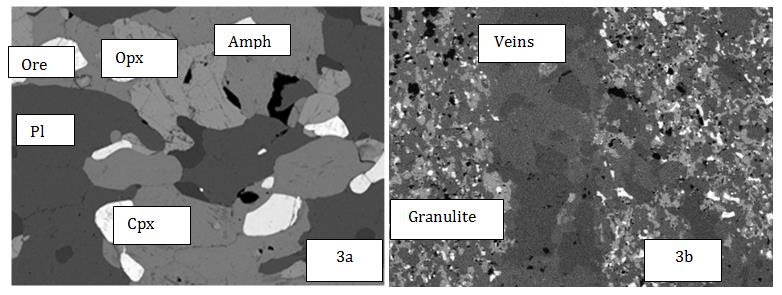
Clinopyroxene, xenomorphic grains from 0.1 to 1 mm, occurs in paragenesis with plagioclase and orthopyroxene (Figure 3a).
Acknowledgement
Authors are greatful to Dr. Kaulina TV for provided samples of mafic xenolithes in plagiogranites of the River Lotta Area of the Central zone of the LGB. This work was supported by the Russian Foundation for Basic Research (grant 16-05-00266).
References
-
Kozlov NE, Kozlova NE (1998) On the Genesis of Pomegranate Plagiogranitoids of the Lapland Granulite Belt. Bulletin of the Moscow State Technical University 1: 43-52.
-
Mitrofanov FP, Kravtsova EI, Manuilova MM (1974) Early Precambrian granitoid formations. Moscow, Science, pp: 292.
-
Mints MV, Kaulina TV, Konilov AN, Krotov AV, Stupak VM (2007) The thermal and geodynamic evolution of the Lapland granulite belt: Implications for thermal structure of the lower crust during granulite-facies metamorphism. Gondwana Research 12(3): 252-267.
-
Kaulina TV, Nerovich LI, Bayanova TB, Yapaskurth VO (2014) Sequence of geological processes in the Central and North-Eastern part of the Lapland granulite belt: isotope-geochemical data on zircon and the results of geological-petrological studies. Geochemistry 7: 625-645.
-
Berman RG (2007) WinTWQ (version 2.3): A software package for performing internally-consistent thermobarometric calculations. Geological Survey of Canada.
-
Blundy JD, Holland TJB (1990) Calcic amphibole equilibria and a new amphibole-plagioclase geothermometer. Contribution to Mineralogy and Petrology 104(2): 208-224.
-
Safonov OG, Reutsky VN, Golunova MA, Butvina VG, Yapaskurt VO, Varlamov DA (2016) Different sources of carbon in granitoid fluids in granulite. Moscow, Russia.
-
Safonov OG, Reutsky VN, Golunova MA, Butvina VG, Yapaskurt VO, Varlamov DA, Shcherbakov VD, Van Rinnen DD (2017) Isotopic characteristics of carbon as an indicator of the source of high-temperature granitoids in granulite complexes. Proceedings of the Conference, Petrozavodsk, pp: 216-218.
- Nigeria’s Vulnerability in the Face of Global Energy Policy
- A Simulation Study of Investigation of Optimum Oil Production Performance by Applying Various Gas Injection Methods in Oil Reservoir
- Characterization of Permo-Triassic Reservoirs through Thermal Maturity Assessment of Westphalian Source Rocks in the Cheshire Basin
- Influence of Microwax on the Rheological and Thermal Behaviour of a Wax Crude Oil
- Real-Time Monitoring and Performance Optimization of Steam Injection in Heavy Oil Reservoirs Using Fiber Optic Sensing and Integrated Predictive Simulation Models
- Rapid On-Site Determination of the Total Petroleum Hydrocarbon Content of Soils by Handheld Fourier Transform Near-Infrared Spectroscopy: Development of a Global, Site- and Scanner- Independent Calibration Model