
Proactive Personality in Case of Workplace Bullying Exposure
Studying the role of coping strategies’ efficiency in case of workplace bullying behavior it seems to be very important since some coping strategies may be efficient for some people but may prove to be inefficient for others. Moreover, proactive personality in the context of workplace bullying exposure was found not to be efficient since it may trigger more bullying behaviors from the part of aggressors. The present study aims to investigate the relationships existing between workplace bullying exposure, mental and physical strain and the choice of coping strategy thus proposing a multi-mediation model of the relationship between these variables. A number of 313 employees participated at the study by completing questionnaires referring to workplace bullying behaviors, coping strategies, proactive personality and strain. The results have shown that the choice of coping strategy influences the levels of physical and mental strain in that the more the person chooses passive coping strategies the more strained she will feel. Furthermore, despite the fact that previous research have shown that introducing proactivity in the relationship between workplace bullying and coping strategies doesn’t influence its impact on physical and mental strain previous research have shown that proactivity is positively associated with active coping strategies which diminish its impact on strain. Present research didn’t obtained a significant relationship but the tendency is in the way indicated by previous researchers. The results showed that workplace bullying exposure is associated with passive coping strategies which in their turn are associated with higher levels of physical and mental strain.
Introduction
Studying the coping strategies used in response to an extreme stress factor such as the phenomenon of workplace bullying is very important considering that a coping strategy can be effective for one person and inefficient for another person.
The literature specifies that information regarding the severity and longevity of the workplace bullying behaviors existing within an organization can be extracted only if we analyze the types of strategies implemented by the employee- victim.
Research on the effectiveness of coping strategies in the case of the phenomenon of workplace bullying is useful to practitioners because they can provide informational support to the employees who experience this phenomenon from the position of victim.
Practitioners can intervene beneficially by informing employees about effective coping strategies depending on the severity of workplace bullying behaviors. Moreover, they can also provide support by informing employees about the influence of environmental factors on the occurrence, manifestation and maintenance of these behaviors.
Until now, the scientific literature offers, to a large extent, studies regarding the effective coping strategies only in the educational field. There are few studies that have highlighted the effectiveness of coping strategies in the case of workplace bullying [1, 2, 3, 4].
Choosing the Coping Strategies in Case of School Bullying Exposure
Studies in the educational field have highlighted a number of factors that are associated with choosing the coping strategy when a person is experiencing workplace bullying. Thus, the greatest attention has been paid to the effects of gender, age and status (for example, aggressor or victim) and more recently, the form of aggression experienced has also been taken into account [5, 6, 7, 8, 9].
Regarding the gender difference in the choice of coping strategies, studies on school bullying have shown significant gender differences between boys and girls regarding their preference for a specific coping strategy.
In Finland, Olafsen and Viemero [8] conducted a study on the students of a school being interested in evaluating the students’ preference for a particular coping strategy. The results of their study showed that boys relied more on self-destructive strategies compared to girls. These strategies were measured with a modified version of the COPE inventory called LECI [10]. The measurement scale of self-destructive strategies included items related to smoking, suicidal thoughts and thoughts about self-control gestures. Girls used strategies for recognizing stress more often, such as crying reactions, crying or seeking advice from other people [11, 12, 13, 14, 15, 16].
No gender differences were found regarding the aggression manifested as a consequence of the bullying behaviors experienced (for example, injurious behaviors of others, entry into violent quarrels, screams). Also no gender differences were found in distraction (taking a walk, pursuing a personal hobby) or, in terms of, the strategy of enduring aggressive behaviors (for example, resisting persistent behaviors, try to forget what happened).
Consistent with the results of Olafsen and Viemero [8] are those of Cowie’s [5] who showed that girls (for example, girls between the ages of 10 and 14) resorted more frequently to crying behaviors or to the advice of a friend compared to the boys who have expressed a preference to engage in physical conflicts with the aggressor.
In their study, Kristensen and Smith [6] found that girls usually seek more social support (i.e., seek help from a friend, teacher, or family) and internalize more (i.e., worry too much or cry) compared to boys who outsource stress (i.e., it discharges dissatisfaction with other people and geting angry).
In her study, Cowie [5] did not find gender differences in coping strategies, but female victims showed a higher tendency to tell a third person about what happened to them compared to the male victims. The researcher classified the victims’ responses into six categories:
- Ignoring workplace bullying (i.e. coping with the situation, trying to forget what happened, planning for revenge)
- Physical responses (i.e., hitting the aggressor, threatening with the older brother)
- Verbal responses (i.e., stating that these behaviors were harming, retaliated, threatened to talk about these behaviors)
- They accepted that they could do nothing (i.e. they had difficulty coping with the situation, or upset)
- They manipulated the social context without saying anything to anyone (i.e., they stayed very close to other people, avoided the aggressor)
- Did not use any strategy Olafsson [7] pointed out that boys (between the ages of 10 and
The studies presented above provide an overview of how boys and girls cope with school bullying. These different ways of coping with a stressful event reflect, in fact, different preferences for certain coping strategies. The above studies manage to highlight gender differences in the preference for a certain coping strategy (i.e., boys respond aggressively and girls seek social support).
These gender differences regarding the choice of a certain type of coping strategy were also explained by the differences existing in the different types of aggression behaviors that boys and girls are subjected to.
Researchers such as Olafsson and Johannsdottir (2004) explain these differences by the fact that girls are exposed to indirect psychological aggression behaviors while boys are exposed to physical aggression behaviors. They conclude that being exposed to different types of aggression has led to the implementation of different coping strategies. This conclusion is based on a study conducted a year earlier [7] on a number of general school students and was able to highlight that girls were subjected behaviors that involved social isolation, and this in turn its correlated with passive responses such as feelings of helplessness or waiting for these behaviors to cease. According to these studies, boys are subjected to aggression behaviors that highlight the physical nature of the behaviors. This type of aggression has been correlated with aggressive response behaviors such as hitting the aggressor.
In order to elucidate the gender differences regarding the preference for a certain type of coping strategy in the case of school bullying, intercultural studies are required. They may prescribe differently which behaviors are or aren’t accepted by each culture and may at some point also explain the preference for certain coping strategies. Furthermore, a number of studies [17] regarding environmental contexts can be edifying in this regard. A diagnosis can be made of the circumstances favoring the occurrence of the aggressive behaviors.
There have been studies that have shown that places such as school halls, gyms, sports grounds, the school’s interior garden and toilets are the places with the highest risk of aggression.
Regarding the issue of differences in the choice of coping strategies according to the age of the participants, Smith, et al. [9] pointed out that adolescents adopt the strategy of ignoring the aggressor compared to the students of the primary classes who adopt as a coping strategy the crying reaction. or running away. Moreover, Kristensen and Smith [6] have shown that primary school students more often adopt coping strategies such as distancing behaviors, seeking social support and internalizing conflict.
These differences in the choice of coping strategies highlighted according to the age category were explained by the researchers in the field as being due to the characteristic that the most frequently attacked students are those of younger age and, in general, the perpetrators are boys. This age difference can make the aggressed student to adopt the strategy of avoiding the aggressor or running away because of the fact that he feels he doesn’t have the physical resources necessary to deal with an open conflict. In this case, the factor that influenced the coping strategy was the age difference between the aggressor and the victim. However, there are other factors that could influence the decision to adopt a certain adaptation strategy, such as the duration and frequency of the aggressive behaviors.
Olafsson [7] pointed out that coping strategies adopted by students to cope with aggression change gradually as the duration and intensity of behaviors increase.
According to the data obtained by the aforementioned researcher, in the first stages of the aggression, the victims adopt the active strategies (i.e., the direct approach of the problem, the assertive communication), moving more and more towards the passive strategies (i.e., denial, avoidance, acceptance).
Choosing the Appropriate Coping Strategy in Case of Workplace Bullying Exposure
Previous research conducted in the workplace context has shown that there is a large discrepancy between what employees think they would do if they became victims of workplace bullying and what they actually do when faced with this stress factor in the workplace. Rayner [18] showed that a much smaller percentage of victims coped with this phenomenon by directly confronting the aggressor (eg active coping strategy) or by communicating the manager about the existing conflictual situation in the company compared to the persons who were not the victims of workplace bullying but who responded that if they found out in such a situation, they would directly confront the aggressor or notify the manager of the company. The same differences were also found in the search strategy for social support.
The group of people not affected by workplace bullying stated in a much higher percentage that they would call on the social support of their colleagues to cope with the situation compared to the people who experienced this stress factor at work. Moreover, research has shown that victims adopt as a coping strategy the avoidance of the aggressor by resigning from the current job. And at the level of this strategy, the studies indicated significant differences between the group of affected persons and the group of unaffected persons.
In the first group are registered percentages between 14.36% of resignation compared to the declared percentage of the unaffected persons who stated that they would resign if they experienced aggression in the workplace (only 7%).
Mostly, it seems that victims adopt passive coping strategies to adjust to workplace bullying and that unaffected persons believe that they would rather adopt active coping strategies to adjust to this phenomenon.
In the context of the workplace, Zapf and Gross [19] used the model of the five types of strategies [20] to deal with an existing conflict in the workplace. The results highlighted a tendency of victims to use less dominant strategies compared to the non-victim group and to use avoidance strategies more frequently to cope with workplace conflicts. Zapf and Gross [19] suggested that victims will cope with the phenomenon, in its early stages, by adopting active coping strategies, but with time and the prolongation of the phenomenon over time, victims will sooner adhere to passive coping strategies (i.e., they will most often leave the company or organization where they work).
In order to provide an even clearer picture of how victims change their coping strategy depending on the duration of the manifestation of the aggressive behaviors, Zapf and Gross [19] conducted in-depth interviews with the victims, interviews in which they applied the EVLN model to analyze the content of four coping strategies (i.e. vociferation, loyalty, neglect and avoidance).
According to data obtained by Zapf and Gross [19], victims of aggression begin by adopting active coping strategies (i.e. assertive communication techniques in the direct approach of the aggressor), but as the phenomenon increases in time, people begin to call more and more passive coping strategies (i.e. passivity, avoiding the aggressor).
Moreno-Jimenez, et al. [21] was interested in testing the moderating roles of psychological detachment and thoughts of revenge. The results revealed that psychological detachment moderates both the relationship between workplace bullying and role conflict, as well as between the workplace bullying and psychological strain. Moreover, thoughts of revenge moderates the relationship between workplace bullying and role conflict. The effects of role conflict on workplace bullying were more pronounced for those with thoughts of revenge.
Psychological detachment moderates the relationship between role conflict and workplace bullying. The effects of role conflict on workplace bullying were less pronounced for those who were psychologically detached. This result indicates that psychological detachment is a successful strategy in managing stressors [21]. According to Moreno- Jimenez, et al. [21] these results are congruent with the CATS theory [22], which suggests that individual interpretation of stressors should be the framework through which the effect of these factors can be understood.
From this perspective, the same stress factor may produce different individual responses depending on the individual interpretation of each person.
Researchers such as Moreno-Jimenez, et al. pointed out that when an individual is experiencing a stress factor, he or she will try to redirect attention to other aspects to lessen the effects of that stress factor [21]. The results of their study indicated that psychological detachment moderates the relationship between workplace bullying and psychological strain. Those who used psychological detachment as a strategy to adapt to stressors recorded lower levels of psychological strain.
Starting from this hypothesis I will verify, on the Romanian population, the moderating effect of the disengagement in the relationship between workplace bullying and physical and mental strain.
The Importance of Workplace Bullying Behavior Type in Choosing The Appropriate Coping Strategy
Lee and Brotheridge [23] pointed out that the type of act of workplace bullying influences the choice of the type of strategy to adapt to this phenomenon.
Thus the authors obtain important results for the psychological well-being. Being subjected to verbal abuse causes the person to underestimate others. Moreover, the fact that you have underestimated your work also leads to the underestimation of other people.
The depreciation of a person determines the latter to choose as a style of coping strategy such as doubts regarding his own person, passive / indirect adaptation strategy, ignoring the aggressor. Moreover, having doubts about oneself leads to results such as cynicism, emotional exhaustion, physical symptoms and emotional symptoms.
According to these data, there are three main types of results:
1. How the victims were treated determined how they behaved with others
2. The manner in which they were subjected to workplace bullying determined the choice of the type of strategy to deal with the stressful situation
3. Doubts about one’s own person or proven to be an important mediator between workplace bullying and physical and mental health.
Coping Strategies Efficiency
Regarding the effectiveness of different coping strategies used in order to face workplace bullying, studies in the field have shown that choosing an active coping strategy (problem solving) can aggravate the situation [24]. Regarding the same aspect, Rayner [18] stated that having an open discussion with the aggressor can cause him to revenge the victim even more.
Baillien, et al. [25] proposed a three-dimensional model to explain the occurrence of workplace bullying. One direction of explanation was the idea that workplace bullying appears as a consequence of an inefficient coping strategy. Moreover, according to the data of these researchers, the inefficient active coping strategy consists in coping with the stressful situation by transforming the frustration into negative acts aimed at others (eg aggressive behaviors). The ineffective inactive coping strategy consists in coping with the stressful situation psychologically distanced from the stressful work environment, which brings with it the aggressiveness of colleagues directed at the person (for example the victim).
Lee and Brotheridge [23] stated that in the case of workplace bullying, the most effective psychological coping strategies would be the passive ones, namely cognitive restructuring, relaxation strategies and avoidance strategies.
Another interesting result is that the preference for a particular coping strategy may reflect the degree of workplace bullying (early or advanced). Factors that influence the choice of coping strategies are factors such as age, gender, status (victim or offender) and seniority in work.
Hyung Park and DeFrank [26] showed that positive reinterpretation works for both active and passive individuals. In general, active coping strategies can lead not only to undesirable outcomes, but also to the intensification of the phenomenon on the victims due to the aggressors’ revenge for the fact that the victims have responded.
Active strategy may be an uninspiring choice for highly proactive people, but the study conducted by Hyung-Park and DeFrank [26] showed that this type of strategy reduced the strain felt by passive people. This result may suggest that passive people should use active strategy when facing workplace bullying.
While positive interpretation seemed to be the most effective coping strategy, both denial and disengagement were closely correlated with high scores on both physical and mental strain. These two coping strategies (denial and disengagement) are of great interest because they are most often chosen when it comes to dealing with workplace bullying.
At the measurement level it would be preferable to carry out a more formal evaluation of these coping strategies that would highlight the relationship between them and workplace bullying.
A qualitative study conducted by Zapf and Gross [19] was interested in finding effective coping strategies. Their results highlighted:
- In a first stage the victims used various coping strategies focused on conflict resolution, later in a secondary stage
- In a second stage, people started to resort to more diversified strategies so that in the end
- To leave the organization.
Moreover, the results of the semi-structured interviews revealed that victims of workplace bullying advised those who were going through similar situations to leave the organization and seek social support.
Empirical data show that victims most often avoid open conflicts. People who successfully coped with workplace bullying used the aggressor’s strategy less as a technique to respond to aggression, used less the negative behavior of absenteeism, were more able to recognize and managed to avoid negative behaviors that may degenerate in time. People who fad to effectively manage workplace bullying contributed to the replication of the conflict generated by bullying behaviors.
The role of Proactive Personality in Choosing the Coping Strategy When Exposed to Workplace Bullying Acts
Hyung Park and DeFrank [26] have shown that proactive personality plays an important role in the case of workplace bullying approached from the stressor factors perspective. Also, while the stress literature has focused heavily on the personality trait of neuroticism, this study focuses on the proactive characteristics of the individuals involved in the choice of coping strategies.
According to the results of the study, the biological gender was a highly significant predictor of the strain in each predictive model, given that women report higher degrees of physical and mental strain. Although not the goal of Hyung- Park and DeFrank’s [26] study, it would be important to see if women are more likely to perceive workplace bullying or if they are more sensitive to the effects of this phenomenon [27].
Proposing a Framework of Studying Workplace Bullying in a Stress Perspective Theory
The framework proposed for this study is based on the studies of Bolger and Zuckerman [28] and Kammeyer Mueller, Judge and Scott [29]. This model has been tested in relation to other personality concepts such as neuroticism [28] and self-assessment of competences [29].
Bolger and Zuckerman [28] introduced four components Stressor and Strain Model (Stressor and Strain Model, [28]) of the process conducting to stressful situations: a. Exposure to stressors b. Reactivity to stressors c. Choosing certain coping strategies d. The effectiveness of the adaptation strategies chosen Hyung-Parker and DeFrank [26] also added e. The direct impact of psychological aggression in the workplace on the choice of adaptation strategy.
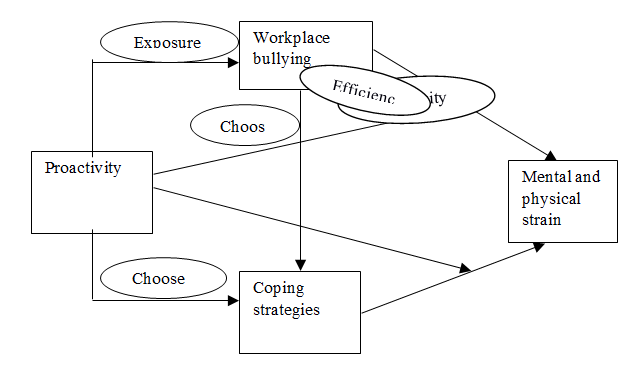
Study’s objectives: 1. Replication of the study conducted by Hyung-Park and DeFrank [26] on Romanian employees. 2. Proposing a complex structural model composed of variables such as workplace bullying, proactivity, passive coping strategies, active coping strategies and strain.
Study’s hypotheses and their theoretical argumentation from the perspective of the Stressor and Strain model [28] A. Differentiated Exposure The differentiated exposure hypothesis postulates that personality can influence the way stressors are perceived, and even, in some cases, personality may favor the induction of stressors.
Research has shown that those with high negative affectivity perceive workplace conflicts at a higher level [28, 30] and the negative affectivity of victims has been positively associated with workplace harassment [31].
Self-assessment of skills was considered another personal characteristic that was negatively related to exposure to psychological aggression [29].
Kammeyer Mueller, et al. [29] stated that “stressors are perceived at a different subjective level by each person.” The first assessment of these factors describes the process by which individuals identify potential threats and assess them in terms of the negative consequences that may arise. According to studies in the field, personality can influence the process of identifying and evaluating potential stressors so that those individuals with different levels of proactive personality may perceive stressors differently.
In an earlier study [28, 30], high levels of neuroticism are positively associated with workplace harassment [31, 32]. As proactive personality is negatively associated with neuroticism, researchers such as Major, Turner, and Fletcher, [33] and Hyung-Park and DeFrank [26] tested the hypothesis that exposure to workplace bullying is negatively associated with proactive personality. Their hypothesis was not supported, which is why in the present paper the hypothesis is repeated and we want to see if this hypothesis is verified on the Romanian population.
Hypothesis 1: Proactive personality is negatively associated with exposure to workplace bullying (according to differential exposure).
B. Differentiated Creativity Harvey and collaborators [34] pointed out that proactive personality increases the effect of stressors on a person’s stress level so that people with high proactivity experience highly negative outcomes when faced with interpersonal conflict. In other words, when it comes to uncontrollable conflict, highly proactive people respond negatively to this situation.
Being put into the situation of dealing with workplace bullying, in most situations, employees will experience a feeling of lack of control over the situation and will react negatively.
Explicitly, if a highly proactive person is put in a situation to deal with aggressive acts from an inferior position (uncontrollable situation) it is possible that he will react more negatively compared to less proactive people.
Hypothesis 2: Proactive personality can exacerbate the impact of workplace bullying on physical and mental stress. Proactive personality moderates the relationship between workplace bullying and physical and mental strain, so the relationship is more positive for those with high proactivity and more negative for those with low proactivity (according to differentiated reactivity).
C. Differences in the Choice of Coping Strategies Personality can influence the preference for a certain coping strategy, an aspect that was defined by Bolger and Zuckerman [28] the differential model of choosing the type of coping strategy.
The choice process is triggered when people perceive a stressful event and interpret it as having a high potential threat to personal values and resources [35].
Over time, different dimensions of coping strategies have been used in the professional stress literature [36]. In this sense, in the literature, the most widespread dimensions of adaptation strategies are of two types: 1. The strategy focused on solving the problem
2. Strategy focused on regulating negative affective feelings [37].
Starting from the differences observed in the literature regarding the number of dimensions of adaptation strategies, Carver and Scheier [38] develop and validate a new tool for measuring these strategies, identifying a vast number of dimensions.
More recently, KammeyerMuller, et al. [29] classified adaptation strategies into three categories:
- The strategy focused on solving the problem
- Strategy focused on regulating negative emotional feelings
- Coping strategy through avoidance behaviors Similarly, in published studies in the field of psychological aggression at work, Lee and Brotheridge [23] extracted and categorized coping strategies into three categories:
According to the results in the literature, proactive people are characterized by a special need to keep things under control and to control the environment. Highly proactive people are active people, always looking for new challenges, new solutions with immediate effect on problems that arise in their immediate context so that they will have a tendency to solve the situation of workplace using active coping strategies (i.e., approaching direct the problem) Starting from these ideas, Hyung-Park and DeFrank [26] manage to highlight the fact that highly proactive people tend to adopt more active coping as strategies to solve the situation of workplace bullying compared to people with low proactivity who will have a higher tendency to choose passive coping strategies.
Hypothesis 3: People with high levels of proactivity will resort to active coping strategies more frequently and less frequently to passive adaptation strategies compared to people with low levels of proactivity (according to the differences in the process of choosing coping strategies).
The specialized literature is in a slight contradiction regarding the role of proactivity in the process of adopting a coping strategy as a result of the occurrence of workplace bullying. There are studies that have shown that proactivity influences the process of choosing coping mechanisms [26] but there are also studies that have shown the opposite [39].
Starting from this contradiction, I want to investigate the moderating role of work experience of the relationship between proactivity and the choice of coping mechanism in case of psychological aggression at work.
Hyung-Park and DeFrank [26] stated that being highly proactive decreases the likelihood of experiencing workplace bullying. On the other hand, Harvey, et al. [34] showed that highly proactive young people felt a much lower job satisfaction and had lower performances than expected by the company when faced with aggressors whose source came from interpersonal conflicts.
In support of these results, Cunningham and De La Rosa [40] stated that highly proactive people experience higher levels of mental stress when faced with uncontrollable sources of occupational stressors. Hyung-Park and DeFrank [26] explain the result by the fact that highly proactive people felt less control over the conflict situations which led to lower performance. Dealing effectively with workplace bullying seems to have a different meaning in the field of literature compared to the sense of effectiveness of coping strategies in the case of general stress experienced at work. Kammeyer-Muller, et al. [29] stated that, in general, the adoption of active coping strategies (i.e. direct problem solving) is effective in the case of stressors and the adoption of passive coping strategies is associated with higher levels of physical and mental strain. This may no longer be valid in the case of workplace bullying, there is research [24] that has shown that the adoption of active adaptation strategies can worsen the situation of workplace bullying.
Rayner [18] showed that the direct approach of the aggressor can cause him to take revenge even more as a result of the fact that he was directly confronted. Therefore, Lee and Brotheridge [23] suggested that passive adaptation strategies such as: passive reinterpretation, relaxation strategies and avoidance of the aggressor would be more effective for the victim, reducing the levels of physical and mental strain felt. Therefore, workplace bullying can influence the process of choosing the coping strategies.
Hypothesis 4: Workplace bullying is associated with higher levels of passive coping strategies and lower levels of active adaptation strategies (according to the differentiated effectiveness, in case of psychological aggression, of the chosen adaptation strategies).
D. Differentiated Efficacy In the face of a stressful situation what one person chooses as a coping strategy to deal with stress can be ineffective for another person. This was defined by Bolger and Zuckerman [28] as the differential model of effective coping strategies. In the case of workplace bullying, the tendency of highly proactive people to deal with the situation by approaching direct strategies can worsen the situation and can turn these strategies into ineffective strategies to reduce the tension felt at work. People with a low proactive personality generally adopt passive coping strategies, research in the literature showing that such strategies can lead to preventing or stopping the phenomenon of psychological aggression.
Hypothesis 5: Proactive personality moderates the relationship between uncontrollable source stressors (workplace bullying) and perceived constraints, so this relationship is more positive for people with high proactive personality and less positive for people with lower proactive personality. (According to differentiated reactivity).
Hypothesis 5a: Proactive personality moderates the relationship between passive coping strategies and perceived tensions, so that this relationship is more negative for people with low proactive personality (According to Differential Effectiveness).
Hypothesis 5b: Proactive personality moderates the relationship between active coping strategies and perceived tensions, so that this relationship is more positive for people with high proactive personality (According to Differential Effectiveness).
Participants and Procedure
A total of 313 Romanian employees aged between 19 and 64 participated in the present study (M = 33.11; SD = 9.93). They came from private companies (N = 156), public (N = 140) and private (N = 6) institutions but also from non-governmental organizations (N = 9) existing in 3 counties: Bacău, Iași and Suceava. The fields of activity were: production (N = 46), services (N = 139), trade (N = 34), education (N = 92). 226 of the employees are female and 84 are male, with a length of service between 6 and 480
months (40 years). Of these, only one person had high school education, 53 high school education, 127 university studies, 129 postgraduate studies. Contacting people was done in three ways: (1) through the acquaintances who provided the questionnaire package in pencil paper format; (2) online via a google docs form (N = 218) and via email containing the questionnaire package in electronic format. The study was presented as one interested in the dynamics of interpersonal relationships at work and nowhere in the record were there any words to allude to the phenomenon of psychological aggression at work.
Measuring the Variables
Workplace bullying The already known and validated NAQR sample [41]. The answer to this test is provided on a five-step likert scale (1 - never; 5 - daily) to identify the frequency with which they encountered acts of bullying. This sample has 22 items grouped into three dimensions: bullying (items 2, 4, 6, 7, 9, 11, 13, 22; eg item - You are humiliated or ridiculed in connection with your work.) - with an alpha cronbach = .844; the context-oriented bullying dimension (items 1, 3, 14, 16, 18, 19, 21; item example - Someone does not share information, which affects your performance.) with an alpha cronbach = .784 and the person-directed bullying dimension (items 5, 8, 10, 12, 15, 17, 20; item example - Gossip and rumors about you were spread.) with an alpha cronbach = .826. For the total NAQR test has an alpha cronbach = .922.
Proactive personality The proactive personality was measured by the Proactive Personality Scale [42] - scale with 17 items, with answers on the Likert scale in five steps in which 1 strongly agree and 5 - strong disagreement. Examples of items “I’m always looking for new ways to solve things” and “No matter what the chances of success, I can do what I want if I really believe in it.” To obtain the scale score, the answers are summed. Low scores designate the proactive personality. Alpha Cronbach obtained for the whole proactive personality scale = .854.
The coping strategies A dispositional subscale of the COPE inventory version was used [38]. The response to the item was on the four-step Likert scale 1 - I don’t usually do that; 4 - I usually do that. Of the 11 subscales of the COPE inventory, the scales were used: active strategy (example item I make every effort to solve the problem); positive reinterpretation (example item I try to develop personally as a result of lived experience.); disengagement (example of an item I go to the movies or watch TV so I don’t have to think about what happened);
denial (example item I tell myself that what is happening is not real.). The size of the active strategy (items 1619) has an alpha Cronbach = .944; the positive reinterpretation dimension (items 14) has an alpha Cronbach = .720; the mental and behavioral disengagement dimension (items 511) has an alpha Cronbach = .584 and the denial dimension (items 1215) has an alpha Cronbach = .790.
Mental and physical strain Physical and mental stress scales from the Occupational Stress Inventory were used [43]. In order to be able to report the frequency with which they felt these symptoms, the researchers used the last three months as a reference time. The response to the item was on a six-step scale in which: 1 never and 6 always. The physical strain scale has a number of 12 items, and the alpha Cronbach obtained on the whole scale = .828. Example of an item for the physical tension scale: “I often experience muscle tremors.” The mental strain scale has a number of 17 items, and the alpha Cronbach obtained on the whole scale = .835. Example of an item for the mental stress scale “Do you generally describe yourself as a person who worries a lot?” The way data were analyzed To analyze the data of this study it was applied two statistical programs known in the field of researches in humanities, namely: SPSS 17 and AMOS 18.
Results
Hypothesis 1: Proactive personality is negatively associated with workplace bullying exposure (according to differentiated exposure) The first hypothesis which stated that proactive personality is negatively associated with exposure to workplace bullying has not been supported. The path coefficient is negative (path coefficient = .024) but not significant (p> .05). These results are consistent with those obtained by HyungPark and DeFrank [26] who obtained a path coefficient = .030 for a significance threshold equal to p> .05.
Hypothesis 2: Proactive personality can exacerbate the impact of workplace bullying on physical and mental stress. Proactive personality moderates the relationship between workplace bullying and mental and physical strain, so the relationship between workplace bullying and strain is more positive for those with high proactivity and more negative for those with low proactivity. (according to differentiated reactivity)
| Physical strain | Mental strain | ||||
|---|---|---|---|---|---|
| β | ∆R2 | β | ∆R2 | ||
| Step 1 | Step 1 | ||||
| Age | 79 | Age | 0.014 | ||
| Work experience | 0.031 | 0.002 | Work experience | 0.055 | 0.004 |
| Step 2 | Step 2 | ||||
| Workplace bullying | 142 | Workplace bullying | 0.149 | ||
| Proactivity | 0.056 | 0.073 | Proactivity | 0.398 | .176** |
| Step 3 | Step 3 | ||||
| Workplace bullying X proactivity | 0.274 | 0.094 | Workplace bullying X proactivity | 1.086 | .213** |
Table 1: Regression predicting mental and pyshical strain having as predictors the age, work experience, workplace bullying and p
Table 1: Regression predicting mental and pyshical strain having as predictors the age, work experience, workplace bullying and proactivity Hypothesis 2 stated that there is a moderating effect of proactivity in the relationship between workplace bullying and physical and mental strain. Separate hierarchical regression analyzes were performed for physical and mental strain. The results of this paper support the moderating role of proactivity for mental strain but do not support the moderating role of proactivity for physical strain. For physical strain, ∆R2 = .002, F (2,292) = .702, p> .05. Hypothesis 2, which postulates that a proactive personality may exacerbate the impact of bullying on the strain felt, is not verified in the case of physical strain but is verified for the mental strain. This result is similar to that obtained by Hyung-Park and DeFrank [26]. Being proactive does not exacerbate the effects of bullying on physical stress but it may exacerbate the impact on mental stress.
Regarding the case of mental strain, ∆R2 = .213, F (2,292) = 16,924, p <.001, the hypothesis is confirmed. Being proactive exacerbates the impact of workplace bullying on the level of mental strain felt. Proactive people will experience higher levels of mental strain compared to people with low proactivity. This result is consistent with that obtained by HyungPark and DeFrank [26]. This result may be explained through the fact that, in general, proactive persons tend to solve their problems in a more active way so that they will feel more mental strain trying to find solutions to workplace bullying situation.
Hypothesis 3: People with high levels of proactivity will resort to active coping strategies more frequently and less frequently to passive adaptation strategies compared to people with low levels of proactivity (according to the differences in the process of choosing the coping mechanism).
The active coping strategies are: the active coping (directly approaching the situation) and positive reinterpretation.
The passive coping strategies are: denial and disengagement.
Hyung-Park and DeFrank [26] obtained a path coefficient equal to .30, p<.001 between proactivity and active coping strategy but the present research shows an insignificant path coefficient between proactivy and active coping strategy. This challenges the hypothesis that proactive personalities would prefer active coping strategies to deal with difficult situations. Previous results [26] obtained a positive and significant path coefficient between proactivity and positive reinterpretation (path coefficient =.36, p<.001) which meant that proactive personalities tend to adopt active coping strategies and less the passive ones. In the case of the present research, the results support the result support the results obtained by Hyung-Park and DeFrank [26]. People with high proactivity have a preference for positive reinterpretation strategy when the deal with workplace bullying.
In the case of this paper, proactivity is positively but insignificantly associated with denial, the result converges with those obtained by Hyung-Park and DeFrank [26]. Hypothesis three stated that highly proactive people more often adopt active coping strategies to cope with workplace bullying and less frequently adopt passive coping strategies to deal with workplace bullying compared to lower proactive people. In the case of this paper, the active coping strategies were the direct approach to the problem and the positive reinterpretation and the passive coping strategies were the denial and disengagement.
The results showed that proactive people tend to cope with workplace bullying by adopting the strategy of positive reinterpretation, but not the strategy of active coping strategy. Proactive people of Romanian nationality tend to deal with workplace bullying by positively reinterpreting the prolonged conflict situation at work, but will insignificantly prefer the strategy of direct approach to the problem to deal with workplace bullying. The results of this study partially support the results of Hyung-Park and DeFrank [26] who showed that proactive people significantly prefer active coping strategies (i.e. active strategy and positive reinterpretation) to cope with situations of psychological aggression at work.
This difference could be explained by the differences in cultural and economic factors. In Romania, in the context of a precarious economy and lack of jobs, people tend to be less assertive at work when faced with a problematic situation out of a desire to lose their jobs. They prefer to adopt less concrete strategies to deal with the situation, and the strategy of positive reinterpretation seems to be the strategy preferred by proactive people to deal with stressors at work.
Regarding the relationship between workplace bullying and passive coping strategy, the results of this paper highlighted a tendency of people, with low proactivity, to cope with the phenomenon by adopting passive coping strategies. The present study manages to empirically support the claim that people with low proactivity adopt passive strategies to deal with psychological aggression. According to the current study, people with low proactivity prefer the passive strategy called disengagement. These data complement the results of Hyung-Park and DeFrank [26] who, although they aimed to highlight the link between low proactivity of the person and the preference for passive adaptation strategies, failed to empirically demonstrate this relationship.
However, on the Romanian population, the relationship between low proactivity and passive coping strategies is empirically supported. Again, if cultural and economic factors are used, this preference for passive coping strategies can be explained by the fact that, in Romania, passivity has been culturally shaped and promoted as the best way to deal with stressful situations in contexts. jobs.
From an economic point of view, due to the lack of existing jobs, employees prefer to passively adopt stressful information and situations at work just to keep their job. This widespread fear of losing your job may be the reason why people are passive to the negative and persistent acts experienced at work. Therefore, hypothesis three is confirmed only for coping strategies positive reinterpretation and disengagement. Highly proactive people adopt positive reinterpretation as an active coping strategy to deal with workplace bullying, and low proactive people adopt disengagement as a passive strategy to deal with workplace bullying.
Hypothesis 4: Workplace bullying is associated with higher levels of passive coping strategies and with lower levels of active coping strategies.
The fourth Hypothesis stated that workplace bullying is related to higher levels of passive coping strategy and with lower levels of active coping strategy. In the case of this paper, workplace bullying was not significantly associated with active coping strategies: direct approach to the problem and positive reinterpretation, but was significantly associated with passive coping strategy such as denial (Path coefficient = .235, p <.001) .
The results of this research didn’t converge on previous research that has shown that victims of workplace bullying rather adopt passive coping strategies to deal with the phenomenon. For example, Hyung-Park and DeFrank [26] obtained positive and significant path coefficients between passive coping strategies (e.g. denial and disengagement) and workplace bullying (Path Coefficient = .39, p <.001 for denial and Path coefficient = .31, p <.001). The results of this research confirm the results of previous research which showed that victims of workplace bullying tend to cope with the phenomenon by adopting passive coping strategies and this because this phenomenon involves uncontrollable situations.
Hypothesis 5: Proactive personality moderates the relationship between uncontrollable source stressors (i.e. workplace bullying) and perceived strain, so this relationship is more positive for people with high proactive personality and less positive for people with lower proactive personality (According to Differential reactivity) Hypothesis 5a: Proactive personality moderates the relationship between passive coping strategies and perceived strain, so this relationship is more negative for people with low proactive personality. (According to Differential Effectiveness) ∆ R2 = .112, F(3,309) = 14.12, p < .001 In the case of this research, only the relationship between disengagement and physical strain was moderated by proactivity. For the relationship between denial and physical strain, proactivity doesn’t moderate this relationship. Hyung- Park and DeFrank [26] showed that both coping strategies (i.e. denial and disengagement) were significantly associated with higher levels of physical and mental strain. In the case of this research only disengagement was significantly associated with higher levels of physical strain.
Hypothesis 5b: Proactive personality moderates the relationship between active coping strategies and perceived strain, so that this relationship is more positive for people with high proactive personality (According to Differential Effectiveness).
∆R2 = .191, F(3,309) = 25.560, p<.001 In the present research, only part of hypothesis 5b has been confirmed, namely that of the relationship between positive reinterpretation and mental strain. This relationship is more positive for people with high proactivity. This is no longer true for the relationship between positive reinterpretation and physical strain or for the relationship between active coping strategy and physical and mental strain.
Hyung-Park and DeFrank [26] obtain favorable results to support hypothesis 5b both for the relationships between active coping strategy and physical and mental strain and for the relationship between positive and physical reinterpretation. However, Hyung-Park and DeFrank [26] do not obtain a significant positive relationship between positive reinterpretation and mental strain, a relationship that was highlighted in this present research.
| Physical strain | Mental strain | ||||||
|---|---|---|---|---|---|---|---|
| β1 | β2 | β3 | β1 | β2 | β3 | ||
| Step 1 | Step 1 | ||||||
| Gender | .216** | .210** | .210** | Gender | 0.042 | 0.007 | 0.007 |
| Work experience | 0.004 | 0.005 | 0.05 | Work experience | 0.029 | 0.006 | 0.006 |
| Step 2 | Step 2 | ||||||
| Active coping (AC) | 0.056 | 0.005 | Active coping (AC) | 0.08 | |||
| Proactivity (P) | 0.066 | 0.04 | Proactivity (P) | .402** | .412** | ||
| Step 3 | Step 3 | ||||||
| AC x P | 0.06 | AC x P | 0.021 | ||||
| F = 3.504; p = .004 | F = 12.413; p = .000 |
Table 2: Regression predicting the mental and physical strain having as predictors the gender, work experience, active coping str
*, p<.05; **, p<.01 Table 2: Regression predicting the mental and physical strain having as predictors the gender, work experience, active coping strategy and proactive personality.
| Physical strain | Mental strain | ||||||
|---|---|---|---|---|---|---|---|
| β1 | β2 | β3 | β1 | β2 | β3 | ||
| Step 1 | Step 1 | ||||||
| Gender | .216** | .209** | .207** | Gender | 0.042 | 0.001 | 0.004 |
| Work experience | 0.004 | 0.021 | 0.01 | Work experience | 0.029 | 0.106 | 0.013 |
| Step 2 | Step 2 | ||||||
| Positive reinterpretation (PR) | 0.024 | 0.322 | Positive reinterpretation (PR) | 0.134 | 0.924 | ||
| Proactivity (P) | 0.061 | 0.247 | Proactivity (P) | 0.368 | 0.45 | ||
| Step 3 | Step 3 | ||||||
| PR X P | 0.34 | PR X PPA | .974** | ||||
| F = 3.504; p = .004 | F = 15.097; p = .000 |
Table 3: Regression predicting the mental and physical strain having as predictors the work experience, age, positive reinterpret
*, p<.05; **, p<.01 Table 3: Regression predicting the mental and physical strain having as predictors the work experience, age, positive reinterpretation and proactive personality.
| Physical strain | Mental strain | ||||||
|---|---|---|---|---|---|---|---|
| β1 | β2 | β3 | β1 | β2 | β3 | ||
| Step 1 | Step 1 | ||||||
| Gender | .216** | .189** | .184* | Gender | 0.042 | 0.017 | 0.024 |
| Work experience | 0.004 | 0.030 | 0.30 | Work experience | 0.029 | 0.032 | 0.032 |
| Step 2 | Step 2 | ||||||
| Denial (D) | .205 | .370 | Denial (D) | 0.237** | 0.501 | ||
| Proactivity (P) | .065 | .419 | Proactivity (P) | 0.401** | 0.535** | ||
| Step 3 | Step 3 | ||||||
| D X P | .187 | D X P | ..299 | ||||
| F = 6.148; p = .000 | F = 17.015; p = .000 |
Table 4: Regression predicting the mental and physical strain having as predictors the gender, work experience, denial and proact
*p<.05, **p<.001 Table 4: Regression predicting the mental and physical strain having as predictors the gender, work experience, denial and proactive personality.
| Physical strain | Mental strain | ||||||
|---|---|---|---|---|---|---|---|
| β1 | β2 | β3 | β1 | β2 | β3 | ||
| Step 1 | Step 1 | ||||||
| Gender | .216** | .170** | .164** | Gender | 0.042 | 0.018 | 0.02 |
| Work experience | 0.004 | 0.012 | 0.022 | Work experience | 0.029 | 0.016 | 0.021 |
| Step 2 | Step 2 | ||||||
| Disengagement (D) | .297 | .939** | Disengagement (D) | .194** | .542* | ||
| Proactivity (P) | .035 | .589** | Proactivity (P) | .383** | .683** | ||
| Step 3 | Step 3 | ||||||
| AC x P | .903* | AC x P | .489 | ||||
| F = 10.701; p = .000 | F = 15..553; p = .000 |
Table 5: Regression predicting the mental and physical strain having as predictors the gender, work experience , disengagement an
*p<.05; **p<.001 Table 5: Regression predicting the mental and physical strain having as predictors the gender, work experience , disengagement and proactive personality.
Hypothesis 5a stated that the relationship between passive coping strategy and strain is more negative for people with low proactivity. The results of the present study confirm this hypothesis but only for the relationship between workplace bullying and physical strain. People with low proactivity use more frequently the disengagement strategy as a strategy to deal with workplace bullying. Indeed, the relationship between workplace bullying and coping strategies is more negative for people with low proactivity. In other words, people with low proactivity who adopt passive coping strategies will have higher levels of physical strain than those who adopt active coping strategies.
Hypothesis 5b postulates that the relationship between active strategy and strain is more positive for highly proactive people. The results of the present study support the hypothesis but only for the state of mental strain and not for the physical one. In other words, highly proactive people who adopt the positive reinterpretation coping strategy will have lower levels of mental strain.
The results of the present study partially validate the results obtained by Hyung-Park and DeFrank [26]. They pointed out that the relationship between coping strategy and mental strain was moderated by the proactive personality. This was true for the relationship between active coping strategy and mental strain but also for the relationship between positive reinterpretation and physical strain.
Regarding hypothesis 5a, Hyung-Park and DeFrank [26] didn’t obtain significant results attesting the fact that low proactive people adopt rather passive strategies to deal with workplace bullying and that the adoption of these strategies leads to high levels of physical and mental strain. In the case of this paper, it is possible to highlight the fact that those people with low proactivity who adopt the coping strategy of disengagement have higher levels of physical strain. Moreover, those people with high proactivity who adopt the strategy of active coping and positive interpretation have lower levels of mental strain As a conclusion, the most effective coping strategy is positive reinterpretation, a strategy that proves to be the most effective coping strategy in the case of bullying at work. Its efficiency is increased by reporting the level of mental strain felt by the person. The disengagement strategy proves to be an inefficient strategy in the case of psychological aggression at work.
Those who adopt passive coping strategies, especially the disengagement strategy, will have the highest levels of physical strain. The study in this paper manages to highlight The Proposed Complex Model the moderating role of proactivity both in the relationship between workplace bullying and coping strategies and in the relationship between coping strategies and the state of physical and mental strain.
Starting from these results, a new question arises, namely whether proactivity can play the role of a mediating factor both in the relationship between workplace bullying and coping strategies and in the relationship between coping strategies and the state of employee’s physical and mental strain.
In order to answer this question, it was proposed to test the model of structural equations presented below:
O2. Proposing a complex structural mediation model composed of workplace bullying, proactivity, passive coping strategies, active coping strategies and strain having as mediator the employees’ proactivity
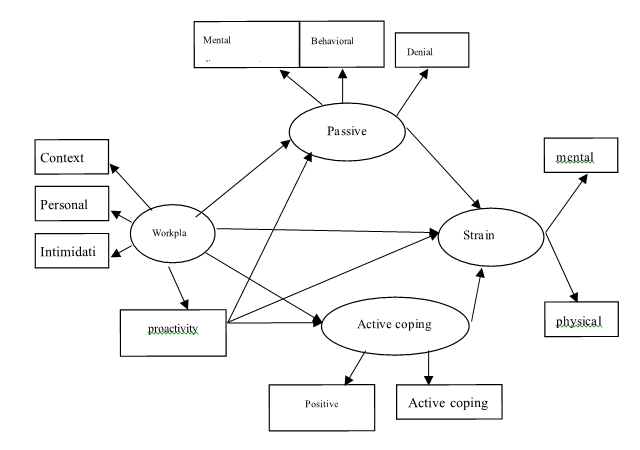
(אּ27) = 137.304, p = .000; RMR = .022; GFI = .925; NFI = .868; IFI = .900; CFI = .898; RMSEA = .093 [.077; .110]
Hypothesis: The relationship between workplace bullying and passive coping strategies is mediated by proactivity.
According to the results, it is observed that proactivity plays the mediating role in the relationship between workplace bullying and passive coping strategies. The relationship between workplace bullying and passive coping strategy becomes statistically insignificant. Proactivity intervenes in the implementation of the passive coping strategy.
Hypothesis: The relationship between workplace bullying and active coping strategy is mediated by proactivity.
According to the above data, proactivity is a complete mediator of the relationship between workplace bullying and active coping strategy. The relationship between workplace bullying and the active coping strategy becomes insignificant when the person’s proactivity is taken into account. The
choice for a coping strategy can be fully explained by the person’s proactivity. Hypothesis: The relationship between workplace bullying at work and the strain felt by the employee is mediated by the passive coping strategies.
When we consider as a mediator the passive coping strategy, the relationship between workplace bullying and the strain becomes insignificant, which means that the passive coping strategy fully explains the relationship between workplace bullying and strain. The state of strain can be fully explained by the type of coping strategy implemented by the employee.
Hypothesis: The relationship between workplace bullying and strain is mediated by active coping. According to the data from the mediation model above, the active coping strategy is a complete mediator in the relationship between workplace bullying and strain. This relationship becomes significant when the active coping strategy is introduced as a mediator. Those who use active coping strategies are more mentally and physically strained.
Discussions
In this paper, workplace bullying was understood as a factor of extreme social stress that negatively affects the psychological well-being of employees. Given the negative impact of workplace bullying on health and the fact that proactive people are generally in stressful situations at work, it was considered important to study how the proactive personality can intervene in resolving this situation.
At the same time, an attempt was made to verify the theory of personality, which specified that some of the victim’s personality traits predispose her to experiencing psychological aggression at work.
This study examined how the proactive personality influences each stage of the process of choosing the best coping strategy in case of workplace bullying exposure. This analysis was based on a theoretical model, namely the stressor-strain factor model [28].
The first aim of this study was only to replicate an existing study in the literature [26] to verify on Romanian employees if the variable proactivity can be considered a moderating factor in the relationship between psychological aggression and adaptation strategies and the relationship between adaptation strategies and the state of tension felt by the employee.
The results of the replica study showed that people with low proactivity who implement passive coping strategies experience higher levels of physical strain. Therefore, for these people, the passive coping strategy proves to be ineffective for their personal well-being. Moreover, proactive people generally adopt active coping strategies such as a direct approach to the problem and a positive reinterpretation, which leads to low levels of mental strain. Proactive people who adopt active coping strategies in the event of workplace bullying are less concerned about their situation at work and feel more confident in their resources to deal with problematic and uncertain situations at work.
Overall, the results of the study showed that low proactive people who passively cope with workplace bullying exposure experience high levels of physical strain and highly proactive people who use the active coping strategy experience low levels of physical and mental strain. Therefore, the study manages to highlight the moderating role of proactivity in the relationship between workplace bullying and coping strategies and in the relationship between coping strategies and physical strain. The moderating role of proactivity in the latter situation highlighted the effectiveness of adaptation strategies depending on the proactivity of the person for their state of physical and mental strain. Thus, passive coping strategies prove to be ineffective for low proactive people and active coping strategies are effective for highly proactive people.
Coyne, et al. [32] found that personality traits such as extraversion, emotional stability, and conscientiousness are related to workplace bullying, but in terms of the relationship between people with different levels of proactivity and workplace byllying, they have not been identified. No relationship whatsoever. Neither Hyung-Park and DeFrank [26] found any relationship between levels of workplace bullying exposure and different levels of proactivity. Both passive and active people seem to perceive workplace bullying as having similar levels of intensity of negative behaviors at work, but proactive people show a preference for active coping strategies that lead to low levels of stress and low proactive people seem to to prefer passive coping strategies that have negative consequences for physical and mental stress.
While proactivity played no role in exposure to workplace bullying, it did play a significant moderating role in the reactivity and effectiveness stages of coping strategies.
The results of hypothesis two showed that proactive personality has a dampening role in the impact between workplace bullying and strain, and this relationship is more positive for those with high proactivity levels. Even if they do not have clear control over the workplace bullying situation, proactive people can be persistent in their effort to solve the problem and will do everything is possible to change the situation. Proactive people can indirectly address the issue through political skills [1] and through the social network. Resource conservation theory [2] explains that proactive people may have enough cognitive resources to cope with stressors and may not react to them at the high level to which those with lower cognitive resources would react.
Proactive personality and workplace bullying influence the process of choosing the coping strategies. Highly proactive people resort more frequently to active coping strategies, in the case of this paper, to the positive reinterpretation strategy and workplace bullying has been positively correlated with passive coping strategies. The idea refers to the fact that the use of active coping strategies in case of workplace bullying could lead to a worsening of the situation.
Interesting results were highlighted by the differential model of the effectiveness of coping strategies. The results of the study by Hyung-Park and DeFrank [26] showed that proactive personality moderates the relationship between active coping strategies and physical and mental strain.
The results of the present study validate the results of HyungPark and DeFrank [26] only for the situation in which highly proactive people use the positive reinterpretation coping strategy and this has a beneficial effect on mental strain. However, previous research has found that adopting active strategies could be beneficial for passive people.
Using passive coping strategies, victims can show aggressors that they are refusing to be victims. Einarsen [3] and Zapf [4] showed that people become victims when they show their weaknesses and the aggressors spot them and start aggressing them so that if a victim falls victim to the situation by adopting the active adaptation strategy (i.e. direct approach to the problem) can cause the aggressor to stop his aggressive acts. Moreover, the literature has shown that positive reinterpretation is beneficial for both active and passive people. Positive reinterpretation seems to be a recommended way to deal with any particular stressor. The first objective of the study was therefore achieved.
The second objective of the study was to propose a model of structural equations that would simultaneously test the mediating role of proactivity in the relationship between latent variables psychological aggression, coping strategies and the state of tension felt by the employee.
This model allows the simultaneous processing of data with both latent and overt variables (i.e. proactive personality) explaining the mediating roles of proactivity, passive coping strategies and active coping strategies.
The results associated with the second aim showed, in a first stage, that proactivity is a complete mediator in the relationship between workplace bullying and coping strategies (both passive and active). This means that when we introduce proactivity between workplace bullying and coping strategies the latter relationship becomes insignificant. Thus, proactivity is an important factor when we want to understand what of the person’s personality traits determines him to choose a certain type of coping mechanism. The relationship between proactivity and active coping strategy is significant, which indicates that, in general, proactive people prefer active adaptation strategies (the results of the reply study are confirmed).
Moreover, the active coping strategy totally mediates the relationship between workplace bullying and strain, which means that the relationship between workplace bullying and strain, proactivity is an important mediating factor when understanding this relationship. Proactive people who actively adapt in case of workplace bullying exposure are those who have low levels of physical and mental strain. These results are consistent with those obtained in the replica study. Again, the effectiveness of active coping mechanisms was highlighted in relation to the state of physical and mental strain of proactive people.
The second aim was achieved by proposing a structural multi-mediation model with good matching indices that explains the role of proactive personality and coping strategies in the relationship between workplace bullying and the employees’ levels of mental and physical strain.
Limits of the Present Research
A first and most important limitation refers to the fact that the present study was based on a cross-sectional design. Lazarus [35] says that the coping strategy is in fact a process that involves a series of exposures to various stressors, a series of processes for assessing the potential risk of the situation, a series of reactions to stressors and, of course, a preference to choose a certain coping strategy to cope with stressors.
The second limitation of this study does not allow conclusions to be drawn in terms of causation or direction of causation. Who determined whom? Who led to what? Regarding this aspect, Kivimaki, et al. [11] highlighted that psychological aggression led to depression and a high level of depression led to the more frequent manifestation of aggression at work. This suggested the potential existence of a double-causal relationship. Using a longitudinal design we can clarify the relationship between well-being (operationalized in this paper as physical and mental stress) and workplace bullying. In an attempt to cover this limitation, Rodriguez Munoz, et al. [44] used a cross-lagged panel design and conducted a longitudinal study. They concluded that psychological aggression would rather be a precedent of well-being and not a consequence of negative behaviors at work as a result of experiencing a low level of well-being.
A third limitation refers to the use of self-report questionnaires that may affect the accuracy of the results. Subsequent research should use more objective measurements in terms of physical strain (i.e. measurements of cardiovascular, biochemical, or gastrointestinal symptoms).
Despite these limitations, however, the present paper manages to support previous research [26] regarding the role of proactivity in the process of choosing adaptation strategies using Bolger and Zuckerman’s [28] stress-strain model. Moreover, most studies have been conducted in northwestern Europe or on other continents [26] but there are very few studies that address the issue of psychological aggression in Eastern European countries. If they exist, they are not accessible to the universal literature and are published and accessed only in the countries of origin. Certainly there are many intercultural differences that are also reflected in organizational contexts [12].
Regarding gender differences as a predictor of strain, the results of the study by Hyung-Park and DeFrank [26] showed that there are significant differences between men and women in terms of the level of strain felt. This difference shows that women generally report higher levels of strain than men.
Moreover, while the results of the present study showed that positive reinterpretation seems to be an effective strategy to deal with workplace bullying, passive coping strategies: denial and disengagement were highlighted as coping strategies that lead to amplification of workplace bullying phenomenon.
The organizational implications of the present study focus on ways to prevent workplace bullying. The literature has shown that aggression leads to a number of serious negative consequences in terms of physical and mental health [13, 14, 15, 16] and the present study confirmed this relationship.
Moreover, taking into account the large number of people who do not report workplace bullying for various reasons (fear of losing their job, non-recognition of the phenomenon, disinterest) the reporting percentages are, in reality, even higher. Rayner [18] revealed that 77% of employees witnessed aggressive behavior. Managers should take this phenomenon and its physical and mental health consequences into account in order to keep the organization functioning.
Zapf [4] showed that certain negative working conditions can lead to workplace bullying and Salin [16] mentioned that factors such as: perceived power imbalance, internal competition and organizational changes can also contribute to workplace bullying.
At an individual level, employees need training to know how to choose the right coping strategies for the situation of workplace bullying. The present study confirms the results of the study of HyungPark and DeFrank [26] which showed that positive reinterpretation works / is effective for both passive and active people. In general, active coping strategies may not lead to negative results, but they may intensify the negative behaviors performed by aggressors on them.
The study by Hyung-Park and DeFrank [26] showed that the active coping strategy would be an uninspired choice to deal with workplace bullying if practiced by active people but proved to be an effective adaptation strategy for passive people (in this way, victims have shown that they are refusing their status as victims and are willing to fight back in order to regain their freedom of action). This implies that passive people should deal with the situation in an active way (addressing the problem directly).
However, the most effective ways to deal with psychological aggression are precisely those strategies taken by the organization’s management to counter the phenomenon.
Because the data of the present study are based on a cross-sectional design and although certain causal models of the relationship between psychological aggression have been proposed, adaptation strategies and stress we cannot say precisely which is the predictor variable and which is the criterion variable. Moreover, the effectiveness of the strategies was demonstrated in the short term and only in the individual plan of physical and mental stress but not in the long term and by reference to the social environment in the workplace.
References
-
Liu Y, Ferris GR, Zinko R, Perrewé PL, Weitz B, et al. (2007) Dispositional antecedents and outcomes of political skill in organizations: A four study investigation with convergence. Journal of Vocational Behavior 71(1): 146-165.
-
Hobfoll SE (1989) Conservation of resources: A new attempt at conceptualizing stress. American Psychologist 44(3): 513-524.
-
Einarsen S (1999) The nature and causes of bullying at work. International Journal of Manpower 20(1/2): 1.
-
Zapf D (1999) Organisational, work group related and personal causes of mobbing/bullying at work. International Journal of Manpower 20(1/2): 70-85.
-
Cowie H (2000) Bystanding or standing by: gender issues in coping with bullying in English schools. Aggressive Behavior 26: 85-97.
-
Kristensen SM, Smith PK (2003) The use of coping strategies by Danish children classed as bullies, victims, bully/victims, an not involved, in response to different (hypothetical) types of bullying. Scandinavian Journal of Psychology 44(5): 479-488.
-
Olafsson RF (2003) Coping with bullying in schools: age and gender differences and the relationship between coping strategies and the type and amount of victimization and perpetration. Measures to Reduce Bullying in Schools. Seminar Program and Abstracts, 21 25 May, Kobe Institute, Kobe, Japan.
-
Olafsen RN, Viemero V (2000) Bully/victim problems and coping with stress in school among 10 to 12 year old pupils in Aland, Finland. Aggressive Behavior 26(1): 57-65.
-
Smith PK, Shu S, Madsen K (2001) Characteristics of victims of school bullying: developmental changes in coping strategies and skills. In: Juvonen J, Graham S (Eds.), Peer Harassment at School: the Plight of the Vulnerable and Victimized. New York: Guilford, pp: 332- 352.
-
Dise Lewis JE (1988) The Life Events and Coping Inventory: an assessment of stress in children. Psychosomatic Medicine 50(5): 484-499.
-
Kivimaki M, Elovainio M, Vartia M, Vahtera J, Keltikangas Jarvinen L (2003) Workplace bullying and the risk of cardiovascular disease and depression. Occupational and Environmental Medicine 60(10): 775-779.
-
Hofstede G (2001) Culture’s consequences: Comparing values, behaviors, institutions and organizations across nations. 2nd (Edn.). Thousand Oaks, CA: Sage Publications, Inc.
-
Einarsen S (2000) Harassment and bullying at work; A review of the Scandinavian approach. Aggression and Violent Behavior 5(4): 379–401.
-
Leymann H, Gustafsson A (1996) Mobbing at work and the development of post traumatic stress disorders. European Journal of Work and Stress Psychology 5(2): 251-276.
-
Niedl K (1996) Mobbing and well being: Economic and personnel development implications. European Journal of Work and Organizational Psychology 5(2): 239-249.
-
Salin D (2003) Bullying and Organisational Politics in Competitive and Rapidly Changing Work Environments. International Journal of Management and Decision Making 4(1): 35-46.
-
Vaillancourt T, Brittain H, Bennet L, Arnocky S, McDougall P, et al. (2010) Places to Avoid: Population Based Study of Student Reports of Unsafe and High Bullying Areas at School. Canadian Journal of School Psychoogy 25(1): 40- 54.
-
Rayner C (1997) The Incidence of Workplace Bullying. Journal of Community și Applied Social Psychology 7(3): 199-208.
-
Zapf D, Gross C (2001) Conflict escalation and coping with bullying: A replication and extension. European Journal of Work and Organizational Psychology 10(4): 487-522.
-
Rahim MA, Magner NR (1995) Confirmatory factor analysis of the styles of handling interpersonal conflict: first order factor model and its invariance across groups. Journal of Applied Pscyhology 80(1): 122-132.
-
Moreno Jimenez B, Rodriguez Munoz A, Pastor JC, Sanz Vergel AS, Garrosa E (2009) The moderating effects of psychological detachment and thoughts of revenge in workplace bullying. Personality and Individual Differences 46: 359-364.
-
Ursin H, Eriksen HR (2004) The cognitive activation theory of stress. Psychoneuroendocrinology 29(5): 567- 592.
-
Lee RT, Brotheridge CM (2006) When preys turns predatory: Workplace bullying as a predictor of counter aggression/bullying, coping and well being. European Journal of Work and Organizational Psychology 15(3): 352-377.
-
Zapf D, Einarsen S (2005) Mobbing at work: Escalated conflicts in organizations. In: Fox și PS, Spector E (Eds.), Counterproductive work behavior: investigations of actors and targets. Washington: American Psychological Association.
-
Baillien E, Neyens I, De Witte H, De Cuyper N (2009) A qualitative study on the development of workplace bullying: Towards a three way model. Journal of Community and Applied Social Psychology 19: 1-16.
-
Park JH, DeFrank RS (2018) The role of proactive personality in the stressor–strain model. International Journal of Stress Management 25(1): 44-59.
-
Jick T, Mitz L (1985) Sex Differences in Work Stress. Academy of Management Review 10(3): 408-420.
-
Bolger N, Zuckerman A (1995) A framework for studying personality in the stress process. Journal of Personality and Social Psychology 69(5): 890-902.
-
Kammeyer Mueller JD, Judge TA, Scott BA (2009) The role of core self evaluations in the coping process. Journal of Applied Psychology 94(1): 177-195.
-
Spector PE, Jex SM (1998) Development of four self report measures of job stressors and strain: Interpersonal conflict at work Scale, organizational constraints scale, quantitative workload inventory, and physical symptoms inventory. Journal of Occupational Health Psychology 3(4): 356-367.
-
Aquino K, Grover SL, Bradfield M, Allen DG (1999) The effects of negative affectivity, hierachical status, and self determination on workplace victimization. Academy of Management Journal 42(3): 260-272.
-
Coyne I, Seigne E, Randall P (2000) Predicting workplace victim status from personality. European Journal of Work and Organizational Psychology 9(3): 335-349.
-
Major DA, Turner JE, Fletcher TD (2006) Linking proactive personality and the big five to motivation to learn and development activity. Journal of Applied Psychology 91(4): 927-935.
-
Harvey MG, Heames JT, Richey RG, Leonard N (2006) Bullying: from the playground to the boardroom. Journal of Leadership and Organizational Studies 12(4): 1-11.
-
Lazarus RS (1990) Theory Based Stress Measurement. Psychological Inquiry 1(1): 3.
-
Connor Smith JK, Flachsbart C (2007) Relations between personality and coping: A meta analysis. J Pers Soc Psychol 93(6): 1080-1107.
-
Folkman S, Lazarus RS, Dunkel Schetter C, DeLongis A, Gruen RJ (1986) Dynamics of a stressful encounter: Cognitive appraisal, coping, and encounter outcomes. Journal of Personality and Social Psychology 50(5): 992- 1003.
-
Carver CS, Scheier MF, Weintraub JK (1989) Assessing coping strategies: A theoretically based approach. Journal of Personality and Social Psychology 56(2): 267- 283.
-
Harvey S, Blouin C, Stout D (2006) Proactive personality as a moderator of outcomes for young workers experiencing conflict at work. Personality and Individual Differences 40(5): 1063-1074.
-
Cunningham CJL, De La Rosa GM (2008) The interactive effects of proactive personality and work family interference on well being. Journal of Occupational Health Psychology 13(3): 271-282.
-
Einarsen S, Hoel H, Notelaers G (2009) Measuring exposure to bullying and harassment at work: Validity, factor structure and psychometric properties of the Negative Acts Questionnaire Revised. Journal of Work and Stress 23(1): 24-44.
-
Bateman TS, Crant JM (1993) The proactive component of organizational behavior: A measure and correlates. Journal of Organizational Behavior 14(2): 103-118.
-
Evers A, Frese M, Cooper CL (2000) Revisions and further developments of the Occupational Stress Indicator: LISREL results from four Dutch studies. Journal of Occupational și Organizational Psychology 73(2): 221- 240.
-
Rodriguez Munoz A, Baillien E, De Witte H, Moreno Jimenez B, Pastor JC (2009) Cross lagged relationships between workplace bullying, job satisfaction and engagement: two longitudinal studies. Work și Stress 23: 225-243.
- Occupational Stress and Mental Health Outcomes Among Police Officers: A Mini Review
- The Experience of Counterproductive Leadership on Mental Health and Impact on Retention in U.S. Marines: A Phenomenological Study
- Nomophobia in the Digital Age: A Study on College and University Students
- Emotional Regulation in Children with Autism and Learning Disabilities
- Antisemitism on American College Campuses and Its Impact on Jewish Students
- Exploring the Role of Empathy in the Associations of Family Functioning and Purpose in Life with Attitude towards Abortion among Undergraduates: A Moderation Analysis