
Symbiotic Relationship Human-Cats: Its Psychological and Physiological Benefits
Cats provide many benefits to human, both in a psychological and physiological way. On the other hand, felines are living longer when they choose or can live with humans. This symbiotic relationship between their brains, lifestyles or world perception and ours is analysed in this paper. Their senses and capacity of perceiving the external world is different from ours which might enable them to understand reality differently or to attend and perceive certain important stimuli we do not. Alternatively our evolutionarily younger prefrontal cortex is able to organize, plan and schedule the time and that might give them good reasons to find a place with us. The consideration leading toward coexistence with cats was collected by a questionnaire data collection in the South of Spain, region of Andalusian. We found women are more likely to adopt cats and even to integrate them as a member of the family. Also we detect cats are able to learn from us, with a different meaning of the word obedience. Data obtained are discussed and suggestions are made for further research in this field toward a wider education on cat cares based on scientific studies. A better understanding of mammalian ecosystems has a crucial role, where women and their comprehension of integrative cares and flexibility in learning with willpower and not fear. Human and cat lives are autonomously synchronized, meaning their lives intersect and complement each other in daily routines, behaviours patterns, or emotional well-being but with clear boundaries of mutual time, space and respect.
Introduction
The coexistence of cats and humans has been already reported thousands of years ago and domestic cats have become a very common companion to persons all around the world [1]. Despite this fact, very little research has been done on how cats communicate with humans, their social interaction or their optimal way of coexistence with humans, because there are thousands of different breeds of cat with their own particularities [2, 3].
Some felines live in feral colonies located in areas not highly urbanised nor populated by humans and research into their behaviour or into the symbiotic relationship with humans are still limited. Rodent population might be better controlled in those areas and feral cats might be better cared for possible adoptions. Moreover, there is a debate about the best procedure to help and control feral cats population, whether to gonadectomy and release or to sacrifice (e.g. trap-neuter-release vs culling). It is a fact that through culling or selective slaughter, very little information is possible collected, about i. e. their social organization or survival techniques, together with feasible human benefits of their presence -ecosystem equilibrium- [4]. Moreover, culling might not be eliminating the feral cat population but causing its migration to another less aggressive and more friendly place. It is usually believed that the well being of one species inside an ecosystem (i.e. pet) could have direct repercussions of the well being of the other (i.e. human) [5]. This is based on their common humming and purring activity on the medium to generate a balance between them and other animals.
There are social theories, such as Rusbult development of social investment exchange model [6], which assure that the social relationships, which explore the stability, are based on balanced costs-benefits. According to this theory, human- cats link (based on touch-play-train-feed providing) might have survived so long because of the mutual convenience [7, 8]. Human comprehension of learning and teaching with willpower and not fear could make a good reason for cats to stay with humans. For instance, it is very rare to see cats trained as circus lions.
Do cats usually prefer to live with women or is that a myth? In this paper we wanted to explore, using a questionnaire, what is the consideration of cats inside a human social environment, where they are allowed to have a shelter, receive food/care/medicines and human interaction with playing games and different pet cares [9]. These considerations, as normal pet treatment in certain places, are not very commonly undertaken in certain uncoated areas where cats might still be contemplated as divine, or magical creatures or treated like scapegoats maybe because of their ingenuous trust in humans.
Why Do We Need Cats?
Undoubtedly living with cats has benefits for humans. Originally they kept the rodent population under control and that was very convenient for the seed collection at the beginning of men settlement. After that, when they were allowed to come into human houses, they provided benefits in calmness, heart rhythm and other human metabolic mechanisms through playing and petting them [1]. Cats companion, living with and caring for them have been proved to improve human mood but also to activate the human prefrontal cortex and inferior frontal gyrus in the brain [7]. Performing training interaction with a cat would be an effective way to help develop these brain functions in humans and playing with cats might promote the development of human cognitive functions [7]. Cats can be sources of emotional support for their owner. When they coexist with us and consequently they share with us their specific understanding of the reality it might also cause a reduction of tension in humans, decreasing the risk for health problems (headaches, blood pressure, cardiovascular diseases). That means they are providing psychological and physiological benefits to humans [7].
Despite the fact they seem to be not very good at following instructions for training nor followers of classical conditioning rules such as dogs, their benefits to humans are still present [7]. A specific human understanding of learning and teaching with willpower and not fear or classical conditioning could give a different meaning to the word obedience. An experimental spayed female cat (ragdoll breed), nine years old, was able to learn a number of abilities from her lab trainings by using positive reinforcement (e.g., raising her paws, touching humans´s hands, sitting down, turning around, lying down, etc.) [7]. Obedience in cats is limited [7], but they have managed to be extraordinarily domesticated and useful for human beings. In this research we wanted to check whether cats do typically display obedient behaviours toward humans or they display more autonomous behaviours such as hunting wild behaviour completely on their own with no human training. This could be the reason why cats may have been domesticated by natural selection, instead of selective man-made breeding [7]. In this research we wanted to check how obedient cats are and how they can reach a domesticated state with learning from their caregivers.
Moreover, cats also have superior senses of hearing and smell and they are also able to detect magnetic fields. It is worthwhile to mention the senses of cats, such as sight, which is very interesting and rewarding to learn: experiments done on cat´s visual system were awarded with the Nobel Prize in 1981 by Hubel and Wiesel (figure 1) [10, 11].
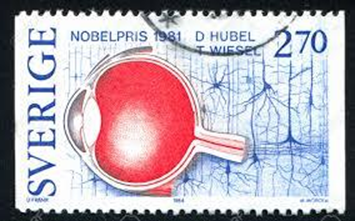
These researchers worked on the cat´s visual system during the 60s and gave us so much relevant information on the organization of the mammalian brain. Hubel and Wiesel studied the retinotopic organization on the visual cortex and they reached out the concepts of topographic specificity, cell- type specificity and functional specificity. These determining concepts for Neuroscience were first coined looking at cat brains [10]. Functional architecture or functional connectomics were found in the occipital cortex, where neurons that detect the same preferred orientation clump together (figure 2). Nevertheless, this magnificent ordered structure was found for simple macro structure, but at the more microscopic level, columns were more disorganized, as they explained: “at this microscopic level the retinotopic representation no longer strictly holds” [10]. This increasing complexity as the level of advanced analysis, may result in the superior sense of sight that cats possess. It is common knowledge that they are able to see in darkness with very little light or detect tiny movements quickly while human vision is far away from these abilities. Nevertheless, these relevant data about our mammalian visual system, that we got thanks to cats have not yet been surpassed today, only replicated and confirmed with new and modern recording techniques.
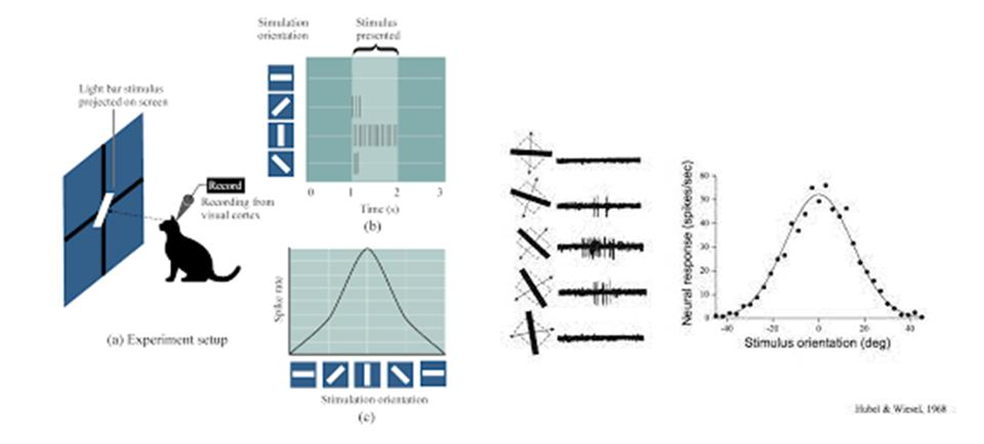
Figure 2: Visual explanation of Hubel and Wiesel method of research: they measured in cat experiments, the intensity of occipital neurons response to different visual stimuli. Accordingly to the nature of the stimuli (more or less inclined), cells in the brain responded with different intensity. That is how they concluded there exists a topographic organization of brain cells and specific for each external stimulus.
Behaviorally speaking cats, that are certainly able to learn, have been also useful in the study of escaping behaviours: Edward Thorndike in the late 1890s observed how instrumental conditioning happened in cats. He proved
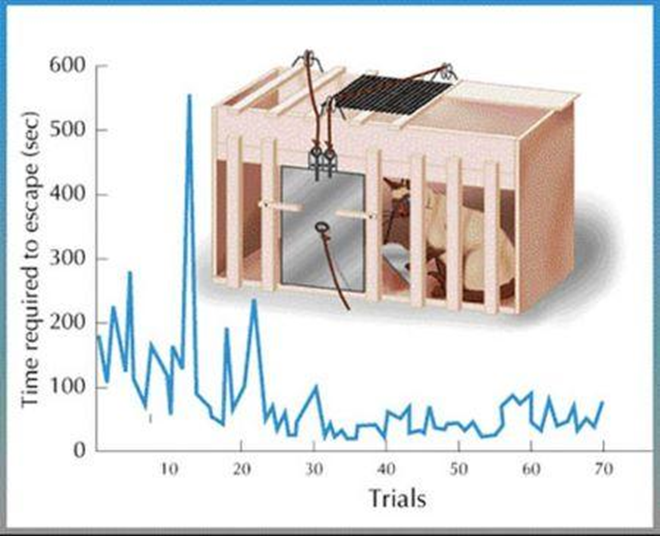
how a hungry cat could learn through trial and error how to escape from a box to get food (positive reinforcement). He proved that the number of trials in learning were decreasing because the cat was learning (figure 3) [12].
Moreover, cats have been very informative in research of paradoxical sleep and fast movements with the inhibition of the lemniscal system [13, 14]. In another order of human affairs, cats have also been a source of inspiration for literature and helped writers to make excellent tales. For instance, the Black Cat is a short terrifying scary horror story written by Edgar Allan Poe in 1843 where psychology of guiltiness and purgative abuses towards black cats are investigated [15]. As an American writer, Edward had not an easy life and his female cat, named Caterina, helped him and his wife to get warm during the cold winters of Boston [9].
Why Do Cats Need Us?
Measuring with Functional near-infrared spectroscopy (fNIRS) it was proved that the human prefrontal cortex is activated when we care for cats and interact with them [7]. Felines do lack this later in evolution brain area in the same development as ours [16]. The cat output network from the thalamus to the prefrontal cortex is phylogenetically different from the same network in monkeys, because in cats, older mediobasal areas predominate. That difference might be the reason why they need our help to provide with the human action derived from this phylogenetically younger brain region (planification, organization and/or scheduling) (Figure 4) That function of our brain might give them peace and calm and reasons to stay with us.
![Figure 4: Drawing depicting the general brain structure of cats and humans. The red region in humans is the prefrontal cortex, which is present in cats much smaller and with older phylogenetical characteristics [16]. Cats have instead a bigger and defined olfactory bulb.](/fulltextimages/12214/fig_4.png)
Obviously cats need us, both domesticated and feral ones, because of the benefits we give them, that might be shelter, care, medicines, food and human organization (frontal lobe). They get protection and guarantees of longer survival with us humans. Our capacity for organization and planning give them benefits in calm and reduce their stress: measuring physiological responses in stools like urinary oxytocin or faecal cortisol metabolite in cats (using the non invasive method of enzyme-linked immunosorbent assays) after interaction with humans it was proved that the level of cortisol and oxytocin metabolites were significantly modified (higher levels). Socialisation with humans changes cat´s metabolisms, that might be due to the fact cats recognize social interaction with humans as important [17].
Method
For a preliminary descriptive gather of information, an online set of 14 questions was submitted online (emails), in the South of Spain area, to several local veterinarian clinics (Veterinary Clinic Avila Fornell and Veterinary clinic Ávila), to a number of animal shelter centres (some of them were closed and the email was returned to sender), to diverse particular owners and to a few municipal centres for the control and management of feline colonies in the cities of Chiclana and Madrid (link of the questionnaire available, [18]. The responders´s identity and belonging were preserved, because only their verified emails were recorded. Despite this wide distribution of the questionnaire (about 100 cases of cats owners) with the consequent dispensing of relevant information about pets caring within each quiz, only 31 people answered back and fulfilled the questionnaire. We might attribute this lack of participation to the specifications of the questionnaire: it is preferably written to collect information from owners who provide shelter, care, pet, food and medicines (veterinary assistance + pet registration in municipal and regional databases). Although the option “other” was also possible to mark in the questionnaire to include all cases, the specific obligatory framing for cats presented in the questionnaire might not be very common yet. As a kind gesture of gratitude we answered back to the responders´s emails thanking them and sharing some graphs obtained. The participation was entirely voluntary and not paid.
Results
After data collection we found that the majority of cat adopters are women (77%) (Figure 5) and they consider their pets mainly as family members (77%) (figure 6).
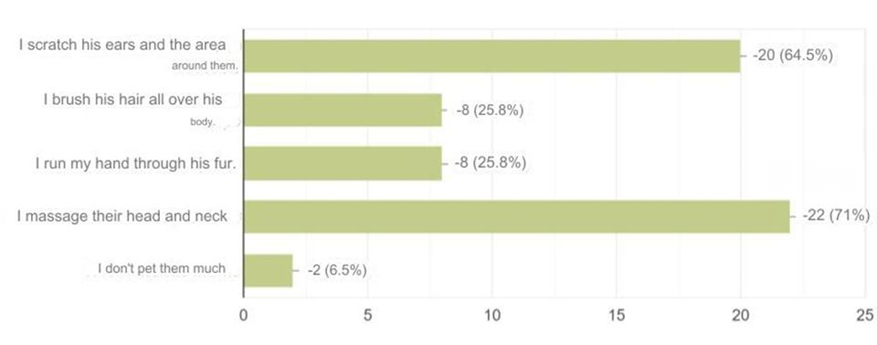
The owners of cats used different games to play with and for having a time with their felines. The most common toy is the cat stick with thread and a soft toy at the end (feathers, teddy, bells) (71 %). They spend time with their pets, and that all have positive effects, (makes them feel better) in 48% of the cases (figure 7&8). None of the answers was “it does not affect me much”. Moreover, they pet their cats mainly massaging their heads and neck (71%) (figure 9).
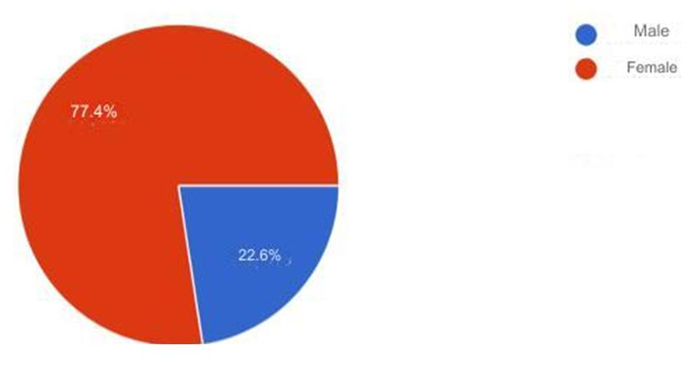
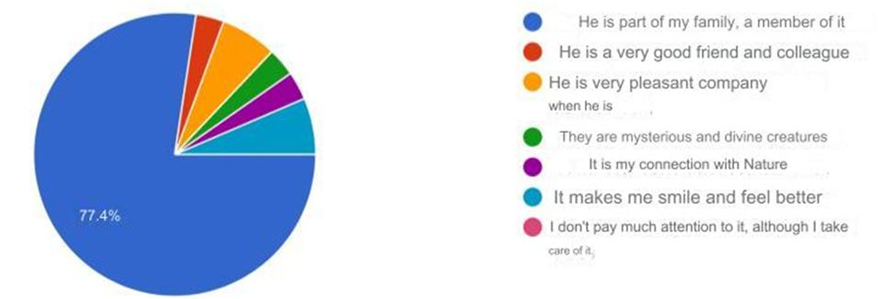
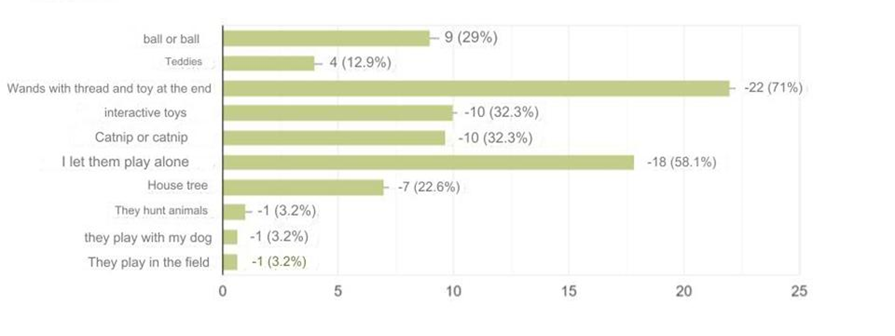
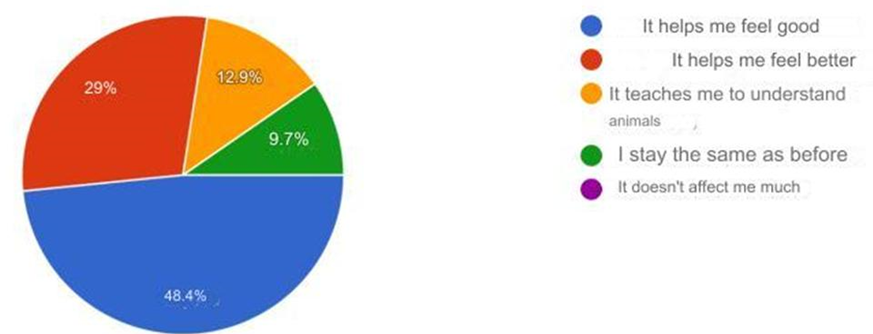
Figure 8: Graph depicting the feelings of owners after having a time of play with their cats. The most common answer was that they have a good time (helps them to feel good) in 48% of the cases. It is noticeable how the answer “it does not affect me much” was not selected in any case, pointing out the games with cats and interaction with their behavior or thinking do not leave anyone indifferent.
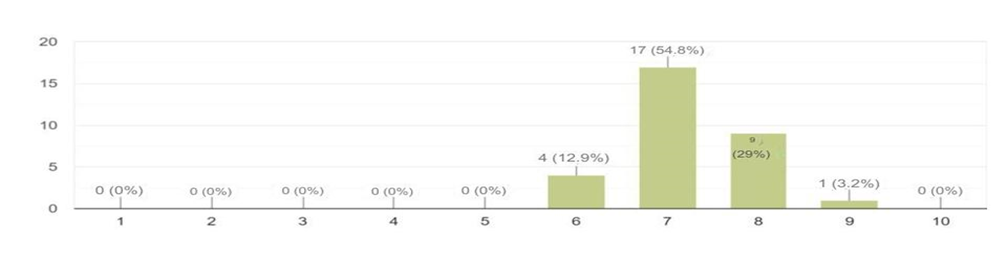
Very interesting to see is that these owners do accept the independence of their pets and their lack of obedience (7 points over 10 in 55 % of the cases), (figure 10). So, although cats have such characteristics, they need us for food, shelter and care (74 %) (figure 11).
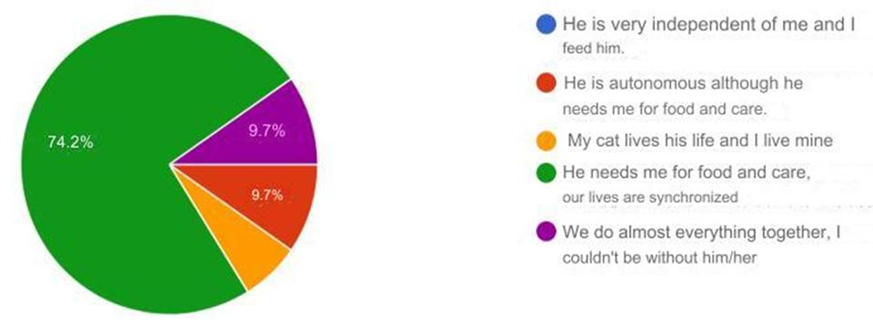
Figure 11: Graph showing the percentage of dependence of cats to their owners. As it is noticeable, the most common answer was the green one: in 74 % of the cases owner admitted their cats depend on them for care and food, but the dependence is limited, being human and feline lives autonomously synchronized. It is remarkable to remember that felines did not lose their hunting abilities during domestication.
Discussion
A symbiotic relationship is defined as a long-term relationship between different species or kingdoms living together which are both having mutual benefits. However in Nature that definition is more reserved to unicellular organisms, we propose and try to demonstrate how that mutualism might be present between cats and humans. Throughout history, felines have been a good companion for humans. The French writer Francois Joseph Mery said “God made the cat to give man the pleasure of stroking a tiger”. However, reaching the level of a human companion has been a long way for them. We proved in the paper that majority of cat owners are women, meaning that it might be easier for them to get into the families through feminine´s permission.
One of the most attractiveness of their personalities is their hunting abilities. That might be the reason why we found the most used toy is the stick with a thread. Cats like to play with such toys because they might satisfy their hunting instincts and enhance their relationship with humans. They can play alone but it is much funnier for them and for humans playing together and learning how each particular brain works in a common activity. Physical contact is also very important for cats to establish the feeling of belonging but also having clear boundaries. As we found in the data, the areas of their bodies they rather better to caress are their heads and around the ears, perhaps because they can not reach much of their own head area by themselves, despite their amazing flexibility. Moreover, that contact might strengthen the bonds between cats and humans. When they decide to be with people and accommodate their space next to them with their characteristic massage, they turn out to be a very comfy and warm company.
Obedience is not the hard core for cats, although they reach to understand humans on many different levels (feelings, body language, etc) and they have the ability to learn from them as Thorndike proved. Their loyalty to their owner is limited till the beginning of their own survival, not being very common to see trained cats as a lion circus. Fear is not a good learning tool for cats, who better decide to escape from pain, and leave it behind instead of making more elaborate reasoning. That simplicity sometimes might make human perception easier, activating their prefrontal cortex to a common human-cat goal instead of, for example, sad thoughts that might arise from excessive human reasoning. Recently in Spain, a terrifying and dramatic apartment block fire occurred in Valencia. In that catastrophe a cat (named Coco) was able to save himself from the flames, first by overcoming his insurmountable fear and then by finding a safe and fresh place to protect himself from the very high temperatures. After a week without food, he was successfully found by the firefighters alive and without having singed even a whisker. Then, lack of obedience might have a good impact on the relationship between cats and humans, with an emphasis on the humbleness of the latter.
Human and cat lives are autonomously synchronized, meaning their lives intersect and complement each other in daily routines, behaviours patterns, or emotional well-being but with clear boundaries of mutual time, space and respect.
Conclusion
In many areas of the planet they do still consider cats as inferior creatures, practising in some cases so cruel techniques of sacrifice or torture games for entertainment. Education and awareness of their benefits and the advantages for human beings is mandatory. The care and attention to these animals could serve as an indicator of the specific level of development in a region. Human and cat lives are autonomously synchronized, meaning their lives intersect and complement each other in daily routines, behaviours patterns, or emotional well-being but with clear boundaries of mutual time, space and respect.. Those might be good reasons why research in this field would be highly recommended.
Acknowledgement
We would like to thank Prof. Swaab at the Netherlands Institute for Neuroscience for their suggestions while the preparation of this work. We would like to thank the Cat Museum in Amsterdam (Kattenkabinet) for their artistic dedication to felines and in Spain to Veterinary Clinica Avila Fornell, specifically to Francisco Lira Naranjo (Coleg. 266) and to the Department of “Plan Municipal de control y gestión de colonias felinas urbanas de Madrid” for their advice and veterinary indications toward the cat cares. Also to the editor and reviewers for their comments of improvement.
Credit of Images
Photographs presented in this work come from files with a free licence in the public domain as Wikimedia Commons.
References
-
Kindersley D (DK) (2014) The Cat Encyclopedia: the definitive visual guide. DK Pet Illustrated Edition. London, New York, Melbourne, Munich and Delhi, Barnes & Noble.
-
Morris D (1986) Catwatching: the essential guide to cat behavior. Good reads pp: 150.
-
Schöt S (2018) The secret language of cats. How to understand your cat for a better, happier relationship. Hanover Square Press. Canada, USA pp: 288.
-
Grigg EK, Turner DC, Lyons LA, Hart BL, Hart LA (2023) Editorial: Exploring cats: their behaviours and human cats interactions. Front Vet Sci 10: 1329398.
-
Amiot CE, Santerre-Bélec L (2022) Toward more equal and mutual human-pet relations: insights and possible solutions based on social psychological theories. Front Vet Sci 9: 1009267.
-
Rusbult CE, Martz JM, Agnew CR (1998) The Investment Model Scale: Measuring commitment level, satisfaction level, quality of alternatives and investment size. Pers Relatch 5(4): 357-387.
-
Nagasawa T, Ohta M, Uchiyama H (2020) Effects of the characteristic temperament of cats on the emotions and hemodynamic responses of humans. PloS ONE 15(6): e0235188.
-
Junça Silva A (2022) Friends with benefits: the positive consequences of pet-friendly practices for workers´ well-being. Int J Environ Res Public Health 19(3): 1069.
-
Kindersley D (DK) (2014) Complete cat care. DK Pet Illustrated Edition.
-
Hubel JE, Wiesel TN (1962) Receptive fields, binocular interaction and functional architecture in the cat´s visual cortex. J Physiol 160(1): 106-154.2.
-
Reid RC (2012) From functional architecture to functional connectomics. Neuron 75(2): 209-217.
-
Sandler AJ (2008) Chronic recording during learning. In: Nicolelis MAL (Ed.), Methods for Neural Ensemble Recordings, 2nd (Edn.), Boca Raton Taylor & Francis 7.
-
Henley K, Morrison AR (1974) A re-evaluation of the effects of lesions of the pontine tegmentum and and locus coeruleus on phenomenya of paradoxical sleep in the cat. Acta Neurobiol Exp 34(2): 215-232.
-
Pompeiano O (1982) Inhibition of sensory transmission in the cat lemniscal system during fast movements: a review. Isr J Med Sci 18: 105-118.
-
Poe E (1843) The Black Cat. Pearson Education Limited, England, UK pp: 1-4.
-
Khokhryakova IM (1978) Structural organization of the prefrontal cortex in cats and its differences from that in monkeys. Neurosci Behav Physiol 9(1): 103-109.
-
Nagasawa T, Ohta M, Uchiyama H (2021) The urinary hormonal state of cats associated with social interaction with humans. Front Vet Sci 8: 680843.
-
Garcia-Falgueras A (2024) Cuestionario sobre convivencia humano-felino.
- Occupational Stress and Mental Health Outcomes Among Police Officers: A Mini Review
- The Experience of Counterproductive Leadership on Mental Health and Impact on Retention in U.S. Marines: A Phenomenological Study
- Nomophobia in the Digital Age: A Study on College and University Students
- Emotional Regulation in Children with Autism and Learning Disabilities
- Antisemitism on American College Campuses and Its Impact on Jewish Students
- Exploring the Role of Empathy in the Associations of Family Functioning and Purpose in Life with Attitude towards Abortion among Undergraduates: A Moderation Analysis