
Exploring Plasma-Based Water Treatment Technology to Achieve a Cleaner Future
Plasma as the fourth state of matter otherwise referred to as ionized gases has gained significant attention recently due to its vast applications across different fields of research such as the medical, the industrial, nanomaterials, etc. The role of clean water for sustainability is important. However, water contaminants have remained a big challenge especially in Nigeria and Africa in general, making it difficult to gain access to clean water, resulting to inadequate clean water supply for many communities. This review work explores the applications of non-thermal plasmas for effective water treatment. It is and upshot from previous studies on the applications of plasma for water treatment and has shown the capability of this method to effectively degrade complex pollutants and heavy metals, etc. as an environmentally friendly approach without the use of harmful chemical addictives like chlorine. Plasma-based method for water treatment is significant for environmental sustainability and general health of the public. This review will be useful for state actors, industries and further research is recommend to assess the economic impacts of plasma-based method of water treatment.
Tachia MJ¹*, Akume VT², Ochoche S³ and Akaahimbe AS⁴
¹Moscow Institute of Physics and Technology, Russia ²Benue State University, Centre of Excellence, Food Technology and Research, Nigeria ³Peoples' Friendship University of Russia, Russia ⁴South Ural State University, Russia *Corresponding author: Mfeuter Joseph Tachia, Moscow Institute of Physics and Technology, Moscow, Russia, Email: tachiajoseph3@gmail.com Sustainability
Abbreviations
NTP: Non-thermal Plasma; PECVD: Plasma-enhanced Chemical Vapor Deposition; THMs: Trihalomethanes; HAAs: Haloacetic Acids; RONS: Reactive Oxygen and Nitrogen Species; CAPP: Cold Atmospheric Pressure Plasma; UV: Ultraviolent; PAW: Plasma-activated Water; MB-CPA: Microbubble-enhanced Cold Plasma Activation.
Introduction
Plasma is the fourth state of matter characterized by the ionization of charged particles and neutral ionized gases. Due to vast areas of application of plasmas, non-thermal plasma (NTP) has gained attention across many fields, for instance NTP is used for different applications in the medical field such as wound and cancer treatment, sterilization of medical instruments and treatment of skin diseases, etc. In engineering, plasma-enhanced chemical vapor deposition (PECVD) which is used for the synthesis of nanoparticles. Industrially, NTPs are used in food safety and preservation as well as in water treatment. The ability of NPT to generate reactive species such as hydroxyl radicals (OH-), superoxide (O2 -), peroxide ions (HO2), oxygen (O) and hydrogen (H) atoms provides a unique capability for disinfection of water contaminants. Despite the wide use of this new method of water treatment in other developed regions, the challenge of water pollution and contamination still persist in many developing countries such as Nigeria and other regions around the world. The lack of access to clean water in many Nigerian communities has posed a significant threat to the health of human lives, aquatic animals, agricultural products, which has an overall effect on the socioeconomic development of the nation. The importance of clean water cannot be overemphasized as humans and animals depends on water for survival. To have clean and safe water for drinking, agricultural and other purposes is very crucial. The role of NTP in water treatment has received increasing attention in recent studies due to its ability to effectively disinfect and degrade complex pollutants, inactive harmful microorganisms and other environmental contaminants [1, 2, 3]. Contrary to the use of chemical additives in the traditional water treatment, which are not environmentally friendly, the plasma-based water treatment technology focus on avoiding the use of these chemical additives. For example, chlorination which involes the process of adding chlorine to water for treatment has been widely criticized for producing harmful byproducts such as trihalomethanes (THMs), chlorite, and haloacetic acids (HAAs), which are toxic to both humans and aquatic organisms. In contrast, plasma treatment relies on reactive oxygen and nitrogen species (RONS) generated during plasma discharge, which degrade pollutants and neutralize pathogens without leaving harmful residues [4, 5]. Moreover, the plasma-based method of water treatment aligns with the global push toward sustainability and green technology due to its environmentally friendly nature, making it suitable the future of water management [6, 7, 8].
The focus of this review is to explore the applications of NTP for water treatment, by considering the various approaches of plasma sources used for water treatment, including the discharge plasmas, the cold atmospheric pressure plasma (CAPP), and other direct applications of plasma. This review also highlights the benefits of plasma- based method of water treatment, which can be used as reference material for further studies. The subsequent sections are organized as follows: Section II focus on the Environmental Consequences of Unclean Water, Section III presented the Mechanisms and Efficiency of Plasma-Based Water Treatment and Section IV highlights the Methods of Plasma-Based Water Treatment. Moreover, Section V emulate the advantages of plasma-based water treatment, Section VI shows the Common Water Contaminants in Nigeria and Section VII compared the Plasma-Based Methods versus Traditional Techniques for water treatment. Whereas, Sections VIII presents the Challenges and Potentials of Plasma-Based Water Treatment. Finally, Section IX concludes the paper, summarizing the key points outlined in the abstract.
Environmental Consequences of Unclean Water
Water is essential for life, hence ensuring the safety of water is vital for both human and animal consumption, with as its contamination affects not just individuals but also crops and the environment at large. Water treatment is crucial to ensuring the availability of clean and safe water for both human consumption and environmental sustainability. However, as industrialization, agricultural practices, and urbanization continue to introduce a wide range of pollutants into water sources, traditional purification methods have struggled to keep up with the complex and diverse contaminants present in modern water systems. According to Verma P [9] air and land pollution have a lesser impact on the environment than water pollution, which is the main type of pollution that has a significant negative impact. Despite advances in sanitation and water delivery, water pollution remains a persistent public health concern globally indicating how it outweighs air and soil pollution, highlighting the need for continued attention and resource allocation. Water pollution is still a public health concern in modern times, despite increased funding, coverage, and advancements in sanitation and water delivery. In recent years, plasma-based water treatment has emerged as a highly efficient, sustainable, and scalable alternative, offering several advantages over conventional methods. Plasma technology leverages the power of non-thermal plasma (NTP) to degrade organic pollutants, eliminate harmful microorganisms, and improve water quality without relying on high temperatures or chemical additives. Despite efforts to combat water pollution and ensure clean water supplies, challenges persist, especially in places like Nigeria, where pollution stems from industrial, urban, and agricultural activities [10, 11, 12]. Millions in Nigeria lack access to safe drinking water, impacting public health and the environment. Contamination of groundwater and other sources with heavy metals and waste materials aggravates health and environmental concerns. Effective waste management, improved water systems, and heightened environmental awareness are crucial steps to mitigate the impacts of water pollution, as depicted in Figure 1.
![Figure 1: Common Types of Water Pollution [13].](/fulltextimages/13352/fig_1.png)
The Mechanisms and Efficiency of Plasma- Based Water Treatment
The core of plasma-based water treatment lies in its ability to generate reactive oxygen and nitrogen species (RONS) through the interaction of non-thermal plasma with water. These highly reactive species are capable of breaking down complex organic molecules, destroying harmful pathogens, and neutralizing a wide range of contaminants. Unlike thermal plasma, which requires high energy input and elevated temperatures, non-thermal plasma operates at room temperature, making it a more energy-efficient and environmentally friendly option for water treatment. Studies by Kozáková Z, et al. [14, 15] demonstrate the efficacy of these plasma-generated species in decontaminating water, making NTP an excellent option for water purification. This mechanism is further amplified when combined with advanced treatment technologies such as catalysis and membrane filtration, as highlighted by Wang H, et al. [16].
One of the key advantages of plasma-based treatment is its effectiveness in eliminating microbial contamination. Research has demonstrated that plasma treatment can rapidly decontaminate water by removing harmful bacteria such as Pseudomonas aeruginosa. For instance, Bousba HE, et al. [17] showed that complete bacterial decontamination could be achieved within just 12 minutes of plasma exposure. This is significantly faster than many traditional methods, such as chlorination, which can take hours to fully disinfect water. Additionally, plasma treatment eliminates the need for chemical disinfectants, which can introduce harmful by- products such as trihalomethanes (THMs) and haloacetic acids (HAAs) into the water supply. Instead, plasma treatment relies on the generation of oxidants that directly destroy microbial cell structures, providing a cleaner and healthier alternative to chemical-based methods [18]. The absence of harmful chemical by-products also aligns plasma-based methods with global sustainability goals. As environmental regulations tighten and public awareness of water quality issues increases, there is growing pressure on industries and municipalities to adopt greener and more sustainable water treatment practices [17, 18, 19]. Plasma technology offers an attractive solution in this regard, as it produces minimal environmental impact and requires fewer resources compared to conventional methods. Moreover, plasma- based water treatment is highly adaptable to different water sources and types of contamination, making it suitable for a wide range of applications, from industrial wastewater treatment to drinking water purification [17, 20, 21].
Methods of Plasma-Based Water Treatment
Discharge Plasma
Cold discharge plasma has gained an increase attention for water treatment recently due to its cost-effectiveness and its simplicity to operate. The cold discharge plasma has emerged as an innovative and viable solution to addressing the prevalent issues of water pollutions. This technique uses the non-thermal plasma to create the reactive species such as the Ozon (O3), superoxide (O2 -), nitric oxide (NO) etc., that degrade organic pollutants in water and other environmental contaminants. The work explore different discharge plasma approaches, including the discharge in the gas phase above the liquid [3] (Figure 2a), direct discharges in the liquid phase (Figure 2b), and discharges in multiphase environments or hybrid gas-liquid systems (Figure 2c) as illustrated in the figures.
![Figure 2: Use of Discharge Plasma for Water Treatment [3].](/fulltextimages/13352/fig_2.png)
These different systems show how the discharge medium, namely in the air or gas phase, in the liquid phase, and the combination of gas and liquid phases affects the production of reactive species and the degradation of contaminants. For example, gas-phase discharges above the liquid produce the reactive oxygen and nitrogen species (RONS), and then diffuse into the water, while direct discharges in the liquid phase create reactive species directly in the water, which increases the efficiency of contaminant breakdown. The study highlights the importance of the reactor design, the type of discharge, and its efficiency for water treatment. Also, the efficiency of discharge plasma can be enhanced by integrating the plasma processes with other treatment methods such as ozone treatment or the ultraviolent (UV) treatment [3]. Emphasize the importance of addressing energy efficiency, sustainability, and by-product analysis to ensure the safe and effective use of plasma discharge technology in water treatment.
Cold Atmospheric Pressure Plasma (CAPP)
Cold Atmospheric Pressure Plasma (CAPP) is a type of non-thermal plasma that has a lot of potential and it is used for water treatment for disinfection, removal of pollutants, and for breakdown of antibiotic residues. Antibiotic contamination in water is a major contributor to the global rise in antibiotic resistance, and CAPP offers a promising method to combat this issue. The study by Wielogorska E, et al. [22] examined the ability of CAPP to degrade common antibiotics compounds such as β-lactam, which poses a significant threat to the environmental when they enter into the water systems. The study found that CAPP can break down these compounds through a mechanism involving pH- driven peroxidation. The effectiveness of CAPP according to Wielogorska E, et al. [22] this can be influenced by factors such as the residue concentration, the pH levels, and the presence of macromolecules in the water. The study also proposed that, CAPP parameters such as the plasma jet, operating voltage, gas composition, and the treatment duration can be optimized to target specific contaminants. Moreover, CAPP can be applied to treat other pharmaceutical residues, making it a versatile tool for water decontamination. Despite the promise of CAPP, several challenges remain. One critical concern is the long-term impact of CAPP on microbial communities, ecosystems, and human health. More research is needed to assess these effects and to ensure that CAPP does not introduce new risks into the water treatment process. Furthermore, the scalability of CAPP technology needs to be evaluated to determine its feasibility for large-scale water treatment systems.
Direct Plasma Treatment of Water
Direct plasma treatment of water is another innovative method that uses atmospheric pressure discharges to decompose organic pollutants directly. Studies by Manakhov [23] explores the application of gliding arc plasma technology for treating organic waste gases from industrial emissions, with a particular focus on separating oil from water and improving oil properties. Figures 3a and 3b illustrate two types of plasma systems used for water treatment: the stretched arc plasma system (Figure 3a) and the atmospheric plasma torch (Figure 3b) respectively.
![Figure 3: Plasma Technology for Water Treatment: (a) Stretch Arc Plasma (b) Atmospheric Plasma Torch [23].](/fulltextimages/13352/fig_3.png)
The stretched arc plasma system is particularly effective for treating produced water, reducing bicarbonate ions, and to prevent foul in water treatment systems. Meanwhile, the atmospheric plasma torch has shown promise in the elimination of the organic pollutants such as polycyclic aromatic hydrocarbons and toluene, which achieve high destruction rates with remarkable energy efficiency. A novel technology known as the ELIPSE process, which utilizes thermal plasma under a water column, has been introduced for elimination of the organic compounds in aqueous solutions. This process highlights the potential of direct plasma treatment for addressing the challenges of produced water treatment, particularly in oil and gas industries. However, Manakhov [23] emphasize the importance of developing cost-effective materials and processes for membrane oil/water separation and desalination to ensure the economic viability of plasma technologies in water treatment.
Advantages of plasma-based Water Treatment
Beyond its use in water purification, plasma technology has also demonstrated significant benefits in agriculture, particularly through the use of plasma-activated water (PAW). PAW is water that has been treated with plasma to enhance its chemical and physical properties, such as pH, conductivity, and reactive species concentration. These properties have been shown to have a positive impact on plant growth and development, making PAW a promising tool for sustainable agriculture. For example, research by Pal P, et al. [10] revealed that PAW treatment significantly improved the biomass and protein content of oat plants. This suggests that plasma treatment not only enhances water quality but also enriches it with properties that support plant health. The improved growth observed in crops irrigated with PAW can be attributed to the increased availability of nutrients and the enhanced capacity of plants to absorb these nutrients, as well as the disinfection of harmful pathogens that may otherwise inhibit plant development. In addition, the physical and chemical changes induced by plasma treatment, such as the slight acidification of water (lower pH) and increased conductivity, can contribute to more effective nutrient delivery to plants. Similarly, Kozáková Z, et al. [14] highlighted that these properties of plasma-treated water make it particularly suitable for use in agriculture, where sustainable practices are increasingly being prioritized. Plasma-activated water offers a more environmentally friendly approach to improving crop yields and food security, by reducing the need for chemical fertilizers and pesticides, which can pollute water sources. Studies by Kozáková Z, et al. [14, 15] point to the growing potential of plasma-based water treatment in these areas, particularly as concerns about water scarcity and contamination intensify. In general, plasma-based water treatment is highly efficient in degrading organic pollutants without high temperatures or chemicals, improving water quality [24, 25]. It is cost-effective, easy to operate, and adaptable to various treatment needs. Environmentally friendly, it minimizes harmful by-products, aligning with sustainability goals. Furthermore, it is highly scalable, making it a promising alternative to traditional water treatment methods.
Common Water Contaminants in Nigeria
Water contamination in Africa, particularly in Nigeria, presents a significant challenge to public health and environmental integrity. Industrial discharge, agricultural runoff, and improper waste management contribute to the degradation of water quality, leaving millions of people without access to safe drinking water. The situation is compounded by inadequate infrastructure, insufficient water treatment facilities, and a lack of effective regulatory frameworks. Groundwater sources in Nigeria, which many communities rely on, are often contaminated with heavy metals, pathogens, and industrial waste, leading to widespread waterborne diseases and environmental degradation [1, 2, 3]. In another view, Tomei G, et al. [11] conducted a review on the impact of greenhouse gas emissions from industrial activities in southern Nigeria, highlighting their contribution to climate change and subsequent water quality degradation. A natural cause such as flooding has become a recurring issue since 2010. The country›s northern regions saw a decline in water availability and grazing fields, causing herders› grazing routes to shift towards more southern regions [26]. This has resulted in farmers-herders’-conflicts within several communities.
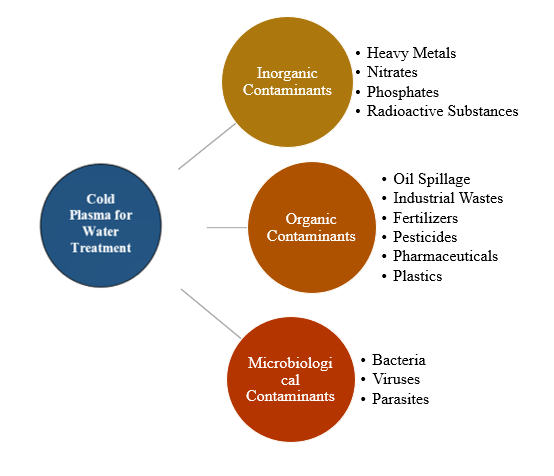
In this context, plasma technology offers a powerful tool for addressing water pollution in regions with limited access to advanced water treatment facilities. Cold discharge plasma, a form of low-temperature plasma, has been particularly effective in degrading pollutants such as pharmaceuticals, dyes, and microplastics from water, making it suitable for both industrial and domestic applications. For example, cold atmospheric plasma (CAP) has been shown to effectively degrade microplastics, achieving weight reductions in materials like polypropylene and low- density polyethylene. These results show the potential of plasma technology in mitigating pollution from persistent pollutants like microplastics that are difficult to remove using conventional methods [20]. Moreover, advancements in plasma technology, such as microbubble-enhanced cold plasma activation (MB-CPA), have further improved the transfer of reactive species into water, significantly increasing the efficiency of contaminant degradation [20, 25]. This technology has demonstrated the ability to degrade pollutants, such as antibiotics and synthetic dyes, by more than 80%, highlighting its scalability and applicability in large-scale wastewater treatment [27]. Such innovations are critical for regions like Nigeria, where the need for efficient, cost-effective, and scalable water treatment solutions is paramount. Plasma-based water treatment offers a versatile approach to tackle various contaminants in water sources across Nigeria. It efficiently deals with heavy metals and oil spills, disinfects water from industrial wastes, and other harmful substances like the pharmaceutical wastes, pesticides, and fertilizers. It is also effective in addressing agricultural runoff pollutants, modifying plastic surfaces for easier removal, and interacting with radioactive substances. Plasma technology enhances water quality and ongoing research aims to optimize its applications for safer and healthier water supplies in communities. Cold plasma is effective for water treatment as shown in Figure 4.
Plasma-Based Methods Versus Traditional Techniques
Plasma-based water treatment methods offer several advantages over traditional purification techniques such as chlorination, ozonation, and UV treatment. The reactive species generated by plasma can target a broader range of contaminants, including both organic pollutants and microbial pathogens. Unlike chemical treatments, plasma systems do not introduce harmful by-products into the water. Chlorination, for example, can lead to the formation of carcinogenic compounds like trihalomethanes (THMs), while ozonation can produce bromates, which are also harmful to human health [12, 19]. Moreover, UV light can only eliminate the micro-organisms present in the water. It does not remove any other contaminants from the water such as heavy metals, salts, Chlorine, and artificial substances such as petroleum or pharmaceutical products. Plasma treatment avoids these issues by relying on physical processes to generate reactive species that degrade contaminants. Furthermore, plasma-based systems are highly adaptable and can be integrated with other treatment technologies to enhance their effectiveness. For example, combining plasma treatment with membrane filtration or catalysis can significantly improve the removal of complex pollutants, such as heavy metals and pharmaceuticals, from water [16]. This makes plasma technology particularly suitable for addressing the diverse range of contaminants found in industrial wastewater, agricultural runoff, and municipal sewage. Moreover, plasma treatment is not constrained by the presence of suspended solids or turbidity in the water, which can reduce the effectiveness of UV or ozonation systems. Plasma can be applied directly to contaminated water, regardless of its clarity, making it a more robust and reliable option for treating complex or heavily polluted water sources.
Challenges and Potentials of Plasma-Based Water Treatment
While plasma-based water treatment is promising, there are still challenges to overcome in order to maximize energy efficiency and incorporate these technologies into the current water treatment systems. One of the primary concerns is the energy requirement of plasma generation. Energy consumption must be carefully considered when scaling up plasma processing systems for industrial or municipal use, even though non-thermal plasma is more energy efficient than thermal plasma. The balance between processing efficiency and energy input must be optimized to ensure that plasma technology remains cost-effective and sustainable. The work by Wang H, et al. [16] emphasize the importance of continued research into the design and operation of plasma reactors, particularly in terms of improving energy efficiency and minimizing implementation costs. As plasma- based water treatment systems are developed for larger- scale applications, innovations in reactor design, such as more efficient discharge configurations or the integration of plasma with other advanced treatment technologies (e.g., membrane filtration or catalysis), will be the key these challenges [8, 19, 25].
Another challenge lies in integrating plasma treatment with existing water treatment infrastructure. Many traditional water treatment plants are not designed to accommodate plasma systems, which may require significant retrofitting or the installation of new equipment. However, the versatility of plasma technology presents opportunities for hybrid treatment systems that combine the strengths of both plasma-based and conventional methods. For instance, plasma treatment could be used as a pre-treatment step to degrade complex organic pollutants, followed by conventional filtration or sedimentation processes to remove particulate matter [12, 15, 20]. This would not only enhance the overall efficiency of the water treatment process but also reduce the strain on conventional systems, extending their operational lifespan and reducing maintenance costs.
Conclusion
In conclusion, this review provides a comprehensive examination of plasma-based water treatment methods, highlighting their versatility and effectiveness in tackling a wide range of contaminants commonly found in Nigeria’s water systems. The novelty of this study lies in its detailed exploration of cold discharge plasma and other plasma technologies for applications such as heavy metal oxidation, oil spill remediation, and the degradation of industrial, agricultural, and radioactive water pollutants. Plasma’s ability to disinfect water and improve agricultural yields through plasma-activated water further underscores its potential as a sustainable and transformative solution to global water pollution challenges. Plasma-based water treatment methods offer significant advantages over traditional purification approaches by utilizing reactive species to eliminate contaminants without harmful by- products. However, the full potential of these technologies will only be realized through continued research and development aimed at optimizing energy efficiency, reducing costs, and integrating plasma systems with existing water treatment infrastructures. Future work should focus on enhancing reactor designs, scaling up plasma applications for widespread use, and thoroughly assessing the environmental and economic impacts of plasma-treated water. With ongoing advancements, plasma technology is poised to play a critical role in modern water management, contributing to both environmental sustainability and public health.
References
-
Takeuchi N, Yasuoka K (2021) Review of plasma-based water treatment technologies for the decomposition of persistent organic compounds. Jpn J Appl Phys 60: SA0801.
-
Thakulla D, Fisher PR (2023) Effects of Cold Plasma and Ozone Water Treatment on Micronutrient Solubility. Horticulturae 9(5): 568.
-
Zeghioud H, Nguyen-Tri P, Khezami L, Amrane A, Assadi AA (2020) Review on discharge Plasma for water treatment: Mechanism, reactor geometries, active species and combined processes. Journal of Water Process Engineering 38: 101664.
-
Barjasteh A, Dehghani Z, Lamichhane P, Kaushik N, Choi EH, et al. (2021) Recent progress in applications of non- thermal plasma for water purification, bio-sterilization, and decontamination. Appl Sci 11(8): 3372.
-
Tariq A, Mushtaq A (2023) Untreated wastewater reasons and causes: a review of most affected areas and cities. IJCBS 23(1): 121-143.
-
Lowe M, Qin R, Mao X (2022) A Review on Machine Learning, Artificial Intelligence, and Smart Technology in Water Treatment and Monitoring. Water 14(9): 1384.
-
Ahmed M, Mavukkandy MO, Giwa A, Elektorowicz M, Katsou E, et al. (2022) Recent developments in hazardous pollutants removal from wastewater and water reuse within a circular economy. NPJ Clean Water 5(1): 1-25.
-
Etale A, Onyianta AJ, Turner SR, Eichhorn SJ (2023) Cellulose: A Review of Water Interactions, Applications in Composites, and Water Treatment. Chem Rev 123(5): 2016-2048.
-
Verma P, Ratan JK (2020) Assessment of the negative effects of various inorganic water pollutants on the biosphere—an overview. Inorganic Pollutants in Water, pp: 73-96.
-
Pal P (2023) Discharge Analysis and Characterisation of Cold Atmospheric Pressure Plasma Jet and Generation of Plasma Activated Water for Agriculture Applications. IEEE Pulsed Power Conference (PPC), pp: 1-4.
-
Tomei G, Saleem M, Ceriani E, Pinton A, Marotta E, et al. (2023) Cold Plasma for Green Advanced Reduction/ Oxidation Processes (AROPs) of Organic Pollutants in Water. Chemistry 29(65): e202302090.
-
Saedi Z, Kuddushi M, Gao Y, Panchal D, Zeng B, et al. (2024) Stable and efficient microbubble-enhanced cold plasma activation for treatment of flowing water. Sustainable Materials and Technologies 40: e00887.
-
Mukherjee S (2024) Types of Water Pollution.
-
Kozáková Z, Čechová L, Lišková K, Šindelková K, Korečková S, et al. (2024) Plasma treated water as a tool for sustainable applications. Plasma Physics and Technology 11(1): 1-6.
-
Weihe T, Yao Y, Opitz N, Wagner R, Krall J, et al. (2023) Plasma-Treated Water: A Comparison with Analog Mixtures of Traceable Ingredients. Microorganisms 11(4): 932.
-
Wang H, Qin K, Zakari RY, Lu G, Yin J (2022) Deep neural network-based relation extraction: an overview. Neural Comput Appl 34: 4781-4801.
-
Bousba HE, Saoudi M, Namous WSE, Sahli S (2023) Interaction between Cold Atmospheric Plasma Jet and Water Contaminated with Pseudomonas Aeroginosa Bacteria for Decontamination Purpose. J Phys Conf Ser 2426(1): 012052.
-
Gonzalez-Lizardo A, Morales G, Rondon J, Santiago J, Landron A, et al. (2024) Water Purification Via Plasma. Plasma Physics, Arxiv.
-
Noman EA, Al-Gheethi AAS, Mohamed RMSR, Talip BA, Nagao H, et al. (2019) Consequences of the Improper Disposal of Greywater. In: Mohamed RMSR, et al. (Eds.), Management of Greywater in Developing Countries. Cham: Springer International Publishing, pp: 33-50.
-
Velasquez JA, Bao Y, Huang JY (2024) Atmospheric cold plasma as a novel approach to remediating microplastics pollution in water. Environ Pollut 356: 124390.
-
Al-Husein MNS (2022) Effects of Unclean Water on the Structural Elements. IJSRP 12(8): 336-338.
-
Wielogorska E, Flynn PB, Meneely J, Thompson TP, Graham WG, et al. (2023) Assessment of Cold Atmospheric Pressure Plasma (CAPP) Treatment for Degradation of Antibiotic Residues in Water. Antibiotics (Basel) 12(7): 1115.
-
Manakhov A, Orlov M, Grokhovsky V, AlGhunaimi FI, Ayirala S (2022) Functionalized Nanomembranes and Plasma Technologies for Produced Water Treatment: A Review. Polymers (Basel) 14(9): 1785.
-
Some S, Mondal R, Mitra D, Jain D, Verma D, et al. (2021) Microbial pollution of water with special reference to coliform bacteria and their nexus with environment. Energy Nexus 1: 100008.
-
Yang JK, Cho CH, Kim JH, Seok DC, Yoo S, et al. (2022) Water Surface Plasma Source for Large Area Water Treatment by Using Volume Dielectric Barrier Discharge. IEEE Transactions on Plasma Science 50(11): 4612- 4619.
-
Gürsoy G (2020) Farmers Herders Conflict in Nigeria.
-
Zhang S, Zheng H, Tratnyek PG (2023) Advanced redox processes for sustainable water treatment. Nature Water 1(8): 666-681.
- Sense, Gravity, Parity & Chirality in Mathematical Physics
- Quantum Lattice Simulations PHYSICS: Microcircuit Particle Formation and Observable Macroscopic Irreversible Time - A Discrete Lagrangian with Cellular Automata Framework
- Quantum Biology from Biomacromolecule to Cell, and Central Dogma Described by Quantum Theory
- Focus, Agility, Speed and Technology (FAST) for Sustainability and Growth
- Square Root Metric Geometry and Pati-Salam Model in Curved Space-Time
- A Simple System Demonstrating the Mpemba Effect in Classical Mechanics