
On Singing Together
This paper starts from the remarkable habit of yoik singing among the Sámi people and the notion of togetherness in ‘singing together’, being confronted with the role of technology in the contemporary manifestations of ‘singing’. An important link appears to exist between several forms of grooming and the social dimensions of language and singing, as previously shown by Robin Dunbar. These types of interaction surpass the physiological, hormonal and psychological roles of grooming in humans, in non-human primates and in other mammals. For they also determine the constraints of group-forming processes in mammals, and social structures in humans too. The characteristic group size of grooming mammals has been reported to determine the necessity of social stratification. Number constraints therefore form a silver lining throughout this paper. The analogy with artificial language models, and modern language models (MLM) in particular, has been chosen following the suggested applicability of AI for the deciphering of the language of Whales (Cetaceans). The polemic discussion between Noam Chomsky’s so-called classical generative linguistics and propagators of the nonlinguistic MLM approach (referring to Steven T. Piantadosi) is found an instructive heuristic for analyzing the future impact of AI on human culture. It is suggested that AI-generated analogues of ‘singing together’ will profoundly interact (or already do so) with social stratification and with the conservation of human values.
Outline
- Introduction: on Sami languages, ‘yoik’ and the failed a-political claims of Eurovision
- Grooming, Gossiping and Singing: the Languages of togetherness
- The Singing of Wolves, Wolf packs and Hyenas
- The Whale alphabet “If you think technology is going to solve your problems, then you don’t understand technology! And you don’t understand your problems!” (© Laurie Anderson, Let x=x, Amsterdam concert, June 8, 2023).
- AI: the Singing Internet of the future?
- Concluding remarks.
Introduction: on Sámi Languages, ‘Yoik’ and the Failed A-Political Claims of Eurovision
It is common knowledge that there are many languages spoken by the Sámi people (Sámegiella), the people living in the North of Norway, Sweden, Finland and Russia. In some of these northern countries, the Sámi languages are officially recognized (there are about 12 officially registered), for instance in Sweden (since 2000), and used in governmental institutes, courts, pre-schools and nursing homes (in Sweden: since 2002). Although it has been noted that although there is some mutual intelligibility between neighboring Sámi languages [1], speakers of more widely separated languages cannot understand without learning or extensive exposure to the other language. Nevertheless, they all understand ‘yoik’ singing, the vocal tradition and way of communication among the Sámegiella. Over a long distance they still are able to communicate, but maybe don’t understand the message in a literary way. The above example of traditional singing culture is chosen as a metaphor in this paper. The core idea of this paper was not to write about music, or about the vocal or other practices in traditional music, for these may be tainted by ‘traditionalism’ [2], cultural imprinting, or worse, by nationalist ideologies, but on the experience of ‘singing together’. These alleged derailments are not purely fictitious, since it was claimed that the artistic movement of ‘naturalism’ not only was allied to the musical expression of traditionalistic and folkloristic elements in music, but also, and inevitably, to nationalism! [3].
The association of ‘singing together’ with the connotation of ‘nationalism’ is most explicitly demonstrated in the tradition of yearly song contests, like the Eurovision Song Contest [4]. The question whether such a contest of national song writing and singing can be regarded as a truly a-political manifestation, as it was originally formulated by the European Broadcasting Union (EBU) in 1954/1955, in 2024 became a matter of serious concern1. A quintessential
1 When after lifting the foggy blankets, that obscured the disqualification of the Dutch participant (Joost Klein, ° 1997, Leeuwarden) with the song Europapa, the protests in Malmö, Amsterdam and elsewhere, against the participation of Israel (due to the war in Gaza) at the Eurovision Contest 2024, the following facts and suppositions became disclosed: 1) (supposition) student protests and other demonstrations can be hijacked by pro-Palestine and/or pro-Israel movements and /or organizations; 2) (fact) provocations from either side take place; 3) (supposition) the exclusion of certain countries, or the refusal to exclude certain others from participation (e.g. Israel) is highly politically motivated; 4) (inference) the decisions of the EBU not to exclude Israel and to disqualify the Dutch participation, were influenced by a myriad of non-musical arguments (In the words of Slavoj Žižek, they are ‘purely ideological’ arguments); 5) (fact) It is not the sound record of the festival experience that counts, because the real sound record was extensively filtered to discard the negative booing of the public (most in particular of the Israel participation): in contrast the television contest made abundantly clear that it is the power of television camera (and of those that handle it) - and of sound engineers – that count, and pay off too! What still remains in the dark, is the role of secret organizations as well as the actions of certain undisclosed groups on social media (and on the dark web, presumably). These series of incidents, moreover, demonstrate that fact-finding as an objective, scientifically sound approach - to study so- called socially relevant issues - has become obsolete, due to the corrupting work of the Internet, of obscure groups on the dark web and elsewhere, and aspect of singing together is the characteristic of the number of singers involved`, which is essentially a maximum number or constraint (as well as a minimum number of two, evidently) (Figure 1).
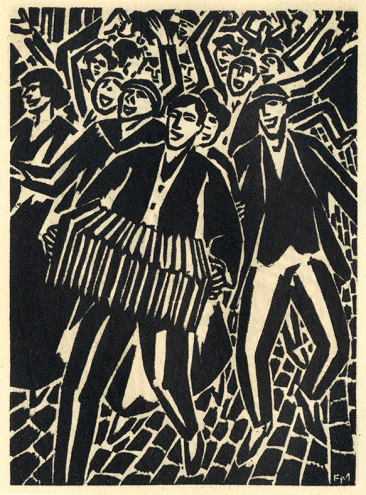
Figure 1: ‘Singing together’ implies togetherness, which however, during the corona-pandemic, could be technically circumvented by virtual synchronicity tools. Singing together is also a matter of (finite) numbers, as illustrated by the artist’s graphic work presented: simply put, it is impossible to represent an infinite number of singers in a graphic work without giving up the ‘human- like’ appearance of the singers. Reproduction from the Belgian artist Frans Masereel’s (1889-1972) work ‘Mon Livre d’Heures’ (ca. 1918)(© Masereel Collection, Gallery of Fine Arts, MSK, Ghent, Belgium). This characteristic plays an important role throughout this paper. Obviously, there is more to singing together the obscure work of intelligence operations of certain countries altogether (of which some still deny their own existence). And because of all that, we will further abstain from such public, so-called socially relevant, so-called a-political contests like the Eurovision contest. It appears to us to be the most remoted as possible from what ‘singing’ is about!.
than the (a)political or ideological connotations of singing contests. The immense popularity as it is also seen during multinational sports events like the soccer championships (and others), suggest not only a deep cultural rootedness, but also an intrinsic physical, hormonal or nervous impact on the human physiology [5] (see also ¶ 2. Grooming, Gossiping and Singing: the Languages of togetherness). It is interesting enough to compare the physiological substratum of human singing with its non-human analogs, such as in behavioral adaptations in Wolves, Hyenas (see ¶ 3. The Singing of Wolves, Wolf packs and Hyenas) and even in sea mammals, like Whales and Dolphins (¶ 4. The Whale alphabet). The attempts to decipher the unknown nature of communication in these Cetaceans (order of sea mammals) using artificial intelligence (AI) [6], not only shows the impetuous efforts to broaden the grip of science and technology on our co-habiting species on this planet Earth, it also may reveal some of the patterns of intelligence deployed in AI. It appears that a strange-if not weird- reverberating pattern of ‘singing together’ is deployed by these pretrained large language models (PLMs) and its derivatives [7], raising questions regarding the future of the well-known forms (since pre-historic times) of commonality expression for the human species (see ¶ 5. AI: the Singing Internet of the future?).
Of course, science and technology have always exerted a tenacious pressure towards replacing emotionality and soft values by rigid analysis and hard (scientific) facts, and this tendency certainly also counts for the philosophy and science of music (see our discussion of the work of Guerino Mazzola and Theodor Adorno, respectively in Allaerts W [8, 9]. Moreover, as the dichotomic separation of cultural and structural elements were found deceptive and impossible to disentangle (especially from a sociological perspective) [10], we will nevertheless confine our present paper to the analysis of the ‘singing together’-experience, from a philosophical-rather-than-physiological perspective. The reason for this tendency to shift from the general effects of specific behavioral adaptations on mood, physical and emotional well-being [5] to the philosophical perspective, are precisely nourished by the notion of otherness or of dis-similitude in our experience of commonality, as well as by the annihilation of this being different at the very moment of ‘singing together’. It is acknowledged, though, in continuation of the discovery of the non-experience of the mystical experience (of otherness) [2], that this discovery may engage one’s desire towards the other as well as to the humble avowal of inadequacy to succeed, as beautifully expressed in the medieval (Latin) notion of ‘iniquitas’, such as in the renaissance polyphonic composition of Gregorio Allegri (1582-1652)2 (Figure 2).
2 “Quoniam iniquitatem meam ego cognosco (…)” (From Latin text of
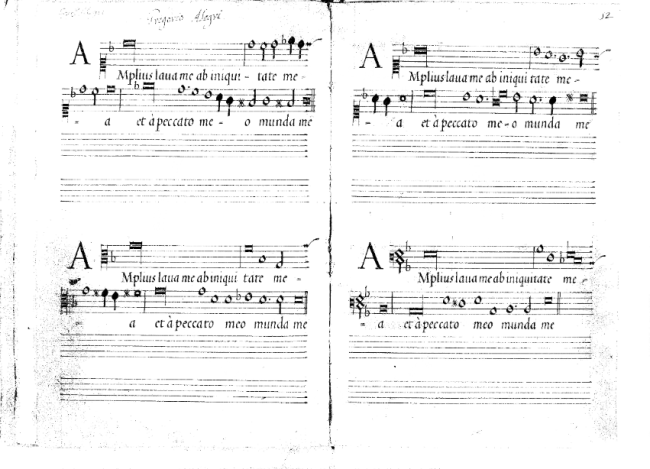
Figure 2: One of the most exquisite examples of Renaissance polyphonic singing, where the experiences of personal dis-similitude and togetherness are superbly blended in a unique composition: facsimile of fragment of the (alleged) score of Gregorio Allegri’s Miserere, showing the lines (in Latin) “(…) Amplius lava me ab iniquitate mea / Et a peccato meo mundo me / (…)” (Allegri’s lyrics, modified after the biblical Psalm 51) (see also2).
Moving from the common to the personal also means a movement away from an abstract, scientific analysis or technological solution. This brings us to the header at the beginning of this introductory paragraph, quoted from the American avant-garde artist Laurie (Philips) Anderson (°1947, Glen Ellyn, Illinois, US): if we think technology – and we include AI as a form of technology - is going to solve our problems, “we don’t understand technology, nor we do understand our problems”. Meaning as much as that “any _knowledge of true change, comes from within”_3, which is not a philosophical creed nor support for the foundational status of solipsism in philosophy, but a reflection of an approved and recognized learning process through experience.
‘Miserere mei, Deus’ referring to the biblical Psalm 51). The Latin word Iniquitas means both unevenness, dis-similitude (referring to being different from the unattainable, divine Being), and therefore, in the scholastic tradition, to the notions of anger as well as of sin.
3 “Any resolution must come from the – personal revolution!” (© 1979, Annette Peacock, Survival, from LP album The Perfect Release Aura Records).
Grooming, Gossiping and Singing: The Languages of togetherness
Rogózjin: “When you’re not there, Lev Nikolajevitsj, then I start hating you at once. In these three months that I didn’t see you, there was not a moment that I didn’t hate you, it’s true (…). Yes, and now you’re sitting here in the same room for not even 15 minutes, and my hatred has gone already, and I love you just as before. Stay a bit longer…” Mýsjkin: “When I am with you, then you believe me, and when I’m absent, then you immediately stop believing me and raise suspicion upon me. You look very much like your father”, M. replied with a friendly smile (…). R.: “I believe your voice, when you’re with me. Because I know that we are nothing comparable, you and me…” M.: “Why do you say that? And now you’re angry again”, he said with a surprised gaze at Rogódzjin. From ‘The Idiot’ (Fjodor M. Dostoevski, 1868, p. 227)(own Eng. translation from the Dutch transl.) The passage of the novel The Idiot [11] quoted above, was chosen to underline the effects of presence and absence upon love and hate, as marvelously depicted by the Russian novelist Fjodor M. Dostoevski (1821-1881). The essence of ‘presence’ in singing together is also that it reinforces the psychological, emotional and therefore also the physiological effects of the activity of singing upon the individuals involved. This ‘presence’ notion contrasts with the interpretation of Robin Dunbar (°1947, Liverpool, UK), regarding the function of gossiping and language, that have to be understood as a human analog of grooming [12]. The anthropologist Dunbar became famous following the publication of his magnum opus ‘Grooming, Gossip and the Evolution of Languages’ (1996). In this work, Dunbar not only provides an evolutionary biological explanation of the origin of human language as an outcome of the evolution of behavioral adaptations in the anthropoid apes and hominids, and especially as a consequence of the behavior of grooming. His approach is very different from other perspectives in the previous century, focusing on the role of linguistics, socio- linguistics and the neurobiology of language4. Moreover, Dunbar links the human origin of language to the role of gossiping in creating social alliances in grooming, which is an important mechanism for enabling the formation of larger social groups. The increased size of the human neocortex – that would have doubled around half a million years from present5 [13, 14] however, would predict an optimal
4 R. Dunbar (1996), ibidem, p. 7.
5 A similar argument is used by the American psychologist Martin E.P. Seligman (° 1942, Albany, NY) in his book ‘Flourish’, where he refers to the work of the British theoretical psychologist Nicholas K. Humphrey (° 1943, Cambridge, UK). Already in 1986, Humphrey stated that the brain of humans evolved to its enormous size for solving ‘social problems, not physical group size of about 150 individuals, which is much smaller than even the smaller modern cities of the contemporary world6. Dunbar explains this apparent discrepancy by the comparison of the size of human social clans, consisting of family members, friends and relatives, versus the number of anonymous fellow inhabitants of the urban environment. A clan size of 150 people would approximately correspond with the number of living descendants (including wives, husbands and children) of four generations from an ancestral couple. Combined with the alleged role of grooming as a mechanism of distinguishing between kin and foreign, this would explain that the social role of gossiping not only consists of creating bonds between relatives, but also marks the often invisible discriminative signals towards the non-kin. In order to link the origin of human language to gossiping, the alleged human analog of grooming7, Dunbar makes abundant use of the empirical statistics and observational analysis of the socio-economic usage of language in popular newspaper and book publishing, on social media and public gatherings. But it is exactly this transfer of the relevance of grooming in the socio-economic realm of the Anthropocene and the evolution of a neurobiological and physiologically relevant behavioral mechanism in the early hominids, that also marks the Achilles’ heel of Dunbar’s hypothesis.
It is the transfer of meaning in particular, between the act of gossiping and the being-of-a-kind-of-its-own of language (albeit spoken language or a textual message) that forms an essential outbreak from the physiological original. Moreover, the detachment in the digital environment of the spoken word- detached from the original senders and recipients-marks one of the biggest challenges of our present world. The weak spot in Dunbar’s analysis may therefore also mark our way out of the culprit of over-socialization in the Anthropocene. From a philosophical perspective, it appears that gossiping and thus also language, as an expression system of human grooming, works as a two-sided blade or, more neutrally put, as a two- sided instrument: on the one hand it creates ‘togetherness’, on the other hand it results in ‘divisiveness’. Interestingly, research in the field of linguistics indeed has revealed the dual effects of speaking two (or more) languages. On the one hand it may promote integration, on the other hand it may cause alienation from the social group. For, bilingualism (under certain conditions) may cause language attrition [15], a sort of erosion of the first language learned by continuous friction with the use of a second language, due to different grammar rules, differences in vocalization and different meaning of the same word in sometimes closely related problems’ (see: Seligman [2011], p. 22).
6 R. Dunbar (1996), ibidem, p. 63 and following.
7 See also W. Allaerts (2024b), p. 212 (see also footnote 5).
languages8. Analogously, and extrapolating the philosophical viewpoint of two-sidedness, we owe to Ernst Cassirer (1874- 1945) in his work ‘Language and Myth’ [16] the argument that it is the deceptive similarity of words with different meanings, that entails the tracks of tale, myth and language. According to Cassirer, not only this so-called ‘paronymia’ of words but also “the very realization of symbolization, which in fact is nothing but a sort of phantasmagoria of the spirit, is the essence of the appearance of myth, art and language.” [17]9. At the opposing end of this line of thought, we may situate the philosophies of Martin Heidegger (1889-1976) and Peter Sloterdijk (°1947, Karlsruhe), expressing the view that the ‘Institute of Language’ represents the proverbial cradle, where a person conscious of its individuality is born, and without which it would become handed over to the wilderness of insanity [18, 19]10,11. Insanity maybe, but a grateful subject for fiction, like the various stories and myths about a baby boy, or a couple of them, raised by wolves in the wild. Such exceptions appear in the fiction-story of the English journalist Joseph R. Kipling (1865-1936), author of ‘The Jungle Book’ [20], in Richard Wagner’s ‘Siegfried Saga’ and in the famous myth about the founding of Rome by the boys Romulus and Remus, raised by the Lupa Capitolina, the legendary she-wolf described in the antique work by Titus Livius (59 BC-17 AD) on the history of Rome and the Roman empire12.
In analogy with the adverbial qualities of language [21]13 as generators of individuality and social structures, these adverbial qualities can also be ascribed to the instrument of singing. Singing, an activity of the human voice or vocalization, is not restrictively used by humans (see also ¶ 3. The Singing of Wolves, Wolf packs and Hyenas). For instance, song birds use a very different organ for singing, namely the syrinx (situated in the lower trachea or bronchi), instead of the human vocal cords that are found in the upper larynx. Also in singing, socializing and group-defining mechanisms may occur. How can singing be related to grooming? With regard to the physical, emotional and hormonal mechanisms involved, the physical effects of vocal cords sounding in resonance (and resulting bodily sensations) form the closest
8 Many examples of these confusing, divergent meanings of the same word are e.g. found within the Dutch and Flemish versions of Dutch, that until the present is still considered one language.
9 See quotes from Cassirer (1946, 1953) cited in Allaerts (2019), p. 5.
10 See e.g. P. Sloterdijk (1999), p. 34.
11 The fundamental relationship between language and thinking, as for instance propagated by the pioneer of modern linguistics, Noam Chomsky (° 1928, Philadelphia, Pennsylvania), however, became challenged by recent developments in modern language models and AI (see e.g. Steven T. Piantadosi [2024]; see also ¶ 5. AI: the Singing Internet of the future?).
12 Titus Livius in ‘Ab Urbe Condita’ (around 27-9 BC).
13 See e.g. W. Allaerts (2020a), p. 7.
analogue to grooming. There may be of course a problem with those singing out of tune, or with singers that don’t have the capability of hearing the right pitch, in order to achieve a real, physical resonance of the oscillations of the vocal cords. But apart from these, singing together in a small group (or not too big chorus) may form a marvelous experience, healthy for the body and spirit.
On the other hand, the singing performances of say thousands of participants, as observed in certain religious, socio-cultural celebrations and political manifestations have a somewhat un-natural and intimidating effect. The emotional impact of such mass performances is well- recognized as well as the intimidating effect for those that don’t feel to belong to the crowd. In marriage, according to a famous UK royal, three can be regarded as ‘a crowd’. But what is comfortable, comforting or too crowded, apparently depends on many parameters and circumstances. One may wonder why so many people want to have thousands or millions of followers (especially on their social accounts), while we would never want so many of them at our birthday parties, or to follow us in our bathrooms! Dunbar’s calculation of a maximum group size of 150 individuals (in one clan) may have some significance (see above). With regard to ‘singing together’, being there, the effect of being present, makes all the difference, sometimes without having a clue of what the singing is really about. However, the dangers of inconsiderateness, ill-usage, and even de-humanization resurge and grow as the group size increases. One may easily forget that another distinct characteristic of humans, and which is much in contrast with their closest relatives among the primates, is that on top of the organization in social groups/clans, during a long period of their lifetime and in a large proportion of the population, humans are a so-called monogamous species. Once this characteristic was brought to the forefront by another early zoologist, primatologist and author of speculative books about the evolution of mankind: Desmond Morris (°1928, Wiltshire, UK), author of probably long-forgotten books like ‘The Naked Ape’ [22], ‘The Human Zoo’ [23]. In contrast to some more recent authors, Morris argued that the naked skin of humans was an argument for the important role of a social structure of society, based on (serial) monogamous relationships. It seems also forgotten now, that an entire generation of ethologists and evolutionary biologists have been looking - probably with bewildering enthusiasm - at the promiscuous sexual behavior of our closest relatives and the role that sexual relationships play in grooming and building social structures. The statistical fact that these are not in line with the quantitative, cross-cultural observations in our own species – with exception of the few and famous, or the rich and young, or the jet-set of the ultra- liberal upper class, that exert their ius primae noctis, or, have the means to maintain a multitude of partners – however, was and still is at least astonishing.
But let’s return to the notion of close togetherness, or presence, as depicted at the onset of this paragraph with a quote from Dostoevski’s novel. Presence or togetherness is bliss, but it can be horrifying too14. Apart from the notion of presence, which can be conveniently regarded as a gradual scale – e.g. from calling someone around the corner, through the telegraph, the wired phone towards the wireless internet and skyping of today – another important hallmark and physiological basis of people’s communication, is the characteristic of having a body. It is not without importance to recall the role ascribed to Alan M. Turing’s seminal paper on ‘thinking computers’ [24] at the origin of artificial intelligence (AI) and the digitalization of all forms of communication [25]. Moreover, the mistrust of the bodily basis of human senses was often regarded as a stimulus to outperform the original senses, like in hearing and visual communication, that were sought to be replaced by digitalized, technological alternatives [8]. Therefore, works like the recent book by Timothy Snyder (°1969, Ohio) ‘On Freedom’, building upon the five so-called forms of freedom, starting with the ‘sovereignty (of the body)’ - which begins after the labor of a mother, or as soon as the umbilical cord is cut loose -, followed by ‘unpredictability’ (which we regard as especially of interest in this respect too), ‘mobility’, ‘factuality’ and ‘solidarity’ [26], and the consequences of these notions for human communication, merit our attention.
The Singing of Wolves, Wolf packs and Hyenas
“Vocalizations: (…) Wolves have an extensive repertoire of sounds. Whines and whimpers indicate friendly interaction but can also express frustration or anxiety. Growls and snarls are threatening or defensive. Barking is rare, and is usually used as an alarm signal. Howls seem to be about togetherness, whether the wolves are gathering for a hunt, mourning a lost pack mate, or announcing territorial or mating intentions.” (_from: _The Language of wolves).
Of course, the term ‘singing with wolves’ here is used metaphorically. From an ethological viewpoint, using the correct biological term would be ‘howling with wolves’. But, in this philosophical analysis, we aim to explore the metaphor at its widest sense, thus reflecting the broad spectrum of wolve vocalizations. Within this spectrum, the vocalizations
14 See for instance the well-known slogan “L’enfer c’est les autres!” derived from the famous theatre play by Jean-Paul Sartre (1905-1980), ‘Huis clos’ (1943). However, in an attempt to build a ‘positive psychology’ based on the fundamental role of ‘positive relations’ for creating human well-being, Seligman strongly opposes to this philosophical argument of Sartre (Seligman, 2011, p. 20). At another occasion, we will come back to the different realms of (positive) psychology and the philosophy of interpersonal relationships, which are not only a matter of a different discourse, but probably also reflect entirely divergent world view.
used for expressing togetherness, indeed are the sounds referred to as ‘howling’. But similar to the use of speech in our own species, spoken language may fulfill multiple roles, not only expressing ‘togetherness’ (see also ¶ 2. Grooming, Gossiping and Singing: the Languages of togetherness). And, obviously, ‘howling with the wolves’ is also known as a metaphorical expression for being in league (with an/the enemy), a quite negative, defamatory characterization of ‘the others’.
When the brain of wolves and other mammals, Canidae and Hyaenidae in particular, are compared to their primate analogs, according to Dunbar (1996), they are clearly lagging behind in evolutionary terms. Or, in more ‘sophisticated’ terms, they lack the expansion of brain regions for achieving the more sophisticated social intelligence functions15, a hypothesis also known as the Machiavellian Intelligence hypothesis [27]. Expanding the brain size like it happened in the evolution of primates, and, moreover, occurring at a great evolutionary cost, therefore wasn’t only the result of adopting color vision (in order to eat fruits-instead of other plant material or meat - like in most other mammal orders, where indeed color vision is exceptional !) [12]. Consequently, it is obvious, according to the author of the theory on gossiping as the source of language (see above), that the social skills of wolves (and hyenas) are by far insufficient to keep at pace with the complexity of the social networks of primates.
Group sizes are very important though, as for instance in the Spotted Hyaena (Crocuta crocuta), where large clans (up to 130 individuals) are important in order to deflect attacks by groups of larger predators, such as lions (Panthera leo) [28]. This also holds for wolve packs, when hunting larger prey mammals, sometimes many times bigger than their pack mates. But with larger group sizes, the need for social hierarchy - or some other social structuring principle - becomes more urgent (which also applies to primates). It is very interesting to observe the very clear hierarchical order among wolves of a pack, usually noted as the distinction between alpha, beta, and omega wolves. The precise placement of an individual wolf on the hierarchical ladder is primarily communicated by posture and facial expressions [29]. “There are almost no fights among the individuals of a pack”, a wolf investigator once told me, “except when a wolf of lower rank takes some food before the pups of an alpha wolf had eaten”. Just before that moment, I became an eye-witness of that phenomenon in a pack of Timber wolves. Apparently, the hierarchy was also passed on to the next generation. In both of the latter species, the (European & Timber or Grey) Wolf (same species Canis lupus) and in the Spotted Hyaena, groups (packs or clans) are led by a female dominant leader. We may wonder how number constraints would work in
15 See R. Dunbar (ibidem), p. 60.
humans in a matriarchal versus a patriarchal version of the future world, but so far, this is only food for speculative thinking.
In a fictitious, post-apocalyptic world – as for instance came to live in the famous novel and movie picture the ‘Planet of the Apes’ [30]16 the battle for dominance of the planet would result in an ape-dominated Earth, speaking one language and obeying one world-dominating tyranny. It goes without saying that a wolf-dominated planet wouldn’t be a less horrifying alternative, but fortunately, the maximum clan size of 130-150 individuals (as empirically confirmed e.g. in hyenas) would impede the development of clans of such magnitude. However, what if not another social mammal or other animal species, but an artificial source of ‘intelligence’, adhering to one common ‘language’, like in AI, would take over the planet [31]? And would a digital analog of ‘gossiping’, such as the exchange of short messages among like-minded groups on ‘social media’, become an artificial analog of the role that grooming and languages played in the (evolution of the) real world? And furthering this line of thought, would it result in emerging social and political structures, including the divisiveness between clans of our species, or between nations and political adversaries?
The above lines are supposed to be hypothetical, although many would agree that this is exactly what polarizing algorithms are doing with our so-called freedom of expression on social media [31]. Even the differences between men and women appear to be susceptible to algorithmic polarizations and have been suggested to influence voting behavior, according to a celebrity like Julia F. Roberts (°1967, Atlanta, Georgia), e.g. in certain presidential elections (of a very recent past!). But before to proceed with the role of AI in these developments, let’s first have a look at so-called benign and useful applications of AI in unraveling the language of another group of mammals living on this very planet Earth, namely the order of marine mammals also known as whales, dolphins and porpoises (Cetaceans) (see ¶ 4. The Whale alphabet).
The Whale alphabet
“You know the first letter in the Hebrew alphabet is alef. And the letter alef actually has no sound. It’s a letter with no sound, a mental letter. So to say alef you open your mouth and think of the letter and you start to say it and then you stop. And that is alef.”
16 Based on the original French novel by Pierre Boule (1963), the first film adaptation resulted from a screenplay by Michael Wilson and Rod Serling and directed by Franklin J. Schaffner [1968]: The Planet of the Apes. APJAC Productions (USA), 20th Century Fox.
(© 2018, Laurie Anderson, from: Landfall).
Instead of an attempt to define ‘language’ in terms of the complex historical, paleo-linguistic and socio-religious mechanisms involved in the generation of (written) language, and following the origins of a distinct alphabet17[32, 33], the minimalist abstraction towards the symbolic, mental connotation of the letter alef, like in Laurie Anderson’s text, is a marvelous way to say a lot in not saying it (see above) [34]. It is also not the philosophical, deconstructivist discourse of Jacques Derrida (1930-2004), pounding down the structuralist theory regarding the socio-anthropological demarcations between spoken and written language, and elucidating the inherent ‘aggression’ in language too [35], neither the polemic debates between Noam Chomsky and the propagators of AI and MLM-models [7, 19] that will guide us here. What do researchers mean, when they say that AI can help (us) to decipher the Whale alphabet [6]? Because the inherent complexity of a language is a prominent characteristic of such systems, we first have to elaborate on the complexity of artificial language models and that of the presumed or hypothetical language of Cetacean species. As a first premise we may state that is the aim of most if not all scientific discourses to find a generally applicable knowledge of any kind of system studied, but not the individual characteristics or the quirks and idiosyncrasies particular to a small group of users. The fact that these variations most probably also occur in the (communicative) vocalizations used by highly-developed mammals, may bring us to the conclusion that an artificial language model necessarily has a lower degree of complexity. On the other hand, if applied successfully, an AI-based deciphering of the communication between Whales would lead to a general understanding of the specific Cetacean group ‘communication’ (or maybe of Cetaceans in general). For what purpose? Purpose might become our second premise, for deciphering the language of whales, dolphins and porpoises. Do we need to decode the language of Killer Whales (Orcinus orca) too, in order to understand their behavior? Because of the increased incidence of Killer Whales (or Sea Wolfs) attacking small commercial or tourist vessels, some might think that intercepting the Sea Wolf’s messages would allow us to take preventive measures against their noxious attacks. Seriously? Wouldn’t it be better to first take preventive measures against human harmful threatening of almost all of the ocean life forms?
Anyway, an AI-based communication system deciphering or ‘speaking’ the hypothetical Cetacean’s language, necessarily
17 See e.g. the investigations of Jean Psichari (1930) and others, on the Phoenician and/or Semitic origins of the Hebrew and Greek alphabets (Allaerts, 2018).
has to be universal and abstract, i.e. not individualized (or it wouldn’t be general nor generative). And, most notoriously, it might become very difficult to generate a purpose-free system. And what do we think of a generalized, global communication system of a lower complexity than the (sum of hundreds, maybe thousands of) human languages and dialects that are currently used on planet Earth, with (one or more) aim(s) that might be partly unknown to us? It may be prompting to censorship intervention to speak of a Reptilian Intelligence (RI) (probably from some exo-planet or at least from outside our own planet), that would (hypothetically!) threaten to take-over the global powers and install an alien- dominated tyranny [31]. But we just concluded that such an AI-generated communication system would be less complex than that of the highly-developed marine mammals. It is a widely used expression, to call the lower brain functions of mammals (including mankind) as the (or our) ‘reptilian brain’ (e.g. referring to the important brain stem functions as well as that of many midbrain regions). But is it less developed than the much expanded (neo)cortical brain regions of mammals, and of primates in particular? Less specialized probably, but also more generic, the global communication system for surveying both Killer Whales and the human noxious offenders of the marine world, would correspond well with an alien RI system, that some might warn us [31]. Of course, there is one (or two) obvious reason(s) to replace all existing language systems by one general, dominant and controllable communication system, that is: control (and the financial benefits it may create) [31]. And, as we explained, ‘purpose’ is quintessential.
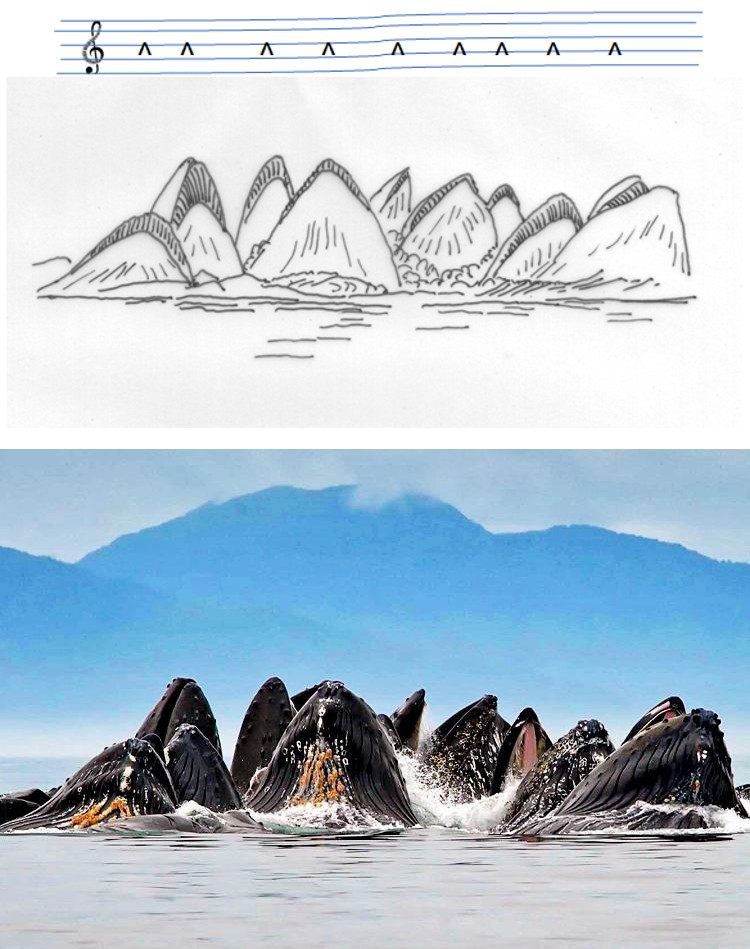
Figure 3A: Photograph representing the gathering of hunting Humpback Whales (Megaptera novaeagliae) in the Gulf of Alaska (© Image by Alaska Fisheries Science Center, NOAA Fisheries).
But let’s go back to the Whale alphabet, we didn’t even start naming its first letter… If we conceive of the enormous Humpback Whales (Megaptera novaeangliae) opening their mouth, whereby millions of liters of sea water and thousands of fishes are swallowed up, it would be an interesting cross- species analogy, to link the whale alphabet’s first letter (say ‘whale-A’) with ‘swallowing up food’ (Figure 3).
Figure 3B: Outline of an A Capella singing performance by Humpback Whales, singing the ‘Whale-A’. It is presumed, that this behavior is related to whales swallowing food (with oblique reference to Laurie Anderson’s quote from ‘Nothing left but their names’ [34], see also main text) (© 2024, Biological Publishing).
What other symbolizations could we attribute to the whale’s alphabet?18[36].
Actually, we have no clue what whales are ‘talking’ about, except for the maybe trivial explanation, that they co-operate and share information on how to find their food (sources), just like honey bees developed a bee waggling dance ‘language’ to indicate where flowers with nectar are located (as discovered by Max von Frisch, Konrad Lorenz and Niko Tinbergen in the nineteen seventies). Indeed, scientists have classified the noises (clicks) made by a family of Sperm Whales (Physeter catodon) meeting in the Caribbean Sea into roughly two dozen distinct phrases or codas, roughly as much as the number of letters in one of the global alphabets (Hebrew, Arabic, Greek, Cyrillic, Roman, …). However, when the distinct Caribbean dialect of 21 codas was compared to the approximately 150 Sperm Whale codas found around the world, it appeared that sperm whales of different clans produced different variations of sounds, that also could become fine-grained variations within a group [6]. For some researchers, these variations were very reminiscent of
18 In the Hebrew alphabet, the letters aleph, beth, gimel, daleth,… not only correspond to their respective transcriptions, vocalizations and numerical values, but they also refer to distinct symbolizations, namely the ox head, the house, the camel, the door…. (Friedrich Weinreb, 1979). All these symbols can be related to the nomadic origins of the Semitic peoples. These symbolizations, that were recognized in the Hebrew alphabet, however became obscured and got lost in the Greek and other derivations of the alphabet.
‘music’, with distinct clusters of tempos and rhythms, well- known from jazz music. Other scientists however remain skeptical: “although we’re going to collect a lot of data, it’s going to be new and exciting; but will we ever end up with having a conversation with whales?” [6].
Such as: “Sorry, we have messed up with the oceans and your food, but no hard feelings. We liked your ambergris, by the way.” ”Whale-A...” (sarcasm or irony, depending on the side chosen). The only non-trivial, serious purpose of such a conversation would be that a deciphering of the whale alphabet would not be adversary to the act of preserving the human interest. And it is exactly this human interest that has caused so much damage to the sea world. Training dolphins for military purposes hasn’t been beneficial to the dolphins either (nor to the marine environment), but an example of the unstoppable craving for extending the power of the human species.
AI: The Singing Internet of the future?
”The first casualty of war is the truth” (Aeschylus, around 550 BC) It is not only the fundamental liaison between thought and language that was contested by defenders of the ‘modern language models’ (MLM) and AI (see11 and ¶ 2. Grooming, Gossiping and Singing: the Languages of togetherness). According to one of the prominent challengers of Noam Chomsky’s foundations of linguistic theory [37], we may count the work of Steven T. Piantadosi (at UC Berkeley, Psychology and Helen Wills Neuroscience Institute) [19]. Without going into the full depth of Chomsky’s foundational work, which would reach far beyond the scope of the present article, we think the laborious refutations of Piantadosi merit our attention here. Not because we are taking a stand for the arguments from AI and MLM (Piantadosi), neither we would try to defend the Chomsky approach, but it is the difference of perspective that fits well into our analysis of grooming, gossiping and the philosophical grounds of language. In short, Piantadosi may have it right, academically (regarding in more than one aspect), but that doesn’t justify his approach from a humanitarian point of view (as we’ll explain below).
Piantadosi starts with the opening remark that “after decades of privilege and prominence in linguistics” Chomsky’s approach is experiencing “a remarkable downfall”, which, moreover, is “a cautionary tale about what happens when an academic field isolates itself from what should be _complementary endeavours”_19. The attentive listener might wonder when and if there would be a moment to think (or
19 S.T. Piantadosi (2024), p. 1.
speak) the same words about MLM or AI. Without having the intention to exhaustively summarize all the arguments brought together by Piantadosi and the like-minded, the key principles on which the Chomsky approach- also called ‘generative (linguistic) theories’ [19]-are refuted (in MLM) are: I. Syntax is integrated with semantics; II. Probability and Information are central; III. Representations are continuous and gradient; IV. Representations are complex, not minimal; V. Hierarchical structure need not be innate; etc. Of course, these principles need a lot of explanation to clarify, as they represent some kind of anathemata, distillated from the battlefield between linguistic scientists, such as Chomsky, and the MLM-approach. One of the crucial characteristics of MLM is that they are only achieved by a learning process, a training procedure, just like kids need examples and training, exercising to achieve a good comprehension of language. The other main hallmark of MLM is that syntax and semantics are intertwined. How is that achieved? It is a bit surprising to read that language models develop “representations that are parameterized in a way which is unfamiliar to linguistics” (*20). So generative theories of linguistics are refuted by non- linguistic models. This parametrization moreover is captured by mathematical expressions like the following:
20 ( ) ( ) 1 1 , . 1 . ^ 2 F r r r α α α = + −
(which expression would capture both a linear dependency of the entity in a model, such as the dependency of gravitational force (F) with distance 1/r, or with the distance squared 1/ r2. The choice for either of the two models depends on the choice for α = 1 or α = 0 , respectively.) Or, alternatively:
( ) ( ) ( ) ( )
21 . 1 1 , log ^ r r F r e r
α α − + = which, after some algebraic re-writing, comes down to the same formula as presented above. Mathematically, the representations in MLM, integrating syntax and semantics, encode words as a kind of vectors in a high-dimensional space, “without an effort to separate out e.g. part of speech categories from semantic representations, or even predict at any level of analysis other than the literal word” 21. The use of algebraic formulas may seem haunting here, but what MLM does in fact is fitting words in a text by calculating the probabilistic expectations of the next word, somehow like a text spelling prediction app does. It is of course, a bit
20 S.T. Piantadosi (2024), p. 7.
21 S.T. Piantadosi (idem), p. 15.
more sophisticated, Piantadosi explains, because it uses “the true next word as an error signal to update their latent parameters”_22[38]. In order to enable this, modern models “include an attentional mechanism that allows the next word in_ sequence to be predicted from some previous far in the past”_22. Based on huge datasets containing billions of weighted data connections, according to Piantadosi, it is clear that there “certainly is some theory_ in there” 21. The philosophical viewpoint that the hierarchical structure of language needs no innateness of language seems also interesting for the present analysis, and touches upon the refutation of Chomsky’s deep interconnection between human language and human thought [39]. The interconnection argument already dates back to John Rogers Searle’s (° 1932, Denver, Colorado) famous ‘Chinese room thought experiment’, which originally was formulated as a critique on A.M. Turing’s imitation-test23[40, 41, 42, 43]. According to Piantadosi (2024), the distinction between syntax and semantics in MLM is unimportant, if not irrelevant, because these models are developed through training, similar to a child is trained to speak its first sentences. The status of MLM is comparable to the history of medicine, Piantadosi claims, because also in medicine often a certain treatment was tried out and selected if it worked well (the example given by Piantadosi here is the use of ‘lemons to threat scurvy’) without yet understanding the mechanism. A lot may be said about this ‘trial and error’ validation of medicine. In favor of this view is the observation that in the (modern) history of medicine, that’s often the way it goes. On the other hand, the biochemical and other scientific investigations have discovered the important role(s) of vitamin-C, the molecular mechanisms and physiological effects, etcetera. In a postscript to this 2024 paper, Piantadosi adds to this argument (on the development of medicine) his view that
22 This idea is derived from Jeffrey L. Elman’s (1990) work on neural network theory. Elman showed how “training of a neural network on text prediction could lead it to discover key pieces of the underlying system”. In a footnote, Piantadosi adds that “the underlying neural network weights are typically optimized in order to predict text”, but that “many applications of these models also use human feedback to fine-tune parameters (…)”, in or- der to avoid the “horrible things text on the internet leads models to say” (Piantadosi, idem, p. 5).
23 J.R. Searle’s argument can be seen as an ancestral form of the syntax- semantics debate. In his thought experiment, Searle explains that merely manipulating the Chinese symbols by (a) person(s) not speaking Chinese – and being guided by an English rule book and reacting to orders given from outside the room - , is not enough to guarantee cognition. It doesn’t make (that/those) person(s) understand Chinese. The argument was elaborated by Searle to defeat the strong claim(s) of AI (Searle, 1980, 1990). These strong AI claims state that computer programs are or may become constitutive for, or sufficient to create human-like minds, in such a way that they may pass A.M. Turing’s test (Turing, 1950) to become indistinguishable from each other. Searle’s objections against these strong AI claims, meanwhile have been contested from many sides, e.g. by Daniel C. Dennett (1942-2024) (1992)(see also Allaerts, 1997).
_“scientific theories are more often inductive than deductive”_24. It would however reach far beyond the scope of this article to present an elaborate and balanced review of the roles of experimentation, logical reasoning and refutation, theory building and paradigm clashes, as seen in the vast field of science philosophy (see e.g. the oeuvres of Karl R. Popper [1902, 1903, 1904, 1905, 1906, 1907, 1908, 1909, 1910, 1911, 1912, 1913, 1914, 1915, 1916, 1917, 1918, 1919, 1920, 1921, 1922, 1923, 1924, 1925, 1926, 1927, 1928, 1929, 1930, 1931, 1932, 1933, 1934, 1935, 1936, 1937, 1938, 1939, 1940, 1941, 1942, 1943, 1944, 1945, 1946, 1947, 1948, 1949, 1950, 1951, 1952, 1953, 1954, 1955, 1956, 1957, 1958, 1959, 1960, 1961, 1962, 1963, 1964, 1965, 1966, 1967, 1968, 1969, 1970, 1971, 1972, 1973, 1974, 1975, 1976, 1977, 1978, 1979, 1980, 1981, 1982, 1983, 1984, 1985, 1986, 1987, 1988, 1989, 1990, 1991, 1992, 1993, 1994], Thomas S. Kuhn [1922, 1923, 1924, 1925, 1926, 1927, 1928, 1929, 1930, 1931, 1932, 1933, 1934, 1935, 1936, 1937, 1938, 1939, 1940, 1941, 1942, 1943, 1944, 1945, 1946, 1947, 1948, 1949, 1950, 1951, 1952, 1953, 1954, 1955, 1956, 1957, 1958, 1959, 1960, 1961, 1962, 1963, 1964, 1965, 1966, 1967, 1968, 1969, 1970, 1971, 1972, 1973, 1974, 1975, 1976, 1977, 1978, 1979, 1980, 1981, 1982, 1983, 1984, 1985, 1986, 1987, 1988, 1989, 1990, 1991, 1992, 1993, 1994, 1995, 1996] and many others) [44, 45].
The important notions of probability and plausibility obviously correlate well with the predictive character of MLM. However, there remains the criticism of shallowness of the argumentation. We may follow Piantadosi when stating that the dismissal used by some cognitive scientists like Gary Marcus [46], that the language models are “just the same as ‘autocomplete’ systems on your phone”, are too shallow25. Indeed, we may rather make a comparison with the police/ detective novel, where AI (in the future) may probably be capable to compose a novel episode of Agatha Christie’s (1890-1976) famous Hercules Poirot novels (published between 1920 and 1975), or a retake of Arthur Conan Doyle’s (1859-1930) brilliant Sherlock Holmes series. Some may argue that detectives and police fiction feuilletons are always (in some way) stereotypical, reflecting a particular style of the different authors, a signature characteristic of their creators. Although the two examples given are generally considered meticulously composed masterpieces with an unmatched, larger-than-fiction ingenuity, one should always remain cautious about the possibility of mimicking stereotypical plots or styles. A parallel reasoning can be found in all fine arts, where even the most brilliant paintings of the great masters, the Rembrandts, the Vermeers, Picassos of past and recent times have been mimicked or forged, and often so with great skill of the counterfeiters. But that doesn’t make these counterfeited works as valuable as the originals.
Another example is inspired by the possibility of MLM to create nonsense stories (see Piantadosi’s story of the giant ant vessel attacking an aircraft carrier)26, even so copying the ludicrous style of some former president’s speeches. If these MLM would have access to my deeper thoughts and writings regarding subconscious knowledge elements-which I would not share on the internet, for obvious reasons-, it might even generate something like a dream-of-me, it would however
24 This argument is used by Piantadosi (2024) to refute the criticism of the logical error of a mistaken affirmative inference (i.e. according to the mistaken syllogism ((p → q ) ∧ q ) → p) known as using the modus ponens instead of the modus tollens for a correct logical inference, ((p → q ) ∧ ¬ q ) → ¬ p). The former is logically false, the latter is true. (Note the ¬ sign meaning a negation of the subsequent symbol). Piantadosi however takes a positive stand for using this incorrect inference, because of the argument that ‘inductive theories are doing it too!’ (see Piantadosi, ibidem, p. 33).
25 S.T. Piantadosi (idem), p. 5.
26 S.T. Piantadosi (idem), p. 2-3.
not be my dream, because I knew, I had not dreamed it. But, in the meantime, we may have to admit that MLM may easily transgress the thin line between consciousness and insanity, because unlike in real people, it has not the obligation to delineate its thinking from the luring threat of nonsense and insanity. However, defenders will probably argue that the role of our conscience – the thing of which Prince Hamlet was convinced that it would make ‘cowards of us all’27- may be well taken over by some ruling authority. And that’s exactly what society in the preceding ages, has tried (successfully or not) not to bow for 28.
Chomsky [37] has spent a lot of pages in explaining what the ‘goals’ are of linguistic theory (*29), and also for Piantadosi (2024), MLM’s cannot operate without striving for specific goals or purposes, explicit or implicit (see also ¶ 5. The Whale alphabet.). One of the fundamental concerns of linguistic theory, according to Chomsky, is the “problem of justification of grammars”, the discrimination between grammatically correct and incorrect sentences. “A grammar of the language L. is essentially a theory of L.” 30. This of course, doesn’t apply solely to the English language, but a linguistic theory must be constructed in a way that generality is achieved (for any language)30. From the ‘external conditions’ required for such a system, however, it follows that a principle of hierarchy and subordination is imposed31 [47]. Chomsky, moreover, argues that “the requirements jointly give us a very strong test of
27 See Hamlet’s monologue in Act III, Scene 1: “(…) Thus conscience does make cowards of us all: (…)”. From: W. Shakespeare (between 1589 and 1608). Hamlet, Act III, Scene 1, line 83. In: The Complete Works of William Shakespeare (edited by W.J. Craig [1984]), p. 959. London: Henry Pordes.
28 Of course, one might argue that large groups in society are not allowed to follow their conscience: soldiers are not allowed to think for themselves, but follow the military commands of their superiors. And one may easily add the school teachers that have to obey the commands of their head masters, the priests following the dictates of Rome, the Ministers talking with the mouth of a ruling political agreement (e.g. in The Netherlands), and even the King of Belgium had to temporarily abdicate his throne, when he didn’t want to sign the Bill that wasn’t in agreement with his conscience (in 1990). But still, in most judicial systems, delinquents are punished more severely when they have shown not to listen to, or to have silenced their conscience.
29 N. Chomsky (1957), p. 49-60.
30 In the words of Chomsky (1957): “In addition to some external conditions of adequacy, we pose a condition of generality on grammars; we require that the grammar of a given language be constructed in accordance with a specific theory of linguistic structure in which such terms as “phoneme” and “phrase” are defined independently of any particular language”. One of the ‘external conditions of adequacy’ is that “the sentences generated will have to be acceptable to the native speaker” (Chomsky, idem, p. 49-50).
31 This for instance can be illustrated by the recent developments in science publishing: since a certain language (English) was chosen world- wide for scientific communication by a great number of non-native speaking groups, it followed what Chomsky here called an external condition (for non-native speakers) and what we previously called “an interlanguage conversion hierarchy” that comes with a “worldwide topography”, combined with the “dominance of a (few) world language(s) over the less spoken languages”(Allaerts 2020c, p. 11).
adequacy for a general theory of linguistic structure and the _set of grammars that it provides for particular languages”_30. Fortunately, some may argue, users are no longer tempted to use correct grammar and spelling when writing short text messages (SMS). The younger generations are long past that phase now. And probably the older generations too, when realizing that writing in full, grammatically correct sentences has made them a laughing stock amidst their friends! It appeared that generation X (but often named gen-Z) has already abandoned all limitations to written expression and content messaging, simply put: in social networks, anything goes!
In a way, the requirements put forward by MLMs, according to Piantadosi (2024) are much simpler, although it wouldn’t be fair to call MLM “a system of ‘anything goes’ ”, Piantadosi argues. “Not all ‘anything goes’ models are _equivalent”_32. It is important that some mechanism (of computational text prediction) is built in that matches humanlike behavior. Similar to robots that are already operational in elderly health care, in order to replace real nurses and health practitioners, the argument is used as a promotional argument for implementing AI and robotics in key sectors like human health care, and beyond. The argument of mimicking the humanlike behavior now has become a plea for upgrading the look-alike approach for all possible sectors of economy, adopting as much as possible of the economic benefits for the generators of generative AI.
An important asset of MLM, according to Piantadosi, is their ability to “capture hidden (or latent) variables” 33. Examples are ‘ambiguous words’, for which we may have a specific meaning in our mind, but that could be read differently. What MLMs do differently than “the formalisms of linguistics” is to infer the “likely hidden structure because that _structure permits them to better predict upcoming material”_34.
That’s great, we may say. But is it really? It’s also giving way to ‘hidden’ variables that are not our own choices or thoughts, but the structures that permit the owners of the MLM software to implement their own interpretations and goals, return-on-investment strategies, and so on (like it occurred too in the development of social media and social media investment strategies, with all known consequences of mass polarizations). Like the culturally rich and mesmerizing ‘paronymia’ of words that procreated ‘the appearance of myth, art and language’ [17]9, and even the historical richness of the origins of letters and their multiple symbolizations18, all these are becoming utilitarian assets in
32 S.T. Piantadosi (idem), p. 11.
33 S.T. Piantadosi (idem), p. 6.
34 S.T. Piantadosi (idem), p. 6-7.
generating artificial contents, that once were reserved for the genuine creators of art and poetry. And what about the future of science? Whereas we might be surprised that Piantadosi (in his defense of MLM) uses examples of neurolinguistic programming in order to explain certain developments in neuroscience [48], the argument is now reversed, in that we may possibly see AI generating scientific developments in all fields of medicine, based on trial and error and the use of large medical (meta-)data sets. We must however remain cautious about the questions: who generated these data, who owns them and who has access to them? And have they been obtained and used legally?35. Despite all privacy regulations and law makings, the present situation is already pointing towards a consolidation of the huge imbalances between those having access to (personal) data (of large groups) including those having access to illegal sources as referred to in ‘the dark web’ - and those who don’t.
It is not fundamentally different from the mechanisms that the Big Tech companies have incorporated in their tool kits, after global scale violations of copyrighted materials (although ended by settlement at international law suits, but not for the individual contributors) [49]. Hence, appropriating the generative search engine tools became lucrative and useful for adopting them for generating economic benefits for certain users at the cost of the millions of others (and despite the fines and convictions imposed by the European Union and others). With regard to the generative powers of language, Piantadosi (2024) is convinced that something as ‘universals’ (a commonality of some sort in all languages) will (eventually) be attained. The argument that such ‘universal(s)’ aren’t yet found [50] is not persuasive, Piantadosi (2024) thinks, because “the differences between languages may be more scientifically informative than their commonalities”, being all the more an argument against the innateness of (all) language(s)36.
The universality claim(s) of MLM as formulated above somehow reflect an old saying of Johann Wolfgang von Goethe (1749-1832), who declared in a paper of 1830, that a global ‘world literature’ was inevitable and immanent, because of the increased speed of ‘traffic’ (≈ telecommunication of today). “The wide world however will always remain an enhanced ‘Heimat’, and, after all, won’t give us more than what our own ‘grounds’ (Boden) _have provided (…)”_37[51].
35 This argument a fortiori also holds for all illegal use, e.g. without formal consent, of copyrighted and previously published scientific writings that are used in integrative AI publishing strategies.
36 S.T. Piantadosi (idem), p. 25.
37 See translation of fragment of Goethe’s March 1830 paper, quoted in P. Boerner (1964, 1979 ed), p. 140. One may argue that attempts to create an artificial, world-wide spoken language, so far have remained not very successful, probably with the exception of the auxiliary language ‘Esperanto’. It was created by L.L. Zamenhof in 1887, exactly for this purpose. Taxations Goethe writes only 15 years after Napoleon Bonaparte’s defeat (Waterloo, 1815), while the Germans still awaited Otto von Bismarck’s (1815-1898) strategic moves for a unified Germany! Goethe, as well as Bismarck, therefore were born too early to see the role of the German language and culture in the subsequent century and its devastating world wars. But with universality in writing and communication, an AI that is integrated with all possible services and economic sectors, we may ask how the inherent limitations of our clan sizes (the maximum number of 150, that works equally well in wolves and hyenas) (see ¶ 3. The singing of wolves, wolve packs and hyenas), might become organized without giving up all forms of autonomy and self-organization? Or, briefly, without giving up freedom, a freedom that has an important bearing on sovereignty as well as on unpredictability (see also ¶ 2. Grooming, Gossiping and Singing: the Languages of togetherness) [26].
We possibly can’t foretell the future of history, unlike Yuval Harari’s saying [52], but when ‘truth’ is a target for replacement by AI-generated look-alikes for all commodities and tastes, then ‘war’ will be dooming, definitely. If ‘Big Science’ has given up its neutrality in the clash between Big Tech and the individuals who procured a world of data38, we ‘d better stop contributing to that global world of data. We’d better stop writing and publishing at all, because guarantees against abuse apparently have become all void and idle. For, creating an arsenal of generative AI tools that supersede the very conditions of the human species, or build on the premises of dehumanization of human senses and incentives, is akin to undermining the very identity of humanity. But not on my watch39[8].
Concluding remarks
When confronted with the loss of someone of our nearest relatives, it is part of our very human condition to seek comfort with those that are our closest. The comforting and consolidating mechanism of grooming has evolved in nature, even long before our very species Homo sapiens sapiens became discernable from its ancestors (like the Homo s. neanderthalensis and previous early hominids).
of its successes vary, for the number of Esperanto followers/users are estimated between 30,000 and 2 million. Or, this would count for only 0.05 % of the world population, at most!
38 Some may argue that individual scientists have no saying in these matters, because (nearly all) scientific research has been bench-marked, paid and thus owned by governments and government-ruled institutes, so there would be no such thing as an ‘independent’ scientist. That’s the reason why we have strongly opposed the deliberate abandoning of neutrality and academic freedom by the ruling scientific institutes, when governments became their primary (and often only) source of financing.
39 See our discussion of the motives for the computerization of music in (Allaerts, 2021).
Philosophers, theologians and other scientific disciplines have long believed that ‘language’ forms the cradle of our human existence, both in its early cerebral deployment as well as in the technical developments of the present Anthropocene. But, as Robin Dunbar (1996) had unveiled, a famous primatologist and anthropologist, the development of language was molted within the biological constraints of grooming. However, the institute-of-language, as famous philosophers named it, in the present world has become corrupted by artificial intelligence fabrications of man-made origine. According to Piantadosi (2024), there is not much left in human language that MLM cannot generate or mimic. And what do these developments mean for the future of humanity?
Of course, it has been brought forward that it is the lure of innovation, of future progress and benefits that will equally foster prospects of a dooming cataclysm. And the hysterical cries for more control and containment of these powers unleashed by the new artificial tools, will be equally welcomed by the anxious outsiders as by those that are eager to safeguard their investments and market positions. There is no point in trying to curtail the forthcoming battle of the giants, to wit the Big Tech companies, their allied institutes and their obvious adversaries. But what can we learn from the other forms of grooming that are still present in our own species, as well as in some other fellow species of this planet Earth? Togetherness is bliss, and so does singing, but not at all moments, not in all circumstances and especially: not in any numbers. In a previous publication we focused on the mesmerizing effects of discovering the ‘non-experience of experiencing the other’ (when listening to music) [2]. Experiencing the Other means leaving the ‘island of unity’ of the Self and taking a giant step into a world of Togetherness. Numbers apparently play a key-role in grooming mechanisms, in its socializing potential, and in its aggressive potential too! Hyenas may form large clans when confronted with clans of their strongest enemies, the lions, and wolves show a similar behavior. With growing clan numbers, however, the biological necessity of social stratification becomes more urgent [12].
It might be too late already to give warnings for a further deployment of AI tools that essentially take over the cradle- forming capacities of humanity, namely the institute-of- language and its various products, ranging from big science to social cuddling. The argument of building a global AI defense system that must protect us from extra-planetary or from man-made cyber disas`ters [31], may precisely create the undesired threats, as our thought experiment with developing a Cetacean-language-deciphering-AI- toolkit suggested (¶4. The Whale alphabet): creating an all-encompassing Reptilian-like Intelligence system, for the purpose of a next level planet supremacy (?). However, it seems a logical consequence that numbers will play a crucial role also here, in generating the constraints of the social structures of our future planet. Social constraints eventually mean also nations and national languages. And I really don’t know whether or not these numbers will make me a happier person. Because, if human languages disappear, entire nations may follow.
Somewhere in the boreal solitude, the Sámi yoik sounds are calling for an answer.
References
-
Omniglot (2024) Sámi languages.
-
Allaerts W (2024a) On Music and Tradition. Philosophy International Journal 7(2): 1-13.
-
Burton I (1999) Jenůfa: muzikaal nationalisme, naturalisme en kindermoord In: Burton I, et al. (Eds.), Jenůfa. Opera van Leoš Janáček (1854-1928) in drie bedrijven. Opera Ballet Vlaanderen, Gent, Antwerpen.
-
Eurovision (2024) The Origins of Eurovision.
-
Allaerts W (2024b) Towards the understanding of long- term effects of Glucocorticoid and Stress hormones. American Journal of Biomedical Science & Research 23(2): 207-216.
-
Cornwall W (2024) Could a newly discovered sperm whale ‘alphabet’ be deciphered by humans? Discovery of potentially complex communication could reveal way to interpret what these marine mammals are saying-but not everyone is convinced. Science Advisor.
-
Shilovitsky O (2023) Future PLM AI Advancement-GPT, Large Language Hybrid Model, and Copilots (blog). Beyond PLM.
-
Allaerts W (2021) On Music and computability: Contrasts between Harry Partch’s Bitter Music and Guerino Mazzola’s Topos of Music. International Journal of Arts and Humanities 2(1): 44-55.
-
Allaerts W (2022) On Music and Soul: Coltrane’s My Favorite Things, LeRoi Jones’ Black Music and Adorno’s papers on Jazz. International Journal of Arts and Humanities 2(1): 56-69.
-
Hays S (1994) Structure and agency and the sticky problem of culture. Sociological Theory 12(1): 57-72.
-
Dostoevski FM (1868) The Idiot.
-
Dunbar R (1996) Grooming, Gossip and the Evolution of Languages. Harvard University Press. Cambridge.
-
Seligman MEP (2011) Flourish. A Visionary New Understanding of Happiness and Well-being. New York, London.
-
Humphrey N (1986) The Inner Eye: Social Intelligence in Evolution. Oxford University Press, New York.
-
Francis N (2023) When does second language learning lead to first language attrition? Communication & Cognition 56 (1-2): 3-24.
-
Cassirer E (1946) Language and Myth. Dover Publications Inc, New York.
-
Allaerts W (2019) Into the origins of the inside-outside debate: rediscovering smell/odor and tracking the steps of Nietzsche, Proust and Timothy Morton. Philosophy International Journal 2(2): 000129.
-
Sloterdijk P (1999) Regeln für den Menschenpark. Suhrkamp Verlag, Frankfurt am Main.
-
Piantadosi ST (2024) Modern language models refute Chomsky’s approach to language.
-
Kipling JR (1894) The Jungle Book.
-
Allaerts W (2020a) How to avoid speaking: the experience of the Chora in Derrida’s Denials and in other paradigms of negativity. Philosophy International Journal 3(1): 1-9.
-
Morris D (1967) The Naked Ape. A zoologist’s study of the human animal.
-
Morris D (1969) The Human Zoo.
-
Turing AM (1950) Computing machinery and intelligence. Mind 59(236): 433-460.
-
Allaerts W (2020b) Turing’s legacy and the conversion of genuine mathematical ideas in analogous application fields. Communication & Cognition 53(3-4): 123-152.
-
Snyder T (2024) On Freedom. Crown, New York.
-
Byrne R, Whiten A (1988) Machiavellian Intelligence. Oxford University Press. United Kingdom.
-
Dell’Amore C, Guyton J (2024) The Last Laugh. National Geographic, pp: 18-43.
-
Living with Wolves (2024) The Language of Wolves.
-
Boulle P (1963) La Planète des singes. Éditions Julliard. Paris.
-
Russell S (2019) Human Compatible. AI and the Problem of Control. Penguin Random House UK, New York, Dublin, Viking USA.
-
Psichari J (1930) ‘Lamed and Lambda’. In: Some works of linguistics, philology and Hellenic literature 1884-1928. Les Belles Lettres, Paris, 95, Boulevard Raspail, Vol 71, pp: 1040-1075.
-
Allaerts W (2018) Tegen beter weten in: over de lambda-b. In: Pentalogie. Biological Publishing, pp: 55- 71.
-
Anderson L (2018) ‘Nothing left but their names’. In: Anderson L (Eds.), Landfall. Nonesuch Records Inc, New York.
-
Johnson C (1997) Derrida. The Scene of Writing. Phoenix, Orion Publishing Group, London.
-
Weinreb F (1979) Buchstaben des Lebens. Freiburg im Breisgau, Verlag Herder.
-
Chomsky N (1957) Syntactic Structures. Mouton, New York.
-
Elman JL (1990) Finding structure in time. Cognitive Science 14 (2): 179-211.
-
Chomsky N (2002) On Nature and Language. Cambridge University Press, UK.
-
Searle JR (1980) Minds, brains and programs. Behaviour and Brain Sciences 3: 417-458.
-
Searle JR(1990) Is the brain’s mind a computer program? Scientific American 262: 20-25.
-
Dennett DC (1992) Consciousness explained. Little, Brown and Co. New York.
-
Allaerts W (1997) The Self and its biological function: Contrasts between Popper and Sartre. Logique & Analyse 158: 189-214.
-
Popper K (1962) Conjectures and Refutations. The Growth of Scientific Knowledge. Basic Books, New York, London.
-
Kuhn TS (1962) The Structure of Scientific Revolutions. In: Otto Neurath, et al. (Eds.), The International Encyclopedia of Unified Science. The University of Chicago Press, Chicago.
-
Marcus G (2022) Nonsense on stilts.
-
Allaerts W (2020c) Phonemes, the use and abuse of speech-recognition systems. On a fractal topology of memes in a fractal world. Communication & Cognition 53(1-2): 3-32.
-
Schrimpf M, Kubilius J, Lee MJ, Murty N, Ajemian R, et al. (2020) Integrative benchmarking to advance neurally mechanistic models of human intelligence. Neuron 108(3): 413-423.
-
Vaidhyanathan S (2011) The Googlization of Everything (and Why we should Worry). University of California Press, USA.
-
Dąbrowska E (2015) What exactly is Universal Grammar, and has anyone seen it? Frontiers in Psychology 6: 852.
-
Boerner P (1964) Johann Wolfgang von Goethe in Selbstzeugnissen und Bilddokumenten. Reinbek bei Hamburg, Rowohlt Taschenbuch Verlag Gmbh.
-
Harari YN (2015) Homo Deus. A Brief History of Tomorrow. Harvill Secker, UK.
- Digital Hermeneutics Embodied in Brian Kim Stefans’ “The Dreamlife of Letters,” and Memory: Analog to Flash Interface in the Light of Ecofeminism
- Using C-Tables to Teach Class Logic
- The Ideology of Education’s Postponed Fantasies: Deepenings on a Pressing Problematic
- Phantasia and Perceptual Realism in Aristotle
- The Pleasures of Solitude
- Super Science