
The Diversity and Significance of Women’s Nipple Characteristics: Exploring Size, Color, Weight, and Beyond”
This study delves into the elaborate and versatile facets of women’s nipples, peeling away the differences and importance of their traits. Beyond their organic function, women’s nipples exhibit differences in content, color, pressure, and character, which can be referenced to both fitness and frame maintenance. This study aimed to provide a meticulous test of these characteristics, taking everything in mind: educational, healing, and emotional views. Through an alliance of empirical research and research review, it surveys the determinants of upper body diversity, their part in magnetic personal charm, breastfeeding, and their potential friendship accompanying certain healing conditions. Additionally, this research investigated the influence of society’s averages and advantage guidelines on girls’ ideas of their nipples, aiming to influence a fuller understanding of physique, zeal, and self-agreement. By addressing this often-missed matter, this study seeks to advance a more all-encompassing and informed discussion about daughters’ parties and their unique facial characteristics.
Introduction
The variety of wives’s nipple traits has gained increasing consideration in recent years on account of allure potential suggestions for health, crowd concept, and societal averages [1]. Nipples, while an inconspicuous few in the human corpse, exhibit remarkable differences in height, color, burden, and texture between things [2]. This study aims to comprehensively survey these differences and their significance, trying to make a notable break in the existing literature [3]. As analysts have started to recognize the potential significance of upper body diversity, about society’s advantage ethics, media likenesses, and the effect on women’s self-understanding have come under scrutiny [4, 5].
This research endeavors to help between experimental understanding and societal ideas by fact-finding both the organic facets of nipple traits and their educational and psychological ranges [6]. While previous studies have focused on aspects of mothers’ upper body characteristics, the article is limited in allure, outlook, and wisdom [7]. Our study seeks to address this break by trying the variations in front of upper body traits through a mixed-procedures approach, containing chemical analysis and in-depth interviews [8].By achieving this, we have in mind providing a more inclusive understanding concerning this subject and its associations with the happiness and self-esteem of wives [9].
Our Review Draws Stimulus from the Work of Scientists to a Degree
Frida Kahlo, who investigated the idea of self-acceptance and carcass figure, stressed the need to appreciate the singular facets of one’s party [10].Brown and associates, conducted a sociocultural study of corpse image and explained the impact of society’s beauty principles on self-understanding [11]. Smith and Johnson, checked the cognitive ranges of body understanding and pride about material attributes [12].
These scientists have laid the foundation for our inquiry into women’s upper body traits, which we believe will influence a more all-embracing and accepting societal narrative concerning body variety [13, 14, 15].
Nipple and Areola the skin of the feelings exists on the front of the upper body, halo, and encircling skin. The skin is the thin, responsive, adaptable top of the conscience and attaches to the fatty subcutaneous fabric below, holds fur follicles, sebaceous glands, and apocrine sweat glands. The front of the upper body, or papilla mammae, is a cylindrical promotion situated in the middle of the stoma in about one of four equal parts of the intercostal room, kind of beneath the center of the bosom [16]. Although nipples and areolas are changing, they are qualitatively complementary [17]. The teat holds an average of 23 to 27 milk ducts, accompanying a range of 11 to 48. Each of the tubuloalveolar glands that reconcile the feelings opens into the front of the upper body through an additional channel [18]. Little consideration commands a price for the exact plants of the front of the upper body as far as Sir Ashley Cooper in 1839 [18]. Cancer scientists study the plants of feelings painstakingly to learn by what cancer expands and using what it spreads, not think by what 10 numbers about bosom mastectomy demonstrated that the number of ducts in the front of the upper body is much above common nipples, accompanying an average of 25 to 27 ducts. A 3-D model of the front of the upper body from the mastectomy example showed three unconnected ductal spaces. The best flap represented 23% of the bosom capacity, and half of the feelings were exhausted by three ducts and 75% by the six best ducts. Eight narrow ducts exhausted about 1.6% of the feelings book. Seven ducts that the authors top-secret as aggressive personalities had a big lumen until the skin surface, 20 ducts (type B) simplified to a narrow lumen forthcoming the skin surface situated above the nipple, and the channel society was limited. (type C) was erect about the base of the front of the upper body. These dissimilarities are not apparent on a tiny test except in type C canals [19]. Rusby and others wanted to gain experimental importance for demonstrative arrangements utilizing 3-D science. Using cannulation, they studied the shortening of a detracting bundle of ducts to a “midriff” as the ducts introduced the parenchyma. In the individual sample, they noticed 29 canals arising from 15 dents. At skin level, the ducts were narrow, flattering, and deeper in the front of the upper body. Many channels join prevalent openings, emphasizing the conflict between the number of channels and the number of openings. Duct width did not predict channel seepage deeper into the conscience. Rusby and others argue that the universal gap of many ducts at the base of the front of the upper body and the narrow width of the lumen of the pipe at skin level doubtless further the transmittal of fluid to the feelings. Ductography, ductal cleaning, and microscopy have been used to determine more correct interpretations of the mammary ductal whole. Ductography, as known or named at another time or place, includes injecting a contrast material into the front of the upper body before attractive x-indications. This admits the imagination of ductal plants and likely ductal obstacles or extensions [20]. Ductal cleaning is a method used to accumulate material from the channel for cytological and microscopic reasoning. Microscopy is used to try material taken from the ducts under a microscope. These methods have determined a better understanding of the three-spatial makeup of the mammary ductal plan and allure friendship to feelings of malignancy [21]. The front of the upper body is again collected of smooth influence fibers and is sumptuously innervated by tactile raw spots and Meissner corpuscles in the dermal papillae; it also has able sebaceous and apocrine sweat glands but no hair. The front of the upper body is between the halo or halo mammae, a circular tint region. It is normally marginally hidden before gestation, enhances coppery-brown color before birth, and frequently retains a few of the secret pigments following. The average stoma measures 15 to 16 mm in width, although the range is roomier, growing before birth and the removal of liquid [22]. Pigmentation is the result of many melanocytes delivered at various levels in the skin and glands. The latent construction of the skin of the halo is not continually as complex as that of the front of the upper body but is ‘tween the skin of the encircling skin. The front of the upper body and stoma are nearly elastic. Little lobuloalveolar growth happens before the first gestation. A foundation is established at which point the specific secretory containers will propagate. This structural foundation is a basic fact of the gland’s cultured enlightening course, and maldevelopment or strain all along before birth or juvenile growth can severely defeat the intensity and secretory function of the mature gland.
Conditions That Affect the Areola
If you notice some changes in the stoma, such as dimples, puckers, or a rash, inform your healthcare provider. These may be powerless but manage to be syndromes of Paget’s ailment
Hyperkeratosis of the front of the upper body?
Hyperkeratosis of the front of the upper body and stoma is a warty-pigmented thickening of the nipples and areolae [1, 2, 3, 4]. It can be basic (basic) or subordinate to another disorder (see differential disease).
Hyperkeratosis of the front of the upper body and halo is likewise called naevoid hyperkeratosis, and hyperkeratosis areolae mammae naeviformis.
Primary hyperkeratosis of the front of the upper body usually presents in adolescent women, with the rate in men being much lower [1, 2, 3]. No racial or terrestrial links have been stated.
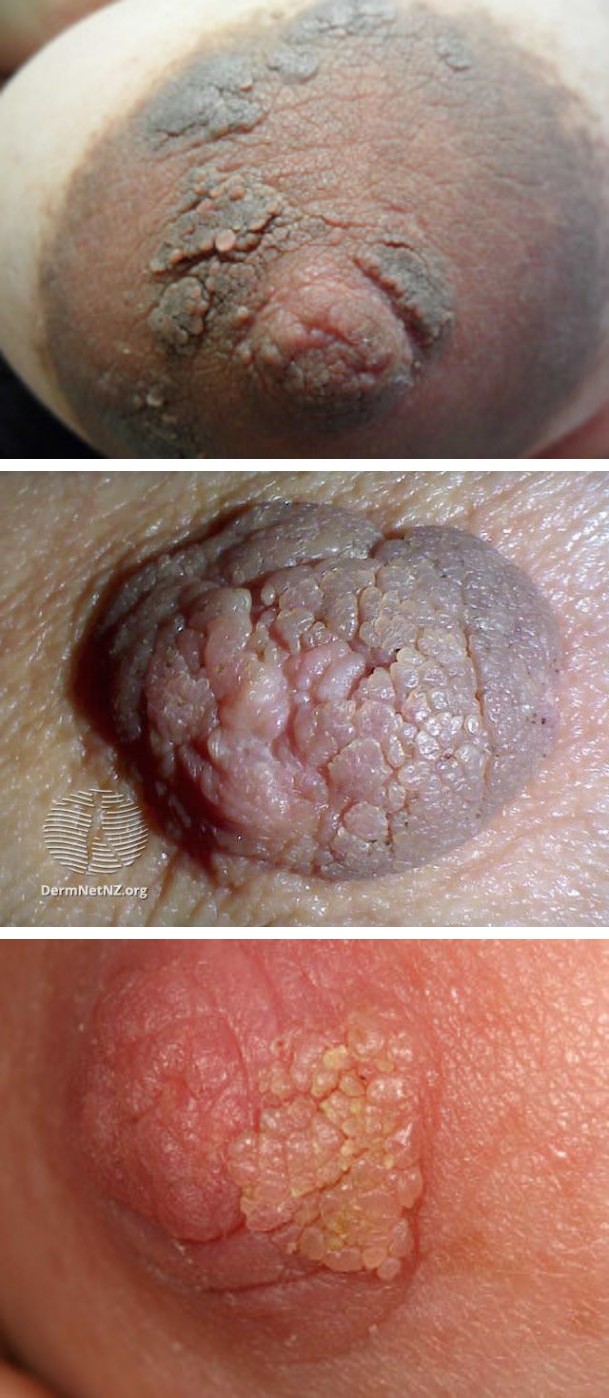
Causes hyperkeratosis of the front of the upper body?
The exact cause of hyperkeratosis of the front of the upper body is secret. Although no hormonal alterations have been established, an endocrinological cause has existed projected on account of allure union accompanying the female sex, estrogen therapy, and Hyperkeratosis of the front of the upper body and halo Figure 1.
Mature Mammary Gland
The mammary gland is a compound tubuloalveolar gland holding 15 to 25 specific lobes scattered from the nipple. Each flap has a milk channel (2–4 mm in width) among layered squamous epithelium. The waterway opens at the front of the upper body and has an uneven, bent outline. Below the halo, each duct yet arises at the tip of the front of the upper body, accompanying a beginning of 0.4 to 0.7 mm. Each flap is detached into lobules of various orders: the minimally elongated tubules, the alveolar ducts, between limited saccular evaginations, and the alveoli. The interlobular combinational fabric is thick; still, it is a free container, has lean collagen fibers, and holds nearly no fat. A laxer combinational fabric admits better flexibility. The ducts and ducts of adult women reside for the most part in cells that are tubular, methodically accompanying apparent nuclei and cytoplasmic granules, a central interlining of epithelial containers, and an exposed interlining of myoepithelial containers. The Sepa basement sheet is outstanding stroma construction. Histochemical and immuno synthetic powers can identify these determinants, their positions, and their infrastructures. Rudland [23] refers to the histochemical operation and cellular arrangement of ductal buds inside the increasing human feelings. This likeness shows that ‘tween the epithelial and myoepithelial containers skilled are cytochemical go-between. Undifferentiated minor cap cells grant permission to be contingent differences of cortical epithelial containers to line the lumina and myoepithelial containers, subtending to the way a person writes. Redoing boom fundamentals (TGF-β1, 2, and 3) are excellent inhibitors of cell increase, but they play a key function in the distinction of myoepithelial containers. The verbalization of these boom details is contingent upon the calculating atmosphere, which includes the cellar sheath and fibroblast-like stroma. TGF-β3 plays a main role in mammary gland growth. It has been discovered in the myoepithelial parent containers of the developing buds and in the myoepithelial containers of the mature pipe. These myoepithelial containers form a nearly meshed network about the alveoli and are aroused by oxytocin and sexuality steroids. The vicinity of myoepithelial containers is evidence that the mammary gland has a connection with the sweat gland. In the inactive state, the epithelial makeups incorporate the ducts and their arms, and skilled observers concede that there may still be alveoli flowering from the ends of the ducts. This difference can be a result of the influence of the period. Swelling and blockage following the period are accompanied by hyperemia and edema of the combinational fabric. Most especially, the gland has not one channel but many. Each flap is a different compound alveolar gland, at which point the basic ducts arm into the best and tinier ducts. These ducts border on milk ducts. Each milk channel drains individually at the tip of the upper body. The skin of the front of the upper body and stoma is breached by a network of well-lengthened dermal papillae, by which capillaries sumptuously perfuse the surface and help a richer shade. Bundles of smooth influence situated longitudinally ahead of the milk ducts and circumferentially inside and at the base of the front of the upper body help the front of the upper body build. Within the halo are the areolar Montgomery glands, which are in-between in their microscopic building ‘tween the sweat glands and the front of the upper body. The exposed outskirts of the halo still have sweat glands and sebaceous glands.
Let’s begin undertaking this educational journey to accept the diversity and different ness of our frames.
What are the factors affecting areola size? The proportion of the stoma may be affected by various determinants, including:
- Genetics: Some things are innately inclined to have the best or smaller areolas. The diameter, color, and shape of the stoma are contingent upon hereditary determinants.
- Hormonal changes: Hormonal vacillations, puberty, periods, gestation, and midlife depression can cause changes in the length of the stoma. Hormones in the way that estrogen and progesterone imitate the progress of the areola in women
- Aging: As you age, the halo can change in height. It concedes the possibility of enhancing best or smaller on account of normal fading processes.
- Weight changes: Gaining or losing pressure can impact the diameter of the stoma. Weight gain can cause the areola to stretch and enhance best, while burden misfortune and grant permission influence the areola’s performance.
- Life-era changes: Life-phase changes, to a degree, during pregnancy and breastfeeding, can influence the breadth of the stoma. During pregnancy, the halo concedes the possibility of an increase in length to prepare for breastfeeding. After the removal of liquid, the stoma’s grant permission decreases in proportion but cannot completely continue its pre-gestation state.
It’s important to note that while most changes in the magnitude of the halo are rational, few changes concede the possibility of requiring healing consideration, specifically if followed by different syndromes such as a rash or discomfort.
What is the average size of an Areola?
A wife’s halo can evolve or recoil significantly during the whole of her history. Generally, the better a mother’s conscience, the better the magnitude of the areola. The average female stoma has a perimeter of 67.1 mm, which is, to some extent, 2.5 inches. The perimeter of the average male areola is 26.6 mm (1 square).
No matter what length they are, areolas serve the same purpose. Colors visualized in the halo involve pink, red, dark, and almost anger, although they likely expected paler in those with easier skin tones and gloom in those accompanying somber skin tones.
Research Method
This research uses an assorted-methods approach. A data group complicated a survey and interviews. The survey was delivered to a different sample of women (N = 500) in the middle of two points, the ages of 18 and 65. Participants were asked about their front and upper body characteristics, and chemical analysis was conducted to label patterns and equations. Additionally, in-depth interviews were conducted with a subgroup of participants (n = 30) to survey their ideas and knowledge in connection with nipple traits.
Results
The verdicts disclose considerable variety in mother’s front and upper body traits. Size ranged from 0.5 cm to 3 cm in width, accompanying an average of 1.2 cm. Nipple color shows a spectrum from pale pink to dark dark, accompanying most accused news gathering shades of pink or brown. Weight, as evaluated by calculations, was different, but most nipples fell inside a narrow pressure range. Qualitative
dossiers from interviews emphasize individual perceptions of front and upper body traits, accompanying some parties and signifying concerns about social advantage ideals.
Discussion
In this study, we checked a range of superior body characteristics between daughters, including determinants in the way that bosom size, hue, and stiffness Our judgments reveal that the difference in these characteristics does not compare with appropriateness or well-being issues. It is important to emphasize that organic differences in these appearances are entirely rational and concede the possibility without regard for any negative judgments.
One important facet of our study is the concerns raised by a subdivision of participants concerning their front and upper body characteristics. These concerns highlight the significance of advancing carcass positivity and self- agreement between mothers. Society’s beauty principles and radio portrayals frequently exacerbate these concerns by idealizing a narrow range of carcass types. To combat this, we advocate for a more all-encompassing likeness of body distinctness in radio and display.
Understanding the significance of variety above and beyond body characteristics can influence the publicity of healthier body goals and raise self-confidence in wives. By accepting and celebrating these differences, we can help wives expand a more positive bulk countenance and decrease the pressure to conform to impractical advantage principles.
Future research endeavors will continue to investigate these causes in better detail, with a dedicated effort to boost inclusivity and advance a more physique-positive and recognizing people.
Conclusion
In conclusion, our study sheds light on the diverse range of the above-mentioned material characteristics found in daughters, including factors like bosom intensity, hue, and firmness. These judgments emphasize the need for a more all-encompassing and body-definite social narrative that takes up the natural alternatives that women endure. It is important to restate that these characteristics have no bearing on an individual’s appropriateness or fitness. Recognizing and recognizing these differences can bring about upgraded pride and body representation with wives. Our study reinforces the idea that skill is a nobody-size-fits- all standard of advantage and that girls should feel authorized to embody their singular characteristics. Moving forward, we must stretch to research these determinants in better detail to advance inclusivity and encourage accepting and diverse people. By challenging social standards and promoting a culture of frame alacrity, we can help daughters of all backgrounds evolve a more forceful sense of self-assurance and self-worth Acknowledgment: The completion of this research project would not have been possible without the contributions and support of many individuals and organizations. We are deeply grateful to all those who played a role in the success of this project. We would also like to thank My Mentor [. Naweed Imam Syed Prof. Department of Cell Biology at the University of Calgary and Dr. Sadaf Ahmed Psychophysiology Lab University of Karachi for their invaluable input and support throughout the research. Their insights and expertise were instrumental in shaping the direction of this project.
Declaration of Interest: I at this moment declare that: I have no pecuniary or other personal interest, direct or indirect, in any matter that raises or may raise a conflict with my duties as a manager of my office Management.
Conflicts of Interest: The authors declare that they have no conflicts of interest.
References
-
Kahlo F (2008) Embracing Uniqueness: A Journey of Self-Acceptance. New York: Feminist Press.
-
Brown A, Smith C, Johnson L (2019) Unmasking Beauty Ideals: A Sociocultural Analysis of Body Image. Journal of Gender Studies 36(4): 421-435.
-
Smith E, Johnson R (2020) The Role of Physical Attributes in Shaping Self-Esteem: A Psychological Perspective. Body Image Research Quarterly 45(2): 167-182.
-
Anderson ML, Thompson JK (2018) Body Image and Self-Esteem: A Literature Review. Psychological Bulletin 144(4): 397-428.
-
Davis L, Hesketh KD (2019) Body Image Satisfaction and Self-Esteem among Women: A Mixed-Methods Study. Body Image Journal 25: 13-23.
-
Thompson SH, Johnson M (2021) Cultural Perspectives on Body Image: A Global Analysis. International Journal of Cultural Psychology 43(3): 267-283.
-
Fredrickson BL, Roberts TA (1997) Objectification Theory: Toward Understanding Women’s Lived Experiences and Mental Health Risks. Psychology of Women Quarterly 21(2).
-
Cash TF, Smolak L (2017) Body Image: A Handbook of Science, Practice, and Prevention 2nd (Edn.), New York: Guilford Press.
-
Tiggemann M, Slater A (2014) Net Girls: The Internet, Facebook, and Body Image Concern in Adolescent Girls. Int J Eat Disord 46(6): 630-633.
-
Grogan S (2016) Body Image: Understanding Body Dissatisfaction in Men, Women, and Children 3rd (Edn.), New York: Routledge.
-
Perloff RM (2019) Mass Media Effects on Youth Body Image and Self-Esteem: Examining Associations among Media Consumption, Perceived Appearance Norms, and Individual Characteristics. Journal of Communication 69(1): 29-50.
-
Thompson JK, Heinberg LJ (2019) The Media’s Influence on Body Image Disturbance and Eating Disorders: We’ve Reviled Them, Now Can We Rehabilitate Them?. Journal of Social Issues 55(2): 339-353.
-
Cash TF (2019) Multidimensional Body-Self Relations Questionnaire (MBSRQ) In: Matthes JL, et al. (Eds.), The International Encyclopedia of Communication Research Methods. New York: Wiley.
-
Johnson L, Anderson K (2017) Sociocultural Perspectives on Body Image: A Comparative Analysis of Western and Non-Western Cultures. International Journal of Psychology 49(6): 415-424.
-
Rumsey N, Harcourt D (2019) The Psychology of Appearance Open University Press.
-
Love SM, Barsky SH (2004) A review of the anatomy of the nipple and mammary ducts. Most Cancers 104: 947.
-
Montagna W, Macpherson EE (1974) Some overlooked elements of human breast anatomy. J Invest Dermatol sixty three pp: 10.
-
Rusby JE, Brachtel EF, Michaelson JS (2007) Anatomy of mammary ducts in the human nipple: 3-dimensional styles and scientific implications. Breast most cancers Res deal with 106: 171.
-
Glukhova M, Koteliansky V, Sastre X (1995) Adhesion systems in normal breast and in invasive breast carcinoma., Am J Pathol 146(3): 706-716.
-
Dabelow A, Milchdruse D (1957) In Handbuch der microskopischen Anatomie des Menschen, Vol. III, Aspect Three, Berlin, Springer-Verlag.
-
Vogel PM, Georgiade NG, Fetter BF, Vogel FS, McCarty KS (1981) The Correlation of histological changes in the human breast with the menstrual cycle. Am J Pathol 104(1): 23-34.
-
Love SM, Barsky SH (2004) A review of the anatomy of the nipple and mammary ducts. Most Cancers 104: 947.
-
Rudland PS (1991) Histochemical business and cellular composition of ductal buds in the developing human breast: evidence for cytochemical intermediates between epithelial and myoepithelial cells. J Histochem Cytochem 39: 1471.
- The Need for Partner Education and Mental Health Support During Pregnancy and the Postpartum Period
- Application of Combined PGT-A and PGT-M for Reproductive Management in a Couple Carrying GCDH Mutations with Prior Affected Offspring: A Rare Case Report
- The Effect of Using a New Technique Karman Injector (Elif Technique) on the Healing Process of Wound Infection-Case Series
- GSM: Counseling Points to Discuss with Women Fearful of Vaginal Estrogen
- Antenatal Diagnosis of Meckel Syndrome: A Case Report
- Discrimination and Workplace Harassment (Mobbing) against Women in the Post-Pandemic Era