
Hla-E Gene from Ophiocomina Nigra (Echinodermata-Invertebrates) Bioinformatics Data
HLA-E gene from MHC (Major Histocompatibility Complex) system has been recently discovered, in our laboratory, in Invertebrates. Blasts were performed against different protein species to find or not homologies. Results were given in the precedent communication.
Introduction
In 2020, we discovered for the first time, MHC genes in Invertebrates and particularly in Echinodermata [1, 2]. More recently, in 2022 a biosynthesis of HLA-E (ClassI, MHC) gene from O. nigra was performed [3]. The aim of this work is to analyze HLA-E DNA sequence
Material and Methods
Starting Material: DNA Sequence of HLA-E Transcript to me
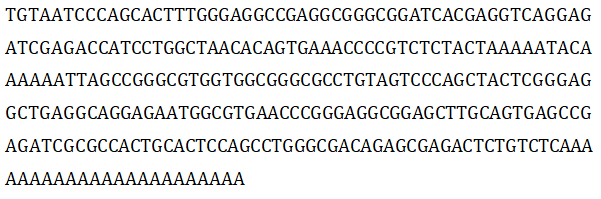
Results and conclusion
Blastn Original Sequence
Data base: Standard data bases were used
- We also optimize for: Highly similar sequences (mega blast)
- We recall that Molecule type is DNA
- Its query length is 281
- We find more than 100 sequences producing significant alignments First results appear in the table below: Table 1
| Description | Scientific name | Max score | Total score | Query cover | E. Value | Per. Ident | Acc Len | Accession |
|---|---|---|---|---|---|---|---|---|
| Pan troglodytes chromosomes unknown clone CH251- 153M19, complete sequence Pan troglodytes chromosome unknown clone CH251- 153M19, complete sequence | Pan troglodytes | 514 | 9982 | 100% | 2.00E-141 | 99.64% | 184578 | AC280142.1 |
| Pan troglodytes BAC clone CH251-501A13 from chromosomes unknown, complete sequence | Pan troglodytes | 514 | 10636 | 100% | 2.00E-141 | 99.64% | 181275 | AC185293.4 |
| Homo sapiens clone RP11-92L24 from 2 from chromosomes unknow, complete sequence | Homo sapiens | 514 | 2329 | 100% | 9.00E-141 | 99.64% | 137248 | AC019051.8 |
| Eukaryotic synthetic construct chromosome 13 | Homo sapiens | 508 | 1.31E+06 | 100% | 9.00E-140 | 99.29% | 96089878 | CP034516.1 |
Table 1: Blastn original sequence.
Blastx Original Sequence: The Molecule type is again DNA with a query length of 281. The Database which is used consists in: Non-redundant protein sequences (nr).
We obtain more than 100 sequences producing significant alignments. The table is recapitulated as following in Table 2:
| Description | Scientific Name | Max score | Total score | Query cover | E. Value | Per. Ident | Acc Len | Accession |
|---|---|---|---|---|---|---|---|---|
| Hypothetical protein EGM_09670 [Macaca fascicularis] | Macaca fascicularis | 149 | 149 | 91% | 1.00E-44 | 91.86% | 89 | EHH59533.1 |
| hCG2030582 [Homo sapiens] | Homo soapiens | 135 | 135 | 90% | 5.00E-39 | 83.53% | 102 | EAW48014.1 |
| Low quality protein: histone demethylase UTY [Chlorocebus sabaeus] | Chlorocebus sabaeus | 129 | 219 | 91% | 7.00E-36 | 87.50% | 166 | XP_037863302.1 |
| hypothetical protein CRU82_14500 [Staphylococcus aureus] | Staphylococcus aureus | 124 | 124 | 71% | 7.00E-35 | 92.54% | 72 | PGG78133.1 |
Table 2: BlastX original sequence.
Conclusion
Results summarized in the 2 Tables show homologies between the Ophiocomina nigra HLA-E gene and various proteins which lead to human Chromosome 13 .This chromosome is sometimes implicated inhuman trisomy We note also a strong homology with Macaca fascicularis: 91,86% of identity with the: Hypothetical protein: EGM 09670. Mainly we retain that O. nigra HLA-E gene exists in”its own right” and can be amplified in plasmid PUC-GW-Kan.
References
-
Leclerc M (2020) Proteomics Bioinformatics 2(1): 59- 61.
-
Leclerc M (2021) Biosynthesis « De Novo » of the Ophuirid Ophiocomina Nigra Igkappa Gene. J Clin Class. Immunol 1(1): 1-4.
- Are the Vaccines the Only Solution to Prevent the COVID-19 Pandemic? Part Two
- Clinical Characteristics of Women in this New Global Immunodeficiency
- Cell Dynamics in HIV Pathogenesis: Insights and Implications
- Determination of the CDR (CDR1, CDR2) « Complementary- Determining Region Invertebrate Primitive Antibody from Sea Star »
- Prioritizing Care for High-Risk COVID-19 Patients in the EU: 10 Civic Recommendations to the Institutions
- Comprehensive Insights into ModRNA Vaccines: Persistent PP-Spike Recombinant Protein, Hyperimmune/Inflammatory Reactions, Thrombotic Vasculopathy, Chronic Organ Complications and Excess Deaths