
To Investigate the Neuroprotective Effect of Crocin against Colchicine and Aluminium Chloride Induced Cognitive Disfunction and Oxidative Damage in Rodents
Neuroprotective effect of Crocin against intracerebral administration of Colchicine induced neurotoxicity in mice has been studied. Effect of Crocin on colchicine induced memory impairment in Morris water maze test was done. Colchicine is a powerful mitotic poison, anti-inflammatory, and inhibitor of tumor growth. Most biological effects of colchicine are probably related to the formation of a colchicine-tubulin complex which prevents microtubule polymerization. It is used in cancer chemo therapy but is limited due to its high toxicity. The present study showed that intraperitoneal administration of Crocin has neuroprotective effect. It was suggested because of assessing various biochemical and behavioural parameters. In this study two models were taken (colchicine and aluminium chloride induced oxidative damage and cognitive dysfunction) to assess neuroprotective effect of crocin. Neuroprotective action of crocin may be beneficial for the prevention and treatment of Al-induced oxidative damage in the brain. The present study also showed that treatment with crocin ameliorated colchicine-induced memory impairment in mice. Furthermore, the beneficial effects of crocin may be attributed to reduced oxidative stress and cholinergic dysfunction in the brain.
Komal1, Parul Sharma2*, Firoz Khan3, Lubhan4 and Vipin Kumar
Garg5
Keywords: Morris Water Maze Test; Cognition; Colchicine and Oxidative Stress
To Investigate the Neuroprotective Effect of Crocin against Colchicine and Aluminium Chloride Induced Cognitive Disfunction and Oxidative Damage in Rodents Adv Pharmacol Clin Trials
Introduction
Brain is the major part of the central nervous system. It is the biological organ responsible for thinking, memory, reasoning and language. From the simplest vertebrate animals to humans there is very little difference between the spinal cord while the brain has great deal. Its average weight is about 1600g in men and 1450g in women. The human brain is a complex organ that allows us to think, move, feel, see, hear, taste, and smell. It controls our body, receives, analyses, and stores information (our memories). The brain produces electrical signals, which, together with chemical reactions, let the parts of the body communicate. Nerves send these signals throughout the body [1].
Protective Coverings of the Brain
Brain is enveloped in three connective tissue membranes, the meninges lies between nervous tissue and bone .The outer most is dura mater, the middle is arachnoid mater and the inner most is pia mater. These are also present to protect the brain and provide a structural framework for arteries, vein and dura sinuses. In the cranial cavity dura mater consist of two layers-an outer periosteal layer and inner meningeal layer [2].
In some places the two layer of dura are separated by dural sinuses, spaces that collect the blood that has circulated through brain. Two major dural sinuses are the superior sagital sinus found just under the cranium and the transverse sinus which runs horizontally from the rear of the head towards each ear. These sinuses meet like an inverted T at back of the brain ultimately into the internal jugular veins of the neck [3].
Memory
Memory is not unitary in nature, but is actually aided by multiple memory systems present in different regions of the brain. Memories are also classified according to time: from short-term memory, lasting only seconds or minutes, to long-term memory, lasting months or years. Research of the neurobiological basis of memory supports a clear distinction between the declarative and non- declarative memory systems (Figure 1).
1) Declarative (explicit) memory system - It is hippocampal dependent and the knowledge is characterized as flexible memory for past events and facts. 2) Non-declarative (implicit) memory system-It is striatal dependent and in this memory is characterized by relatively inflexible knowledge for habitual and procedural behaviours.
Classification of Memory
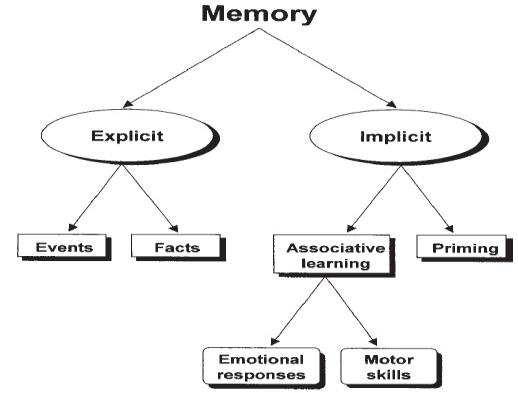
Moreover, evidence indicates that the two memory systems may, in actuality, interact with one another during learning; however, the level at which this interaction occurs, either during acquisition or response, remains unknown. Investigation of the multiple memory systems and the mechanisms of interaction are not only important for what it reveals about the evolution and adaptive function of the brain, but for its clinical applications as well [4].
Cognition
Cognition is a group of mental processes that includes attention, memory and learning power, producing and understanding language, reasoning, problem solving and decision making. It is subjective in nature and can be affected by various factors which include ageing, stress, hypertension and various pathological conditions such as dementia related to Parkinson’s disease (PD), Alzheimer’s disease (AD), schizophrenia, cancer and HIV1 & HIV 2. Cognitive enhancement may be defined as the amplification or extension of core capacities of the mind through improvement of information processing systems (internal and external) [5].
Cognitive impairment is one of the major health problems in middle and elderly population and also in some disease conditions, one of the most functionally enfeebling aspects of many neuropsychiatric disorders and neurodegenerative disorders, such as schizophrenia, depression, AD dementia, cerebrovascular impairment, seizure disorders, head injury and Parkinsonism [6].
Copyright© Parul Sharma, et al.
Parul Sharma, et al. To Investigate the Neuroprotective Effect of Crocin against Colchicine and Aluminium Chloride Induced Cognitive Disfunction and Oxidative Damage in Rodents. Adv Pharmacol Clin Trials 2019, 4(3): 000163.
Oxidative stress (OS) has been implicated in the pathophysiology of many neurological, particularly neurodegenerative diseases. OS can cause cellular damage and subsequent cell death because the reactive oxygen species (ROS) oxidize vital cellular components such as lipids, proteins, and DNA. Moreover, the brain is exposed to excitatory amino acids (such as glutamate) throughout life, whose metabolism produces ROS, thereby promoting excitotoxicity. Antioxidant defence mechanisms include removal of O2, scavenging of reactive oxygen/nitrogen species or their precursors, inhibition of ROS formation, and binding of metal ions needed for the catalysis of ROS generation and up-regulation of endogenous antioxidant defences [7].
Excitotoxicity is defined as excessive exposure to the neurotransmitter glutamate or overstimulation of its membrane receptors, leading to neuronal injury or death. Excitotoxic neuronal cell damage is mediated in part by over activation of N-methyl-D-aspartate (NMDA)-type glutamate receptors, which results in excessive Ca2+ influx through the receptor associated ion channel and subsequent free radical formation. Physiological NMDA receptor activity, however, is also essential for normal neuronal function. This means that potential neuroprotective agents that block virtually all NMDA receptor activity will very likely have unacceptable clinical side effects [8]. For this reason many previous NMDA receptor antagonists have disappointingly failed advanced clinical trials for a number of neurodegenerative disorders. Amino acid glutamate plays an important role in excitotoxicity. The glutamate acts mainly on four receptors, divided in two groups: a- ionotrophic receptors (related to ions action): NMDA, amino-hydroxyl-methyl-isoxalone propionic acid (AMPA), and kainat (AMPA and kainat are known as non-NMDA receptors); b-metabotrophic [9].
Mechanism of Excitotoxicity
Glutamate acts in about 30% of synapses in central nervous system (CNS), it is kept in specific vesicles and released in little doses and then metabolized by specific enzymes. The glutamate opens the receptor dependent channel and then a large quantity of Ca2+ enters inside the cell. The excess of Ca2+ is highly toxic for the cells [10]. Under normal conditions, the intracellular Ca2+ level is stable and low, around 10000 times lower than the extracellular level. Besides Ca2+, Na+ also inflows and this further imbalances the cellular ionic levels. This leads to an increase in cerebral edema. The excess of [Ca2+]
stimulates a sequence of toxic enzymatic reactions and leads to cell death. In short, the main enzymatic reactions can be described as:
Damage of oxidative phosphorylation, lowering function and energy production by the mitochondria. Activation of phospholipases that act on the phospholipids and contributes to the destruction of neuronal membranes and brain vascular endothelium, through a mechanism called enzymatic lipid peroxidation (the non-enzymatic lipid peroxidation is of another kind performed by free radicals) [11].
Neurodegenerative Disorders
Neurodegenerative disorders are characterized by progressive and irreversible loss of neurons from specific regions of the brain. Neurodegenerative disorders include Parkinson's disease (PD) and Huntington's disease (HD), where loss of neurons from structures of the basal ganglia results in abnormalities in the control of movement; Alzheimer's disease (AD) is also a neurodegeneration disease where the loss of hippocampal and cortical neurons that leads to impairment of memory and cognitive ability and amyotrophic lateral sclerosis (ALS), where muscular weakness results from the degeneration of spinal, bulbar, and cortical motor neurons. These disorders are relatively common and represent a substantial medical and societal problem [12].
Parkinson’s Disease(PD)
Parkinson disease (PD) is an age-related neurodegenerative disease, occurs worldwide with an equal incidence in both sexes, and its prevalence is predicted to increase dramatically in the coming decades due to the aging of the population. The cardinal clinical features of PD are resting tremor, rigidity, and bradykinesia. Pathologically, the disease is characterized by loss of dopamine neurons in the substantial nigra pars compacta (SNPC), with intracellular proteinaceous inclusions or Lewy bodies and a reduction in striatal dopamine. PD is multifactorial in terms of both etiology and pathogenesis. Several biochemical factors appear to be involved in the pathogenetic cascade of events leading to cell dysfunction and death in PD, including free radicals, a mitochondrial complex I deficiency, excitotoxicity, and inflammation [13].
Huntington’s Chorea
Huntington’s disease (HD) is an inherited (autosomal dominant) disorder characterised by choreic Copyright© Parul Sharma, et al.
Parul Sharma, et al. To Investigate the Neuroprotective Effect of Crocin against Colchicine and Aluminium Chloride Induced Cognitive Disfunction and Oxidative Damage in Rodents. Adv Pharmacol Clin Trials 2019, 4(3): 000163.
hyperkinesias (dance-like movements of limbs and rhythmic movements of tongue and face) and dementia with progressive brain degeneration. It is caused by a genetic error in huntingtin gene and subsequent abnormal synthesis of a huntingtin protein that contains several repeats of polyglutamine. In which GABAergic striatonigral pathway is impaired, which leads to large decreases in striatal GABA concentrations, whereas somatostatin and dopamine concentrations are relatively preserved Symptoms develop insidiously, either as a movement disorder manifest by brief, jerk like movements of the extremities, trunk, face, and neck (chorea) or as personality changes or both [14].
Alzheimer’s Disease (AD)
Alzheimer’s disease is the most prevalent form of dementia which does not have any previous cause such as stroke, brain trauma or alcohol toxicity. Dementia is the term used to explain various conditions which cause brain cells to die, leading to the progressive disruption in memory and the ability to carry out normal routine activities such as washing, dressing, eating, and completing complex tasks. Dementia may also affect a person’s mood and personality. There are different types of dementia but Alzheimer’s disease and vascular dementia are the most common one [15] (Figure 2).
Colchicine
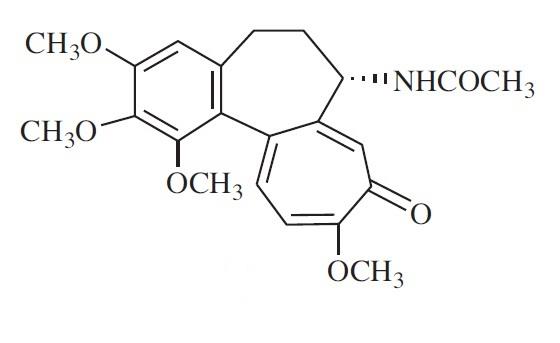
Colchicine is a powerful mitotic poison, anti- inflammatory, and inhibitor of tumor growth. Most biological effects of colchicine are probably related to the formation of a colchicine-tubulin complex which prevents microtubule polymerization. It is used in cancer chemo therapy but is limited due to its high toxicity [15].
Materials and Methods
The study was conducted at Meerut Institute of Engineering and Technology (MIET), department of Pharmaceutical Technology, Meerut. Commonly used laboratory strains, young healthy adult Wistar rats and Swiss albino mice of either sex in equal number (n=6) were taken. The female was nulliparous and non- pregnant. At the commencement of study the weight variation of animals used was kept minimal and not exceeded ± 20% of the mean weight of each sex. Normal weight of rat was taken. (Rats (150-200 g) were used in aluminium chloride induced neurotoxicity; Mice (25-35 g) were used for colchicine induced neurotoxicity).
Duration of the Study
The duration of the study was 45 days. Animal ethical committee approval (711/PO/Re/S/02/CPCSEA) has been taken before the start of the study.
Preparation of Animals
Healthy young adult rat and mice were randomly assigned to the control and treatment groups. The animals were identified uniquely (i.e. via marking at base of the tail) and acclimatized for at least 5 days in their cages prior to the start of study.
Experimental Design: Method I
• Aluminium chloride and test drug solutions were made freshly at the beginning of each experiment.
• For oral administration, aluminium chloride and crocin were dissolved in sterile water and normal saline respectively and administered orally at a dose of 0.5 ml/100 g body weight.
- Animals were randomly assigned into five groups consisting of six animals in each.
- Group 1: Naive (will receive vehicle (sterile water and normal saline) for aluminium chloride and crocin)
- Group 2: Aluminium chloride (100 mg/kg) + vehicle (sterile water and normal saline) for crocin
- Group 3: Crocin (30 mg/kg) + vehicle (sterile water and normal saline) for aluminium chloride
- Group 4: Crocin (15 mg/kg) + aluminium chloride (100 mg/kg)
- Group 5: Crocin (30 mg/kg) + aluminium chloride (100 mg/kg) Copyright© Parul Sharma, et al.
Parul Sharma, et al. To Investigate the Neuroprotective Effect of Crocin against Colchicine and Aluminium Chloride Induced Cognitive Disfunction and Oxidative Damage in Rodents. Adv Pharmacol Clin Trials 2019, 4(3): 000163.
The study was carried out for a period of 42 days (6 weeks). Then after we assessed various behavioural parameters using locomotor activity, Morris water maze test and step through passive avoidance paradigm and biochemical estimation.
Method II
Animals were randomly assigned into seven groups consisting of six animals in each. Prior to surgery, mice were anaesthetized by thiopental sodium (45 mg/kg i.p.) and positioned in stereotaxic apparatus. A sagittal incision was made in the scalp and two holes were drilled through the skull for placement of the injection cannula into the lateral cerebral ventricles.
- Group 1: Control mice treated with vehicle (sterile water and normal saline) of crocin.
- Group 2: ACSF (Artificial Cerebrospinal Fluid) (10 μl i.c.v.) + vehicle (sterile water and normal saline) of crocin
- Group 3: Colchicine treated group (3 μg/10 μl i.c.v.) + vehicle (sterile water and normal saline) of crocin
- Group 4: Crocin (15mg/kg) + ACSF (10 μl i.c.v.)
- Group 5: Crocin (30 mg/kg) + ACSF (10 μl i.c.v.)
- Group 6: Crocin (15 mg/kg) + colchicine (3 μg/10 μl i.c.v.)
- Group 7: Crocin (30 mg/kg) + colchicine (3 μg/10 μl i.c.v.) Behavioural tests such as Morris water maze test and step through passive avoidance paradigm were then carried out on days 17, 18, 19, 20 and 21, and locomotor activity was carried out on every 7th day. The marker of oxidative stress was estimated after the last behavioural testing on day 21 of the colchicine injection.
The Morris water maze consists of a large circular black pool of 120 cm diameter; 50 cm height fill to a depth of 30 cm with water at 26±2°C. A black coloured round platform of 8 cm diameter was placed 1 cm below the surface of water in a constant position. The water should be coloured with non-toxic black dye to hide the location of the submerged platform. The pool should be divided into four hypothetical quadrants. Trials should be giving for five consecutive days in order to train mice in the Morris water maze. The rat have maximum time of 60 s (cut-off time) to find the hidden platform and allow to stay on it for 30 s. The experimenter will put the rat on platform himself that fails to locate the platform. Latency time to reach the platform was recorded in each trial. Mean latency time of all three trials is shown in the results. A significant decrease in latency time from that of 1st session was considered as a successful learning.
Locomotor Activity
The locomotor activity was recorded by using actophotometer (Inco Pvt. Ltd. Ambala, India). Before locomotor task; animals were placed individually in the activity meter for 2 min for habituation. Thereafter, locomotor activity was recorded using actophotometer for a period of five min (Kulkarni SK 1999).
Results and Discussion
- Neuroprotective effect of Crocin against intracerebral administration of Colchicine induced neurotoxicity in mice.
- Effect of Crocin on colchicine induced memory impairment in Morris water maze test It has been observed that Normal control, ACSF- injected, and Crocin per se (15 and 30 mg/kg, i.p.) group of animals quickly learned to swim directly to the platform in the Morris water maze. Colchicine-injected mice showed an increase in escape latency time. Crocin (15 and 30 mg/kg i.p.) also showed significant decrease in the escape latency time.
As shown in Figure 3 normal control [F (4, 25) = 24.71, P < 0.001] and ACSF [F (4, 25) = 8.904, P < 0.001] treated mice showed significant decrease in escape latency time (ELT) from session three onward indicating spatial learning. To induce memory impairment, colchicine was administered intracerebrally at 3μg/mice dose. Memory function was evaluated from day 17 to day 21 after colchicine administration. Colchicine at 3 μg dose [F (4, 25) = 5.959, P < 0.001] showed significant increase in ELT at session 3, 4 and 5.
Copyright© Parul Sharma, et al.
Parul Sharma, et al. To Investigate the Neuroprotective Effect of Crocin against Colchicine and Aluminium Chloride Induced Cognitive Disfunction and Oxidative Damage in Rodents. Adv Pharmacol Clin Trials 2019, 4(3): 000163.
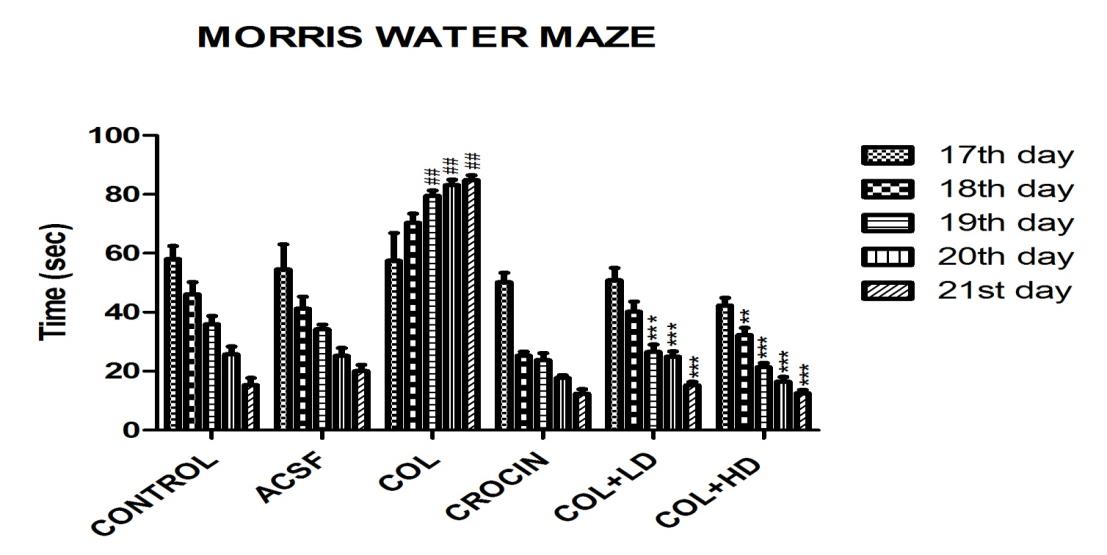
Crocin was administered at 15 and 30 mg/kg dose for 25 days starting prior to 4 days from colchicine injection. Crocin 15 mg/kg [F (4, 25) = 22.00, P < 0.001] treated mice showed significant decrease in ELT from session 3 onward, similarly higher dose [F (4, 25) = 40.41, P < 0.001]
also decreases ELT from session 3 onward. Moreover, Crocin per se treatment enhanced spatial memory as there was a significant decrease [F (4, 25) = 52.31, P < 0.001] in ELT from session 3 onward in comparison to session 1 (Table 1).
| Escape Latency Time (sec) | |||||||
|---|---|---|---|---|---|---|---|
| Group | Session 1 | Session 2 | Session 3 | Session 4 | Session 5 | ||
| Normal Control | 58.00±4.44 | 46.11±4.07 | 35.94±2.73*** | 25.72±2.66*** | 15.33±2.38*** | ||
| ACSF | 54.5 ± 8.57 | 41.22 ± 4.06 | 34.22 ± 1.55* | 25.17 ± 2.67*** | 20.0 ± 2.11*** | ||
| Colchicine (3µg/10µl) | 57.45 ± 9.43 | 70.39 ± 3.10 | 79.50 ± 1.77** | 83.11 ± 1.88** | 84.89 ± 1.55** | ||
| Crocin (30 mg/kg) + ACSF | 50.22 ± 3.14 | 25.33 ± 1.33 | 23.83 ± 2.32*** | 17.67 ± 0.96*** | 12.39 ± 1.52*** | ||
| Crocin (15 mg/kg) + Colchicine (3µg/10µl) | 50.89 ± 4.71 | 40.23 ± 3.42 | 26.50 ± 2.49*** | 24.94 ± 1.76*** | 15.17 ± 1.22*** | ||
| Crocin (30 mg/kg) + Colchicine (3µg/10µl) | 42.28 ± 2.60 | 32.28 ± 2.43** | 21.34 ± 1.42*** | 16.44 ± 1.59*** | 12.55 ± 1.05*** |
Table 1: Effect of Crocin on memory performance in the Morris water maze paradigm for Colchicine treated mice.
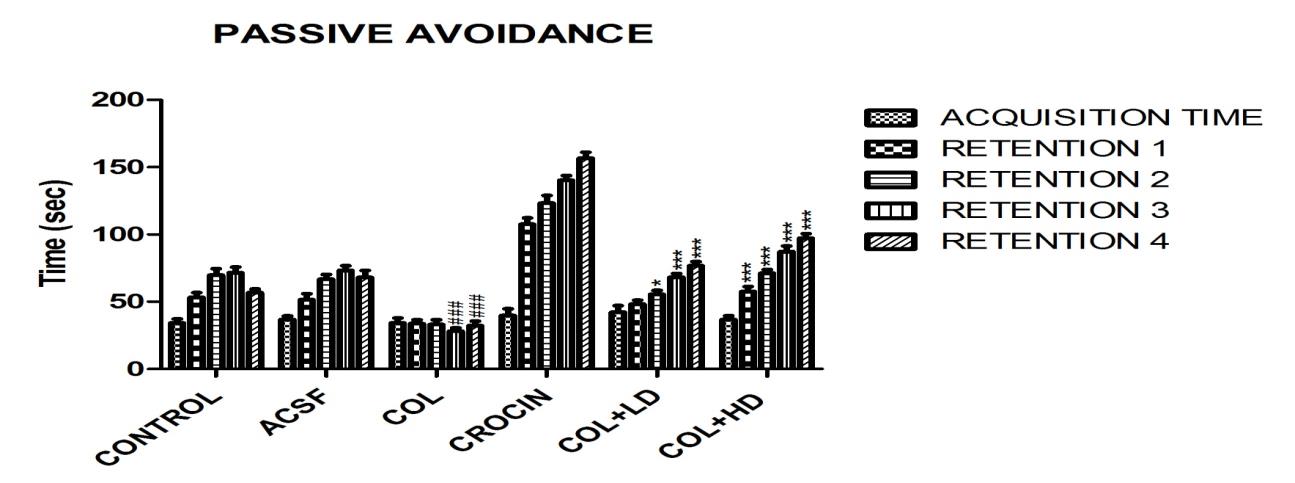
The transfer latency time significantly increased in the 1st and 2nd retention trials as compared to acquisition trial in control [F(4, 25) = 16.75, P < 0.001] and ACSF groups [F(4, 25) = 14.25, P < 0.001]. In the colchicine (3 µg) treated group there was no significant increase in the TLT in the 1st and 2nd retention trials as compared to acquisition trial [F (4, 25) = 0.6051, P > 0.001]. However, Copyright© Parul Sharma, et al.
Parul Sharma, et al. To Investigate the Neuroprotective Effect of Crocin against Colchicine and Aluminium Chloride Induced Cognitive Disfunction and Oxidative Damage in Rodents. Adv Pharmacol Clin Trials 2019, 4(3): 000163.
in the Crocin (30 mg/kg) treated group, the TLT of retention trials was significantly higher [F (4, 25) = 49.62, P < 0.001] than that of the acquisition trial while lower dose of Crocin (15 mg/kg) has less significant effect to improve TLT in retention trials [F (4, 25) = 17.96, P > 0.001]. Summary of trials are given below in Table 2 (Figure 4).
| Transfer Latency Time (sec) | |||||||
|---|---|---|---|---|---|---|---|
| Group | Acquisition trial | Retention trial 1 | Retention trial 2 | Retention trial 3 | Retention trial 4 | ||
| Normal Control | 34.33 ± 2.94 | 53.33 ± 3.38** | 69.83 ± 4.75*** | 71.50 ± 4.22*** | 56.83 ± 2.63*** | ||
| ACSF | 36.83 ± 2.58 | 51.50 ± 4.38* | 66.67 ± 3.62*** | 73.33 ± 3.41*** | 68.00 ± 5.26*** | ||
| Colchicine (3µg/10µl) | 34.33 ± 3.63 | 33.83 ± 2.83 | 33.00 ± 3.62 | 28.00 ± 2.55*** | 32.17 ± 3.44*** | ||
| Crocin (30 mg/kg) + ACSF | 39.67 ± 5.09 | 107.5 ± 4.68*** | 123.2 ± 5.70*** | 140.2 ± 3.54*** | 156.7 ± 4.43*** | ||
| Crocin (15 mg/kg) + Colchicine (3µg/10µl) | 42.17 ± 4.96 | 48.17 ± 2.92 | 55.50 ± 2.96* | 68.33 ± 2.58*** | 76.83 ± 2.87*** | ||
| Crocin (30 mg/kg) + Colchicine (3µg/10µl) | 36.83 ± 2.82 | 57.50 ± 3.74*** | 71.17 ± 2.81*** | 87.33 ± 4.10*** | 97.17 ± 3.34*** |
Table 2: Effect of Crocin on colchicine induced memory impairment in Passive avoidance test. Effect of Colchicine and Crocin on p
Table 2: Effect of Crocin on colchicine induced memory impairment in Passive avoidance test. Effect of Colchicine and Crocin on passive avoidance task in mice. Results were expressed as mean transfer latency time (s) ± S.E.M. (n = 6). Data were analyzed by one-way ANOVA followed by Dunnet’s test for comparisons with acquisition trial. * Significant difference (*P < 0.001, P < 0.01, *P < 0.05) in transfer latency time in comparison to acquisition trial.
Effect of Crocin on Locomotor Activity in Colchicine (i.c.) induced memory deficits
In the present series of experiments, the mean scores of locomotor activity for each animal were relatively stable and showed no significant variation among different groups. The mean scores in normal control, ACSF, and colchicine treated mice remains unchanged. Further, both the dose of crocin (15 and 30 mg/kg, i.p.) did not cause any significant alteration in the locomotor activity as compared to colchicine treated mice on days 14 and 21 (Table 4 & Figure 5).
Copyright© Parul Sharma, et al.
Parul Sharma, et al. To Investigate the Neuroprotective Effect of Crocin against Colchicine and Aluminium Chloride Induced Cognitive Disfunction and Oxidative Damage in Rodents. Adv Pharmacol Clin Trials 2019, 4(3): 000163.
| Group | 1st Day | 7th Day | 14th Day | 21st Day | |||||
|---|---|---|---|---|---|---|---|---|---|
| Normal Control | 161.2 ± 4.58 | 182.8 ± 7.37 | 178.0 ± 5.33 | 172.2 ± 8.51 | |||||
| ACSF | 239.7 ± 20.66 | 237.7 ± 17.47 | 221.2 ± 19.63 | 218.2 ± 21.57 | |||||
| Colchicine (3µg/10µl) | 266.7 ± 46.12 | 301.0 ± 46.03 | 324.2 ± 30.49 | 350.2 ± 24.71 | |||||
| Crocin (30 mg/kg) + ACSF | 293.0 ± 23.30 | 297.3 ± 17.44 | 315.5 ± 23.22 | 341.8 ± 15.68 | |||||
| Crocin (15 mg/kg) + Colchicine (3µg/10µl) | 331.2 ± 9.83 | 334.0 ± 16.62 | 381.3 ± 23.14 | 395.8 ± 33.35 | |||||
| Crocin (30 mg/kg) + Colchicine (3µg/10µl) | 303.8 ± 8.83 | 290.0 ± 23.77 | 323.8 ± 31.20 | 317.7 ± 23.74 |
Table 3: Effect of Colchicine and Crocin on Locomotor Activity. Effect of Crocin and colchicine on locomotor activity. Results we
Discussion
The present study showed that intraperitoneal administration of Crocin has neuroprotective effect. It was suggested because of assessing various biochemical and behavioural parameters. In this study two models were taken (colchicine and aluminium chloride induced oxidative damage and cognitive dysfunction) to assess neuroprotective effect of crocin.
In colchicine treated mice (Swiss Albino), the actophotometer model does not show any significant decrease in locomotion, which shows that colchicine, does not impair locomotor activity. Whereas, in Morris water maze test there was a significant decrease in the escape latency time of crocin treated group when compared to colchicine treated group, showing that colchicine produces neurodegeneration and crocin has protective effect over colchicine. Similarly, in passive avoidance paradigm there was a significant decrease in the transfer latency time in colchicine treated group.
Furthermore, in Aluminium Chloride induced neurodegeneration model, similar behavioural and biochemical parameters were evaluated.
Similar to colchicine, no locomotor incoordination was found in the AlCl3 treated rat. In morris water maze test, there was a significant decrease in the escape latency time of the crocin treated group when compared to AlCl3 treated group. Similarly, passive avoidance paradigm shows a significant decrease in the transfer latency time in the AlCl3 treated group.
Conclusion
The present study clearly shows that crocin has neuroprotective effect against colchicine and Aluminium Copyright© Parul Sharma, et al.
Parul Sharma, et al. To Investigate the Neuroprotective Effect of Crocin against Colchicine and Aluminium Chloride Induced Cognitive Disfunction and Oxidative Damage in Rodents. Adv Pharmacol Clin Trials 2019, 4(3): 000163.
Chloride induced behavioural and biochemical changes that are caused by neurodegeneration. On the other hand, it can also be used as anti-cancer, anti edematos and anti- oxidant. Its free radical scavenging property can also be used in treatment of other disorders like Parkinson’s disease and Huntington’s disease. Pharmacological agents like carotenoids crocin, capable of scavenging free radicals, maintaining antioxidant homeostasis, and/or inhibiting lipid hydroperoxides, protein oxidation and thereby protecting neurons from oxidative injuries may provide useful therapeutic potentials for the prevention or treatment for the neurodegenerative disorders caused by Al-induced neurotoxicity. Neuroprotective action of crocin may be beneficial for the prevention and treatment of Al-induced oxidative damage in the brain.
The present study also showed that treatment with crocin ameliorated colchicine-induced memory impairment in mice. Furthermore, the beneficial effects of crocin may be attributed to reduced oxidative stress and cholinergic dysfunction in the brain. Therefore, Crocin can be an effective drug for the treatment of oxidative stress and cognitive dysfunction related disorders.
References
-
Chryssanthi DG, Lamari FN, Iatrou G, Pylara A, Karamanos NK, et al. (2007) Inhibition of breast cancer cell proliferation by style constituents of different Crocus species. Anticancer Research, PP: 27(1A): 357-362.
-
Ellman GL, Courtney KD, Andres V, Robert MF (1961) A new and rapid colorimetric determination of acetylcholinesterase activity. Biochem Pharmacol 7(2): 88-95.
-
Escribano J, Alonso GL, Coca-Prados M, Fernandez JA (1996) Crocin, safranal and picrocrocin from saffron (Crocus sativus L.) inhibit the growth of human cancer cells in vitro".Cancer Letters 100(1-2): 23-30.
-
Tamaddonfard E, Farshid AA, Ahmadian E, Hamidhoseyni A (2013) Crocin Enhanced Functional Recovery after Sciatic Nerve Crush Injury in Rats. Iran J Basic Med Sci 16(1): 83-90.
-
Abdullaev FI (2002) Cancer Chemopreventive and Tumoricidal Properties of Saffron (Crocus sativus L.). Exp Biol Med (Maywood) 227: 20-25.
-
Ghahghaei A, Bathaie SZ, Kheirkhah H, Bahraminejad E (2013) The protective effect of crocin on the amyloid fibril formation of Aβ42 peptide in vitro. Cell Mol Biol Lett 18(3): 328-339.
-
Green LC, Wagner DA, Glogowski J, Skipper PL, Wishnok JS, et al. (1982) Analysis of nitrate, nitrite, and [15N] nitrate in biological fluids. Anal Biochem 126(1): 131-138.
-
Gupta YK, Kumar VMH (2002) Intracerebroventricular administration of colchicine produces cognitive impairment associated with oxidative stress in rats. Pharmacology, Biochemistry and Behaviour 73(3): 565-571.
-
Abdullaev JF, Caballero-Ortega H, Riverón-Negrete L, Pereda-Miranda R, Rivera-Luna R, et al. (2002) In vitro evaluation of the chemopreventive potential of saffron. Rev Invest Clin 54(5): 430-436.
-
Habig WH, Pabst MJ, Jarkoby WB (1974) Glutathione S-transferases. The first enzymatic step in mercapturic acid formation. J Biol Chem 249(22): 7130-7139.
-
Hardman JG, Limbird LE, Gilmann AG (2001) The pharmacological basis of therapeutics. Tata Mc Graw Hill 10th (Edn.). 2001: 549- 556.
-
El-Beshbishy HA, Hassan MH, Aly HA, Doghish AS, Alghaithy AA (2012) Crocin “saffron” protects against beryllium chloride toxicity in rats through diminution of oxidative stress and enhancing gene expression 83: 47-54.
-
Ahmed YC, Pierre AED, Andre T, Kiendrébéogo M, Odile GN, et al. (2011) Protective effect of Scoparia dulcis on Brain and Erythrocytes. Current Research Journal of Biological Sciences 3(3): 254-261.
-
Ailton M (2011) Oxidative stress in neurodegenerative diseases: Mechanisms and therapeutic perspectives. Oxidative medicine and cellular longevity 14(8): 1-14.
-
Jnaneshwari S, Hemshekhar M, Santhosh MS, Sunitha K, Thushara R, et.al. (2013) Crocin, a dietary colorant, mitigates cyclophosphamide-induced organ toxicity by modulating antioxidant status and inflammatory cytokines. J Pharm Pharmacol 65(4): 604-614. Copyright© Parul Sharma, et al. Parul Sharma, et al. To Investigate the Neuroprotective Effect of Crocin against Colchicine and Aluminium Chloride Induced Cognitive Disfunction and Oxidative Damage in Rodents. Adv Pharmacol Clin Trials 2019, 4(3): 000163.
- Gallic and Citric Acid Present in the Peels of Tropical Fruits as an Alternative in the Fight against Cancer
- Treating the Forehead Lines with Combination of Forehead and Glabellar Botulinum Toxin Among Japanese Patients
- Clinical Evaluation of Patients Suffering from Breast Cancer & Determination of Treatment Therapies and Better Strategies Related to Breast Cancer
- Medieval Recipes by Al-Zahrāwī for Heart Palpitations Treatment
- Etiology and Prescription Errors of Myocardial Infarction in Different Health Care Systems of Azad Kashmir
- Early Diagnosis and Multidisciplinary Management of Turner Syndrome: A Paediatric Case Study