
Antioxidant Activity of Biofield Treated Proprietary Formulation Supplemented with Vitamins and Minerals in D-Galactose Induced Aging Dysfunction in Sprague Dawley Rats
A proprietary formulation was designed that consist of minerals (zinc, magnesium, iron, and copper) and vitamins (pyridoxine HCl, cyanocobalamin, and cholecalciferol). The present study was aimed to evaluate the impact of Consciousness Energy Healing Treatment (the Trivedi Effect®) on a novel test formulation in male Sprague Dawley (SD) rats for antioxidant activity. The test formulation was divided into two parts. One part was denoted as the control without any Biofield Energy Treatment, while the other part was defined as the Biofield Energy Treated sample, which received the Biofield Energy Healing Treatment by renowned Biofield Energy Healer, Mr. Mahendra Kumar Trivedi. Additionally, three groups of animals were also received Biofield Energy Healing Treatment per se (day -15). The tissue lipid peroxidation data exhibited that the level of malondialdehyde (MDA) was altered by 20.86%, 12.92%, and 17.31% in the Biofield Energy Treated test formulation from day -15 (G7), Biofield Energy Treatment per se plus Biofield Energy Treated test formulation from day -15 (G8), and Biofield Energy Treatment per se animals plus untreated test formulation (G9) groups, respectively as compared to the untreated test formulation group (G4). Moreover, tissue myeloperoxidase (MPO) level was significantly reduced by 32.46%, 27.49%, 27.49%, and 23.71% in the Biofield Energy Treatment per se to animals from day -15 (G6), G7, G8, and G9 groups, respectively as compared to the G4 group. Antioxidant enzyme like SOD was significantly increased by 26.64%, 28.74%, 22.69%, 36.31%, and 36.11% in the Biofield Energy Treated test formulation (G5), G6, G7, G8, and G9, respectively compared to the disease control group (G2). Additionally, the level of catalase was significantly increased by 156.10%, 101.62%, 66.57%, and 179.17% in the G6, G7, G8, G9 groups, respectively compared to the G4 group. Further, LDH level was significantly reduced by 9.86% in the G9 group compared to the G4 group, while NO level was reduced by 11.42%, 10.76%, and 8.77% in the G5, G6, and G7 groups, respectively as compared to the G2 group. Altogether, results suggested that the Biofield Treated test formulation possess antioxidant potential and could be used to maintain bodies’ oxidative stress, immunity and boost overall health and aging.
Introduction
Oxidative stress is the primary cause for many diseases [1]. It has been well proven that reactive oxygen species (ROS) can directly causes oxidative injury to cells by damaging cell membranes, lipids, proteins, and nucleic acids in tissues [2]. The human has the excellent antioxidant defense system to protect the ROS. Decreased antioxidant system activities and increased ROS production leads to pathogenesis of many diseases like hypertension, atherosclerosis, diabetes, chronic renal disease, cancer, rheumatoid arthritis, ischemia/ reperfusion, chronic adenotonsillitis and aging [3, 4]. Antioxidant activity is considered as one of the vital property of any formulation or nutraceuticals. However, the high concentration of free radicals are very much accountable for abundant inflammatory infections [5]. Myeloperoxidase (MPO) is a pro-oxidant with antimicrobial activity. By the utilization of H2O2 it produced hypochloric acid (HOCl) and other toxic substances in neutrophil phagolysosomes. It also causes neurodegenerative disorders and atherosclerosis [6, 7]. Aging causes morphological and metabolic changes in skeletal muscle followed by reduced ability and weakened athletic performance [8]. The current research work was designed with the aim of investigating the antioxidant and antiaging potentials of Biofield Energy Healing (The Trivedi Effect®) Treated test formulation supplemented with minerals and vitamins in Sprague Dawley rats. The newly formulated test formulation, which is a combination of multiple minerals such as iron sulfate, copper chloride, zinc chloride, magnesium (II) gluconate and vitamins like cholecalciferol (vitamin D3), pyridoxine HCl (vitamin B6), and cyanocobalamin (vitamin B12). Each component of this test formulation commonly used as nutraceutical supplement [9, 10, 11, 12].
Complementary and Alternative Medicine (CAM) therapies are now considering as the first-line model of treatment against several disorders, among which Biofield Therapy (or Healing Modalities) is one approach that has been reported to have several benefits to enhance physical, mental, and emotional human wellness. Besides, as per National Health Interview Survey (NHIS) 2012, reported that the highest percentage of the Americans used the dietary supplement as complementary health approaches than conventional medicine therapy. The National Center of Complementary and Integrative Health (NCCIH) has recognized and accepted Biofield Energy Healing as a CAM health care approach in addition to other therapies, medicines and practices such as Qi Gong, Tai Chi, deep breathing, yoga, natural products, chiropractic/osteopathic manipulation, massage, meditation, special diets, progressive relaxation, homeopathy, guided imagery, acupuncture, acupressure, hypnotherapy, healing touch, relaxation techniques, pilates, movement therapy, rolfing structural integration, mindfulness, traditional Chinese herbs and medicines, Ayurvedic medicine, aromatherapy, naturopathy, essential oils, Reiki, cranial sacral therapy and applied prayer (as is common in all religions, like Hinduism, Christianity, Judaism, and Buddhism).
Human Biofield Energy has subtle energy that can work effectively [13]. CAM therapies have been practiced worldwide with reported clinical benefits in different health disease profiles [14]. This energy can be harnessed and transmitted by individuals into living and non- living things via the process of Biofield Energy Healing. Biofield Energy Treatment (the Trivedi Effect®) has been published in numerous peer-reviewed science journals with significant outcomes in many scientific fields such as cancer research [15, 16], microbiology and biotechnology [17, 18, 19], pharmaceutical science [20, 21, 22, 23], agricultural science [24, 25, 26], materials science [27, 28, 29], nutraceuticals [30, 31], skin health [32, 33], human health and wellness. The authors want to evaluate the impact of the Biofield Energy Healing Treatment (the Trivedi Effect®) on the test formulation for antioxidant action concerning lipid peroxidation biomarkers malondialdehyde (MDA) and myeloperoxidase (MPO) in liver, antioxidant enzyme superoxide dismutase (SOD), and catalase activity in brain, lactate dehydrogenase (LDH) in muscle, and nitric oxide (NO) in serum using standard assays.
Materials and Methods
Chemicals and Reagents
Pyridoxine hydrochloride (vitamin B6), zinc chloride, cyanocobalamin (vitamin B12), magnesium (II) gluconate, and resveratrol were purchased from TCI, Japan. Copper chloride, cholecalciferol (vitamin D3), sodium carboxymethyl cellulose (Na-CMC), and iron (II) sulfate were procured from Sigma-Aldrich, USA. D (+) galactose obtained from Amresco, LLC. Other chemicals used in this experiment were analytical grade procured from India.
Experimental Animals
Randomly breed male Sprague Dawley (SD) rats with body weight ranges from 240.48 to 428.27 gm were used in this study. The animals were purchased from M/s. National Institute of Biological, India. Animals were randomly divided into nine groups based on their body weights consist of ten animals of each group. They were kept in sterilized polypropylene cages with stainless steel top grill having provision for holding pellet feed and drinking water bottle fitted with stainless steel sipper tube. The animals were maintained as per standard protocol throughout the experiment.
Consciousness Energy Healing Strategies
The test formulation was divided into two parts. One part of each ingredient was considered as control, where no Biofield Energy Treatment was provided. Another part of each ingredient and three group of animals were received Biofield Energy Treatment by Mr. Mahendra Kumar Trivedi (known as the Trivedi Effect®) under laboratory conditions for ~3 minutes. Biofield Energy Healer in this study never visited the laboratory (Dabur Research Foundation, New Delhi, India), nor had any contact with the test formulation. The energy transmission was done without touching the samples or animals. Similarly, the control samples were subjected by a “sham” healer under the same laboratory conditions for ~3 minutes. The “sham” healer did not have any knowledge about the Biofield Energy Treatment. After that, the Biofield Energy Treated samples were kept in the similar sealed condition and used as per the study plan. The Biofield Energy Treated animals were also is taken back to experimental room for further proceedings.
Experimental Procedure
Five days after acclimatization, animals were randomized and grouped based on body weight. Dosing for group G7 and G8 was also initiated on day -15 till end of the experiment. However, G1 to G6 and G9 animals were dosed from day 1 till the end of experiment. All the animals except G1 received D-Galactose, daily (500 mg/kg; i.p.) from day 1 to the end of the experiment. At the end of the experimental period, i.e., during 9th week, the animals were bled and the serum samples subjected for the estimation of nitric oxide (NO). Further, the animals were sacrificed and a portion of liver, brain, muscle samples were homogenized and stored in -80°C for estimation of anti-oxidant in liver homogenate (LPO and MPO), in brain homogenate (SOD and catalase), and in muscle homogenate (LDH) by ELISA method.
Antioxidant Assay Using ELISA Method
Tissue Lipid Peroxidation (LPO) in Liver Homogenate: Measurement of thiobarbituric acid reactive species (TBARS) levels is considered as an index of malondialdehyde (MDA) production [34]. This method depends on the formation of MDA as an end product of lipid peroxidation which reacts with TBARS, a pink chromogen, which can be measured spectrophotometrically at 532 nm, an MDA standard was used to construct a standard curve against which readings of the samples were plotted [35].
Tissue Myeloperoxidase (MPO) in Liver Homogenate: For MPO estimation, liver tissue (5%w/v) was homogenized in 0.5% hexadecyltrimethylammonium bromide (HTAB, Sigma-Aldrich, Co., St. Louis, MO, USA) with 50 mm potassium phosphate buffer, pH 6. The rest of the steps were performed as per in-house standard protocol. In addition, the homogenate was used for the estimation of myeloperoxidase (MPO) using Elisa kit (Cat No: k11-0575, Kinesisdx) through the colorimetric method as per manufacturer recommended standard procedure [36].
Estimation of Enzymic antioxidants - Superoxide dismutase (SOD) and Catalase (CAT) in Brain Homogenate: The brain homogenate was used as a matrix for the estimation of antioxidant enzymes by a colorimetric method with slight modification for SOD [37] and CAT [38]. Briefly, the formation of chromic acetate from dichromate and glacial acetic acid in the presence of hydrogen peroxide was measures colorimetrically at 570 nm. One enzyme unit was defined as the amount of enzyme which catalyzed the oxidation of 1 μM H2O2 per minute under assay conditions [39].
Estimation of Lactate Dehydrogenase (LDH) in Muscle Homogenate
Lactate dehydrogenase (LDH) activity was determined spectrophotometrically with lactate as a substrate. The method used is based on that of Wacker WEC, et al. [40], with certain modifications [41].
Estimation of Nitric Oxide (NO) in Serum
Nitrite (NO2−) and nitrate (NO3−) are stable final products of NO metabolism and used as indirect markers of NO presence. Total NO concentration is commonly determined as a sum of nitrite and nitrate concentrations. NO concentration was determined using an indirect method based on measurement of nitrite concentration in serum according to Griess’s reaction [42].
Statistical Analysis
The data were expressed as mean ± standard error of mean (SEM) and subjected to statistical analysis using Sigma Plot (Version 11.0). Student’s t-test was performed for comparison of the individual treatment group with control. The p≤0.05 was considered as statistically significant.
Results and Discussion
Measurement of Tissue Lipid Peroxidation (LPO)
Lipid peroxidation is the process in which the membrane bound enzymes, proteins, and receptors are inactivated through loss of cell membrane integrity [43]. In this reaction, the lipid containing polyunsaturated fatty acids (PUFA) are hydrolyzed into biologically active aldehydes and carbonyl compounds. Among these, the most important is lipid peroxidation end product malondialdehyde (malondialdehyde, MDA) [44]. The effect of the test formulation on the lipid peroxidation in the liver tissue is shown in Figure 1. From the Figure 1, it was observed that the tissue (liver) MDA slightly increased in the disease control group (G2) compared to the normal control group (G1). Further, the level of MDA was altered by 3.45%, 8.24%, 20.86%, 12.92%, and 17.31% in the Biofield Energy Treated test formulation (G5), Biofield Energy Treatment per se to animals from day -15 (G6), Biofield Energy Treated test formulation from day -15 (G7), Biofield Energy Treatment per se plus Biofield Energy Treated test formulation from day -15 (G8), and Biofield Energy Treatment per se animals plus untreated test formulation (G9) groups, respectively as compared to the untreated test formulation group (G4). After post-treatment with the test formulation the level of lipid peroxidation end product malondialdehyde (MDA) was significantly altered in the Biofield Energy Treatment groups compared to the disease control group, which might be due to The Trivedi Effect® - Conscious Energy Healing Treatment.
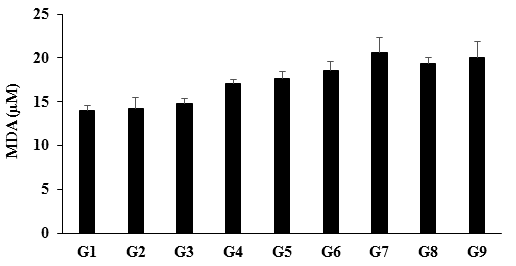
Figure 1: Lipid peroxide activity of the test formulation in male Sprague Dawley rats. Values are expressed as mean ± SEM, n=10 in each group. G: Group; G1: Normal control; G2: Disease control; G3: Reference item (resveratrol); G4: Untreated test formulation; G5: Biofield Energy Treated test formulation; G6: Biofield Energy Treatment per se to animals from day -15; G7: Biofield Energy Treated test formulation from day -15; G8: Biofield Energy Treatment per se plus Biofield Energy Treated test formulation from day -15 and G9: Biofield Energy Treatment per se animals plus Untreated test formulation.
Tissue Myeloperoxidase (MPO) in Liver Homogenate
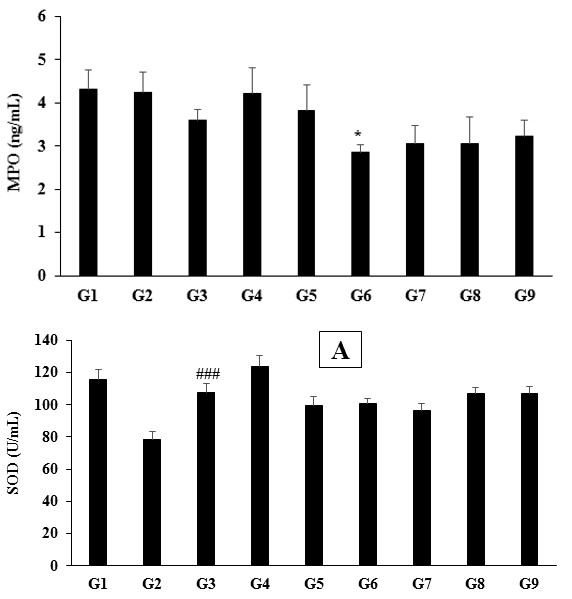
(G5), Biofield Energy Treatment per se to animals from day -15 (G6), Biofield Energy Treated test formulation from day -15 (G7), Biofield Energy Treatment per se plus Biofield Energy Treated test formulation from day -15 (G8), and Biofield Energy Treatment per se animals plus untreated test formulation (G9) groups, respectively as compared to the untreated test formulation group (G4). One study reported that during aging state there was an increased accumulation of lipid peroxidation end products, which indirectly indicated that oxidative stress and age are directly proportional [46, 47]. Overall, the Biofield Treated groups more reduction of the MPO level compared to untreated test formulation group (G4), which can restrict or slowdown the process of lipid peroxidation. Thus, it would be beneficial for cardiovascular, kidney-related, and neurodegenerative, and inflammatory disease conditions.
Myeloperoxidase (MPO) is a heme protein enzyme secreted by the activation of leukocytes that facilitates the conversion of hydrogen peroxide to hypochlorous acid and produces a reactive intermediate that promote lipid peroxidation [45]. The impact of Biofield Energy Treated test formulation on the activity of liver myeloperoxidase is shown in Figure 2. The level of MPO in the normal control (G1) and disease control (G2) groups was 4.35 ± 0.45 and 4.25 ± 0.46 ng/mL, respectively. Resveratrol (positive control) significantly reduced the level of MPO by 15.53% compared to the G2 group. Additionally, the MPO level was significantly reduced by 9.24%, 32.46%, 27.49%, 27.49%, and 23.71% in the Biofield Energy Treated test formulation
Estimation of Antioxidant Enzymes - Superoxide dismutase (SOD) and Catalase (CAT)
The effect of the test formulation on the enzymic antioxidant level in the liver tissue is shown in Figure 3A and 3B. The level of SOD was significantly (p≤0.001) reduced by 32.12% in the G2 group compared to the G1 group. However, the SOD level was increased significantly (p≤0.001) by 37.16% in the positive control group (G3) compared to the G2 group. Further, SOD level was significantly increased by 57.31%, 26.64%, 28.74%, 22.69%, 36.31%, and 36.11% in the untreated test formulation (G4), Biofield Energy Treated test formulation (G5), Biofield Energy Treatment per se to animals from day -15 (G6), Biofield Energy Treated test formulation from day -15 (G7), Biofield Energy Treatment per se plus Biofield Energy Treated test formulation from day -15 (G8), and Biofield Energy Treatment per se animals plus untreated test formulation (G9) groups, respectively compared to the G2 group (Figure 3A). Besides, the level of catalase was significantly (p≤0.001) reduced by 63.56% in the G2 group compared to the G1 group. The positive control group significantly (p≤0.05) increased by 113.61% of catalase enzyme compared to the G2 group. Further, the catalase level was significantly increased by 156.10%, 101.62%, 66.57%, and 179.17% in the G6, G7, G8, G9 groups, respectively compared to the G4 group (Figure 3B). Oxygen free radicals have been proposed to be involved in the process of aging. SOD and catalase are important for antioxidative defence [48, 49]. From literature it was reported that an increased levels of both CuZn-SOD and catalase leads to increased maximum life span and further SOD plays an important role in longevity and degenerative disease [50]. Overall, Biofield Treated test formulation significantly improved the levels of antioxidant defenced enzymes compared to the untreated test formulation group.
Figure 3A: Enzymic antioxidant levels A) Super oxide dismutase (SOD).
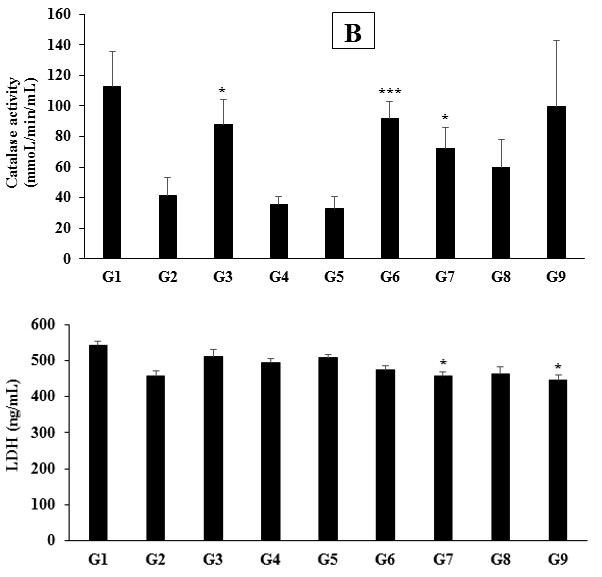
Figure 3B: Catalase of the test formulation in male Sprague Dawley rats. Values are expressed as mean ± SEM, n=10 in each group. ###p≤0.001 vs. G2; *p≤0.05 vs. G2; ***p≤0.001 vs. G4.
Lactate Dehydrogenase (LDH) in Muscle Homogenate
The effect of the test formulation on the level of lactate dehydrogenase (LDH) in muscle homogenate is shown in Figure 4. Lactate dehydrogenase is an enzyme that catalyzes the pyruvate-lactate reaction. Physical activity and age are among the factors affecting lactate levels and lactate dehydrogenase activity. Increased level of lactate and alterations of lactate dehydrogenase (LDH)-A/B mRNA- expression-ratio in brain is the hallmark of ageing [51, 52]. Moreover, mitochondrial dysfunction also responsible for aging-related alterations in neuronal function [53]. The level of LDH in muscle homogenate was observed 541.99 ± 12.84, 457.42 ± 15.66, and 512.74 ± 17.43 ng/mL in the normal control (G1), disease control (G2), and positive control (G3) groups, respectively. Further, LDH level was significantly reduced by 4.09%, 7.65%, 6.37%, and 9.86% in the Biofield Energy Treatment per se to animals from day -15 (G6), Biofield Energy Treated test formulation from day -15 (G7), Biofield Energy Treatment per se plus Biofield Energy Treated test formulation from day -15 (G8), and Biofield Energy Treatment per se animals plus untreated test formulation (G9) groups, respectively compared to the untreated test formulation (G4) group.
Estimation of Nitric Oxide (NO) in Serum
Nitric oxide (NO) is normally produced by the influenced of endothelial (e) NO synthase (eNOS) and neuronal (n) NO synthase nNOS, and plays a ubiquitous role in the body in controlling the function of every organ system [54]. NO has both anti-oxidant and pro-oxidative properties, while its level was increased in the inflammatory conditions [55, 56].
(p≤0.001) reduced the NO level by 24.34% as compared to the G2 group. Further, NO level was reduced by 11.42%, 10.76%, 8.77%, and 4.30% in the G5, G6, G7, and G9 groups, respectively as compared to the disease control group (G2) group. Overall, Biofield Energy Treatment altered the level of NO in muscle homogenate.
It also plays an important role different chronic diseases [57]. The effect of test item on the level of nitric oxide (NO) in muscle homogenate is shown in Figure 5. The level of NO was increased by 14.83% in the disease control group (G2) as compared to the normal control (G1) group (5.26 ± 0.32 µM/mL). Positive control, resveratrol was significantly
![Figure 4: Lactate dehydrogenase is an enzyme that catalyzes the pyruvate-lactate reaction. Physical activity and age are among the factors affecting lactate levels and lactate dehydrogenase activity. Increased level of lactate and alterations of lactate dehydrogenase (LDH)-A/B mRNA- expression-ratio in brain is the hallmark of ageing [51,52]. Moreover, mitochondrial dysfunction also responsible for aging-related alterations in neuronal function [53]. The level of LDH in muscle homogenate was observed 541.99 ± 12.84, 457.42 ± 15.66, and 512.74 ± 17.43 ng/mL in the normal control (G1), disease control (G2), and positive control (G3) groups, respectively. Further, LDH level was significantly reduced by 4.09%, 7.65%, 6.37%, and 9.86% in the Biofield Energy Treatment _per se_ to animals from day -15 (G6), Biofield Energy Treated test formulation from day -15 (G7), Biofield Energy Treatment _per se_ plus Biofield Energy Treated test formulation from day -15 (G8), and Biofield Energy Treatment _per se_ animals plus untreated test formulation (G9) groups, respectively compared to the untreated test formulation (G4) group.](/fulltextimages/6739/fig_4.png)
Conclusion
Based on the study outcomes, the MPO level was significantly reduced by 32.46% (p≤0.05), 27.49%, 27.49%, and 23.71% in the G6, G7, G8, and G9 groups, respectively than the untreated test formulation (G4) group. SOD enzyme level was increased by 26.64%, 28.74%, 22.69%, 36.31%, and 36.11% in the G5, G6, G7, G8, and G9 groups, respectively compared to the disease control group (G2). Catalase enzyme was significantly increased by 156.10% (p≤0.001), 101.62% (p≤0.05), 66.57%, and 179.17% in the G6, G7, G8, and G9 groups, respectively compared to the G4 group. LDH level was significantly reduced by 9.86% in the G9 group compared to the G4 group, while NO level was reduced by 11.42% and 10.76% in the G5 and G6 groups, respectively with respect to the G2 group. The current findings conclude that the Biofield Energy Treated Proprietary formulation possess antioxidant properties, which can be used to improve the overall health. Thus, the Biofield Treated test formulation can be used as a CAM for various autoimmune disorders such as Rheumatoid Arthritis, Myasthenia Gravis, Aplastic Anemia, Lupus Erythematosus, Addison Disease, Celiac Disease, Hashimoto Thyroiditis, Multiple Sclerosis, Dermatomyositis, Graves’ Disease, Scleroderma, Psoriasis, Pernicious Anemia, Type 1 Diabetes, Crohn’s Disease, Vasculitis, Vitiligo, Chronic Fatigue Syndrome and Alopecia Areata, a`s well as inflammatory disorders such as Irritable Bowel Syndrome (IBS), Asthma, Ulcerative Colitis, Parkinson’s Disease, Alzheimer’s Disease, Dermatitis, Atherosclerosis, Hepatitis, and Diverticulitis.
Further, the Biofield Energy Healing Treated test formulation can also be used in the prevention of immune-mediated tissue damage in cases of organ transplants (for example heart transplants, kidney transplants, and liver transplants), for anti-aging, stress prevention and management, and in the improvement of overall health and quality of life.
Acknowledgements
The authors are grateful to Dabur Research Foundation, Trivedi Science, Trivedi Global, Inc., and Trivedi Master Wellness for their support throughout the work.
References
-
Vertuani S, Angusti A, Manfredini S (2004) The antioxidants and pro-antioxidants network: An overview. Curr Pharm Des 10(14): 1677-1694.
-
Yilmaz T, Koçan EG, Besler HT (2004) The role of oxidants and antioxidants in chronic tonsillitis and adenoid hypertrophy in children. Int J Pediatr Otorhinolaryngol 68(8): 1053-1058.
-
Gaté L, Paul J, Ba GN, Tew KD, Tapiero H (1999) Oxidative stress induced in pathologies: The role of antioxidants. Biomed Pharmacother 53(4): 169-180.
-
Sezer U, Erciyas K, Ustun K, Pehlivan Y, Senyurt SZ, et al. (2013) Effect of chronic periodontitis on oxidative status in patients with rheumatoid arthritis. J Periodontol 84(6): 785-792.
-
Karp SM, Koch TR (2006) Oxidative stress and antioxidants in inflammatory bowel disease. Dis Mon 52(5): 199-207.
-
Podrez EA, Abu Soud HM, Hazen SL (2000) Myeloperoxidase-generated oxidants and atherosclerosis. Free Radic Biol Med 28(12): 1717-1725.
-
Vita JA, Brennan ML, Gokce N, Mann SA, Goormastic M, et al. (2004) Serum myeloperoxidase levels independently predict endothelial dysfunction in humans. Circulation 110(9): 1134-1139.
-
Mohebbi H, Nia FR, Arabmomeni A, Riasi A, Marandi M (2015) The effects of interval training and age on blood lactate (La) levels and lactate dehydrogenase (LDH) activity in male Wistar rats. Pars Journal of Medical Sciences 12(4): 37-45.
-
Houston M (2014) The role of nutrition and nutraceutical supplements in the treatment of hypertension. World J Cardiol 6(2): 38-66.
-
Bishop WM, Zubeck HM (2012) Evaluation of microalgae for use as nutraceuticals and nutritional supplements. J Nutr Food Sci 2(5): 147.
-
Houston M (2013) Nutrition and nutraceutical supplements for the treatment of hypertension: Part I. J Clin Hypertens (Greenwich) 15(12): 752-757.
-
Qureshi NA, Al Bedah AM (2013) Mood disorders and complementary and alternative medicine: A literature review. Neuropsychiatr Dis Treat 9: 639-658.
-
Jain S, Hammerschlag R, Mills P, Cohen L, Krieger R, et al. (2015) Clinical studies of biofield therapies: Summary, methodological challenges, and recommendations. Glob Adv Health Med 4: 58-66.
-
Rubik B (2002) The biofield hypothesis: Its biophysical basis and role in medicine. J Altern Complement Med 8(6): 703-717.
-
Trivedi MK, Patil S, Shettigar H, Mondal SC, Jana S (2015) The potential impact of biofield treatment on human brain tumor cells: A time-lapse video microscopy. J Integr Oncol 4(3): 141.
-
Trivedi MK, Patil S, Shettigar H, Gangwar M, Jana S (2015) _In vitro_ evaluation of biofield treatment on cancer biomarkers involved in endometrial and prostate cancer cell lines. J Cancer Sci Ther 7(7): 253-257.
-
Trivedi MK, Branton A, Trivedi D, Nayak G, Mondal SC, et al. (2015) Antimicrobial sensitivity, biochemical characteristics and biotyping of _Staphylococcus_ _saprophyticus_: An impact of biofield energy treatment. J Women’s Health Care 4(6): 271.
-
Trivedi MK, Branton A, Trivedi D, Nayak G, Mondal SC, et al. (2015) Evaluation of antibiogram, genotype and phylogenetic analysis of biofield treated _Nocardia_ _otitidis_. Biol Syst Open Access 4(2): 143.
-
Trivedi MK, Branton A, Trivedi D, Nayak G, Charan S, et al. (2015) Phenotyping and 16S rDNA analysis after biofield treatment on _Citrobacter braakii_: A urinary pathogen. J Clin Med Genom 3(1): 129.
-
Branton A, Jana S (2017) The influence of energy of consciousness healing treatment on low bioavailable resveratrol in male Sprague Dawley rats. International Journal of Clinical and Developmental Anatomy 3(3): 9-15.
-
Branton A, Jana S (2017) The use of novel and unique biofield energy healing treatment for the improvement of poorly bioavailable compound, berberine in male Sprague Dawley rats. American Journal of Clinical and Experimental Medicine 5(4): 138-144.
-
Branton A, Jana S (2017) Effect of The biofield energy healing treatment on the pharmacokinetics of 25-hydroxyvitamin D3 [25(OH)D3] in rats after a single oral dose of vitamin D3. American Journal of Pharmacology and Phytotherapy 2(1): 11-18.
-
Trivedi MK, Branton A, Trivedi D, Nayak G, Gangwar M, et al. (2016) Molecular analysis of biofield treated eggplant and watermelon crops. Adv Crop Sci Tech 4(1): 208.
-
Trivedi MK, Branton A, Trivedi D, Nayak G, Mondal SC, et al. (2015) Morphological characterization, quality, yield and DNA fingerprinting of biofield energy treated alphonso mango (Mangifera indica L.). Journal of Food and Nutrition Sciences 3(6): 245-250.
-
Trivedi MK, Branton A, Trivedi D, Nayak G, Mondal SC, et al. (2015) Evaluation of plant growth, yield and yield attributes of biofield energy treated mustard (Brassica juncea) and chick pea (Cicer arietinum) seeds. Agriculture, Forestry and Fisheries 4(6): 291-295.
-
Trivedi MK, Branton A, Trivedi D, Nayak G, Mondal SC, et al. (2015) Evaluation of plant growth regulator, immunity and DNA fingerprinting of biofield energy treated mustard seeds (Brassica juncea). Agriculture, Forestry and Fisheries 4(6): 269-274.
-
Trivedi MK, Tallapragada RM, Branton A, Trivedi D, Nayak G, et al. (2015) Characterization of physical and structural properties of aluminum carbide powder: Impact of biofield treatment. J Aeronaut Aerospace Eng 4(1): 142.
-
Trivedi MK, Nayak G, Patil S, Tallapragada RM, Latiyal O, et al. (2015) Impact of biofield treatment on atomic and structural characteristics of barium titanate powder. Ind Eng Manage 4(3): 166.
-
Trivedi MK, Patil S, Nayak G, Jana S, Latiyal O (2015) Influence of biofield treatment on physical, structural and spectral properties of boron nitride. J Material Sci Eng 4(4): 181.
-
Trivedi MK, Nayak G, Patil S, Tallapragada RM, Jana S, Mishra RK (2015) Bio-field treatment: An effective strategy to improve the quality of beef extract and meat infusion powder. J Nutr Food Sci 5(4): 389.
-
Trivedi MK, Tallapragada RM, Branton A, Trivedi D, Nayak G, et al. (2015) Biofield treatment: A potential strategy for modification of physical and thermal properties of gluten hydrolysate and ipomoea macroelements. J Nutr Food Sci 5(5): 414.
-
Kinney JP, Trivedi MK, Branton A, Trivedi D, Nayak G, et al. (2017) Overall skin health potential of the biofield energy healing based herbomineral formulation using various skin parameters. American Journal of Life Sciences 5(2): 65-74.
-
Singh J, Trivedi MK, Branton A, Trivedi D, Nayak G, et al. (2017) Consciousness energy healing treatment based herbomineral formulation: A safe and effective approach for skin health. American Journal of Pharmacology and Phytotherapy 2(1): 1-10.
-
Yang YS, Su YF, Yang HW, Lee YH, Chou JI, et al. (2014) Lipid-lowering effects of curcumin in patients with metabolic syndrome: A randomized, double-blind, placebo-controlled trial. Phytother Res 28(12): 1770- 1777.
-
Bunglavan SJ, Garg AK, Dass RS, Shrivastava S (2014) Effect of supplementation of different levels of selenium as nanoparticles/sodium selenite on blood biochemical profile and humoral immunity in male wistar rats. Vet World 7(12): 1075-1081.
-
Pulli B, Ali M, Forghani R, Schob S, Hsieh KLC, et al. (2013) Measuring myeloperoxidase activity in biological samples. PLoS One 8(7): 67976.
-
Marklund S, Marklund G (1974) Involvement of the superoxide anion radical in the autoxidation of pyrogallol and a convenient assay for superoxide dismutase. Eur J Biochem 47(3): 469-474.
-
Sinha AK (1972) Colorimetric assay of catalase. Anal Biochem 47(2): 389-394.
-
Noeman SA, Hamooda HE, Baalash AA (2011) Biochemical study of oxidative stress markers in the liver, kidney and heart of high fat diet induced obesity in rats. Diabetol Metab Syndr 3(1): 17.
-
Wacker WEC, Snodgrass PJ (1960) Serum LDH activity in pulmonary embolism diagnosis. Jama 142-2145.
-
Boutwell JN (1961) Clinical Chemistry: Laboratory Manual and Methods. London: Henry Kimpton, pp: 209.
-
Jabłońska E, Rogowska BK, Ratajczak W, Rogowski F, Powierza JS (2007) Reactive oxygen and nitrogen species in the course of B-CLL. Adv Med Sci 52: 154-158.
-
Young SG, Parthasarathy S (1994) Why are low-density lipoproteins atherogenic?. West J Med 160(2): 153-164.
-
Aktan B, Taysi S, Gumustekin K, Bakan N, Sutbeyaz Y (2003) Evaluation of oxidative stress in erythrocytes of guinea pigs with experimental otitis media and effusion. Ann Clin Lab Sci 33(2): 232-236.
-
Zhang R, Brennan ML, Shen Z, MacPherson JC, Schmitt D, et al. (2002) Myeloperoxidase functions as a major enzymatic catalyst for initiation of lipid peroxidation at sites of inflammation. J Biol Chem 277(48): 46116- 46122.
-
Miquel J, Boscá AR, Soler A, Díez A, Gutiérrez MAC, et al. (1998) Increase with age of serum lipid peroxides: implications for the prevention of atherosclerosis. Mech Ageing Dev 100(1): 17-24.
-
Sohal RS, Weindruch R (1996) Oxidative stress, caloric restriction, and aging. Science 273(5271): 59-63.
-
Tsay HJ, Wang P, Wang SL, Ku HH (2000) Age-associated changes of superoxide dismutase and catalase activities in the rat brain. J Biomed Sci 7(6): 466-474.
-
De la Torre MR, Casado A, López Fernández ME (1992) Superoxide dismutase (SOD) and aging. Sangre (Barc) 37(3): 193-195.
-
Warner HR (1994) Superoxide dismutase, aging, and degenerative disease. Free Radic Biol Med 17(3): 249- 258.
-
Datta S, Chakrabarti N (2018) Age related rise in lactate and its correlation with lactate dehydrogenase (LDH) status in post-mitochondrial fractions isolated from different regions of brain in mice. Neurochem Int 118: 23-33.
-
Ross JM, Oberg J, Brene S, Coppotelli G, Terzioglu M, et al. (2010) High brain lactate is a hallmark of aging and caused by a shift in the lactate dehydrogenase A/B ratio. Proc Natl Acad Sci USA 107(46): 20087-20092.
-
Larsson NG (2010) Somatic mitochondrial DNA mutations in mammalian aging. Annu Rev Biochem 79: 683-706.
-
McCann SM, Licinio J, Wong ML, Yu WH, Karanth S, et al. (1998) The nitric oxide hypothesis of aging. Exp Gerontol 33(7-8): 813-826.
-
Joshi MS, Ponthier JL, Lancaster JR (1999) Cellular antioxidant and pro-oxidant actions of nitric oxide. Free Radic Biol Med 27(11-12): 1357-1366.
-
Yilmaz T, Kocan EG, Besler HT, Yilmaz G, Gursel B (2004) The role of oxidants and antioxidants in otitis media with effusion in children. Otolaryngol Head Neck Surg 131(6): 797-803.
-
Koc S, Aksoy N, Bilinc H, Duygu F, Uysal IO, et al. (2011) Paraoxonase and arylesterase activity and total oxidative/anti-oxidative status in patients with chronic adenotonsillitis. Int J Pediatr Otorhinolaryngol 75(11): 1364-1367.
- The Muculent Bleb-Mucinous Cystic Neoplasm-Hepatobiliary Region
- Insulin Sensitizers as Anti-Aging Agents: Unveiling Synergies with Albumin, GLP-1RA, Klotho Protein, and Metformin in the Quest to Combat Aging
- Reprogramming of GLP-1 Response at Prediabetes for the Prevention of Type 2 Diabetes: The Role of Albumin and GLP-1 Receptor Agonists
- The Mingled Allies-Combined Hepatocellular Carcinoma and Cholangiocarcinoma
- Compilation and Embodiment-Leydig Cell Tumour Testis
- Glucolipotoxicity: A Novel Different Perspective on the Causes of Cancer