
Quality of Bread Prepared From a Composite Flour of Triticale and Wheat Variety
This study assessed the quality of bread produced from triticale flour and wheat composite flour. Wheat (Dendea variety) and Triticale were obtained from wheat breeding breeding program at Holeta Research center. They were thoroughly dried, milled, sieved and packed. Six blends were prepared by homogenously mixing wheat flour with triticale flour in the percentage proportions: (100:0), (90:10%), (80:20%), (70:30%), (60:40), (50:50) and later used to bake bread. The physical and chemical properties of flour and bread samples made from the flour were examined. Panelists were assigned to assess the bread samples as well. The result of the proximate, water absorption, oil absorption and sensory result of the flour and bread samples showed that the water absorption of wheat (Denda) was 1.62% while for Triticale was 1.25% which indicates the triticale flour absorbs less water than wheat flour. The ash content of triticale (1%) was higher than the wheat (Denda) indicates the mineral content was higher compared to wheat. The protein content between treatments were not significant different at p
Introduction
Rapid increases in world population demand concomitant increases in food production, particularly of cereal grains, the main source of nutrients for both humans and animals. However, further increases in cereal production must occur while preserving the environment and natural resources. Therefore, production increases must come mainly from enhancing the yield potential of new crops and not from expanding the global cultivated area.
Triticale (X Triticosecale Witt Mack) the product of wheat and rye hybridization has demonstrated high yield potential even under marginal growing conditions and could be a very attractive alternative for raising cereal production globally. Unfortunately, recent estimates FAO
indicate that the area sown to triticale worldwide is approximately 3 million ha, slightly higher than a decade ago. Despite the high productivity of triticale, global production is increasing slowly, and the crop has not yet become well established in local or world markets. The main reason for the lower-than-expected production is that triticale, a good source of protein and energy, is used mainly for animal feed but very little for human consumption.
Triticale can be milled into flour using standard wheat or rye flour-milling procedures. However, the wheat milling process is more suitable for obtaining maximum triticale flour extraction rates, mainly because rye flour milling precludes the use of smooth rolls (smooth rolls tend to flake rye middling’s due to their high pentosan content) thus reducing flour extraction rates. Early triticale lines tended to produce low flour yields due to long grains with incomplete plumpness, which made it difficult to obtain high extraction rates of low ash flours. More recent triticale possessing improved grain shape and plumpness have flour yields equal or closer to those of wheat. At low ash content, semi-hard and soft triticales show higher flour extraction rates than do hard triticales, which in this sense resemble durum wheat more than bread wheat.
One of the traits that made triticale attractive as food is its good protein nutritional value, particularly its high lysine content which is not found in other cereals made it unique. Triticale flours produce weak dough due to low gluten content, inferior gluten strength and high levels of alpha-amylase activity. Weak dough is unsuitable for the manufacture of wheat-type leavened breads and snacks requiring medium- strong to strong dough properties. Acceptable quality attributes can be prepared with wheat-triticale blend with the best possible baking quality and formulation.
Material and Methods
Plant Materials
The plant material was collected from the (5kg of Triticale and wheat sample) wheat breeding program at Holeta Agricultural Research Center, Ethiopian Institute of Agricultural Research.
Both the plant materials were the new variety (the improved variety). Experiments were carried out in the Ethiopian Institute of Agricultural Research Food science and Nutrition Laboratory during the study period.
Wheat Flour Preparation
Manually cleaned whole wheat and Triticale were milled finely by using 0.5mm sieve size of (perten laboratory mill 3100) sample miller and prepared for blending. Flour Formulation The cleaned and prepared flour was blended according to appropriate product development.
By using ratio formulation software Wheat and Triticale flour were blended in the ratios of the following (Tables 1 & 2):
| Treatments | Wheat –Triticale flour formulation | |
|---|---|---|
| Wheat Flours in gram | Triticle Flour in gram | |
| T1 | 100% W.F (200g) | 0.00 gram |
| T2 | 90%(180g) | 10%(20g) |
| T3 | 80%(160g) | 20%(40g) |
| T4 | 70%(140g) | 30%(60g) |
| T5 | 60%(120g) | 40%(80g) |
| T6 | 50(100g) | 50%(100g) |
Table 1: Formulation of samples.
| Ingredients | Quantity in grams |
|---|---|
| yeast | 2.5 |
| Fat(oil) | 10 |
| water | 150ml |
Table 2: Recipe for the production of breads.
Bread Preparation
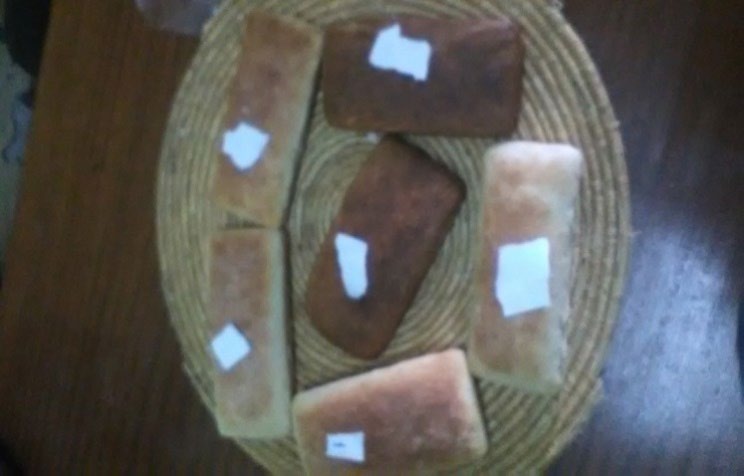
The milled sample was mixed with enough amount of water using stain less steel Bowel. After kneading the dough was allowed to ferment until it expand. Following fermentation it was molded into cylindrical shape. After molding the dough was placed in the baking pan in a cabinet pre heated oven. As the bread became enough to be stopped it was taken out of the oven.
Nutrient Analysis
The Association of Official Analytical Chemist (AOAC) procedure was used to determine the nutrient Compositions (crude protein, moisture content, crude fat, total ash, dry matter) of the wheat, Triticale flour and Bread samples made from the blends of the above flours.
Sensory Analysis
Sensory evaluation was carried out using 10 panelists. The sensory attributes assessed was taste, aroma, texture, crumbness, color and overall acceptability. These panelists was instructed to rate the breads based on 5-point hedonic scale ranging from 5=like very much to 1=disliked very much.
Proximate Analysis
The Association of Official Analytical Chemist procedure was used for Proximate Analysis crude protein, crude fiber, crude fat, moisture, ash and carbohydrate.
Experimental Design and Data Analysis
Completely Randomized designs (CRD) for nutritional data as well as for sensory scores were used. Analyses for the nutritional and sensory data were carried out using SPSS software.
Result and Discussion
Physical Characteristics of Flour and Chemical Composition of Bread Samples
The functional property and nutrient content of the flour of wheat and triticale were observed (Figure 1). The water absorption of wheat (Denda) was 1.62% while for Triticale was 1.25% which indicates the triticale flour absorbs less water than wheat flour. Regarding to the oil absorption the oil absorption of triticale (1.25%) was hgher than wheat (1.12%) (Table 3). The ash content of triticale (1%) was higher than the wheat (Denda) indicates the mineral content was higher compared to wheat. Generally the water absorption moisture content and protein content of wheat flours were higher than triticale while oil absorption, ash and fat content of triticale flour were higher than wheat (Denda variety) (Table 3). The absorption of more water during mixing is a typical characteristic of composite starches [1]. Several studies also reported that the dough made from composite flour absorbed more water than that made from wheat flour alone [2].
| Flour | Water absorption | Oil Absorption | MC | PC | Ash | Fat |
|---|---|---|---|---|---|---|
| Wheat (Dendea) | 1.62±0.88 | 1.12±0.17 | 12.25±1.17 | 8.88±0.29a | 0.5±0.00 | 1.25±0.35 |
| Triticale | 1.25±0.35 | 1.25±0.00 | 10.25±0.35 | 7.24±0.09b | 1±0.7 | 1.6±0.00 |
Table 3: Functional Property and Nutrient content of Flour.
The moisture content between the treatments were significant different at p<0.05. The moisture content of the bread sample (T3:41.5%) was higher compared to the control bread sample (T1:31%) (Table 4). The protein content between treatments were not significant different at p <0.05. The protein content of the bread sample decrease from T1 (Control) 10.28 to T6 (9.24) indicate the flour of triticale increase the protein content of the bread sample decrease (Table 4). The ash content of the bread samples were higher compared to the control indicates the flour of triticale increase the mineral content of the bread sample increase. The fat content between the treatments were not significant different at p <0.05. The fat content of the control (T1:1.6%) which is higher compared to the other treatments.
Generally The nutrient content between treatment protein and ash were significant different at p<0.05 for Moisture content and fat content (Table 4).
| Treatment | Nutrient content | |||
|---|---|---|---|---|
| Moisture content | Protein content | Ash | Fat | |
| T1 | 31±2.12b | 10.28±1.2 | 1.5±0.0 | 1.6±0.0a |
| T2 | 38±0.00a | 10.2±0.29 | 1.75±0.35 | 1.2±0.14cd |
| T3 | 41.5±0.71a | 10.16±0.18 | 2.0±0.00 | 1.25±0.07bc |
| T4 | 38.00±0.00 | 9.6±0.41 | 2.00±0.00 | 1.45±0.07ab |
| T5 | 28.5±3.55b | 9.26±0.06 | 2.00±0.00 | 1.0±0.14d |
| T6 | 23.5±2.12c | 9.24±0.04 | 1.75±0.35 | 1.4±0.00abc |
Table 4: Nutrient content of formulated Bread.
Sensory Evaluation
Sensory Properties of Bread Samples: The taste of bread between treatments there were not significant different at p<0.05. Treatment 1 (control) the taste were higher (4.5) compared to the other bread sample (Table 5). The texture of the bread were significant between the treatments at p<0.05. The aroma of bread between treatments were not significant different at p<0.05.The overall acceptability of the bread samples were significant different at p<0.05 compared to the control (T1:5%) up to Treatment four (4%) accepted bread formulation. In general up to treatment four (70 wheat:
30 triticale) acceptable taste, color, aroma and over all acceptability (Table 5). This observation is consistent with previous reports by Eddy, et al. [3] that observed changes in the quality of bread produced from cassava-wheat composite flours at different levels of substitutions. In general interms of the nutrient content and sensory test from T1 (control) to treatment T4 have acceptable bread product in which the processing quality of triticale improve to utilize it as bread. Olaoye & Onilude [4] in their report also affirmed this by suggesting that addition of breadfruit flour to wheat flour up to10% level will give bread without changing its organoleptic properties [5, 6, 7, 8, 9, 10, 11, 12, 13, 14, 15].
| Treatment | Sensory test | |||
|---|---|---|---|---|
| Taste | Texture | Aroma | Over all acceptability | |
| T1 | 4.5±0.7 | 4±0.00ab | 4±1.14 | 5±0.00a |
| T2 | 4±0.00 | 5±0.00a | 3.5±0.70 | 3.5±0.07bc |
| T3 | 4±0.00 | 4±1.41ab | 3.5±0.70 | 4±0.00b |
| T4 | 4.5±0.70 | 2.5±0.70b | 2.5±0.7 | 4±0.00b |
| T5 | 3.5±0.7 | 3±0.00ab | 3±0.00 | 3±0.00c |
| T6 | 4±1.40 | 3±1.41ab | 2±0.00 | 3±0.00b |
Table 5: Sensory data using Five point Hedonic scale.
Conclusion
The water absorption moisture content and protein content of wheat flours were higher than triticale while oil absorption, ash and fat content of triticale flour were higher than wheat (Denda variety). The absorption of more water during mixing is a typical characteristic of composite starches. The ash content of the bread samples were higher compared to the control indicates the flour of triticale increase the mineral content of the bread sample increase. In general up to treatment four (70 wheat: 30 triticale) acceptable taste, color, aroma and over all acceptability indicates triticale can be utilized in the form of bread up to 30 % triticale flour substitution.
References
-
Doxastakis G, Zafiriadis I, Irakil M, Marlani H, Tananaki C (2002) Lupin,soya and triticale addition to wheat flour dough and their effect on rheological properties. Food Chem 77: 219-227.
-
Eddy NO, Udofia PG, Eyo D (2007) Sensory Evaluation of Wheat/Cassava composite bread and effect of label information onacceptance and preference. Afr J Biotechnol 6(20): 2415-2418.
-
Morita N, Maeda T, Miyazaki M, Yamamori M, Miura H, et al. (2002) Dough and baking properties of high amylase and waxy wheat flours. Cereal Chem 79: 491-495.
-
Olaoye OA, Onilude AA, Oladoye CO (2007) Breadfruit flours in biscuit making: Effects on product quality. Afr J Food Sci 4(10): 020-023.
-
Boros D (2002) Physico-chemical indicators suitable in selection of triticale for high nutritive value. In: Arseniuk E (Edn.), Proc. 5th Int. Triticale Symp. Radzikow, Poland, Plant Breeding and Acclimatization Institute 1: 239.
-
Boros D, Rakowska M (1991) Chemical and biological evaluation of triticale cultivars released in Poland. In: Proc. 2nd Int. Triticale Symp., Passo Fundo, Rio Grande do Sul, Brazil, Mexico, DF, CIMMYT, pp: 253.
-
Brand TS, van der Merwe GD (1994) Comparison of triticale cultivars with maize grain for finishing lambs. S Afr J Anim Sci 24: 143.
-
Bruckner PL, Hanna WW (1990) In vitro digestibility of fresh leaves and stems of small-grain species and genotypes. Crop Sci 30: 196.
-
Bruckner PL, Cash SD, Lee RD (1998) Nitrogen effects on triticale grain yield, amino acid composition, and feed quality for swine. J Prod Agric 11: 180.
-
Carnide V, Guedes-Pinto H, Mascarenhas-Farreira A, Sequeira C (1991) Triticale-legume mixtures. In: Proc. 2nd Int. Triticale Symp., Passo Fundo, Rio Grande do Sul, Brazil, Mexico, DF, CIMMYT, pp: 542.
-
Carnide V, Guedes-Pinto H, Miguel-Rodriguez M, Sequeira C, Mascarenas-Ferreira A (1998) Forage yield and quality of triticale-vetch mixtures. In: Juskiw P, (Ed.), Proc. 4th Int. Triticale Symp., Red Deer, Alberta, Canada, International Triticale Association, pp: 256.
-
Charmley E, Greenhalgh JFD (1987) Nutritive value of three cultivars of triticale for sheep, pigs, and poultry. Anim Feed Sci Tech 18(1): 19-35.
-
Cheeke PR (1998) Natural toxicants in feeds, forages, and poisonous plants, 2nd (Edn.), Danville IL, USA, Interstate Publishers Inc, pp: 139.
-
Coffey MT, Gerrits WJ (1988) Digestibility and feeding value of B858 triticale for swine. J Anim Sci 66: 2728- 2735.
-
Varughese G, Pfeiffer WH, Peña RJ (1996) Triticale (Part 1): a successful alternative crop. Cer Foods World 41(6): 475.
- The Role of Podocyte Apoptosis and the Involvement of SIRT1 in Diabetic Nephropathy
- Dealcoholization of Beer by Osmotic Distillation for the Beverage Industry
- Biopolymer-Based Edible Packaging- Biomaterials, Methods, and Applications in Food Industry: An Updated Review
- Influence of Bioprocessing Methods on 'China Rice' (Gawal R1), and Soyabean Supplementation on the Quality of Complementary Food
- Cassava (Manihot esculenta) Varietal Growth, Yield and Cyanide Content Performance in Three Sites in the South- Eastern Semi Arid Regions of Kenya
- Food Waste Treatment, Recycling, Management and Production of Value-Products-An Update on Methodologies and Current Trends